Introduction
A healthy pond depends on oxygen and clean water. Without proper aeration and filtration, fish can stress, algae can grow, and water can turn cloudy. Choosing the right equipment can be confusing, especially for new pond owners. A pond air pump size calculator removes this guesswork by matching airflow and filtration to your pond’s exact needs.
This guide covers common US pond types: backyard ponds, koi ponds, and garden or ornamental ponds. Whether you’re adding a few goldfish or maintaining a large koi pond, proper sizing ensures your pond stays balanced and vibrant.
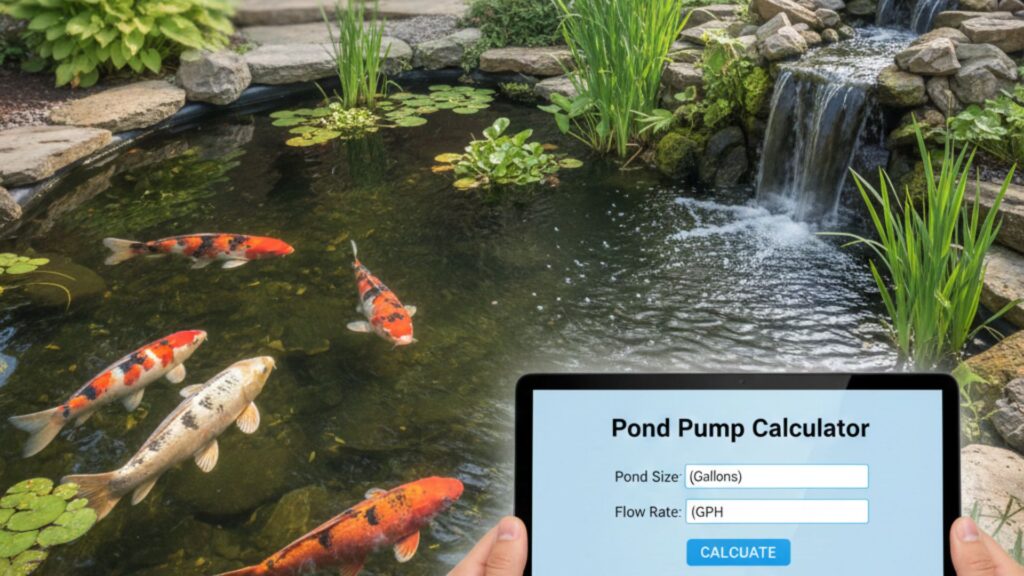
👉 Use our pond air pump & filter calculator to choose the correct aerator and filter for your pond instantly.
Why Air Pumps and Filters Are Essential for Pond Health
A healthy pond needs oxygen and clean water. That’s where air pumps and filters matter most. A pond air pump size calculator helps match both tools to your pond’s real needs. When sizing is correct, fish stay active, water remains clear, and odors remain low. Many pond problems start with low oxygen or weak filtration. Here’s how these systems work together and why correct sizing matters. Here’s how to apply this effectively:
How Air Pumps Increase Dissolved Oxygen Levels
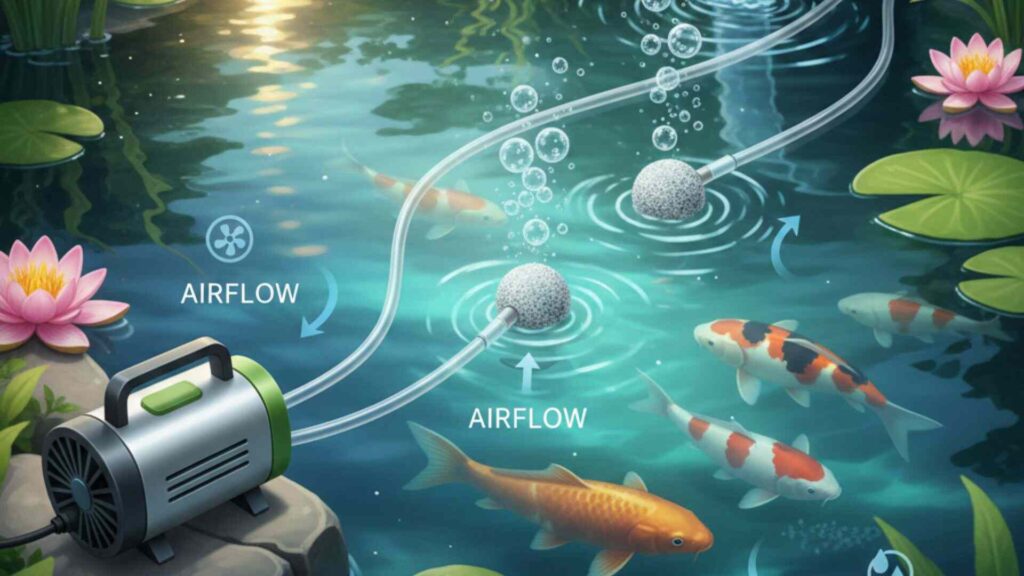
Air pumps push air through diffusers or air stones. This process adds oxygen to the water. Rising bubbles also move water from the bottom to the surface. That movement prevents stagnant zones.
Higher oxygen levels support:
- Fish breathing and stress control
- Healthy bacterial activity
- Even water temperature
Small ponds may need only one air stone. Larger ponds need several outlets. A pond air pump calculator helps estimate airflow based on pond size and depth. It prevents underpowered systems.
Pro tip: Deeper ponds lose oxygen faster at the bottom. Use many diffusers for even coverage.
Why Oxygen Is Critical for Pond Life
Oxygen affects every part of a pond ecosystem. Without enough, problems show fast.
Fish survival
- Fish need oxygen to breathe.
- Low oxygen causes gasping and weak movement.
Beneficial bacteria
- These bacteria break down fish waste.
- They stop ammonia buildup.
- They need oxygen to work well.
Odor and algae control
- Low oxygen leads to bad smells.
- It also fuels harmful algae growth.
A pond aerator pump calculator helps match oxygen supply to fish load and pond size. This keeps the system balanced.
Role of Filters in Maintaining Clean Water
Filters remove solid waste and support biological cleaning. They work in two main ways:
- Mechanical filtration: Traps leaves, debris, and fish waste
- Biological filtration: Hosts bacteria that break down toxins
Good filtration improves:
- Water clarity
- Fish health
- Overall pond balance
Filter flow rate must match pond volume. A pond filter pump size calculator helps avoid weak circulation or clogged filters.
Why Air Pumps and Filters Must Be Sized Together
Air pumps and filters depend on each other. Oxygen supports bacteria inside the filter. Filtration removes waste that would otherwise reduce oxygen.
Problems happen when sizing is off:
- Strong filter + weak air pump = poor bacteria performance
- Strong air pump + weak filter = cloudy water
Use a pond filter and pump calculator to size both together. This approach keeps oxygen levels steady and water clean.
Key takeaway: Balanced sizing prevents most pond health issues before they start.
Understanding Pond Air Pumps and Filters (Beginner-Friendly)
Many pond owners feel confused when choosing the right equipment. Air pumps, water pumps, and filters all sound similar. They do very different jobs. A pond air pump size calculator helps simplify these choices by matching tools to your pond’s needs. When you understand what each device does, you avoid costly mistakes. You also protect fish and water quality from day one. Let’s break each component down in simple terms so you can apply this correctly.
What Is a Pond Air Pump?
A pond air pump adds oxygen to the water. It pushes air through tubing into air stones or diffusers. Those bubbles release oxygen and move water gently.
Airflow is not the same as water flow:
- Airflow measures how much air enters the pond
- Water flow measures how much water moves through pumps or filters
Air pumps become mandatory when:
- You keep koi or many fish
- The pond is deep
- Summer heat lowers oxygen levels
A pond air pump calculator helps size airflow based on pond volume and depth. It prevents weak aeration that stresses fish.
What Is a Pond Filter?
A pond filter cleans the water. It removes waste and supports helpful bacteria.
There are two main types:
- Mechanical filtration: Traps leaves, sludge, and fish waste
- Biological filtration: Grows bacteria that break down toxins
Filters support the pond ecosystem by:
- Reducing ammonia and nitrites
- Improving water clarity
- Lowering algae growth
Filter size must match pond volume and fish load. A pond filter pump size calculator helps choose the correct flow rate. Undersized filters clog fast and fail quickly.
Air Pump vs Water Pump vs Filter Pump
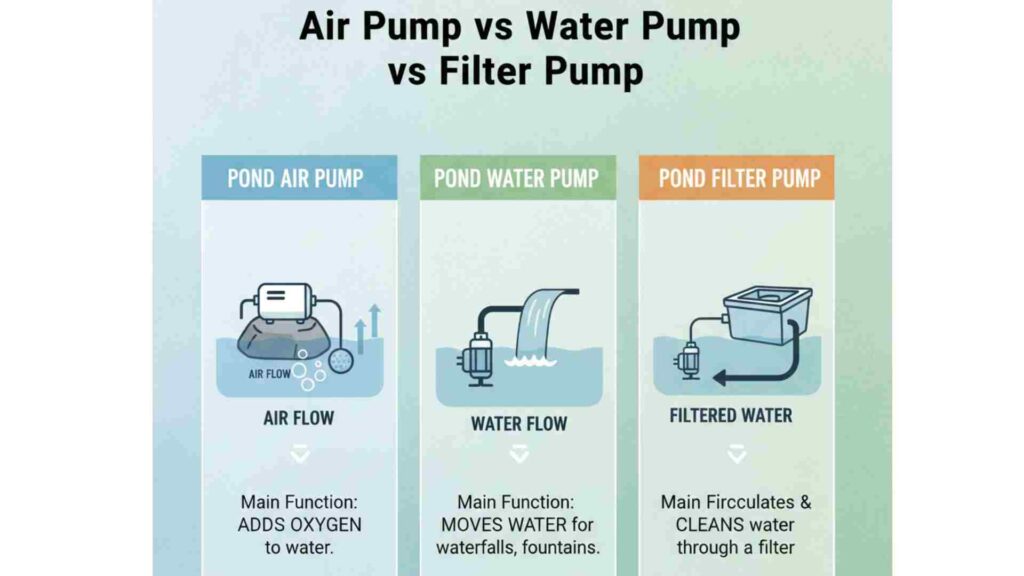
Many beginners mix these up. Each tool has a specific role.
| Equipment | Main Purpose | Common Mistake |
|---|---|---|
| Air Pump | Adds oxygen | Choosing a pump that is too weak |
| Water Pump | Moves water | Confusing it with an air pump |
| Filter Pump | Powers filtration | Ignoring the filter size |
Common buying mistakes include:
- Using a water pump instead of an air pump
- Oversizing pumps and wasting energy
- Ignoring filter capacity
A pond filter and pump calculator prevents these errors. It ensures each component works together, not against each other.
Common Types of Pond Air Pumps (With Use Cases)
Not all pond air pumps work the same way. The right type depends on pond size, fish load, and layout. A pond air pump size calculator helps narrow choices, but understanding pump types matters too. When you match the pump style to your setup, you get better oxygen flow and fewer issues. Below are the most common pond air pump types and when to use each one.
Submersible vs External Air Pumps
Submersible air pumps sit inside the pond or near the edge. They are easy to install and stay quiet. These work best for:
- Small garden ponds
- Shallow ponds
- Low fish loads
External air pumps stay outside the pond. They push air through tubing into diffusers. These suits:
- Koi ponds
- Deeper ponds
- Medium to large pond systems
Pros and cons
- Submersible: simple setup, limited power
- External: stronger airflow, needs weather protection
A pond air pump calculator helps decide which type fits your pond volume and depth.
Pro tip: For koi ponds, external pumps usually provide more stable oxygen levels.
Single-Outlet vs Multi-Outlet Air Pumps
Single-outlet pumps send air to one diffuser. They work well for:
- Small ponds
- Decorative water features
- Low fish density
Multi-outlet pumps split airflow to several air stones. These are better for:
- Large ponds
- Koi systems
- Uneven pond shapes
Benefits of multiple air stones:
- Even oxygen distribution
- Fewer dead zones
- Better bottom circulation
Use a pond air pump size calculator to ensure enough airflow reaches every outlet. Weak pumps lose pressure fast when split.
Energy Consumption & Continuous Operation
Most US ponds run air pumps 24/7. Constant airflow keeps oxygen stable and bacteria active. Turning pumps off can cause oxygen drops, especially at night.
Efficiency matters because:
- Air pumps run year-round
- Power costs add up over time
Look for pumps rated for:
- Low watt usage
- Continuous duty
- Quiet operation
An appropriately sized pump costs less to run than an oversized one. A pond air pump calculator helps balance airflow and energy use.
If your pond includes a waterfall, pump sizing becomes even more important due to added head height and flow demands.
Our Waterfall & Garden Pond Pump Guide – Size, Flow & Calculator explains how to match pump flow and lift height for stable circulation.
Step 1 – Determine Your Pond Requirements
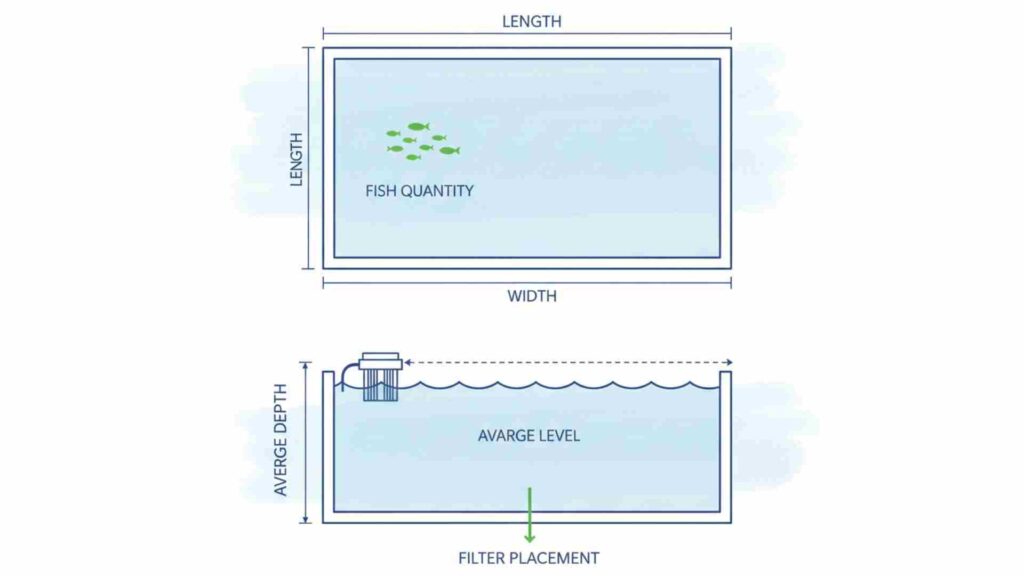
Correct sizing starts with understanding your pond. Guessing leads to poor oxygen levels and dirty water. A pond air pump size calculator works best when the inputs are accurate. This step helps you collect the correct information before using any calculator. Once you know your pond volume, fish load, and filtration needs, equipment selection becomes simple. Here’s how to do it the right way.
Pond Volume Calculation (US Gallons)
Pond volume sets the base for all sizing. Use this simple formula:
- Length × width × average depth × 7.48 = gallons
Always use average depth, not the deepest point. Depth often varies across the pond. Estimating too deeply leads to oversized equipment. Estimating too shallow causes weak aeration.
Why accurate depth matters:
- Oxygen levels drop faster in deeper water
- Filters depend on the correct water volume
- Airflow needs change with depth
Measure in feet for best results. Then enter the total gallons into your pond air pump size calculator for accurate recommendations.
Fish Load & Pond Usage
Fish type affects oxygen demand. Koi need more oxygen than goldfish. Heavy feeding also increases waste and oxygen use.
Consider these factors:
- Number of fish
- Fish size and growth
- Feeding frequency
High stocking density means:
- Higher oxygen demand
- Stronger aeration required
- Larger filtration capacity
Decorative ponds with few fish need less airflow. Koi ponds need consistent, higher oxygen levels. Accurate fish data improves calculator results.
Filter Flow Requirements
Filters and air pumps must work together. Filters remove waste. Air pumps keep bacteria alive inside the filter.
When matching airflow and filtration:
- Filters need steady water movement
- Bacteria need oxygen-rich water
- Undersized flow reduces filter efficiency
A pond filter pump size calculator helps match filter flow to pond volume. Pair it with the pond air pump size calculator for balanced performance.
Step 2 – Using a Pond Air Pump & Filter Calculator
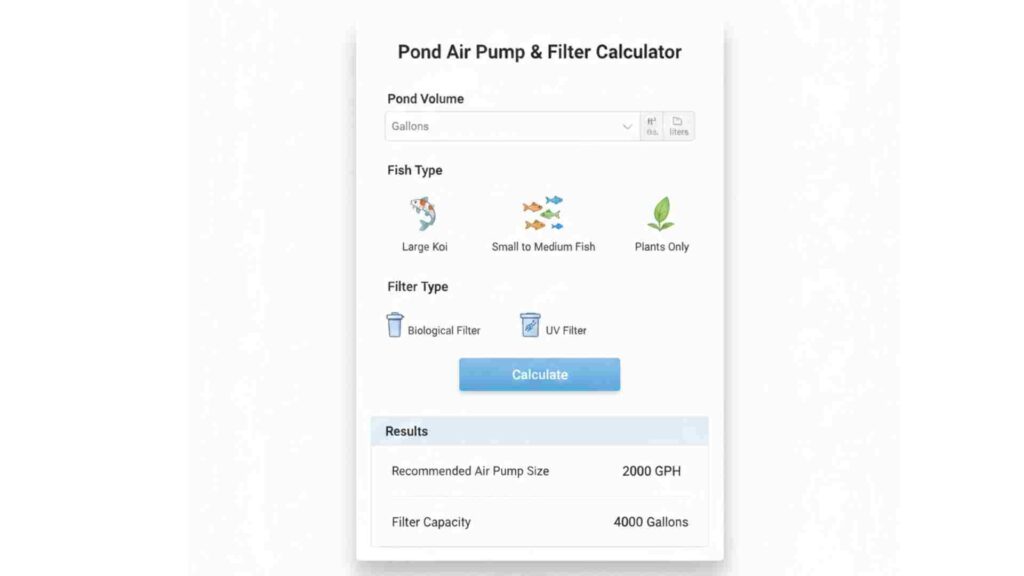
Once you know your pond details, a calculator does the hard work. A pond air pump calculator removes guesswork and reduces mistakes. It balances oxygen needs with filtration demands. This step shows how calculators work and why they are the safest option for most pond owners. Here’s how to apply this effectively:
How the Calculator Works
A pond air pump and filter calculator uses simple inputs to give accurate results. Entering correct data is key.
Required inputs include:
- Pond volume: Total water in US gallons
- Fish type and quantity: Koi, goldfish, or mixed stock
- Filter type: Mechanical, biological, or combo
The calculator then processes oxygen demand and water flow needs.
Typical calculator outputs:
- Recommended air pump size: Matches airflow to pond depth and fish load
- Filter capacity: Ensures proper waste removal and bacteria support
Using both results together prevents system imbalance. A pond filter and pump calculator ensures the air pump supports filter performance, not just fish oxygen.
Real-World Example (US-Based)
Let’s look at a standard setup.
- Pond size: 500 gallons
- Fish: Koi
- Stocking: High fish density
Step-by-step result:
- Enter 500 gallons into the calculator
- Select koi with a high stocking level
- Choose a biological filter
The calculator recommends:
- A stronger air pump for constant oxygen
- A higher filter flow rate to handle waste
This balanced result prevents cloudy water and fish stress. A pond air pump calculator makes these decisions fast and reliably.
Step 3 – Manual Pond Air Pump & Filter Calculation (Advanced)
Some pond owners prefer hands-on calculations. This approach suits advanced users who manage large or custom systems. A pond air pump size calculator remains the easiest option, but manual sizing helps when calculators feel limited. This section explains basic formulas and when to use them safely. Here’s how to apply this effectively:
Air Pump Sizing Formula
Manual air pump sizing starts with a simple rule of thumb. Most ponds need steady airflow based on water volume.
Basic guideline:
- [placeholder] liters of air per minute per gallon
This estimate increases for:
- Koi ponds
- Deep ponds
- Heavy stocking
Depth matters because deeper water needs more pressure. Airflow drops as depth increases. Manual calculations must account for this loss.
A pond pump calculator automatically adjusts for these factors. Manual methods require careful judgment.
Filter Flow Rate Calculation
Filter flow rate depends on pond volume and waste load. The goal is full water circulation at regular intervals.
Common manual approach:
- Turn over the total pond volume every [placeholder] hours
Higher fish loads require faster turnover. Slower flow reduces waste removal and harms water clarity.
Matching filtration with aeration matters. Oxygen-rich water helps bacteria break down waste faster. A mismatch causes cloudy water and odor issues.
A pond air pump size calculator paired with manual flow checks gives more reliable results.
When Manual Calculation Is Better
Manual sizing works best for:
- Large koi ponds
- Custom-built ponds
- Commercial or show ponds
These systems often exceed standard calculator limits. They may use multiple air pumps and filters.
Still, calculators provide a strong starting point. Use manual math to fine-tune final choices.
Step 4 – Choosing the Right Air Pump and Filter
Choosing equipment goes beyond size alone. Pond type, climate, and daily use all matter. A pond air pump calculator gives a strong baseline. Final selection should match how your pond actually runs. This step helps you choose gear that lasts, performs well, and stays efficient. Here’s how to apply this effectively:
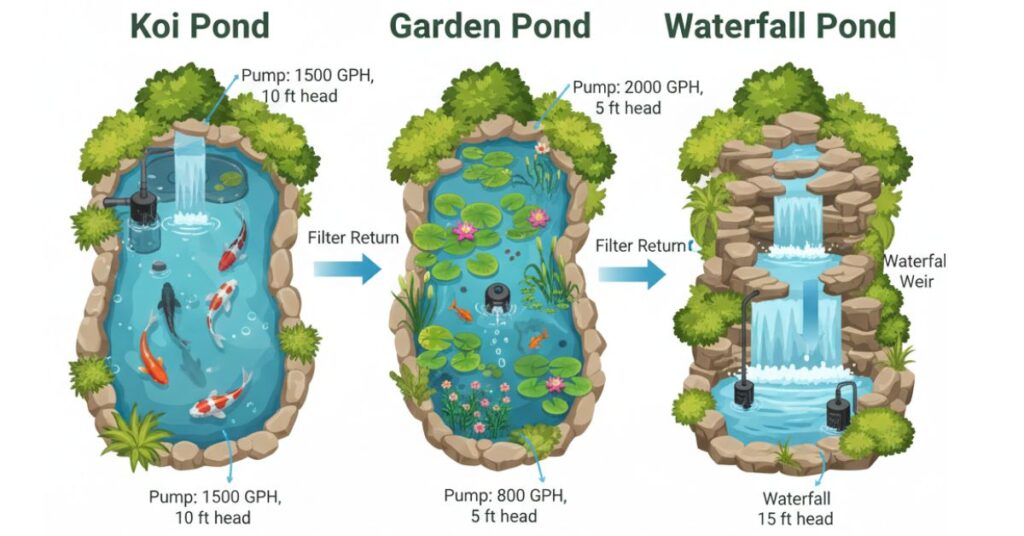
Match Equipment to Pond Type
Different ponds have different needs.
Backyard ponds
- Light fish load
- Shallow depth
- Small air pump with simple filtration
Koi ponds
- High oxygen demand
- Heavy waste production
- Strong air pump and a large biological filter
Garden ponds
- Fewer fish
- Focus on clarity and odor control
- Moderate airflow with compact filtration
Use a pond filter pump size calculator to match filter flow with pond volume. Pair it with air pump sizing for balance.
Energy Efficiency & Durability
Air pumps often run all day—efficiency matters, especially for US electricity rates.
Look for:
- Continuous-duty rated pumps
- Low-watt motor designs
- Quiet operation
Durability also counts. Choose weather-resistant housings for outdoor setups. Protect external pumps from rain and snow.
Pro tip: A correctly sized pump uses less power than an oversized one.
Quick Recommendation Guide
Small ponds (under 300 gallons)
- Single-outlet air pump
- Compact filter
Medium ponds (300–1,000 gallons)
- Multi-outlet air pump
- Combined mechanical and biological filter
Large ponds (1,000+ gallons)
- High-output air pump
- Dedicated biological filtration
Running air pumps and filters continuously can impact energy bills if equipment is oversized. Our Pond Pump Electricity Cost Calculator – Save Energy & Cut Bills guide helps estimate running costs and choose energy-efficient pond equipment.
Operating Tips & Maintenance
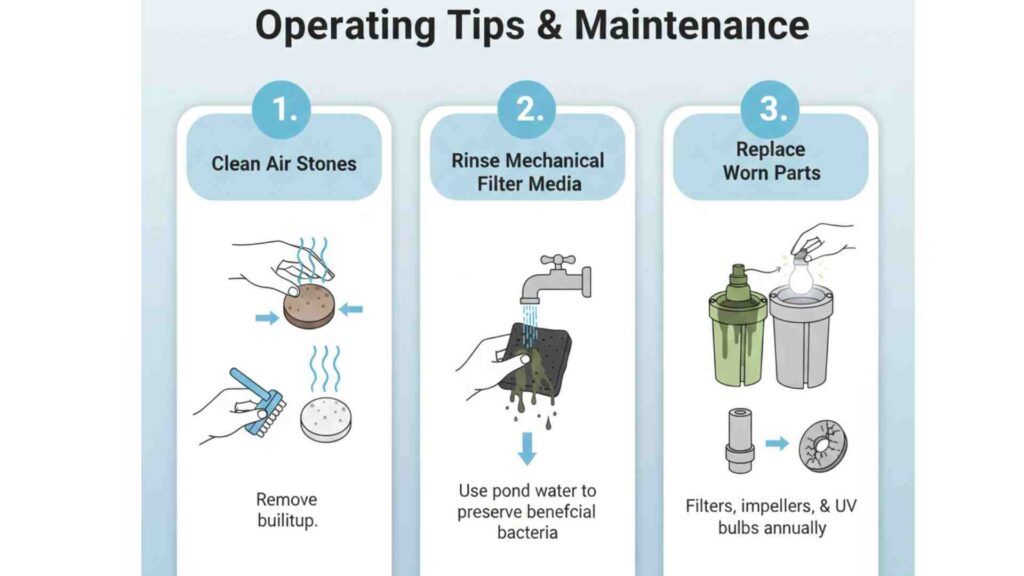
Proper operation keeps your pond stable and your equipment reliable. Even the best setup fails without routine care. A pond air pump calculator helps with sizing, but daily habits protect long-term performance. These tips focus on simple actions that prevent common pond problems. Here’s how to keep things running smoothly:
How Long Air Pumps Should Run Daily
Most ponds need constant oxygen. That means running air pumps 24/7 in most cases.
Continuous operation:
- Keeps oxygen levels stable
- Supports beneficial bacteria
- Prevents night-time oxygen drops
You may reduce runtime only in mild weather and low fish loads. Use a pond air pump size calculator to confirm airflow before making changes.
Cleaning Air Stones and Filters
Clogged equipment reduces airflow and filtration fast.
Air stones
- Clean every 4–8 weeks
- Replace if bubbles weaken
Filters
- Rinse mechanical media regularly
- Never wash biological media with tap water
Clean parts gently to protect bacteria. A pond filter pump size calculator won’t help if maintenance is ignored.
Seasonal Maintenance Tips
Seasonal changes affect oxygen demand.
- Summer: Increase airflow during heat waves
- Fall: Remove debris before leaves sink
- Winter: Keep air stones shallow to prevent supercooling
Adjust placement, not pump size, when seasons change.
Signs Your Pump or Filter Is Undersized
Watch for early warning signs:
- Fish gasping near the surface
- Cloudy or foul-smelling water
- Frequent algae blooms
These signs mean oxygen or filtration is lacking. Recheck sizing with a calculator.
Common Mistakes to Avoid
Even small errors in pond setup can cause big problems. Using a pond aerator pump calculator helps prevent these issues, but awareness of common mistakes ensures long-term pond health. Avoiding these pitfalls keeps fish safe, water clear, and energy costs low.
Choosing an Undersized Air Pump
Many beginners select a pump that’s too weak. Low airflow causes:
- Fish to gasp at the surface
- Reduced oxygen for beneficial bacteria
- Poor water circulation
A pond aerator pump calculator ensures you pick a pump that matches pond volume and fish load.
Oversizing and Wasting Electricity
An oversized pump produces more bubbles than needed. Problems include:
- Excess energy costs
- Water turbulence stressing fish
- Noise or vibration issues
Use a calculator to find the right balance. Oversizing doesn’t improve water quality—it just wastes power.
Ignoring Filter Capacity
Even with a correctly sized air pump, a weak filter causes cloudy water and odor. Undersized filters can’t handle fish waste or debris effectively. A pond filter pump size calculator ensures your filtration matches pond volume and stocking levels.
Running Air Pumps for Limited Hours
Turning off air pumps at night or intermittently can drop oxygen levels dangerously, especially in koi ponds or heavily stocked systems. Continuous operation is usually best.
Conclusion
Correctly sizing your pond air pump and filter is key to a healthy, balanced pond. Undersized equipment can lead to stressed fish, cloudy water, and higher maintenance, while oversized systems waste energy. A pond air pump size calculator removes the guesswork and ensures you choose equipment that matches your pond’s volume, fish load, and filtration needs.
For US pond owners, proper sizing delivers clear benefits:
- Healthier fish with steady oxygen levels
- Clearer water with efficient filtration
- Lower energy costs through optimized pump operation

Michael Brooks and Sarah Lane are the co-founders of the Pond Pump Team, a trusted U.S.-based group helping homeowners and landscapers build better ponds and water features. Michael, an experienced pond engineer from Oregon, has worked for over 12 years on pump sizing, flow systems, and water circulation. Sarah, a pond designer from Colorado with nine years of experience, focuses on eco-friendly and easy-to-maintain pond and waterfall designs. Together, they’ve completed more than 180 pond projects and created tools like the Pond Pump Calculator and Pond Liner Calculator to make pond planning simple, accurate, and sustainable.
Need help with your pond setup? Contact the Pond Pump Team for expert advice and reliable solutions.