Table of Contents
Introduction
Installed a pond pump, but the waterfall barely flows.
This issue often frustrates newcomers in the USA. Today’s pond systems are more complex. Many feature tall waterfalls, long pipe runs, or geothermal heat systems. In these cases, guessing pump size can lead to weak flow, noisy pumps, or high energy use. A pond pump capacity calculator isn’t optional—it’s essential.
Unlike simple tools, advanced calculations account for head height, pipe friction, and actual flow losses. These details are especially important for high-head ponds, large backyard waterfalls, and accurate pond sizing for geothermal systems. Without them, even a premium pump may disappoint.
This guide shows when and why advanced pump calculations matter. We’ll explain flow rate, head pressure, and real-world examples in easy steps. You’ll discover how a pond pump head calculator helps you avoid costly mistakes.
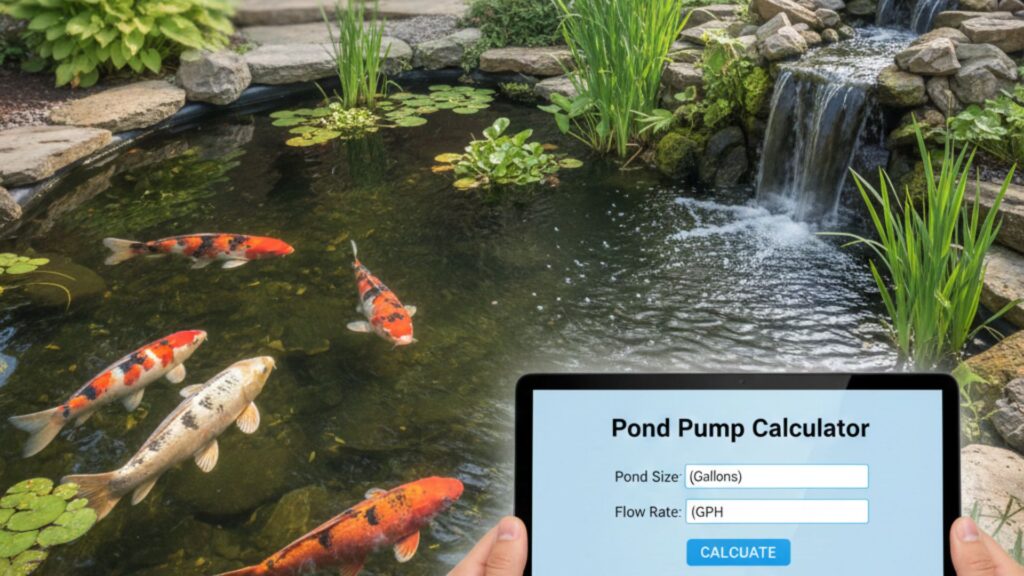
By the end, you’ll know exactly how to size a pump with confidence. Try our pond pump calculator for quick results.
When to Use an Advanced Pond Pump Calculator
A pond pump calculator works for simple ponds. Complex setups require more precise math. High lifts, long pipes, or unique systems can make basic calculators inaccurate. This can cause low flow, wasted energy, or pump failure.
An advanced calculator handles more inputs. It accounts for head height, pipe friction, and real-world losses. It also supports complex designs, such as waterfalls and geothermal systems. This matters for performance and long-term costs.
If your pond falls into any of the cases below, a standard tool may not be enough. Here’s how to apply an advanced approach effectively:
Large Ponds or Commercial Setups
Large ponds move more water over longer distances. Commercial or shared ponds run longer. Basic estimates often underpower these systems.
An advanced calculator lets you enter exact pond volume and turnover goals, ensuring your pump is tailored to your specific needs and optimizing efficiency.
- Factor in long pipe runs and multiple outlets.
- Match flow rate to filters and skimmers.
This approach prevents uneven circulation and the formation of dead zones. It also avoids oversizing, which wastes power. Many US commercial ponds rely on this method to meet safety and efficiency needs. For accuracy, pair volume data with a pump head calculator for the pond to reflect real lift and losses.
Ponds With Waterfalls or High Lifts
Waterfalls change everything. Lifting water even a few feet slows the flow. A standard calculator rarely shows this drop.
Use an advanced tool when you have:
- Tall waterfalls or streams.
- Elevated returns or spillways.
- Long vertical or sloped pipe runs.
You’ll calculate total dynamic head (TDH), not just flow. This ensures the pump delivers the target GPH at height. A pond pump head calculator is essential here. It keeps waterfalls strong without overworking the pump.
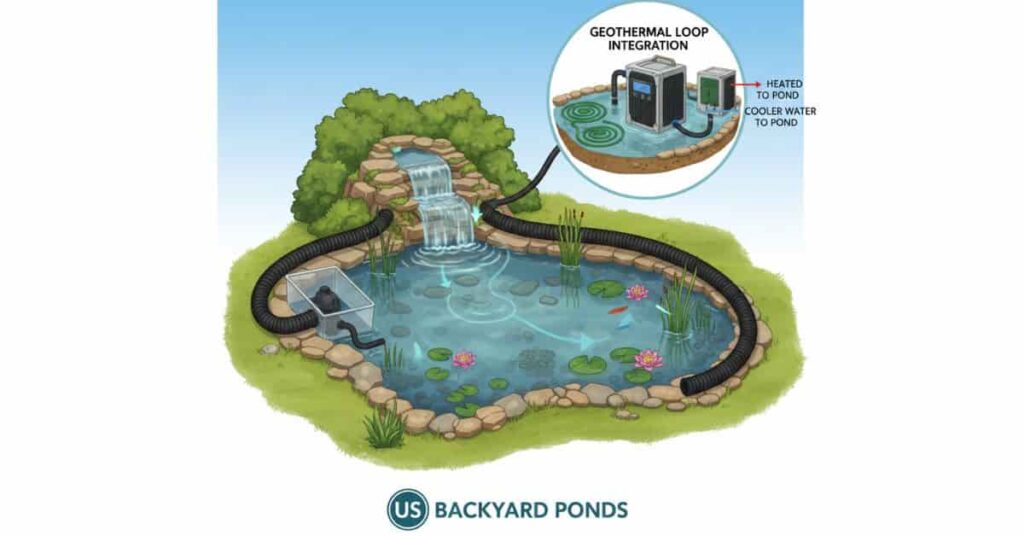
Geothermal Heat Pump Integrations
Geothermal systems demand precision. They need a steady flow to transfer heat safely. Guesswork can damage equipment.
An advanced calculator enables accurate pond-size calculation for geothermal heat pump loops, supporting balanced, reliable system operation.
- Constant flow needs across seasons.
- Pressure loss from heat exchangers.
These systems often run year-round, so small calculation errors quickly add up. Using a detailed calculator protects efficiency, extends system life, and supports reliable operation.
Differences From Standard Pond Pump Calculators
Standard tools work for small, simple ponds, as they usually ask only for pond size and a basic flow rate. In contrast, an advanced pond pump capacity calculator goes much deeper, using real system data to avoid wrong pump choices.
To achieve this, advanced calculators require: Exact pond volume.
- Total dynamic head, including vertical lift, is needed.
- Pipe length, fittings, and friction losses are considered.
- Waterfall or stream height.
This detail allows precise GPH output at the correct pressure. It also estimates power needs more accurately, which helps control energy costs. Tools often include a pond pump head calculator to reflect real-world losses.
Common US examples include large koi ponds with tall waterfalls, commercial water features, and systems that use pond size calculations for geothermal heat pump loops. In these cases, standard calculators often underperform or oversize pumps, while advanced tools deliver reliable, efficient results.
For beginners, it also helps to understand the basics before moving into advanced scenarios.
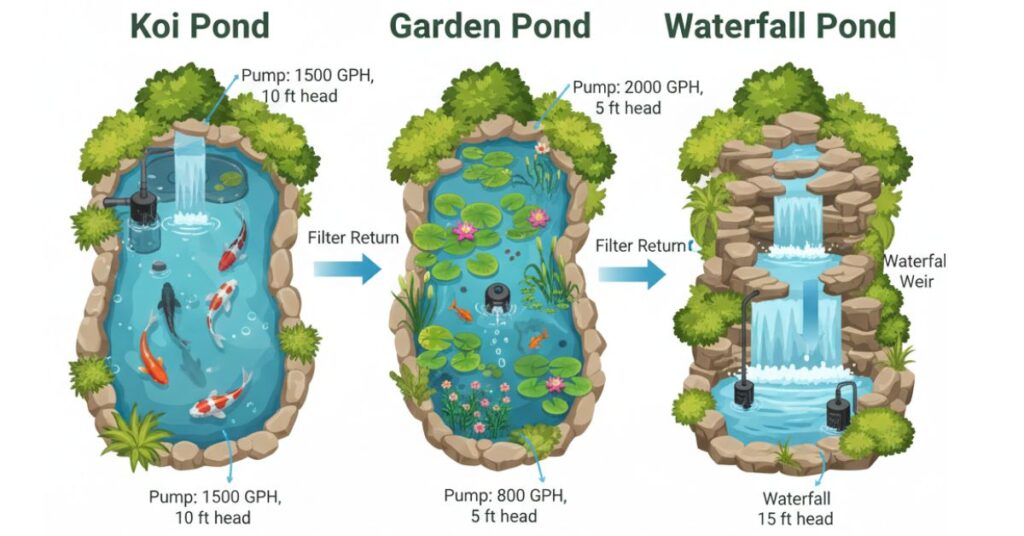
You can start with our step-by-step guide on how to calculate pond pump size and flow rate for koi, garden, and waterfall ponds.
Step 1 – Measure Your Pond and Head Requirements
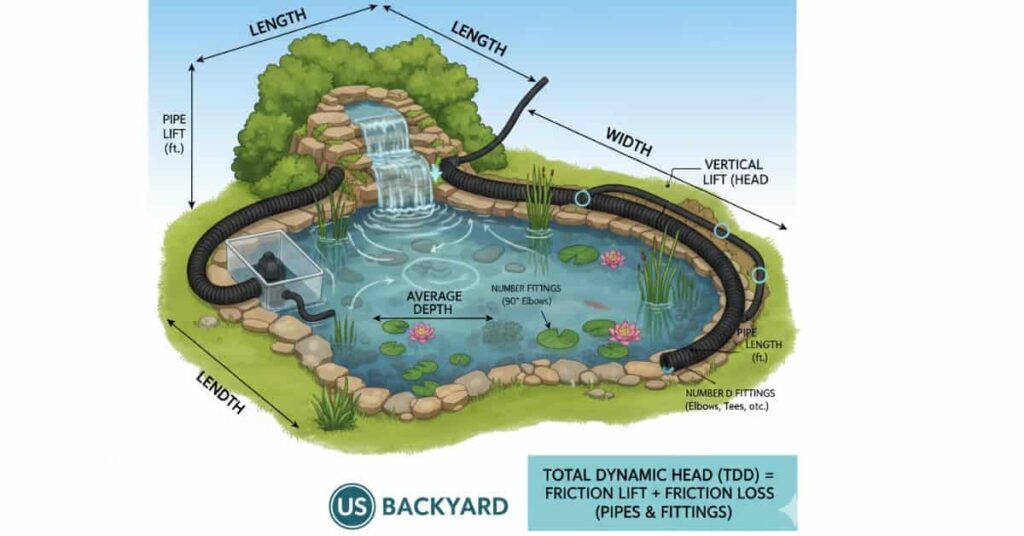
Accurate measurements are vital. A pond pump capacity calculator only works when the inputs are correct. Guessing pond size or head height leads to weak flow or wasted power. Focus on pond volume and head pressure, which are even more important for waterfalls and geothermal systems.
How to Measure Pond Volume Accurately
Pond volume serves as the basis for every calculation. Even small errors here affect the entire system, especially filtration and circulation.
To measure pond volume, use this formula: Measure the pond’s length, then the width, and then the average depth—all in feet. Multiply these three numbers together to get cubic feet.
- Take your total cubic feet and multiply by 7.48. This will convert the volume into gallons, the standard unit for pumps.
If your pond is not a regular shape, divide it into smaller, simpler shapes such as rectangles or circles for easier measurement. Measure each part separately.
- Calculate the volume of each section, then add them together.
If your pond supports a geothermal system, accurate volume becomes critical. A correct pond size calculation for a geothermal heat pump ensures steady flow and safe heat exchange. When in doubt, slightly overestimate volume. This avoids undersizing the pump and protects equipment.
Calculating Head Pressure for High Lifts and Waterfalls
Head pressure indicates how hard your pump must work. It accounts for more than just vertical lift.
First, measure the vertical distance from where water leaves the pump to the final outlet, such as the top of a waterfall.
- Account for waterfall or stream elevation.
- Include the total length of pipe the water travels and count each bend or fitting. Every bend adds to the resistance, increasing head pressure.
Add vertical lift first. Then include friction loss from pipes and fittings. This total is your Total Dynamic Head (TDH). A pond pump head calculator simplifies this step and reduces the risk of math errors.
High waterfalls and long runs increase head pressure quickly. Measuring TDH correctly ensures your pump delivers the required GPH in real conditions, not just on paper.
Pro Tip: Always measure the head from the pump’s location, not the pond surface. This small detail makes a big difference.
Step 2 – Determine Pump Flow Rate & Capacity
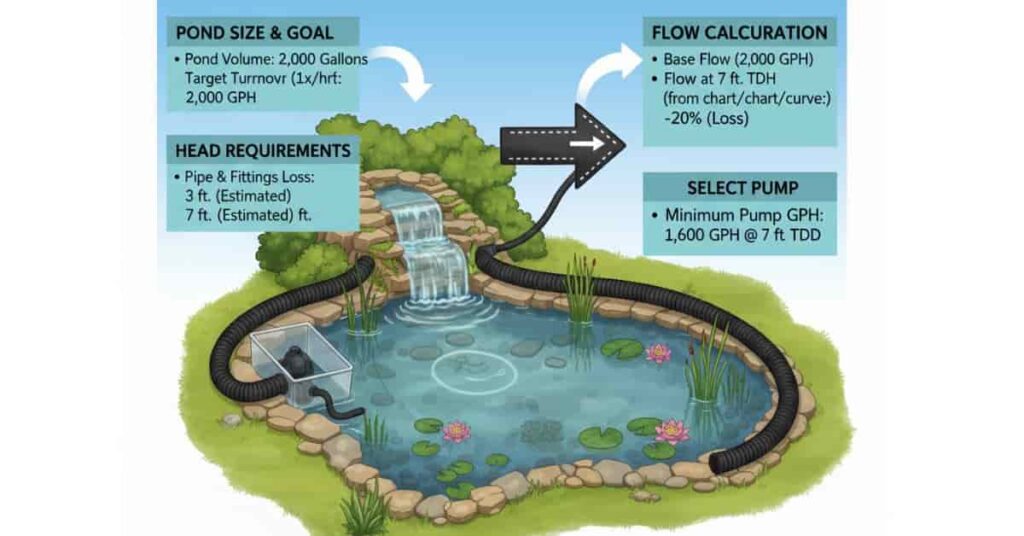
Once you know the pond volume and head pressure, you can size the pump correctly. This step turns measurements into real numbers that a pond pump capacity calculator can use. Advanced systems need the right flow at the right pressure. Flow alone is not enough. You must match GPH with total dynamic head (TDH). Here’s how to do it accurately:
Ideal Flow Rate for Advanced Scenarios
The flow needs change with pond use. Advanced setups often need higher or steadier flow than basic ponds.
General guidelines:
- Decorative ponds: full turnover every 1–2 hours.
- Koi or filtered ponds: full turnover once per hour.
- Waterfalls: add extra flow for visual strength.
- Geothermal systems: constant, steady water flow is vital.
Always adjust flow goals before selecting a pump. Large waterfalls and heat systems often need more capacity than expected. This is where pond size calculation is essential for geothermal heat pump planning.
How to Calculate Capacity Using GPH and TDH
Pump capacity depends on the flow at your system’s TDH. A pump rated at 5,000 GPH may deliver far less at height.
Follow these steps:
- Set your target GPH based on pond needs.
- Confirm your TDH from Step 1.
- Look at the pump’s actual chart, not just the biggest number on the label.
Using a pump head calculator for a pond helps align GPH with real pressure. This avoids weak flow and pump strain.
Using the Pond Pump Capacity Calculator (Example)
US backyard example:
- Pond size: 4,000 gallons.
- Target turnover: 1× per hour → 4,000 GPH.
- Waterfall lift: 6 feet.
- Pipe and fittings loss: 4 feet.
- Total TDH: 10 feet.
Enter these values into the pond pump capacity calculator. The result may show a pump rated near 6,000 GPH, delivering 4,000 GPH at 10 feet. This approach ensures strong waterfalls, efficient geothermal flow, and long pump life.
Step 3 – Selecting the Right Pump
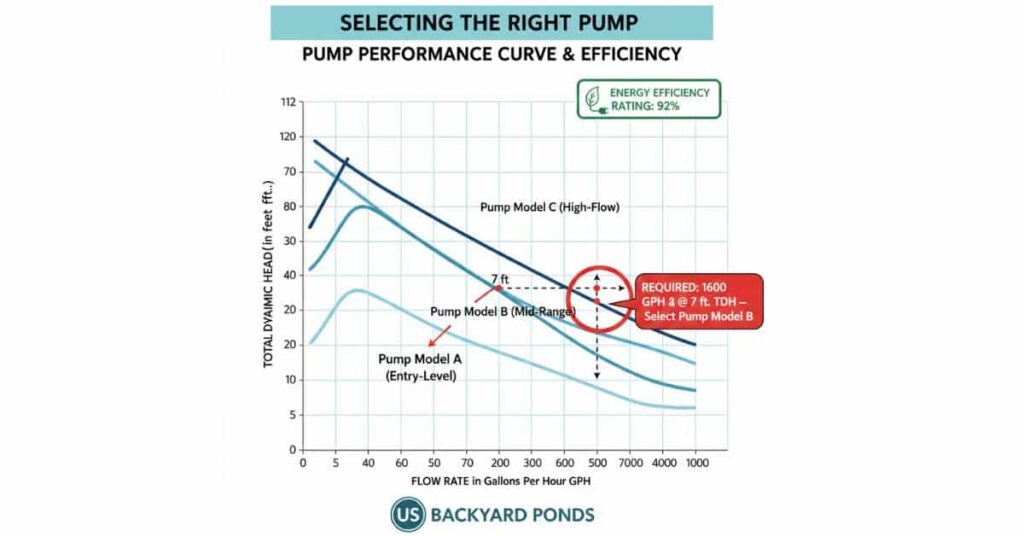
Now it’s time to choose the pump. Your pond pump capacity calculator provides target numbers, not the final product—match real performance, not marketing claims. Always select a pump that meets the required flow at your system’s head pressure to avoid circulation issues, noise, and high energy bills. Here’s how to make a smart, long-term choice:
Match Calculated Capacity With Pump Specifications
Never choose a pump based solely on its maximum GPH (gallons per hour). That number applies at zero head (no resistance or elevation), which is unrealistic.
Follow this process: Open the pump’s performance curve chart, which is a graph showing how much water the pump moves at different heights.
- Find your total dynamic head (TDH), which is the total resistance that the pump must overcome, including elevation and friction in pipes.
- Confirm the pump delivers your target GPH at that height.
A pump head calculator can verify TDH before purchase. Aim for a slight buffer above your required flow. This allows easy fine-tuning with valves and future upgrades without straining the pump.
Consider Energy Efficiency, Durability, and US Standards
Efficiency matters, especially for pumps that run 24/7. Look for pumps designed for continuous duty.
Key factors to check:
- High GPH-per-watt rating.
- Energy-efficient motors compatible with US 120V power.
- Weather-resistant housing and thermal protection.
- Proven reliability for ponds and waterfalls.
Efficient pumps cost more up front but save money over time by running cooler and lasting longer. Using your pond pump capacity calculator helps you avoid overspending on power or replacements.
Pro Tip: Choose pumps from brands that publish full performance curves. Transparency is a strong sign of quality.
Many pond owners begin with simple pump selection before dealing with advanced systems.
If you’re new, our pond pump calculator guide explains how to choose the right pump for garden, koi, or waterfall ponds.
Advanced Tips & Considerations
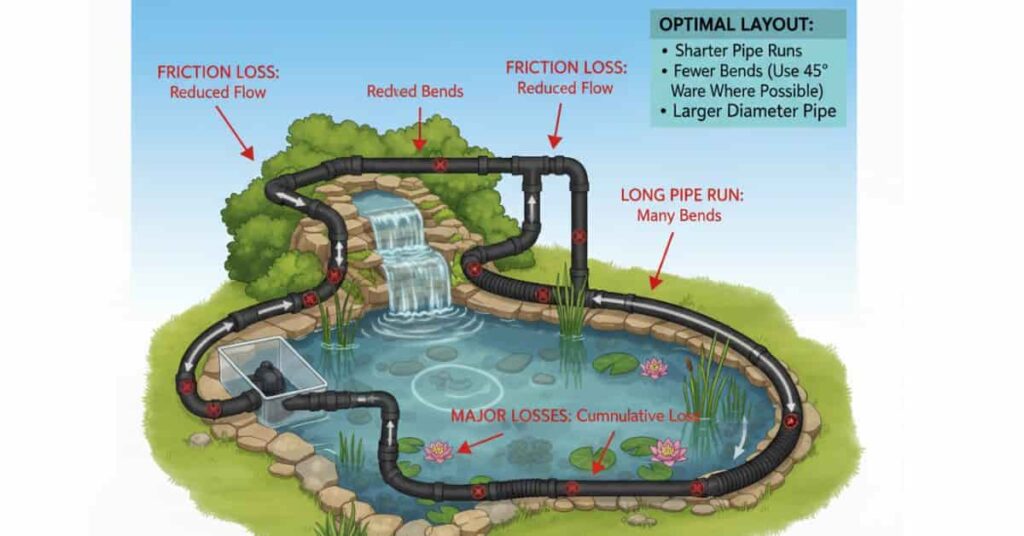
Advanced pond systems require more than basic math. Small design choices alter flow, efficiency, and pump life. After using a pond pump capacity calculator, use these tips to fine-tune results. Focus on real-world losses, seasonal changes, and system balance. Applying these steps improves performance and prevents costly fixes. Consider the following before final installation:
Adjusting for Pipe Friction, Bends, and Long Distances
Water slows in pipes. Longer or tighter paths mean higher losses.
Keep these points in mind:
- Longer pipe runs increase friction loss.
- Each bend, valve, or fitting adds resistance.
- Smaller pipe diameters raise head pressure fast.
When possible, use wider pipes and gentle bends. Always include these losses in your TDH. A pond pump head calculator helps estimate this accurately. Ignoring friction often leads to underpowered pumps and weak waterfalls.
Seasonal Adjustments for Varying Pond Requirements
The pond needs to change with the weather. A flow that works in summer may waste energy in winter.
Smart seasonal adjustments include:
- Reducing flow during cold months.
- Raising flow during algae-prone seasons.
- Adjusting valves instead of replacing pumps.
Geothermal systems may require stable flow year-round. This is where accurate pond size calculation for geothermal heat pump system planning protects energy efficiency and equipment.
Integrating With Filters and Skimmers for Balanced Circulation
Pumps do not work alone. Filters and skimmers affect total dynamic head and resistance.
For balanced circulation:
- Match pump flow to filter capacity.
- Ensure skimmers receive enough draw.
- Avoid overpowering bio-filters.
A balanced system keeps water clear and oxygen stable. Use your pond pump calculator results as a guide, then fine-tune with valves for smooth operation.
Pro Tip: Always test the flow after installation. Real-world checks reveal losses that calculators cannot predict.
Common Mistakes in Advanced Pond Pump Calculations
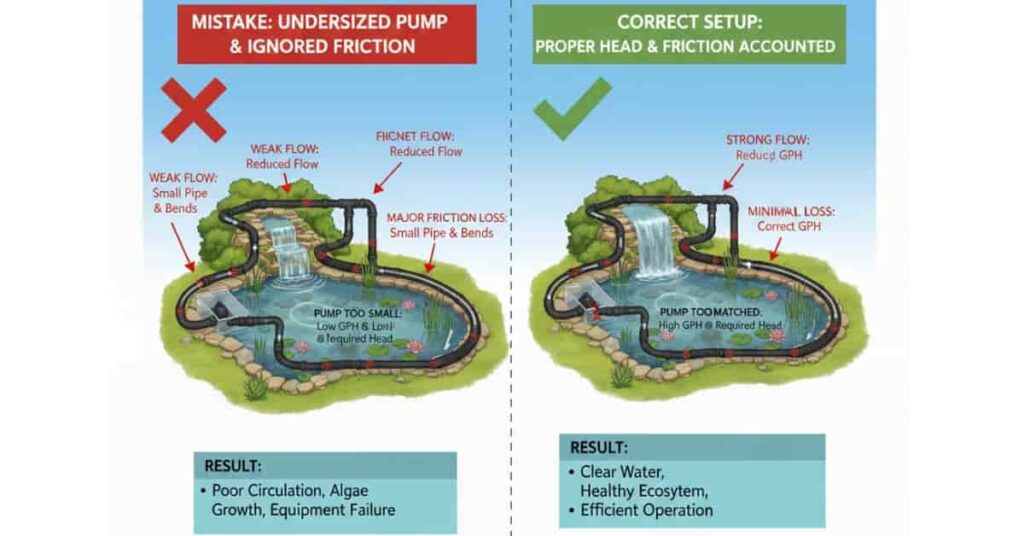
Advanced pond systems fail most often because of simple planning mistakes. A pond pump capacity calculator can only help when used correctly. Many pond owners apply basic methods to complex setups, then wonder why flow feels weak or costs rise. Avoiding these common errors protects your pump, your budget, and your pond’s health.
Using Standard Calculators for High-Head or Geothermal Ponds
Standard calculators assume low lift and short pipe runs. That rarely matches advanced systems.
This mistake leads to:
- Undersized pumps that cannot overcome height.
- Poor waterfall performance.
- Unstable flow in geothermal loops.
For these setups, always use pump selection calculators that include geothermal heat pump system sizing and calculators that provide head-based flow output specific to larger or complex pond systems.
Ignoring Friction Loss in Piping
Pipe friction is easy to overlook, but it adds up fast.
Common friction sources include:
- Long pipe runs.
- Multiple elbows or valves.
- Small pipe diameters.
Ignoring friction makes flow calculations seem better than reality. The pump then struggles under load. Always include pipe losses when calculating TDH with your capacity calculator.
Overlooking Seasonal Water Level Changes
Water levels change with evaporation, rain, and winter drawdowns. These shifts affect head height and flow.
Problems appear when:
- Pumps run harder during low water periods.
- Skimmers lose efficiency.
- Energy use spikes unexpectedly.
Plan for seasonal changes when sizing your system. Build a small safety margin into your calculations.
Pro Tip: If a system isn’t working right, first review the head and friction. Most advanced pump issues trace back to these factors.
Conclusion
Choosing the right pump for your pond doesn’t have to be confusing. This guide covered advanced pond setups, head calculations, flow rates, and how to accurately measure pond volume. You now understand why guessing pump size can lead to weak waterfalls, poor circulation, or wasted energy.
A pond pump capacity calculator ensures you pick a pump that matches your pond’s volume, head height, and real-world flow requirements. For complex systems, such as geothermal loops or tall waterfalls, combining this tool with an accurate pond size calculation for a geothermal heat pump and a pump head calculator for the pond ensures reliable performance and efficiency.
Measure your pond, calculate your TDH, and use the advanced calculator to find the right pump. Share your results in the comments or explore our other guides for US pond owners to keep your water features healthy and beautiful.
Michael Brooks and Sarah Lane are the co-founders of the Pond Pump Team, a trusted U.S.-based group helping homeowners and landscapers build better ponds and water features. Michael, an experienced pond engineer from Oregon, has worked for over 12 years on pump sizing, flow systems, and water circulation. Sarah, a pond designer from Colorado with nine years of experience, focuses on eco-friendly and easy-to-maintain pond and waterfall designs. Together, they’ve completed more than 180 pond projects and created tools like the Pond Pump Calculator and Pond Liner Calculator to make pond planning simple, accurate, and sustainable.
Need help with your pond setup? Contact the Pond Pump Team for expert advice and reliable solutions.