Introduction
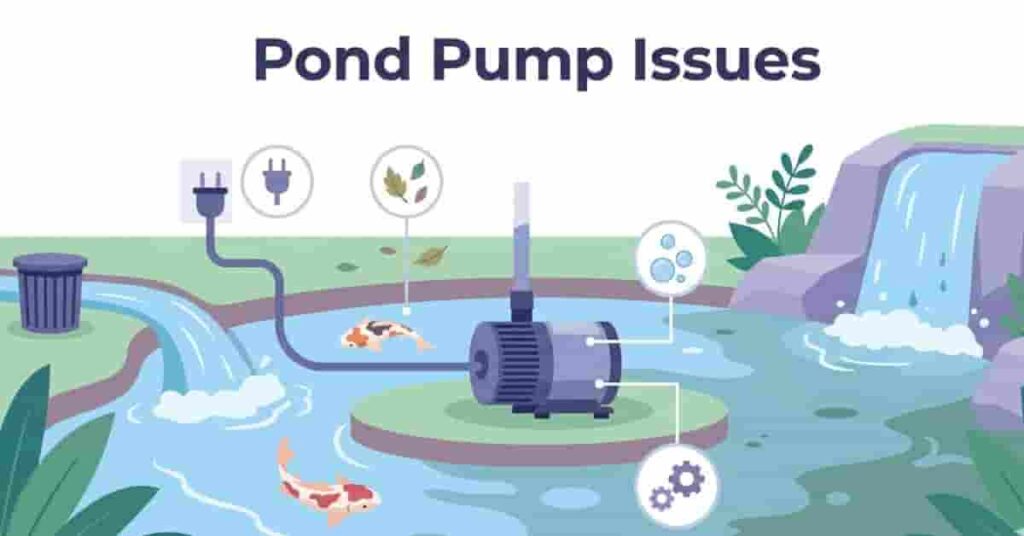
Is your pond pump slowing down or clogging too quickly? For backyard ponds, koi ponds, and fountains, smooth water flow is more than aesthetics—it’s essential for the health of fish and plants. Poor maintenance leads to costly repairs, reduced pump life, and stagnant water that harms your pond ecosystem.
That’s where proper maintenance comes in. Regular care keeps your pump running efficiently, prevents debris buildup, and ensures consistent water circulation. Whether you have a simple submersible or a high-tech smart pond pump, routine attention goes a long way. Beginners often overlook weekly and seasonal checks, but these small steps can extend pump life and save energy.
Ready to get started? This guide gives you step-by-step cleaning and maintenance instructions, tips for different pump types, and solutions to common issues. Follow these strategies to keep your pond healthy year-round. Take action now to keep your fountain sparkling, your koi thriving, and your pump running strong.
“Learn strategies to prevent clogs, no matter which type of pump you choose.”
Why Pond Pump Maintenance Is Important
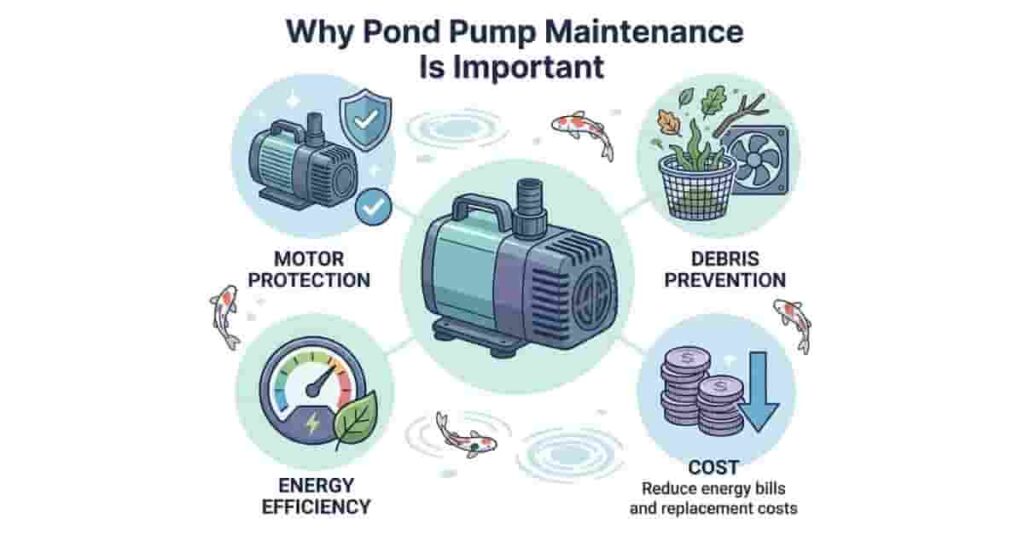
A well-maintained pond pump keeps your water clear, your fish healthy, and your equipment working longer. Neglecting maintenance can cause clogs, reduced water flow, and motor damage.
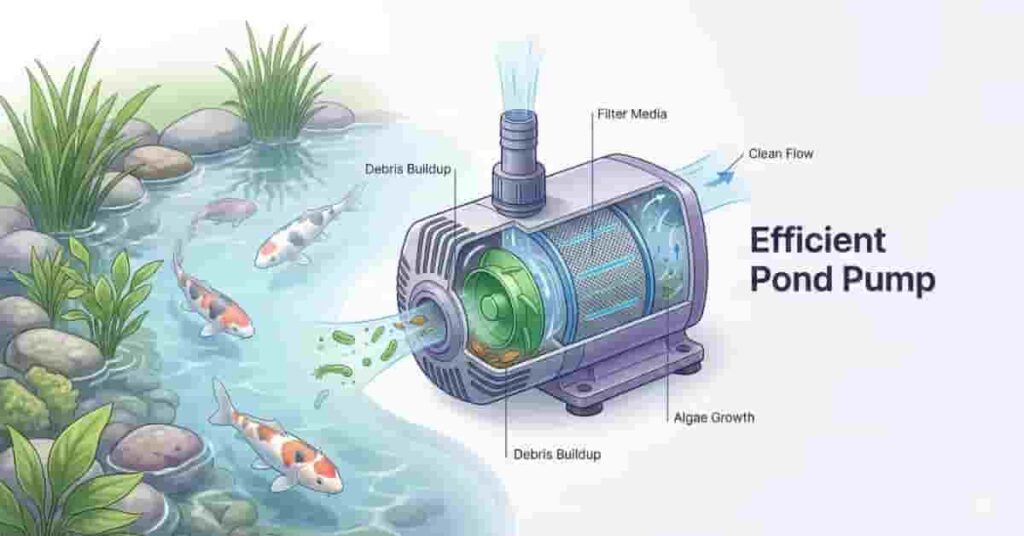
Leaves, algae, and dirt often accumulate inside the pump, forming debris. Ignoring these blockages forces the pump to work harder, wasting electricity and reducing its lifespan. Simply cleaning and inspecting your pump regularly prevents clogs and ensures smooth water flow—crucial for koi ponds and backyard fountains alike.
Another benefit is energy efficiency. When kept clean and well-lubricated, a pump uses less power, lowering your electricity costs while supporting a healthy pond environment. On the other hand, skipping maintenance may bring unexpected breakdowns or costly replacements. In modern systems, especially smart pond pump systems, regular maintenance ensures sensors and app alerts function as intended, so you’ll know about small issues before they grow into big problems.
In summary, by regularly maintaining your pond pump, you protect your investment, reduce costs, and keep your pond ecosystem healthy and vibrant year-round.
How Often Should You Maintain Your Pond Pump?
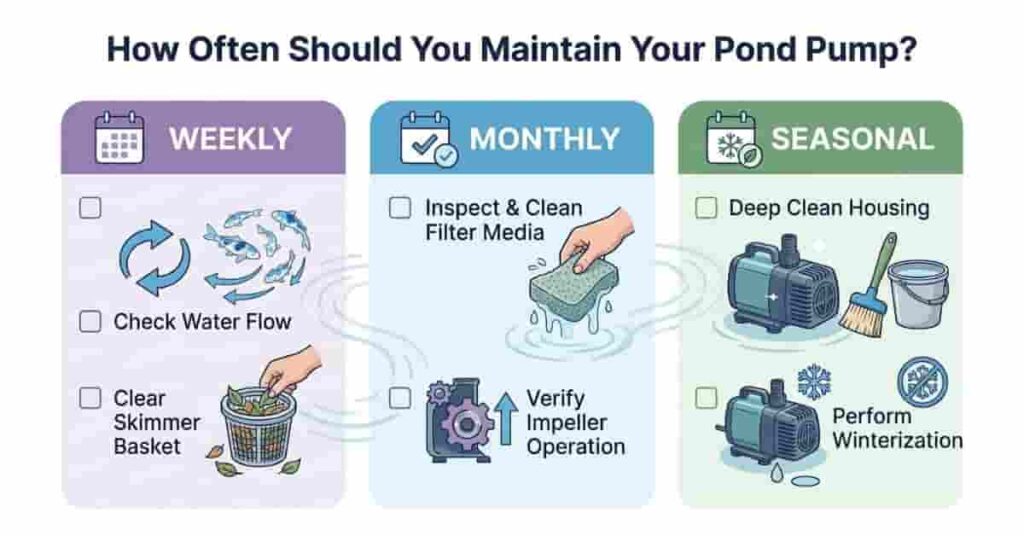
Regular pond pump maintenance prevents clogs and ensures efficient water flow. Weekly, monthly, and seasonal checks keep your pond and its inhabitants healthy.
Weekly Maintenance
Start with quick weekly checks to catch small problems early. Always check water flow first—slower movement may signal debris or blockages. Remove leaves, algae, and other debris from the pump intake and pre-filters. These simple steps prevent clogs and ensure your pump works efficiently. For fish ponds, weekly attention is especially important to maintain clean water and protect your koi or goldfish.
Monthly Maintenance
Once a month, go deeper. Clean the impeller and housing to remove built-up slime or dirt. Inspect hoses and tubing for cracks, kinks, or wear that could reduce water flow. Check for leaks around connections, seals, or fittings. Monthly maintenance keeps your pump in peak condition, prevents energy waste, and reduces the risk of costly repairs.
Seasonal Maintenance
Seasonal care prepares your pump for extreme conditions. In colder climates, winterize your pond pump to prevent freezing damage. Before summer, give the pump a thorough cleaning to ensure optimal performance during peak use. Seasonal checks are vital for maintaining fish pond pumps and keeping water healthy year-round.
Step-by-Step Pond Pump Maintenance Guide
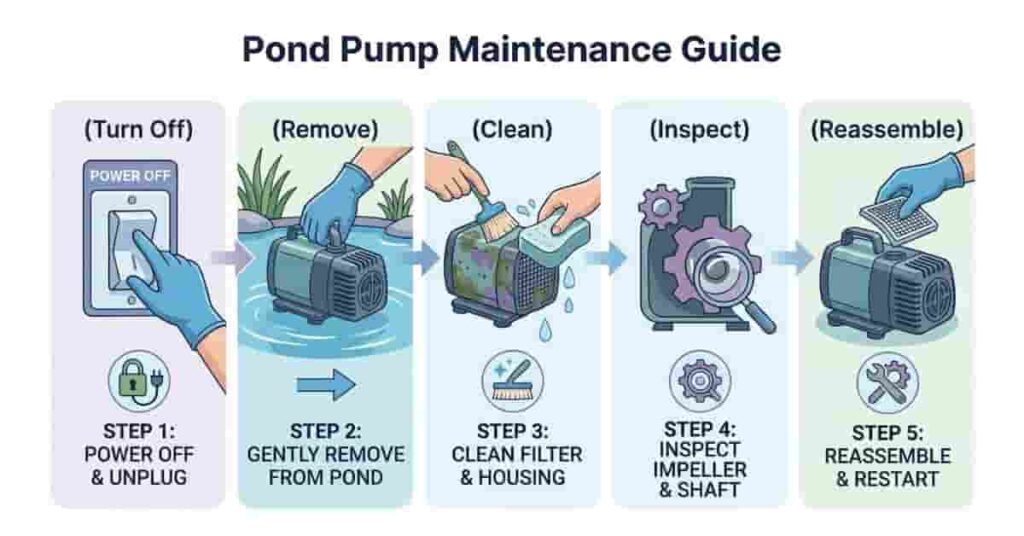
Maintaining your pond pump is simple with a clear routine. This guide helps prevent clogs, extends pump lifespan, and keeps water flowing, covering both submersible and fountain pumps for straightforward, safe upkeep.
Turn Off and Unplug the Pump
Start with safety: turn off and unplug the pump before handling. This prevents electrical accidents and protects both you and your equipment. Even a quick check requires this step for stress-free, safe maintenance.
Remove Pump From Pond
Handle your pump carefully. For submersible pumps, lift slowly to avoid damaging the motor or impeller. Fountain pumps should be detached gently, ensuring hoses and tubing remain intact. Proper handling prevents cracks, leaks, and unnecessary wear.
Clean the Pump and Filter
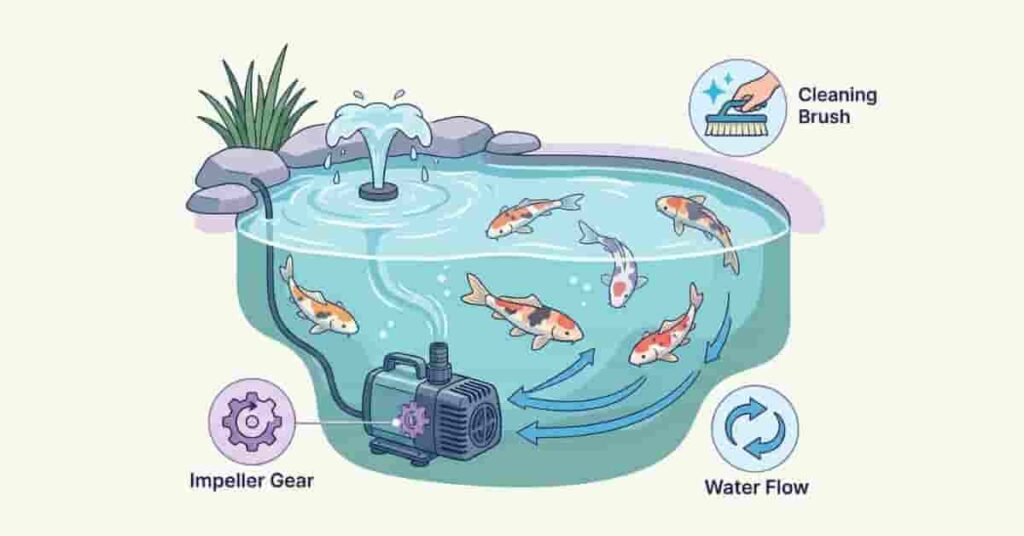
Remove any algae, dirt, or debris from the pump body and filter. Use a soft brush and a mild cleaning solution recommended by the manufacturer. Avoid harsh chemicals that could harm fish or damage pump components. Regular cleaning ensures smooth water flow and reduces energy use.
Inspect the Impeller
Examine the impeller for any wear, damage, or mineral buildup. Some pumps need lubrication; check your manual. A well-maintained impeller keeps water moving efficiently.
Reassemble and Test the Pump
After cleaning and inspection, reassemble the pump. Test it in the pond or a bucket to confirm proper function. Observing smooth operation helps catch any issues early. These steps make maintenance easy and effective.
Suggested Visual:
- Image Idea: Step-by-step diagram of pump disassembly, cleaning, and reassembly.
- Caption: “Follow these steps for safe and effective pond pump maintenance.”
- SEO Alt Text: “step-by-step pond fountain pump maintenance for backyard ponds.”
“If issues arise, knowing how to perform basic repairs can extend the life of your pump.”
Maintenance Tips for Different Types of Pond Pumps
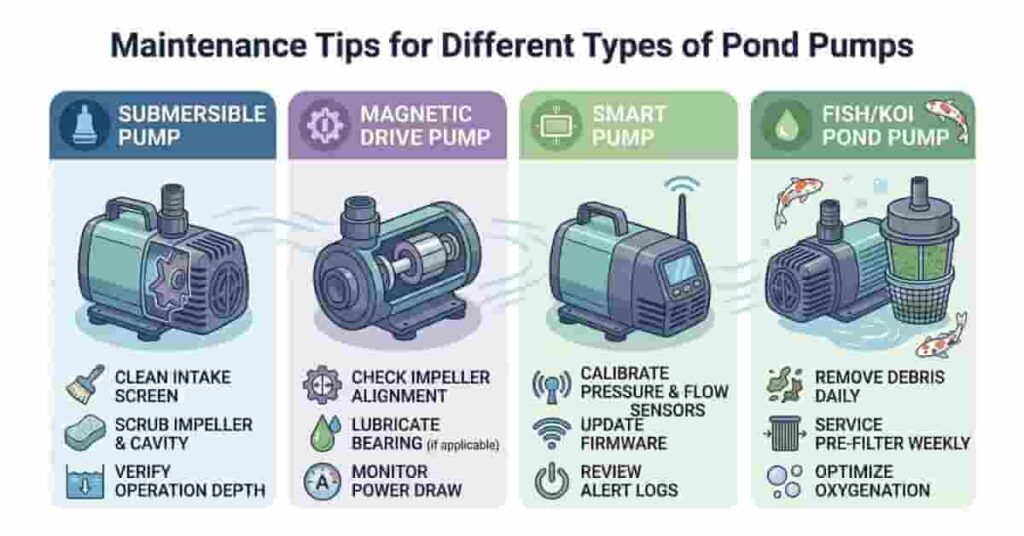
Different pond pumps have unique designs and maintenance needs. Understanding your pump type ensures efficient operation, prevents damage, and keeps your pond healthy. Whether you have a submersible pump, magnetic-drive pump, smart pond pump, or fish-and-koi pond pump, following these tips will make pond pump maintenance easier and more effective.
Submersible Pumps
Submersible pumps are entirely submerged, so they must never run dry. Operating without water can damage the motor instantly. Clean these pumps frequently, removing debris from the intake and impeller. Regular checks prevent clogs and ensure smooth water flow, making them ideal for fountains and small backyard ponds.
Magnetic Drive Pumps
Magnetic-drive pumps are efficient and quiet but sensitive to mineral buildup. Inspect the impeller and housing regularly to remove scale or sediment. Also, check impeller alignment to prevent wear and reduce energy consumption. Proper care keeps these pumps running efficiently for years.
Smart Pond Pumps
Smart pond pumps use sensors and apps. Regularly check software alerts for flow issues and clean sensors and components to prevent false readings. Consistent attention ensures reliable operation and helps avoid costly failures.
Fish and Koi Pond Pumps
For fish and koi ponds, protecting aquatic life is crucial. Remove organic debris, such as leaves, uneaten food, or algae, that can clog pumps or harm fish. Maintain pre-filters to prevent fish from entering the pump and ensure safe operation. Following these steps supports both pond health and the longevity of the pump, making fish pond pump maintenance effective.
Common Mistakes to Avoid in Pond Pump Maintenance
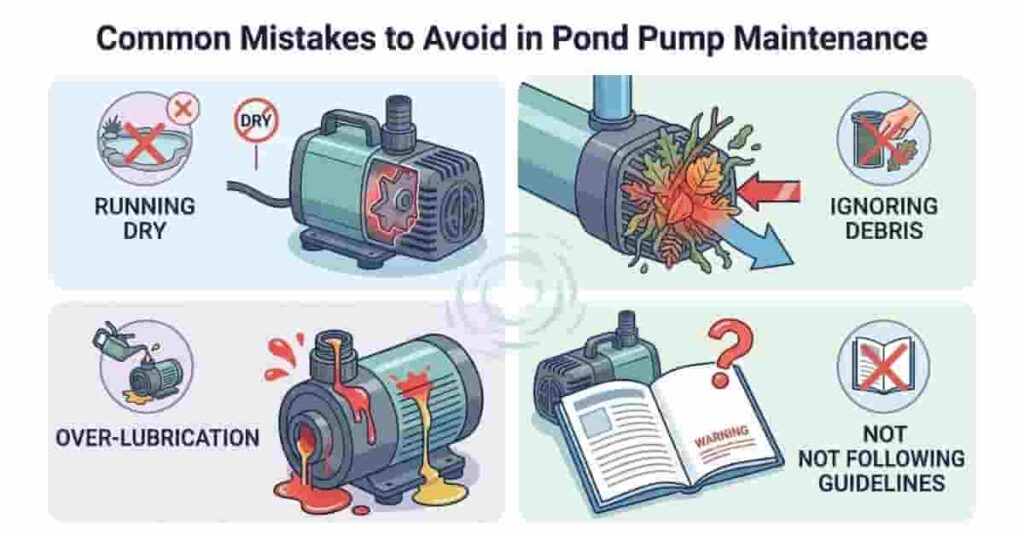
Even small mistakes can shorten your pump’s lifespan and harm your pond’s ecosystem. By knowing what to watch out for, you can make pump maintenance easier, safer, and a lot more enjoyable for everyone involved.
One of the biggest errors is running the pump dry. Without water, the motor can overheat, and impeller damage occurs almost instantly. Always ensure the pump is submerged or filled before turning it on.
It’s easy to forget about debris and algae, but ignoring them can make your pump work harder. Leaves, sludge, and algae can block water flow and strain your pump. Taking a little time for regular cleaning helps prevent clogs, keeps everything running smoothly, and creates a healthy home for your fish and plants.
Over-lubrication or the use of the wrong cleaning solutions is another trap. Too much oil or harsh chemicals can damage the motor or impeller. Always follow the manufacturer’s recommendations for lubrication and cleaning products.
Finally, failing to follow manufacturer guidelines is risky. Every pump model has specific care instructions. Skipping these can void warranties, reduce efficiency, and lead to costly repairs. For smart pond pumps, ignoring app alerts or sensor maintenance can also cause failures.
By steering clear of these pitfalls, you’re setting your pond and pump up for smooth, reliable operation all year—and protecting your investment too!
When to Replace Your Pond Pump
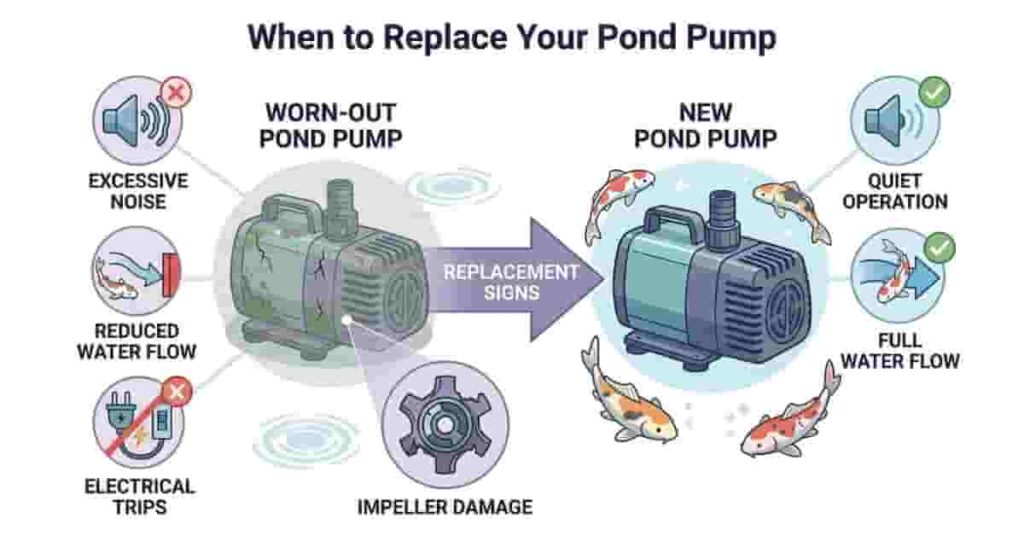
Knowing when to replace your pond pump can save time and money and prevent damage to your pond ecosystem. Even with regular pond pump maintenance, pumps wear out over time. Recognizing the signs early keeps your pond safe and flowing smoothly.
Persistent noise or vibration signals trouble. If your pump hums loudly, rattles, or shakes even after cleaning, worn bearings or a damaged motor may be at fault. Ignoring these signs risks complete pump failure.
Another warning sign is reduced water flow despite thorough cleaning. Clogged impellers or motor issues that don’t improve with maintenance suggest the pump has lost efficiency and may need to be replaced.
Frequent electrical trips are serious red flags. If the pump repeatedly trips circuit breakers, there may be internal electrical faults. Continuing to run it can be dangerous and damage other equipment.
Replacing a failing pond pump promptly protects your pond and ensures continuous, healthy water flow.
Quick Pond Pump Maintenance Checklist
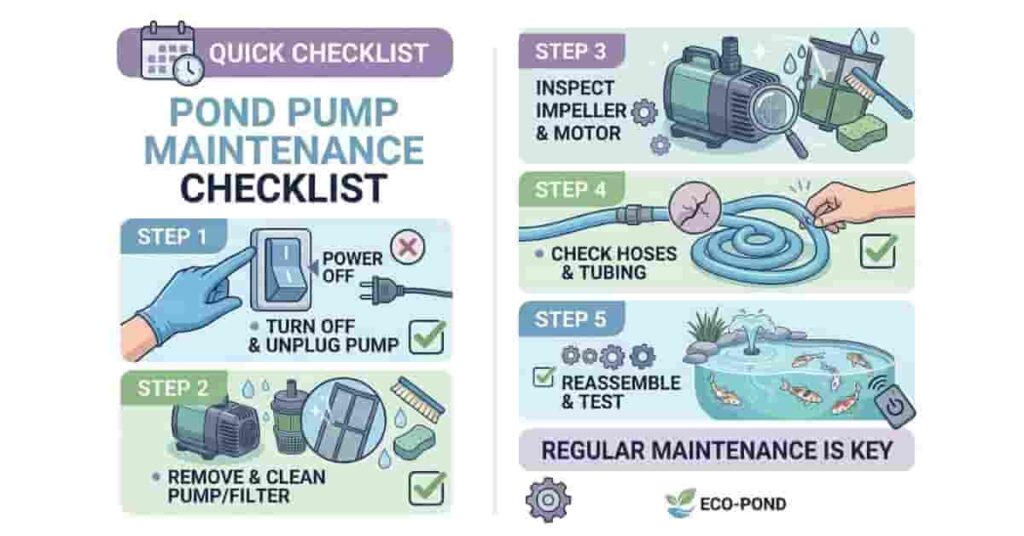
A simple checklist speeds up pond pump maintenance and ensures you don’t skip essential steps. Following these actions regularly keeps your pond water flowing smoothly and protects your pump from damage.
- Turn off and unplug the pump: Always start with safety to prevent electrical accidents.
- Remove and clean the pump/filter: Clear out debris, algae, and dirt to ensure efficient operation.
- Inspect impeller and motor: Look for wear, cracks, or buildup that could reduce performance.
- Check hoses and tubing: Ensure there are no leaks, kinks, or blockages in the connections.
- Reassemble and test: Put everything back correctly and run the pump to verify proper function.
Using this checklist weekly or monthly, depending on your pump type, saves time and extends pump life. Beginners will find it especially helpful for keeping both submersible and fountain pumps in peak condition. It’s also a handy reference for seasonal deep cleaning or prepping your pond for winter.
“Identify potential problems early by consulting our troubleshooting tips before making your selection.”
Conclusion
Keep your pond pump running smoothly with regular care. This guide covered step-by-step maintenance, tips for different pump types, and ways to avoid common mistakes. By following these practices, pond pump maintenance becomes simple, effective, and safe for both your equipment and your pond ecosystem.
Consistent upkeep helps you prevent clogs, protect the motor and impeller, and ensure clean, healthy water for your fish, koi, and plants. Even if you use smart pond pumps or fountain pumps, routine checks and seasonal care make a difference. With these strategies, you can extend pump life, reduce energy costs, and avoid costly replacements.
Take action now—schedule your next cleaning or inspection, and share your most effective maintenance tips in the comments. Explore our resources and commit to keeping your backyard water feature healthy year-round.

Michael Brooks and Sarah Lane are the co-founders of the Pond Pump Team, a trusted U.S.-based group helping homeowners and landscapers build better ponds and water features. Michael, an experienced pond engineer from Oregon, has worked for over 12 years on pump sizing, flow systems, and water circulation. Sarah, a pond designer from Colorado with nine years of experience, focuses on eco-friendly and easy-to-maintain pond and waterfall designs. Together, they’ve completed more than 180 pond projects and created tools like the Pond Pump Calculator and Pond Liner Calculator to make pond planning simple, accurate, and sustainable.
Need help with your pond setup? Contact the Pond Pump Team for expert advice and reliable solutions.