Introduction
Ever notice your pond water turning cloudy even though the pump is running?
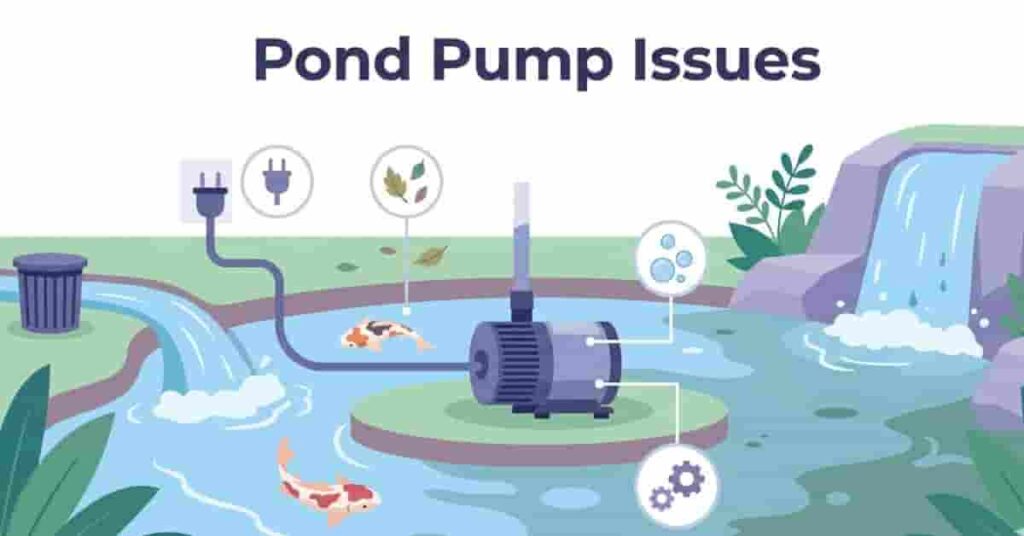
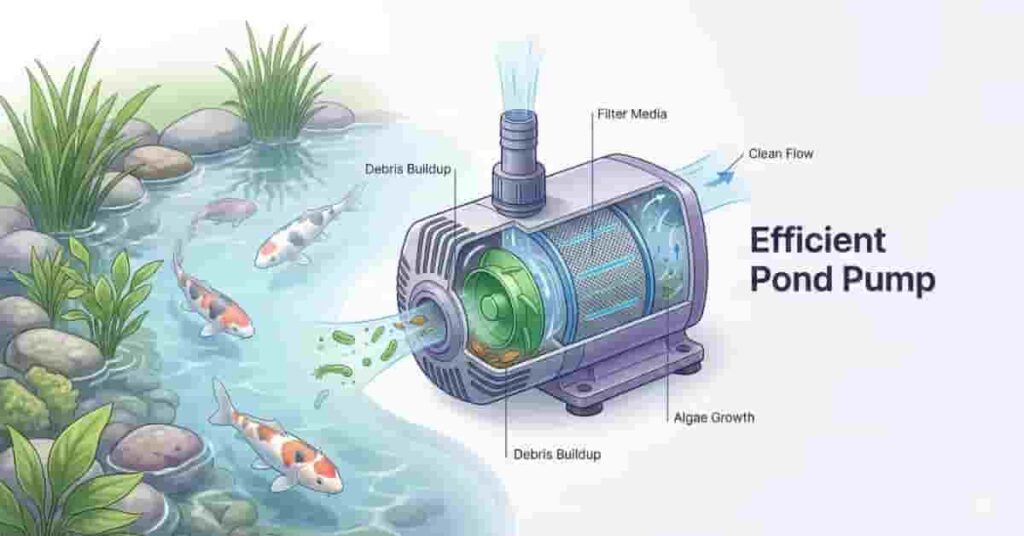
That’s often a sign your pond pump cleaning routine needs attention. Many beginners in the USA overlook this simple task. Over time, debris, algae, and dirt can clog the system. This reduces water flow and harms fish health in backyard ponds and koi setups.
Regular cleaning of a pond pump keeps your water fresh and clear. It also helps your pump last longer and use less energy. Whether you have a fountain or a fish pond cleaning pump, maintenance is key to avoiding costly repairs.
In this guide, you’ll learn exactly how to clean your pump step by step. You’ll also discover simple maintenance tips and how to use a pond pump cleaner safely. By the end, you’ll feel confident keeping your pond clean, healthy, and running smoothly.
“If cleaning alone doesn’t fix your pump, our repair guide provides step-by-step instructions for all common issues.”
Why Regular Pond Pump Cleaning Is Important
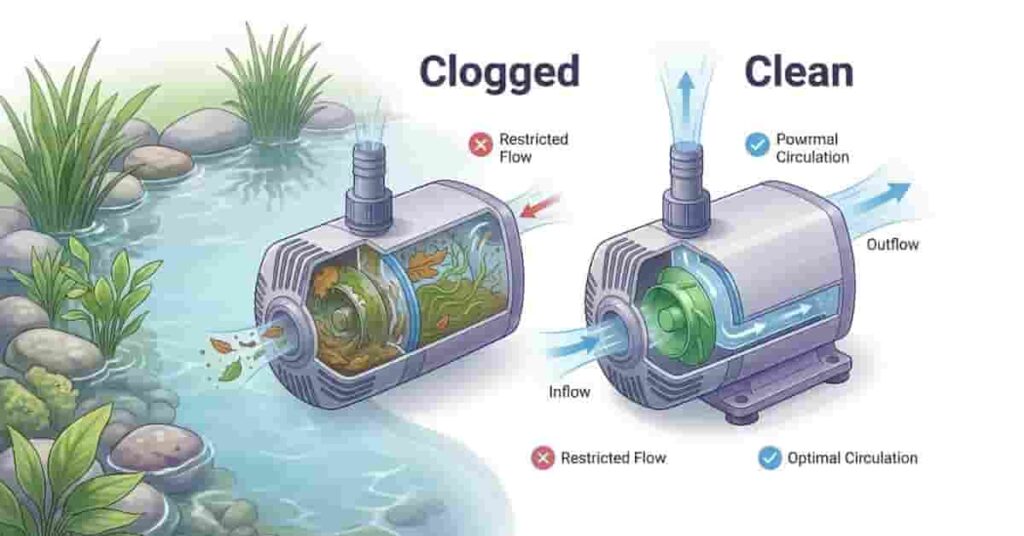
Regular pond pump cleaning keeps your system running smoothly and your pond water clear. Many beginners treat their pump as “set and forget,” but they encounter problems fast. Dirt, leaves, and algae build up inside the pump over time. This buildup reduces performance and damages key parts.
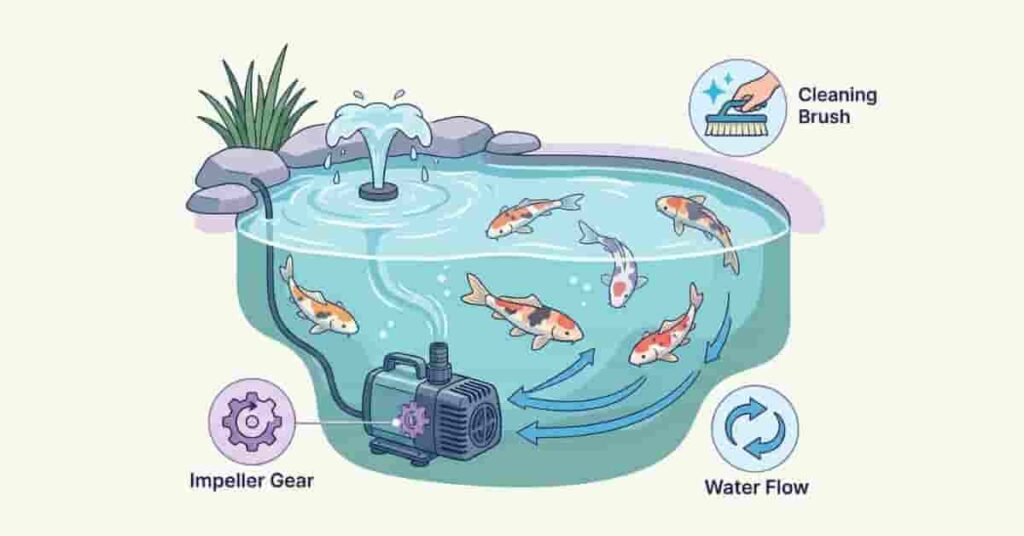
When you clean your pond cleaning pump often, you prevent clogs before they start. Blocked intakes restrict water flow and strain the motor. This extra pressure wears out the impeller, which is the part that moves water. A clean pump works efficiently and keeps water circulating at the right speed.
Good circulation keeps ponds healthy. It distributes oxygen and controls harmful bacteria. Fish, especially koi, depend on clean and moving water to stay healthy. Poor flow creates murky water and stresses fish.
Cleaning also saves money in the long run. A dirty pump uses more electricity to do the same job. It may also break down sooner, leading to repair or replacement costs. Simple maintenance prevents these issues and extends your pump’s life.
Key Takeaways
- Prevents clogs and debris buildup
- Protects motor and impeller from damage
- Maintains strong water flow and circulation
- Reduces energy use and repair costs
How Often Should You Clean Your Pond Pump?
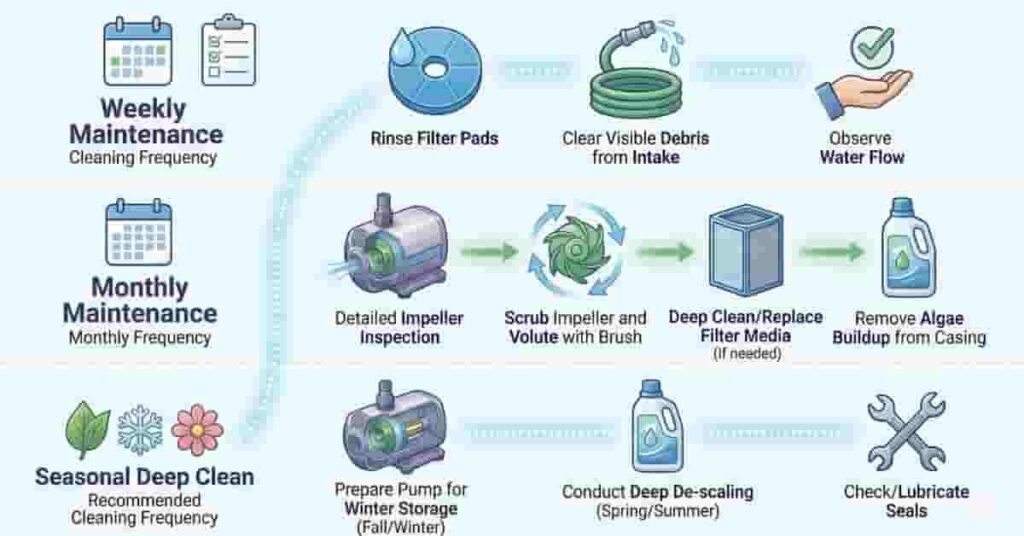
A cleaning schedule keeps your pond pump efficient and your water healthy. Beginners in the USA often follow weekly, monthly, and seasonal routines.
If you have a fish pond, regular checks are especially important. Fish waste can quickly clog pumps and harm the ecosystem. Consistency helps prevent failures.
Below is a simple schedule you can follow to keep your pump in top condition year-round.
Weekly Cleaning Tasks
Check your pump weekly. These quick tasks prevent bigger problems.
- Remove leaves and debris from the pump intake.
- Check filter sponges for dirt buildup.
- Make sure the water flow is steady and strong.
If the water flow is weak, clean the pump more deeply. Weekly maintenance is crucial for fish pond cleaning pumps, as waste builds up quickly.
Pro Tip: Keep a small net nearby to remove debris quickly during routine pond checks.
Monthly Cleaning Tasks
Do deeper maintenance monthly to protect the pump and keep it running smoothly.
- Clean the impeller and pump housing.
- Inspect hoses and tubing for blockages or cracks.
- Remove algae and mineral deposits from surfaces.
Clean the system to improve efficiency and reduce strain on the motor. Clean pumps use less energy and last longer.
Mini Case Insight: Many pond owners notice better water clarity within days after a proper monthly cleaning.
Seasonal Cleaning
Seasonal care gets your pump ready for changes in temperature and weather. In cold climates, focus on preventing freeze damage. Before summer, focus on preparing for increased algae and heavy use. Adjust your care based on your region’s climate.
- Winterise your pump in cold climates to prevent freezing damage.
- Perform a deep clean before peak summer use.
Summer brings more algae and higher use. Start with a clean pump. Seasonal care prevents breakdowns during heavy use.
Key Takeaways
- Weekly tasks prevent small issues from growing.
- Monthly cleaning protects internal components.
- Seasonal care prepares your pump for extreme conditions.
- Consistency keeps your pond clean and your pump efficient.
Step-by-Step Pond Pump Cleaning Guide
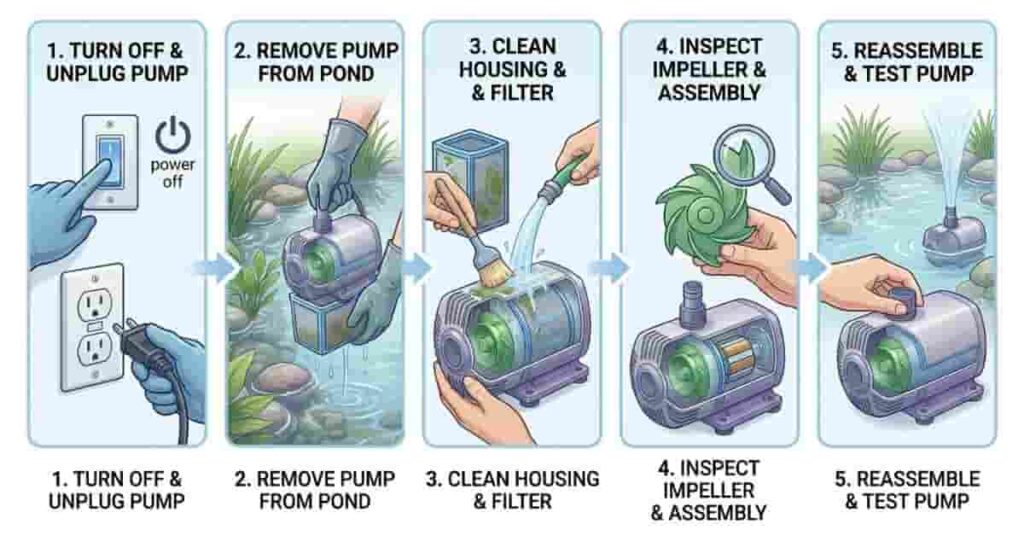
Cleaning your pond pump is simple with the right steps. This guide ensures safe, proper cleaning. Follow each step to maintain performance and avoid damage.
If you’re cleaning pond pumps for the first time, take it slow and stay organised. Most pumps, including self-cleaning pond pumps, still require occasional manual care.
Turn Off and Unplug the Pump
Always start with safety. Never handle a pump while it’s connected to power.
Turn off and unplug the pump to prevent shocks and protect the motor. Never mix water and electricity.
Wait one minute to ensure full power-down before handling the pump.
Pro Tip: Use a waterproof outdoor outlet cover to keep connections safe year-round.
Remove the Pump From the Pond
Next, carefully remove the pump from the water. The method depends on your pump type.
For submersible pumps, lift using the handle or base—never the cord. For fountain pumps, detach parts slowly to avoid damage.
Place the pump on a flat surface near your pond for easy cleaning.
Clean the Pump Housing and Filter
Remove visible debris and buildup to boost performance.
Open the pump housing, which is the outer shell that protects the internal components, and take out the filter. Rinse off algae, dirt, and debris using clean water. Use a soft brush to scrub hard-to-reach areas.
Avoid harsh chemicals. A mild solution is enough to safely clean the pond pump filter parts. Clean filter sponges and screens until water flows through easily.
Inspect and Clean the Impeller
The impeller drives water movement. Keep it clean for top performance.
Carefully remove the impeller cover and check for damage or wear. Clear out any debris or mineral deposits stuck inside. If allowed, apply a small amount of lubricant according to the manufacturer’s instructions.
A clean impeller keeps the pump efficient and quiet.
Mini Case Insight: Many users resolve low water flow issues by simply cleaning the impeller.
Reassemble and Test the Pump
Once everything is clean, carefully reassemble the pump. Make sure all parts fit tightly and correctly.
Return the pump to the pond or test it in a water-filled bucket. Turn on and check that water flows smoothly without noise.
If everything works as planned, your pond-cleaning pumps are ready to go.
Key Takeaways
- Always unplug the pump before cleaning.
- Handle and remove the pump carefully.
- Clean housing, filter, and internal parts
- Check the impeller for damage or buildup.
- Test the pump before placing it back.
Maintenance Tips for Different Types of Pond Pumps
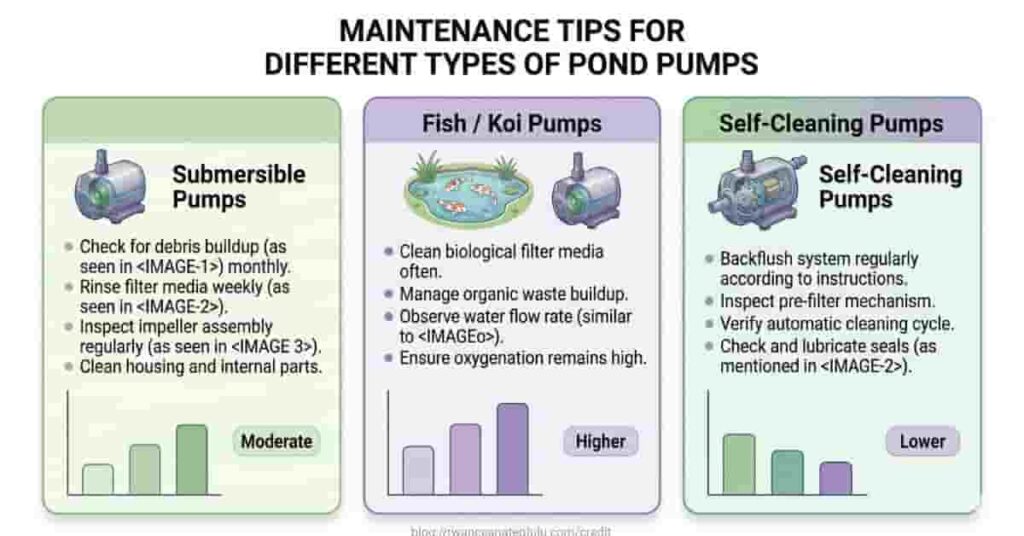
Match your pond pump cleaning routine to your specific pump type. This boosts performance and extends its lifespan.
No matter which cleaning method you choose, understanding your pump type streamlines your maintenance. To help, here are simple tips for the most common pond pumps used in the USA.
Submersible Pond Pumps
Keep your submersible pump clean to prevent rapid debris buildup underwater and ensure smooth operation.
Keep your pump submerged so water cools it and prevents overheating. If the water level drops, turn off the pump immediately.
Remove and clean the pump often, especially during heavy debris seasons. Leaves, dirt, and algae can quickly block the intake. A quick rinse once a week helps prevent buildup and protect the motor.
Pro Tip: To transition, try placing your pump on a small stone or platform; this reduces debris intake from the pond bottom and enhances performance.
Fish and Koi Pond Pumps
Fish ponds require extra care due to waste and organic matter. A fish pond pump can clog more quickly than a standard pump.
Remove organic debris, such as fish waste, uneaten food, and plant matter, regularly. This keeps water clean and safe for fish. Clean pre-filters weekly. Block harmful particles before they reach the pump to protect your pump and your fish.
In summary, keeping filters clean helps keep your fish and pump healthy.
Self-Cleaning Pumps
A self-cleaning pond pump reduces maintenance but doesn’t eliminate it. These pumps use built-in systems to handle small debris. Use the pump’s larger intakes or internal mechanisms to prevent clogs and maintain steady water flow, so you clean less often. Clean your self-cleaning pump manually to handle algae, mineral deposits, or larger debris. Check and clean it monthly, as needed. Schedule a full inspection every month, even if you use a self-cleaning pump.onth.
Key Takeaways
- Match maintenance to your pump type
- Submersible pumps need frequent cleaning.
- Fish pond pumps require extra filter care.
- Self-cleaning pumps still need manual checks.
“Start by identifying the root cause of the problem with our troubleshooting tips before you clean your pump.”
Common Mistakes to Avoid While Cleaning Your Pond Pump
Even with a good routine, small mistakes can quickly damage your pump. Proper pond pump cleaning is not just about what you do—it’s also about what you avoid. Many beginners make simple errors that lead to poor performance or costly repairs.
Knowing these common mistakes helps keep your pump safe and water clean.
One major mistake is running the pump without water. Water cools the pump, so operating it dry overheats the motor and causes permanent damage within minutes.
Another issue is using harsh chemicals or rough tools. Strong cleaners can damage plastic parts and harm fish when the pump is returned to the pond. Always use mild solutions and soft brushes to clean safely.
If you ignore debris buildup, leaves, algae, and dirt, they can clog the system over time. Without regular cleaning, you reduce water flow and put extra strain on the motor.
Many pond owners also neglect seasonal maintenance, as changing weather conditions affect pump operation. When you skip winter prep or summer deep cleaning, you shorten your pump’s lifespan.
Key Takeaways
- Never run your pump without water.
- Avoid harsh chemicals and abrasive tools.
- Clean debris regularly to prevent clogs.
- Don’t skip seasonal maintenance.
When to Replace Your Pond Pump
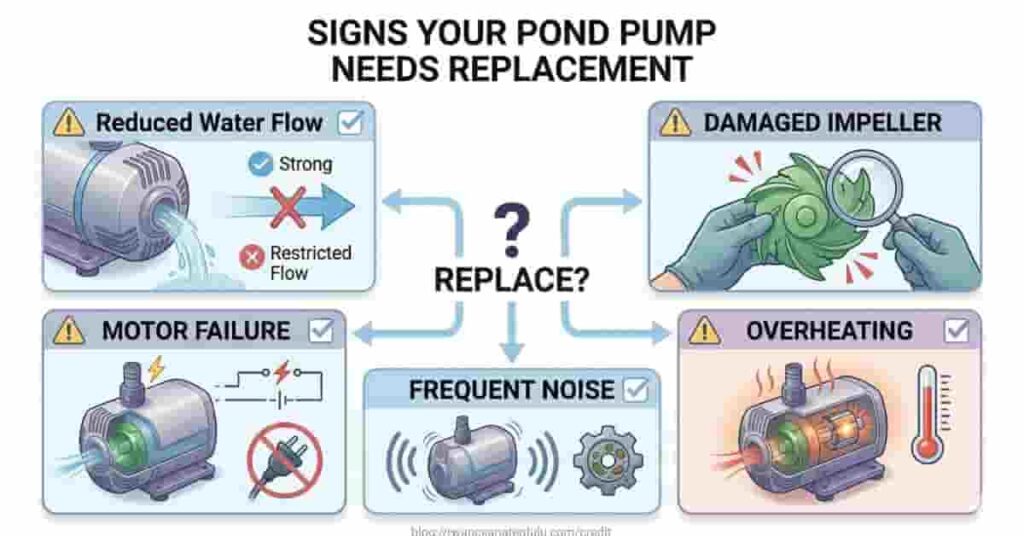
Every pond pump wears out, even with regular cleaning. Once performance drops, replace it to save time, money, and stress.
If the water flow remains weak after cleaning, the internal parts are damaged. Cleaning won’t fix deeper problems. Replace the pump.
Cracks in the impeller or a failing motor will cause the pump to fail. Replacing parts often costs as much as a new unit. Replace the pump.
Overheating or unusual noises—such as grinding or buzzing—indicate internal damage. Ignoring these signs leads to pump failure. Replace it.
Stop repairing the pump if it’s not cost-effective. Invest in a new, energy-efficient pump.
Key Takeaways
- Weak flow after cleaning may mean internal damage.
- A broken impeller or motor often requires replacement.
- Overheating and noise are warning signs.
- Replace the pump if repairs cost too much.
Quick Pond Pump Cleaning Checklist
Keeping your pond pump in top shape is easier with a simple checklist. A pond pump cleaning routine ensures nothing is overlooked, and your system runs efficiently. This quick guide is perfect for beginners who want fast, effective maintenance.
Follow these steps every week or month, depending on your pond type:
- Turn off and unplug the pump: Safety first. Prevents electrical accidents.
- Remove pump from pond: Handle carefully to avoid damage to the cord or housing.
- Clean housing, filter, and impeller: Remove debris, algae, and mineral buildup with soft brushes and mild solutions.
- Inspect hoses and tubing: Check for cracks, blockages, or leaks that could reduce water flow.
- Reassemble and test: Ensure everything fits properly, then run the pump in water to confirm smooth operation.
Using this checklist keeps your pond water clear, protects fish, and prolongs pump life. It also speeds up maintenance since you follow a set routine each time.
Conclusion
Regular pond pump cleaning is essential for keeping your pond healthy, water clear, and equipment running efficiently. We covered why cleaning matters, how often to do it, step-by-step instructions, and maintenance tips for different pump types.
Following this guide helps prevent clogs, protects the impeller, and reduces energy costs. Whether you use a standard fish pond cleaning pump or a self-cleaning pond pump, consistent care ensures your system lasts longer and your fish stay safe.
Don’t wait for problems to appear. Commit to scheduling your next cleaning today and set automated reminders for routine inspections. Share your pond maintenance wins or questions in the comments, and visit our website for exclusive tips to keep your pond thriving.

Michael Brooks and Sarah Lane are the co-founders of the Pond Pump Team, a trusted U.S.-based group helping homeowners and landscapers build better ponds and water features. Michael, an experienced pond engineer from Oregon, has worked for over 12 years on pump sizing, flow systems, and water circulation. Sarah, a pond designer from Colorado with nine years of experience, focuses on eco-friendly and easy-to-maintain pond and waterfall designs. Together, they’ve completed more than 180 pond projects and created tools like the Pond Pump Calculator and Pond Liner Calculator to make pond planning simple, accurate, and sustainable.
Need help with your pond setup? Contact the Pond Pump Team for expert advice and reliable solutions.