Introduction
Ever thought about turning your yard into a peaceful water retreat?
A backyard pond setup can completely change how your outdoor space feels. It adds calm, beauty, and even a home for fish. However, many beginners in the USA want this upgrade, but feel unsure where to start. Choosing the right spot and picking materials can seem confusing at first.
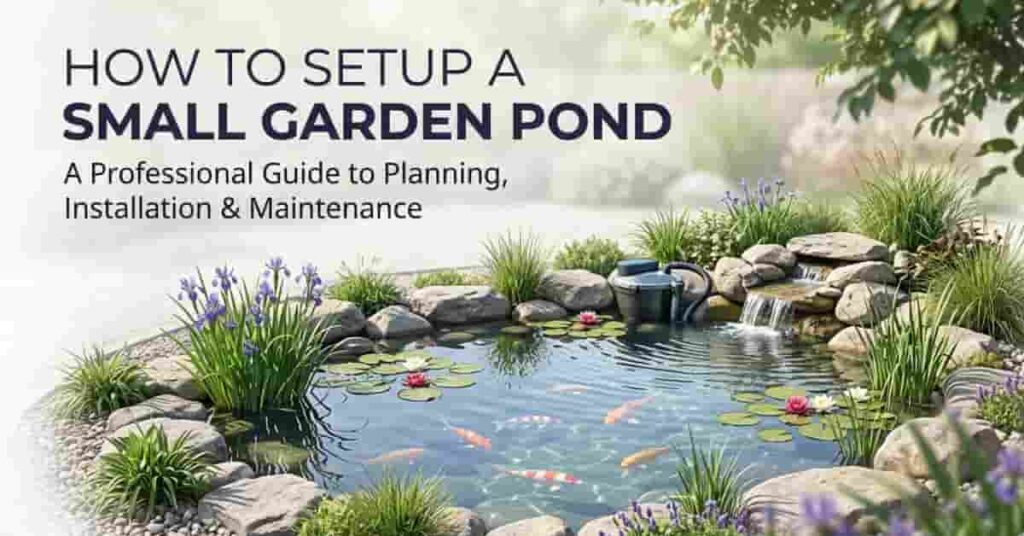
The good news is that you don’t need to be an expert to build one. With the right steps, a DIY backyard pond becomes simple and enjoyable. Whether you dream of a small backyard pond or a full koi pond setup, careful planning will guide you.
This guide walks you through each step with clear instructions. You’ll learn how to plan, build, and maintain your pond without costly mistakes. By the end, you’ll feel confident to start your own backyard water feature.
If you’re planning to build from scratch, don’t miss this detailed DIY pond construction guide for a complete step-by-step process.
Planning Your Backyard Pond
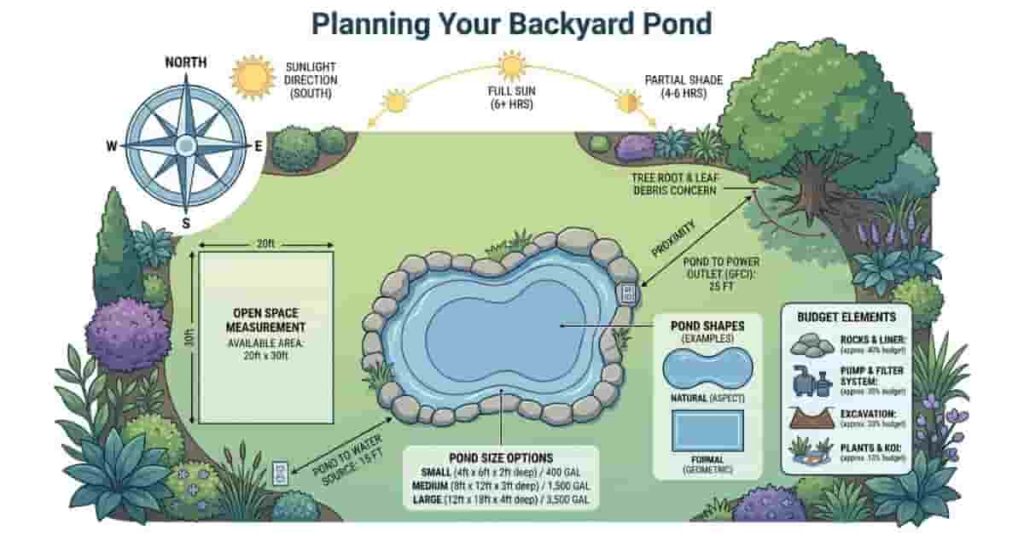
A smart backyard pond setup starts with good planning. This step helps you avoid costly mistakes later. You’ll choose the right spot, size, and materials before digging. It also ensures your pond stays healthy year-round, especially in different USA climates.
Beginners often rush into building without a plan. That leads to poor water quality, algae issues, or extra costs. Take time here, and your pond will be easier to build and maintain. Think of this as your blueprint for success.
Takeaways
- Pick a location with balanced sunlight and easy access.
- Choose a size that fits your space and budget.
- Plan materials early to avoid overspending
Choose the Right Location
Location plays a big role in your pond’s health. Most ponds need 4–6 hours of sunlight daily. Too much sun can cause algae growth, while too much shade slows plant growth.
Avoid placing your pond under large trees. Falling leaves can clog filters and dirty the water. Roots can also damage the liner over time. Pick a flat area with enough open space around it.
Accessibility is also important. You should be able to reach your pond easily for cleaning and maintenance. Keep it near a water source and power outlet for pumps and filters.
If you live in colder regions of the USA, consider frost zones. Deeper ponds help fish survive winter. In warmer states, partial shade can prevent overheating.
Pro Tips
- Observe sunlight patterns in your yard before choosing a spot.
- Keep at least a few feet away from trees and fences.
- Plan for power access early to avoid the need for extension cables.
Decide Pond Size & Shape
Your pond size depends on your space, budget, and goals. A small backyard pond is easier to build and maintain. It’s perfect for beginners or limited spaces.
Medium ponds offer more design options and support more plants and fish. Large ponds offer koi and advanced features but require more care and cost more.
Shape also matters. Formal ponds use clean lines, such as squares or circles. They suit modern homes. Natural ponds have curves and blend with the landscape. They look more organic and relaxing.
A good rule is to start small, then expand later if needed. This makes your backyard pond setup easier to manage.
Pro Tips
- Start with a 6–8 feet wide pond for easy maintenance.
- Use a hose to outline shapes before digging.
- Keep the depth at least 2 feet for fish safety.
Budgeting & Materials
Setting a budget keeps your project under control. Costs depend on pond size and features. Basic items include a liner, pump, filter, rocks, and plants.
A simple DIY pond can cost around [placeholder]. Larger or koi ponds may cost much more due to filtration and depth needs. Always plan a small extra budget for unexpected expenses.
DIY projects save money but require time and effort. Hiring professionals costs more but ensures faster and cleaner results. Beginners often start with DIY to learn the basics.
Choose quality materials, especially for liners and pumps. Cheap parts may fail quickly, increasing long-term costs.
Pro Tips
- Invest in a strong liner to avoid leaks.
- Choose a pump based on pond size, not price.
- Compare DIY vs professional costs before starting.
Choosing the Right Pond Type
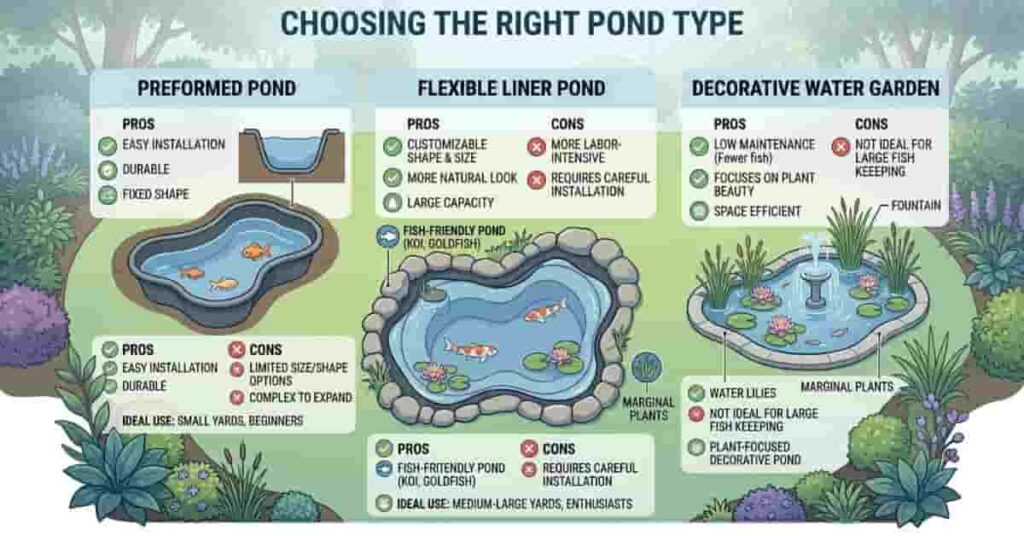
Choosing the right pond type is key. Each option varies in cost, effort, and maintenance. Your space, budget, and goals determine your best choice.
Some ponds focus on fish, others on plants, and others on design. Beginners do best with simple setups and upgrade later. Knowing your options helps avoid costly changes.
Takeaways
- Choose a pond type based on your goal: fish, plants, or design.
- Start simple if you are new to pond building.
- Match your pond type with your budget and maintenance level.
Preformed Pond vs Flexible Liner Pond
Preformed ponds are ready-made, easy to install, and great for beginners. Dig a hole and place the mold—ideal for a DIY backyard pond. However , preformed ponds have limited sizes and designs. You cannot easily customize their shape or depth. They may also crack over time in colder climates in the USA.
Flexible liner ponds allow any shape or size and are ideal for natural looks and larger projects. Most advanced backyard ponds use liners. The downside is that installation takes more effort. You must level the ground carefully and protect the liner from damage.
Pro Tips
- Choose preformed ponds for quick and simple setups.
- Use flexible liners for custom shapes and larger ponds.
- Add a protective underlay to extend liner life.
Koi or Fish Pond Setup
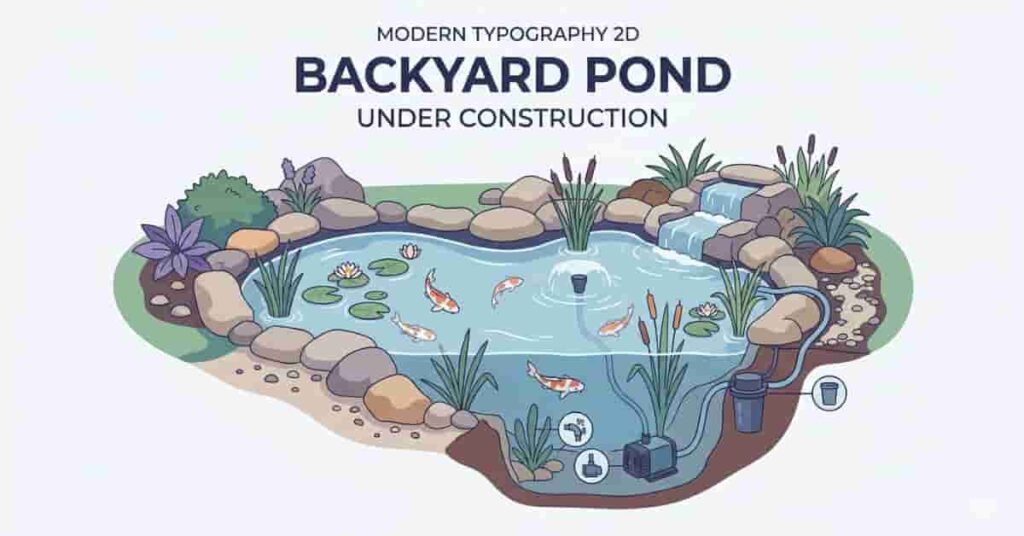
A koi pond setup requires more planning than a basic pond. Fish need clean, oxygen-rich water to stay healthy. This means proper aeration and filtration are essential.
Depth is very important for fish ponds. In most cases, depth is important for fish ponds. In most regions of the USA, aim for at least 3 feet, which protects fish from temperature changes and predators. Koi need more space to grow. produce waste that can quickly pollute the water. A good filter keeps ammonia and toxins under control.
Goldfish are easier for beginners and need less space, but all fish ponds require regular care and monitoring.ro Tips
- Use both mechanical and biological filters for fish ponds.
- Avoid overcrowding fish to maintain water quality.
- Add an aerator to increase oxygen levels.
Water Garden or Decorative Pond
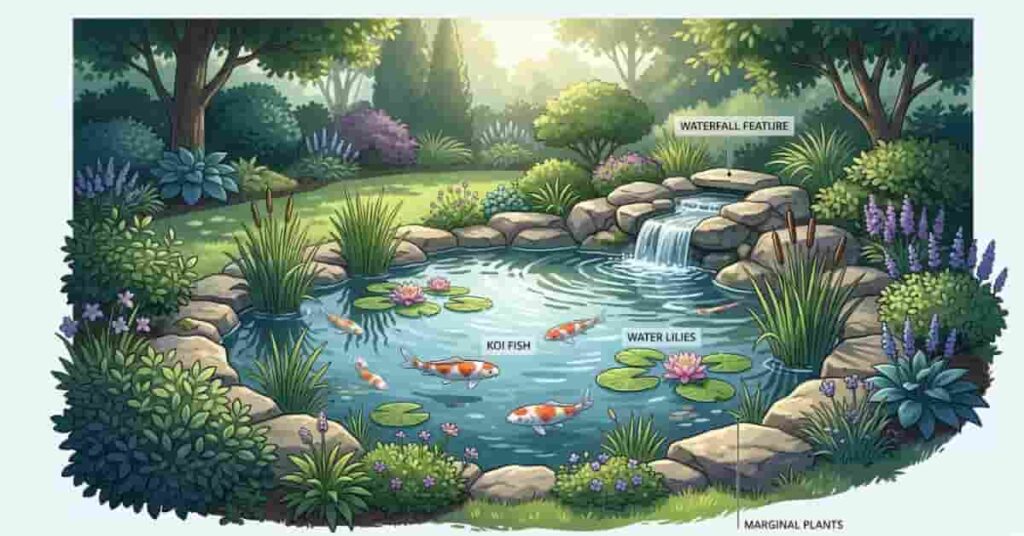
A water garden focuses on beauty rather than fish. It uses plants, rocks, and features like fountains or waterfalls. This type is perfect if you want a relaxing backyard space.
Plants play a major role here. Floating plants, lilies, and marginals create a natural look. They also help keep water clean by absorbing nutrients.
Decorative ponds are easier to maintain, need less depth and complex filtration, and are ideal for beginners. You can also add lighting for a stunning night effect. Small waterfalls or fountains improve water movement and sound. These features turn your pond into a true backyard highlight.
Pro Tips
- Mix different plant types for a balanced look.
- Use a small pump for fountains or waterfalls.
- Add lighting to enhance nighttime appeal.
For those with limited space, this small garden pond setup guide offers practical tips for compact backyard ponds.
Installing Your Pond – Step by Step
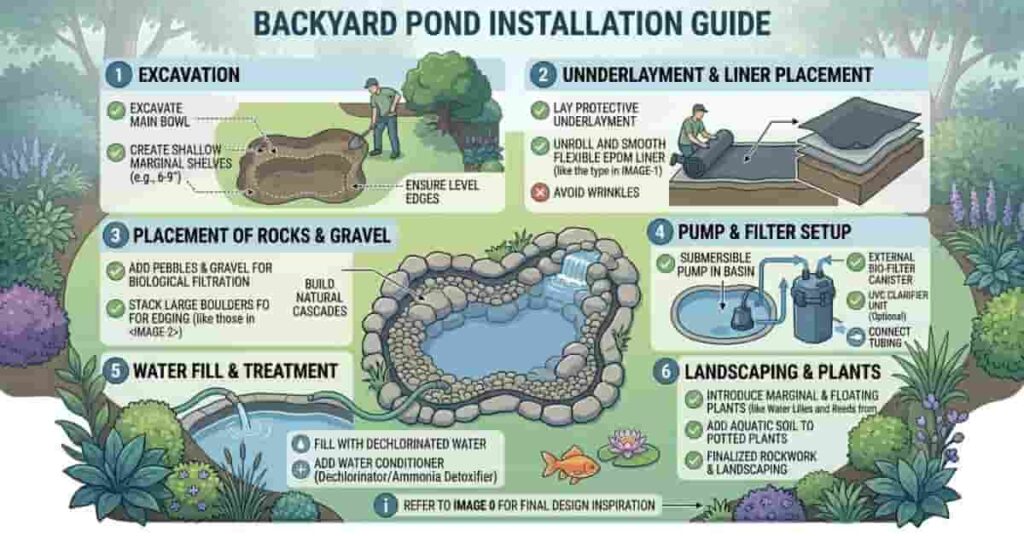
Now comes the most exciting part of your backyard pond setup—building it. This stage turns your plan into a real feature. Take your time with each step to avoid leaks or uneven surfaces.
Work in a clear order: dig, install the liner, add landscaping, and set up equipment. Small mistakes here can lead to bigger problems later. With careful work, your pond will look great and last for years.
Takeaways
- Follow each step in order for the best results.
- Double-check leveling before adding water.
- Use quality materials to avoid future repairs.
Excavation & Liner Installation
Start by marking the outline of your pond with a rope or garden hose. This gives you a clear outline before digging. Remove grass and dig to your planned depth, creating shelves for plants.
Make sure the base is level. Uneven ground can cause water to shift or spill. Remove sharp rocks or roots that could damage the liner.
Add a layer of sand or underlayment for protection. Then carefully place the liner over the hole. Press it gently into the corners without stretching it too much.
Leave extra liner around the edges. You will secure it later with rocks or soil. Take time to smooth out wrinkles for a clean finish.
Pro Tips
- Dig in stages to keep edges neat and stable.
- Use a level tool to check for even ground.
- Never pull the liner tight; let it settle naturally.
Adding Rocks, Gravel, and Landscaping
Once the liner is in place, start adding rocks and gravel. This step gives your pond a natural look and protects the liner. Place larger rocks first, then fill gaps with smaller stones.
For a natural style, use uneven rocks and soft curves. This blends the pond into your garden. For a formal look, use straight edges and uniform stones.
Edging is important for both style and stability. In many USA backyards, flat stones or bricks are common choices. They hold the liner in place and create a clean border.
You can also add soil and plants around the edges. This softens the look and helps the pond blend into the landscape.
Pro Tips
- Use rounded stones to avoid liner damage.
- Mix rock sizes for a more natural effect.
- Secure edges well to prevent shifting over time
Installing Pump & Filtration System
A good pump keeps water moving and healthy. It prevents stagnation and supports proper pond filtration. Choose a pump based on your pond size, not just price.
The general rule is to circulate all pond water every hour. This keeps oxygen levels stable and reduces algae growth. Place the pump at the lowest point for best performance.
Filters are also essential, especially if you have fish. Mechanical filters remove debris, while biological filters break down waste. Many beginners use a combo system for better results.
Proper placement of pipes and cables keeps your setup neat and safe. Always follow the manufacturer’s instructions during installation.
Pro Tips
- Match the pump flow rate to your pond volume
- Clean filters regularly to maintain performance
- Hide cables and pipes for a cleaner look.
Filling Pond & Checking Water Quality
Once everything is set, start filling your pond with water. Fill it slowly to allow the liner to settle properly. Adjust rocks and edges as the water level rises.
Tap water often contains chlorine, which can harm fish and plants. Use a dechlorinator before adding any living elements. This step is important for a safe start.
Test the water after filling. Check pH, ammonia, and nitrate levels using a basic test kit. Balanced water keeps your pond healthy and clear.
Let the system run for a few days before adding fish. This allows the filtration system to stabilize.
Pro Tips
- Always treat tap water before adding fish.
- Test water regularly during the first week
- Run the pump continuously for best results.
Adding Plants, Fish & Wildlife
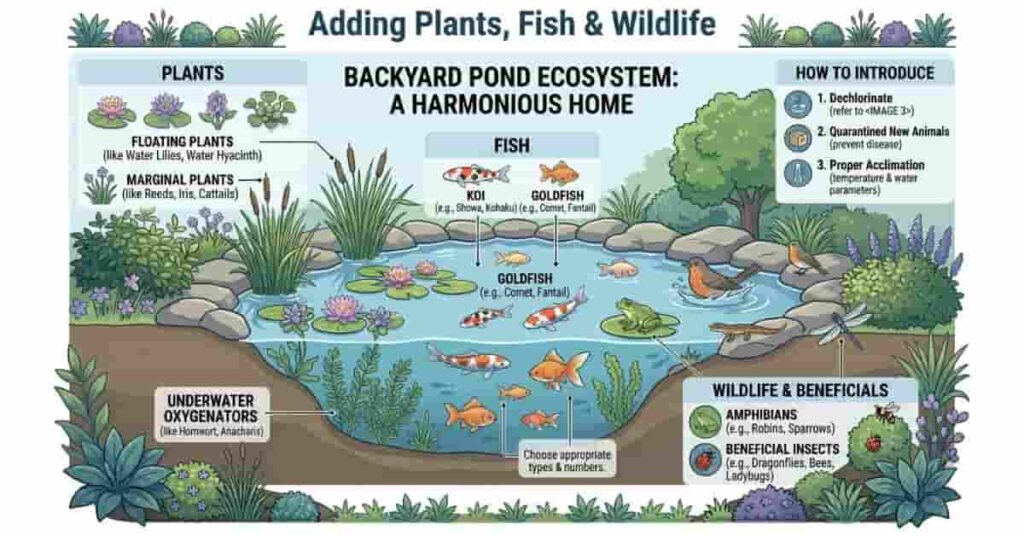
This is where your backyard pond setup comes to life. Plants, fish, and wildlife turn a simple pond into a living ecosystem. They also help keep the water clean and balanced.
Start slowly and add elements in stages. This helps your pond adjust without stress. A mix of plants and fish creates both beauty and function. Over time, you’ll notice more natural activity around your pond.
Takeaways
- Use a mix of plants for balance and water health.
- Start with a few fish and grow slowly.
- Encourage natural wildlife for a thriving pond.
Aquatic Plants for Beginners
Aquatic plants are essential for a healthy pond. They improve water quality and reduce algae growth. Beginners should start with easy, low-maintenance options.
Oxygenator plants grow underwater and release oxygen into the water. Floating plants, like water lilies, provide shade and reduce sunlight. Marginal plants grow along the edges and add structure.
In the USA, planting seasons vary by region. Spring is the best time to add most plants. In colder areas, avoid planting too early due to frost. In warmer states, plants may grow longer through the year.
A balanced mix of plant types keeps your pond stable and attractive. It also creates a natural habitat for fish and insects.
Pro Tips
- Cover about 50–60% of the water surface with plants.
- Use plant baskets to control growth.
- Trim dead leaves regularly to keep the water clean.
Fish Selection
Choosing the right fish depends on your pond size and depth. Koi are popular but need more space and care. A proper koi pond setup requires deeper water and strong filtration.
Goldfish are a better choice for beginners. They are hardy, easy to care for, and adapt well. Native fish species can also work well in some regions of the USA.
Avoid adding too many fish at once. Overcrowding leads to poor water quality. Start with a small number and increase slowly over time.
Feed fish once or twice daily with quality food. Remove any uneaten food to prevent water pollution. Regular observation helps you spot health issues early.
Pro Tips
- Add fish only after water conditions are stable.
- Choose fish based on pond size, not appearance.
- Avoid overfeeding to maintain water quality.
Encouraging Wildlife
A well-designed pond attracts natural wildlife. Birds, frogs, and insects bring life and balance to your space. They also help control pests and improve the ecosystem.
Birds may visit for water and bathing. Adding shallow edges or stones makes access easier. Frogs can appear naturally and help control insects like mosquitoes.
Beneficial insects, such as dragonflies, also support a healthy pond. They reduce pests and add movement to your garden. Avoid using chemicals that could harm these visitors.
Creating a natural environment encourages wildlife to stay. Over time, your pond becomes a small, self-sustaining habitat.
Pro Tips
- Add shallow areas for easy wildlife access.
- Avoid chemicals that harm beneficial insects.
- Use native plants to attract local species.
Maintenance Tips for a Healthy Pond
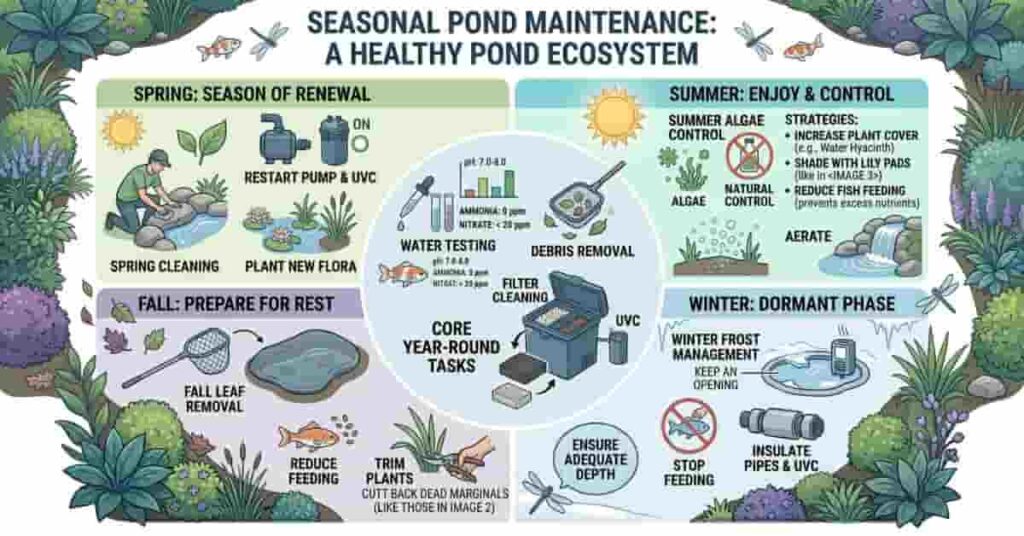
Regular care keeps your backyard pond setup clean, clear, and safe for plants and fish. Good maintenance prevents algae, bad smells, and costly repairs. The goal is simple—keep water balanced and equipment working well.
A few small tasks each week can save you hours later. Focus on seasonal care, basic cleaning, and water testing. Once you build a routine, pond maintenance becomes quick and easy.
Takeaways
- Follow a simple weekly and seasonal routine.
- Keep filters clean and water balanced.
- Control algae early before it spreads
Seasonal Maintenance (Spring, Summer, Fall, Winter)
Each season brings different needs for your pond. In spring, clean debris and restart your pump and filter. This prepares your pond for new growth.
Summer requires more attention. Warm weather increases algae growth and evaporation. Check water levels often and remove excess algae quickly.
In the fall, remove falling leaves to prevent water pollution. You can use a net to keep debris out. Trim plants and prepare for colder weather.
Winter care depends on your region. In colder areas of the USA, prevent the pond from freezing completely. Use a pond heater or aerator to keep a small opening.
Pro Tips
- Clean your pond fully at the start of spring.
- Check water levels often during hot months.
- Use a net cover in the fall to keep leaves out.
Cleaning, Filters & Water Testing
Routine cleaning keeps your pond healthy. Remove leaves, dirt, and debris from the surface and bottom. This prevents buildup that can harm water quality.
Your filter plays a key role in pond filtration. Clean it regularly to keep water flowing properly. A clogged filter reduces oxygen and increases waste levels.
Water testing is just as important. Use a basic kit to check pH, ammonia, and nitrate levels. Balanced water keeps fish safe and plants thriving.
Test your water weekly for the first few weeks. Once stable, you can test less often. Always check after adding fish or making changes.
Pro Tips
- Rinse filters with pond water, not tap water.
- Remove debris before it sinks to the bottom.
- Test the water more often in new ponds.
Algae Control Strategies
Algae are common in any pond, usually due to too much sunlight or nutrients. Control it early before it spreads.
Add more plants to block sunlight and absorb nutrients. Floating plants are especially helpful for shading the water. This reduces algae growth naturally.
Avoid overfeeding fish, as leftover food increases waste. A proper filtration system also helps control algae by removing excess nutrients.
You can also use safe treatments if needed. Always choose pond-safe solutions that do not harm fish or plants.
Pro Tips
- Increase plant coverage to reduce sunlight.
- Avoid overfeeding fish to limit waste.
- Clean filters regularly to control nutrients
Safety & Legal Considerations
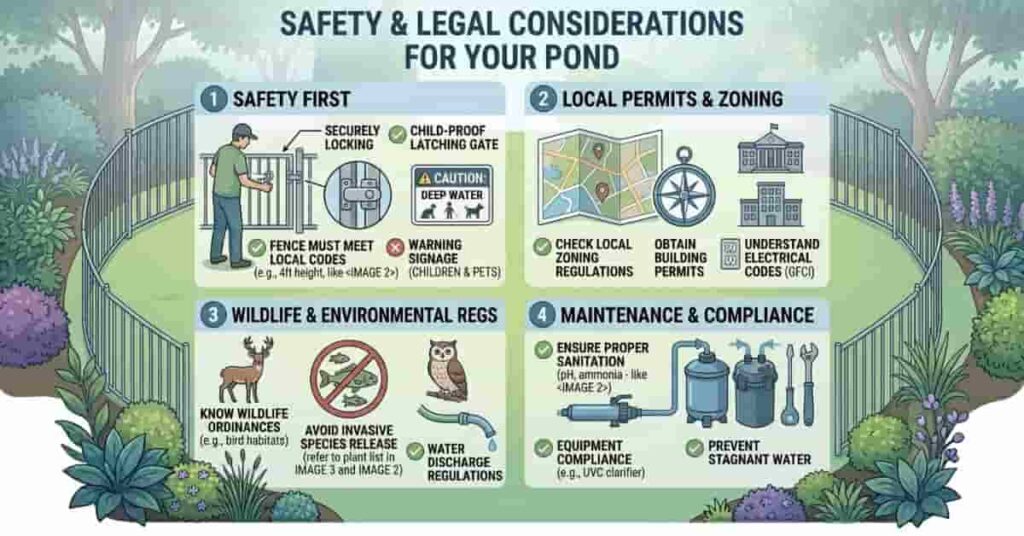
A safe backyard pond setup protects your family, pets, and local wildlife. Even small ponds can be risky for children or curious pets. Planning for safety from the start prevents accidents and keeps everyone happy.
You should also be aware of the local regulations in your area of the USA. Some cities or counties require permits, especially for larger ponds or water features. Following these rules avoids fines and ensures your pond meets environmental standards.
Takeaways
- Safety is essential for family and pets.
- Follow local laws and permit requirements.
- Plan access and barriers early in your pond setup
Fence and Child Safety Tips
Install a sturdy fence or barrier around your pond if children or pets are nearby. Gates should latch securely and prevent unsupervised access. Even a small pond can pose drowning risks.
Use shallow edges or gradual slopes where possible. This reduces the risk of accidents if someone falls in. Avoid slippery stones on the pond perimeter. Consider using warning signs for extra caution.
Supervision is always necessary, even with barriers. Teaching children about pond safety is also important. Simple rules like “no running near the pond” go a long way.
Pro Tips
- Use at least a 3-foot-high fence around the pond.
- Choose non-slip stones or pavers for pond edges.
- Always supervise children around water.
Local Regulations and Permits
Check local regulations before starting your backyard pond setup. Some USA municipalities require permits for ponds exceeding certain depths or sizes. This ensures safety and environmental compliance.
Wildlife rules may apply as well. Certain fish, plants, or animals might be regulated in your state. For example, importing non-native koi can require documentation. Ignoring these rules can lead to fines or environmental issues.
Local water agencies can provide guidance on proper drainage, runoff, and pond construction. Always confirm rules before digging or adding large features.
Pro Tips
- Contact city or county offices for pond permit requirements
- Research wildlife restrictions before adding fish or plants
- Keep copies of any permits for future reference.
Once you understand the basics, you can explore this DIY backyard pond construction guide to take your setup to the next level.
Enhancing Your Backyard Pond
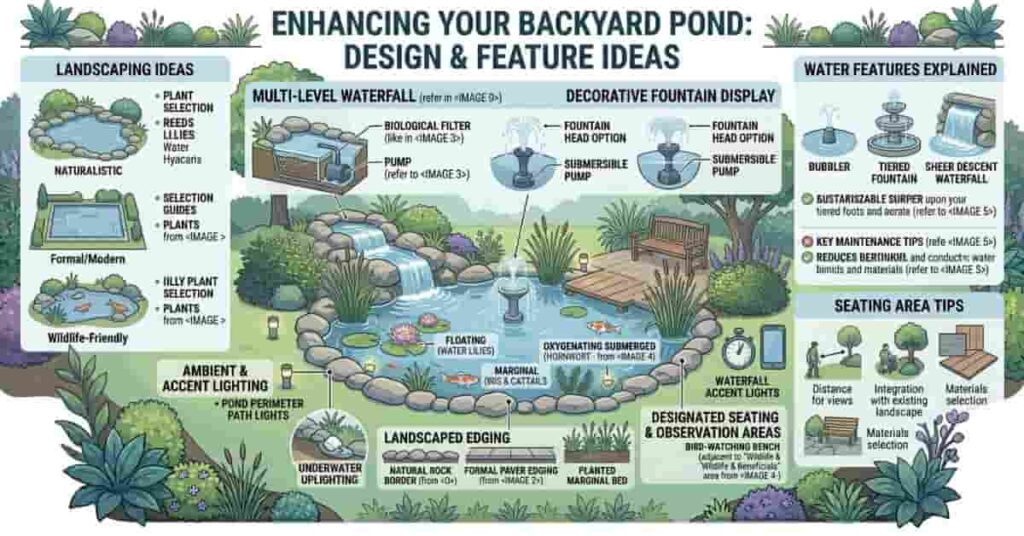
Once your pond is functional, you can enhance it with features that add beauty and relaxation. A well-designed backyard water feature transforms your space into a peaceful retreat. Even small additions can create stunning effects and increase enjoyment.
Enhancements also help integrate the pond with your garden. Thoughtful landscaping makes the pond a focal point while keeping maintenance manageable. Simple ideas like rocks, plants, or lighting can elevate the overall look.
Takeaways
- Add aesthetic features for visual and sensory appeal.
- Use landscaping to blend the pond with your garden.
- Enhance without overcomplicating maintenance.
Waterfalls, Fountains & Lighting
Waterfalls and fountains bring movement and sound to your pond. Flowing water improves oxygen levels, benefiting fish and plants. Small fountains are perfect for beginner ponds, while larger waterfalls suit bigger setups.
Lighting creates a magical atmosphere at night. Submersible lights highlight plants, rocks, and water movement. Pathway or garden lighting around the pond also enhances safety and visibility.
Carefully combine multiple features to avoid overloading your pump. Choose energy-efficient options to save costs and reduce environmental impact.
Pro Tips
- Start with a small fountain before adding a waterfall.
- Use LED or solar lights for low-maintenance illumination.
- Position features that complement plant and rock are angements.
Landscaping Ideas for Aesthetic Appeal
Planting around your pond adds color, texture, and depth. Mix tall and low-growing plants for a natural look. Include floating plants or lilies to soften the water surface.
Use stones, gravel, or mulch to create pathways and define edges. Curved borders mimic natural ponds, while straight edges suit formal gardens. Add seating areas or benches nearby for relaxation.
Native plants are ideal in the USA. They are low-maintenance and attract wildlife. Incorporating these improves the pond’s ecosystem while enhancing its beauty.
Pro Tips
- Mix plant types for seasonal color and interest.
- Use edging materials that match your garden style.
- Leave open water areas for wildlife activity.
Conclusion
Creating a backyard pond can transform your outdoor space into a peaceful retreat. This backyard pond setup guide covered everything from planning and choosing the right pond type to installing liners and pumps, and adding plants, fish, and wildlife. We also explored seasonal maintenance, safety tips, and optional enhancements like waterfalls, fountains, and lighting.
With careful planning, even beginners in the USA can build a DIY backyard pond or a small koi pond setup that not only looks beautiful but also provides natural cooling, relaxation, and a habitat for beneficial wildlife. Proper landscaping, water care, and feature placement ensure your pond stays healthy and enjoyable year-round, giving you a vibrant focal point in your outdoor space every season.
Now it’s your turn—start planning and building your pond today. Use this guide to map your space, select the plants and fish that excite you, and create features that reflect your style. Share your pond journey or favorite tips in the comments below, and take the next step by exploring our additional resources. Create a backyard water feature you’ll love and be proud of—begin your project now!

Michael Brooks and Sarah Lane are the co-founders of the Pond Pump Team, a trusted U.S.-based group helping homeowners and landscapers build better ponds and water features. Michael, an experienced pond engineer from Oregon, has worked for over 12 years on pump sizing, flow systems, and water circulation. Sarah, a pond designer from Colorado with nine years of experience, focuses on eco-friendly and easy-to-maintain pond and waterfall designs. Together, they’ve completed more than 180 pond projects and created tools like the Pond Pump Calculator and Pond Liner Calculator to make pond planning simple, accurate, and sustainable.
Need help with your pond setup? Contact the Pond Pump Team for expert advice and reliable solutions.