
⚡ Key Benefits
- ✔️ Calculate pond volume accurately in seconds
- ✔️ Supports rectangle, circular, oval, and irregular ponds
- ✔️ Instant conversion to gallons and liters
- ✔️ Smart pump size recommendations based on volume
- ✔️ Fish stocking estimates for koi and goldfish
- ✔️ Easy-to-use interface for beginners and professionals
🚀 Get Started
What Is a Pond Volume Calculator?
💡 Why It Matters
Accurate pond volume calculation is essential for choosing the right pump, filtration system, and maintaining water quality. With the right data, you can avoid costly mistakes and create a perfectly balanced pond ecosystem.
Pond Volume & Gallons Calculator
Calculate pond volume, water capacity, and gallons instantly for any shape — rectangle, circle, oval, or irregular.
Choose the shape that best matches your pond
2D Pond Visualization
Volume vs Water Capacity
Water capacity shown at ÷100 scale for comparison
Enter pond dimensions above to see results instantly.
How to Calculate Pond Volume
Calculating pond volume accurately is essential for planning filtration, fish stocking, and water treatments. The method varies depending on your pond's shape.
Volume = L × W × D
Volume = π × r² × D
Volume = L × W × D × 0.785
Volume = L × W × D × Factor
Gallons Conversion Guide
| Cubic Feet | US Gallons | Liters | Cubic Meters |
|---|---|---|---|
| 1 cu ft | 7.48 | 28.3 | 0.028 |
| 10 cu ft | 74.8 | 283 | 0.283 |
| 100 cu ft | 748 | 2,831 | 2.83 |
| 500 cu ft | 3,740 | 14,157 | 14.16 |
| 1,000 cu ft | 7,480 | 28,317 | 28.3 |
Key conversions: 1 cubic foot = 7.48052 US gallons = 28.317 liters. 1 cubic meter = 264.17 US gallons = 1,000 liters.
Frequently Asked Questions
How to Calculate Pond Volume step-by-step guide
- ⚗️ Step 1
- ⚗️ Step 2
- ⚗️ Step 3
- ⚗️ Step 4
- ⚗️ Step 5
- ⚗️ Step 6
- ⚗️ Step 7
- ⚗️ Step 8
Select Your Pond Shape
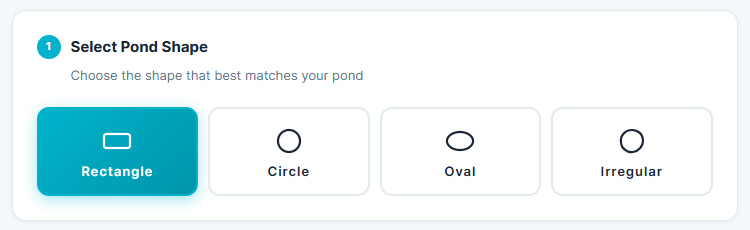
Start by choosing the shape that matches your pond — rectangle, circle, oval, or irregular. This is crucial because the shape determines the correct formula for accurate volume calculation.
- Pro Tip: Measure your pond carefully; small errors in dimensions can significantly affect volume.
Set Units
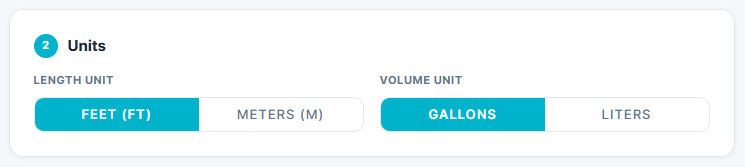
Choose the units for your measurements: Feet or Meters for length, and Gallons or Liters for volume. Selecting the correct units ensures accurate calculation and easy planning for pumps and filtration systems.
- Pro Tip: Use the same units as your pond equipment specifications to avoid conversion mistakes.
Enter Pond Dimensions
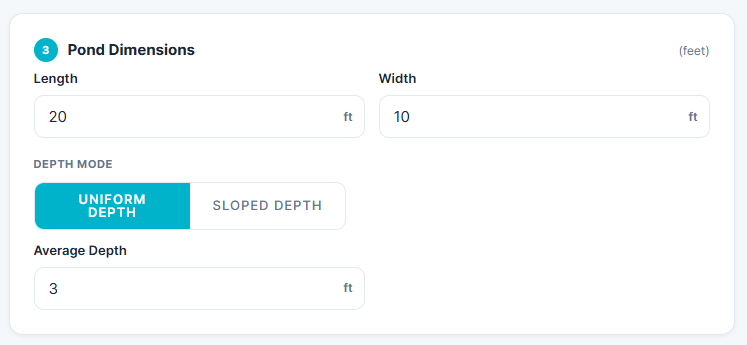
Input your pond’s length, width, and depth. For depth, select Uniform, Sloped, or Average Depth depending on your pond’s design. Accurate dimensions are key to getting correct volume and capacity results.
- Pro Tip: For sloped or irregular ponds, use the average depth for a more precise water volume estimate.
Calculate Volume & Gallons
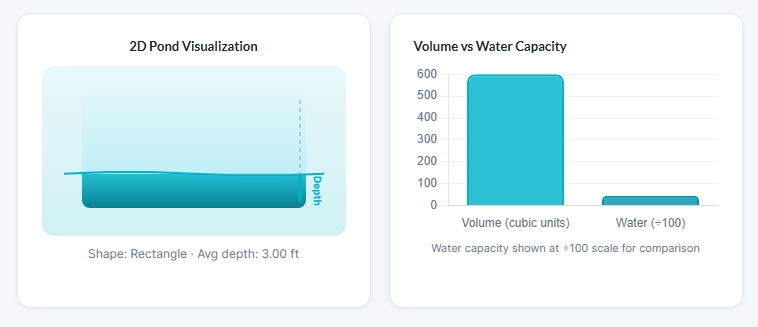
Click Start Calculating to instantly see your pond’s volume, gallons, surface area, and average depth. The calculator also provides smart recommendations for pump size, fish stocking, and plant coverage to maintain a healthy pond.
Pro Tip: Use these insights to select the right pump and filter — it ensures clear, healthy water for your fish.
View Live Results
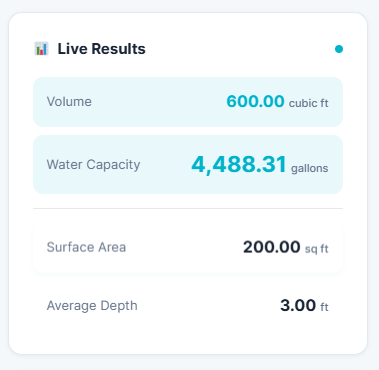
Once you input your pond dimensions and start calculating, the calculator displays live results showing volume, water capacity in gallons, surface area, and average depth. These numbers give you a clear snapshot of your pond’s size and capacity instantly.
Pro Tip: Use these live metrics to compare multiple pond designs quickly or validate your measurements before making any purchases.
Check Smart Insights
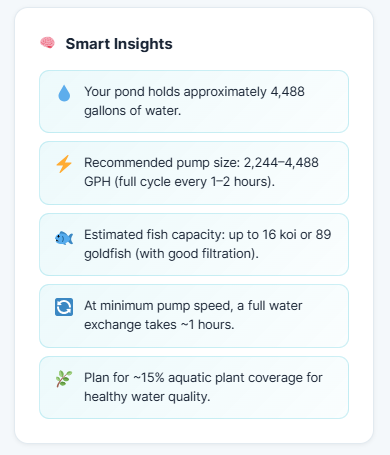
Our calculator goes beyond basic numbers by providing smart insights:
- Approximate water capacity in gallons
- Recommended pump size for full water turnover
- Fish stocking estimates (koi, goldfish, etc.)
- Suggested aquatic plant coverage for optimal water quality
These insights help you make informed decisions about pump selection, fish stocking, and pond health.
Pro Tip: Follow these recommendations to avoid overstocking fish or undersized pumps, ensuring a balanced and thriving pond ecosystem.
Save, Copy, or Download Results

You can copy results, download a PDF, or save your pond setup for future reference. This makes it easy to compare multiple ponds or plan upgrades and renovations.
Use Quick Conversion Guide
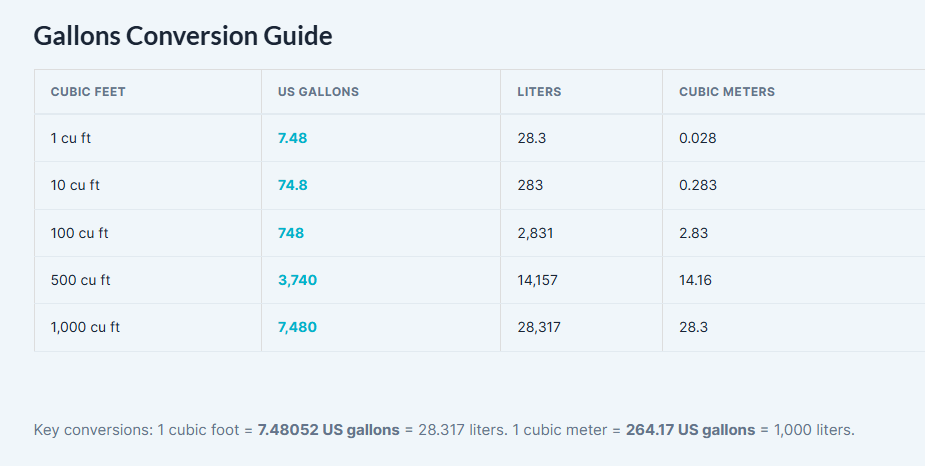
The calculator automatically converts cubic feet to gallons, liters, and cubic meters. This allows you to compare your pond volume with product specifications or international standards.
Pond Volume Formulas Explained
Calculate your pond’s volume accurately to design a healthy ecosystem, choose the right pump, and plan your fish stocking. Use our formulas for any pond shape: rectangle, circular, oval, or irregular.
1. Length × Width × Depth (Rectangle Ponds)
For rectangular or square ponds, multiply length × width × depth to get cubic feet, then convert to gallons. This is the easiest and most reliable method for backyard and garden ponds.
2. π (Pi) Formula for Circular Ponds
For round ponds, multiply π by the radius squared, then by the depth. This gives you cubic feet and works well for koi ponds, ornamental ponds, and water features.
3. Conversion Factors (Gallons & Liters)
To convert cubic feet to gallons, multiply by 7.48. For liters, multiply cubic feet by 28.317. These conversions ensure your pond volume matches USA measurement standards and help when sizing pumps, filters, and other equipment.
Use our calculator with US customary units (feet & gallons) or metric units (meters & liters). Get flexibility for planning, equipment purchases, and international product comparisons.
Pond Gallons & Water Capacity Guide
Pond Pump Size Calculator Guide
Common Pond Volume Calculation Mistakes
- Measuring Pond Depth: If you use only the maximum depth instead of an average or take sloped areas into account, you might overestimate your pond’s water volume. Take your time and measure carefully!
- Considering Pond Shape: Rectangular formulas don’t always work—circular, oval, or irregular ponds need their own special attention. Use the formula that fits your pond best!
- Checking Units: Mixing up feet with meters, or gallons with liters, is easy to do. Double-check your units to avoid mixing things up!
- Remembering Fish Capacity: Calculating the pond size incorrectly could mean your fish don’t have enough space to thrive. Let’s keep your fish happy and healthy by giving them plenty of room!
- Including Water Features: Features like waterfalls, streams, or fountains can slightly reduce your pond’s water volume. Don’t forget to include these when you’re doing your math!
Why Use Our Pond Calculator?
- ✅ Calculate pond volume, gallons, and water capacity
- ✅ Choose the right pump and filtration system
- ✅ Plan fish stocking and plant coverage
