Introduction
A common reason your pond pump runs, but no water flows, is an airlock in the pump. You might hear the motor working, yet your waterfall or filter stays dry. This issue can feel frustrating, especially if everything worked fine before.
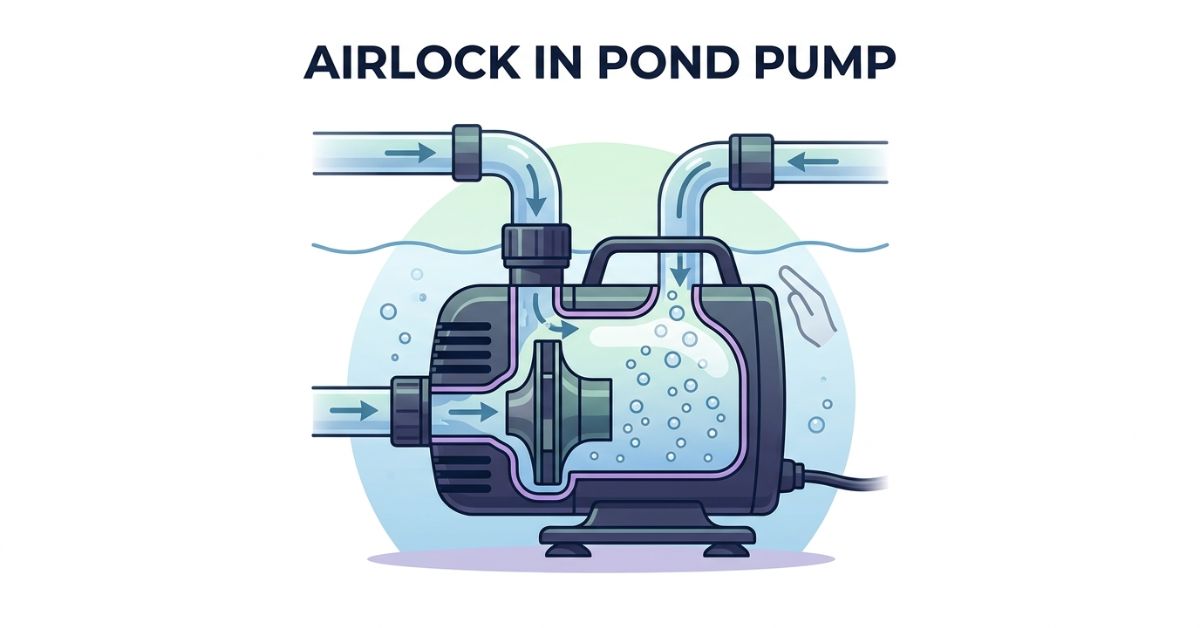
In most cases, the problem is simple. An airlock occurs when air becomes trapped, blocking water from moving through the pump or pipes. The good news? You can fix an airlock in just a few minutes without replacing your pump or calling a professional.
Once you understand why airlocks happen, they become easy to handle. Many pond owners deal with an airlock after cleaning their pump or refilling their pond. It’s a normal issue, not a serious failure.
In this guide, you’ll learn what causes a pond pump airlock, how to fix it step by step, and simple ways to prevent it from coming back. Start troubleshooting now and regain clear water flow today!
Quick Answer
An airlock in a pond pump happens when trapped air blocks water from flowing through the pump or pipes. This stops circulation, even though the pump motor is running.
To fix it, turn off the pump, release the trapped air by tilting or priming the pump, then restart it. In most cases, this restores normal water flow within minutes.
“If your pump continues to struggle even after clearing an airlock, check out our pond pump troubleshooting guide for step-by-step solutions to common problems.”
What Is an Airlock in a Pond Pump
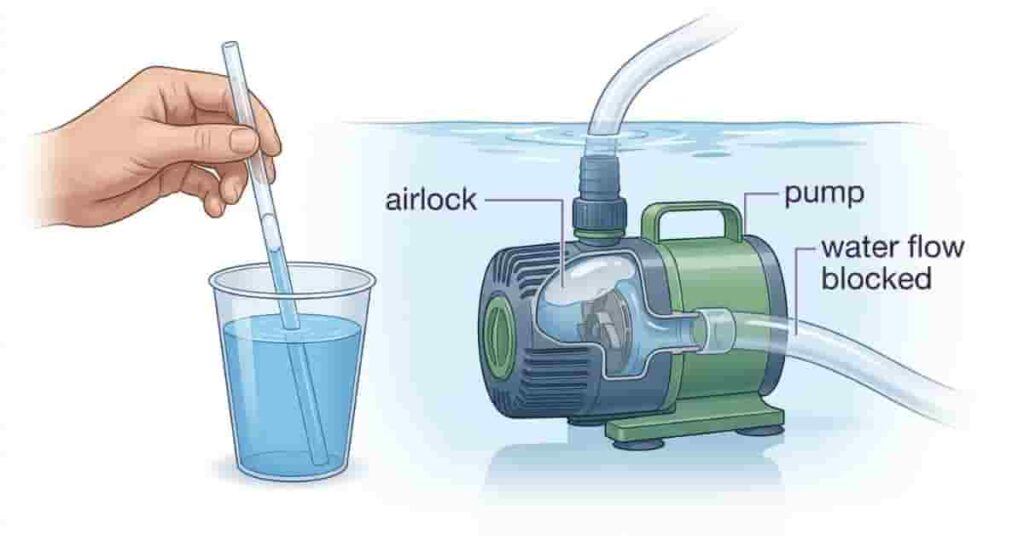
An airlock occurs when trapped air in the pump or pipes halts water flow, even if the motor is running.
It’s like sucking air through a straw—water won’t move until the air clears. Air in the pump or tubing blocks flow.
Airlocks often occur after you clean the pond, refill it, or restart the pump. Even small air pockets can stop circulation. A pump may sound normal, but not move water.
This problem often affects: Submersible pond pumps inside the pond.
- Waterfall systems with long or elevated tubing
Recognize this issue to fix and prevent it efficiently.
Signs Your Pond Pump Has an Airlock
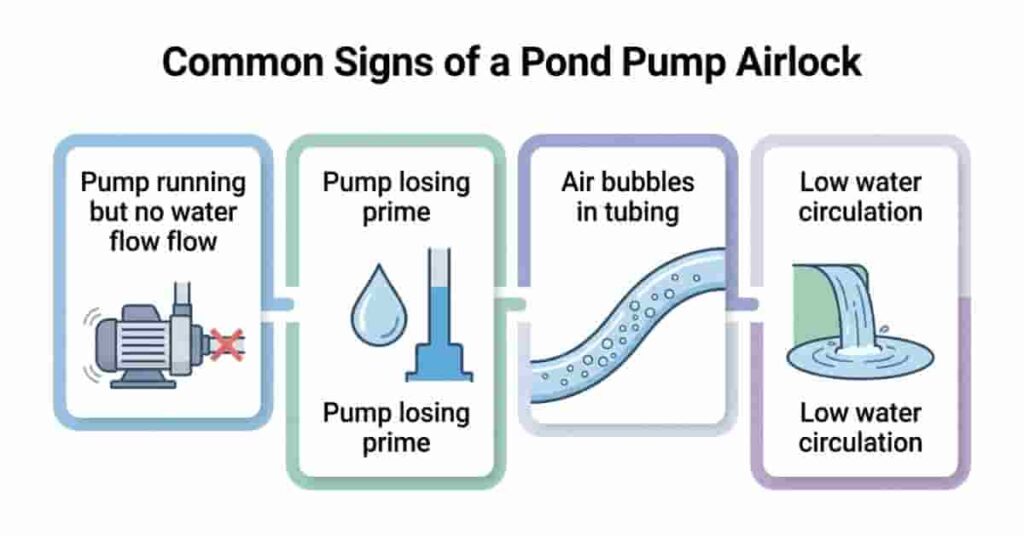
Common signs are sudden changes in how the pump runs and water moves, especially after cleaning or restarting.
Pump Running but No Water Flow
This is the clearest sign: the motor runs, but no water comes out.
Trapped air blocks water. Many think the pump is broken, but usually it just needs the air released.
Pump Losing Prime
A pump may start, then quickly stop moving water. You might see water flow for a few seconds, then slow or stop.
This often means air is stuck in the system. The pump can’t keep pressure, so the flow is unstable.
Air Bubbles in Tubing
Air bubbles in hoses or pipes are a strong sign of an airlock. Bubbles interrupt flow and lower pump efficiency.
If you see bubbles in clear tubing, air is likely trapped.
Low Water Circulation in the Pond
Weak movement is a common symptom. Waterfalls look slow, or filters may get less water.
Poor circulation hurts water quality, so fix it quickly.
Pro Tip: If your pump shows more than one of these signs, check for an airlock first before inspecting for mechanical damage.
What Causes an Airlock in Pond Pumps
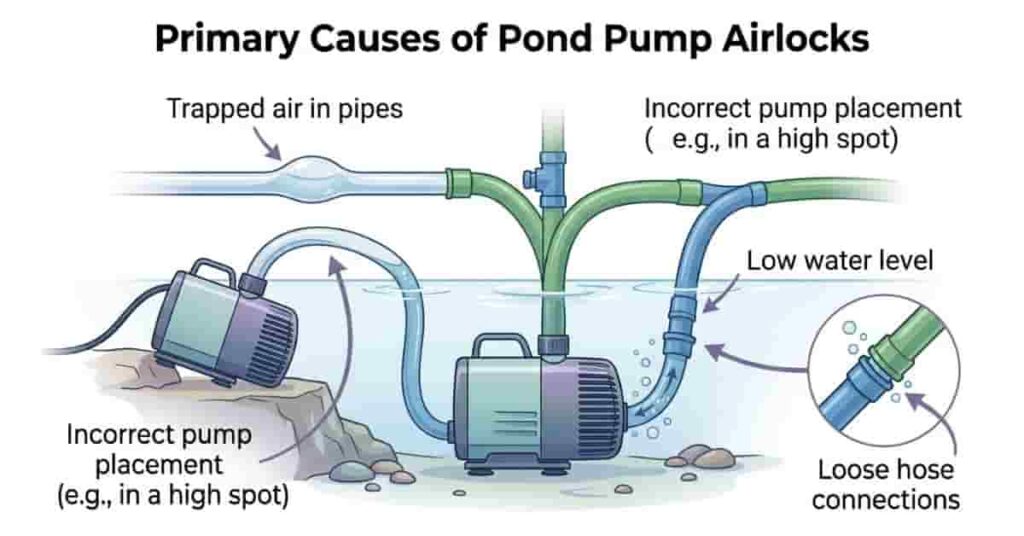
Airlocks form when air becomes trapped in the system, often during maintenance or due to setup issues. Knowing the cause helps fix and prevent it.
Trapped Air in Pipes
Air remains in pipes after cleaning or restarting your pump. Draining or disconnecting parts lets air in.
If you restart the pump without removing air, water flow is blocked. This is a major cause of airlocks.
Incorrect Pump Placement
If the pump isn’t submerged, it pulls air. Even a slight tilt or shallow position causes problems.
Submersible pumps need full water coverage to work properly. If any part of the intake is exposed, air can enter and cause blockage.
Low Water Level
A low pond water level can also lead to airlocks. When water drops below the pump intake, it starts pulling in air.
Low water levels stop proper flow and strain the pump. Check water levels regularly to prevent this.
Loose Hose Connections
Loose hose connections let air leak into the system. These leaks disrupt water flow.
A slightly loose-fitting can let in enough air to cause an airlock.
Pro Tip: After any maintenance, always check pipes and connections before restarting your pump to avoid trapped air issues.
“Regular maintenance helps prevent airlocks, so make sure to follow our pond pump cleaning tips to keep your system running smoothly.”
How to Fix an Airlock in a Pond Pump (Step-by-Step)
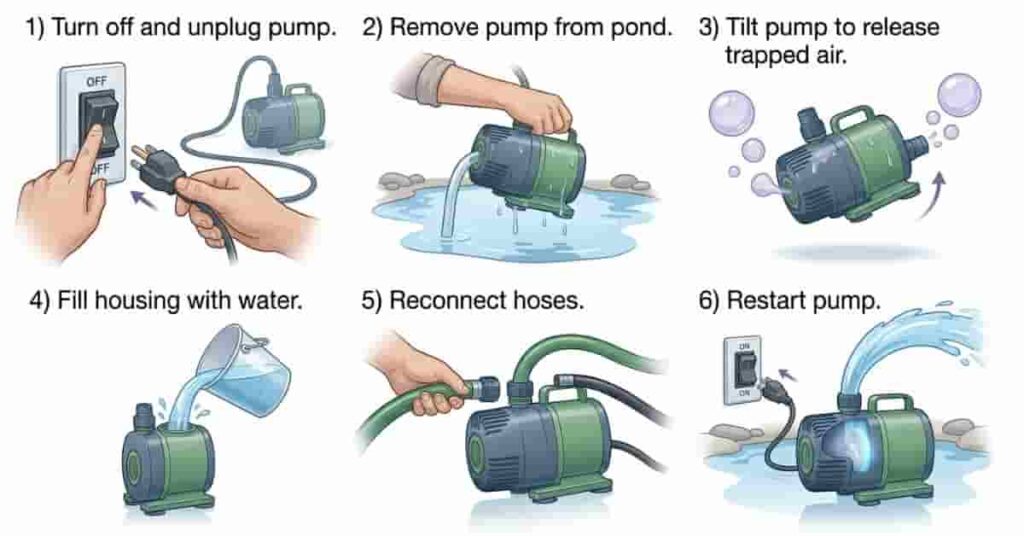
Fixing a pond pump airlock is quick and easy. You can restore water flow in minutes using simple steps.
⚠️ Always unplug the pump before handling it to avoid electrical hazards.
⏱️ This process usually takes 5–10 minutes.
Step 1: Turn Off and Unplug the Pump
Start by switching off the pump and unplugging it from the power source. This keeps you safe while handling water and electrical equipment.
Never try to fix the pump while it is still running.
Step 2: Remove the Pump from the Pond
Carefully lift the pump out of the water. Hold it steady to avoid damaging any attached hoses or fittings.
Place it on a flat surface where you can easily inspect it.
Step 3: Tilt the Pump to Release Trapped Air
Tilt and rotate the pump gently to let trapped air escape from the housing.
You may notice small air bubbles coming out as you do this.
Step 4: Fill the Pump Housing with Water (Prime It)
Pour clean water into the pump housing to remove any remaining air. This process, called priming, helps the pump start properly.
Make sure the pump is fully filled before moving to the next step.
Step 5: Reconnect Hoses Tightly
Attach all hoses back to the pump and ensure they are secure. Check for any loose fittings that could allow air to enter again.
A tight seal is important for smooth water flow.
Step 6: Restart the Pump and Check Water Flow
Place the pump back into the pond and turn it on. Watch the water flow closely to confirm the issue is fixed.
If water starts moving normally, the airlock has been successfully removed.
Pro Tip: If the flow is still weak, repeat the tilting and priming steps once more to remove any remaining air.
Fix Airlock Without Removing the Pump (Quick Method)
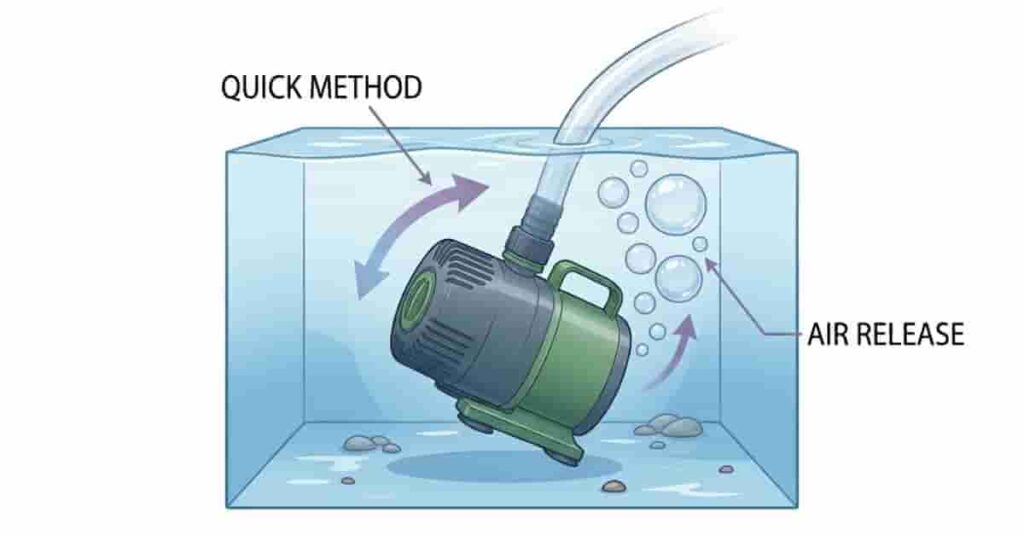
If the airlock is minor, you may not need to remove the pump at all. This quick method works well for small air pockets and can save time.
In many cases, you can restore water flow in just 1–2 minutes using this simple approach.
Start by keeping the pump underwater and gently lifting it slightly off the pond base. Then tilt it at different angles to help trapped air escape. You may notice bubbles rising as the air releases.
Once you’ve done this, place the pump back in position and restart it. Check the water flow to see if it has returned to normal.
This method works best when the airlock is small and caused by recent movement or minor air entry. If the problem continues, you may need to follow the full step-by-step fix.
Pro Tip: Adjust the pump angle while running to release hidden air pockets quickly.
How to Prevent Airlocks in Pond Pumps
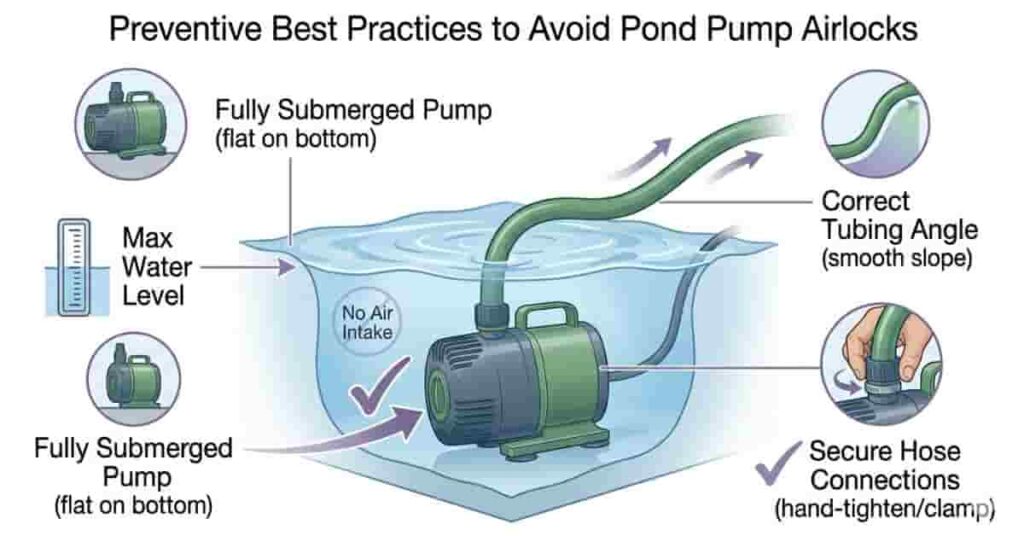
Preventing airlocks is easier than fixing them, and following a few best practices keeps your pond running smoothly. Small adjustments can save you time and protect your pump from unnecessary wear.
Keep Pump Fully Submerged
Always place your pump completely underwater. A fully submerged pump reduces the chance of air entering the system. Even a small exposed section can create air pockets that stop water flow. This is especially important for submersible pumps in shallow ponds.
Maintain Proper Water Level
Check your pond water regularly and keep it at the recommended level for your pump. Low water levels can allow air into the intake, causing frequent airlocks. Maintaining a steady water level is a simple but effective preventive measure.
Use Shorter Tubing / Proper Angle
Long or sharply angled tubing increases the risk of trapped air. Use shorter pipes where possible and ensure a smooth, downward slope from the pump to the filter or waterfall. Proper alignment allows water to flow more easily and reduces the formation of air pockets.
Check Connections Regularly
Inspect hoses and fittings for tightness and wear. Loose connections can let air leak into the system, leading to repeated airlocks. Securing all joints and replacing worn hoses are best practices that keep your pump performing efficiently.
Pro Tip: Add these steps to regular maintenance. Weekly attention prevents airlocks and extends pump life.
When It’s Not Just an Airlock ⚠️
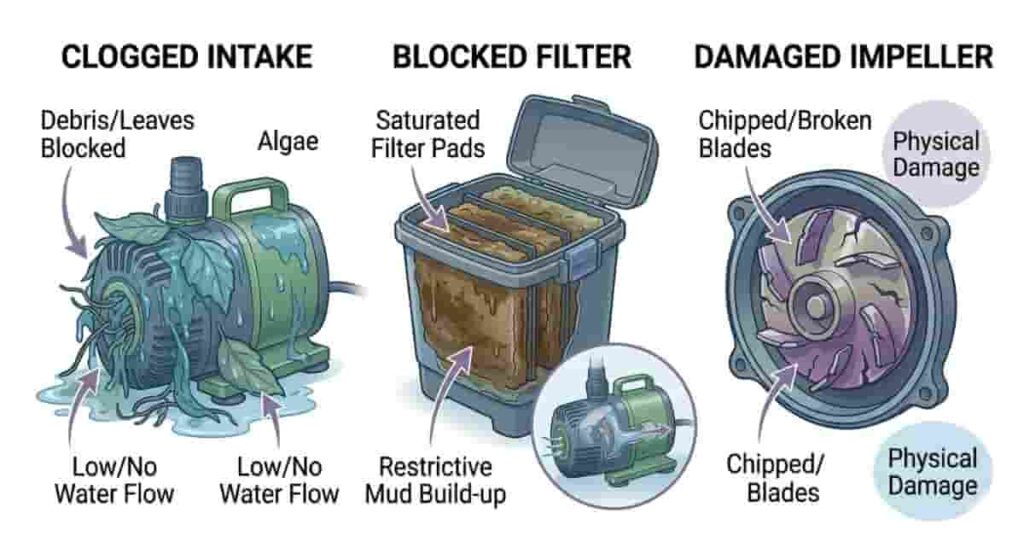
If the pump doesn’t work after releasing air, more serious problems may exist. Check other issues before assuming pump failure.
Common causes include a clogged pump intake. Leaves, algae, and debris can block water from entering, reducing flow even if the pump motor runs normally. A blocked filter can also restrict water movement, leading to weak circulation or no flow. In some cases, a damaged impeller—the part that moves water—may prevent the pump from operating correctly.
Before attempting repairs, inspect these components carefully. Following a systematic approach saves time and prevents further damage. For a complete step-by-step guide, see our Pond Pump Troubleshooting Guide.
Pro Tip: Regularly clean the intake and filter to avoid problems and extend pump life.
Quick Troubleshooting Checklist 📋
Follow this checklist to quickly fix common pond pump airlock problems and save time.
- Check Water Level: Ensure the pond water covers the pump intake completely. Low water can let air in, causing an airlock.
- Inspect Hoses: Look for loose or damaged hoses that might allow air to enter the system. Tighten or replace as needed.
- Tilt Pump: Gently lift and tilt the pump to release trapped air inside the housing or tubing.
- Prime Pump: Fill the pump housing with water to remove remaining air and help the pump start smoothly.
- Restart and Test: Turn the pump back on and observe water flow. Repeat steps if the flow is still weak.
Pro Tip: Keep this checklist handy for quick maintenance. Regular checks prevent airlocks and keep your pond circulation strong.
Conclusion
Airlocks in pond pumps are a common issue that can stop water flow, but they’re usually easy to fix. We covered the main causes, signs, step-by-step fixes, and prevention tips to keep your pump running smoothly. Understanding how to remove an airlock from a pond pump helps you restore circulation quickly and avoid stressing your equipment. Regular maintenance, proper pump placement, and checking hoses can prevent future airlock problems and protect your pond ecosystem.
If you found these tips helpful, share your experience or ask questions in the comments below. You can also explore our other pond care guides to keep your pond healthy year-round.

Michael Brooks and Sarah Lane are the co-founders of the Pond Pump Team, a trusted U.S.-based group helping homeowners and landscapers build better ponds and water features. Michael, an experienced pond engineer from Oregon, has worked for over 12 years on pump sizing, flow systems, and water circulation. Sarah, a pond designer from Colorado with nine years of experience, focuses on eco-friendly and easy-to-maintain pond and waterfall designs. Together, they’ve completed more than 180 pond projects and created tools like the Pond Pump Calculator and Pond Liner Calculator to make pond planning simple, accurate, and sustainable.
Need help with your pond setup? Contact the Pond Pump Team for expert advice and reliable solutions.