Introduction
Have you ever dreamed of turning your backyard into a peaceful water retreat? A garden pond can instantly boost your outdoor space, adding beauty, calm, and a lively habitat for birds, frogs, and beneficial insects. For beginners in the USA, setting up a pond might feel overwhelming. Choosing the right pump, filter, and layout can be confusing, and in small spaces, extra planning is needed to ensure your pond thrives.
This guide will show you exactly how to set up a small garden pond from scratch. You’ll learn step-by-step tips for setting up a garden pond, including choosing the right pump, installing filters, and selecting plants and fish that suit your space. By the end, you’ll have the confidence to create a vibrant, easy-to-maintain pond that enhances your backyard. Whether it’s a quiet retreat or a lively water feature, this guide covers everything you need for a successful small garden pond setup.
If you’re just getting started, this beginner’s backyard pond setup guide will help you understand the fundamentals.
Planning Your Garden Pond
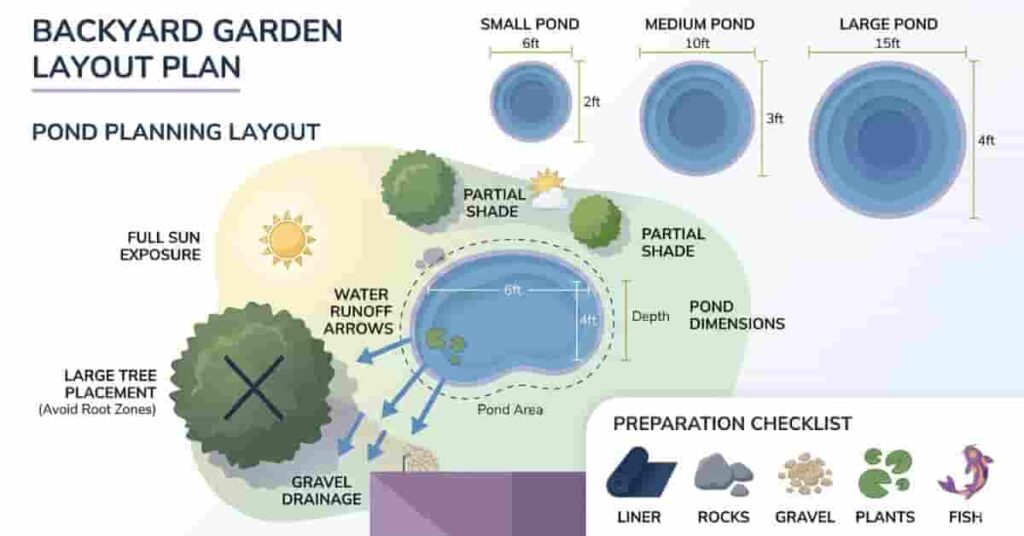
Planning your garden pond is key to achieving long-term success—don’t start digging yet! Considering location, size, and budget in advance will make maintenance easier and keep your pond healthy. Beginners in the USA sometimes overlook seasonal factors, such as freezing winters and hot summers, which can affect pump performance and plant growth. Careful planning leads to a thriving pond all year.
Choosing the Right Location
Select a spot with partial sunlight: too much sun causes algae, but too little hinders plant growth. Avoid building your pond beneath large trees, since falling leaves can clog pumps and filters. When considering natural water runoff and the backyard layout, plan carefully. In colder US regions, ensure your pond is less likely to freeze entirely during winter. For hotter states, some shade will protect fish and plants from extreme heat. Installing the liner is much easier on a stable, level area.
Deciding Pond Size & Shape
Small ponds (50–500 gallons) are ideal for patios or tiny backyards. For more spacious yards, medium (500–2,000 gallons) or large (2,000+ gallons) ponds are a better fit. Whether rectangular, kidney-shaped, or naturally curving, pond shapes can blend with your landscaping. Design your pond to fit your available space and best complement your garden style.
Budget & Materials Checklist
For a DIY pond, you’ll need a liner, pump, filter, rocks, gravel, plants, and fish. Depending on your plan, costs vary widely: small DIY ponds may cost $200–$500, while professional installations or larger ponds can reach $2,000 or more. Remember to factor in seasonal maintenance tools and replacement filters for smooth pond operation.
Selecting the Right Pond Type
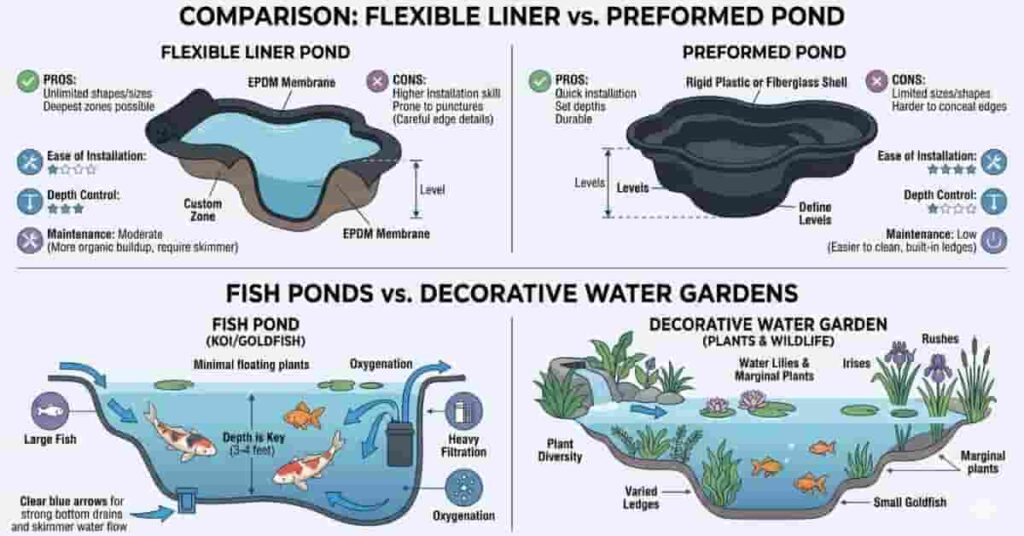
Choosing the right type of pond is an exciting first step in creating your perfect garden pond. The pond type you pick will affect installation, maintenance, and which plants or fish you’ll enjoy. Many beginners in the USA find themselves wondering whether a flexible liner or a preformed pond works best, and whether to focus on fish or beautiful plants. Exploring your options helps you create a pond that matches your space, budget, and lifestyle—let’s make it fun! Next, let’s compare flexible liners and preformed ponds to help you decide.
Flexible Liner vs Preformed Ponds
With flexible liners made of rubber or PVC, you can shape your pond however you like; this is ideal for those pursuing a natural look or wanting a unique design. Although installing a flexible liner pond requires digging and attention to leveling and securing edges, expanding it in the future is relatively simple. On the other hand, preformed ponds offer fixed shapes and sizes, making setup quick and straightforward for beginners. You’ll find that preformed ponds limit your options for plant placement or fish, due to their inflexible design. While maintenance is similar between the two types, liners may occasionally require patching. Choose what feels best—pick the right fit for your project and preference.
Fish vs Decorative Garden Ponds
Consider what brings you more enjoyment: a lively fish pond or a tranquil water garden filled with blooming plants. For fish lovers, koi or goldfish thrive in deeper ponds (18–36 inches) with robust filtration. Prefer flowers and greenery? You might lean toward water lilies, floating plants, or oxygenators, usually best at shallower depths. Combining both creates vibrant small backyard ponds—imagine colorful fish weaving through lush plants for a balanced, beautiful effect.
Small Garden Pond Setup Tips
Even within a small space, you can create a fabulous pond. While keeping it compact, make it deep enough for healthy fish and steady water flow. Place the pump at the deepest point to encourage good circulation throughout the pond. Enhance both function and appearance by lining the edges with rocks or gravel, which also helps prevent erosion. As you arrange plants, allow them room to grow and keep some open water for sunlight and for fish to swim. Following these simple tips encourages a healthy, year-round, small garden pond.
Planning to build a custom pond? Follow this DIY pond construction guide for a complete walkthrough.
Installing Your Garden Pond – Step by Step
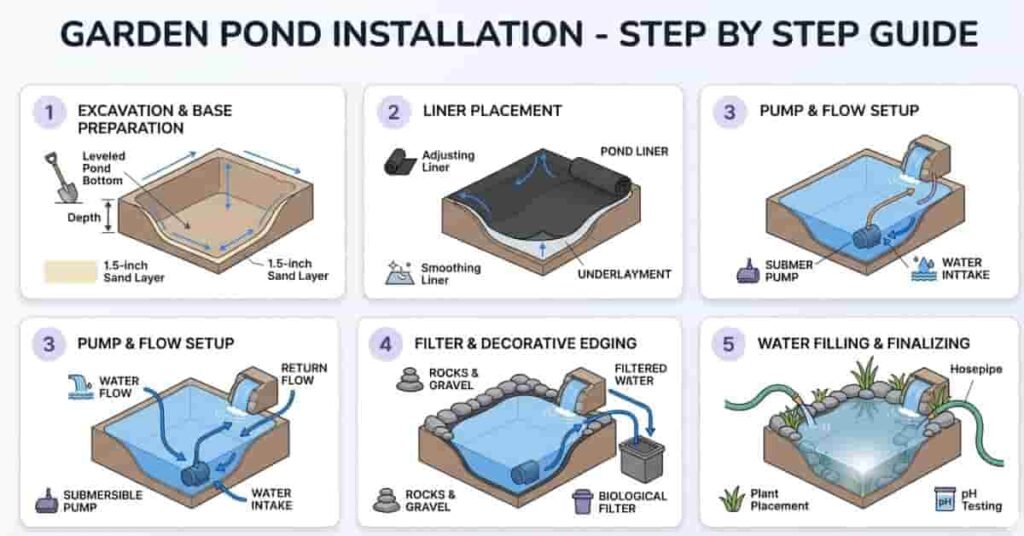
Once your pond type and location are planned, it’s time for installation. Proper setup ensures healthy water, thriving plants, and happy fish. Beginners often overlook details such as proper leveling, pump placement, and water treatment. Following each step carefully prevents common problems and keeps maintenance manageable. This section covers everything from digging to filling, with clear tips for a successful garden pond.
Excavation & Liner Placement
First, mark the pond’s shape with rope or spray paint. While excavating, dig carefully and add plant shelves if desired. Check that your pond floor is level to prevent uneven water depth later. Protect the liner from roots or rocks by spreading a thin layer of sand on the bottom. Lay the flexible liner with care, smoothing out wrinkles as you go. Be sure the extra liner extends past the edges—you’ll secure it with rocks or edging later. The right liner placement helps prevent leaks and simplifies future maintenance.
Pump Installation
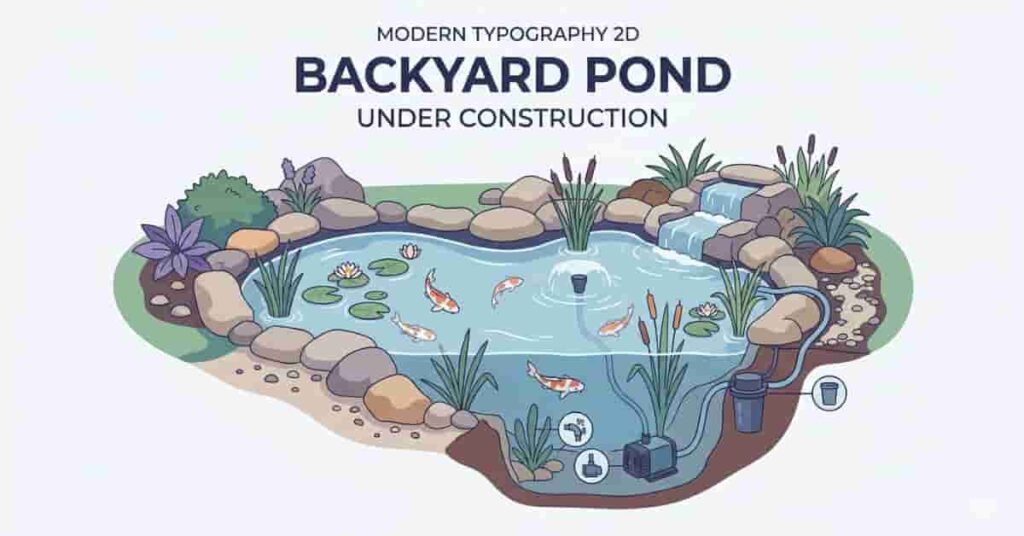
Choosing the right pump is critical for clean water and circulation. Calculate the pump flow rate based on the pond volume: typically, you want the pump to circulate the entire pond volume once every 2 hours. Place the pump at the deepest part of the pond for optimal suction. Connect hoses securely and test the flow before covering with rocks or gravel. A correctly installed pump reduces debris buildup and keeps fish healthy.
Target keyword: garden pond pump setup
Filter Setup
Filters keep water clear and healthy. Mechanical filters remove debris, while biological filters support beneficial bacteria that break down waste. Install the filter according to the manufacturer’s instructions, ensuring proper flow from the pump. Position hoses to avoid kinks and maintain consistent circulation. Clean or backwash filters regularly, especially during the fall when leaves accumulate.
Target keyword: garden pond filter setup
Rocks, Gravel & Landscaping
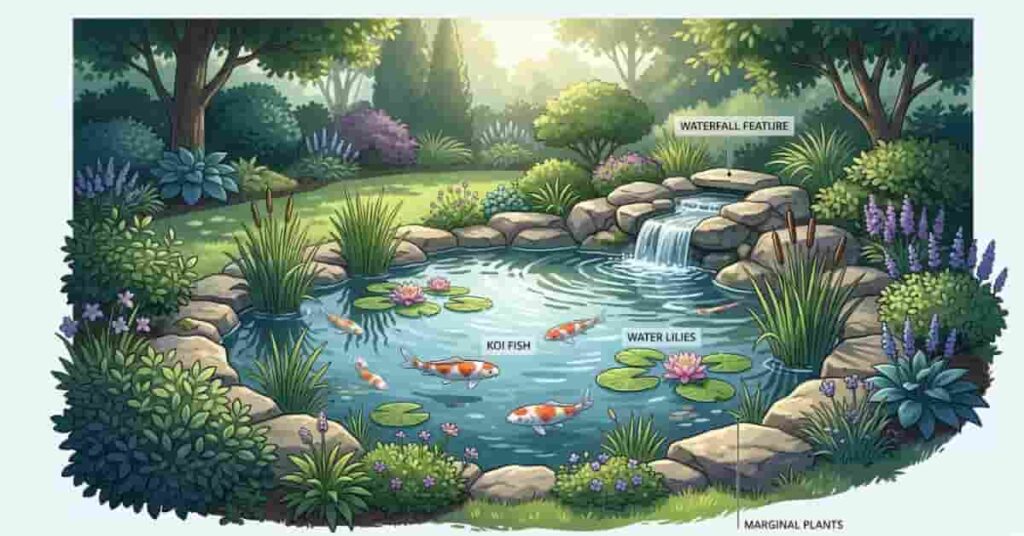
Edge your pond with rocks or gravel to hide liner edges and create a natural look. Place marginal plants on shelves and floating plants in open water. Avoid overcrowding plants—they need sunlight and circulation. Adding a few decorative features, like stepping stones or a small waterfall, enhances aesthetics without complicating maintenance.
Filling Pond & Water Treatment
Filling your new pond is exciting! Use dechlorinated water and take it slow. It’s a great idea to check water levels—like pH, ammonia, and nitrites—before you welcome any fish. Get your plants in place first, then let your fish gradually get used to their new home for a smooth transition. With the right prep, your pond will be a healthy, beautiful haven all season long.
Adding Plants, Fish & Wildlife
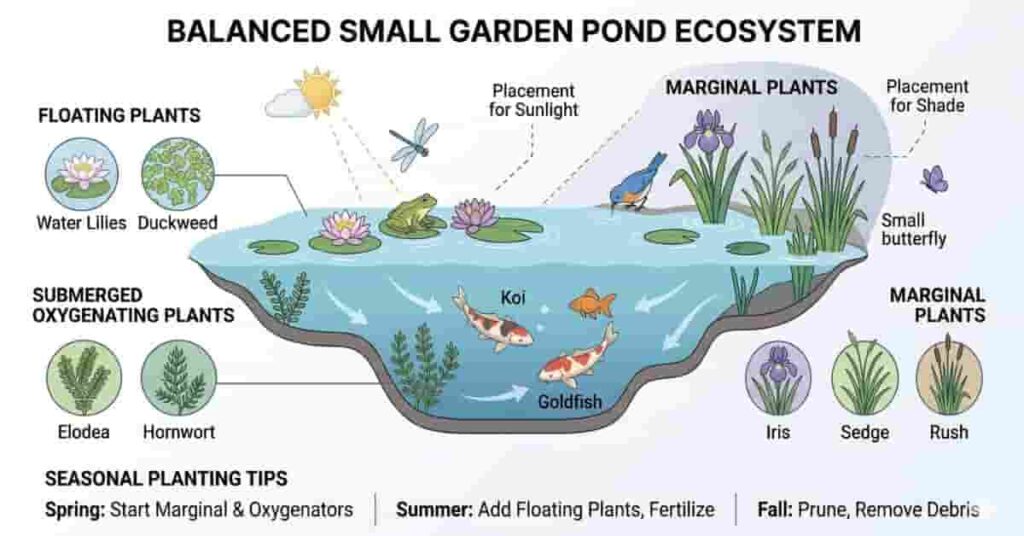
A thriving garden pond isn’t just about water—it’s about life. Adding the right plants, fish, and wildlife enhances beauty, keeps the ecosystem balanced, and makes your backyard a peaceful retreat. Beginners in the USA often overlook seasonal considerations or fish needs, but careful planning ensures long-term success. This section covers aquatic plants, fish care, and ways to attract beneficial wildlife.
Aquatic Plants
Choose a mix of floating plants, oxygenators, and marginal plants to keep your pond healthy. Floating plants like water lilies provide shade, reduce algae, and offer shelter for fish. Oxygenating plants, such as hornwort or anacharis, improve water quality by releasing oxygen and absorbing nutrients. Marginal plants along the edges help stabilize the soil and create a natural look. In colder US regions, move sensitive plants indoors during winter or use hardy varieties. In warmer climates, rotate seasonal plants to maintain continuous growth and color. Proper plant selection balances sunlight, shade, and water quality.
Fish Selection & Care
Small ponds are best suited for fish like koi, goldfish, or small native species. Avoid overcrowding; each fish needs enough space to swim freely. Feed fish once or twice daily with high-quality pond food, and remove uneaten food to prevent water quality issues. Winter care depends on your climate: in colder regions, ensure ponds are deep enough to prevent freezing completely, and in warmer areas, maintain adequate shade and aeration. Regular water testing and observation keep fish healthy and stress-free.
Supporting Backyard Wildlife
A garden pond can attract frogs, beneficial insects, and birds, creating a lively ecosystem. Add rocks and shallow edges for amphibians, and plant flowering margins to draw pollinators. Floating plants or small islands offer shelter for birds and insects. Avoid chemicals or pesticides near your pond, and provide clean water access. Supporting wildlife not only enhances aesthetics but also helps control pests naturally.
Maintaining a Healthy Garden Pond
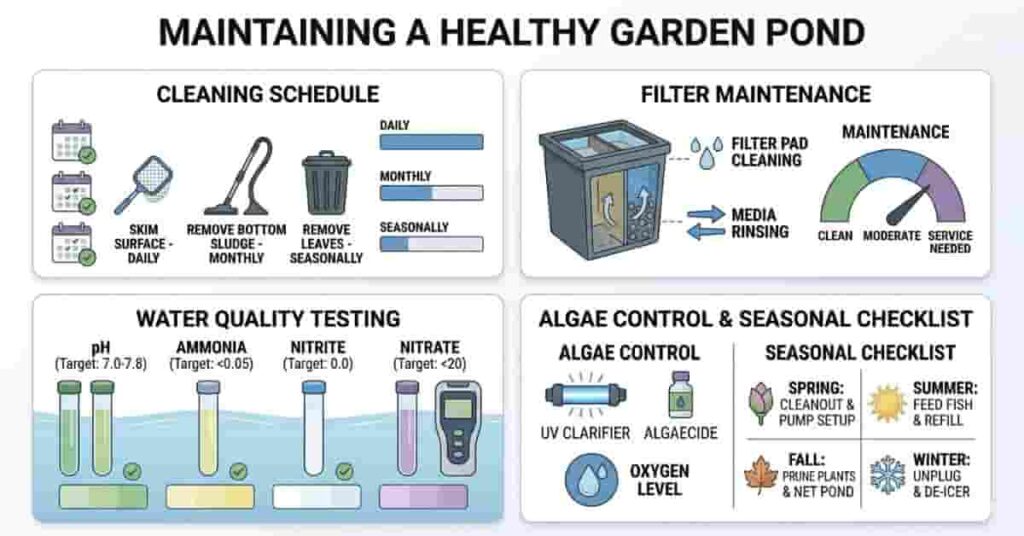
Keeping your pond clean and balanced is essential for clear water, healthy fish, and thriving plants. Many beginners in the USA underestimate maintenance, which can lead to algae blooms, debris buildup, and stressed fish. With a simple routine and seasonal care, even small garden ponds stay beautiful year-round. This section covers practical tips on cleaning, water testing, algae control, and seasonal tasks.
Cleaning Schedule for Debris and Filter
Remove leaves, twigs, and debris from the pond weekly or as needed, especially in the fall when trees shed heavily. Clean the pump and filter regularly—mechanical filters trap debris, while biological filters support beneficial bacteria. Avoid using harsh chemicals; rinse with pond water or a soft brush. Keeping filters and pumps in good condition ensures water circulates properly, reducing fish stress and preventing water stagnation.
Water Quality Testing
Test pH, ammonia, nitrite, and nitrate levels at least once a month. Proper water quality supports fish health and plant growth. Adjust pH with natural additives if necessary, and remove excess nutrients with aquatic plants or water changes. Monitoring water prevents surprises like cloudy water, algae, or fish illness.
Algae Control Tips
Algae can be controlled by balancing sunlight, plants, and nutrients. Floating plants provide shade, and oxygenators consume excess nutrients. Avoid overfeeding fish, and remove dead leaves promptly. For persistent algae, use a safe pond algaecide or introduce algae-eating fish, such as goldfish or snails.
Enhancing Your Garden Pond
Once your pond is established and healthy, adding enhancements can make it a stunning focal point in your backyard. Even small ponds can feel luxurious with a few thoughtful features. Enhancements improve both aesthetics and functionality, creating a peaceful retreat while supporting fish and plants. Beginners in the USA can choose budget-friendly options that suit their space and style.
Waterfalls and Fountains
Adding a waterfall or fountain introduces movement and soothing sound. Flowing water increases oxygen levels, which benefits fish and plants. Small pre-formed waterfalls or pump-driven fountains are perfect for compact ponds. Position features where water can circulate efficiently without splashing over plants or edges. Beyond beauty, moving water helps prevent algae and keeps water fresh.
Lighting
Underwater or perimeter lighting transforms your pond at night. LED lights are energy-efficient and safe for aquatic life. Highlight plants, fish, or water features to create a relaxing ambiance. Solar-powered options are great for eco-friendly setups and reduce electricity use.
Small Pond Design Ideas
Maximize space by using rocks, gravel, and tiered plant shelves to create depth and interest. Incorporate floating plants and small islands for visual appeal. Consider a natural layout with curved edges or a minimalist rectangular pond for modern gardens. Combining design elements with functionality ensures your pond remains beautiful and easy to maintain.
For larger and more decorative setups, explore this backyard pond setup guide with landscaping ideas and design tips.
Conclusion
Creating a beautiful backyard pond is easier than it seems. This guide covered every step of garden pond setup, from planning and choosing the right pond type to installing pumps, filters, plants, and fish. You also learned tips for maintenance, seasonal care, and enhancing your pond with features like waterfalls and lighting.
Starting small is often best. A compact pond is easier to manage, allows you to learn, and can be scaled up over time. For detailed guidance, visit our [pond maintenance guide] and [backyard pond setup guide] for expert tips. Take the first step—create your pond today and enjoy the rewarding process as your backyard comes to life with water, plants, and wildlife.

Michael Brooks and Sarah Lane are the co-founders of the Pond Pump Team, a trusted U.S.-based group helping homeowners and landscapers build better ponds and water features. Michael, an experienced pond engineer from Oregon, has worked for over 12 years on pump sizing, flow systems, and water circulation. Sarah, a pond designer from Colorado with nine years of experience, focuses on eco-friendly and easy-to-maintain pond and waterfall designs. Together, they’ve completed more than 180 pond projects and created tools like the Pond Pump Calculator and Pond Liner Calculator to make pond planning simple, accurate, and sustainable.
Need help with your pond setup? Contact the Pond Pump Team for expert advice and reliable solutions.