Table of Contents
Introduction
Have you noticed green water or slimy growth in your pond and wondered if something is wrong? Pond algae are a natural part of every pond, but too much can quickly turn clear water into a frustrating mess. For many beginners in the USA, it can be difficult to tell whether algae in a pond is harmless or a sign of a bigger problem. Without the right knowledge, it’s easy to waste time and money on treatments that don’t solve the real cause.
The good news is that understanding pond algae doesn’t have to be complicated. Once you know why it grows and how different types behave, keeping your pond healthy becomes much easier.
In this guide, you’ll learn what is pond algae, the most common pond algae types, what causes algae growth, and whether it is good or bad for your pond. You’ll also discover simple ways to control algae and prevent future blooms, helping you maintain cleaner water and healthier fish with confidence.
What Is Pond Algae?
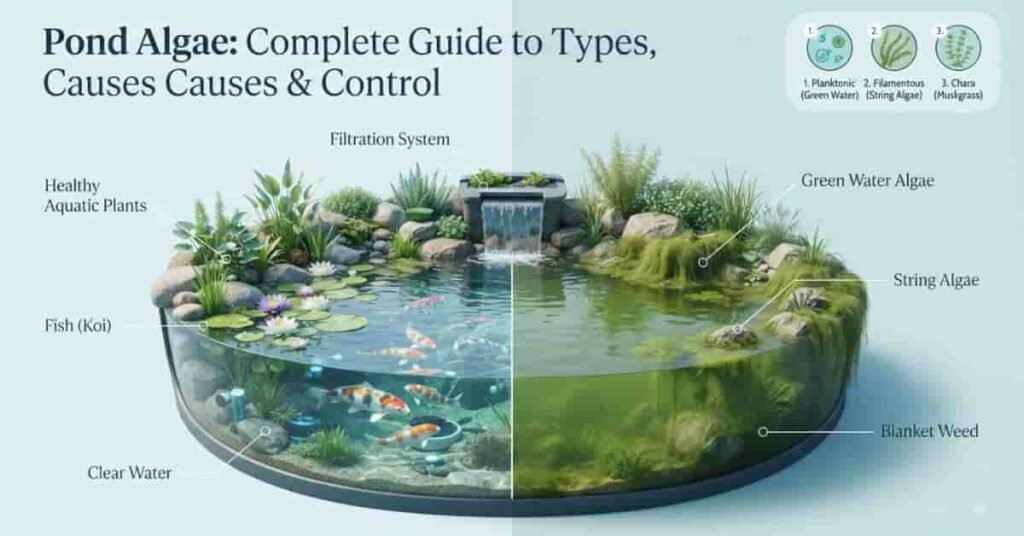
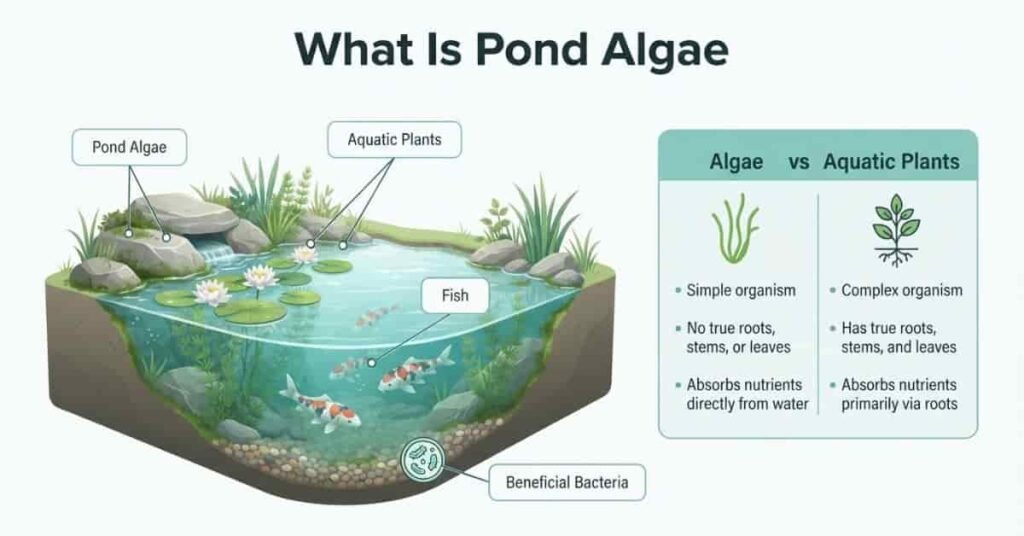
Pond algae are simple aquatic organisms that grow naturally in water. Unlike most plants, algae do not have true roots, stems, or leaves. They use sunlight, water, and nutrients to make their own food through photosynthesis. A small amount of pond algae is normal and even helps support a healthy pond ecosystem.
Many beginners mistake algae for aquatic plants, but they are different. Aquatic plants have roots and other plant structures that help stabilize the pond and provide shelter for fish. Algae, on the other hand, can grow as tiny floating cells, long green strands, or mats that spread across the water’s surface. This is why algae in pond systems can look very different depending on the species.
While algae produce oxygen during the day, excessive growth can create problems. Thick algae blooms may block sunlight, reduce water clarity, and compete with other pond plants for nutrients. When large amounts of algae die, they decompose and use oxygen, which can stress fish and beneficial bacteria.
Understanding what is pond algae is the first step toward keeping your pond balanced. Instead of trying to remove every trace of algae, focus on preventing excessive growth. A healthy pond usually contains a small amount of algae without harming fish or water quality.
Expert Tip: Don’t aim for an algae-free pond. A small amount of algae is completely normal and often indicates a functioning aquatic ecosystem.
Pond algae can grow for several reasons, including excess nutrients, sunlight, and poor water circulation. If you want to understand these factors in more detail, learn about what causes algae in ponds and why certain conditions encourage rapid growth.
Why Does Algae Grow in Ponds?
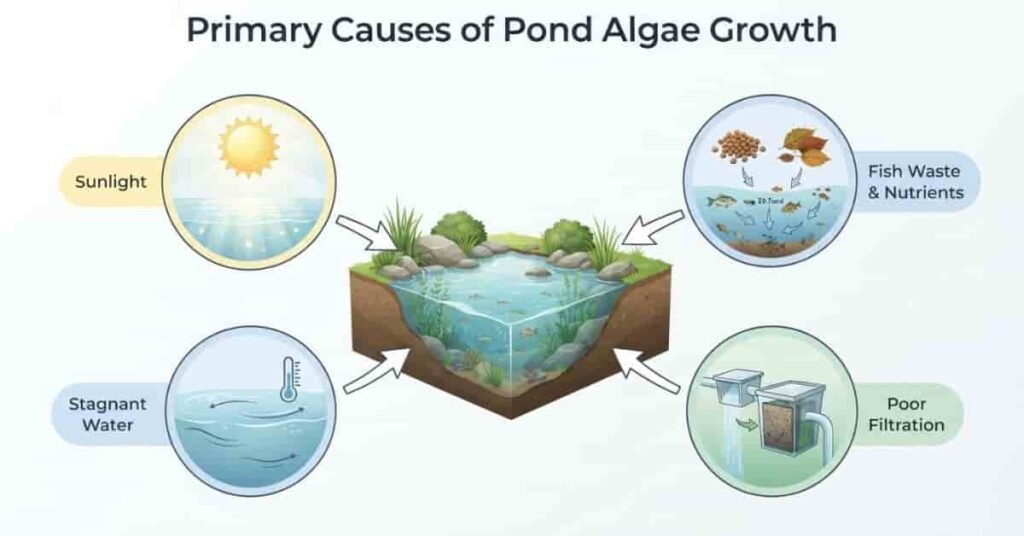
Algae grow when they have the right combination of sunlight, nutrients, and water. Since these conditions exist in most ponds, some algae growth is completely natural. Problems begin when algae receive more resources than the pond can naturally balance.
Sunlight is one of the biggest factors. Algae use sunlight to produce energy, so ponds with long hours of direct sun often experience faster growth. During warm months, this process speeds up even more, making green water and string algae more common.
Excess nutrients also fuel algae blooms. Fish waste, uneaten food, decaying leaves, and plant debris release nitrogen and phosphorus into the water. These nutrients act like fertilizer for algae, allowing them to multiply quickly. Overfeeding fish or skipping regular pond maintenance can make the problem worse.
Water movement plays an important role as well. Stagnant water creates conditions where algae can thrive. A pond without enough circulation or oxygen often struggles to maintain a healthy balance. Poor filtration allows waste and nutrients to build up, giving algae an even greater advantage.
The good news is that most algae problems have simple causes. By limiting excess nutrients, improving filtration, increasing water circulation, and managing sunlight, you can reduce algae growth before it becomes difficult to control.
Expert Tip: Feed fish only what they can eat in a few minutes. Reducing leftover food is one of the easiest ways to limit excess nutrients.
Types of Pond Algae
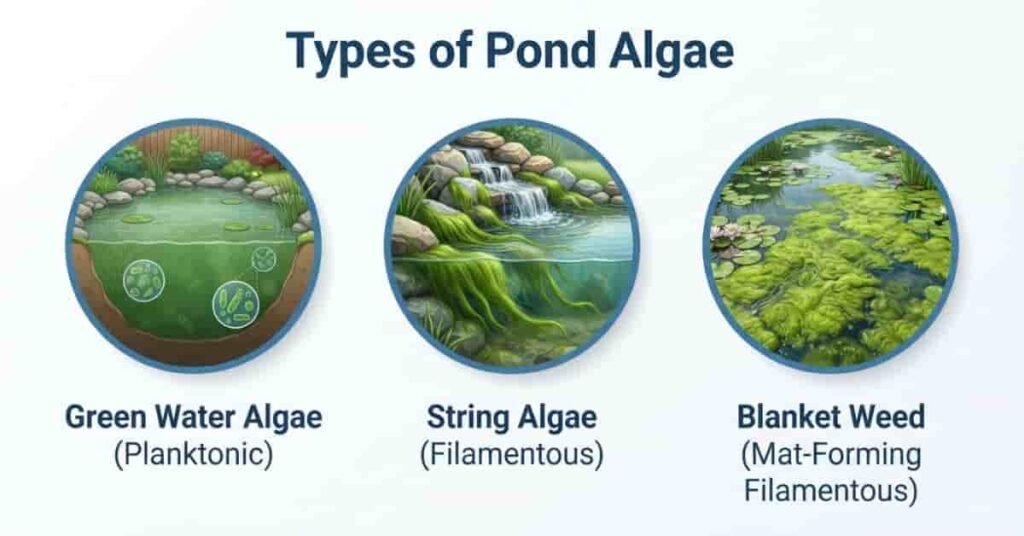
Not all pond algae look or behave the same. Some types float freely in the water, while others attach to rocks, pond liners, or plants. Knowing which type you have makes it easier to choose the right control method. The three most common pond algae types are green water algae, string algae, and blanket weed.
Green Water Algae (Free-Floating)
Green water algae consist of tiny microscopic cells that float throughout the pond. As they multiply, the water turns green and cloudy, making it difficult to see fish or the pond bottom. Warm temperatures, strong sunlight, and high nutrient levels often trigger these algae blooms.
Although green water algae reduce water clarity, they usually do not form thick mats on surfaces. They also produce oxygen during the day, but heavy blooms can lower oxygen levels at night. If left unchecked, they may upset the pond’s natural balance.
Pro Tip: If your pond suddenly turns pea-green, test your water quality before adding any treatment. High nutrient levels are often the real cause.
String Algae (Filamentous)
String algae, also called filamentous algae, grow in long, green strands that attach to rocks, waterfalls, pond liners, and aquatic plants. These strands can grow several feet long and often feel slimy when touched. They spread quickly in sunny ponds with excess nutrients.
Small patches are usually harmless, but large mats can block water flow and make the pond look untidy. Removing visible strands by hand during routine maintenance helps slow their spread before they become difficult to manage.
Blanket Weed
Blanket weed is the common UK name for dense mats of filamentous algae. It forms thick green layers that cover the pond surface, rocks, and waterfalls. Many pond owners use the terms blanket weed and string algae interchangeably, although blanket weed usually refers to heavier growth.
Large mats can trap debris, reduce water circulation, and block sunlight from reaching aquatic plants. Regular maintenance and proper nutrient control help prevent blanket weed from taking over the pond.
Pro Tip: If you read UK pond guides, remember that “blanket weed” usually refers to the same algae many US pond owners call string algae.
Once you understand the different types of pond algae, the next step is reducing the conditions that allow them to spread. Following practical strategies for how to prevent pond algae can help keep your water clearer over time.
Is Pond Algae Good or Bad?
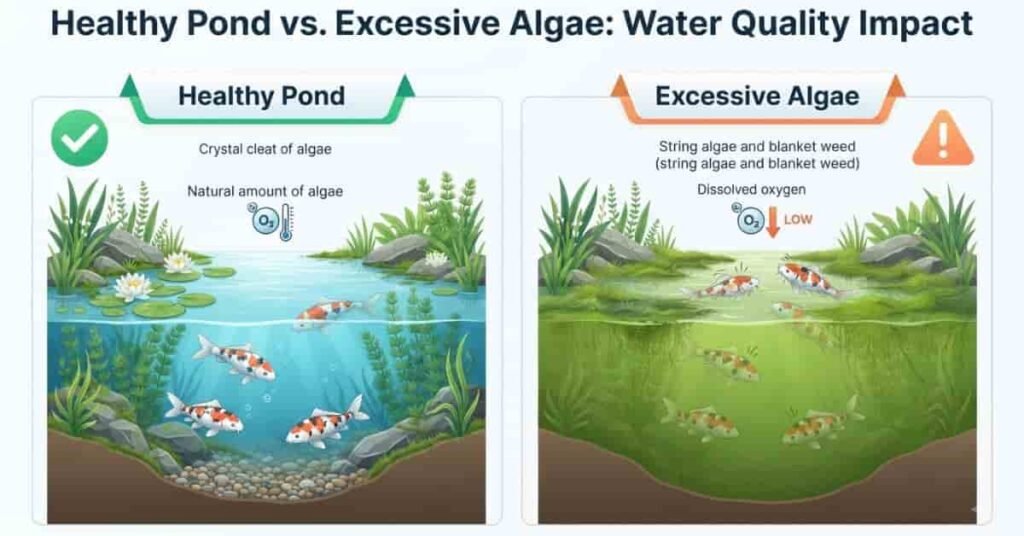
The answer depends on how much algae is present. A small amount of pond algae is a natural part of a healthy pond ecosystem. It produces oxygen during daylight, absorbs nutrients, and provides food for some aquatic organisms. Many balanced ponds contain small amounts of algae without causing problems.
Trouble begins when algae grow faster than the pond can support. Excess algae block sunlight from reaching beneficial aquatic plants and reduce water clarity. As large algae blooms die and decompose, they consume oxygen from the water. Low oxygen levels can stress fish, beneficial bacteria, and other aquatic life.
Heavy algae growth also makes routine pond maintenance more difficult. Thick mats can clog filters, cover waterfalls, and trap leaves or other debris. These conditions allow nutrients to build up, creating a cycle that encourages even more algae growth.
The goal is not to eliminate algae completely. Instead, aim to maintain a balanced pond where algae remain under control. Regular maintenance, proper filtration, and healthy plant growth help prevent algae from becoming a serious problem.
How Pond Algae Affects Water Quality
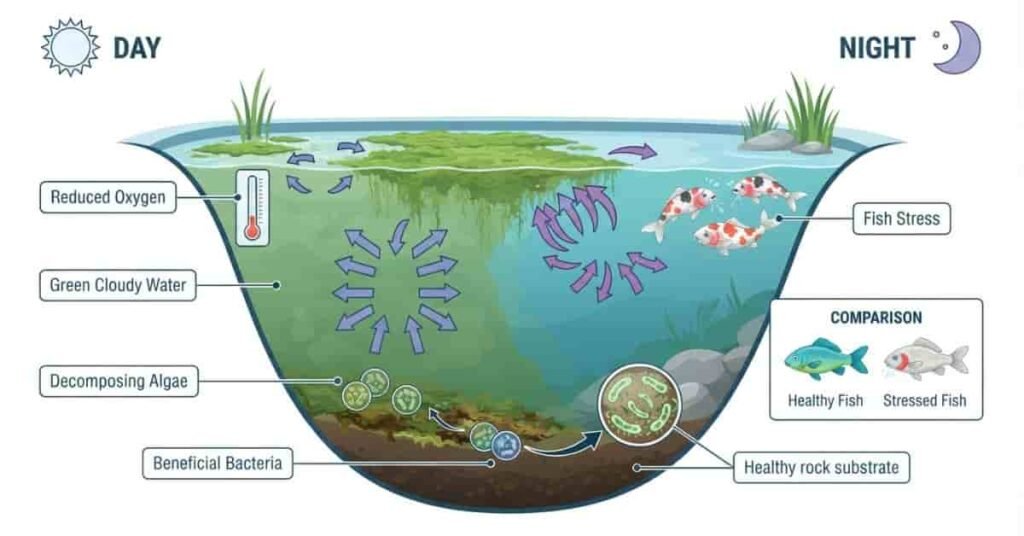
Excess pond algae can change water quality in several ways. While algae naturally produce oxygen during the day, they also consume oxygen at night. When large algae blooms die, bacteria break them down and use even more oxygen. This process can leave fish with less oxygen, especially during warm weather.
One of the first signs of an algae problem is green or cloudy water. Free-floating algae reduce water clarity, making it difficult to see fish, plants, or the pond bottom. Thick mats of string algae can also collect debris and block water movement around pumps and waterfalls.
Poor water quality places extra stress on fish. Low oxygen levels may cause fish to swim near the surface, breathe rapidly, or become less active. Long-term algae problems can also make it harder for beneficial bacteria to keep the pond balanced.
Regular pond maintenance helps protect water quality. Clean filters, remove decaying leaves, avoid overfeeding fish, and maintain good water circulation. These simple steps reduce excess nutrients and make algae blooms less likely.
Basic Pond Algae Control Methods
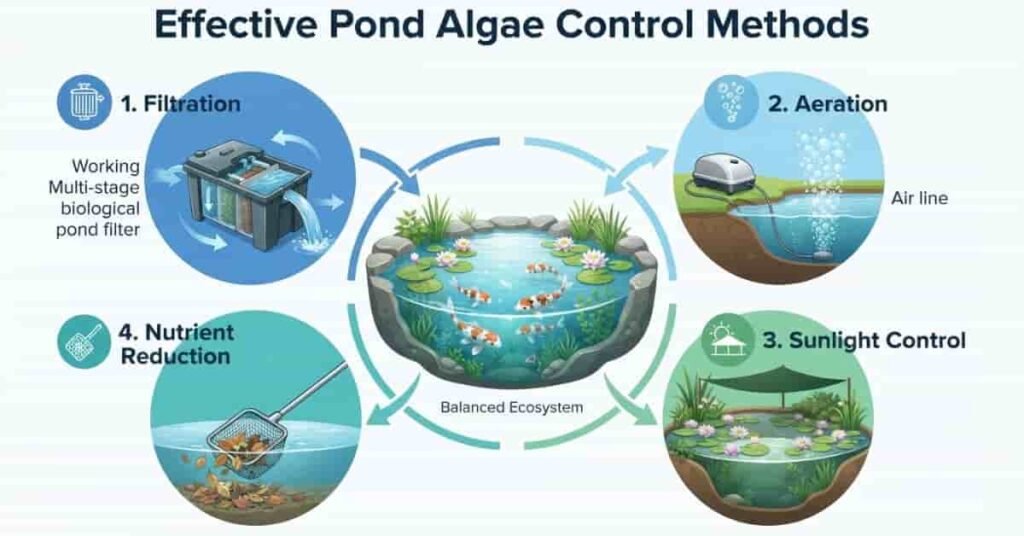
The best way to control pond algae is to address the conditions that help it grow. Instead of relying on a single solution, combine good filtration, proper aeration, sunlight management, and nutrient control. These methods work together to keep your pond healthy and reduce future algae blooms.
A quality filtration system removes suspended debris and helps beneficial bacteria break down waste before it feeds algae. Clean your filter regularly according to the manufacturer’s instructions, but avoid washing filter media with untreated tap water. This helps protect the beneficial bacteria that support your pond’s biological balance.
Aeration is just as important. Air pumps, fountains, and waterfalls improve water movement and increase oxygen levels. Better circulation prevents stagnant areas where algae often thrive and supports fish and beneficial bacteria.
Managing sunlight also helps limit algae growth. If your pond receives full sun all day, consider adding floating aquatic plants or placing the pond where it receives partial afternoon shade. Avoid blocking all sunlight, as pond plants still need light to grow.
Finally, reduce excess nutrients before they become a problem. Feed fish only what they can finish in a few minutes, remove fallen leaves, trim dead plants, and perform regular maintenance. Fewer nutrients mean less food for algae.
If algae has already become excessive, understanding what it is is only the first step. You can then explore how to get rid of pond algae using methods suited to the type and severity of the growth.
Natural vs Chemical Control
There is no single solution that works for every pond. Some pond owners prefer natural methods that improve long-term pond balance, while others use chemical treatments when algae growth becomes severe. The right approach depends on the type of algae, pond size, fish population, and the underlying cause of the problem.
Natural methods focus on reducing nutrients, improving filtration, increasing aeration, and adding beneficial pond plants. These solutions usually take longer to show results but help create a healthier ecosystem over time.
Chemical algae treatments can provide faster results, but they should be used carefully and according to the product label. Treating algae without fixing the root cause often leads to new blooms after the treatment wears off.
If you’re deciding between these options, we’ve created detailed guides to help you choose the best approach for your pond.
Prevention Tips
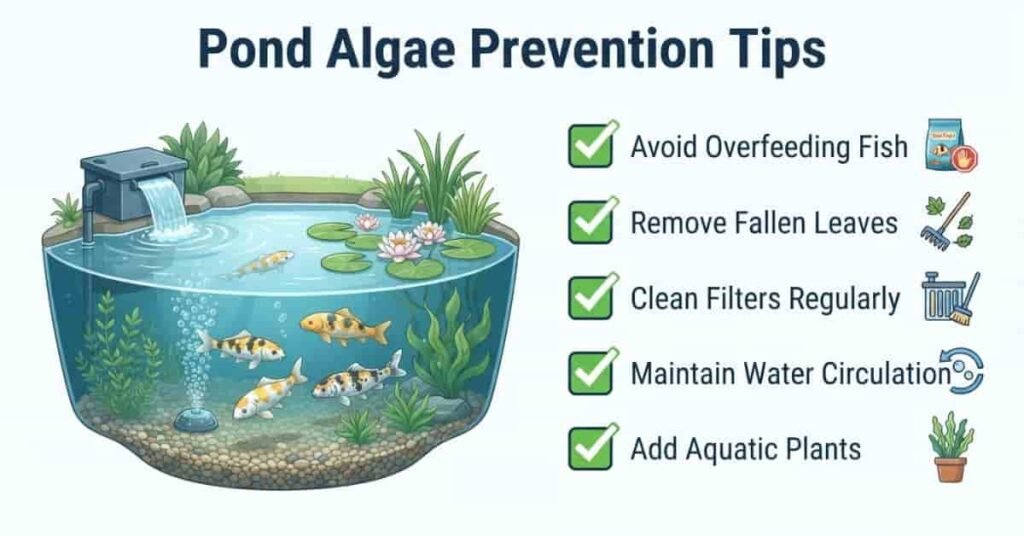
Preventing pond algae is easier than removing a large algae bloom. A few simple maintenance habits can keep your pond balanced and reduce the chance of recurring problems. Consistency is more effective than waiting until algae become difficult to control.
Avoid overfeeding your fish. Uneaten food breaks down into nutrients that encourage algae growth. Feed only the amount your fish can eat within a few minutes, and remove any leftovers if necessary.
Remove decaying leaves, dead plants, and other organic debris before they sink to the bottom. As this material decomposes, it releases nutrients that feed algae. Regular skimming and seasonal cleanups help keep nutrient levels under control.
Maintain a balanced pond by cleaning filters, checking pumps, and ensuring good water circulation. Healthy aquatic plants also compete with algae for nutrients, making it harder for algae to spread. Routine water testing can help you spot changes before they become major problems.
Small, regular maintenance tasks save time and help protect fish, plants, and water quality throughout the year.
Conclusion
Understanding pond algae is the first step toward keeping your pond healthy and balanced. You now know what algae are, why they grow, the most common types, and how simple maintenance can prevent excessive growth. Remember, a small amount of algae in pond ecosystems is normal. The goal is to manage algae before it affects water quality or fish health.
If you’re dealing with an existing algae problem, your next step is learning the safest and most effective removal methods. Be sure to read our complete guide on How to Remove Pond Algae for practical solutions and step-by-step advice.
If you found this guide helpful, share it with other pond owners or leave a comment below with your questions or experiences. Explore our other pond care guides to keep your water clear, your fish healthy, and your pond thriving all year.
Frequently Asked Questions
1. What is pond algae?
2. What causes pond algae to grow?
3. Is pond algae harmful to fish?
4. Can pond algae be completely removed?
5. Why is my pond water green?
6. What is the difference between pond algae and aquatic plants?
7. How can I naturally control pond algae?
8. Does sunlight make pond algae worse?
9. How often should I maintain my pond to prevent algae?
10. When should I use algae treatments?

Michael Brooks and Sarah Lane are the co-founders of the Pond Pump Team, a trusted U.S.-based group helping homeowners and landscapers build better ponds and water features. Michael, an experienced pond engineer from Oregon, has worked for over 12 years on pump sizing, flow systems, and water circulation. Sarah, a pond designer from Colorado with nine years of experience, focuses on eco-friendly and easy-to-maintain pond and waterfall designs. Together, they’ve completed more than 180 pond projects and created tools like the Pond Pump Calculator and Pond Liner Calculator to make pond planning simple, accurate, and sustainable.
Need help with your pond setup? Contact the Pond Pump Team for expert advice and reliable solutions.