Table of Contents
Introduction
Is your pond turning green, and you’re wondering if the algae are harming your fish?
Many pond owners see algae and immediately assume something has gone wrong. But is algae good for ponds in some situations? Yes, small amounts can play a useful role in a healthy pond ecosystem.
Algae can produce oxygen during daylight and support tiny organisms that form part of the aquatic food chain. However, excessive growth can create serious water-quality problems. Thick algae mats and heavy blooms can reduce oxygen levels and stress pond fish.
This can confuse beginners, especially when algae suddenly spread across the pond. Knowing the difference between normal growth and an algae problem helps you make better decisions.
In this guide, you’ll learn when pond algae can be beneficial and when it becomes harmful. We’ll also explain can algae kill fish, what causes excessive growth, and when you should take action. By the end, you’ll know how to manage algae without trying to remove every trace of it.
To understand whether algae is becoming a problem, it helps to know why it grows in the first place. Learn what causes algae in ponds and which conditions can lead to excessive growth.
Is Algae Good for Ponds?
Yes, is algae good for ponds? In small amounts, algae can benefit a healthy pond ecosystem. It forms part of the natural food web and supports tiny aquatic organisms that fish may feed on. During daylight, algae also produces oxygen through photosynthesis.
However, more algae doesn’t always mean a healthier pond. A balanced pond can support some algae without major problems. The trouble starts when algae grows rapidly and takes over large areas.
When Algae Becomes a Problem
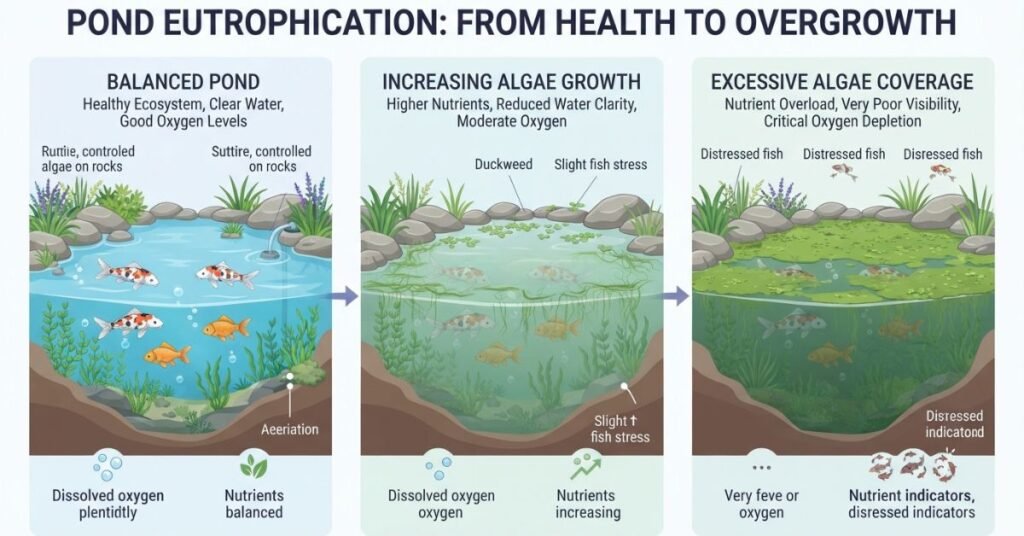
Excessive algae usually points to an imbalance in the pond. Too many nutrients, strong sunlight, and limited water movement can encourage rapid growth. Dense algae can also make the water look cloudy or completely green.
Watch for signs such as:
- Thick mats covering the water surface
- Rapidly spreading algae
- Poor water visibility
- Strong or unusual odors
- Sudden changes in water appearance
Too much algae can also create bigger problems when large amounts die and decompose.
Can Algae Kill Fish?
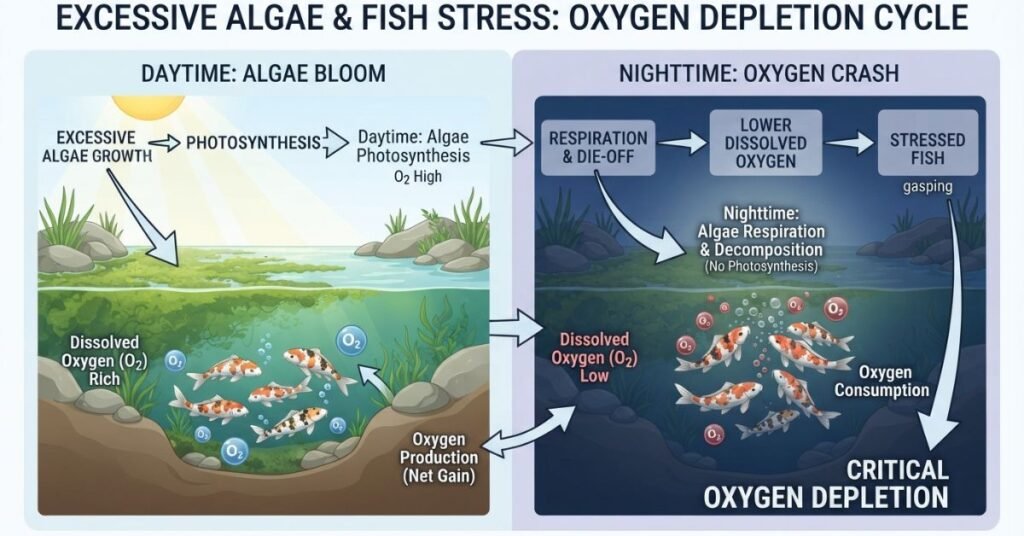
Can algae kill fish? Usually, algae does not kill fish directly. The bigger concern comes from oxygen depletion, especially after dark or during heavy algae die-offs.
Algae produces oxygen during daylight but also uses oxygen through respiration. When dense algae populations die, decomposition can consume even more dissolved oxygen. If oxygen levels fall too low, fish can become stressed or struggle to survive.
Severe blooms can therefore create dangerous conditions for pond fish. Fish gasping near the surface, unusual swimming, or sudden stress signals should prompt quick action.
When algae becomes excessive, pond owners may need to consider control options. Learn about pond algae control and the different methods available.
Does Pond Algae Kill Fish?
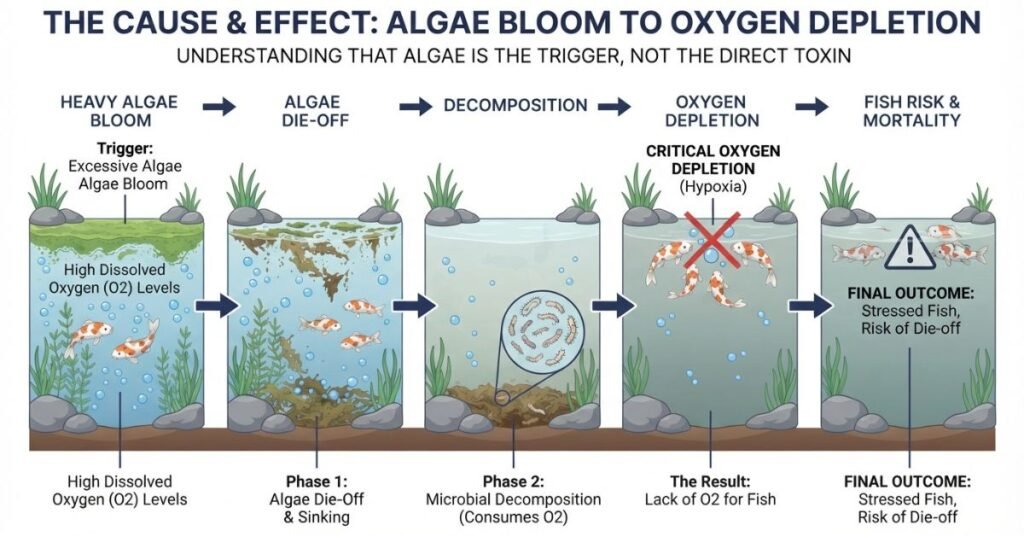
So, does pond algae kill fish? Algae itself usually isn’t the direct cause of fish deaths. The bigger danger comes from what happens when algae becomes excessive or suddenly dies.
Dense algae populations can change oxygen levels in the pond. During daylight, algae produces oxygen through photosynthesis. At night, algae also consumes oxygen through respiration. A large algae population can contribute to low oxygen levels, especially when conditions stress the pond.
A major algae die-off creates another risk. Dead algae decomposes, and microorganisms use oxygen during that process. If dissolved oxygen drops too far, fish can become stressed or die.
The key difference is simple:
Excess algae → algae die-off → decomposition → oxygen depletion → fish risk
If fish start gasping near the surface, check the pond’s oxygen conditions quickly. Aeration can help increase water movement and oxygen exchange.
What Is Too Much Algae in a Pond?
Too much algae in pond water can make the ecosystem harder to manage. Some algae is normal, but rapid growth and dense coverage can signal excess nutrients or other imbalances.
Look for these common signs of overgrowth:
- Thick mats covering large areas
- Green water that blocks visibility
- Algae growing rapidly
- Unpleasant or unusual odors
- Sudden changes in water clarity
- Fish showing signs of stress
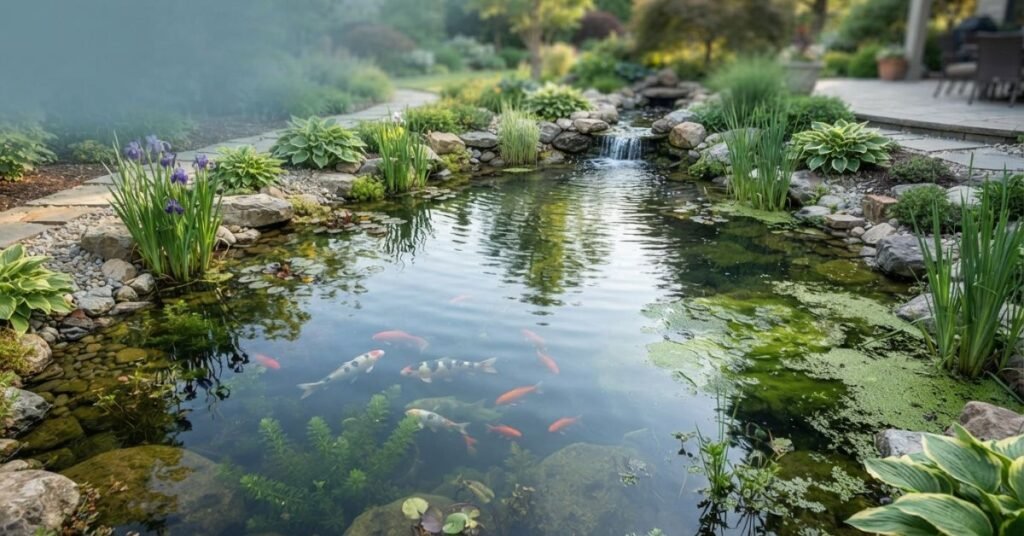
String algae can form thick floating mats across the surface. Planktonic algae can create a green-water bloom that reduces visibility. Both can become troublesome when growth becomes excessive.
Large algae blooms can also create oxygen problems when algae populations die suddenly. This makes monitoring more important than simply judging the pond by appearance.
Managing excessive algae is easier when you prevent the conditions that encourage it. Learn how to prevent pond algae and maintain a healthier pond environment.
Types of Algae in Ponds
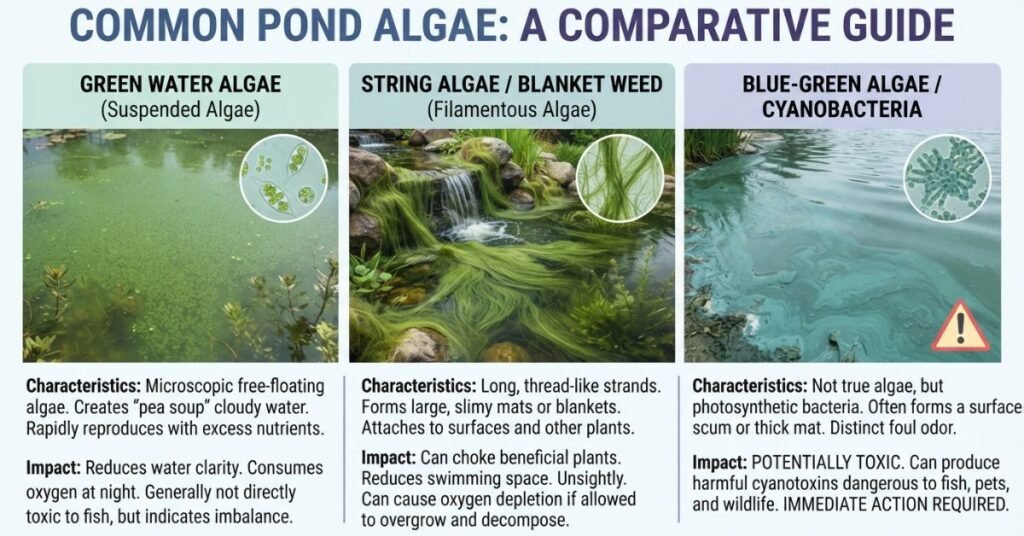
Ponds can contain several types of algae, and each behaves differently. Knowing the basic types helps you identify potential problems early.
Green Water Algae
Green-water algae consists mainly of microscopic algae suspended throughout the water. Heavy growth can make pond water look bright green and cloudy.
String Algae
String algae, also called blanket weed, grows in long strands. It can form thick mats around pond edges, rocks, pumps, and other surfaces.
Blue-Green Algae
Blue-green algae is actually cyanobacteria, not true algae. Some cyanobacterial blooms can produce harmful toxins. Treat unusual blue-green blooms with caution and avoid assuming they’re harmless pond algae.
Benefits of Controlled Algae
Algae isn’t automatically something you need to eliminate. A controlled amount can support natural pond processes and contribute to a balanced ecosystem.
Algae can provide food for small aquatic organisms and contribute to the pond’s natural food web. It also supports microorganisms that form an important part of aquatic ecosystems.
During daylight, algae produces oxygen through photosynthesis. However, this benefit doesn’t mean heavy algae growth is always healthy. The goal should be balance, rather than removing every trace of algae.
A healthy pond can support some algae while still maintaining good water quality. The real concern begins when algae grows faster than the pond ecosystem can manage.
Risks of Excess Algae
A small amount of algae can fit naturally into a healthy pond. However, excessive growth can create several water-quality challenges. The biggest concern often involves dissolved oxygen, especially when dense algae populations die and decompose.
Heavy algae growth can also contribute to noticeable pH fluctuations. Algae removes carbon dioxide during daylight, which can raise pH. At night, algae releases carbon dioxide, which can push pH lower.
Excess algae can affect fish in other ways too. Poor water conditions may cause fish stress, reduce visibility, and interfere with normal feeding. Thick algae mats can also clog screens, pumps, and filtration equipment.
Common problems include:
- Lower oxygen levels
- Larger daily pH swings
- Fish stress or unusual behavior
- Poor water clarity
- Clogged filtration equipment
- An unattractive pond appearance
These risks don’t mean all algae needs removal. They show why controlling excessive growth matters.
When You Should Take Action
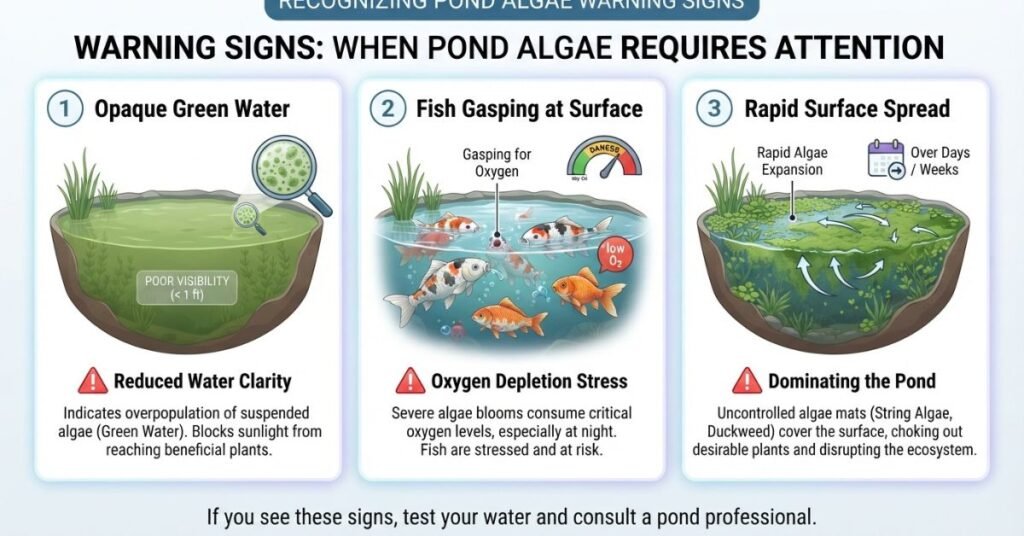
You don’t need to panic whenever you notice algae. However, rapid changes can signal that your pond needs attention.
Take a closer look when the water turns opaque green and you can barely see below the surface. This may indicate a heavy suspended algae bloom.
Fish behavior also provides important clues. Watch for fish gasping near the surface, staying unusually inactive, or behaving differently from normal.
Rapid algae growth deserves attention as well. If algae spreads across the pond within a short period, check possible causes such as excess nutrients and poor circulation.
Early action can prevent a manageable algae problem from becoming a larger water-quality issue.
A Balanced Pond Approach
The goal isn’t to create an algae-free pond. Complete algae removal is rarely necessary for a healthy pond ecosystem. Instead, focus on keeping algae growth under control.
A balanced pond combines several factors. Aquatic plants can compete with algae for nutrients and sunlight. Proper filtration helps remove waste and suspended particles. Good circulation supports healthier water conditions.
Fish stocking also matters. Too many fish can increase waste and nutrient levels, which may encourage algae growth.
Think of pond management as maintaining a balance between:
- Plants that use available nutrients
- Filtration that removes waste
- Fish stocked at appropriate levels
- Circulation and aeration that support water quality
- Algae kept at manageable levels
This approach works better than repeatedly trying to remove every trace of algae.
Conclusion
Pond algae isn’t completely good or bad. A small amount can support a healthy pond ecosystem and natural food web.
The real problem starts when algae grows too quickly or disrupts water quality. Excessive algae can contribute to oxygen problems, pH changes, fish stress, and poor water clarity.
So, is algae good for ponds? Yes, when you keep it under control. The goal isn’t to remove every trace of algae. Instead, maintain balance with proper filtration, plants, circulation, and sensible fish stocking.
If you notice rapid growth, green water, or stressed fish, take action early. Small changes can help prevent bigger pond problems.
Have you dealt with excessive algae in your pond? Share your experience in the comments, and explore our other pond care guides for practical tips.
Frequently Asked Questions
Yes, small amounts of algae can benefit a healthy pond ecosystem. Algae produces oxygen during daylight and supports microorganisms in the natural food chain. However, excessive algae growth can cause oxygen problems, pH fluctuations, and poor water clarity. The goal should be to control algae rather than remove every trace of it.
Algae usually doesn’t kill fish directly. However, heavy algae growth can contribute to low oxygen levels, especially at night or after a large algae die-off. Fish may become stressed when dissolved oxygen drops too low. Proper aeration, water movement, and algae control can help reduce this risk.
Pond algae itself usually isn’t the direct cause of fish deaths. The bigger concern comes from oxygen depletion. When large amounts of algae die, decomposition can consume oxygen and create dangerous conditions for fish. Watch for fish gasping near the surface or showing unusual behavior.
Too much algae means algae has grown enough to affect water quality, visibility, or pond management. Common signs include thick floating mats, opaque green water, rapid growth, unpleasant odors, and stressed fish. Heavy algae growth can also create oxygen problems when large amounts suddenly die.
Excess nutrients often encourage algae growth. Fish waste, decaying organic matter, fertilizer runoff, and uneaten food can add nutrients to pond water. Strong sunlight can also encourage algae growth. Reducing nutrient buildup and improving pond balance can help control excessive algae.
Often, yes. Green pond water commonly results from microscopic algae suspended throughout the water. A heavy bloom can make the pond look cloudy or opaque. While some green water can occur naturally, sudden or severe blooms may indicate excess nutrients or an imbalance.
String algae isn’t automatically harmful to fish. Small amounts can become part of the pond ecosystem. However, thick string algae mats can interfere with pond appearance, equipment, and water movement. Large amounts can also create oxygen concerns when they die and decompose.
No, complete algae removal isn’t usually necessary. A healthy pond can contain some algae naturally. Focus on controlling excessive growth instead. Managing nutrients, maintaining filtration, supporting aquatic plants, and improving circulation can help keep algae at manageable levels.
Take action when algae spreads rapidly or covers large areas of the pond. Also watch for opaque green water, thick algae mats, unusual odors, or sudden changes in water quality. Fish gasping near the surface or behaving unusually can signal a more urgent oxygen problem.
You can help control algae by reducing excess nutrients and improving overall pond balance. Avoid overfeeding fish, remove decaying organic matter, maintain appropriate aquatic plants, and support good water circulation. Proper filtration and aeration can also help maintain healthier pond conditions.

Michael Brooks and Sarah Lane are the co-founders of the Pond Pump Team, a trusted U.S.-based group helping homeowners and landscapers build better ponds and water features. Michael, an experienced pond engineer from Oregon, has worked for over 12 years on pump sizing, flow systems, and water circulation. Sarah, a pond designer from Colorado with nine years of experience, focuses on eco-friendly and easy-to-maintain pond and waterfall designs. Together, they’ve completed more than 180 pond projects and created tools like the Pond Pump Calculator and Pond Liner Calculator to make pond planning simple, accurate, and sustainable.
Need help with your pond setup? Contact the Pond Pump Team for expert advice and reliable solutions.