Introduction
Ever bought a pond liner, only to realize it’s too small?
Many beginners guess their measurements and hope for the best. That mistake leads to leaks, wasted money, and frustrating repairs. A reliable pond liner area, overlap & dimensions calculator removes the guesswork and gives you exact coverage in minutes. It helps you calculate surface area, edge allowance, and total liner size with confidence.
Backyard ponds in the USA face real challenges. Hot summers, freezing winters, and shifting soil all affect liner performance. Standard shapes like rectangular, round, and koi ponds each need slightly different calculations. Even a small overlap mistake can cause costly problems later.
In this guide, you’ll learn how to measure area, add proper overlap, and calculate correct dimensions step by step. We’ll also touch on when a pond liner area calculator or pond liner overlap calculator makes planning easier. By the end, you’ll know exactly how much liner your pond needs—no guessing, no waste, no stress.
Understanding Pond Liner Area
Pond liner area means the total surface your liner must cover. This includes the bottom and all side walls. If you miscalculate this number, your liner may come up short.
For a rectangular pond, use this simple formula:
Liner Length = Pond Length + (2 × Depth)
Liner Width = Pond Width + (2 × Depth)
Example (in feet):
A 10 ft long, 6 ft wide, 2 ft deep pond:
Length: 10 + (2×2) = 14 ft
Width: 6 + (2×2) = 10 ft
Total liner size: 14 ft × 10 ft
For a round pond, use:
Diameter + (2 × Depth)
Example:
8 ft diameter, 2 ft deep pond:
8 + (2×2) = 12 ft liner diameter
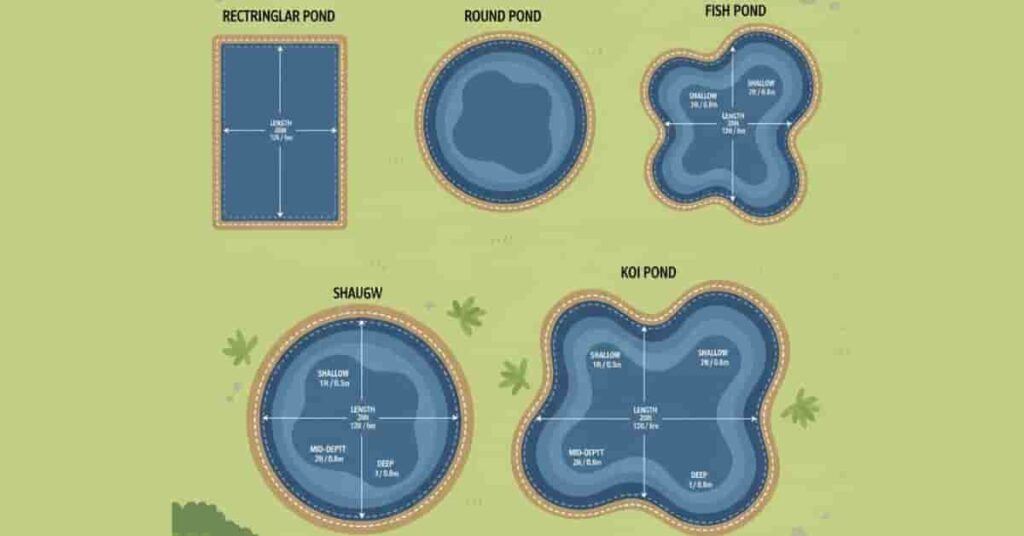
Koi and fish ponds often have sloped sides. Always measure the deepest point. A pond liner area calculator helps reduce mistakes with irregular shapes. A pond liner dimensions calculator is even better for multi-depth ponds.
Feet vs. Meters (US Tip)
Most US suppliers sell liners by the foot.
1 meter = 3.28 feet
1 square meter = 10.76 square feet
If your plans are in meters, convert before ordering. This prevents costly sizing errors and material waste.
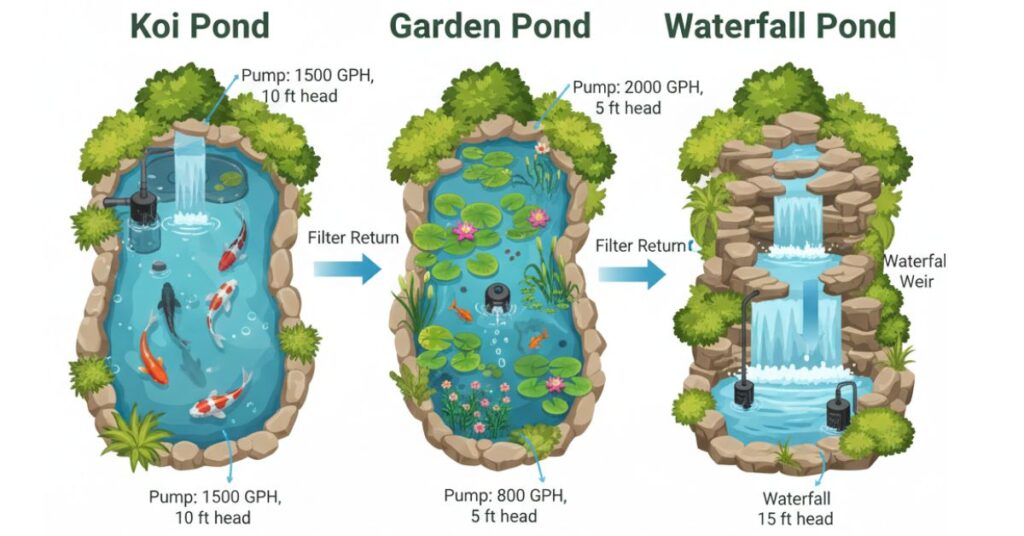
“When planning your pond liner dimensions, it’s also important to consider the pump capacity for optimal water circulation.”
Adding Overlap & Edge Allowance
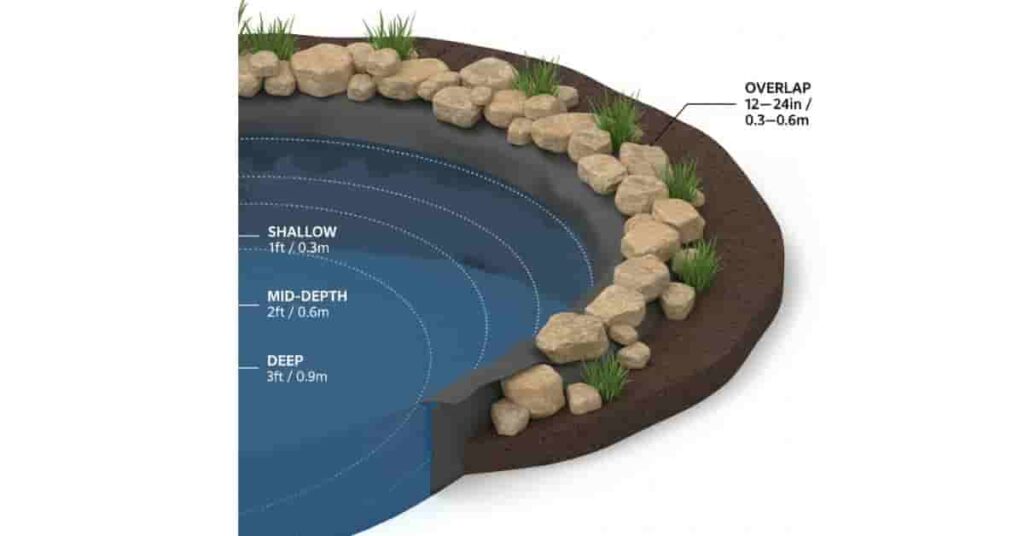
Never cut your liner to the exact pond size. You need extra material around the edges.
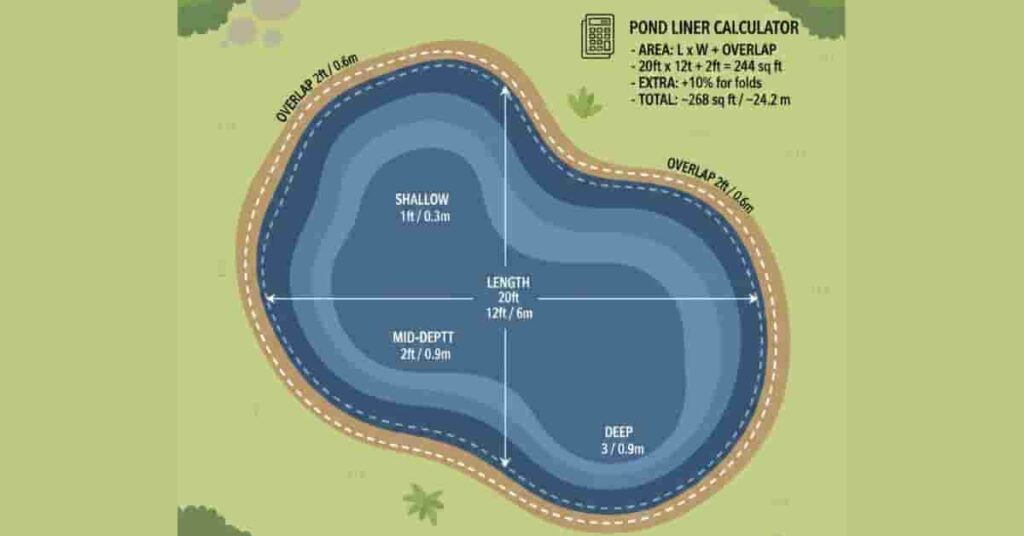
Most backyard ponds require 12–24 inches of overlap on each side. This extra liner secures the edges with rocks or soil. It also protects against shifting ground, heavy rain, and freeze–thaw cycles in colder US states.
Without proper overlap, the liner can slip inward. That leads to leaks and costly repairs.
How Overlap Changes Liner Size
When calculating linear dimensions, always add overlap to both length and width.
Updated formula:
Liner Length = Pond Length + (2 × Depth) + (2 × Overlap)
Liner Width = Pond Width + (2 × Depth) + (2 × Overlap)
Example: Medium Garden Pond
Pond size:
12 ft long, 8 ft wide, 2 ft deep
Overlap: 1.5 ft (18 inches)
Length: 12 + (2×2) + (2×1.5) = 19 ft
Width: 8 + (2×2) + (2×1.5) = 15 ft
Final liner size: 19 ft × 15 ft
A pond liner overlap calculator makes this step easier and reduces mistakes. It ensures accurate sizing before you order material.
Calculating Liner Volume for Deeper Ponds
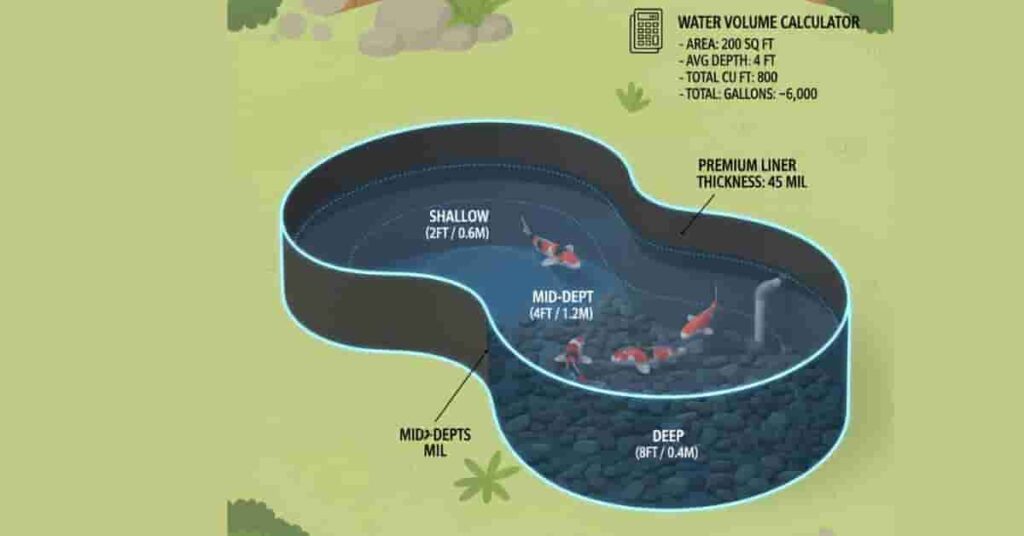
Deep ponds require more than surface-area planning. You must also calculate water volume. This is critical for koi and fish ponds.
Volume affects filtration, pump size, and liner thickness. Deeper ponds hold more water pressure. Thin liners may stretch or fail over time.
For rectangular ponds, use this formula:
Volume (cubic feet) = Length × Width × Depth
To convert cubic feet to gallons:
1 cubic foot = 7.48 gallons
“A pond pump electricity cost calculator helps plan operational costs alongside your pond liner investment.”
US Example: Koi Pond
Pond size:
12 ft long, 8 ft wide, 4 ft deep
Volume in cubic feet:
12 × 8 × 4 = 384 cubic feet
Gallons:
384 × 7.48 = 2,872 gallons (approx.)
That is a large water load. A deeper pond like this often requires thicker liner material. Many pond owners choose heavier-duty options for long-term durability.
A pond volume calculator for liner planning helps confirm total water capacity. It also ensures your pond liner dimensions calculator accounts for deeper walls correctly.
Always calculate the deepest point in sloped ponds. Accurate volume protects both your liner and your fish investment.
Step-by-Step Planning & Installation Tips
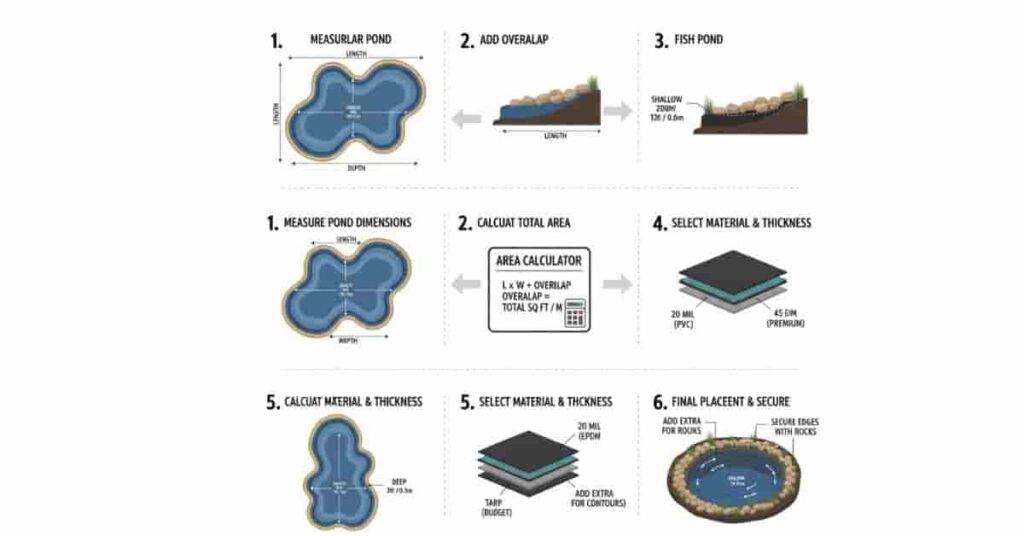
Planning your liner correctly prevents leaks and wasted money. Follow these four simple steps.
Step 1: Measure Pond Dimensions Carefully
Measure the longest length, the widest width, and the deepest point.
Always measure from edge to edge at ground level.
For irregular ponds, break the shape into smaller rectangles. Then add the measurements together. A pond liner dimensions calculator can simplify complex layouts.
Step 2: Apply Overlap Calculation
Add 12–24 inches of overlap on every side.
Cold states may need extra allowance due to soil movement.
Use this formula:
Length = Pond Length + (2 × Depth) + (2 × Overlap)
Width = Pond Width + (2 × Depth) + (2 × Overlap)
A pond liner overlap calculator helps avoid costly underestimation.
Step 3: Calculate Total Liner Area Needed
Multiply the final liner length by the final liner width.
This gives the total square footage.
A pond liner area calculator speeds up this step and reduces math errors. It is especially helpful for sloped or tiered ponds.
Step 4: Select Material & Thickness
Shallow decorative ponds can use lighter liners.
Deep koi ponds often require thicker material for durability.
Consider:
- Pond depth
- Fish load
- Sharp rocks or roots
- Local climate conditions
Pro Tips for Slopes & Curves
- Always measure the deepest slope, not the average depth.
- Add an extra liner for curved edges.
- Remove sharp stones before installation.
- Use underlayment for added protection.
Careful planning now prevents expensive repairs later.
Common Mistakes & How to Avoid Them
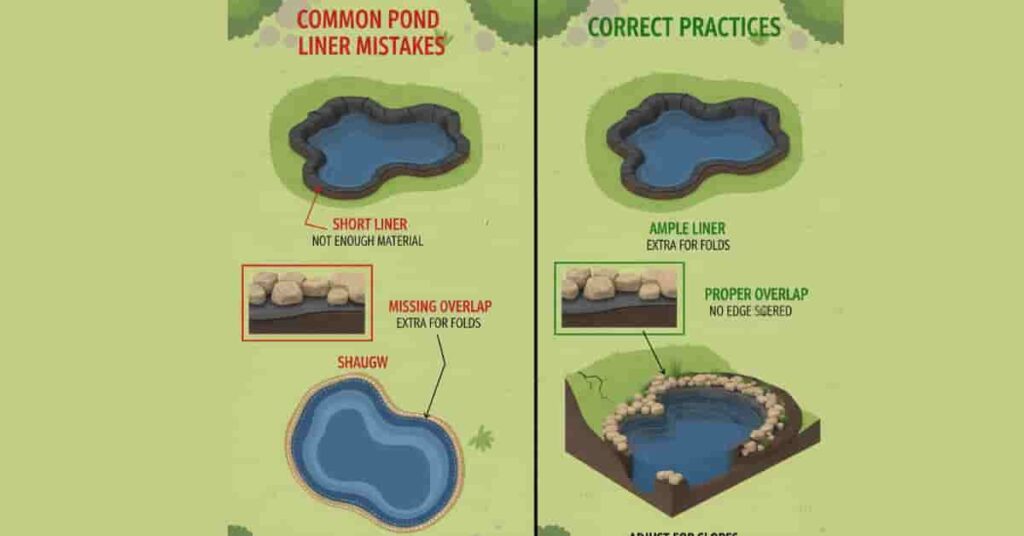
Small calculation errors can turn into expensive problems. Most liner issues start during planning.
1. Forgetting to Add Overlap
Many beginners measure only length and width. They skip the extra 12–24 inches needed around edges. Without Overlap, the liner can pull inward and leak.
Always include Overlap in your formula. A pond liner overlap calculator helps prevent this mistake.
2. Incorrect Volume Calculation for Deep Ponds
Deep koi ponds hold thousands of gallons. If you miscalculate volume, you may choose the wrong liner thickness.
Higher water pressure stresses thinner liners. Use accurate depth measurements and confirm gallons before buying. A pond liner area calculator can also help verify total sizing.
3. Ignoring Slopes or Irregular Shapes
Sloped sides increase liner requirements. Measuring only flat dimensions leads to shortages.
For curved or kidney-shaped ponds, divide them into sections. Measure the longest and widest points. Then add an extra allowance for safety.
Takeaway
Measure carefully. Add Overlap. Account for depth and slopes. Careful planning now saves money and prevents leaks later.
Conclusion & Next Steps
Accurate pond liner measurements are key to a leak-free, long-lasting pond. Skipping overlap or misjudging depth can waste materials and money. By carefully calculating area, overlap, and dimensions, you ensure your liner fits perfectly.
Using a pond liner area, overlap & dimensions calculator simplifies this process. It reduces guesswork, saves time, and helps you plan confidently—especially for deep or irregularly shaped ponds.
Next, check our Pond Liner Size Calculations to see detailed sizing guides. For materials and cost planning, explore Pond Liner Cost & Material Guide.
With these tools and tips, you can build a durable, well-fitted pond liner while avoiding common mistakes. Plan carefully, measure accurately, and enjoy a beautiful backyard pond for years to come.
Michael Brooks and Sarah Lane are the co-founders of the Pond Pump Team, a trusted U.S.-based group helping homeowners and landscapers build better ponds and water features. Michael, an experienced pond engineer from Oregon, has worked for over 12 years on pump sizing, flow systems, and water circulation. Sarah, a pond designer from Colorado with nine years of experience, focuses on eco-friendly and easy-to-maintain pond and waterfall designs. Together, they’ve completed more than 180 pond projects and created tools like the Pond Pump Calculator and Pond Liner Calculator to make pond planning simple, accurate, and sustainable.
Need help with your pond setup? Contact the Pond Pump Team for expert advice and reliable solutions.