Introduction
Ever picked a pond liner and regretted it a few months later? Choosing the wrong liner can cost hundreds in repairs or replacements. In the U.S., climate matters. Cold winters, hot summers, and seasonal changes all affect how long your liner lasts.
Your pond’s size, shape, and depth influence which material works best. Flexible, durable liners like EPDM or butyl handle pressure better. PVC may save money upfront but wears faster. A pond liner cost and material calculator shows how different materials and thicknesses impact your total project cost before you buy.
In this guide, we’ll break down the most common pond liner materials, show U.S.-based pricing ranges, and explain how to calculate the liner size you need. You’ll learn how to match material to your pond type, avoid waste, and save money without compromising quality.
By the end, you’ll know exactly what liner to pick and how much it should cost. Use the calculator below to estimate your project cost instantly and make smarter decisions for your backyard pond.
Understanding Pond Liner Materials
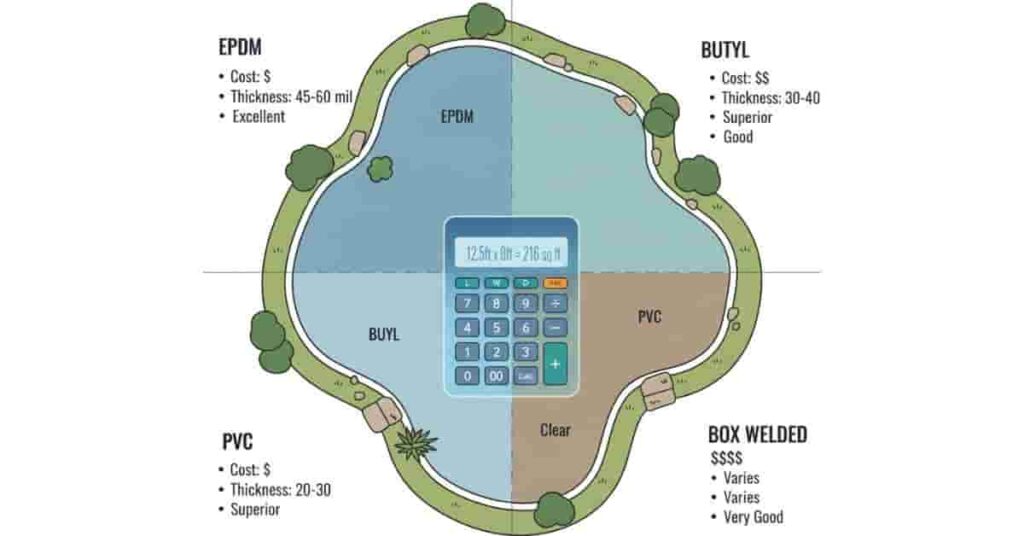
Choosing the right liner matters more than most pond owners think. Your material choice affects lifespan, repairs, and total cost. A smart pond liner cost & material calculator helps you compare materials before you buy.
Different liners handle sun, frost, and deep water in different ways. Some of the last decades. Others work best for small or temporary ponds. If you use a pond liner material calculator, you can quickly test pricing for each option.
Here’s how to apply this effectively:
EPDM Rubber Pond Liners
EPDM is the most popular choice for backyard ponds in the U.S. It bends easily and resists UV damage. That makes it great for uneven shapes.
You’ll usually see two thickness options:
- 45 mil—Good for standard garden ponds
- 60 mil—Better for deep koi ponds
Most homeowners use an EPDM pond liner calculator to compare sizes and costs. EPDM handles hot summers and freezing winters well.
Best for:
- Koi ponds
- Large backyard ponds
- Long-term projects
It costs more than PVC, but it often lasts 20+ years with proper care.
Butyl Pond Liners
Butyl liners stretch more than EPDM. They resist cracking and handle movement well. Many pros consider them premium liners.
A butyl pond liner calculator helps you compare price differences, since butyl often costs more per square foot.
Pros:
- Very elastic
- Strong seam performance
- Long lifespan
Cons:
- Higher upfront cost
Butyl works well in mixed climates. It suits deep ponds and formal water features where durability matters most.
Box Welded Pond Liners
Box-welded liners come pre-made to your pond’s exact size. This design reduces folding and waste.
A box-welded pond liner calculator helps estimate custom pricing. These liners often cost more upfront but reduce installation time.
Best for:
- Formal or square ponds
- Raised ponds
- Projects needing clean edges
They limit excess material and create a neat finish. Many builders prefer them for structured designs.
PVC & Budget Rubber Liners
PVC liners cost less upfront. They work well for small ponds or short-term setups.
A rubber pond liner calculator or pond liner price calculator helps compare PVC, EPDM, and butyl.
Pros:
- Affordable
- Easy to find
Cons:
- Shorter lifespan
- Less flexible in cold weather
PVC may crack in freezing climates. It suits mild regions or temporary ponds.
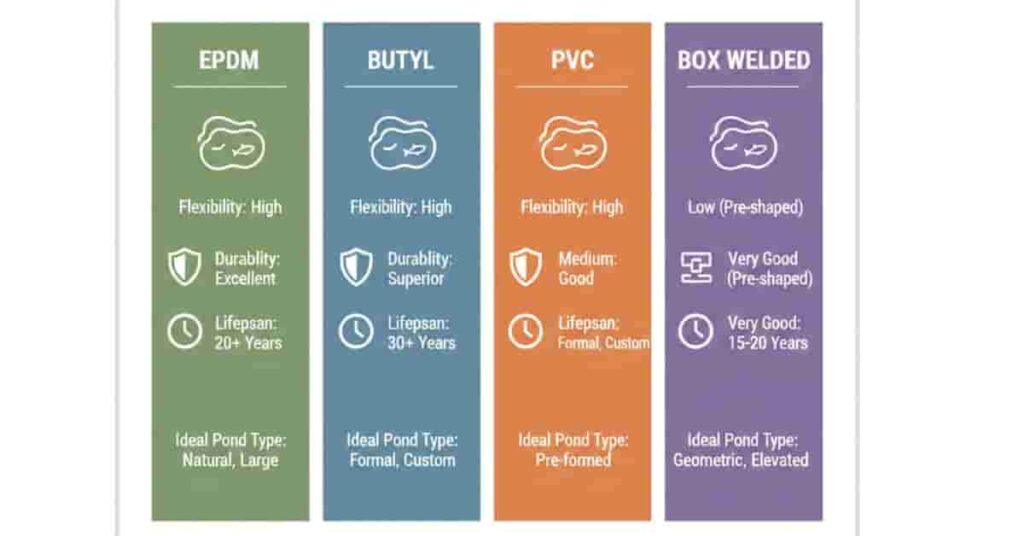
📊 Pond Liner Material Comparison
| Material | Average Lifespan (Years) | Cost per Sq Ft (USD)* | Best For | Climate Suitability |
|---|---|---|---|---|
| EPDM | 20+ | [placeholder] | Backyard & Koi Ponds | Cold / Hot / Mixed |
| Butyl | 20–30 | [placeholder] | Deep Formal Ponds | Cold / Hot / Mixed |
| Box Welded | 20+ | [placeholder] | Structured Designs | Mixed |
| PVC | 5–15 | [placeholder] | Small Ponds | Mild / Hot |
*Use a pond liner cost calculator to get accurate local pricing.
Takeaways
- EPDM offers the best balance of cost and durability.
- Butyl delivers premium flexibility at a higher price.
- Box-welded liners reduce waste and improve fit.
- PVC works for budget or temporary ponds.
Pond Liner Cost Breakdown (US Pricing Guide)
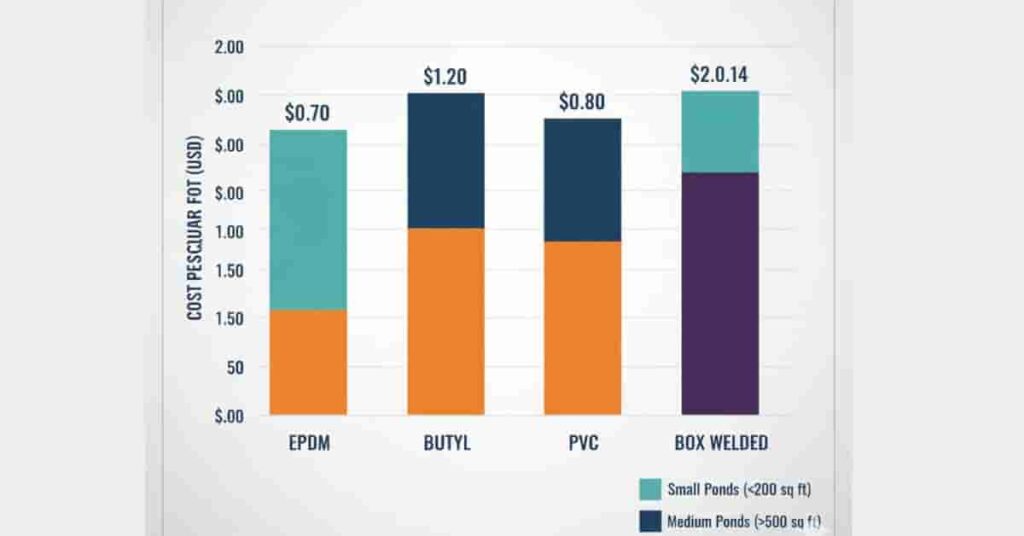
Material type and pond size drive most of your total cost. A pond liner cost & material calculator helps you test options fast. It shows how small changes in size or thickness affect your budget.
Before you order, review these common U.S. pricing ranges. Then confirm your numbers with a pond liner price calculator.
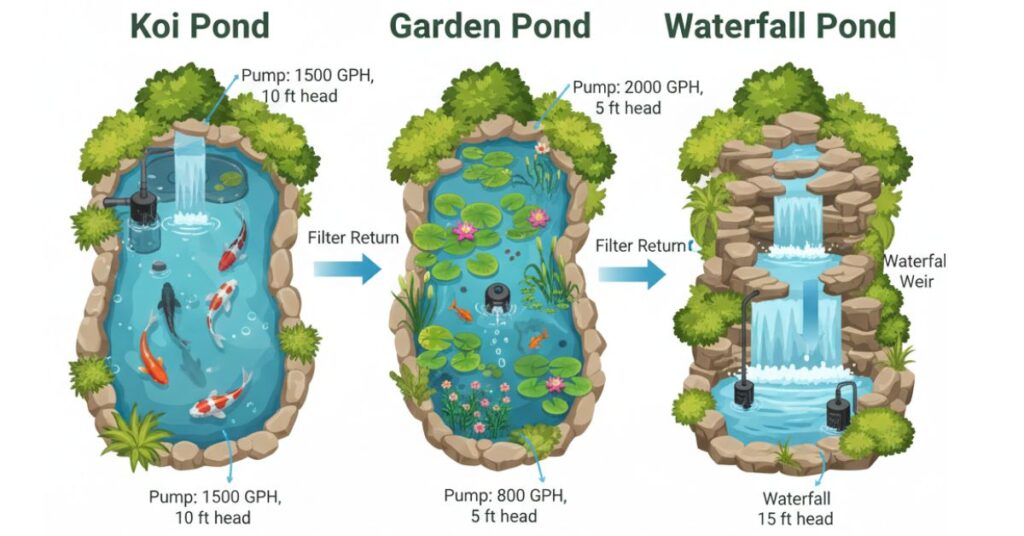
“If your pond includes a waterfall or koi setup, understanding pump size is crucial, as detailed in our guide on how to calculate pond pump size & flow rate.”
3.1 Material Cost per Square Foot (USD Ranges)
Prices vary by thickness and supplier. These ranges reflect typical retail pricing in the U.S. [placeholder—verify before publishing].
- EPDM (45–60 mil): ~$0.70–$1.50 per sq ft
- Butyl: ~$1.20–$2.50 per sq ft
- PVC: ~$0.40–$1.00 per sq ft
- Box welded liners: Custom pricing, often quoted per project
EPDM gives the best balance of cost and durability. Butyl costs more but lasts longer. PVC saves money upfront but may need to be replaced sooner.
A pond liner cost calculator lets you compare these materials side by side.
3.2 Pond Size Impact on Cost
Size increases cost quickly because liner pricing depends on square footage.
Example estimates:
- Small pond (100 sq ft): $70–$150 (EPDM range example)
- Medium pond (300 sq ft): $210–$450
- Large koi pond (600+ sq ft): $420–$900+
These estimates cover liner material only. A pond liner price calculator gives more accurate totals based on your exact depth and overlap.
3.3 Additional Costs to Consider
Many pond owners forget these extra expenses:
- Underlayment: Protects the liner from rocks and roots
- Shipping fees: Heavy liners cost more to ship
- Installation labour: If you hire help
- Seam tape: Needed if you join multiple sheets
These costs can add 10–30% to your project budget.
Takeaways
- Material type sets your base price.
- Pond size quickly multiplies the total cost.
- Extra supplies can increase the final bill.
- Always confirm numbers with a pond liner cost calculator before buying.
How to Calculate Pond Liner Material & Cost (Step-by-Step Guide)
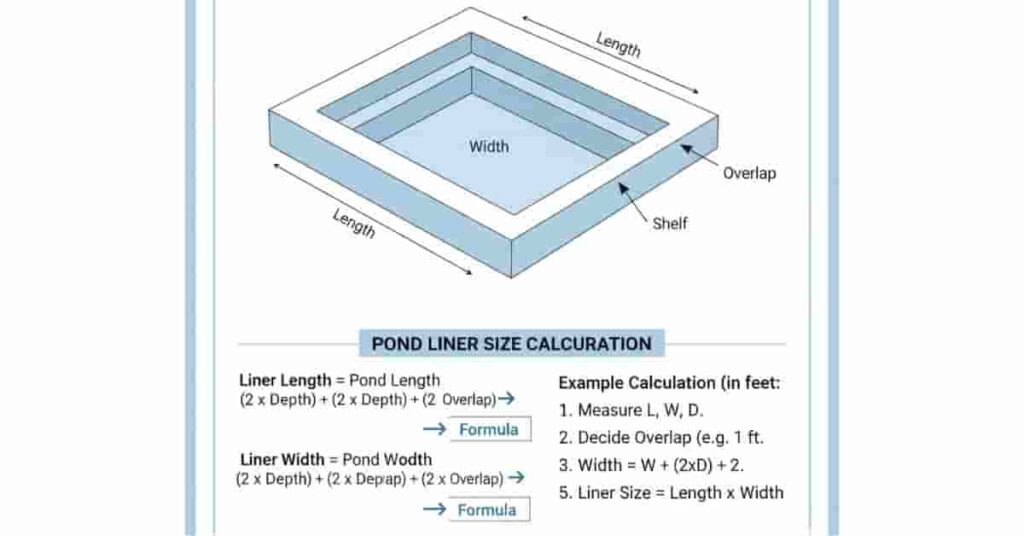
Accurate measurements prevent waste and save money. A small mistake can add hundreds to your order. That’s why many homeowners use a pond liner cost & material calculator before buying.
Follow these steps to size your liner correctly and estimate the total cost.
Step 1: Measure Pond Dimensions
Start with basic measurements:
- Length—Longest point of the pond
- Width—widest point
- Depth—Deepest section
If your pond has shelves, measure the deepest level. Depth must include shelves because the liner must cover all drops.
Use a tape measure. Write numbers in feet. Round up slightly to stay safe.
Pro Tip: Always measure twice. Uneven edges often cause sizing errors.
Step 2: Calculate Required Liner Size
You must allow extra liner to fold over the edges. This prevents slipping and soil collapse.
Use this formula:
Liner Length = Pond Length + (2 × Depth) + Overlap Liner Width = Pond Width + (2 × Depth) + Overlap
Recommended overlap: 1–2 feet per side
Example: If your pond is 10 ft long, 8 ft wide, and 2 ft deep:
Liner Length = 10 + (2 × 2) + 2 = 10 + 4 + 2 = 16 ft
Liner Width = 8 + (2 × 2) + 2 = 8 + 4 + 2 = 14 ft
A pond liner material calculator does this instantly, reducing mistakes.
Step 3: Calculate Surface Area
Multiply linear length by linear width.
Using the example above:
16 × 14 = 224 square feet
This number determines your material cost.
Step 4: Multiply by Material Unit Cost
Now multiply the total square footage by the price per square foot.
If EPDM costs $1.00 per sq ft [placeholder]:
224 × $1.00 = $224 estimated liner cost
You can repeat this step using:
- EPDM pond liner calculator
- Rubber pond liner calculator
- Butyl pond liner calculator
- Box-welded pond liner calculator
This helps compare material options quickly.
📐 Example Calculations
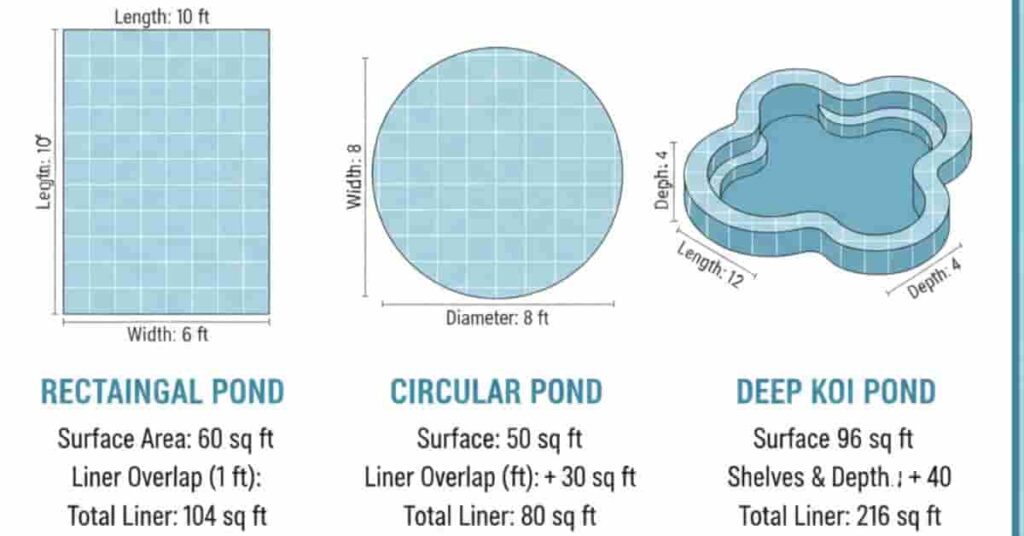
Rectangular Garden Pond
12 ft × 10 ft × 2 ft deep
Liner Length = 12 + 4 + 2 = 18 ft Liner Width = 10 + 4 + 2 = 16 ft
18 × 16 = 288 sq ft
Round Pond Example
For round ponds:
Measure diameter instead of length and width.
Add depth and overlap the same way. Many online tools handle this automatically.
A pond liner material calculator simplifies circular math.
Deep Koi Pond Example
Koi ponds often reach 4 ft deep.
Deeper ponds increase liner size fast. Thickness also matters here. Many owners choose 60-mil EPDM for its strength.
👉 Get Instant, Accurate Results
Manual math works, but it takes time. Small errors can cost you.
Use our pond liner cost & material calculator to:
- Auto-calculate liner dimensions
- Compare EPDM, rubber, butyl, and box-welded options.
- Estimate total project cost in seconds.
It’s faster, safer, and more accurate than guessing.
Takeaways
- Always measure depth carefully.
- Add 1–2 feet of overlap for safety.
- Multiply the linear size by the unit cost.
- Use a calculator to avoid overspending.
Choosing the Right Liner Based on Your Pond Type
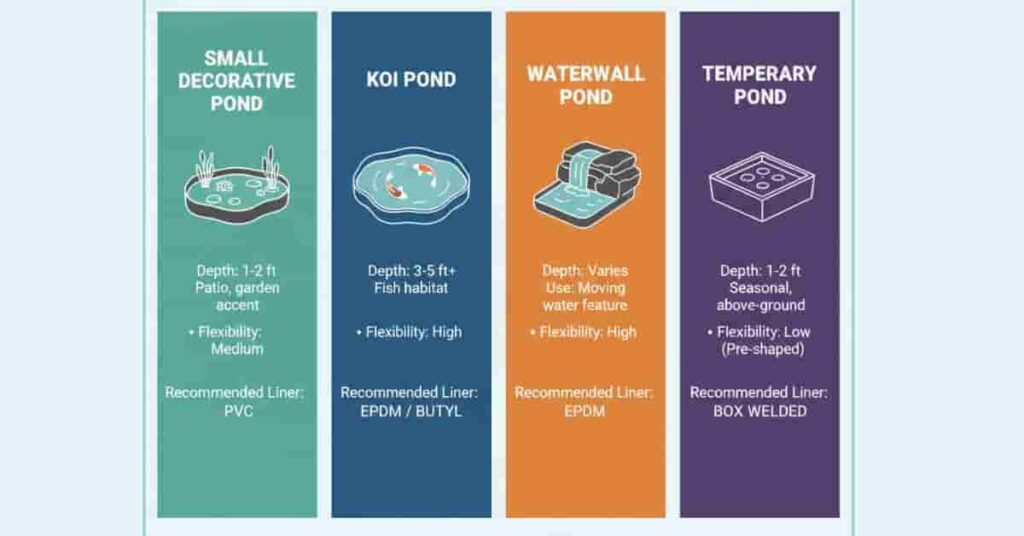
Not every pond needs the same liner. Depth, shape, and water features all affect your choice. A pond liner cost & material calculator helps you compare materials based on your pond type and budget.
Here’s how to choose the right liner for your setup:
“For ponds with waterfalls, selecting the correct liner and pump combination ensures both durability and optimal flow—our waterfall & garden pond pump guide explains this in detail.”
Small Decorative Pond
Small backyard ponds are usually less than 2 feet deep. Flexibility matters more than heavy thickness.
Best options:
- 45 mil EPDM
- Box-welded liner for square or formal shapes.
EPDM handles uneven edges well. Box-welded liners create clean corners and reduce folding. Use a pond liner material calculator to compare pricing before ordering.
Koi Pond (3–4 ft Deep)
Koi ponds need stronger protection. Fish movement and depth increase pressure on the liner.
Best options:
- 60 mil EPDM
- Butyl liner
These materials resist punctures and last longer. A pond liner cost calculator helps estimate the price difference between 45 mil and 60 mil options.
Waterfall Pond
Waterfalls need a flexible material that bends easily around rocks.
Best option:
- Rubber liner (EPDM)
Rubber handles curves and temperature changes well. A rubber pond liner calculator helps size both the pond and the waterfall basin.
Temporary Pond
If the pond is seasonal or short-term, budget matters more than lifespan.
Best option:
- PVC liner
PVC costs less upfront. A pond liner price calculator helps confirm if it fits your short-term budget.
Takeaways
- Match liner strength to pond depth.
- Use flexible materials for waterfalls.
- Choose PVC only for short-term use.
- Always compare costs using a pond liner cost & material calculator.
Tips to Save Money Without Compromising Quality
Pond projects can get expensive fast. The good news? You can control costs with smart planning. A pond liner cost & material calculator helps you avoid common budget mistakes before you buy.
Here are practical ways to save money without cutting quality:
1. Avoid Oversizing the Liner
Many homeowners order more liner than needed. Extra material increases cost and waste.
Use a pond liner cost calculator to:
- Enter exact dimensions
- Include correct overlap
- Prevent overbuying
Accurate sizing protects your budget.
2. Choose the Right Thickness for Your Depth
Thicker liners cost more. But going too thin can lead to damage.
- Shallow decorative ponds → 45 mil EPDM
- Deep koi ponds → 60 mil EPDM or butyl
Match thickness to depth and fish load. A pond liner price calculator helps compare material upgrades before you decide.
3. Buy During Off-Season
Winter often brings discounts from U.S. suppliers. Demand drops, and prices may improve. Check trusted pond retailers during colder months.
[placeholder—verify seasonal discount trends]
4. Compare Online Suppliers
Prices vary between stores. Always compare:
- Cost per square foot
- Shipping fees
- Warranty terms
Small price differences add up on large ponds.
5. Avoid Unnecessary Seams
Seams require tape and labor. They also increase leak risk. Order one correctly sized sheet when possible.
Takeaways
- Measure accurately to avoid waste.
- Match thickness to pond depth.
- Shop smart and compare suppliers.
- Confirm totals with a pond liner cost calculator before checkout.
Conclusion
Choosing the right pond liner material can save you money and prevent future repairs. In this guide, we covered popular options like EPDM, butyl, box-welded, and PVC. We also explained how to calculate liner size, compare costs, and select the best fit for your pond type.
Using a pond liner cost & material calculator ensures you order the correct size and avoid waste. It helps plan your budget accurately while comparing materials and thicknesses for your specific pond. Related tools, like the pond liner price calculator or EPDM pond liner calculator, can further refine your estimates.
For detailed sizing guidance, check out our Pond Sizing Guide.
Start your project with confidence today—use the calculator to see instant estimates, and make smarter choices for a durable, cost-effective pond.

Michael Brooks and Sarah Lane are the co-founders of the Pond Pump Team, a trusted U.S.-based group helping homeowners and landscapers build better ponds and water features. Michael, an experienced pond engineer from Oregon, has worked for over 12 years on pump sizing, flow systems, and water circulation. Sarah, a pond designer from Colorado with nine years of experience, focuses on eco-friendly and easy-to-maintain pond and waterfall designs. Together, they’ve completed more than 180 pond projects and created tools like the Pond Pump Calculator and Pond Liner Calculator to make pond planning simple, accurate, and sustainable.
Need help with your pond setup? Contact the Pond Pump Team for expert advice and reliable solutions.