Introduction
Ever bought a pond pump only to find it too weak—or too powerful—for your pond? Many beginners in the USA face this exact problem. Choosing the right pump is crucial for healthy fish, clear water, and energy efficiency.
A pond pump calculator takes the guesswork out of the process. By entering simple details like pond size, water features, and pump head, you can quickly see which pump will work best. This saves time, prevents costly mistakes, and ensures your pond runs all year round.
In this guide, we’ll explain how to use a pond pump calculator step by step. You’ll also learn about different types of calculators, factors that affect pump choice, and common mistakes to avoid. Whether you have a koi pond, garden pond, or waterfall setup, you’ll feel confident selecting the right pump for your pond.
By the end, you’ll know exactly how to pick a pump that keeps your pond healthy, beautiful, and energy-efficient. Even beginners can make informed decisions without guesswork or overspending.
What Is a Pond Pump Calculator?
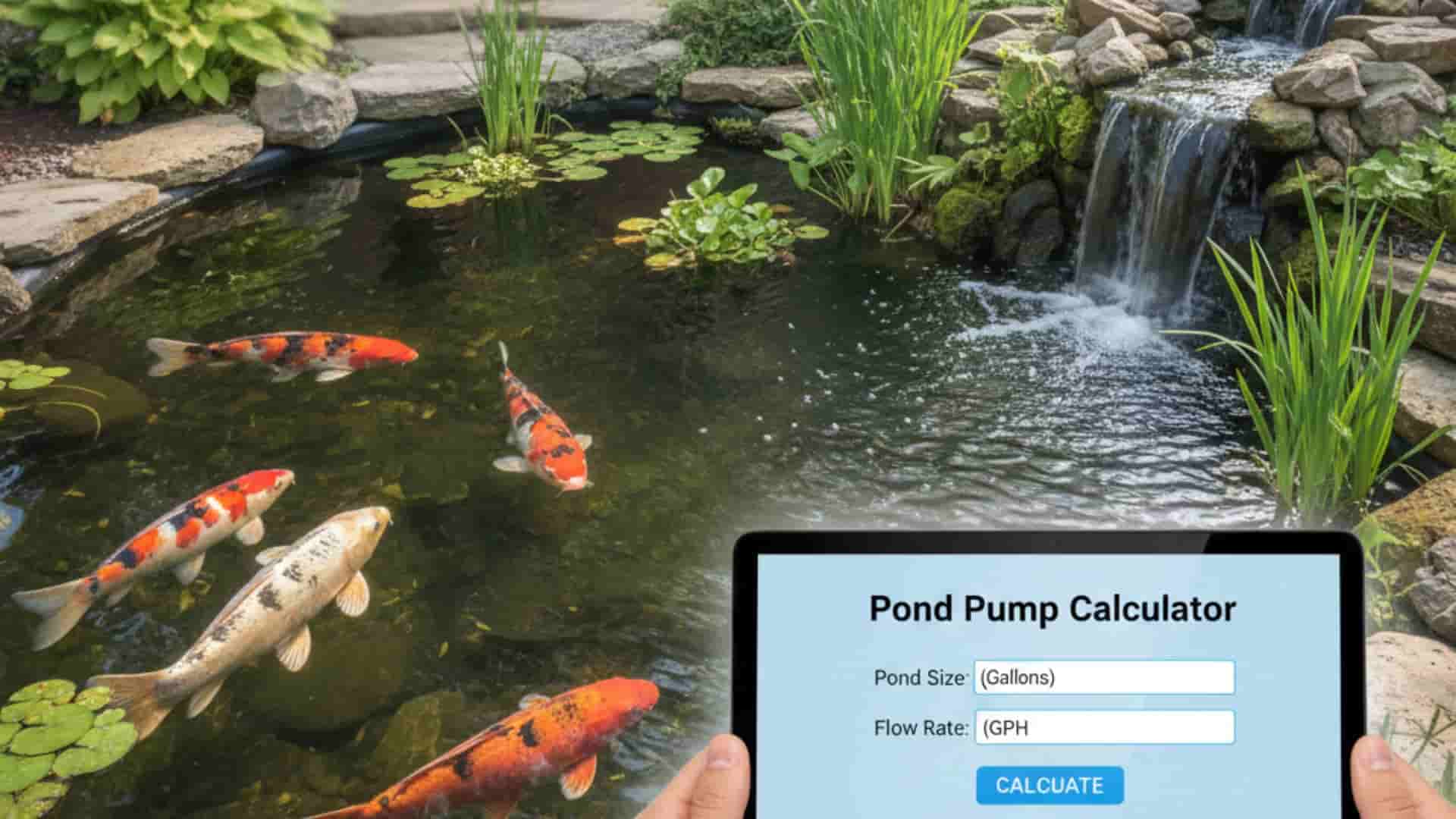
A pond pump calculator is an easy online tool that helps you pick the right pump for your pond. Instead of guessing, you enter pond size and features, and it recommends the correct pump flow and power.
This tool works for garden ponds, koi ponds, and waterfall systems. It helps beginners avoid common sizing mistakes that can harm fish or waste electricity. Here’s how to apply this effectively:
From my experience: I once guessed the wrong pump for my koi pond and ended up stressing my fish. I tried a pond pump calculator, entered the pond size and features, and got the correct flow instantly. It saved me time, money, and a lot of worry.
Definition and Purpose
A pond pump calculator determines the pump size your pond needs for proper circulation. Its main goal is accuracy. You get recommendations based on real pond measurements, not guesses.
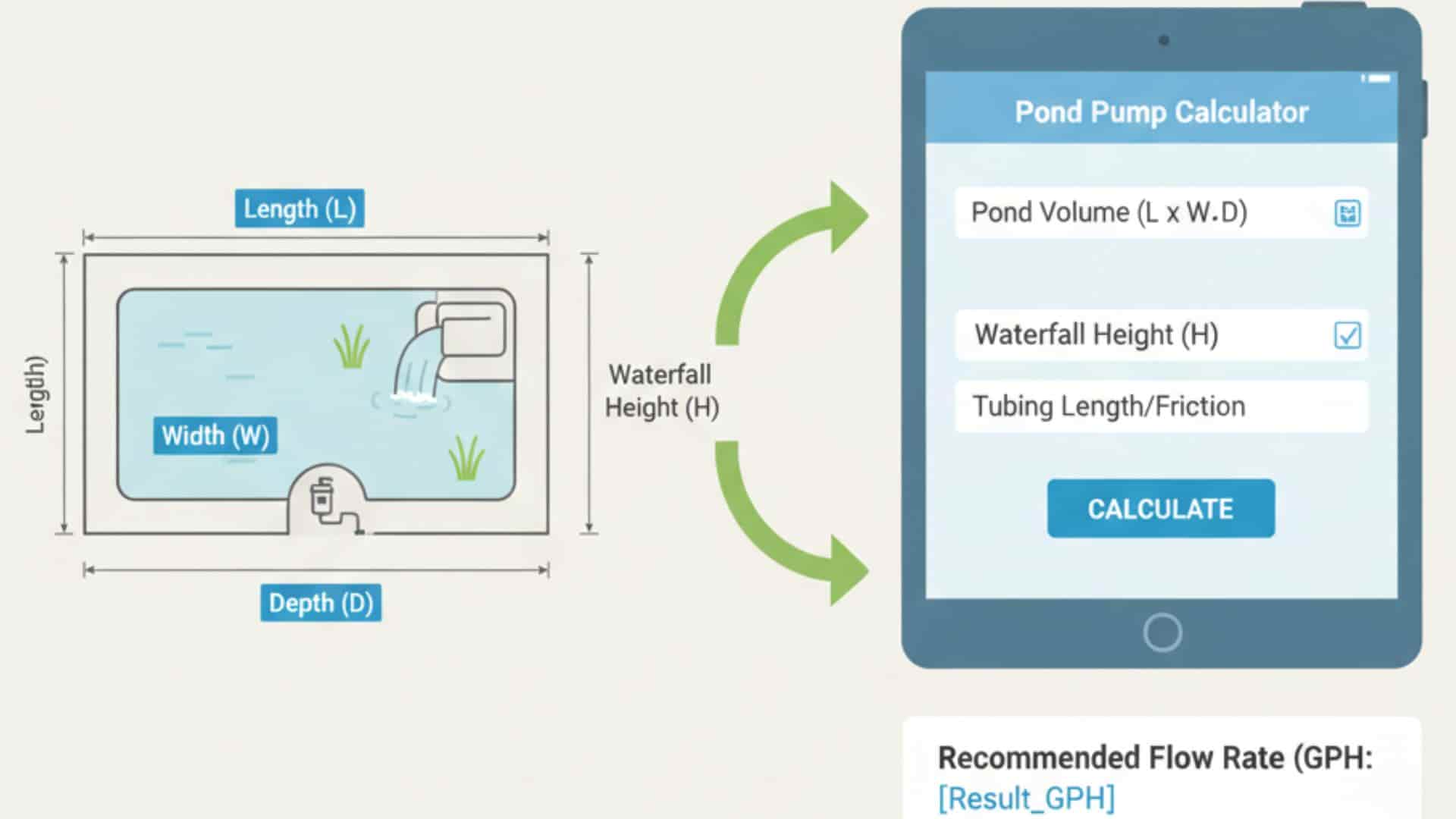
Most calculators ask for:
-
- Pond length, width, and depth
-
- Pond type (koi, fish, or garden)
-
- Water features like waterfalls or filters
The tool then calculates the required flow rate, usually in gallons per hour (GPH). It also considers head height, which includes vertical lift and pipe resistance. This ensures the pump performs correctly once installed.
How It Helps Save Time and Avoid Mistakes
Using the wrong pump can lead to poor water circulation, unhealthy fish, and higher electricity costs. A pond pump calculator removes these risks.
Key benefits include:
-
- Make faster, accurate decisions.
-
- Correct pump sizing for fish and koi ponds
-
- Avoid underpowered or oversized pumps.
-
- Improve energy efficiency
Many beginners buy pumps that don’t meet their pond’s needs. A calculator shows realistic performance, preventing poor circulation and frequent replacements. It also builds confidence for first-time pond owners.
Types of Pond Pump Calculators
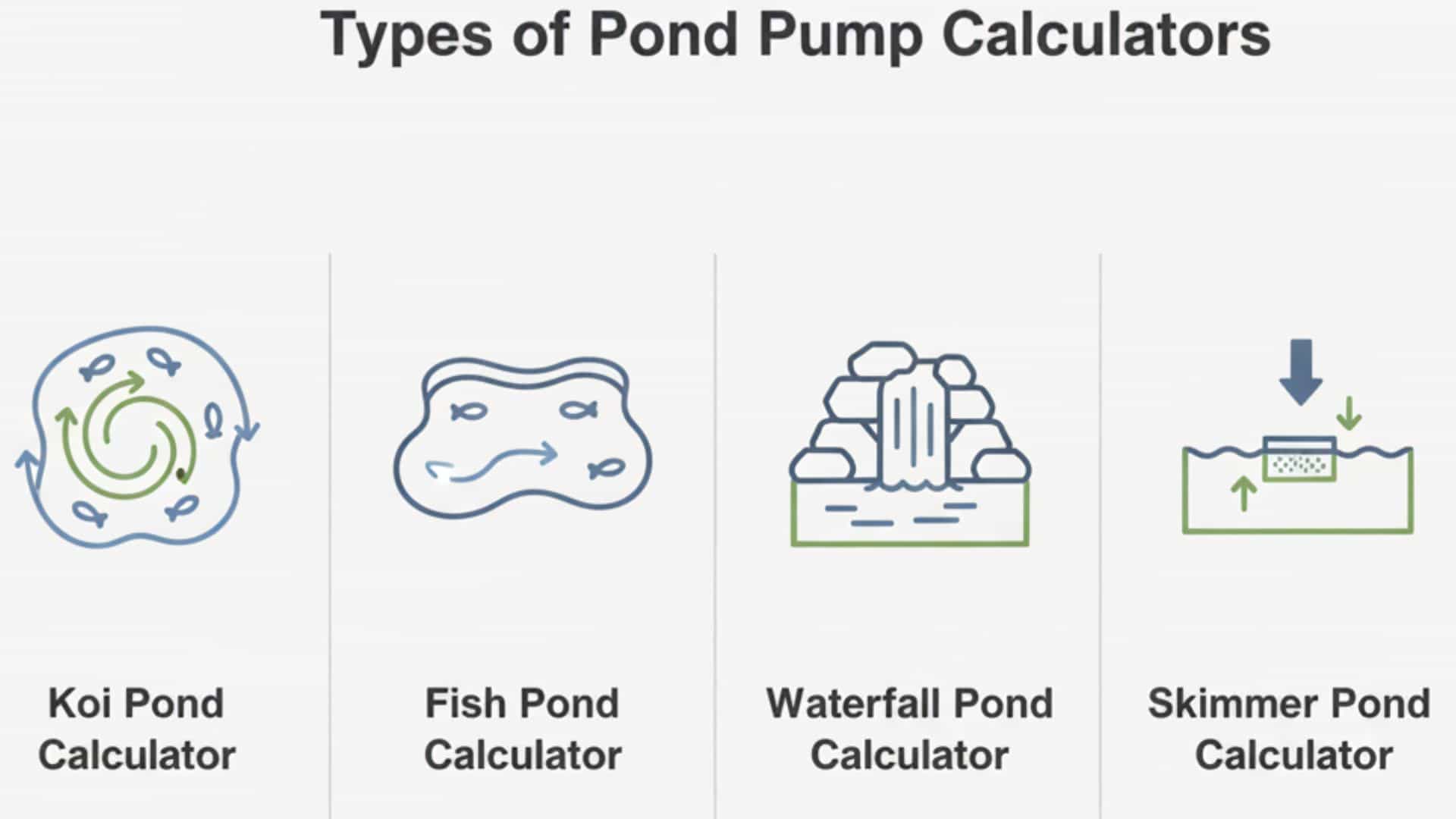
Not every pond works the same way, so one generic tool won’t fit all needs. A pond pump calculator often comes in different types, each designed for a specific pond setup. These calculators adjust flow rates, head height, and circulation based on how your pond functions.
Choosing the right calculator matters as much as choosing the right pump. It helps you get accurate results for fish health, clear water, and stable performance. Below are the most common types and when to use each one. Here’s how to apply this effectively:
For a deeper breakdown of flow rates and lift requirements, see our detailed waterfall and garden pond pump guide covering size, flow, and real-world examples.
This guide is especially helpful if your pond includes a waterfall or decorative garden features that affect pump performance.
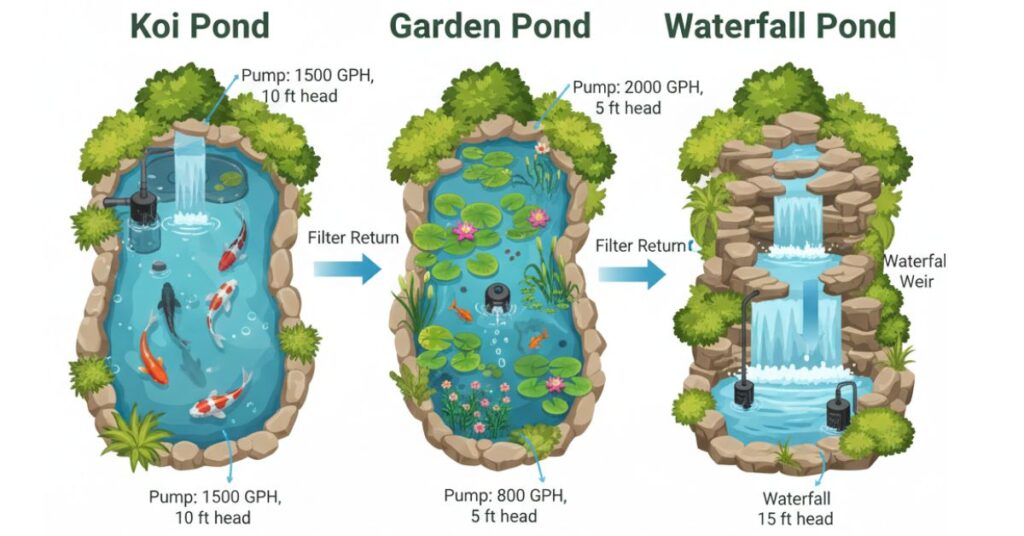
Koi Pond Pump Calculator
A koi pond pump calculator focuses on high circulation and strong filtration. Koi produce more waste than smaller pond fish, so water must move faster and pass through filters more often.
This calculator usually considers:
-
- Total pond volume
-
- Target turnover rate (often once per hour)
-
- Filter and UV system resistance
It helps you determine the right pump size without oversizing. Oversized pumps raise energy costs and can stress the fish.
Use this calculator if your pond holds koi year-round. It balances flow, efficiency, and fish health, ensuring clean water and safe circulation.
Fish Pond Pump Calculator
A fish pond pump calculator is ideal for goldfish or mixed-species ponds. These ponds need steady circulation, but not the aggressive flow required for koi.
This type focuses on:
-
- Moderate turnover rates
-
- Gentle water movement
-
- Energy-efficient pump sizing
It helps avoid mistakes like buying a koi-sized pump for a small pond. It also reduces cloudy water caused by weak circulation. This ensures your pond stays healthy and clear.
Pond Pump Calculator for Waterfalls
A pond pump calculator for waterfalls prioritizes height and visual flow. Waterfall pumps must push water upward, not just circulate it.
This calculator accounts for:
-
- Vertical lift height
-
- Desired waterfall width
-
- Flow rate per inch of spillway
Many inexpensive pumps lose power at higher lifts. Using the right calculator ensures your waterfall flows consistently and prevents wasted money.
Pond Pump Calculator for Skimmers
A pond pump calculator for skimmers focuses on surface cleaning and debris removal. Skimmers require a steady flow to pull leaves and debris into the basket.
This calculator looks at:
-
- Skimmer rating
-
- Pond surface area
-
- Pipe length and bends
Too little flow makes the skimmer ineffective. Too much flow can cause noise or air intake issues. Using this tool ensures your skimmer works efficiently, keeping the pond clean with minimal maintenance.
How to Use a Pond Pump Calculator
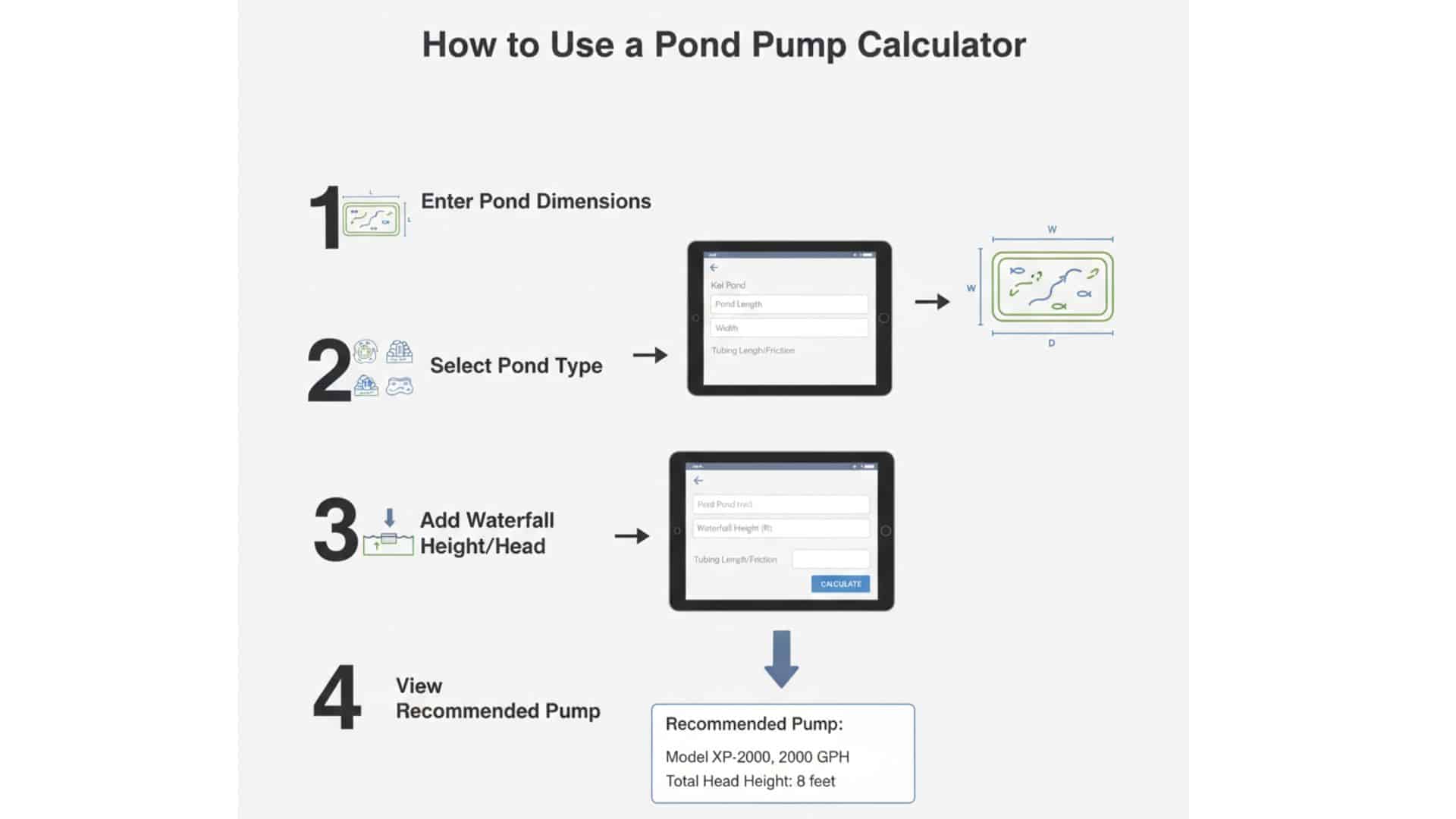
Using a pond pump calculator is simpler than most people think. You don’t need plumbing skills or technical knowledge. Just have accurate pond details and a few minutes to get reliable results.
This tool helps you avoid guesswork and costly mistakes. When used properly, it provides the correct pump size for your pond, koi pond, waterfall, or skimmer setup. Here’s how to apply this effectively:
Case study: A backyard pond in California had cloudy water due to poor circulation. The owner used a pond pump calculator, inputted pond dimensions and waterfall height, and selected the recommended pump. Within a week, the water cleared, and the fish were thriving.
Step-by-Step Instructions for Using Online Calculators
Most pond pump calculators follow the same workflow. Their goal is to match water flow with your pond’s needs.
Follow these steps:
-
- Select your pond type, such as koi, fish, or garden pond.
-
- Enter pond dimensions or total water volume.
-
- Add details for waterfalls, filters, or skimmers.
-
- Review the recommended pump flow and head height.
A koi pond pump calculator usually suggests higher flow rates, while a skimmer-focused tool prioritizes steady surface flow. Always check both the minimum and ideal pump recommendations to ensure optimal performance. Using the calculator saves time, prevents errors, and ensures your pond runs efficiently.
Input Requirements: Pond Size, Water Volume, Pump Head, Waterfall Height
Accurate inputs are essential. Incorrect numbers can lead to poor performance or wasted energy.
Most calculators require:
-
- Pond length, width, and average depth
-
- Total water volume, if known
-
- Pump head height, including vertical lift.
-
- Waterfall height and pipe length
Pump head includes vertical lift plus resistance from pipes and bends. Ignoring this often leads to an undersized pump. Skimmer-based calculators may also ask for pond surface area to ensure effective debris removal. Providing precise information ensures your pump performs as expected and avoids issues with weak flow or noisy operation.
Manual Calculation vs Online Calculator
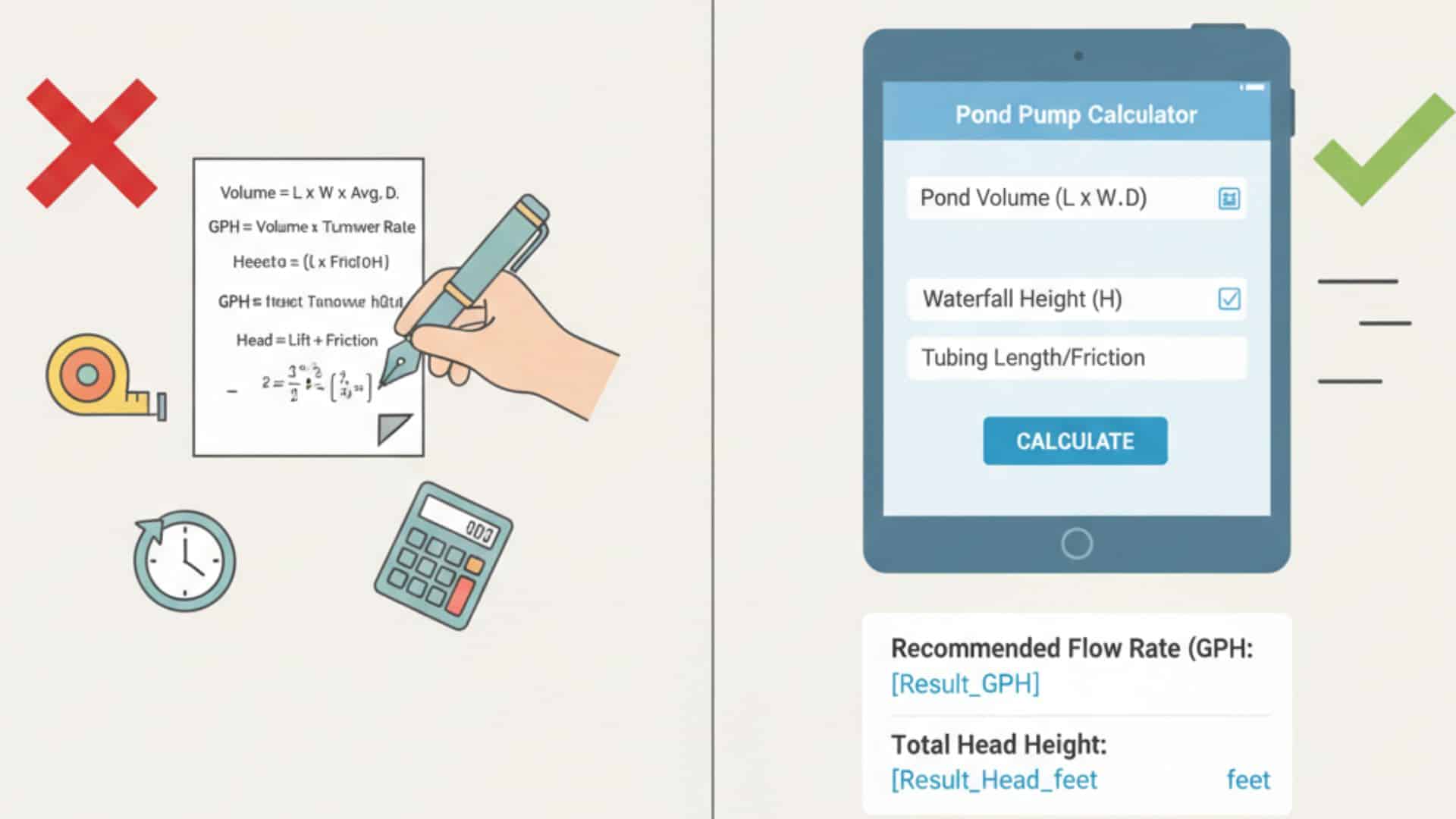
While a pond pump calculator simplifies the process, some pond owners prefer understanding the numbers themselves. Manual calculations help confirm results, especially for unusual pond shapes or complex waterfalls. Knowing both methods ensures accurate pump sizing and avoids common mistakes. Here’s how to apply this effectively:
If you want to understand the numbers behind pump sizing, our guide on how to calculate pond pump size and flow rate explains the formulas step by step for koi, garden, and waterfall ponds.
This step-by-step explanation helps you confidently verify pond pump calculator results using manual calculations.
Basic Formulas Explained (Flow Rate, GPH, Head Height)
Manual calculations use simple formulas to estimate pump requirements. Flow rate is usually measured in gallons per hour (GPH). You calculate it by multiplying pond volume by the desired turnover rate.
Pump head includes vertical lift plus pipe resistance. The formula considers:
-
- Total vertical height from the pump to the highest water point
-
- Length and diameter of pipes
-
- Number of bends and fittings
By calculating these manually, you can compare results with an online pond pump calculator to confirm accuracy. This helps ensure your pump meets the needs of koi, fish, or waterfall ponds without oversizing or undersizing.
When Manual Calculation May Be Necessary
Manual calculation becomes useful when:
-
- Your pond has a unique shape.
-
- You use custom pipe layouts.
-
- You want to double-check online recommendations.
It also helps experienced pond owners estimate electricity use and energy costs more accurately. Beginners can rely on online calculators, but knowing how to check results manually adds confidence.
Examples for US Backyard Ponds
For a typical US backyard koi pond:
-
- Pond volume: 1,500 gallons
-
- Desired turnover: once per hour → 1,500 GPH required
-
- Waterfall height: 3 feet
-
- Pipe length: 20 feet with two bends
Using the formulas, the required pump head and flow match the online calculator’s recommendation. This shows how manual checks validate online results and ensure your pond circulates efficiently and safely.
Ready to find the perfect pump for your pond? Use our pond pump calculator today and get accurate, hassle-free recommendations for koi, garden, or waterfall ponds
Factors to Consider When Choosing a Pond Pump
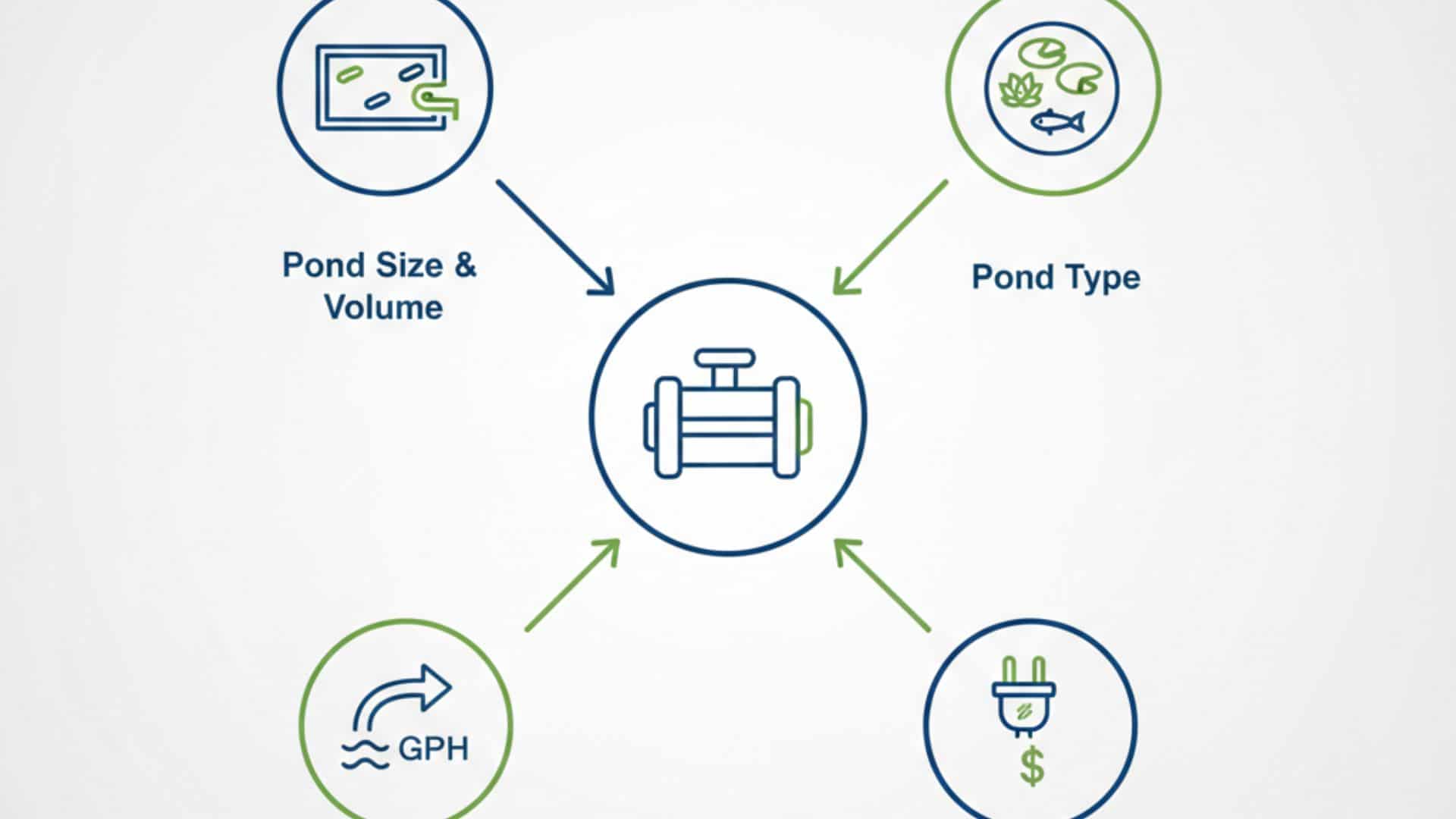
Choosing the right pump is crucial for a healthy pond. A pond pump calculator helps, but understanding the key factors ensures long-term success. The right pump supports water circulation, fish health, and overall pond efficiency. Here’s how to apply this effectively:
From my experience: I once picked a pump without considering pond type, and the waterfall barely trickled. Using the calculator again, I adjusted for total head and flow rate. The results were perfect—smooth waterfall and happy koi.
Pond Size and Volume
The size and volume of your pond are the first things to consider. A larger pond needs a higher flow rate to keep water moving and clean.
To determine the right pump:
-
- Measure pond length, width, and depth.
-
- Calculate total water volume in gallons.
-
- Consider any added features like waterfalls or filters.
Accurate measurements prevent underpowered pumps that cause stagnant water or oversized pumps that waste energy. Using this information with a pond pump calculator gives precise results for your pond’s size and needs.
Type of Pond: Koi, Garden, Waterfall
Pond type significantly impacts pump choice. Different ponds require different flow rates:
-
- Koi ponds: High circulation and filtration for fish health
-
- Garden ponds: Moderate flow for plants and aesthetics
-
- Waterfalls: Higher lift needed for vertical water movement
Knowing your pond type helps the calculator suggest pumps that balance efficiency and water quality. This ensures fish, plants, and water features thrive without unnecessary power consumption.
Desired Flow Rate and Circulation
Flow rate determines how often water passes through filters. Proper circulation removes debris, oxygenates water, and prevents algae.
Key points:
-
- Decide the turnover rate (full pond volume per hour)
-
- Adjust for pond type and fish load.
-
- Ensure smooth water movement without stressing fish.
Setting the right flow rate keeps the pond clean, healthy, and energy-efficient.
Electricity Consumption and Cost
Pump efficiency affects long-term costs. High-power pumps may circulate water well, but they increase your electricity bill.
Tips:
-
- Check the energy rating before purchase.
-
- Balance flow needs with power usage.
-
- Consider running pumps on timers or variable-speed controllers.
Selecting a pump that matches pond requirements prevents overspending and ensures sustainable operation.
This section ensures pond owners understand the critical elements that influence pump performance. Using these factors with a pond pump calculator guarantees a safe and efficient pond system.
Common Mistakes to Avoid
Even with a pond pump calculator, pond owners can make mistakes that affect water quality, fish health, and energy use. Choosing the wrong pump or ignoring pond specifics can lead to costly issues. Being aware of common pitfalls ensures your pond runs efficiently and safely. Here’s how to apply this effectively:
What we know: Many first-time pond owners buy underpowered pumps, leading to stagnant water and stressed fish. Using a pond pump calculator can prevent these issues by matching pump size to pond volume and features.
Choosing Too Small or Too Large a Pump
Selecting the wrong pump size is one of the most frequent mistakes. A pump that’s too small won’t circulate water properly, leading to algae growth and poor oxygenation. A pump that’s too large wastes electricity and can stress fish.
Tips to avoid this:
-
- Measure your pond accurately.
-
- Use a pond pump calculator to determine the correct flow.
-
- Consider features like waterfalls or skimmers.
Even cheap pumps often claim higher output than they deliver. Checking the real output of the cheap pond pump calculator results ensures you pick a pump that performs as expected.
Ignoring Pond Type or Pump Head Requirements
Different ponds require different pump specifications. Koi ponds need higher circulation, while garden ponds need moderate flow. Waterfalls require pumps that handle vertical lift. Ignoring pump head—vertical lift plus pipe resistance—can cause underperformance.
To avoid issues:
-
- Match pump specifications to your pond type
-
- Include pipe length and bends in your calculations.
-
- Verify the surface area when using a skimmer.
Using a pond pump calculator for a skimmer ensures the pump moves water efficiently across the pond surface and keeps it clean.
Not Checking Electricity Costs
Pump efficiency directly affects energy bills. High-power pumps may circulate water well but can significantly increase electricity costs over time.
Ways to save energy:
-
- Choose energy-efficient pumps
-
- Match pump size to actual pond needs
-
- Consider timers or variable-speed pumps.
Checking energy consumption beforehand helps avoid unexpected costs and keeps your pond operation sustainable.
conclusion
In this guide, we covered how to choose the right pond pump using a pond pump calculator. You learned about different calculator types, input requirements, and factors that affect pump performance. We also highlighted common mistakes to avoid and explained manual calculations for extra confidence.
Using a pond pump calculator helps ensure your pond stays clean, fish remain healthy, and electricity costs stay manageable. Even beginners in the USA can make informed decisions without guesswork or overspending.
Now it’s your turn—try the pond pump calculator for your pond type today. Share your results or experiences in the comments, and explore more tips on our website to keep your pond running smoothly.

Michael Brooks and Sarah Lane are the co-founders of the Pond Pump Team, a trusted U.S.-based group helping homeowners and landscapers build better ponds and water features. Michael, an experienced pond engineer from Oregon, has worked for over 12 years on pump sizing, flow systems, and water circulation. Sarah, a pond designer from Colorado with nine years of experience, focuses on eco-friendly and easy-to-maintain pond and waterfall designs. Together, they’ve completed more than 180 pond projects and created tools like the Pond Pump Calculator and Pond Liner Calculator to make pond planning simple, accurate, and sustainable.
Need help with your pond setup? Contact the Pond Pump Team for expert advice and reliable solutions.