Introduction
Backyard pond pumps use a lot of electricity. Many US pond owners are surprised by their power consumption. Running a koi pond, waterfall, or decorative pond can add hundreds to your monthly bill.
Understanding your pump’s energy use is the first step to saving money. A pond pump electricity cost calculator quickly estimates daily, monthly, and yearly costs. With accurate numbers, you can choose the right pump size, set efficient runtimes, and plan for upgrades. This helps beginners avoid costly mistakes, reduce energy bills, and make smarter choices for their ponds.
This guide explains how pond pumps use electricity and what drives running costs. It shows you how to cut energy use, use a running cost calculator to track savings, and keep your pond healthy and beautiful while reducing your bills. By following this guide, you’ll save money, use less electricity, and maintain a thriving pond.
How Pond Pumps Consume Electricity
Every pond pump uses electricity to move water. Estimating costs requires understanding power use, which depends on wattage, runtime, and pump effort. A pond pump electricity cost calculator turns accurate specs into dollar estimates. Here’s how to apply this effectively:
💡 Want to see your pond pump’s real electricity cost? Try our Pond Pump Electricity Cost Calculator and get instant monthly cost estimates for your pond.
Explanation of Pump Wattage and Energy Consumption
Pump wattage shows how much power the pump draws while running. Higher watts mean more electricity use. Most pond pumps list wattage on the label or product page. You can plug this number into a pond pump electricity calculator or a pond pump power consumption calculator.
Energy use depends on runtime. A 100-watt pump running 24 hours uses more power than a 200-watt pump running eight hours.
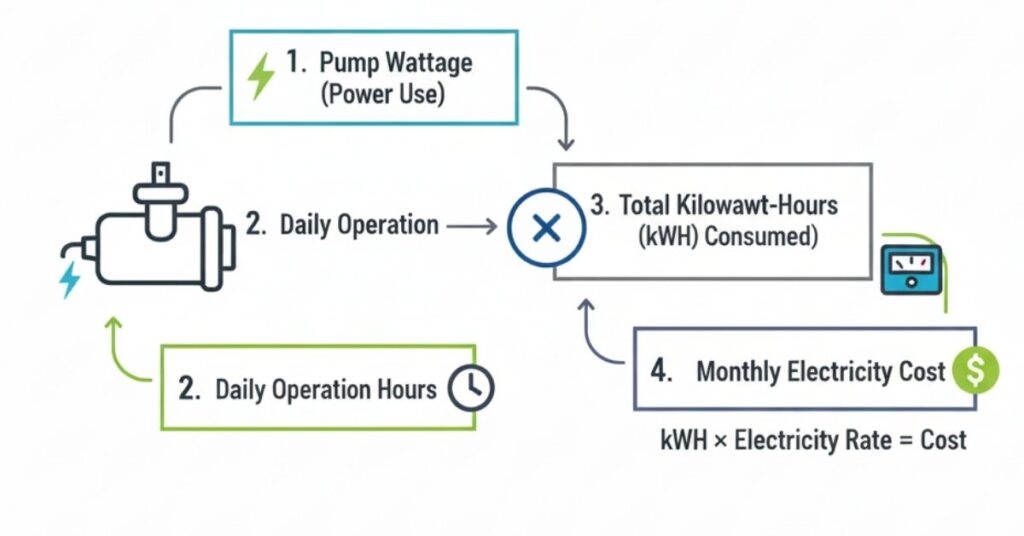
Here’s how consumption works:
- Watts = power draw at any moment
- Kilowatt-hours (kWh) = watts ÷ 1,000 × hours used
- Cost = kWh × electricity rate
This is why a pond pump running cost calculator asks for wattage and daily hours. UK tools work the same way, but electricity rates differ by location. To get an accurate estimate, always use your local electricity rate when calculating costs.
Factors Affecting Electricity Use: Flow Rate, Head Height, Pump Size, Pump Type
Several factors affect power use. Ignoring them leads to wrong estimates, even with a cost calculator.
- Flow rate: The more gallons per hour used, the more energy is required.
- Head height: Pumping uphill uses more power.
- Pump size: A larger pump can waste power.
- Pump type: Eco or variable-speed pumps save energy.
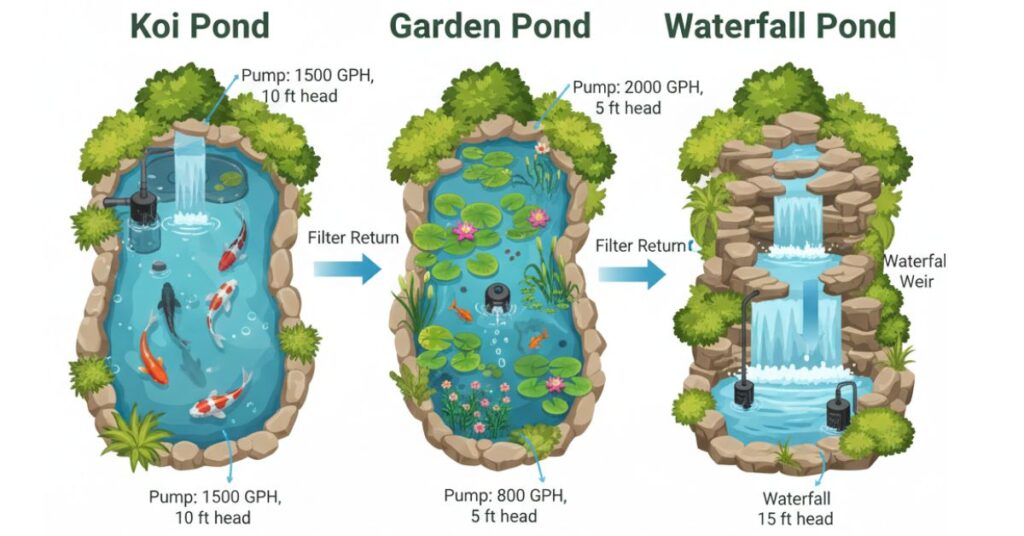
A pump pushing water to a waterfall uses more electricity than one circulating a flat pond. Debris and clogged filters also increase the load. This raises costs over time.
When using a pond pump running cost calculator, UK or US version, always factor in real conditions. Accurate inputs give realistic monthly costs and help you choose efficient equipment.
Energy Usage Examples: Small Backyard Pond vs Large Koi Pond
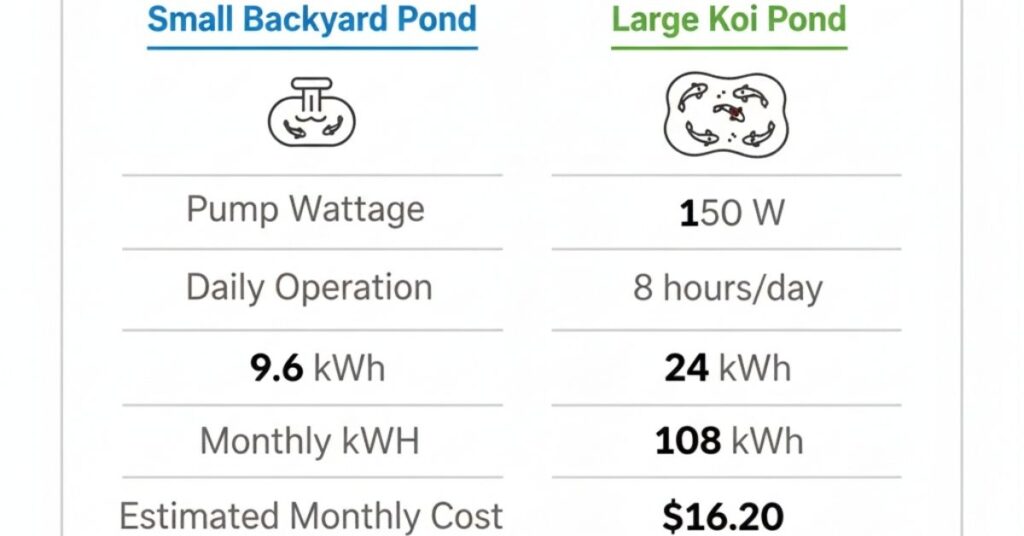
Electricity use varies greatly with pond size and pump demand. For example, a small backyard pond usually runs a low-watt pump for simple circulation, while a large koi pond requires higher flow and often runs nonstop. This difference becomes especially clear when you use a pond pump electricity calculator or pond pump power consumption calculator.
Example scenarios:
- Small pond: 60-watt pump, 10 hours per day
- Koi pond: 200-watt pump, 24 hours per day
kWh calculation (US rates):
- Small pond: 60 ÷ 1,000 × 10 = 0.6 kWh/day
- Koi pond: 200 ÷ 1,000 × 24 = 4.8 kWh/day
To estimate the electricity cost, multiply the number of kilowatt-hours (kWh) your pond pump uses by your local US electricity rate ([placeholder] per kWh). A pond pump power consumption calculator performs this calculation instantly, reducing the chance of math errors. UK tools work the same way, but use different rates.
Step 1 – Calculate Pump Running Cost
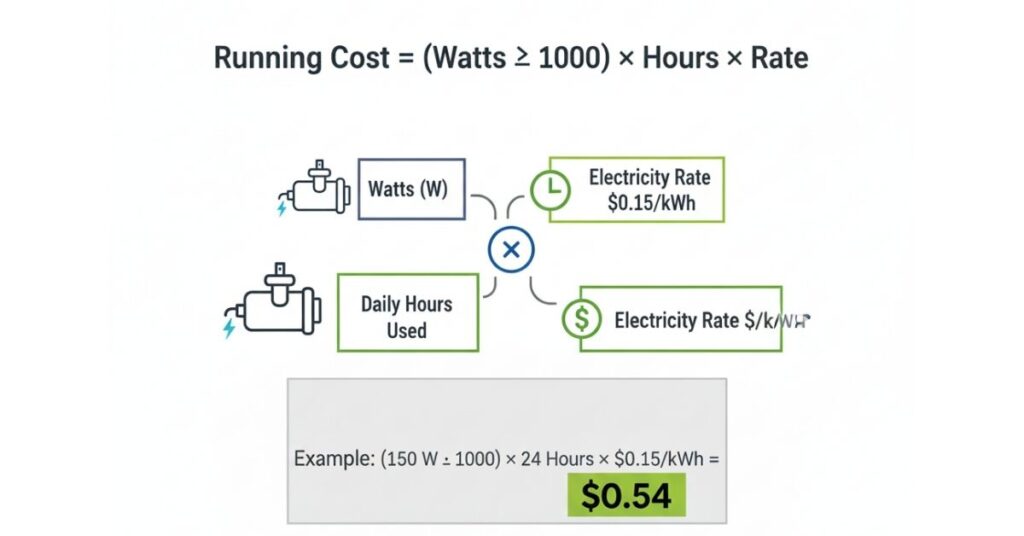
To manage energy bills, know your pump’s running cost. This step turns pump specs into numbers. Whether you calculate by hand or use a tool, the goal stays: get a reliable daily and monthly estimate. A pond pump running cost calculator helps, but learning the basics avoids mistakes. Start with a simple formula, then check with a calculator. Here’s how:
How to Calculate Cost Manually (Watts × Hours × Rate)
Manual calculation needs wattage, runtime, and electricity rate.
Use this formula:
- Daily cost = (Watts ÷ 1,000) × hours per day × rate per kWh
Steps: 1. Find the pump’s wattage on the label or product page. 2. Estimate the number of hours per day the pump runs. 3. Check your local U.S. electricity rate (for example: [placeholder] per kilowatt-hour). Use the formula from above to calculate the daily cost.
- Estimate daily runtime (hours).
- Apply your local US electricity rate ([placeholder] per kWh).
This method matches what a pond pump running cost calculator, UK or US version, uses behind the scenes. It’s reliable if your inputs reflect real use.
Using a Pond Pump Running Cost Calculator
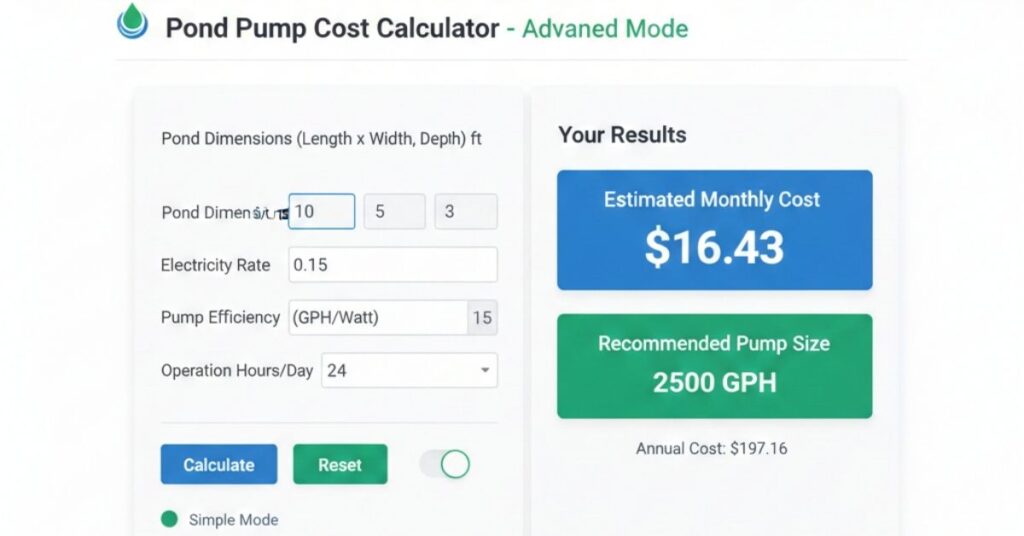
A calculator gives fast results and reduces errors. Enter wattage, daily hours, and your rate. The tool shows daily, monthly, and yearly costs. Many tools also compare efficient pumps.
Benefits:
- Faster results
- Easy pump comparisons
- Fewer math mistakes. Use a pump calculator to confirm manual calculations. This builds confidence before a purchase or upgrade.
Example: 1,000-Gallon Koi Pond With a 200 GPH Pump
A 200-watt pump for a 1,000-gallon koi pond runs 24 hours per day.
- 200 ÷ 1,000 × 24 = 4.8 kWh/day
- Monthly use ≈ 144 kWh
Multiply by your local rate to get the cost. Plug the same numbers into a pond pump running cost calculator for instant confirmation.
Ready to skip the math? Use our Professional Pond Pump Calculator to see your daily, monthly, and yearly costs instantly. Enter your pond details and get your recommended pump size and energy cost.
Step 2 – Factors Affecting Pump Cost
Pump running cost depends on more than wattage alone. Two ponds with the same pump can have very different bills. A pond pump electricity cost calculator works best when you understand what drives those numbers. Size, runtime, and electricity rates all shape your final cost. If you miss one factor, your estimate can be far off. Before adjusting settings or buying a new pump, review the key cost drivers below. Here’s how to apply this effectively:
Pump Size and Flow Rate
Pump size and flow rate directly affect electricity use. Larger pumps move more water but draw more power. Many pond owners oversize pumps, which increases costs without improving water quality.
Key points to remember:
- Higher GPH usually means higher wattage.
- Oversized pumps waste electricity.
- Matching pump size to pond needs saves money.
When using a pond pump electricity cost calculator, always enter the actual pump wattage, not the advertised flow alone. Accurate sizing lowers monthly bills and improves efficiency.
Duration of Operation per Day
Runtime has a big impact on cost. A pump running all day uses more power than one on a timer, even at the same wattage.
Consider:
- Koi ponds often need 24/7 operation.
- Decorative ponds may run fewer hours.
- Seasonal adjustments can cut costs.
Even small runtime changes add up. Reducing daily use by two hours can lower monthly costs. A pond pump electricity cost calculator UK or US version shows this difference instantly.
Electricity Rates (US vs UK Comparison)
Electricity rates vary by country and region. US rates are often lower than UK rates, but they still change by state. This affects final cost estimates.
Always:
- Use your local rate in calculators.
- Treat UK results as reference only.
- Recalculate if rates change.
This keeps your cost estimates realistic and useful.
Accurate pump sizing plays a major role in electricity usage, which is why learning how to calculate pond pump size and flow rate helps prevent overspending on oversized pumps.
When pump size matches real pond needs, energy consumption drops and long-term running costs stay under control.
Step 3 – Choosing Energy-Efficient Pumps
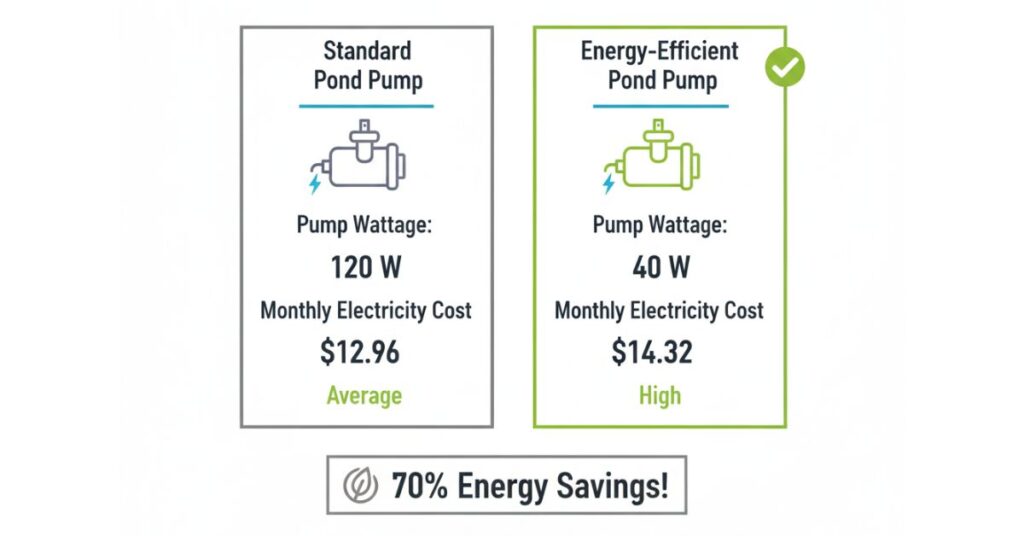
Choosing an efficient pump reduces electricity costs and maintains healthy water flow. Pairing smart pump selection with a pond pump cost calculator reveals long-term savings. Modern pumps emphasise efficiency without sacrificing performance. Before upgrading or replacing, focus on features that truly lower power use. Here’s how to apply this:
How to Select Pumps That Reduce Power Consumption
Energy consumption varies between pump models. High-efficiency pumps transfer greater water volume per watt consumed.
Look for:
- Low wattage at your required flow rate
- High efficiency ratings from trusted brands
- Right-sized capacity for your pond, not oversized
Compare pumps using a pond pump electricity calculator. Use actual wattage instead of marketing claims. This reveals true monthly and yearly costs and helps you avoid overpaying.
Variable Speed Pumps and Eco-Friendly Options
Variable speed pumps change their operating speed and power use based on water demand. They slow down when full water flow is not required, which saves energy but still keeps water clean and healthy.
Eco-friendly pump features include:
- Variable or adjustable speed controls
- Brushless motors for better efficiency
- Low-heat operation to reduce energy loss
Though these pumps may cost more upfront, they save money over time. Use a pond pump cost calculator to compare payback periods clearly.
Benefits for Pond Ecosystem and Long-Term Cost Savings
Efficient pumps support fish health, water clarity, and lower equipment stress. Reduced power use extends equipment life and cuts costs.
Long-term benefits include:
- Lower monthly electricity bills
- Longer pump lifespan
- Healthier pond balance
Energy-efficient pumps provide reliable performance and real savings.
Step 4 – Tips to Reduce Running Costs
Small adjustments can lower your pond’s electricity bill without harming water quality. Use a pond pump running cost calculator to understand your costs, then focus on reducing daily power use. Many pond owners save money by adjusting how and when their pumps run. These tips work for backyard ponds, koi ponds, and waterfalls across the US. Apply them step by step and track your results.
Turn Off Pumps When Not Needed (Seasonal Adjustment)
Pond needs change with the seasons. Running pumps at full power year-round wastes energy.
Practical US examples:
- In winter, decorative ponds may need limited circulation.
- In cooler months, reduce waterfall runtime.
- Use timers instead of manual switching.
Prioritise fish needs before turning off pumps. After making changes, promptly use a running cost calculator to confirm savings and take action based on the results.
Reduce Head Height and Optimise Piping
Water resistance increases electricity use. The higher and farther the water travels, the harder the pump works.
To reduce load:
- Lower waterfall height where possible.
- Shorten pipe runs.
- Use wider pipes to improve flow.
Even small changes reduce strain on the pump. Start making improvements today—less resistance means lower power draw and longer equipment life.
Use Skimmers and Filters to Reduce Pump Workload
Clean water flows more easily. Clogged filters force pumps to work harder and use more electricity.
Best practices:
- Clean skimmers regularly.
- Rinse filters before they clog.
- Remove debris before it reaches the pump.
Efficient filtration lowers energy use and improves pond health. Commit to regular cleaning and see the benefits in your next energy bill.
Common Mistakes to Avoid
Many pond owners overpay for electricity due to avoidable mistakes. Even the best calculator is useless if misused. Avoid these issues to save money and make better pump decisions:
Overestimating Pump Size Leads to Higher Electricity Costs
Large pumps use more power. Most ponds do not need high flow rates, yet owners often select pumps that are too large.
Common causes:
- Choosing “extra power” for safety
- Ignoring actual pond volume
- Following marketing claims
Always match pump size to pond needs. Enter real wattage into a pond pump electricity cost calculator, UK or US version, to see the cost difference clearly.
Ignoring Seasonal Changes in Pond Water Requirements
Your pond’s needs change throughout the year. Running a pump at full power in winter wastes electricity.
Seasonal mistakes include:
- Running waterfalls year-round
- Not reducing runtime in cold months.
- Ignoring lower oxygen demand
Adjust seasonally to save money and protect your fish. Recalculate costs after every change using a pond pump electricity calculator.
Not Calculating True Daily or Weekly Running Cost
Review more than just monthly bills. This helps uncover real electricity use and habits.
Make seasonal adjustments by lowering your pump usage in winter or when fish need less oxygen. Update your electricity calculator with the revised usage, note the savings, and ensure fish health is not affected. Repeat these steps each season for best results. Savings add up over time.
Along with water pumps, choosing the correct air pump size also affects overall pond efficiency and operating costs. Selecting properly sized equipment across your pond system helps lower energy waste and supports long-term savings.
Conclusion
In this guide, we examined pond pump energy usage and detailed methods for calculating precise operating costs. We discussed essential elements such as pump capacity, daily usage, flow efficiency, and energy-saving models suitable for US ponds.
A pond pump electricity cost calculator simplifies the estimation of daily and monthly power expenses. These resources enable informed pump selection, energy conservation, and bill reduction while maintaining optimal pond conditions.
By following these recommendations, you can maintain a thriving koi pond, efficient waterfall, or backyard water feature while maximising your pump’s service life.
Don’t guess your pond pump costs—try our pond pump electricity cost calculator today. Find the right pump, save energy, and reduce bills for your koi or backyard pond.

Michael Brooks and Sarah Lane are the co-founders of the Pond Pump Team, a trusted U.S.-based group helping homeowners and landscapers build better ponds and water features. Michael, an experienced pond engineer from Oregon, has worked for over 12 years on pump sizing, flow systems, and water circulation. Sarah, a pond designer from Colorado with nine years of experience, focuses on eco-friendly and easy-to-maintain pond and waterfall designs. Together, they’ve completed more than 180 pond projects and created tools like the Pond Pump Calculator and Pond Liner Calculator to make pond planning simple, accurate, and sustainable.
Need help with your pond setup? Contact the Pond Pump Team for expert advice and reliable solutions.