Introduction
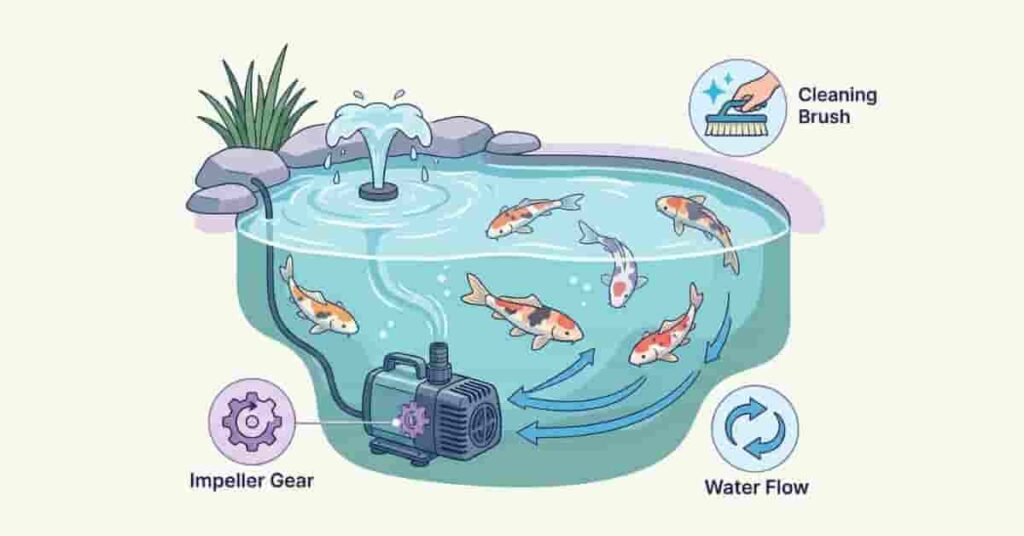
Ever tried enjoying your backyard pond only to find the water still and lifeless? A pond pump not working can ruin the flow, filtration, and oxygen levels your fish and koi need to thrive. Many beginners in the USA struggle with this common issue, especially when pumps stop after winter, during power cuts, or due to simple clogging. Without a functioning pump, water features like waterfalls stall, filters get blocked, and your pond’s ecosystem suffers.
If my pond pump stopped working, you might feel frustrated and unsure where to start. That’s why this guide walks you through the most common reasons pumps fail, from clogged filters to mechanical problems. You’ll learn step-by-step troubleshooting methods, DIY fixes, and preventive maintenance tips. By the end, you’ll be able to restore your pond’s flow quickly, keep your fish healthy, and avoid future problems. Follow this guide to fix your pond pump efficiently, whether it’s a small fish pond or a backyard koi setup.
“If your troubleshooting efforts don’t resolve the issue, our detailed pond pump repair guide will walk you through each step.”
Common Reasons Your Pond Pump Stops Working
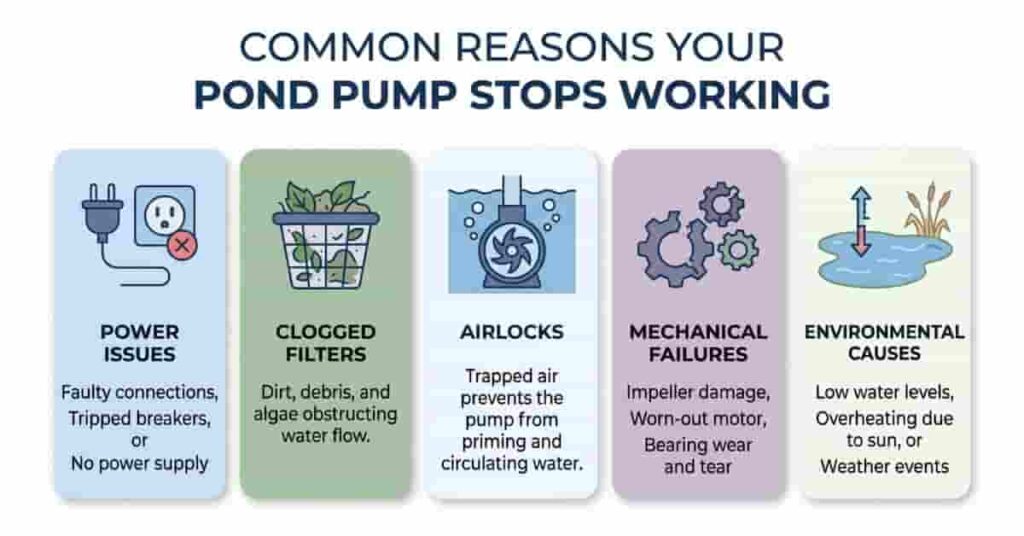
A broken pond pump disrupts your ecosystem. Waterfalls stop, filters clog, and fish lose oxygen. Knowing causes helps you quickly troubleshoot and avoid costly replacements. Below are the most common reasons, explained for beginners in the USA.
Power Issues
One of the simplest yet most overlooked problems is power. If your pond pump stopped working after a power outage, start by checking the plug. Ensure it’s firmly in the socket and test a different outlet if needed. Next, inspect the GFCI (Ground Fault Circuit Interrupter) and circuit breaker. Sometimes a tripped breaker or a triggered GFCI can stop the pump from running. Always switch off the power before handling electrical components. Simple power issues are often the quickest fixes and prevent unnecessary stress.
Clogged Pump or Filter
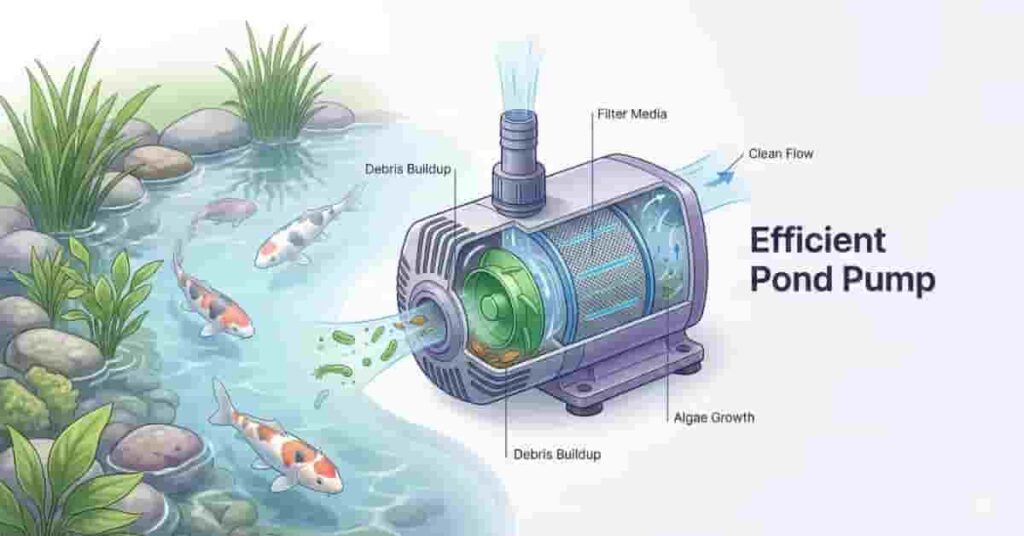
Leaves, algae, and debris clog pumps and filters. If your fish or koi pond pump stops, check for blockages. To fix it, turn off and unplug the pump.
- Remove the filter and intake cover.
- Clean out leaves, algae, and sludge.
- Rinse parts with water before reassembling.
Regular cleaning prevents clogged pond filter pump issues and keeps the water clear. Schedule weekly or monthly checks, depending on how many leaves or debris fall into your pond.
Airlocks or Priming Problems
Air in the tubes or intake stops water flow. When an air pump or pond pump won’t prime, check for airlocks. To fix: turn off the pump and disconnect hoses.
- Tilt or shake the pump to release trapped air.
- Refill the intake and tube with water.
- Restart the pump and check the flow.
Priming your pond pump ensures smooth operation. Always follow the manufacturer’s instructions to avoid damage while bleeding air.
Mechanical Failures
Sometimes, the problem is internal. An impeller may be damaged, the motor may be worn, or other parts may fail. Signs that a pond pump impeller is not working or a magnetic drive pond pump doesn’t work include strange noises, vibrations, or no water movement. If my pond pump stopped working after checking power, filters, and airlocks, I would inspect the impeller. Replace worn parts promptly to avoid permanent motor damage. High-end pumps may require professional service.
Environmental Causes:
Environmental issues affect pumps. If pumps work on and off, check water levels. Frozen water can block intake. Overheating happens in solar pumps. Keep water deep, prevent freezing, and never run pumps dry. Solar pumps may fail without sunlight; use backup power in cloudy or cold weather.s.
- Begin with power checks, then confirm filters are clean and clear.
- Prime the pump to release airlocks and inspect mechanical parts if problems persist.
- Monitor your pond’s environment to keep your pump reliable.
- Inspect mechanical parts if issues persist.
- Monitor environmental conditions for safe operation.
Step-by-Step DIY Troubleshooting
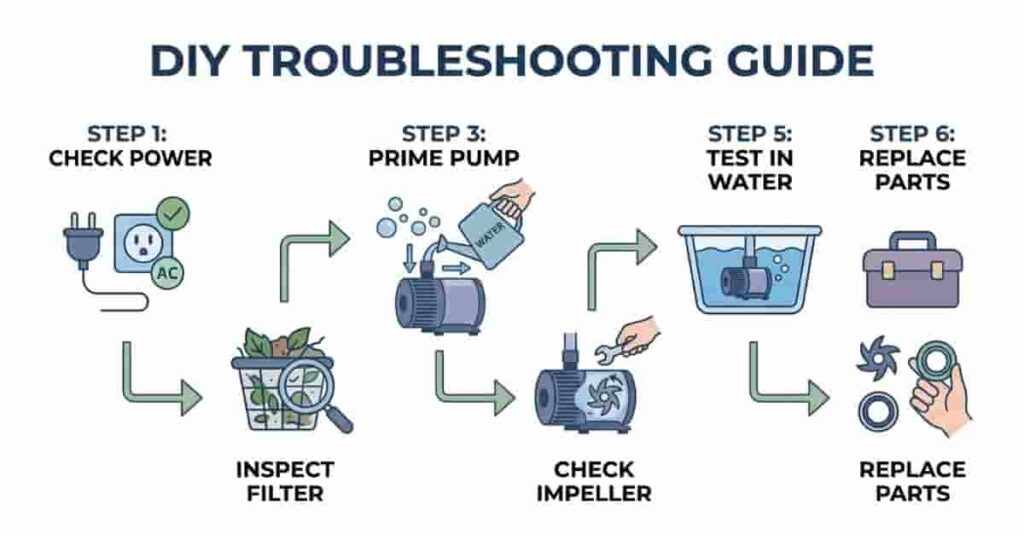
When your pond pump isn’t working, don’t worry. Most problems are simple to fix. Use this troubleshooting guide to restore flow, filtration, and happy fish.
- Check the power supply.
Ensure the plug is secure and test a different outlet. Inspect the GFCI and circuit breaker for tripped switches. Sometimes, the simplest fix resolves the issue, especially if my pond pump stopped working after a power cut. - Inspect and clean the filter or pump intake.
Turn off and unplug the pump. Remove debris, leaves, and algae from the filter and intake. Rinse with clean water before reassembling. Regular cleaning prevents clogs and keeps your pond healthy. - Prime the pump
Air trapped in hoses can stop water flow. Fill the intake and tube with water, tilt the pump slightly, and restart it. Priming ensures smooth operation and solves most pond pump not priming problems. - Check the impeller and internal components.
Inspect the impeller for damage or wear. Listen for unusual noises or vibrations. Replace worn parts if needed. Mechanical failures are a common reason for a pond pump impeller not working. - Test the pump in water.
Place the pump fully submerged and switch it on. Observe the flow and ensure there are no leaks, clogs, or irregular operation. - Replace worn-out parts if needed.
Some pumps may need new impellers, seals, or motors. Always follow the manufacturer’s instructions. This step often resolves persistent problems that simple cleaning or priming cannot fix.
Pro Tip: Keep a small maintenance kit handy with spare impellers, hoses, and basic tools. It saves time and prevents interruptions in pond circulation.
Takeaways:
- Start simple: power and cleaning often fix the problem.
- Airlocks and priming are easy to overlook.
- Inspect mechanical parts for persistent issues.
- Replacing worn parts can save the entire pump.
“Sometimes a simple cleaning can fix performance problems—learn how to properly clean and maintain your pond pump here.”
When to Call a Professional
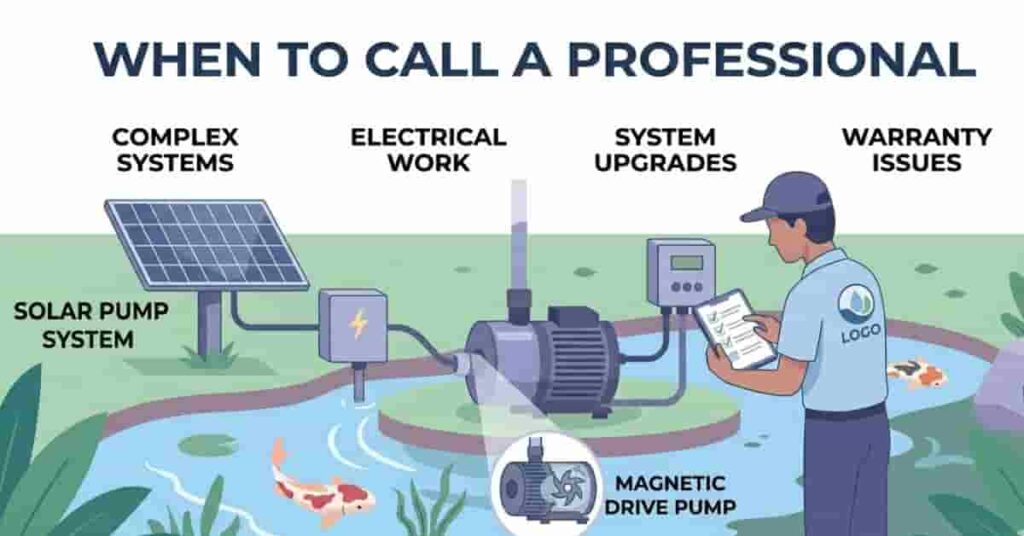
Sometimes, DIY troubleshooting isn’t enough. If your pond pump is not working even after checking power, cleaning filters, and priming, do not delay—call a professional immediately. Persistent issues can quickly escalate into serious mechanical or electrical failures that only an expert should handle.
High-end pumps, such as magnetic-drive or solar pond pumps, can be more delicate. Trying to fix them without experience may cause permanent damage. For example, if a Savio pond pump is not working or an Oase pond pump stops working, professional service ensures it’s repaired safely and efficiently. The same applies to a Laguna pond pump not working. Certified pond technicians can test motors, replace internal components, and restore proper flow without risking the pump.
Even seemingly minor problems can escalate fast, and prolonged downtime often risks severe harm to your fish and overall pond health. Contacting a professional at the first sign of persistent trouble is critical. Professionals can proactively help prevent long-term issues and keep your equipment running. Recognize when to seek immediate help—it’s as crucial as knowing how to troubleshoot.
Takeaways:
- DIY fixes are first-line solutions, but persistent problems need professional help.
- High-end, magnetic drive, or solar pumps often require expert service.
- Act fast—early intervention protects fish, pond features, and your pump investment from serious harm.
Preventive Maintenance Tips
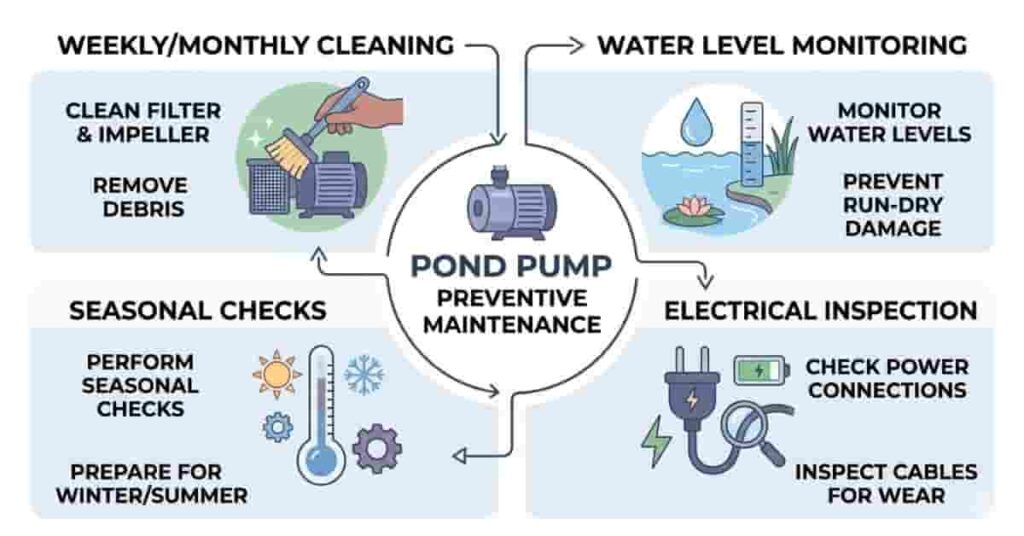
Keeping your pond pump running is easier than fixing it after it fails. Regular maintenance prevents repairs, boosts water flow, and keeps fish healthy. Follow a simple routine to prevent pump failure and enjoy a trouble-free pond year-round.
1. Weekly and Monthly Cleaning Check the pump, filter, and intake for leaves, algae, or debris every week. Monthly, remove the pump and rinse it thoroughly. This stops clogs before they cause serious problems. Low-maintenance pond pumps still need occasional cleaning to keep them performing well.
2. Monitor Water Levels A pump running low on water can overheat or get damaged. Keep the pond at the recommended levels and refill as needed. Low water levels also impair circulation and filtration, affecting fish health.
3. Inspect Electrical Connections Check plugs, cords, and breakers regularly. Ensure GFCI outlets are functioning properly. Faulty electrical connections can cause your pump to stop unexpectedly. Proper inspection reduces the risk of pond pump maintenance while keeping operations safe.
4. Schedule Seasonal Checks Before winter, remove or protect pumps that may freeze. For solar pumps, ensure the panels receive sufficient sunlight. Regular seasonal maintenance prevents downtime and extends the pump’s life.
Takeaways:
- Clean pumps and filters regularly.
- Maintain proper water levels.
- Inspect electrical connections.
- Seasonal checks prevent long-term damage.
“Avoid repeating the same issues by checking out our tips on preventing pond pump clogs in the future.”
Conclusion
In this guide, we covered the most common reasons a pond pump not working can affect your fish and koi pond. You learned how to check power, clean filters, prime the pump, inspect mechanical parts, and maintain your system for long-term health. We also explained when it’s best to call a professional for high-end or solar pumps.
By following these steps, you can troubleshoot issues, prevent future problems, and keep your pond flowing smoothly. Remember, regular maintenance is key, and early attention saves both time and money.
Have tips or experiences with my pond pump stopped working? Share them in the comments below or explore more resources on our website to master pond care.

Michael Brooks and Sarah Lane are the co-founders of the Pond Pump Team, a trusted U.S.-based group helping homeowners and landscapers build better ponds and water features. Michael, an experienced pond engineer from Oregon, has worked for over 12 years on pump sizing, flow systems, and water circulation. Sarah, a pond designer from Colorado with nine years of experience, focuses on eco-friendly and easy-to-maintain pond and waterfall designs. Together, they’ve completed more than 180 pond projects and created tools like the Pond Pump Calculator and Pond Liner Calculator to make pond planning simple, accurate, and sustainable.
Need help with your pond setup? Contact the Pond Pump Team for expert advice and reliable solutions.