Introduction
Have you ever set up a backyard waterfall only to see it trickle weakly? Choosing the right pump is the key. For beginners in the USA, picking the wrong pump wastes money and stresses fish and plants. Every pond type—from small decorative ponds to koi gardens and backyard waterfalls—has different needs.
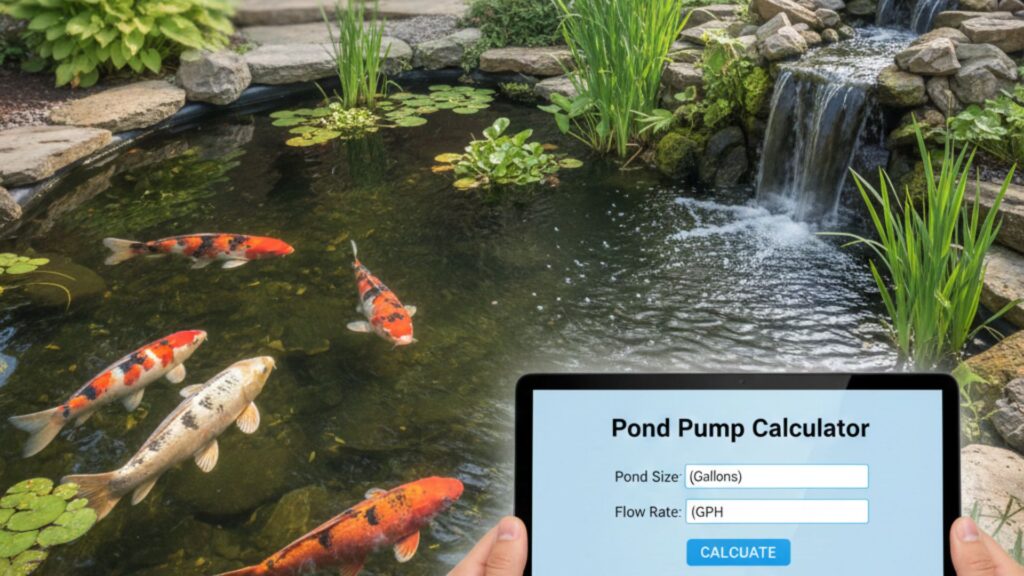
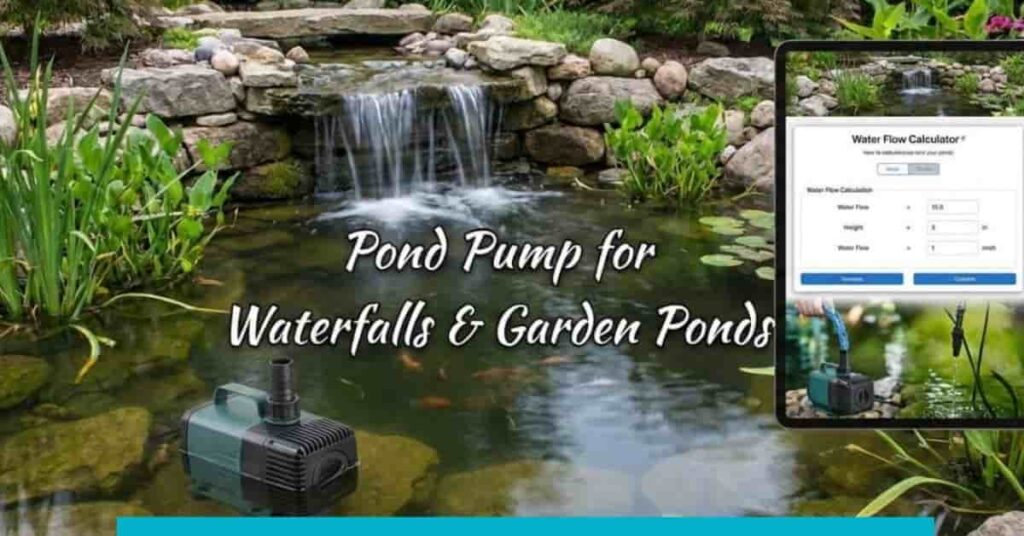
A waterfall pond pump size calculator makes this simple. It helps you match pump flow and head height to your pond, ensuring strong waterfalls and healthy circulation. Using tools like a pond pump calculator waterfalls or a garden pond pump size calculator avoids guesswork and costly mistakes.
In this guide, we’ll walk you through measuring your pond, calculating flow rate, understanding total dynamic head, and selecting the perfect pump. You’ll also learn common pitfalls and expert tips for lasting performance. By the end, you’ll confidently choose a pump that keeps your pond vibrant and your waterfall stunning.
Find the perfect pond pump for your pond with our easy-to-use calculator and enjoy a beautiful, low-maintenance water feature all year long.
Why Waterfall & Garden Pond Pumps Are Different
Selecting a pump for a pond with a waterfall requires extra planning. A waterfall pond pump size calculator is useful because waterfalls alter water flow and pump workload. Many assume any pump will work, leading to weak waterfalls or stressed fish.
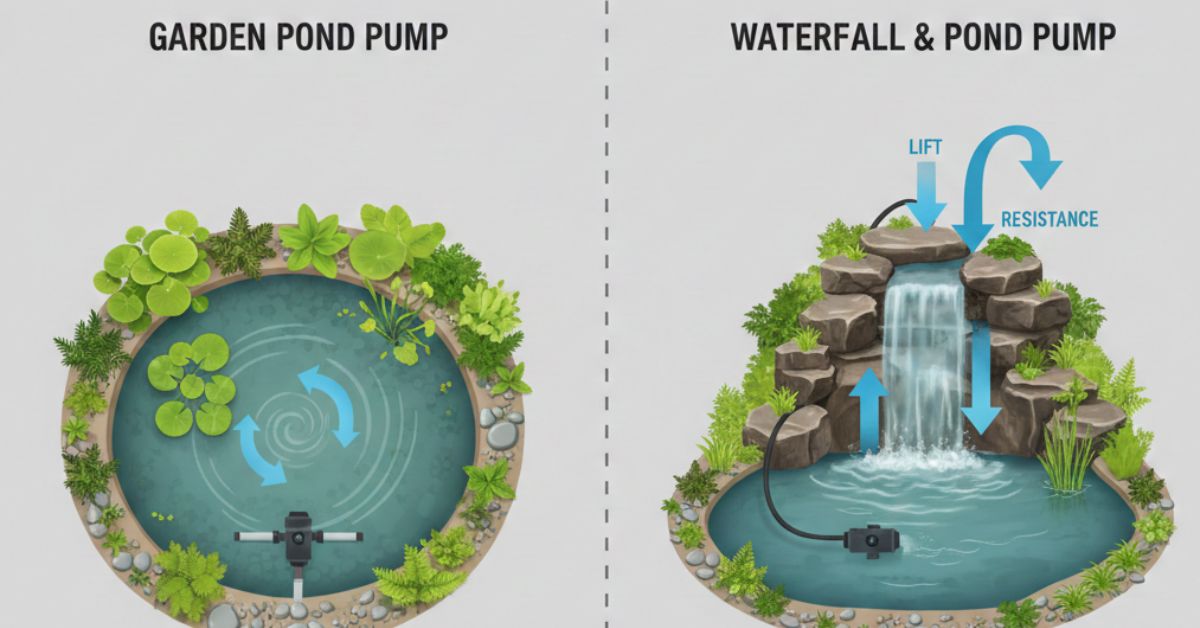
Waterfalls add height, resistance, and higher flow demands. Garden ponds without waterfalls focus on gentle circulation. Once you add a waterfall, the pump must push water upward and keep a steady flow. This is where pond pump waterfall calculation becomes essential. Here’s how to apply this effectively:
Difference Between Standard Pond Pumps and Waterfall Pumps
Standard pond pumps mainly circulate (move water in a loop) water inside the pond. They support filtration (removal of debris and impurities) and light surface movement. Waterfall pumps, however, must move water uphill (against gravity) and maintain force (water pressure) at the top.
Key differences include:
- Pressure handling: Waterfall pumps handle higher head heights.
- Flow stability: They keep steady GPH (gallons per hour, a measurement of water flow) even with resistance.
- Design use: Built for streams, filters, and spillways.
A small pond pump size calculator often works for still ponds. It may fail for waterfalls. Using a pond waterfall pump calculator helps match the pump to both pond size and waterfall demand. If your setup includes a filter and a waterfall, use a pump size calculator for the pond and waterfall filter to avoid underperformance.
Pro tip: Never size a pump for waterfalls based on pond volume alone.
How Pump Head Height Affects Waterfall Performance
Head height is the vertical distance water travels from the pump to the waterfall outlet. The higher the lift, the harder the pump works. Many weak waterfalls come from ignoring this factor.
When calculating head height, include:
- Vertical rise from pump to spillway
- Pipe length and bends
- Elevation changes in streams
A pump rated at high GPH may deliver far less at height. This is why pond pump calculator waterfalls are so useful. They adjust the flow based on head pressure. A pump-sized pond volume calculator alone is not enough for waterfalls.
Takeaway: Always match pump power to real head height, not just advertised flow.
Importance of Flow Rate for Pond Health
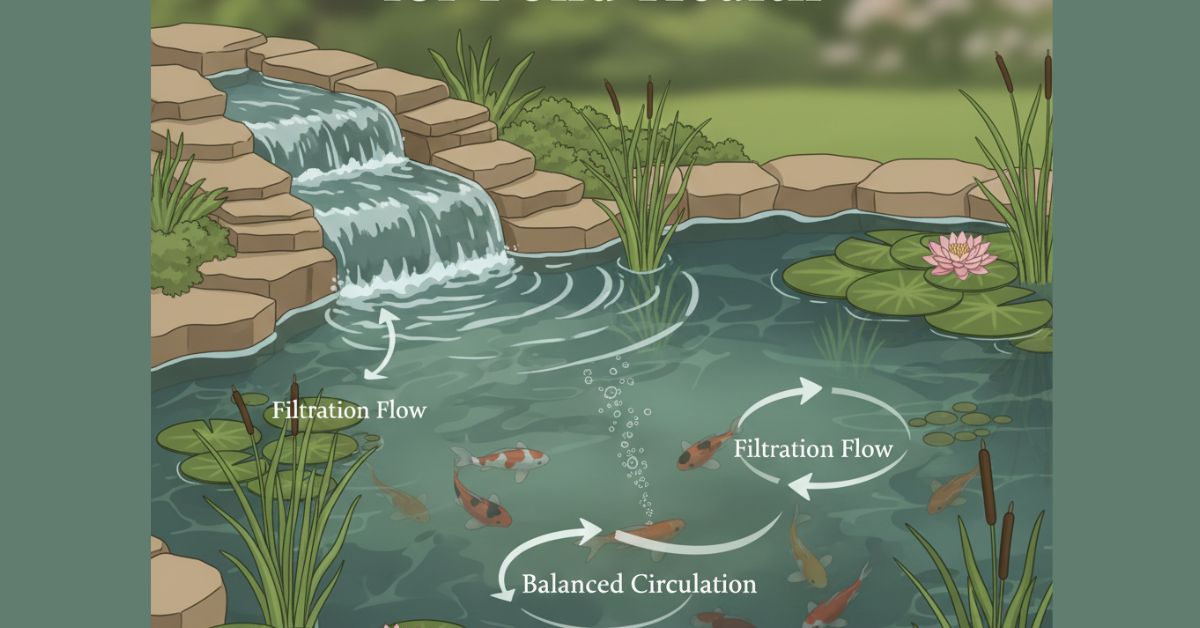
Flow rate affects more than looks. It impacts oxygen levels, filtration, and fish health. Waterfalls need stronger flow than still ponds to look natural and work properly.
General flow goals include:
- One full pond turnover per hour
- Higher GPH for wider waterfalls
- Balanced flow to avoid fish stress
Using a pump size calculator for a pond helps you avoid extremes. Too little flow causes algae and debris buildup. Too much flow disrupts plants and fish. A garden pond pump size calculator helps you find that balance.
A balanced flow boosts clarity, oxygen, and long-term pond health.
Types of Garden & Waterfall Ponds
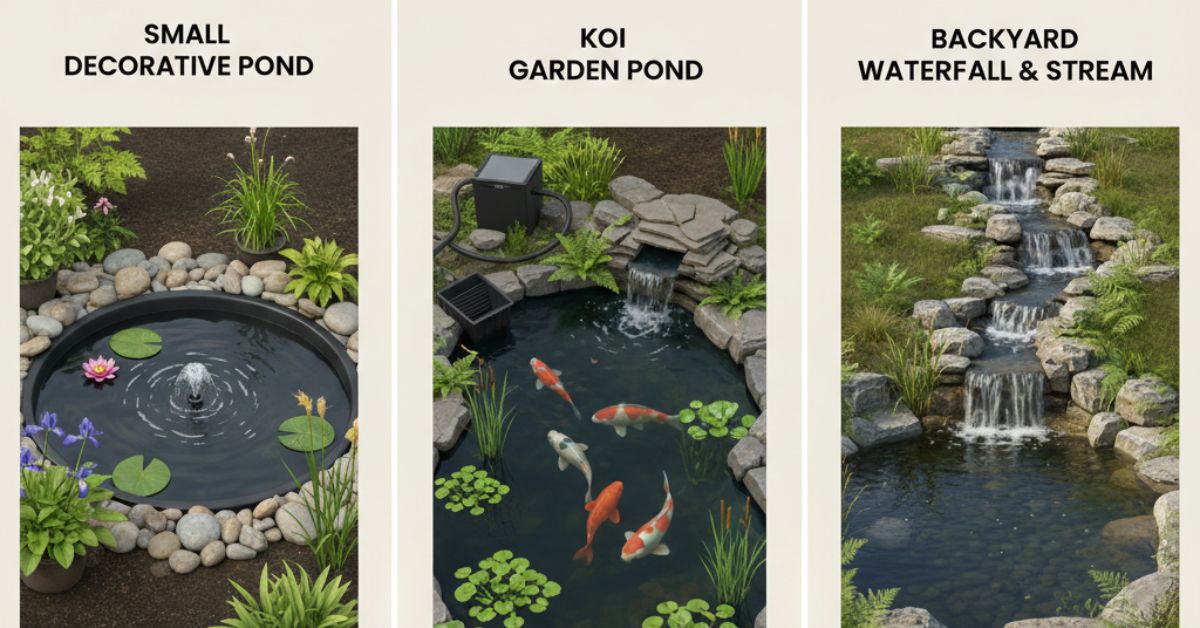
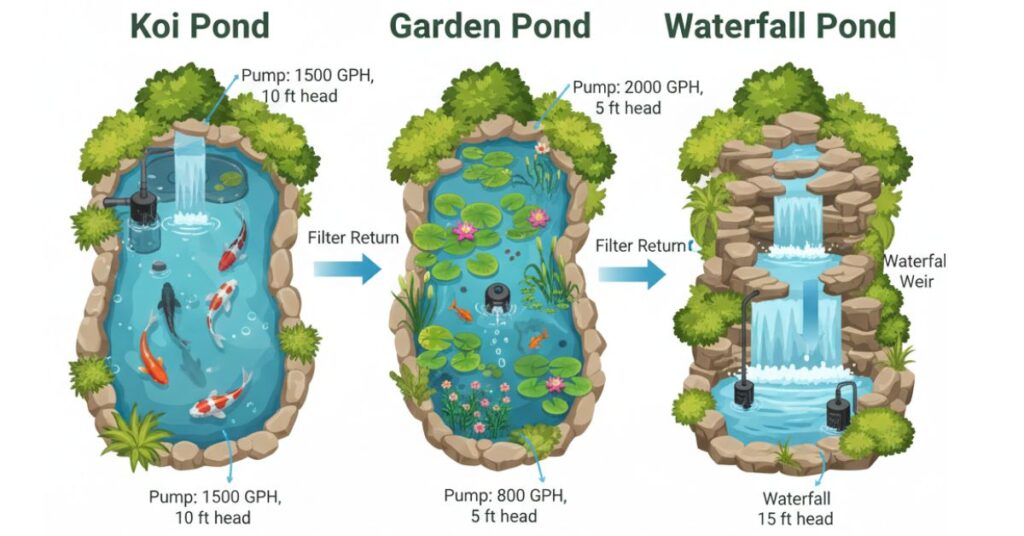
Not all ponds work the same way. The type of pump you need changes with pond size, depth, number of fish (fish load), and whether you have a waterfall. Using a waterfall pond pump size calculator becomes much easier once you know your pond’s type. Each setup affects the water flow rate (how much water moves each hour), head height (how high water must be pumped), and filtration needs (how clean the water must stay). Picking the wrong category often leads to poor circulation or wasted power. Below are the most common garden and waterfall pond types and how pump sizing differs for each.
Small Garden Ponds
Small garden ponds are usually shallow and decorative. Many do not include fish or only have a few plants. These ponds focus on gentle circulation, not strong water movement.
Typical features include:
- Low water volume
- Little or no waterfall height
- Short pipe runs
For these setups, use a small pond pump size calculator. Ensure there is enough flow to keep water fresh and prevent stagnation. A small waterfall increases demand, so use a pond pump waterfall calculation to avoid a weak flow at the outlet.
Pro tip: Always size the pump slightly higher if you plan to add a small fountain or spillway later.
Koi Garden Ponds
Koi ponds need strong, reliable circulation (steady water movement). Fish health depends on oxygen levels in the water and proper filtration (removing waste). These ponds are deeper and hold more water, which increases what the pump must do.
Key considerations:
- High pond volume
- Continuous filtration
- Often paired with waterfalls or filters.
A garden pond pump size calculator will estimate base flow. For koi ponds with waterfalls, use a pump size calculator for both the pond and the waterfall filter. This ensures the pump handles circulation and lift. Relying only on a pond volume calculator may underperform if head height is ignored.
Takeaway: Koi ponds almost always need higher GPH and durable pumps.
Backyard Waterfall Ponds
Backyard waterfall ponds focus on visual impact. These setups include streams, rock cascades, or wide spillways. Water must travel upward and maintain a strong flow at the top.
Common features:
- Multiple elevation changes
- Longer pipe runs
- Wider waterfall openings
A pond waterfall pump calculator is essential here. Flow rate must match the waterfall width and height. A pump-size calculator pond helps balance appearance and energy use. Too little flow looks weak. Too much flow causes splashing and water loss.
Expert note: Backyard waterfalls often need more pump power than pond size alone suggests.
If you want to understand the math behind sizing, our guide on how to calculate pond pump size and flow rate walks through pond volume, GPH, and head pressure in detail.
This step-by-step breakdown helps you double-check waterfall pump calculator results with confidence.
Step 1 – Measure Your Pond & Waterfall
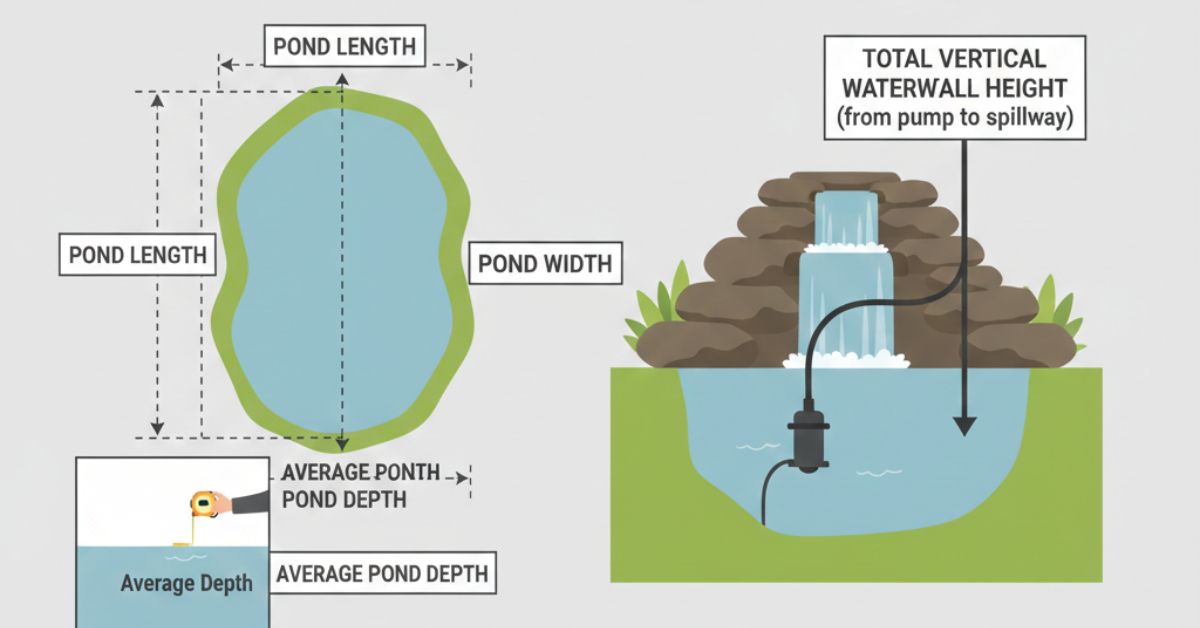
Accurate measurements are crucial for pump sizing. Guessing leads to weak waterfalls or wasted energy. In this step, you’ll measure pond volume and waterfall height for reliable calculations. Apply these guidelines:
Calculate Pond Volume (Length × Width × Depth)
Start by measuring your pond in feet. Use the average depth, not the deepest point. This keeps results realistic.
Follow these steps:
- Measure length × width × average depth
- Multiply the result by 7.48 to convert cubic feet to gallons.
- Round slightly upward for safety
This feeds directly into a pump size calculator. Larger ponds need more turnover; small ponds need gentler flow.
Takeaway: Pond volume sets the base flow your pump must deliver.
Determine Waterfall Height and Desired Flow
Next, measure the vertical head height that the water must travel from the pump position to the waterfall outlet. This vertical lift directly impacts pump flow rate.
Measure:
- Vertical rise from pump to spillway
- Extra height from rocks or stream curves
Now estimate the desired flow. A common rule is
- [placeholder] GPH per inch of waterfall width
This step is critical. Ignoring height often causes pump calculations to fail in real use.
Pro tip: Always plan for slightly more height than you see.
Example: US Backyard Pond vs Waterfall Pond
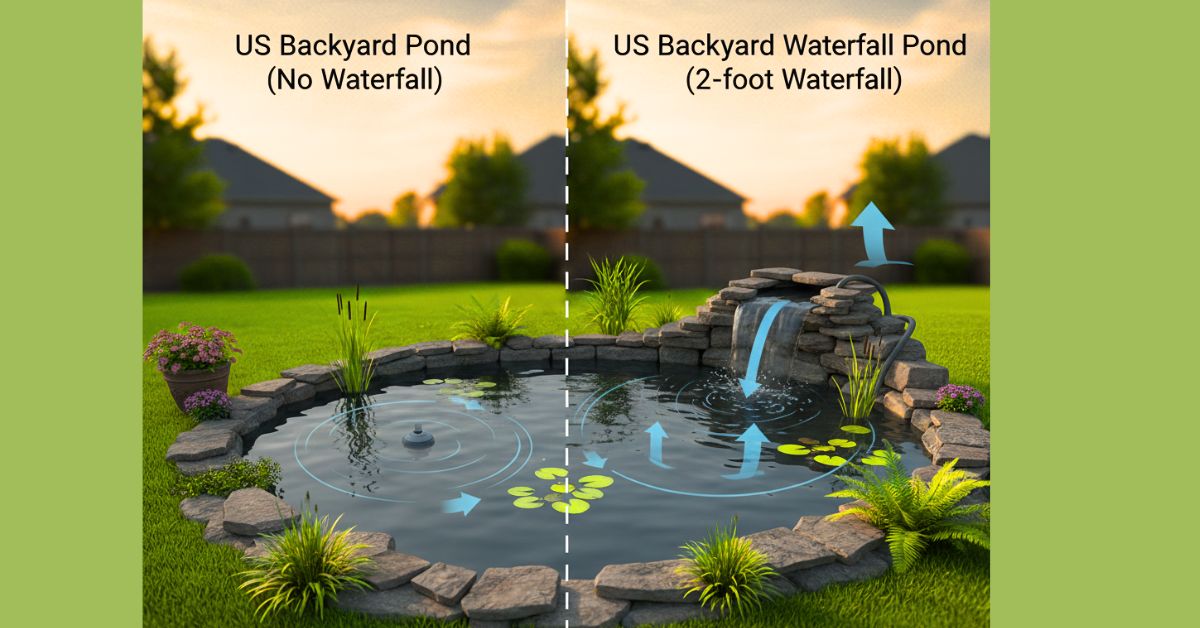
Small garden pond:
- 6 ft × 4 ft × 2 ft
- Volume ≈ 360 gallons
- Low head height, gentle circulation
Backyard waterfall pond:
- Same pond size
- 2-foot waterfall with stream
- Higher flow and a stronger pump are needed.
This is why pump needs can change fast. Pond pump calculators work for still ponds; waterfalls need extra power.
Step 2 – Determine Pump Flow Rate (GPH)
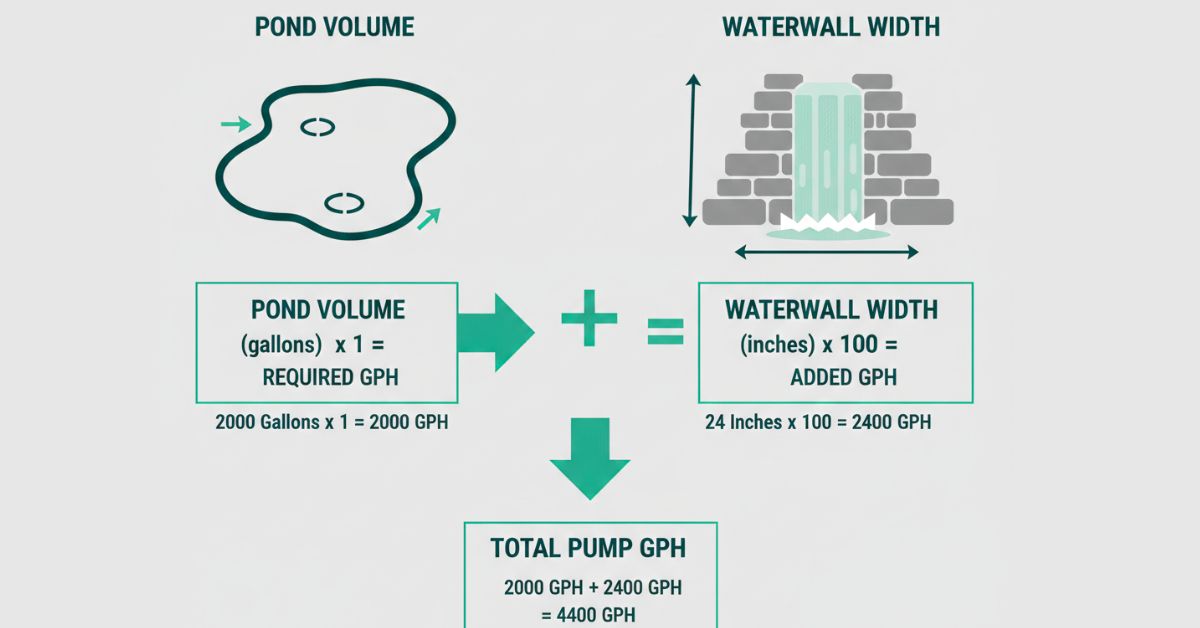
Pump flow rate tells you how much water moves each hour, measured in gallons per hour (GPH). Getting this number right is key to a healthy pond and a strong waterfall. A pump size calculator uses GPH as its main input. Here’s how to apply this effectively:
How to Calculate Required GPH
Start with your pond volume from Step 1. Most ponds need a full water turnover at least once per hour.
Basic rule:
- Pond GPH = total pond gallons per hour
For example:
- A 1,000-gallon pond needs about 1,000 GPH for circulation.
Waterfalls need extra flow for appearance. Many pond owners boost GPH for wider spillways or streams. A calculator combines these needs without guessing.
Takeaway: Minimum GPH always equals pond volume.
Flow Rate Differences: Waterfalls vs Standard Ponds
Standard ponds focus on filtration and oxygen. They need steady but gentle movement. Waterfalls add lift and visual demand.
Key differences:
- Standard ponds: Lower GPH, smoother flow
- Waterfall ponds: Higher GPH to maintain sheet flow
- Wider waterfalls: Need more flow to look natural
Ignoring this difference causes weak cascades. Calculators adjust GPH by waterfall width and height to ensure the pump supports both features.
Pro tip: Size the flow for the waterfall first, then confirm pond turnover.
Using a Pond Pump Calculator for Waterfalls
Manual math works, but calculators save time and reduce errors. A pond pump calculator and a waterfall tool combine:
- Pond volume
- Desired turnover rate
- Waterfall width and height
It then recommends a realistic GPH range, ensuring you avoid oversizing, save energy, and get accurate results. For setups with more than one feature, using a pump size calculator for pond and waterfall filters gives tailored recommendations you can trust, unlike basic tools.
Expert note: Calculators reflect real pump performance, not just box ratings.
Step 3 – Calculate Total Dynamic Head (TDH)
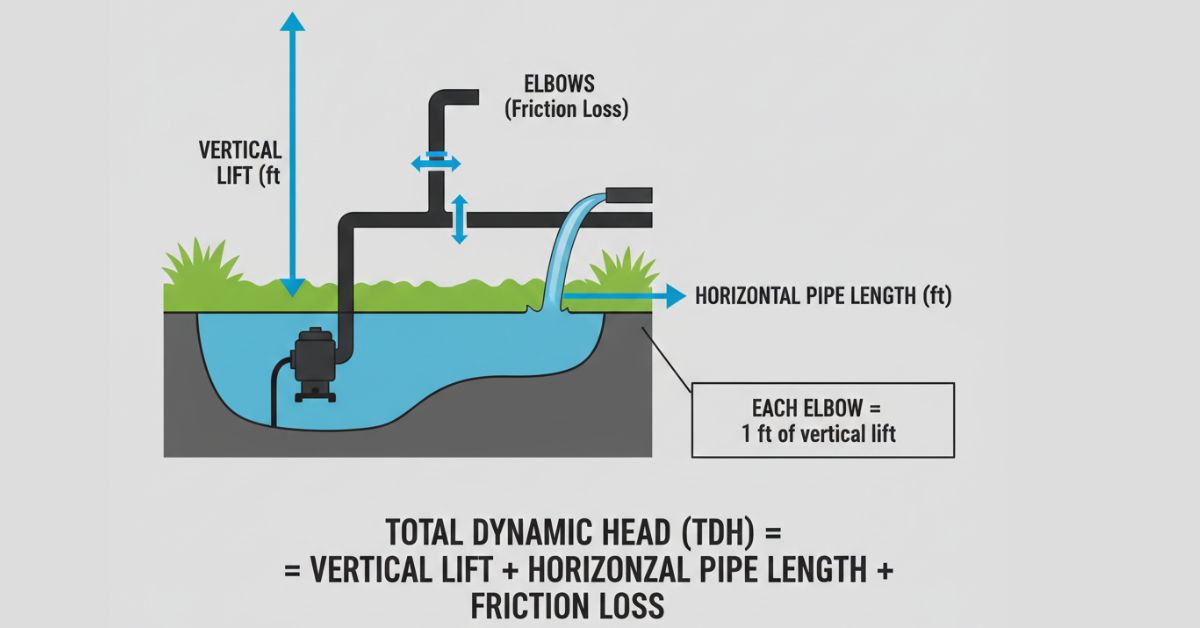
Total Dynamic Head (TDH) measures how hard your pump must work, combining vertical lift and plumbing resistance. Skipping this step often leads to weak waterfalls, as even a high-GPH pump may underperform. Accurate waterfall pump sizing depends on calculating TDH. Here’s how to use it:
How Head Height and Pipe Length Affect Pump Selection
Head height is the vertical distance, measured in feet, from the pump to the highest point where water exits. Pipe length and any turns or fittings add friction, called friction loss, which reduces water flow.
TDH includes:
- Vertical lift from the pump to the waterfall
- Horizontal pipe length
- Elbows, valves, and fittings
Each bend adds resistance. Long pipe runs reduce flow more than most people expect. This is why the pump-size pond-volume calculator results change once TDH is added. A pump size for a pond calculator that ignores pipe friction often looks good on paper but fails in practice.
Takeaway: More height and plumbing always mean less real flow.
Example TDH Calculation for a US Backyard Waterfall
A typical backyard waterfall setup looks like this:
Example:
- Vertical waterfall height: 2 feet
- Pipe length: 10 feet
- Two 90-degree bends
Estimated TDH:
- 2 ft (vertical lift)
- [placeholder] ft for pipe and fittings
- ≈ [placeholder] ft total TDH
Compare this TDH to the pump’s performance chart to ensure your pump delivers the target GPH at that height. Basic pond calculators won’t show this flow drop, so extra planning is necessary for waterfalls.
Pro tip: Always round TDH slightly upward to stay safe.
Why TDH Matters for Long-Term Performance
Ignoring TDH strains the pump. It runs hotter and wears out faster. Correct TDH matching improves:
- Waterfall strength
- Energy efficiency
- Pump lifespan
Using a pump size for a pond calculator that includes TDH protects your investment and keeps water features running smoothly.
Once you’ve selected the right pump, it’s smart to estimate long-term running costs using a pond pump electricity cost guide before installation.
This helps ensure your waterfall and garden pond stay efficient without unexpected energy bills.
Step 4 – Choosing the Right Pump
This step brings together pond volume, flow rate, and TDH. Use a waterfall pond pump size calculator to match real pump performance to your setup. Relying on box ratings alone often leads to poor results. Apply this effectively:
Match Pump Flow Rate and TDH to Your Pond
Start by confirming two numbers:
- Required GPH from Step 2
- Total Dynamic Head from Step 3
Check the pump’s performance chart. Ensure it delivers your target gallons per hour (GPH) at your calculated total dynamic head (TDH). If the pump meets your flow only at zero head (no elevation or resistance), skip it. A waterfall pond pump calculator easily filters pumps that fit both needs.
Key checks:
- The pump delivers the target GPH at TDH.
- Supports the waterfall width and pond turnover
- Compatible with filters or skimmers
Takeaway: Always size pumps by real output, not advertised maximums.
Consider Energy Efficiency and Durability
Pond pumps often run nonstop. Energy efficiency matters for long-term cost. Look for pumps designed for continuous outdoor use.
Focus on:
- Low wattage per GPH
- Solid housing and sealed motors
- Proven lifespan ratings [placeholder]
An efficient pump costs more upfront but saves money over time. Many users upgrade after poor performance. Using the calculator helps avoid repeat purchases.
Pro tip: Choose pumps labeled for waterfalls, not just circulation.
Example: Small Pond With a 2-Foot Waterfall
Scenario:
- Pond size: 500 gallons
- Waterfall height: 2 feet
- Short pipe run with few bends
A standard pond pump may meet circulation needs but fail at the waterfall. A pond waterfall pump calculator would recommend a pump that delivers higher GPH at 2 feet of head. This ensures a steady cascade without stressing fish.
Expert note: Waterfalls almost always need more pump power than pond size suggests.
Common Mistakes to Avoid
Choosing the wrong pump doesn’t just affect your pond—it can leave your fish and waterfall struggling. Want to avoid these headaches? Use a waterfall pond pump size calculator right from the start. Some newcomers get distracted by impressive GPH numbers or low prices and miss what their pond truly needs. Here’s what you need to be careful about:
Selecting a Pump Too Small
A pump that is too weak can’t overcome the head height or push enough water for your waterfall. Signs include:
- Weak, broken waterfall flow
- Stagnant pond corners
- Poor filtration
Don’t want to end up disappointed? Use a pond pump waterfall calculation at the beginning. Even for small ponds, a little extra GPH than the bare minimum keeps things moving beautifully.
Pro tip: Calculate flow by looking at both your pond’s size and the height of your waterfall—it makes all the difference!
Choosing a Pump Too Large
Overpowered pumps waste energy and create turbulence. Problems include:
- Excessive splashing and water loss
- Disturbance to fish and plants
- Higher electricity costs
A pond pump calculator and waterfalls tool help match pump output to actual needs. Oversizing rarely improves waterfall aesthetics.
Ignoring Pipe Bends or Skimmer Requirements
Every elbow, valve, or skimmer makes your pump work harder than you might expect. Many people picture perfectly straight water flow, but reality has more twists. Here’s what can happen:
- Reduced real flow
- Strained pumps
- Unstable waterfall performance
Don’t guess! Use a pond pump size calculator that accounts for plumbing twists and turns. Remember to adjust TDH for every bend and valve, so your system flows smoothly.
Take action: Choose your pond pump based on flow, head, and system design—not just GPH. Use a pump calculator today to ensure the right match for your pond.
Conclusion
Choosing the right pump is key to healthy ponds and strong waterfalls. This guide covered measuring pond volume, calculating flow rate, understanding total dynamic head, and selecting the best pump.
Using a waterfall pond pump size calculator ensures your pump matches your pond’s needs. It keeps water flowing smoothly, supports filtration, and maintains a beautiful waterfall. Tools like a pond pump calculator, waterfalls, or a garden pond pump size calculator make sizing simple and accurate.
Before buying, measure your pond and waterfall height carefully. This prevents weak flow, energy waste, and stressed fish.
Use our quick calculator now to find your perfect pump. Share your pond setup or tips below, and enjoy a thriving, low-maintenance water feature all year!
Michael Brooks and Sarah Lane are the co-founders of the Pond Pump Team, a trusted U.S.-based group helping homeowners and landscapers build better ponds and water features. Michael, an experienced pond engineer from Oregon, has worked for over 12 years on pump sizing, flow systems, and water circulation. Sarah, a pond designer from Colorado with nine years of experience, focuses on eco-friendly and easy-to-maintain pond and waterfall designs. Together, they’ve completed more than 180 pond projects and created tools like the Pond Pump Calculator and Pond Liner Calculator to make pond planning simple, accurate, and sustainable.
Need help with your pond setup? Contact the Pond Pump Team for expert advice and reliable solutions.