Introduction
Have you ever noticed your pond water level dropping even when there is no visible leak?
Many beginners struggle with this issue, especially in the USA, where hot summers and changing seasons increase water loss. Understanding the methods for pond water evaporation rate calculators is important because evaporation can quietly reduce water levels and affect overall pond balance. Temperature changes also play a big role in fish health, oxygen levels, and plant growth inside the pond.
Without proper calculations, pond owners often resort to guesswork. This leads to water imbalance, stressed fish, and poor pond conditions over time. Small mistakes in monitoring can quickly turn into bigger maintenance problems.
In this guide, you will learn how to accurately measure evaporation and track pond water temperature using simple methods and tools. We will also explain how these factors interact and how you can manage them to keep your pond healthy all year round. By the end, you will know how to control water loss and maintain stable pond conditions with confidence.
Before advanced calculations, start with the pond volume & gallons calculator guide for basics.
🟢 What Is Pond Water Evaporation and Why It Matter?
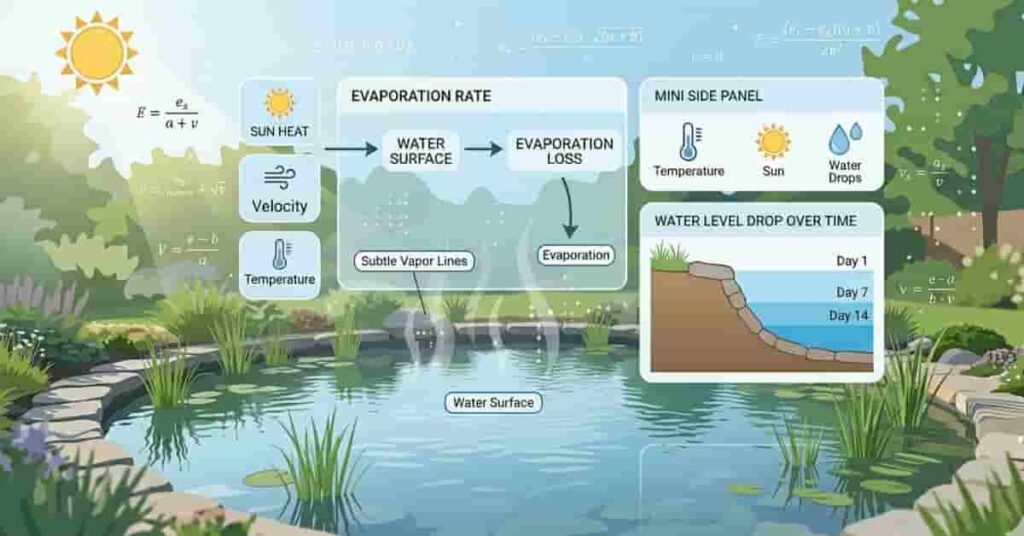
Pond water evaporation is the natural process in which water turns into vapor and slowly rises from the pond surface. This happens every day, even when there are no visible leaks or drainage issues. Over time, it can significantly reduce water levels if not monitored properly.
Evaporation is influenced by natural and environmental factors. High temperatures, strong sunlight, wind, and low humidity all speed up water loss. In contrast, cooler weather and higher humidity slow it down. These changing conditions make evaporation unpredictable for most pond owners.
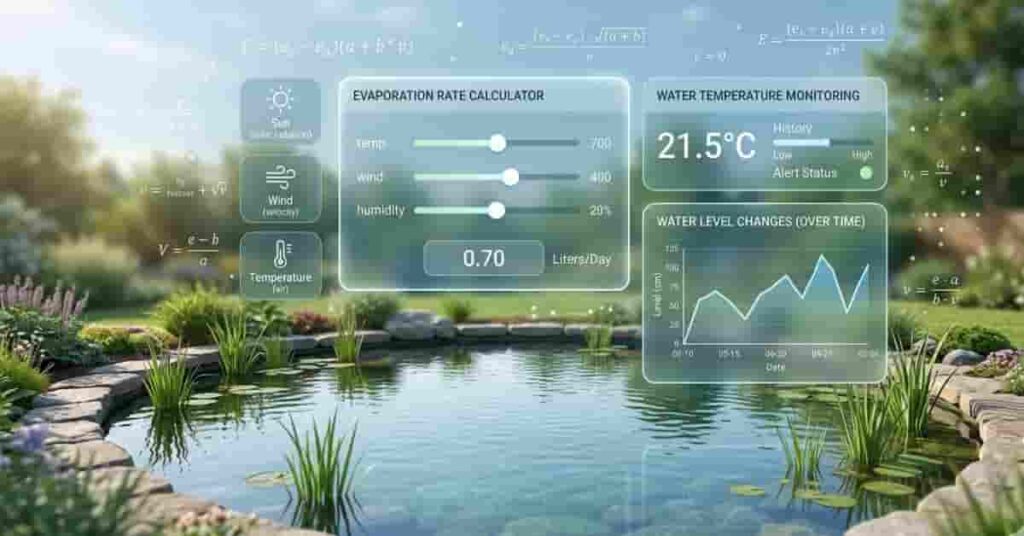
Many beginners underestimate how much water is lost this way. Since the change happens gradually, it often goes unnoticed until the pond level drops too low. This is where tools like a pond water evaporation rate calculator can help provide more accurate tracking, rather than relying on guesswork.
Ignoring evaporation can lead to serious maintenance issues. Lower water levels affect fish health, reduce oxygen balance, and increase cleaning and refill costs. Over time, poor management can increase overall pond maintenance costs and cause long-term damage to the ecosystem.
🟢 Key Factors That Affect Pond Evaporation Rate (SEO Critical Section)
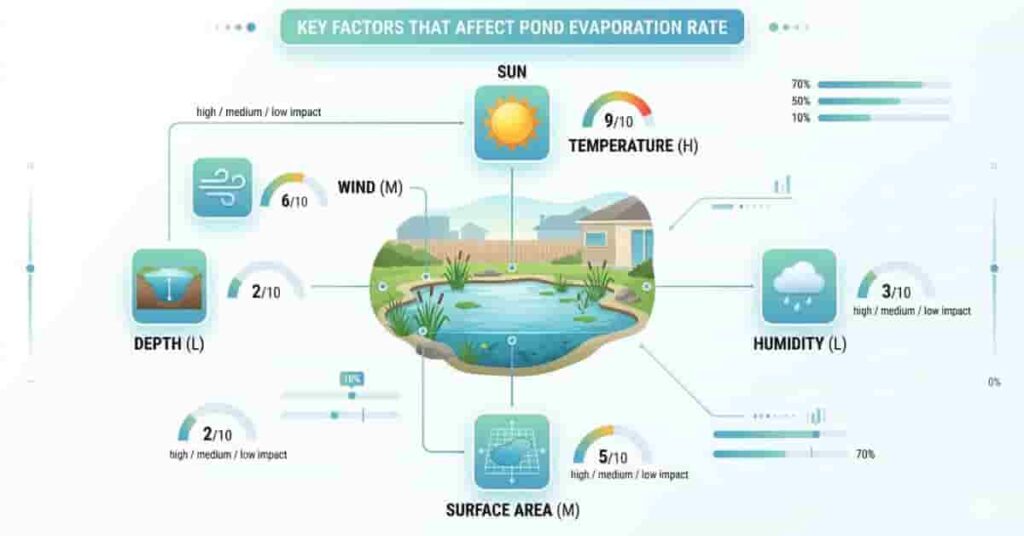
Pond evaporation does not stay constant. It changes based on several environmental and physical conditions. Understanding these factors helps you manage water loss more accurately, rather than relying on guesswork or a basic pond water evaporation rate calculator.
One of the biggest factors is the surface area of the pond. A larger surface exposes more water to the air, increasing evaporation. Smaller ponds lose water more slowly under the same conditions.
Air temperature also plays a major role. Higher temperatures speed up water evaporation because heat energizes water molecules. This is why ponds lose more water during hot summer days.
Wind speed affects how quickly moisture is carried away from the pond surface. Strong winds remove the humid layer above the water, allowing faster evaporation.
Sun exposure and UV intensity directly heat the water surface. Ponds in full sunlight evaporate much faster than shaded ponds. This effect becomes even stronger in open outdoor environments.
Humidity levels work in the opposite way. Dry air increases evaporation, while humid air slows it down because the air is already filled with moisture.
Pond depth and material also matter. Shallow ponds heat up faster, leading to higher evaporation. Materials like concrete may absorb and retain heat, leading to increased water loss.
👉 Evaporation changes daily and seasonally because all these factors shift with weather patterns. Summer increases heat and sunlight, while winter naturally slows the entire process.
🟢 How to Calculate Pond Water Evaporation Rate (Step-by-Step Method)
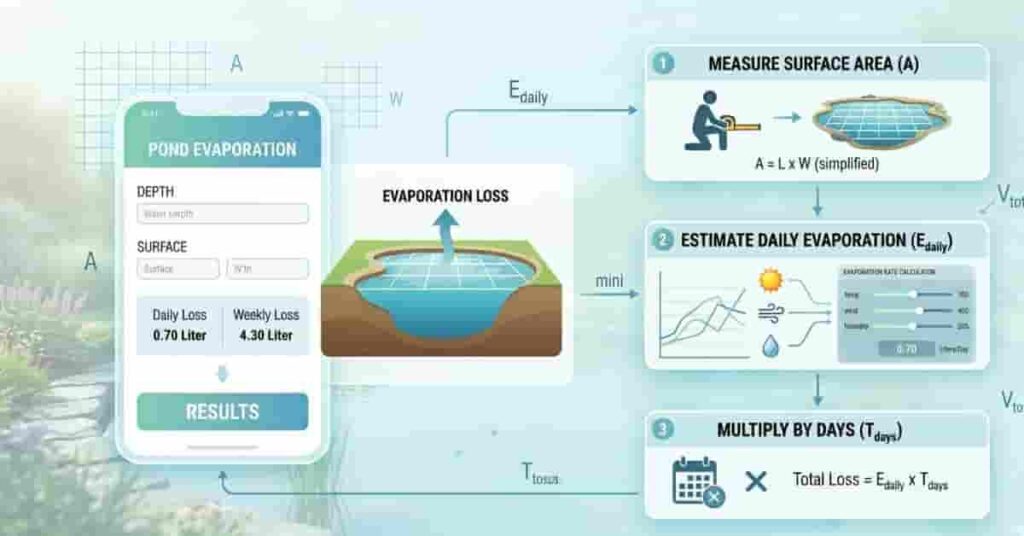
Calculating pond water loss becomes simple when you follow a clear process instead of guessing. A pond water evaporation rate calculator gives quick estimates, but understanding the manual method helps you verify results and manage your pond more confidently.
Start with the basic idea: evaporation depends on how much surface water is exposed and how fast it disappears over time. The larger the surface and the hotter the weather, the faster water loss happens.
Follow this step-by-step method for better accuracy. First, measure the surface area of your pond in square meters or feet. This tells you how much water is exposed to air and sunlight. A larger surface area usually means higher evaporation.
Next, estimate the daily evaporation rate. This can vary by climate, but hot, windy conditions significantly increase water loss. Cooler and humid environments reduce it.
After that, multiply the daily evaporation rate by the number of days you want to track. This gives you a rough idea of total water loss over time.
For example, if a pond loses a small amount of water daily due to heat and wind, that loss adds up quickly over the course of weeks, especially in summer.
However, manual calculation has limitations. It does not always reflect sudden weather changes or seasonal shifts. That is why many pond owners use a pond water evaporation rate calculator for more reliable and consistent tracking.
You may also need a pond capacity calculator guide for more accurate analysis.
🟢 Pond Water Temperature: Why It Is Critical for Ecosystem Health
Pond water temperature plays a major role in maintaining the entire ecosystem in balance. Even small temperature changes can directly affect fish, plants, and water quality. That is why many pond owners use a pond water temperature calculator to better understand and manage conditions year-round.
Water temperature strongly affects fish metabolism and survival. When water is too warm, fish become stressed and need more oxygen. In colder water, their activity slows down, which can reduce feeding and growth. Stable temperatures help maintain a healthy environment for fish.
Temperature also controls oxygen levels in the pond. Warm water holds less oxygen, which can lead to breathing problems for fish. Cooler water usually contains more oxygen, supporting better aquatic life conditions.
Algae growth and bacterial activity also increase in warmer temperatures. This can lead to cloudy water, unpleasant smells, and unbalanced pond conditions. In contrast, cooler temperatures slow down biological activity and keep the pond more stable.
Seasonal temperature variations make this even more important. Summer heat can quickly raise water temperature, while winter can significantly lower it. These shifts require regular monitoring to prevent sudden ecosystem stress and water-quality issues.
🟢 How to Measure and Monitor Pond Water Temperature Accurately
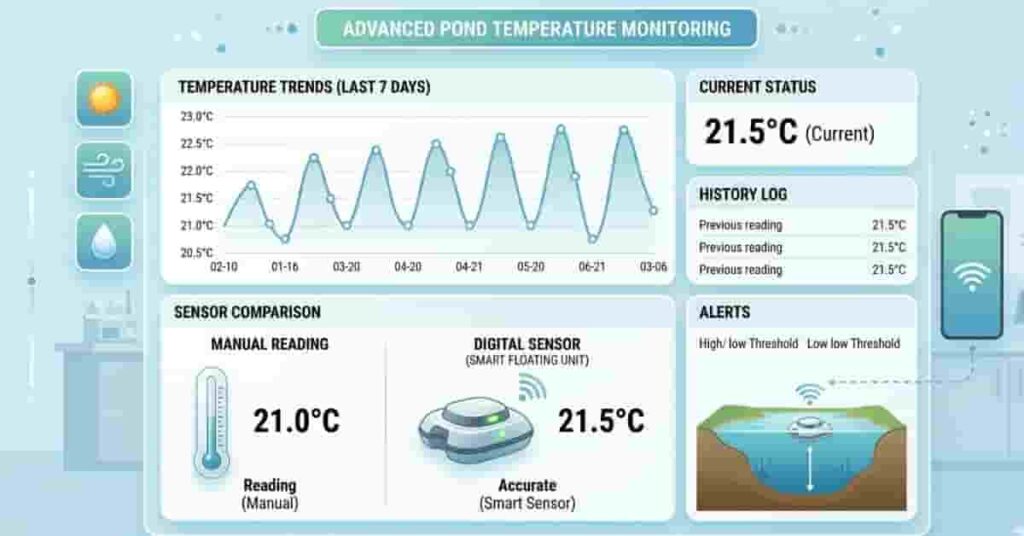
Accurate pond temperature tracking helps you protect fish health and maintain stable water conditions. Small changes can affect oxygen levels, algae growth, and overall pond balance. Using a pond water temperature calculator or simple tools can make monitoring much easier and more reliable.
You can measure temperature using a basic floating thermometer or advanced digital sensors. A standard thermometer is affordable and easy to use, but it requires manual checking. Digital sensors provide continuous readings and are more accurate for long-term monitoring. Some smart systems even send alerts when temperatures go outside safe limits.
Ideal temperature ranges depend on the type of fish in your pond. Most freshwater ponds stay healthy within a moderate range where fish remain active, and oxygen levels stay balanced. Extreme heat or cold can cause stress and disrupt ecosystems.
Daily monitoring is important during hot summers or cold winters, when temperatures can change quickly. In mild weather, weekly checks may be enough. Seasonal monitoring helps you understand long-term patterns and adjust water management strategies accordingly.
Smart tracking tools and mobile apps are becoming popular among pond owners. These tools allow real-time monitoring, data history, and automatic alerts. When combined with proper temperature measurement methods, they help you maintain a stable environment with less manual effort and better accuracy.
🟢 Relationship Between Evaporation and Temperature in Ponds
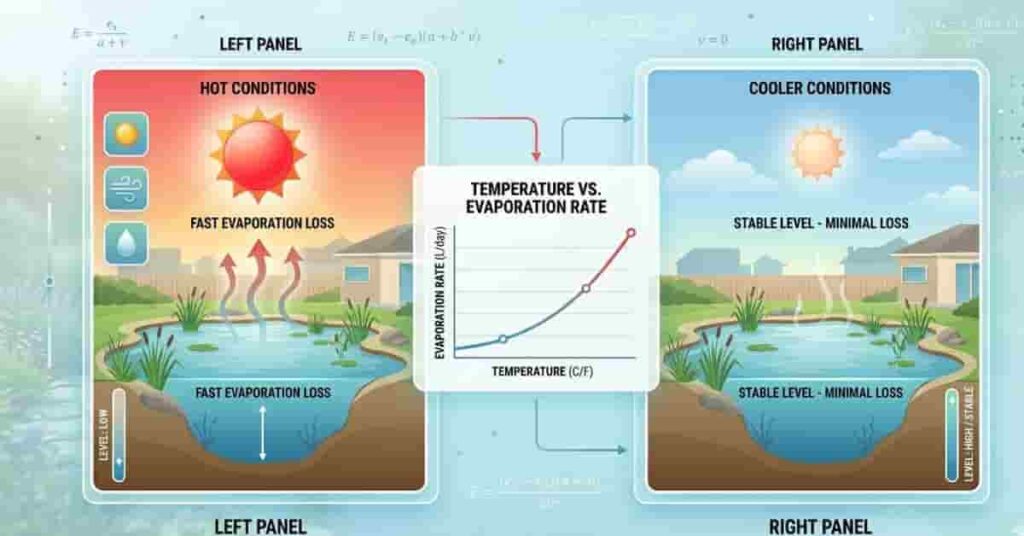
Temperature and evaporation are closely connected. As pond water heats up, evaporation naturally speeds up. Warm air increases the movement of water molecules, leading to faster water loss from the surface. This is why hot weather often leads to noticeable drops in pond levels.
Hot climates lose more water because they combine high temperatures with strong sunlight and lower humidity. These conditions push water to evaporate faster than it can be replaced by rain or refilled. In areas with long summers, this effect becomes even more serious and constant.
When evaporation and rising temperatures coincide, pond water levels become unstable. You may see sudden drops in depth, even if there is no leak. This imbalance can affect fish health, oxygen levels, and overall water quality if not managed properly.
Balancing both factors is important for long-term pond stability. Monitoring temperature helps predict changes in evaporation before they occur. Using tools like a pond water temperature calculator, along with evaporation tracking, gives better control over water management. This combined approach helps maintain steady water levels, reduces stress on aquatic life, and improves overall pond performance year-round.
🟢 Smart Pond Water Management Techniques (Practical Solutions)
Smart pond management helps you reduce water loss and keep your ecosystem stable all year. Instead of reacting to problems, you can prevent them with simple, effective techniques. These methods also support better results when using a pond water evaporation rate calculator for planning.
Adding shade structures or aquatic plants is one of the easiest solutions. Shade reduces direct sunlight, lowering water temperature and slowing evaporation. Floating plants like lilies also help cover the surface and protect the water from heat.
Using pond covers or floating solutions can further reduce evaporation. These covers block sunlight and reduce wind-driven water contact with the surface. Even partial coverage can make a noticeable difference in hot climates.
Aeration systems improve the pond’s oxygen balance. While they don’t directly stop evaporation, they help maintain healthy water conditions when temperatures rise. Better oxygen levels support fish survival during stressful weather.
Seasonal water level adjustments are also important. In summer, you may need to add more water to account for higher evaporation. In cooler months, you can reduce refilling frequency to maintain balance.
Reducing unnecessary water loss includes fixing leaks, avoiding overfilling, and regularly monitoring water conditions. Combining these strategies with temperature tracking and evaporation estimates helps maintain a stable, healthy pond environment year-round.
🟢 Common Mistakes in Pond Water Management
Many pond owners face problems not because ponds are difficult to maintain, but because they miss small but important details. These mistakes can lead to water loss, poor fish health, and higher maintenance costs over time.
One major mistake is ignoring evaporation during hot months. In summer, water loss increases quickly due to heat and sunlight. Without monitoring tools like a pond water evaporation rate calculator, owners often notice the problem too late.
Another common issue is failing to regularly track water temperature. Temperature changes directly affect oxygen levels and fish activity. Without consistent monitoring, sudden changes can stress aquatic life and disturb the pond balance.
Overfilling or underfilling the pond is also a frequent mistake. Too much water can overflow during rain, while too little water reduces oxygen and affects fish survival. Proper measurement helps maintain a stable level.
Many beginners rely on assumptions instead of real data. Guessing water loss or temperature changes often leads to inaccurate decisions. Simple tools and regular checks provide much better control.
Using the wrong measurement units is another hidden problem. Mixing feet, meters, or gallons without conversion can create calculation errors. This affects evaporation estimates and the overall accuracy of pond management.
Avoiding these mistakes helps you maintain a healthier pond, reduce costs, and improve long-term water stability.
🟢 Seasonal Pond Maintenance Strategy (Pro-Level Section)
Seasonal changes directly affect pond water levels, temperatures, and overall stability. A smart maintenance plan helps you stay ahead of problems instead of fixing them later. This approach works best when combined with tools like a pond water evaporation rate calculator and regular temperature checks.
In summer, evaporation increases due to heat and strong sunlight. You should focus on evaporation control techniques such as adding shade, using floating plants, and reducing direct sunlight. Regular water top-ups also help maintain stable levels without stressing fish.
During winter, the main challenge is temperature stabilization. Cold weather slows down fish activity and reduces oxygen demand, but sudden drops can still cause stress. Maintaining stable pond depth and preventing ice buildup in colder regions helps protect aquatic life.
In the rainy season, overflow management becomes important. Heavy rainfall can quickly raise water levels and wash out nutrients. Proper drainage systems and controlled overflow paths help keep the pond balanced and clean.
Adjusting water levels monthly ensures long-term stability. Seasonal monitoring helps you understand how your pond reacts to weather changes. Small, regular adjustments are better than large corrections after problems appear.
conclusion
This guide explained how evaporation, temperature, and seasonal changes affect pond water balance. You also learned how to manage water levels using simple calculations and smart monitoring techniques. These small steps can greatly improve long-term pond health and stability.
Using a pond water evaporation rate calculator helps you track water loss more accurately, rather than guessing. When combined with a pond water temperature calculator, it gives you better control over fish health and water quality year-round.
Regular monitoring is the key to a healthy pond. Small adjustments made on time prevent bigger problems later.
If you found this guide helpful, share it with other pond owners in the USA. You can also explore more pond care guides on our website or share your own pond management experience in the comments.

Michael Brooks and Sarah Lane are the co-founders of the Pond Pump Team, a trusted U.S.-based group helping homeowners and landscapers build better ponds and water features. Michael, an experienced pond engineer from Oregon, has worked for over 12 years on pump sizing, flow systems, and water circulation. Sarah, a pond designer from Colorado with nine years of experience, focuses on eco-friendly and easy-to-maintain pond and waterfall designs. Together, they’ve completed more than 180 pond projects and created tools like the Pond Pump Calculator and Pond Liner Calculator to make pond planning simple, accurate, and sustainable.
Need help with your pond setup? Contact the Pond Pump Team for expert advice and reliable solutions.