Introduction
Ever wondered whether your pond is the right size for fish or if you need a pump upgrade?
Getting your pond volume in gallons and litres right is key to safe water balance and healthy fish care.
Many beginners in the USA struggle with unit conversion when planning pond pumps or water treatments. Small measurement errors can lead to overfeeding chemicals or underpowered filtration systems. That’s why accurate pond volume calculation matters before any pond setup or maintenance work.
In this guide, you’ll learn simple formulas to calculate and convert pond volume easily. We’ll also show quick methods to switch between gallons and litres without confusion. Whether your pond is rectangular or circular, the process stays simple and beginner-friendly.
Learn how to quickly convert your pond volume between gallons and litres with clear formulas. This helps keep your pond water safe, balanced, and properly maintained year-round.
If you’re new, you can follow this step-by-step guide to calculate pond volume for a clearer understanding of the process.
Understanding Pond Volume Units
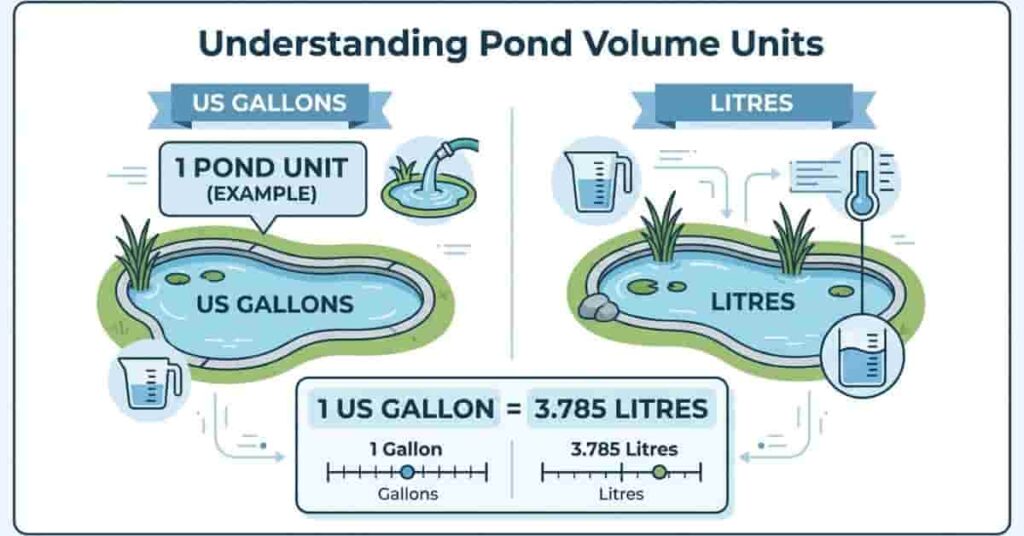
When working with a pond volume in gallons, it is important to understand what that actually means in real measurements. In the USA, ponds are usually measured in US gallons, which is different from UK gallons. A US gallon equals 3.785 litres, so even small conversion mistakes can affect pump sizing and water treatment accuracy. Beginners often overlook this difference and end up with incorrect calculations for their pond setup.
The pond volume in litres is commonly used in scientific and international contexts. Litres make it easier to calculate water treatments because most chemical doses are listed per litre. This is why many pond owners prefer converting gallons into litres for better accuracy and control during maintenance.
Pond sizes vary widely depending on backyard space and design. Small garden ponds usually range from 500 to 1,000 gallons (1,900 to 3,800 litres). Medium ponds often range from 1,000 to 5,000 gallons (3,800 to 18,900 litres). Large decorative or koi ponds can exceed 10,000 gallons (37,800 litres or more), especially in professional landscaping setups.
Quick Reference Table
- Small pond: 500–1,000 gallons (1,900–3,800 litres)
- Medium pond: 1,000–5,000 gallons (3,800–18,900 litres)
- Large pond: 10,000+ gallons (37,800+ litres)
How to Calculate Pond Volume in Gallons
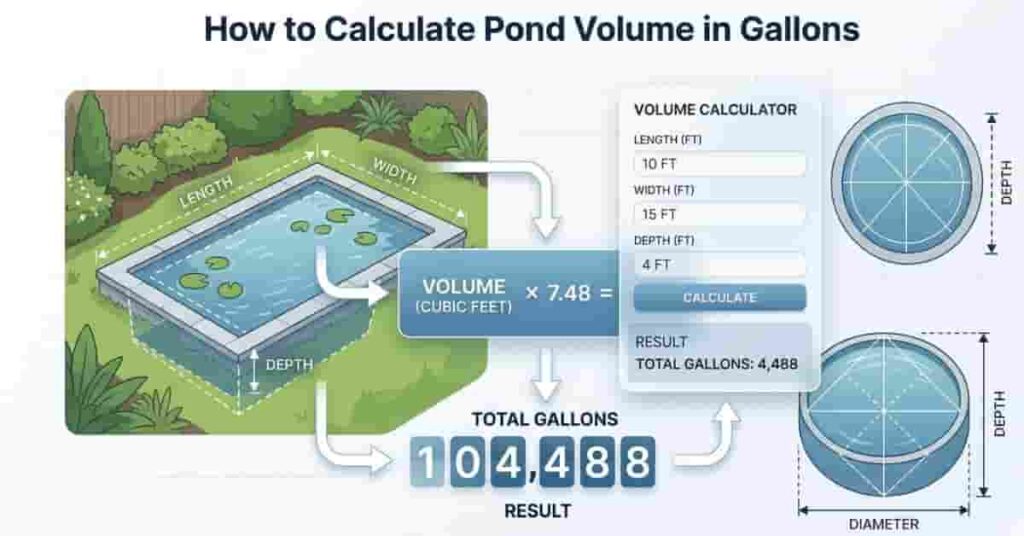
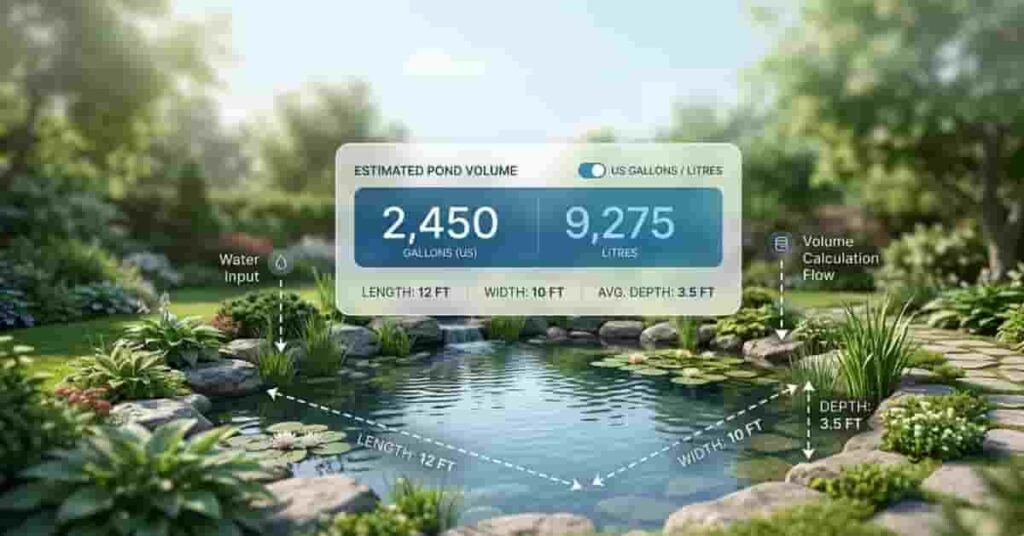
To calculate pond volume in gallons, you need a simple formula based on your pond’s shape and depth. This helps you size pumps, filters, and water treatments correctly. Many beginners skip this step, resulting in poor water balance or weak circulation.
The main formula is easy to remember. First, find your pond’s volume in cubic feet. Then multiply it by 7.48 to get gallons.
Formula: Volume (cubic feet) × 7.48 = gallons
Follow these steps to calculate pond size in gallons:
- Measure length, width, and average depth in feet
- Multiply L × W × Depth to get cubic feet (rectangular pond)
- Multiply the result by 7.48 to convert to gallons.
- For irregular ponds, split into sections and add results.
For a rectangular pond, this method works very accurately if you measure correctly. For a circular pond, use the same process, but first estimate volume using average diameter and depth. This keeps your results close to real water capacity.
Accuracy matters a lot in pond planning. Always measure average depth instead of the deepest point. Ponds often have slopes, so one measurement can mislead your total volume. Recheck your dimensions before final calculations to avoid errors in pump or chemical dosing.
How to Convert Gallons to Litres and Vice Versa
Converting between pond volume in gallons and pond volume in litres is simple once you know the basic formula. This conversion is important for pond maintenance because most water treatments and chemical doses are measured in litres, while many pond sizes in the USA are measured in gallons.
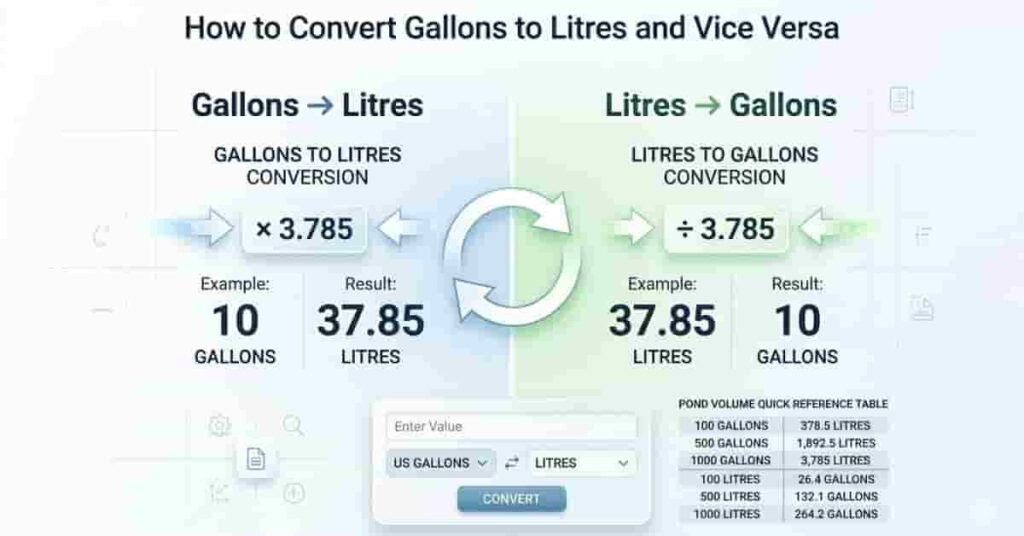
The standard conversion is: 1 US gallon = 3.785 litres.
To convert gallons to litres, multiply the number of gallons by 3.785. To convert litres back into gallons, divide the litres by 3.785. This keeps your pond measurements accurate and prevents mistakes in water treatment or pump sizing.
Quick Conversion Table
- 100 gallons = 378.5 litres
- 500 gallons = 1,892.5 litres
- 1,000 gallons = 3,785 litres
This quick table helps you estimate pond water volume without doing full calculations. It is especially useful when planning chemical dosing or checking filter capacity for different pond sizes.
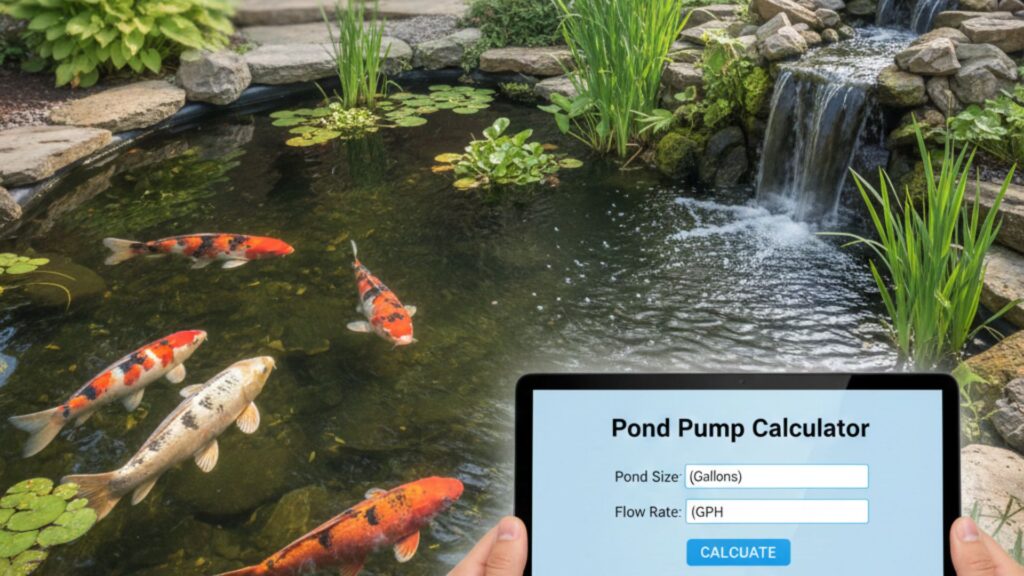
For faster results, you can also use an online pond calculator. It instantly converts values and reduces human error, especially in large pond systems. This is helpful for beginners who want quick and reliable measurements without manual math.
It’s also helpful to learn different pond volume formulas and calculation methods for more accurate results.
Common Mistakes in Unit Conversion
Many pond owners make small conversion errors that lead to big problems in water balance and equipment sizing. These mistakes usually happen when working with pond volume in gallons and converting it into litres for treatments or pump planning. Understanding these errors helps you avoid costly maintenance issues.
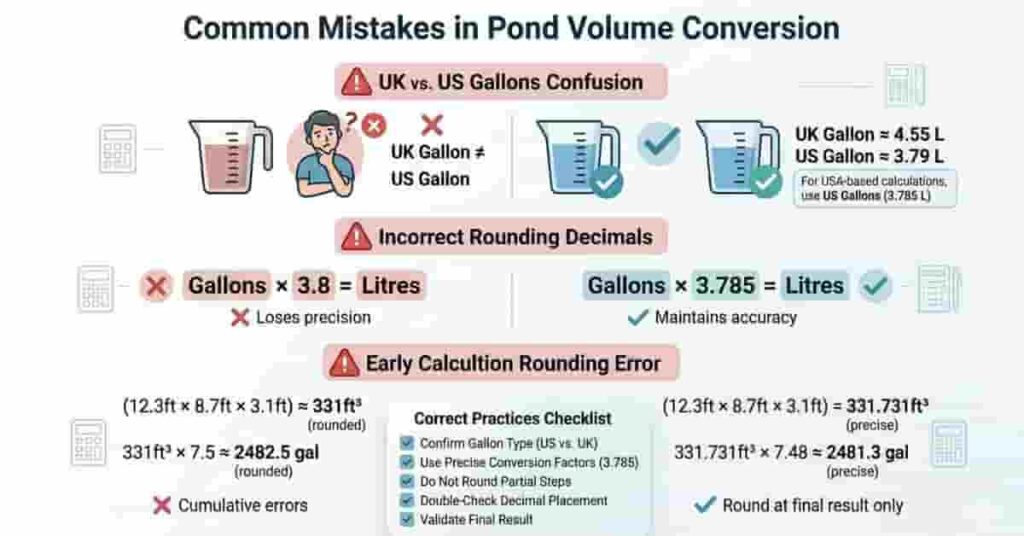
One common mistake is using UK gallons instead of US gallons. In pond calculations, the US gallon is the standard in the USA and equals 3.785 litres. UK gallons are larger, so mixing them with US gallons can yield incorrect results and affect chemical dosing accuracy. Always confirm the unit before starting any calculation.
Another frequent issue is forgetting decimals during conversion. Even small rounding errors can change your final pond volume. This becomes more important in medium- and large-sized ponds, where slight differences can affect filtration performance or water treatment effectiveness.
People also tend to round too early in calculations. This reduces accuracy, especially when measuring irregular pond shapes. It is better to keep full decimal values until the final step, then round only once.
For better accuracy, always double-check your measurements and use a calculator if needed. This helps ensure your calculated pond volume in gallons and conversion results stay reliable for real pond maintenance.
Conclusion
In this guide, we covered how to easily calculate and convert pond measurements. You learned how to work with gallons and litres, avoid common mistakes, and improve accuracy for pond planning. These steps help beginners safely manage water balance, pump sizing, and treatment.
Understanding pond volume in gallons is essential for maintaining a healthy pond system. It ensures your fish, plants, and filtration setup all work in balance without guesswork. When you also convert into pond volume in litres, you gain even better control over dosing and maintenance tasks.
Always double-check your numbers and use a calculator for quick results. A simple conversion chart can also save time during routine pond care.
If this guide helped you, feel free to share it with other pond owners or leave your experience in the comments. You can also explore more pond calculators and guides on our website to make pond maintenance even easier.
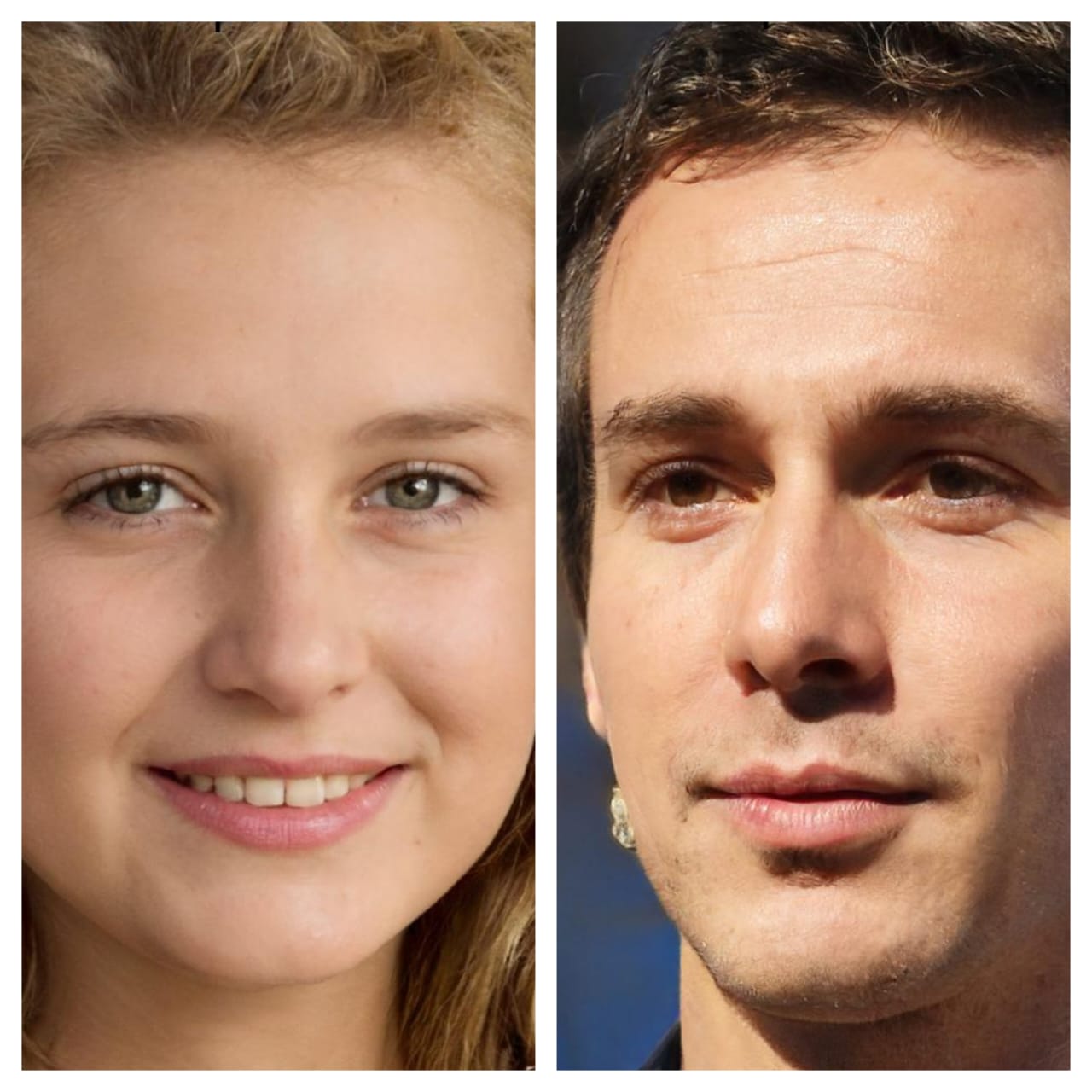
Michael Brooks and Sarah Lane are the co-founders of the Pond Pump Team, a trusted U.S.-based group helping homeowners and landscapers build better ponds and water features. Michael, an experienced pond engineer from Oregon, has worked for over 12 years on pump sizing, flow systems, and water circulation. Sarah, a pond designer from Colorado with nine years of experience, focuses on eco-friendly and easy-to-maintain pond and waterfall designs. Together, they’ve completed more than 180 pond projects and created tools like the Pond Pump Calculator and Pond Liner Calculator to make pond planning simple, accurate, and sustainable.
Need help with your pond setup? Contact the Pond Pump Team for expert advice and reliable solutions.