Introduction
A quiet pond suddenly starts humming or rattling, and now you’re wondering if the pump is failing.
A pond pump making noise is one of the most common problems pond owners face. Strange sounds often point to clogged parts, trapped air, or worn components inside the pump. For beginners in the USA, these noises can feel confusing and expensive to fix. The good news is that many pond pump noise problems are simple to diagnose at home.
A humming, buzzing, or bubbling pond pump does not always mean the motor is damaged. In many cases, cleaning the impeller or adjusting the water level solves the issue quickly. Catching the problem early can also prevent bigger repairs later.
This guide explains why your pond pump is making noise and how to identify the different sounds it makes. You’ll also learn step-by-step fixes, prevention tips, and simple ways to keep your pond pump running quietly and efficiently.
Common Types of Pond Pump Noises
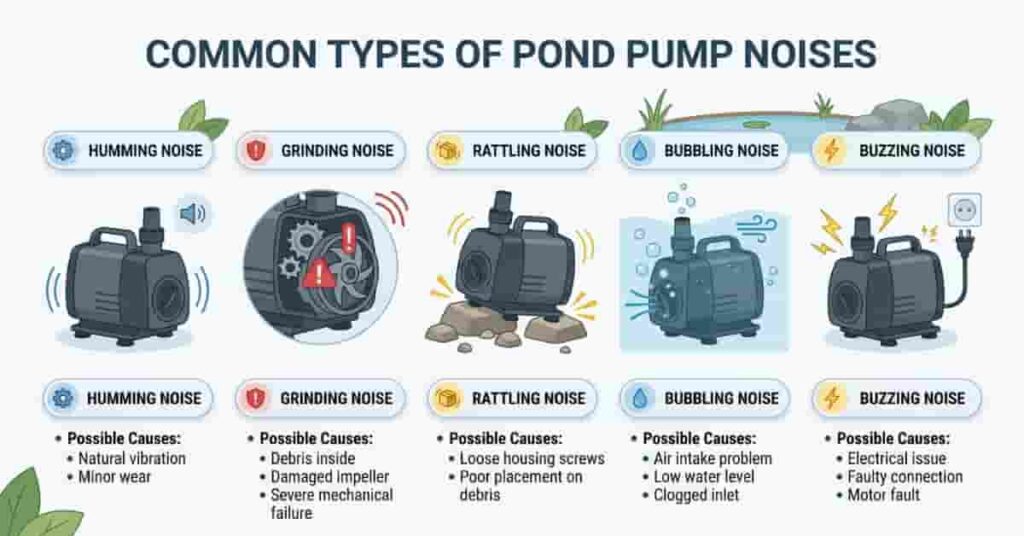
Different pond pump noises often indicate different problems within the system. Learning what each sound means can help you fix the issue faster. Some noises come from trapped air or loose fittings, while others may signal motor or impeller damage.
Listening closely to the sound type can save time and prevent costly repairs. Below are the most common pond pump noises and what they usually mean.
Noisy pumps are often linked to airflow issues or overheating, which you can understand better here: Why Is My Pond Pump Overheating? Causes, Fixes, and Prevention Guide.
Pond Pump Making Humming Noise
A pond pump making a humming noise often means the motor is running but struggling to move water. This problem usually happens when the impeller gets blocked or the water flow becomes restricted. In some cases, the motor starts but cannot spin properly.
A constant humming sound should never be ignored. If the pump keeps humming without moving water, the motor may overheat over time. Beginners often notice this problem after debris collects inside the pump housing.
Common causes include:
- Motor vibration
- Electrical humming
- Jammed impeller
- Restricted water flow
- Pump failing to start.
Watch for these signs:
- Low or weak water movement
- Constant humming sound
- The pump feels warm to the touch.
Cleaning the impeller and checking the intake area often fixes this issue quickly. If the humming continues, inspect the motor for wear or internal damage.
Pond Pump Making Grinding Noise
A grinding pond pump usually signals mechanical trouble inside the unit. This harsh sound often happens when debris enters the impeller chamber or the impeller blades become damaged. Older pumps may also develop worn bearings, which can cause scraping noises during operation.
Grinding sounds can quickly damage the motor if ignored. Many pond owners notice reduced water flow along with strong vibration. Small stones, twigs, or algae buildup are common triggers of this problem.
Common causes include:
- Debris stuck in the impeller
- Broken impeller blades
- Worn bearings
- Internal motor damage
Common warning signs:
- Harsh scraping or grinding sound
- Reduced pump performance
- Excess vibration
Turn off the pump immediately if the grinding becomes loud. Inspect the impeller and remove any trapped debris before restarting the system.
Pro Tip: Grinding noises usually worsen over time, so early cleaning can prevent expensive repairs.
Pond Pump Making Rattling or Vibrating Noise
A rattling pond pump often means something has become loose or unstable. External pond pumps commonly vibrate when fittings loosen or pipes shift during operation. Submersible pumps may also rattle if they sit unevenly on rocks or hard surfaces.
Vibration noise can spread through pipes and pond walls. The sound may grow louder as the water flow increases. In many cases, the fix is simple and only requires tightening loose parts or improving pump placement.
Common causes include:
- Loose pump housing
- Uneven pump placement
- Loose plumbing fittings
- External pump vibration
Typical signs include:
- Pump shaking during operation.
- Vibrating pipes or hoses
- Noise increases with higher flow speed.
Inspect all fittings and make sure the pump sits on a stable surface. Rubber pads can also significantly reduce vibration noise.
Pro Tip: External pond pumps become quieter when installed on vibration-absorbing pads.
Pond Pump Making Bubbling or Gurgling Noise
A bubbling or gurgling pond pump usually means air has entered the system. This problem often appears after cleaning the pump or when the pond water level drops too low. Air trapped inside the tubing can also create splashing and gurgling sounds.
Many beginners mistake bubbling noise for normal operation. However, constant air intake can reduce water circulation and increase pump strain. External pumps may also develop air leaks around loose pipe connections.
Common causes include:
- Air is trapped inside the pump.
- Low pond water level
- Air leak in tubing
- Improper pump priming
Common signs include:
- Intermittent water flow
- Air bubbles from the outlet
- Splashing or gurgling sounds
Check the pond’s water level first, then inspect all tubing connections carefully. Re-priming the pump often quickly removes trapped air.
Pond Pump Making Loud Buzzing Noise
A loud buzzing pond pump may indicate an electrical or motor problem. Unlike normal humming, buzzing sounds often feel harsher and more aggressive. External pond pumps commonly develop buzzing noises when capacitors begin to fail.
Blocked rotors can also force the motor to work harder, creating a loud buzzing sound. If the motor overheats, the noise may become stronger over time. Ignoring this issue can shorten the pump’s lifespan.
Common causes include:
- Electrical problems
- Overheating motor
- Blocked rotor
- Failing capacitor in external pumps
Turn off the pump if the buzzing becomes unusually loud or the housing feels hot. Electrical problems may require professional inspection if basic cleaning does not solve the issue.
Pro Tip: A buzzing pump with overheating symptoms should be inspected immediately to avoid motor failure.
Why Is My Pond Pump Making Noise?
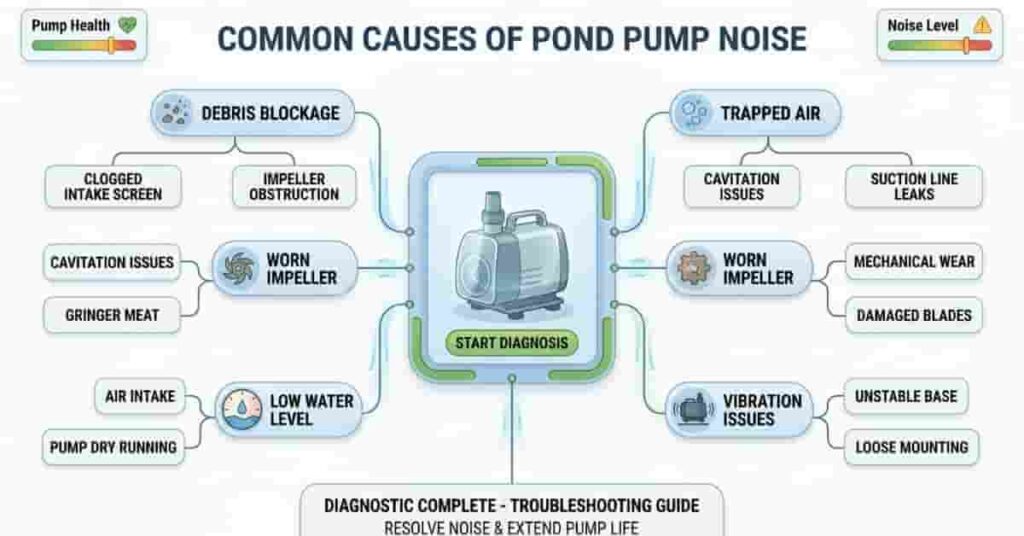
A pond pump making noise usually means something inside the system needs attention. In many cases, the problem starts with debris buildup, trapped air, or worn parts. Even a small blockage can force the motor to work harder and create unusual sounds.
Finding the exact cause early can help you avoid expensive repairs or full pump replacement. Below are the most common reasons noisy pond pumps develop problems over time.
Debris Stuck Inside the Pump
Debris is one of the most common reasons a pond pump starts making noise. Leaves, algae, dirt, and small stones can enter the pump and block the impeller chamber. Fish waste may also collect inside the intake area over time.
When debris builds up, the impeller cannot spin freely. This restriction creates vibration and forces the motor to work harder. Many pond owners first notice a humming or grinding sound before water flow weakens.
Common debris sources include:
- Leaves
- Algae buildup
- Small stones
- Fish waste
- Dirt inside the impeller chamber
How debris causes noise:
- Blocks impeller rotation
- Creates vibration
- Increases motor strain
Regular cleaning helps prevent most debris-related pump problems. Check the intake and impeller area often, especially during fall or heavy algae growth.
Pro Tip: Fine gravel and string algae often hide in the impeller chamber and can cause sudden noise issues.
In many cases, poor startup or trapped air also contributes to noise problems, so this guide may help: How to Prime a Pond Pump (Fix Pond Pump Not Priming – Complete Guide).
Worn or Damaged Impeller
The impeller is one of the most important parts inside a pond pump. If it becomes damaged or worn, the pump may start grinding, rattling, or vibrating loudly. Older pumps often develop impeller wear after years of regular use.
Cracked blades and bent shafts reduce smooth rotation inside the motor housing. Loose magnetic impellers may also shake while spinning. As damage worsens, water flow usually weakens.
Common impeller problems include:
- Cracked impeller blades
- Bent shaft
- Loose magnetic impeller
- Worn ceramic shaft
Typical symptoms:
- Grinding noise
- Rattling sounds
- Reduced water flow
Inspect the impeller carefully during routine maintenance. Replacing a damaged impeller early can protect the motor from further damage.
Air Trapped in the Pump
Air trapped inside the pump can create bubbling, gurgling, or vibrating noises. This issue commonly appears after cleaning the pump or reinstalling it in the pond. Low water levels may also allow air to enter the intake system.
When air enters the pump, the water flow becomes unstable. The pump may produce cavitation noise, which sounds like rattling or bubbling inside the housing. Many beginners notice this problem after restarting the system.
Common causes include:
- Cleaning the pump
- Reinstalling the pump
- Low pond water level
Results of trapped air:
- Cavitation noise
- Bubbling sounds
- Pump vibration
Re-priming the pump often quickly removes trapped air. Keeping the pump fully submerged also helps prevent future air intake problems.
Low Water Level in the Pond
Low pond water levels can make a pond pump noisy very quickly. When the pump becomes partially exposed, it may pull air into the intake instead of water. This creates bubbling, vibration, and cavitation sounds.
Water also helps cool the motor during operation. Without enough water, the pump may overheat and wear out faster. Hot summer weather and evaporation often make this problem worse.
Common low water level problems include:
- Pump partially exposed
- Air enters the intake.
- Reduced motor cooling
Possible results:
- Loud pump noise
- Overheating
- Shorter pump lifespan
Check the pond water level regularly, especially during dry weather. Keeping the pump fully submerged helps maintain quiet and efficient operation.
Pro Tip: A noisy pond pump during summer often indicates low water levels due to evaporation.
Clogged Pond Filter or Intake
A clogged pond filter restricts water flow and increases pressure inside the pump system. As the motor struggles to move water, the pump may begin to hum or vibrate loudly. Dirty intake screens can create similar problems.
Restricted circulation forces the motor to work harder than normal. Many pond owners notice a reduction in waterfall flow before the noise becomes severe. Algae and sludge buildup commonly block filters during warm months.
Common causes include:
- Restricted water flow
- Increased pump strain
- Motor overworking
Warning signs:
- Loud humming noise
- Weak waterfall flow
- Dirty filter pads
Clean the filter and intake regularly to maintain proper circulation. Routine maintenance helps reduce strain on the pump motor.
Pro Tip: Weak waterfall flow combined with humming usually points to a clogged intake or filter.
External Pond Pump Plumbing Problems
External pond pumps can become noisy when plumbing connections loosen or pressure builds inside the pipes. Vibrating pipes often transfer noise across decks, patios, or pond walls. Small air leaks in the suction line may also create bubbling sounds.
Loose fittings allow movement during operation, especially in high-flow systems. Over time, constant vibration may worsen the noise and damage pipe connections.
Common plumbing issues include:
- Loose fittings
- Pipe vibration
- High-pressure buildup
- Air leaks in the suction line
Inspect all plumbing connections carefully and tighten loose fittings when needed. Flexible tubing and vibration pads can also reduce operating noise.
Pump Placement Problems
Improper pump placement can cause rattling and vibration even when the pump is working correctly. Pumps placed directly against pond liners or hard surfaces often produce extra sound during operation.
Uneven placement may also cause the pump housing to shift slightly while running. External pumps become louder when installed without vibration protection underneath.
Common placement problems include:
- Pump touching pond liner.
- Sitting on hard surfaces
- Poor vibration absorption
Place the pump on a stable and level surface whenever possible. Foam pads or rubber mats can help absorb vibration and reduce overall noise.
Pond Pump Noise Quick Diagnosis Table
Strange pond pump sounds can feel confusing at first, especially for beginners. The good news is that most noises point to a specific problem inside the pump system. Identifying the sound early can help you fix the issue before it damages the motor or impeller.
Use this quick diagnosis table to match the noise with its most likely cause and recommended fix.
| Humming | Blocked impeller | Clean the impeller and intake area |
| Grinding | Debris or broken parts | Inspect and replace damaged impeller parts |
| Bubbling | Trapped air inside pump | Re-prime the pump and check water level |
| Rattling | Loose fittings or housing | Tighten fittings and secure components |
| Buzzing | Electrical or motor issue | Inspect the motor and power supply |
| Vibrating | Uneven pump placement | Add a rubber or foam vibration pad |
A pond pump making noise usually becomes easier to diagnose once you identify the sound type. Simple problems like trapped air or debris often need quick cleaning or adjustment. Loud grinding or buzzing noises may require deeper inspection to prevent motor damage.
How to Fix a Noisy Pond Pump (Step-by-Step)
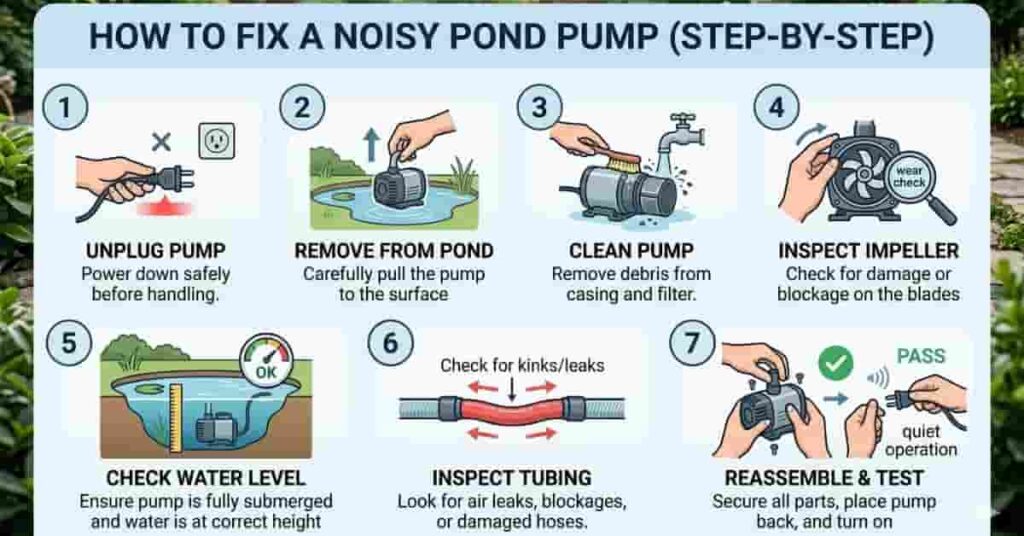
A pond pump that’s making noise often just needs simple maintenance rather than a full replacement. Dirt buildup, trapped air, and loose parts are common causes of pump problems. Following a step-by-step process helps you safely identify the issue and restore quiet operation.
Before starting, gather gloves, a soft brush, clean water, and a towel. Always work carefully around electrical equipment near water.
Step 1: Turn Off and Unplug the Pump
Safety should always come first when fixing a noisy pond pump. Turn off the power supply completely before touching the pump or water. Never inspect a running pump because moving parts and electricity create serious hazards.
Unplugging the unit also protects the motor during inspection. Some pumps continue humming even when water flow stops, so do not assume the system is safe until disconnected.
Basic safety steps:
- Turn off the power source.
- Unplug the pump fully.
- Keep your hands dry during removal.
Once the pump is disconnected, allow it to cool for a few minutes before handling it.
Step 2: Remove the Pump From the Pond
Carefully lift the pump from the pond or filter chamber. This gives you full access to the intake area and impeller housing. Many noise problems become visible once the pump leaves the water.
Check for algae, leaves, gravel, or string debris around the intake screen. External pond pumps may require disconnecting hoses before inspection.
While removing the pump:
- Support the housing carefully.
- Avoid pulling on the power cord.
- Inspect the intake immediately.
Visible debris often explains humming, grinding, or weak water flow problems.
Step 3: Clean the Pump Thoroughly
Cleaning removes buildup that restricts water flow and creates noise. Algae, sludge, and dirt commonly collect around the intake screen and impeller chamber. Even small debris can force the motor to work harder.
Use clean water and a soft brush to avoid damaging delicate parts. Never use harsh chemicals inside the pump housing.
Focus on these areas:
- Remove algae buildup
- Wash the intake screen.
- Clear dirt and sludge deposits
Take extra time around narrow openings where debris often hides. Proper cleaning improves circulation and reduces motor strain.
Step 4: Inspect the Impeller
The impeller controls water movement inside the pump. If it becomes cracked, jammed, or worn, the pump may start grinding or making a loud rattling noise. Inspect this part carefully during maintenance.
Spin the impeller gently by hand. It should rotate smoothly without resistance or wobbling. Remove fishing line, hair, or plant material wrapped around the shaft.
Check for:
- Cracked impeller blades
- Smooth spinning motion
- Wrapped debris around the shaft
Replace damaged impellers immediately to prevent motor damage and poor performance.
Step 5: Check Water Level
Low water levels often allow air into the pump system. This creates bubbling, gurgling, and cavitation noise during operation. Pumps also rely on water for cooling.
Make sure the pump stays fully submerged after reinstalling it. Water should flow freely around the intake without exposing any part of the housing.
Important checks:
- Keep the pump underwater.
- Maintain proper pond depth.
- Prevent air intake near the surface.
Hot weather and evaporation can lower pond water quickly, especially during summer.
Pro Tip: Mark the ideal pond water level to spot evaporation problems faster.
Step 6: Inspect Tubing and Pipe Connections
Loose tubing and plumbing fittings often create rattling or vibration noise. Air leaks inside suction lines may also cause bubbling sounds and weak flow.
Inspect every connection carefully before restarting the system. Tighten loose clamps and remove any visible blockages inside hoses or pipes.
Check for:
- Loose fittings
- Cracked tubing
- Water or air leaks
- Clogged pipe sections
External pond pumps may need vibration pads under the plumbing system to reduce noise transfer.
Pro Tip: Flexible tubing reduces vibration noise better than rigid pipe sections.
Step 7: Reassemble and Test the Pump
After cleaning and inspection, reassemble the pump carefully and return it to the pond. Restore power and monitor the system closely during startup.
Listen for unusual sounds during the first few minutes. Water flow should appear smooth and steady without strong vibration or bubbling.
During testing:
- Listen for remaining noise.
- Verify strong water flow.
- Monitor vibration levels
Some bubbling may occur briefly as trapped air leaves the system. If loud grinding or buzzing persists, deeper mechanical issues may be present.
Pro Tip: Test the pump for several minutes before leaving it unattended.
How to Make a Pond Pump Quieter
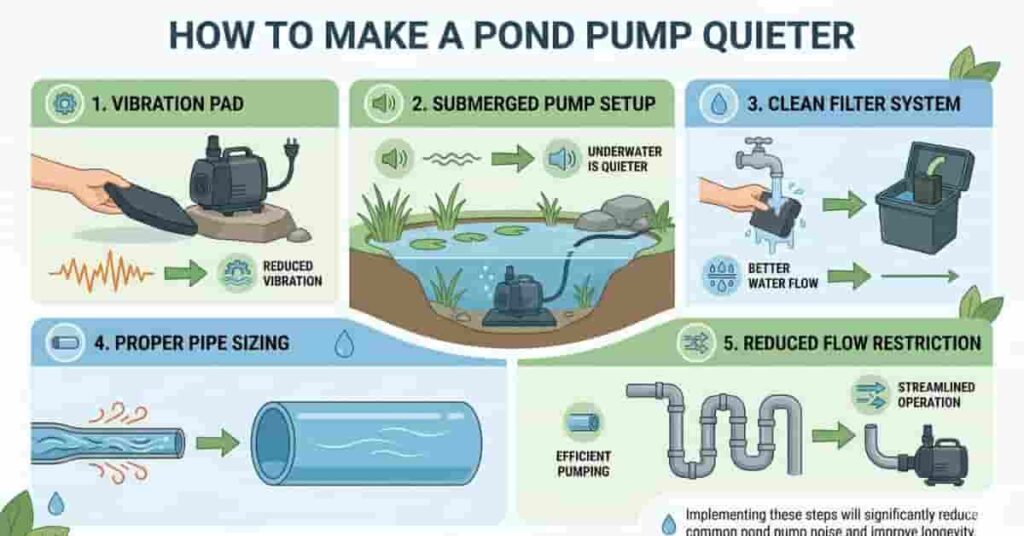
A noisy pond pump can make an otherwise peaceful pond feel annoying and stressful. The good news is that many noise problems come from vibration, restricted water flow, or poor maintenance. Small adjustments often make a noticeable difference in sound levels.
Keeping the pump clean and properly installed helps it run more smoothly. These simple tips can reduce humming, rattling, bubbling, and vibration noise in most pond systems.
Takeaways
- Proper maintenance keeps pond pumps quieter for longer.
- Vibration control helps reduce rattling and humming sounds.
- Good water flow lowers motor strain and operating noise.
Install a Foam or Rubber Vibration Pad
External pond pumps often create vibration noise when placed directly on hard surfaces. Concrete, wood, and stone can amplify sound, making the pump seem louder than usual.
A foam or rubber vibration pad absorbs movement and reduces rattling. Many pond owners notice immediate improvement after adding one beneath the pump housing.
Benefits of vibration pads:
- Reduces surface vibration
- Lowers rattling sounds
- Helps stabilize the pump
Rubber pads work especially well for external pond pumps installed near patios or decks.
Keep the Pump Fully Submerged
Submersible pond pumps need enough water around them to operate quietly. Low water levels allow air into the intake, which creates bubbling and cavitation noise.
Water also cools the motor during operation. If the pump becomes partially exposed, overheating and vibration problems may develop over time.
Why proper water depth matters:
- Prevents cavitation noise
- Improves motor cooling
- Reduces vibration
Check the pond water level regularly during hot weather or dry seasons.
Clean the Pump Regularly
Dirt and algae buildup force the motor to work harder, which increases noise over time. Regular cleaning helps maintain smooth water flow and protects the impeller from blockage.
Many pond pump humming problems start with debris collecting inside the intake or impeller chamber. Monthly maintenance usually prevents serious buildup.
Focus on these cleaning areas:
- Intake screen
- Impeller chamber
- Filter housing
- Tubing connections
Clean pumps run more efficiently and usually last longer.
Replace Worn Impellers Early
A worn impeller can cause grinding, rattling, or vibration inside the pump. Cracked blades and damaged shafts reduce smooth rotation and strain the motor.
Replacing the impeller early helps restore quiet performance and prevents larger mechanical problems later. Many pumps become significantly quieter after installing a new impeller.
Benefits of early replacement:
- Prevents grinding damage
- Improves water circulation
- Restores quieter operation
Inspect the impeller during every major cleaning session.
Use Proper Pipe Size
An incorrect pipe size can create pressure noise inside the plumbing system. Narrow pipes restrict water movement and force the motor to work harder.
Properly sized tubing improves circulation and helps the pump operate more quietly. External pond pumps especially benefit from balanced plumbing setups.
Benefits of proper pipe sizing:
- Reduces pressure noise
- Improves water flow
- Lowers motor strain
Check the manufacturer’s recommendations before upgrading tubing or fittings.
Reduce Flow Restrictions
Reduced water flow increases pressure in the pump system and creates additional noise. Dirty filters, clogged hoses, and sharp tubing bends commonly reduce circulation.
Improving the flow helps the motor run more smoothly and quietly. Small adjustments can often immediately reduce humming and vibration.
Ways to improve circulation:
- Clean clogged filters
- Avoid kinked hoses
- Remove debris buildup
- Improve water flow paths.
Inspect the system regularly for blockages, especially during periods of heavy algal growth.
Pro Tip: Kinked hoses can reduce water flow even when the pump itself works properly.
Noise Problems in Different Types of Pond Pumps
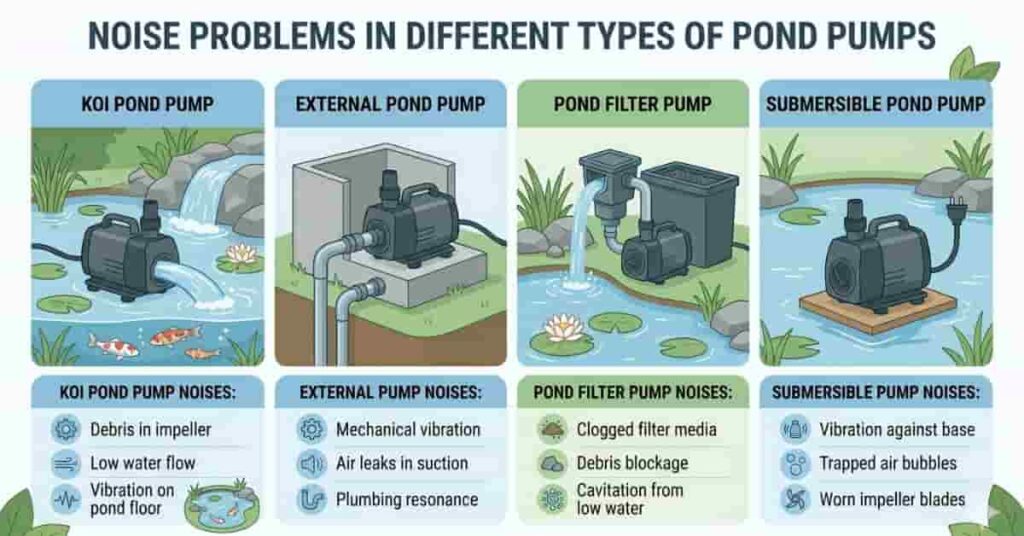
Different pond pumps behave differently, so the noise source can change based on the pump type. A koi pond system, an external pump, and a submersible pump all face unique pressure and flow conditions. That means the same “pond pump making noise” issue can have different causes depending on the setup.
Understanding your pump type helps you diagnose problems faster. It also helps you choose the right fix instead of guessing and wasting time.
Koi Pond Pump Making Noise
Koi pond pumps usually handle higher water flow, which means even small restrictions can create noticeable noise. When water cannot move freely, the motor works harder and produces humming or vibrating sounds.
Dirty skimmer baskets are one of the most common causes. Large debris, like leaves and algae, can also quickly block intake flow in koi setups.
Common causes include:
- High flow restriction
- Dirty skimmer baskets
- Large debris buildup
Noise often increases when the pump tries to maintain strong circulation. Regular cleaning of skimmers and filters is important to keep koi pond pumps quiet and efficient.
External Pond Pump Noise
External pond pumps sit outside the water, so they are more exposed to vibration and plumbing issues. Pipe movement, loose fittings, and motor wear often create noticeable noise in these systems.
Pipe vibration is one of the biggest causes of rattling sounds. Over time, motor bearings may also wear down and produce humming or grinding noises.
Common causes include:
- Pipe vibration
- Loose mounting
- Bearing wear
- Motor humming
Check all mounting points and plumbing connections carefully. Adding vibration pads can also significantly reduce external pump noise.
Pro Tip: External pumps become quieter when installed on stable, vibration-absorbing surfaces.
Pond Filter Pump Making Noise
Pond filter pumps often become noisy when the filtration media gets clogged. Dirty filter pads restrict water flow, forcing the pump to work harder than normal.
Air trapped inside the filter system can also create gurgling or bubbling sounds. This usually happens after cleaning or after restarting the system.
Common causes include:
- Clogged filter media
- Reduced water circulation
- Air is trapped in the filter system.
Regular filter maintenance is key to keeping these pumps quiet. Clean or replace filter media based on usage and pond size.
Submersible Pond Pump Noise
Submersible pond pumps sit underwater, so they are generally quieter. However, they can still produce noise when water levels drop or debris enters the intake.
Low water levels allow air into the system, which creates bubbling and vibration noise. Worn magnetic impellers may also cause humming or rattling sounds.
Common causes include:
- Low water level
- Debris in the intake
- Worn magnetic impeller
Keeping the pump fully submerged and clean helps maintain silent operation. Regular checks prevent most noise issues in submersible systems.
Pro Tip: Submersible pumps rely on full water coverage for both cooling and quiet operation.
How to Prevent Pond Pump Noise
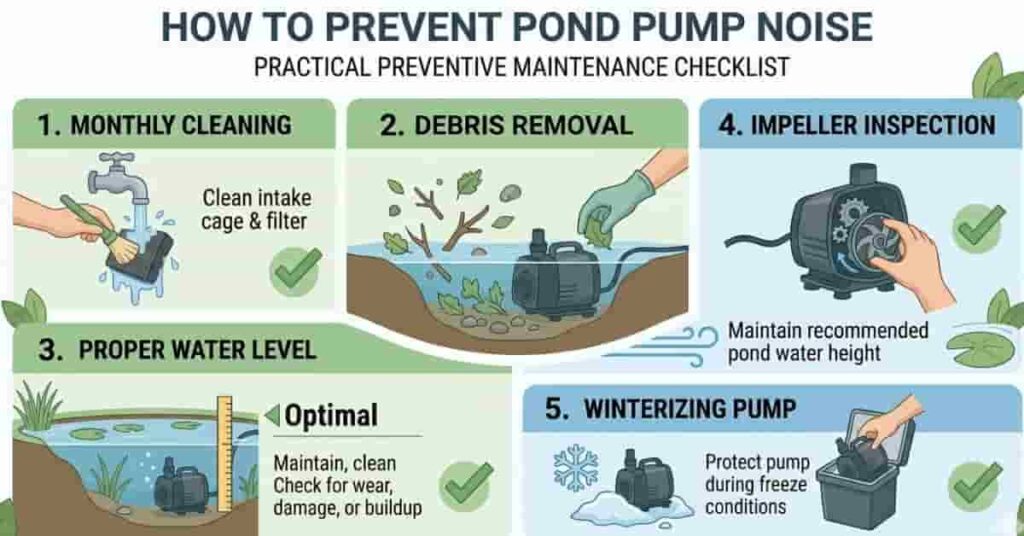
Preventing a pond pump from making noise is easier than fixing one. Most noise problems start with simple issues like debris buildup, low water levels, or worn parts. Regular maintenance keeps the pump running smoothly and reduces long-term damage.
A well-maintained pond pump works quietly, uses less energy, and lasts longer. These simple habits can help you avoid future humming, grinding, and vibration issues.
Takeaways
- Regular maintenance prevents most pump noise problems.
- Clean water flow keeps the motor stress-free.
- Seasonal care protects the pump from long-term damage.
Clean the Pump Monthly
Monthly cleaning is one of the easiest ways to prevent pond pump noise. Dirt, algae, and small debris slowly accumulate in the intake and impeller chambers. Over time, this buildup restricts water flow and produces a humming or vibrating sound.
A clean pump runs more smoothly and puts less pressure on the motor. This also helps prevent overheating and internal wear.
Focus on:
- Removing algae buildup
- Cleaning intake screens
- Flushing internal chambers
Regular cleaning improves efficiency and keeps noise levels low.
Remove Leaves and Sludge
Leaves and sludge are common causes of pond pump blockage. When these materials enter the pump, they can restrict water flow and create grinding or humming noises. Over time, they may also damage the impeller.
Regularly removing debris from the pond helps protect the pump system. Skimmers and netting can also reduce debris buildup.
Key benefits:
- Reduces clogging risk
- Protects the impeller from damage
- Maintains steady water flow
A cleaner pond environment means fewer pump noise problems.
Maintain Proper Water Level
Proper water level plays a big role in keeping pond pumps quiet. When water drops too low, air enters the system, causing bubbling or cavitation noise. This also reduces cooling efficiency and increases motor strain.
Keeping the pump fully submerged ensures smooth and quiet operation. It also protects internal components from overheating.
Important benefits:
- Prevents air intake
- Reduces overheating risk
- Maintains stable water flow
Check water levels regularly, especially during hot or dry weather.
Inspect the Impeller Regularly
The impeller is one of the most important parts inside a pond pump. If it becomes worn or damaged, it can cause grinding, rattling, or vibrating. Regular inspection helps catch these problems early.
Checking the impeller during maintenance prevents bigger motor issues later. Even small cracks or debris buildup can affect performance.
Look for:
- Early signs of wear
- Smooth rotation
- Any trapped debris
Replacing a worn impeller early keeps the pump running quietly.
Winterize the Pump Properly
Cold weather can damage pond pumps if they are not properly winterized. Freezing water inside the pump may cause internal cracks or long-term mechanical issues. This often leads to noise problems when the pump is restarted.
Proper winter storage protects internal components and extends pump life. It also prevents seasonal performance issues.
Winterizing steps help:
- Avoid internal cracking
- Prevent seasonal damage
- Extend pump lifespan
Remove the pump, clean it thoroughly, and store it in a dry place during freezing temperatures.
Pro Tip: Never leave a pond pump filled with water in freezing conditions.
Pond Pump Noise Troubleshooting
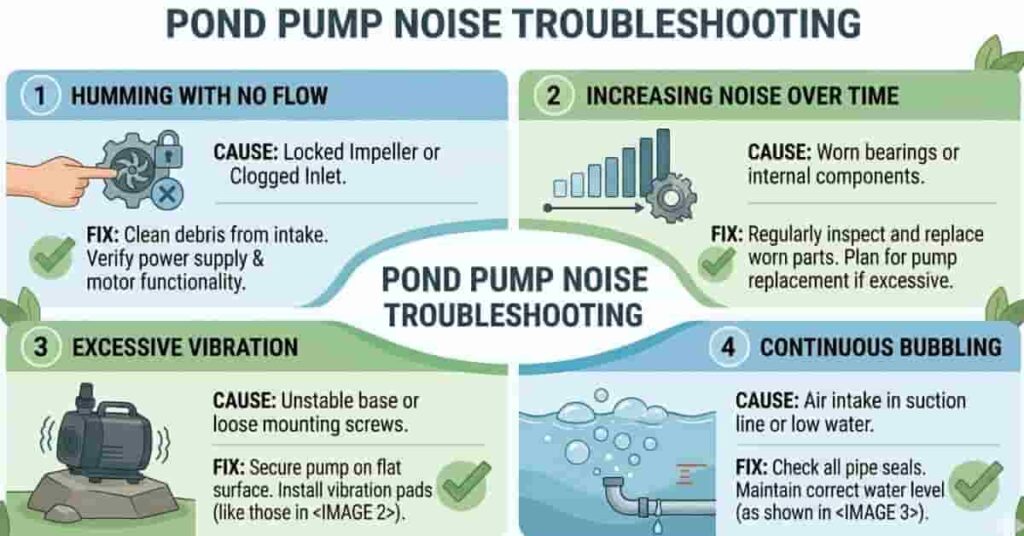
When a pond pump starts making noise, the type of sound can help you quickly identify the problem. Most issues come from blocked water flow, air leaks, worn parts, or vibration problems. A simple check can often reveal what’s wrong before it gets worse.
Use the troubleshooting guide below to match each symptom to its likely cause and fix it fast.
Pump Hums But No Water Flows
If your pond pump is humming but not moving water, the motor is running, but the flow is blocked. This usually means water cannot pass through the impeller or intake system properly.
This issue often appears suddenly after cleaning or heavy debris buildup. Airlocks can also prevent water from circulating, especially in submersible pumps.
Possible causes:
- Blocked impeller
- Airlock inside the pump
- Clogged intake screen
A humming pump should be checked immediately to avoid overheating. Cleaning the impeller and clearing the intake usually restores normal flow.
Pro Tip: A humming pump with zero flow almost always means a blocked impeller first.
Pump Gets Louder Over Time
A pond pump that becomes louder over time usually indicates gradual wear or buildup inside the system. The sound may start as a mild hum and slowly turn into grinding or vibration.
This often happens when debris collects inside the pump or when internal parts start wearing out. Bearings and impellers are common weak points in older pumps.
Possible causes:
- Worn bearings
- Dirt buildup inside the housing
- Damaged impeller
If noise increases steadily, the pump needs to be inspected before it fails completely. Cleaning or replacing worn parts can restore normal operation.
Pond Pump Vibrates Excessively
Excessive vibration usually points to instability in placement or internal imbalance. A pond pump making noise while shaking often sits on an uneven surface or has loose internal components.
High water flow pressure can also increase vibration in some systems. External pumps may transfer vibration through pipes and fittings.
Possible causes:
- Uneven surface
- Loose housing parts
- High flow pressure
Check placement first, as it is the easiest fix. Adding a vibration pad often reduces noise immediately.
Bubbling Noise Will Not Stop
Continuous bubbling or gurgling means air is constantly entering the system. This is common after maintenance or when water levels drop too low.
If the pump is not properly primed, air can become trapped, disrupting water flow. Small leaks in tubing can also keep pulling air into the system.
Possible causes:
- Air leak in the system
- Low water level
- Improper pump priming
Fixing air issues usually stops bubbling quickly. Always ensure the pump is fully submerged and properly sealed.
Conclusion
A noisy pond pump usually points to simple issues like debris buildup, trapped air, vibration, or worn parts. In most cases, basic cleaning and inspection can restore smooth performance without needing a replacement.
A pond pump making noise is not always a serious failure. Many problems come from clogged impellers, loose fittings, or low water levels. With regular maintenance and correct setup, you can keep your system quiet and efficient for years. Pond pump noise problems also become easier to manage once you understand the sound patterns and causes.
If this guide helped you, share it with other pond owners or leave a comment with your experience. You can also explore more pond pump maintenance tips on our website to keep your pond running smoothly.

Michael Brooks and Sarah Lane are the co-founders of the Pond Pump Team, a trusted U.S.-based group helping homeowners and landscapers build better ponds and water features. Michael, an experienced pond engineer from Oregon, has worked for over 12 years on pump sizing, flow systems, and water circulation. Sarah, a pond designer from Colorado with nine years of experience, focuses on eco-friendly and easy-to-maintain pond and waterfall designs. Together, they’ve completed more than 180 pond projects and created tools like the Pond Pump Calculator and Pond Liner Calculator to make pond planning simple, accurate, and sustainable.
Need help with your pond setup? Contact the Pond Pump Team for expert advice and reliable solutions.