introduction
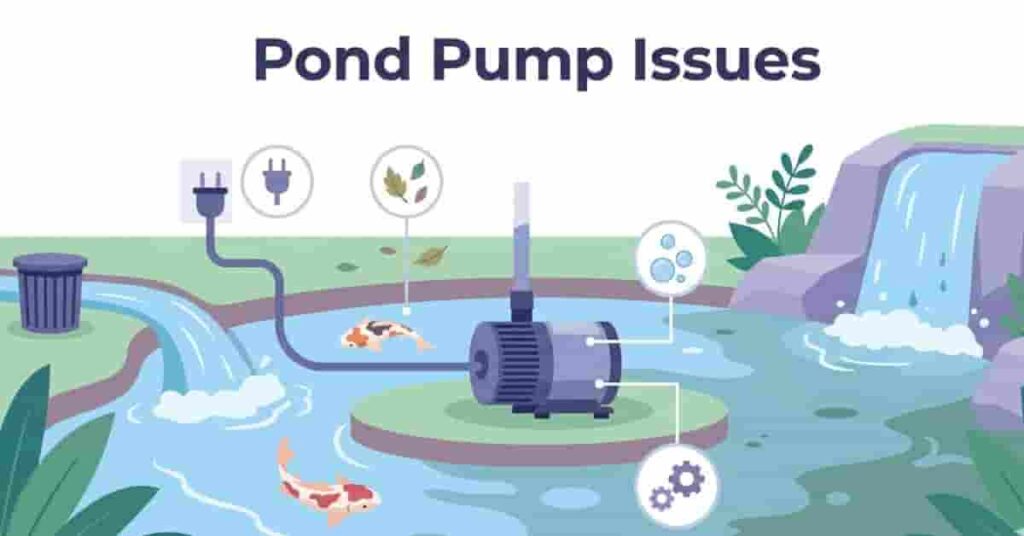
Have you ever wondered why your pond pump is running but not moving any water?
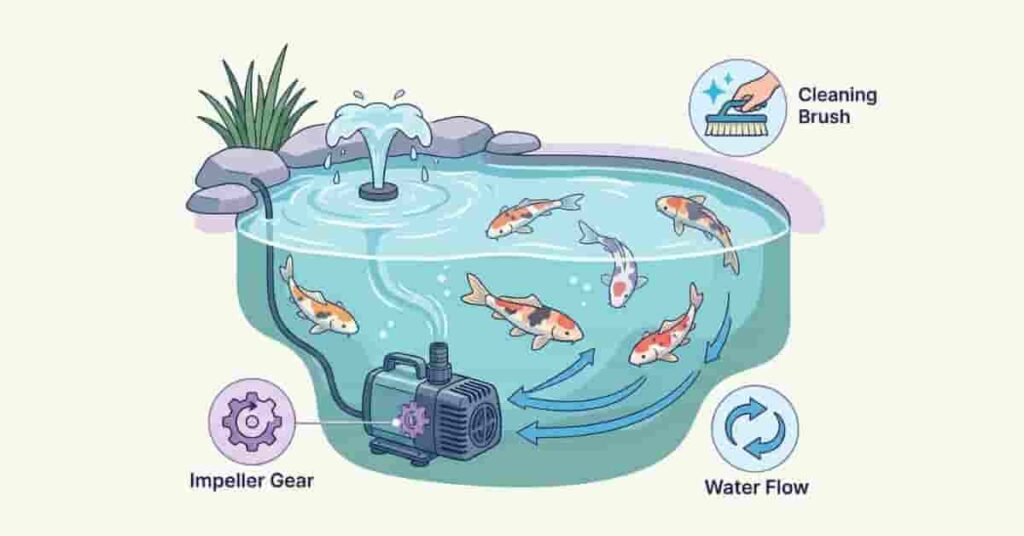
If your pond pump runs but doesn’t move water, it’s usually due to improper priming. Air trapped in the pump stops water flow and decreases performance, affecting filtration, oxygen levels, and your pond’s health.
If you’re dealing with a pond pump not priming or want to avoid future issues, you’re in the right place. This guide will walk you through simple steps to fix the problem and explain why it happens. You’ll also learn that using a self-priming pond pump or a priming pot makes things easier.
By the end, you’ll know how to restore water flow and keep your pond working.
What Is Pond Pump Priming
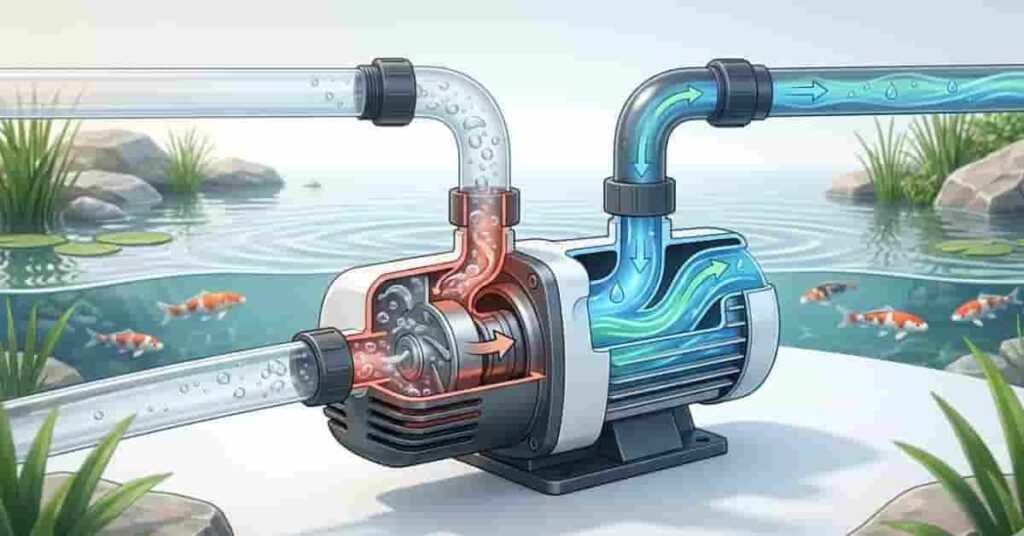
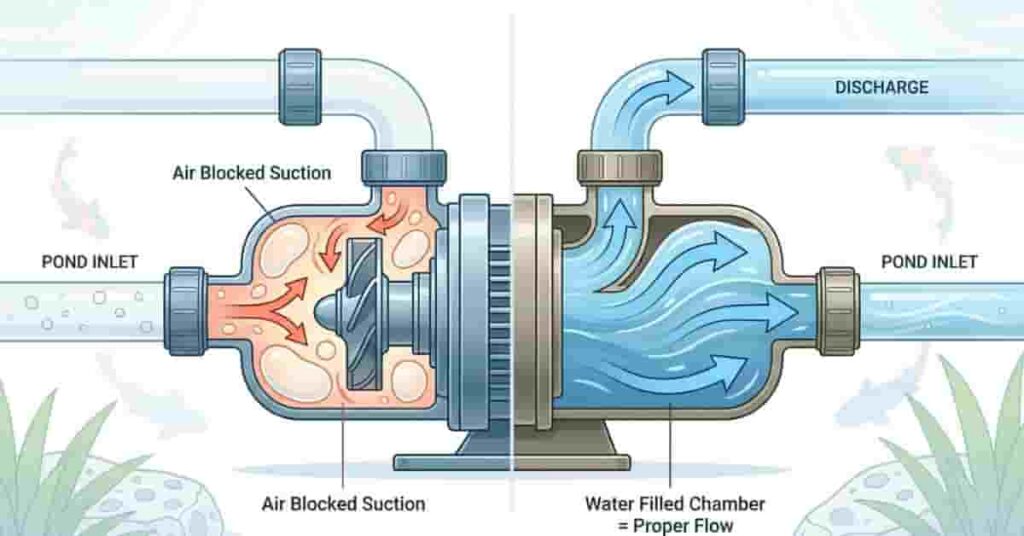
Priming a pond pump means filling the pump chamber—the internal area where water enters and is pushed out—before it starts. This action removes trapped air and prepares the pump to move water properly. Without priming, the pump may run but fail to push water through your system.
Air pockets are the main problem here. When air sits inside the pump housing, it blocks suction. The pump cannot draw water from the pond, resulting in weak or no flow. This is why many beginners think they have a pond pump not priming issue, when it just needs proper setup.
Priming creates strong suction right away. It ensures smooth water flow to filters, waterfalls, and fountains. This keeps your pond clean.
External pond pumps often need manual priming before each start. Unlike a self-priming pond pump, they cannot prime themselves. You must fill the chamber with water to get them working.
If your pump is not priming correctly, it can also lead to weak or inconsistent water flow in your pond system. Read more: How to Increase and Optimize Water Flow in a Pond Pump (Complete Guide).
Pro Tips
- Always fill the pump fully with water before turning it on.
- Check for air leaks in hoses or fittings.
- Keep the pump below the water level when possible for easier priming.
Signs Your Pond Pump Is Not Priming
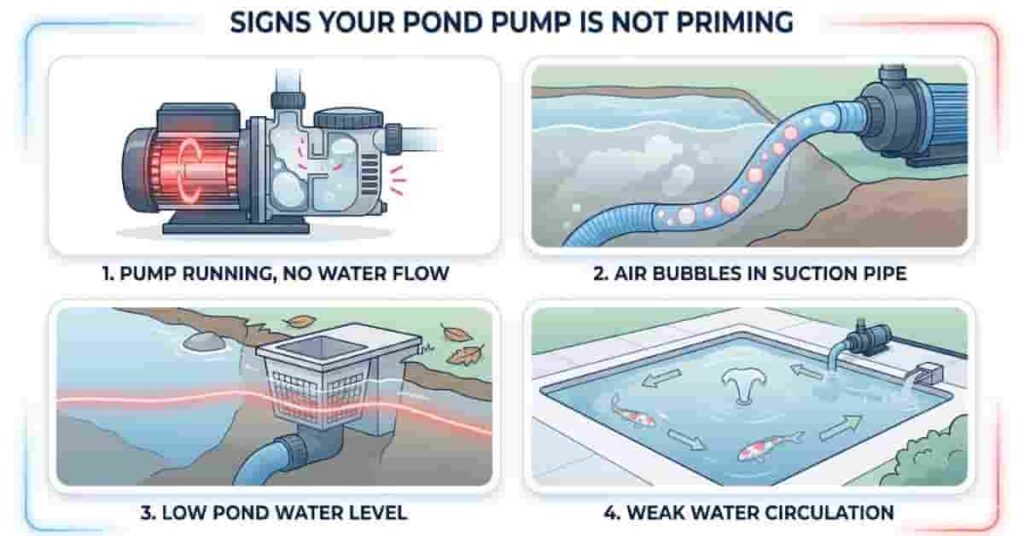
A priming pond pump problem is easy to miss at first. The pump may sound normal, but water flow tells a different story. If you spot these signs early, you can fix the issue before it affects your pond.
Many beginners confuse these symptoms with pump failure. In reality, most cases link to a pond pump not priming issue. Watch for the following warning signs to quickly diagnose the problem.
Pump Running but No Water Flow
You hear the motor running, but no water moves. This is one of the clearest signs of a priming issue.
Air inside the pump blocks the suction. The motor spins, but it cannot pull water through the system. This often happens after cleaning or restarting the pump.
If ignored, the pump may overheat or wear out faster.
Pump Losing Prime
The pump starts fine, and water flows for a short time. Then it suddenly stops.
This usually means air is entering the system. Loose fittings, small leaks, or low water levels can cause this issue.
The pump cannot maintain steady suction, so it keeps losing prime repeatedly.
Air Bubbles in Tubing
Do you see bubbles moving through your pipes or hoses? That’s a strong warning sign.
Air trapped inside the system disrupts smooth water flow. It also reduces efficiency and can damage internal parts over time.
This is common in systems with poor sealing or long pipe runs.
Low Water Circulation in the Pond
Your waterfall slows down or stops completely. Filters and fountains may also stop working.
This happens when the pump fails to move enough water. Poor circulation can lead to dirty water and low oxygen levels.
If your pond looks stagnant, your pump likely isn’t primed correctly.
Pro Tips
- Check flow rate regularly, not just pump sound.
- Inspect hoses for small air leaks.
- Prime the pump after cleaning or maintenance.
Common Reasons a Pond Pump Will Not Prime
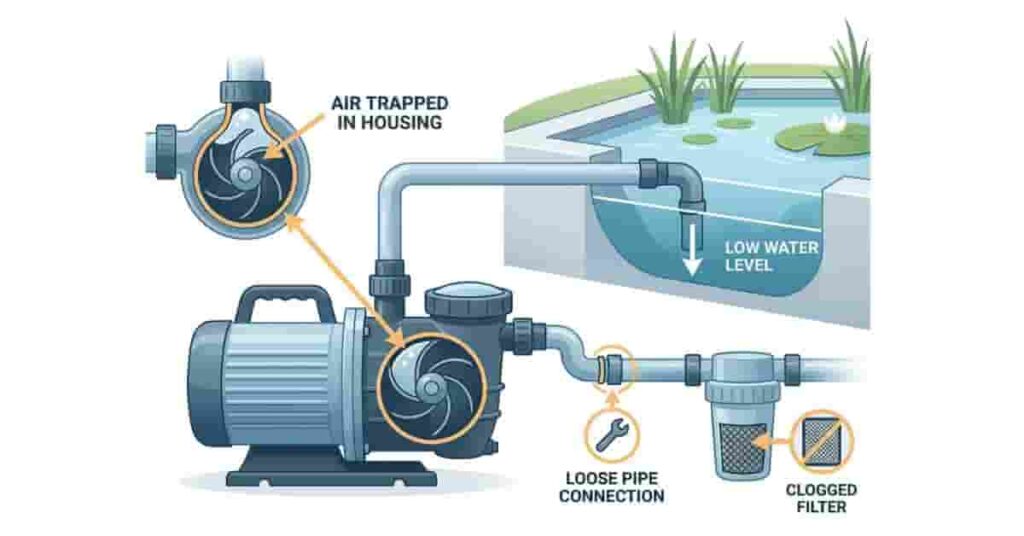
If your priming pond pump is not working, the cause is often simple. Most problems come from air leaks or blocked water flow. The good news? You can fix many of these issues without replacing the pump.
Understanding these common causes helps you solve a pond pump not priming problem faster. Check each area below before moving to advanced fixes.
Air Trapped in Pump Housing
Air inside the pump is the most common reason for priming failure. The pump chamber must stay full of water to create suction.
If air pockets remain, the pump cannot pull water from the pond. This often happens after cleaning or when restarting the system.
To fix it, refill the pump housing completely and restart the pump.
Low Pond Water Level
When the water level drops too low, the pump intake pulls in air instead of water. Even a small drop can break suction.
This issue is common during hot weather or when evaporation is high. It can also happen if there’s a leak in your pond.
Always keep the water level high enough to fully cover the intake.
Loose Hose or Pipe Connections
Small gaps in hoses or fittings can let air enter the system. Even if water doesn’t leak out, air can still get in.
This breaks the vacuum needed for proper priming. Over time, it causes weak or inconsistent water flow.
Check all connections and tighten them securely. Replace worn seals if needed.
Clogged Pump Intake or Filter
Debris like leaves, algae, or dirt can block the pump intake. This restricts water flow and makes priming difficult.
A clogged filter can also reduce pressure, making it harder for the pump to stay primed.
Clean the intake and filter regularly to keep water moving smoothly.
Pro Tips
- Refill the pump chamber after every cleaning session.
- Check water levels weekly, especially in summer.
- Use hose clamps to prevent hidden air leaks.
How to Prime a Pond Pump (Step-by-Step)
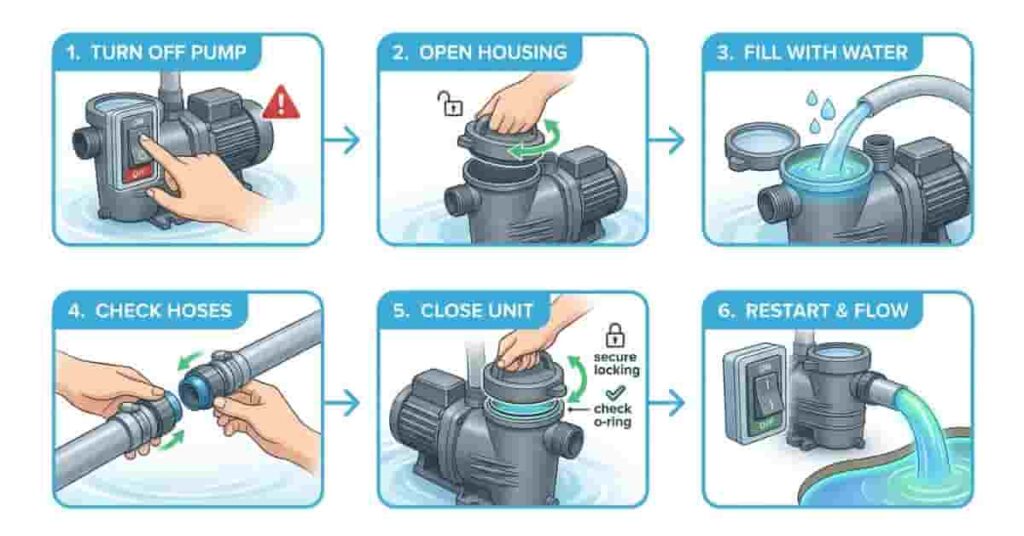
If your priming pond pump is not working, don’t worry. You can fix it in a few simple steps. This method works for most standard and external pumps.
Follow each step carefully to remove air and restore proper water flow.
Step 1: Turn Off and Unplug the Pump
Always start by turning off the pump and unplugging it. This keeps you safe while working with water and electrical parts.
It also prevents the pump from running dry during the process.
Step 2: Remove Pump Housing or Lid
Open the pump housing or remove the lid. This gives you access to the chamber where water needs to be added.
Check inside for dirt or debris while it’s open.
Step 3: Fill the Pump Chamber with Water
Pour clean water into the chamber until it is completely full. This step removes trapped air and prepares the pump for suction.
Make sure no air pockets remain inside.
Step 4: Check and Tighten Hose Connections
Inspect all hoses and fittings connected to the pump. Tighten any loose connections to stop air from entering.
Even small leaks can cause a pond pump not priming issue.
Step 5: Reassemble and Restart the Pump
Securely close the housing and plug the pump back in. Turn it on and listen for smooth operation.
The pump should begin pulling water within a few seconds.
Step 6: Test Water Circulation
Watch the water flow in your pond. Check the waterfall, filter, or fountain to confirm proper circulation.
If the flow is weak, repeat the priming steps once more.
Key Takeaways
- Priming removes air and restores suction.
- Filling the chamber fully is the most important step.
- Tight connections prevent air leaks.
- Proper priming ensures a strong and steady water flow.
Air lock and priming issues can sometimes create unusual noise or vibration, so this article is also useful: Pond Pump Making Noise? Causes, Fixes & Easy Solutions.
Priming Tips for Koi Pond Pumps
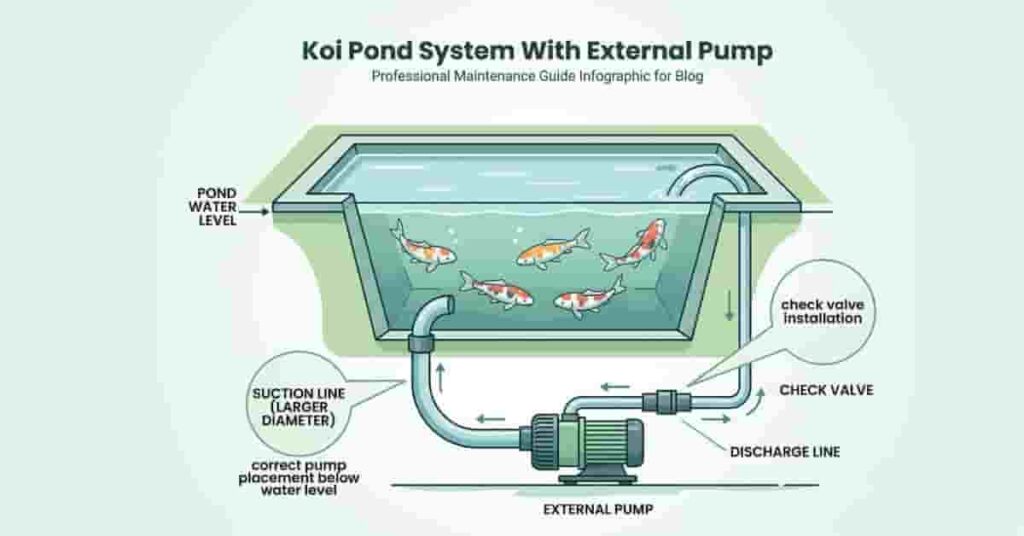
Koi ponds often use external systems, so priming pond pump setups need extra care. These pumps sit outside the pond and depend on strong suction to move water. If priming is off, flow drops quickly, and water quality suffers.
Many koi owners face a pond pump that isn’t priming due to a poor setup. A few smart adjustments can make priming easier and more reliable.
Use the Right Pump Position
Place the pump below the pond’s water level whenever possible. This helps gravity push water into the pump.
When water enters naturally, the pump primes faster and holds suction longer.
Choose Larger Diameter Pipes
Wider pipes improve water flow and reduce resistance. This makes it easier for the pump to pull water without trapping air.
Small pipes can restrict flow and increase the chance of air pockets.
Keep the System Airtight
External systems must stay sealed to work well. Even tiny air leaks can break suction and stop priming.
Check valves, joints, and fittings often to keep everything tight.
What Is a Self-Priming Pond Pump
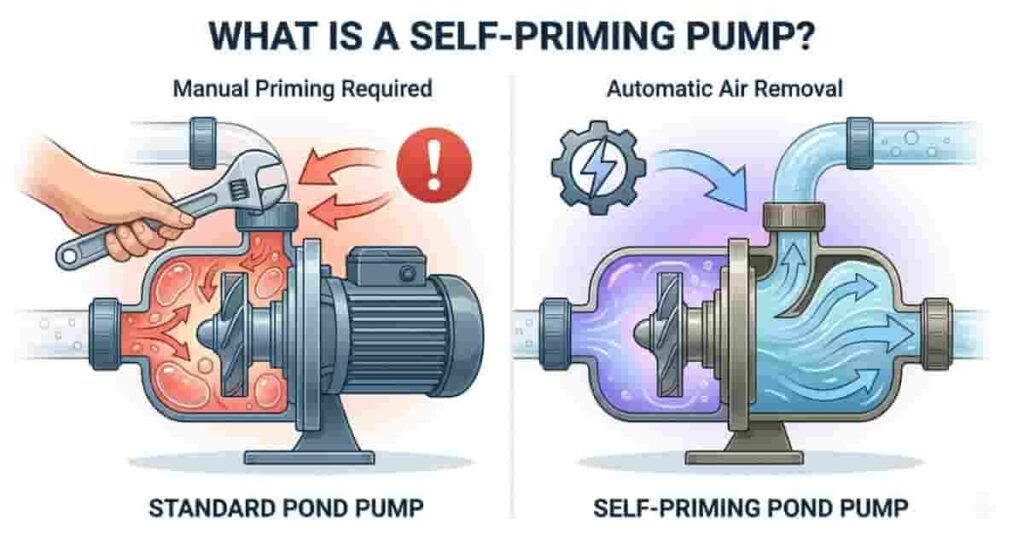
A self-priming pond pump is designed to remove air from the system automatically. Unlike a standard priming pond pump, it does not need manual filling every time you start it.
This type of pump can clear air pockets on its own. It pulls water into the chamber and restores suction without extra steps. That means fewer interruptions and more consistent water flow.
For beginners, this is a big advantage. You don’t have to open the pump or refill it after every cleaning or restart. It saves time and reduces the chance of setup mistakes.
Key Benefits of Self-Priming Pumps
- Easier startup: The pump primes itself, so you can just switch it on.
- Less maintenance: No need to manually fill the chamber each time.
- Reliable performance: Maintains steady water flow with fewer issues.
- Great for large ponds: Ideal for koi ponds with complex filtration systems.
Self-priming pumps work especially well in external setups. They handle small air leaks better and keep the system running smoothly.
External Self-Priming Pond Pumps Explained
External systems are common in larger ponds, especially koi setups. An external self-priming pond pump sits outside the pond and pulls water through pipes. This setup keeps equipment accessible and easier to maintain.
These pumps are often part of a full filtration system. Water flows from the pond to the filters, then returns clean and oxygenated. Because the pump is outside, a proper priming pond pump setup becomes more important for steady performance.
Even though the pump can remove air automatically, plumbing still matters. Poor pipe layout or loose fittings can cause a pond pump not to prime. A well-designed system helps the pump hold its prime and run smoothly.
Why Proper Plumbing Matters
External pumps rely on sealed and efficient pipe systems. If air enters the line, it can reduce suction and slow water flow.
Keep pipe runs short and direct when possible. Avoid sharp bends that can trap air. Use high-quality fittings to prevent leaks.
A check valve is also helpful. It keeps water from flowing backward when the pump turns off.
What Is a Pond Pump Priming Pot
A pond pump priming pot is a small chamber installed before the pump in an external setup. It holds water near the pump intake, which helps the system stay primed and ready to run. This makes it easier for the pump to start without losing suction.
The priming pot acts like a water reservoir. It keeps the pump chamber filled and reduces the chance of air entering the system. This is very useful for preventing a pond pump from not priming, especially in larger or more complex pond setups.
It also works as a basic debris trap. Leaves, dirt, and small particles get collected in the pot before they reach the pump. This protects the pump and improves long-term performance.
When You Should Use a Priming Pot
Priming pots are not needed for every pond, but they are very helpful in specific setups:
- External pumps: They help maintain steady suction in above-ground systems.
- Large koi ponds: They require higher water flow and more demanding filtration.
- Long pipe systems: They reduce air buildup in extended plumbing lines.
Using a priming pot in these situations improves reliability and makes maintenance easier.
Tips to Prevent Pond Pump Priming Problems
Preventing priming pond pump issues is easier than fixing them later. Most problems occur due to air leaks, low water levels, or poor maintenance. With a few simple habits, you can keep your system running smoothly and avoid a pond pump that won’t prime.
These tips are especially helpful for beginners and koi pond owners who rely on steady water flow for filtration and oxygen.
Maintain Proper Pond Water Level
Keep your pond water level high enough to fully cover the pump intake. When the level drops, the pump can pull air instead of water.
Even a small drop can break suction and affect performance. Check water levels regularly, especially in hot weather.
Check Pipe Connections Regularly
Loose fittings are a common cause of air leaks. Air entering the system can stop the pump from priming properly.
Inspect all joints, clamps, and seals. Tighten or replace parts if you notice wear or gaps.
Clean Pump Intake and Filter
Debris buildup reduces water flow and makes it harder for the pump to stay primed. Leaves, algae, and dirt can quickly block the intake.
Clean the pump intake and filter regularly to maintain strong suction and steady flow.
Use a Priming Pot for External Pumps
A pond pump priming pot helps maintain water inside the system. It reduces air buildup and supports stable suction in external setups.
This is especially useful for large koi ponds or long pipe systems where air pockets are more common.
Pro Tips
- Create a weekly maintenance routine for your pond system.
- Use hose clamps to secure all external connections.
- Restart and re-prime the pump after every deep cleaning.
Quick Troubleshooting Checklist
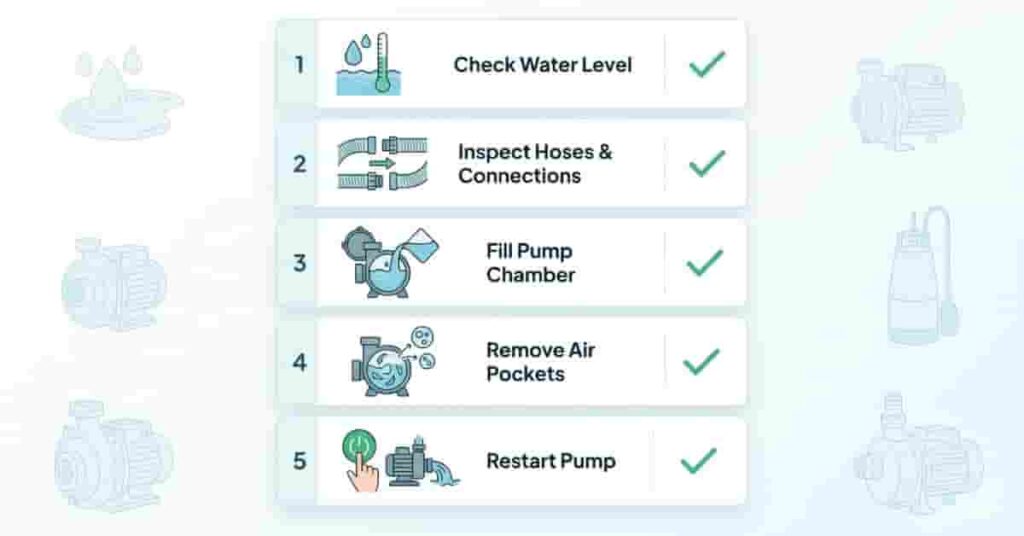
If your priming pond pump stops working, you don’t always need a full repair. Most pond pump not priming issues can be fixed with a quick check. Use this checklist to find the problem fast and restore water flow.
Check Water Level
Start with the pond water level. If it is too low, the pump may pull in air instead of water. This breaks suction and stops proper flow. Always keep the intake fully covered.
Inspect Hoses and Pipes
Look at all connections, hoses, and fittings. Even a small gap can let air enter the system. Tighten loose parts and replace worn seals if needed.
Fill Pump Housing with Water
Open the pump chamber and refill it completely with clean water. This step removes trapped air and helps the pump regain suction.
Remove Trapped Air
Check for air bubbles in pipes or tubing. Gently adjust hoses to release air pockets. Long or bent pipes often trap air inside the system.
Restart Pump
Once everything is checked, turn the pump back on. Watch the water flow closely. If needed, repeat the priming process once more.
Conclusion
A pond pump must be properly primed to move water and keep your system running smoothly. In this guide, we covered what priming means, why pumps lose suction, and how to fix common issues step by step.
Proper priming pond pump practice is the key to avoiding weak flow, airlocks, and sudden pump failure. Most problems come from simple issues like trapped air or low water levels. With the right checks, you can quickly restore performance. Using a self-priming pond pump or a priming pot can also reduce future maintenance and improve reliability.
If this guide helped you fix your pump, share it with other pond owners or leave a comment with your experience. You can also explore more pond care guides to keep your water system healthy and stress-free.

Michael Brooks and Sarah Lane are the co-founders of the Pond Pump Team, a trusted U.S.-based group helping homeowners and landscapers build better ponds and water features. Michael, an experienced pond engineer from Oregon, has worked for over 12 years on pump sizing, flow systems, and water circulation. Sarah, a pond designer from Colorado with nine years of experience, focuses on eco-friendly and easy-to-maintain pond and waterfall designs. Together, they’ve completed more than 180 pond projects and created tools like the Pond Pump Calculator and Pond Liner Calculator to make pond planning simple, accurate, and sustainable.
Need help with your pond setup? Contact the Pond Pump Team for expert advice and reliable solutions.