Introduction
Ever wondered how many fish your pond can safely hold without harming water quality? A pond fish stocking calculator helps you quickly estimate the safe number of fish per gallon. Many beginners in the USA struggle with overstocking koi and goldfish ponds. Small mistakes can quickly affect oxygen levels and overall pond health.
Overstocking increases ammonia levels, reduces oxygen, and promotes algae growth in small ponds. Koi, goldfish, and mixed ponds all need different stocking levels to stay healthy. A fish-per-gallon pond calculator provides a simple starting point, but filtration also matters.
In this guide, you will learn how to use a pond fish stocking calculator step by step. We will also explain safe stocking rules for koi, goldfish, and mixed ponds using a koi pond stocking calculator. By the end, you can confidently plan a healthy pond without overstocking issues.
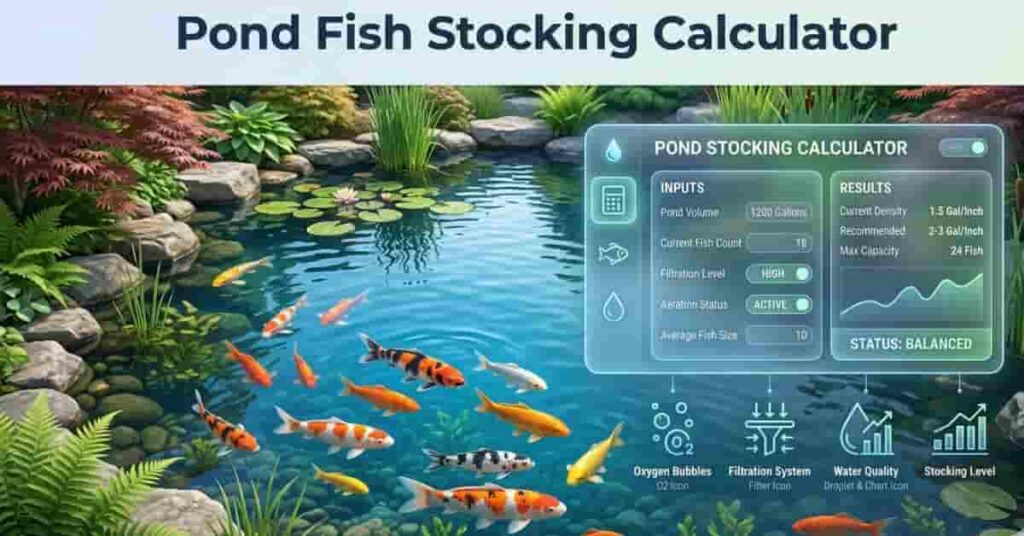
🐟 Use our Pond Fish Stocking Calculator to instantly determine how many fish your pond can safely support.
Why Proper Fish Stocking Matters
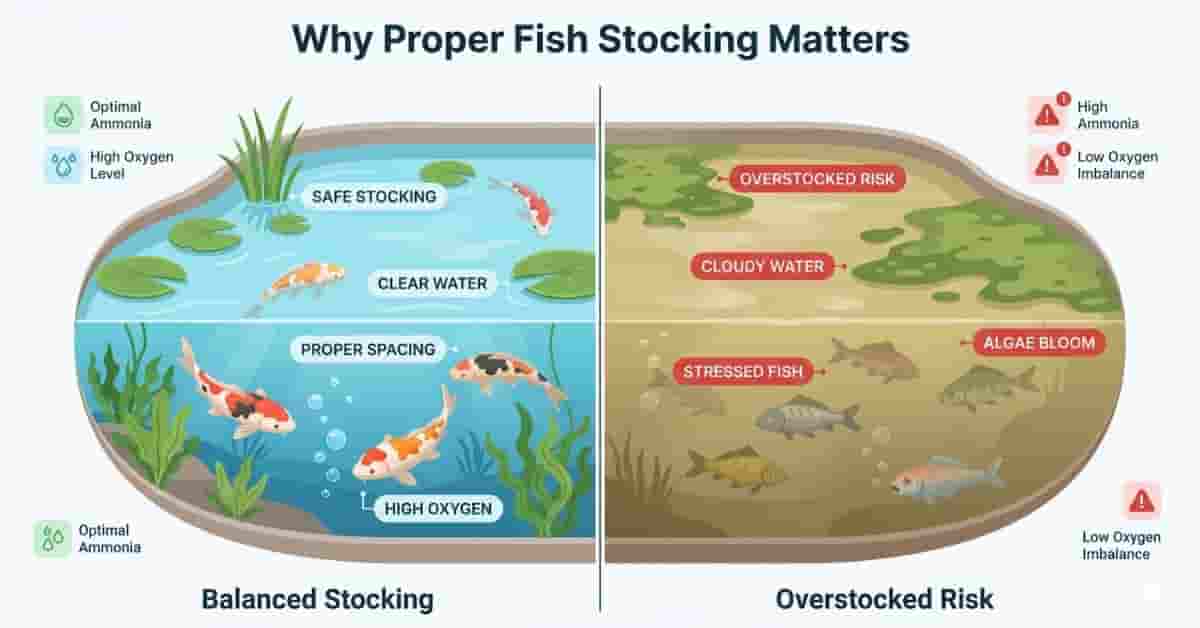
Proper fish stocking keeps your pond healthy and stable. A pond fish stocking calculator helps you avoid common mistakes that lead to poor water conditions. Many beginners in the USA add too many fish too quickly. This often damages water balance and creates long-term problems.
Overstocking is one of the biggest issues in small and medium-sized ponds. It causes ammonia levels to rise rapidly, harming fish health. Even a well-maintained pond fish load calculator will show limits for safe stocking levels. When fish waste increases, beneficial bacteria cannot keep up with the breakdown.
Low oxygen levels also occur when too many fish live in a single space. Fish struggle to breathe, especially in warm weather. A safe fish-stocking pond setup always includes sufficient surface movement and aeration. Without this balance, fish become weak and stressed.
Algae growth also increases in overstocked ponds. Extra nutrients from waste feed algae blooms. This makes water cloudy and harder to maintain. It also reduces visibility and affects pond beauty.
Fish stress is another serious problem. Stressed fish eat less and grow poorly. They also become more likely to catch diseases. Poor filtration performance adds more pressure to the system. Filters clog faster and lose efficiency.
Maintenance costs also rise when stock levels are not planned. You spend more time cleaning and fixing water issues. A balanced pond reduces effort and saves money over time.
What Determines Safe Fish Capacity?
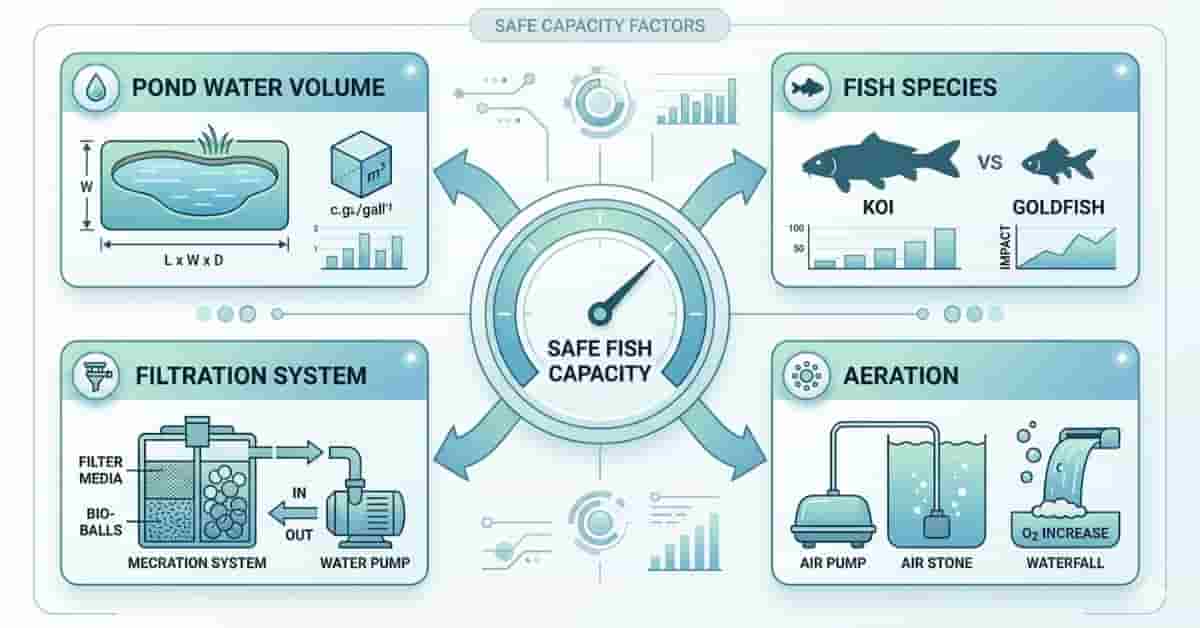
Safe fish capacity is not only about pond size. A pond fish stocking calculator considers several real-world factors that affect water balance. Beginners in the USA often assume bigger ponds can always hold more fish. In reality, fish health depends on water quality, filtration strength, and oxygen levels. A properly stocked pond helps you avoid overloading your ecosystem.
Stocking decisions must also account for waste production and long-term growth. Fish grow, produce waste, and consume oxygen daily. This is why a koi pond stocking calculator gives more accurate results than simple guessing. Let’s break down the key factors that control safe stocking levels.
Pond Water Volume
Pond water volume is the starting point for any stocking decision. More gallons usually mean more stable water conditions. However, accuracy matters because even small measurement errors can affect results. Always measure length, width, and depth carefully before estimating.
A pond fish stocking calculator relies heavily on correct water volume input. If you overestimate the number of gallons, you may add too many fish. This leads to poor water quality and stress for your pond life. For best results, first calculate the volume of your pond using our fish pond volume calculator.
Fish Species
Fish species play a major role in stocking limits. Different fish produce different levels of waste and require different amounts of space.
Goldfish are beginner-friendly and produce a lower biological load. They are easier to maintain and tolerate smaller ponds better. Koi, however, grow large and produce significantly more waste. This is why koi ponds need more space per fish.
Mixed ponds require careful balancing of both species types. A fish stocking calculator pond approach helps adjust for different biological loads. Using a koi pond stocking calculator yields more accurate results when koi are included.
Fish Size and Growth
Fish size is just as important as species type. Small fish may seem harmless, but they grow quickly in a healthy pond. Juvenile stocking often leads to overcrowding if long-term growth is ignored.
A smart pond fish stocking calculator always considers adult fish size. Planning for future growth helps prevent sudden water quality issues. Long-term thinking keeps your pond stable and reduces fish stress.
Filtration System Quality
Filtration determines how much waste your pond can handle. Basic filters only support light fish loads. Moderate systems improve water clarity but still have limits. Advanced biological filtration allows higher stocking safely.
Better filtration directly increases safe stocking density. However, even strong systems need proper maintenance. A pond fish load calculator always assumes filtration quality as a key factor. Without it, even a large pond can become unstable.
Pond Aeration
Aeration controls oxygen levels in your pond. Air pumps, waterfalls, and fountains all help increase oxygen exchange. More oxygen supports more fish, but only within safe limits.
Poor aeration leads to fish stress, especially during hot weather. A balanced system improves fish activity and reduces disease risk. A pond fish stocking calculator includes aeration as a critical adjustment factor.
A 500-gallon pond owner added koi based only on size. Within weeks, ammonia levels rose, and fish became stressed. After upgrading filtration and reducing fish load, the pond stabilized. This shows why a pond fish stocking calculator is essential before adding fish, not after.
General Fish Per Gallon Guidelines
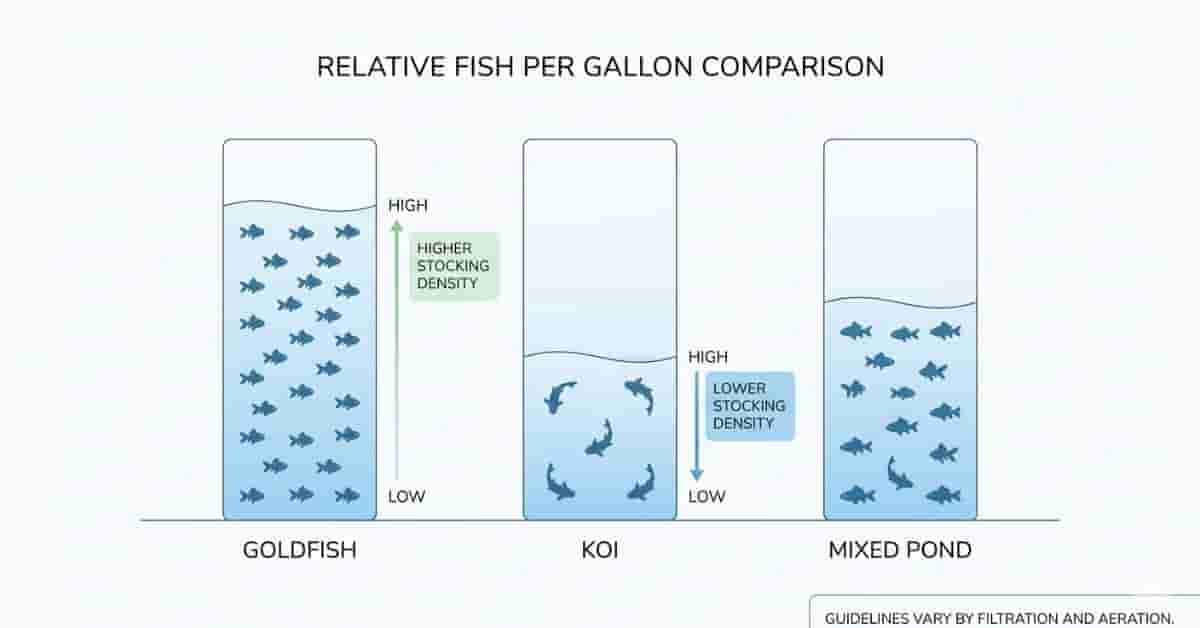
Fish-per-gallon rules give beginners a simple starting point for planning a healthy pond. A pond fish stocking calculator helps turn these rough guidelines into safer estimates based on real conditions. However, these are not strict rules. Every pond behaves differently depending on filtration, aeration, and fish size.
A fish-per-gallon pond calculator is most useful when you are just starting out. It prevents extreme overstocking and helps you understand safe limits. Still, the real capacity always depends on water quality management and long-term care.
Goldfish Pond Guidelines
Goldfish are one of the easiest fish to keep in backyard ponds. They produce less waste than koi, making them more forgiving for beginners. A general guideline is to allow more fish per gallon compared to larger species.
However, this depends heavily on filtration strength and feeding habits. Overfeeding can quickly increase waste levels and reduce water quality. A koi pond stocking calculator is not usually required for goldfish-only ponds, but stocking balance still matters.
Goldfish also grow over time, so beginners often underestimate their adult size. A pond fish stocking calculator helps prevent overcrowding by considering future growth, not just current size. Stable oxygen levels and regular maintenance keep goldfish ponds healthy in the long term.
Koi Pond Guidelines
Koi are much larger and produce significantly more waste than goldfish. Because of this, koi ponds need far more space per fish. Safe stocking ranges are lower, especially in smaller ponds.
A koi pond stocking calculator is especially useful here because koi growth can quickly exceed expectations. Juvenile koi may look small, but they grow into large, high-waste fish over time.
Filtration and aeration become critical in koi ponds. Without strong biological filtration, water quality drops quickly. A fish stocking calculator pond approach always recommends conservative stocking for koi to ensure long-term stability and fish health.
Mixed Pond Guidelines
Mixed ponds contain both koi and goldfish, which makes stocking more complex. You cannot treat all fish equally because their waste levels differ. Koi have a much higher biological load than goldfish.
A pond fish stocking calculator adjusts for these differences by balancing species impact. Beginners should always stock lightly in mixed ponds to avoid water imbalance.
Good planning ensures both species thrive together. A fish-per-gallon pond calculator can provide a baseline, but real success depends on filtration strength, aeration, and regular water testing. Balanced stocking always performs better than maximum capacity thinking.
Important Note
These guidelines should never be treated as fixed rules. Actual stocking depends on filtration quality, fish size, feeding habits, and maintenance routine. A pond fish stocking calculator gives estimates, not exact limits.
Every pond is unique, so monitoring water quality is essential for long-term success.
Pond Fish Stocking Formula Explained
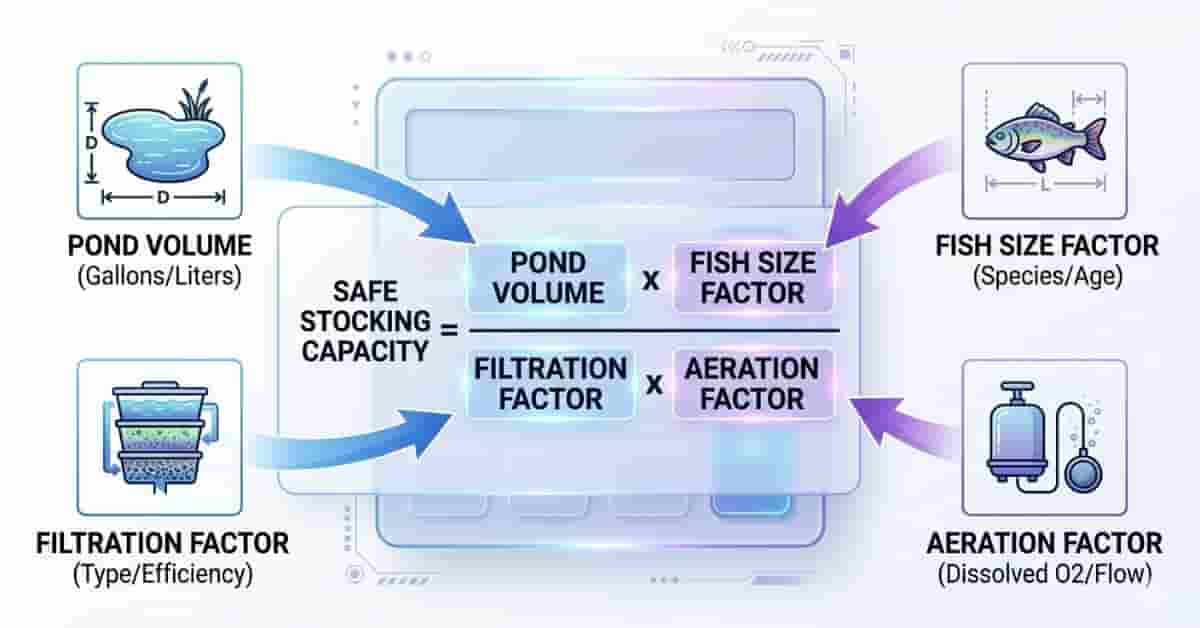
Fish stocking calculators estimate safe fish capacity using multiple pond factors, not just pond size. A pond fish stocking calculator combines water volume, fish type, filtration strength, and oxygen levels to give a realistic estimate. This helps beginners avoid overstocking and maintain a stable pond ecosystem.
Fish Stocking Formula
Fish Capacity = Pond Volume ÷ ( Gallons Per Fish × Size Factor × Filtration Factor × Aeration Factor )
This formula gives a more realistic result than simple fish-per-gallon rules. Each factor adjusts the final capacity based on real pond conditions. When you understand each part, you can better control your pond fish load calculator results and avoid common stocking mistakes.
Pond volume is the base of the calculation. It represents total water in gallons. A larger pond usually supports more fish, but only if other conditions stay balanced. Even a big pond can become unstable if filtration or oxygen levels are weak.
Gallons per fish sets the biological load for each species. Koi require more gallons per fish because they grow large and produce more waste. Goldfish need less space, but they still require proper balance to avoid stress and poor water quality.
The size factor adjusts for fish growth stage. Juvenile fish seem small, but they grow quickly. This factor prevents overstocking when fish reach adult size. A koi pond stocking calculator always includes this adjustment for long-term planning.
The filtration factor measures how well your system processes waste. Strong biological filtration breaks down ammonia and keeps water clean. Weak filters reduce safe stocking capacity, even in large ponds.
The aeration factor controls oxygen levels in the water. Good oxygen exchange supports more fish activity and reduces stress. Air pumps and waterfalls improve this factor and increase overall pond stability.
Together, these factors help a fish stocking calculator pond system estimate safe limits more accurately. Instead of guessing, you get a balanced, sustainable stocking plan that protects fish health in the long term.
How to Use Our Pond Fish Stocking Calculator
Using a pond fish stocking calculator is simple and helps you avoid overstocking mistakes. It gives beginners a clear way to understand how many fish their pond can safely support. Instead of guessing, you enter a few basic pond details and get a safer estimate instantly. A fish stocking calculator pond setup is especially useful for koi and mixed ponds where fish load can change quickly.
Follow these steps carefully to get accurate results.
Step 1: Enter Pond Volume
Start by entering your pond’s total water volume in gallons. This is the most important input because it sets the base capacity. Measure length, width, and average depth for accuracy. An incorrect estimate here can affect the entire calculation.
Step 2: Choose Fish Species
Select the type of fish you plan to keep. Goldfish and koi have different waste levels and space needs. A koi pond stocking calculator adjusts capacity more strictly because koi produce more waste than goldfish.
Step 3: Select Fish Size
Choose whether your fish are small, medium, or large. Juvenile fish grow quickly, so size selection affects long-term stocking safety. A pond fish stocking calculator always considers adult growth, not just current size.
Step 4: Choose Filtration Level
Pick your filtration strength based on your setup. Basic, moderate, or advanced filtration changes how much waste your pond can handle. Stronger filtration allows safer stocking density.
Step 5: Add Aeration Information
Select your aeration system type, such as an air pump or a waterfall. Good oxygen levels improve fish health and increase safe stocking capacity. Poor aeration lowers the number of fish your pond can support.
Step 6: Review Safe Fish Count Results
Check the final recommended fish capacity. This result combines all inputs into a safe estimate. Always treat it as a guideline, not a fixed limit.
🐟 Try our Pond Fish Stocking Calculator now for instant fish capacity estimates and safer pond planning.
Signs Your Pond Is Overstocked
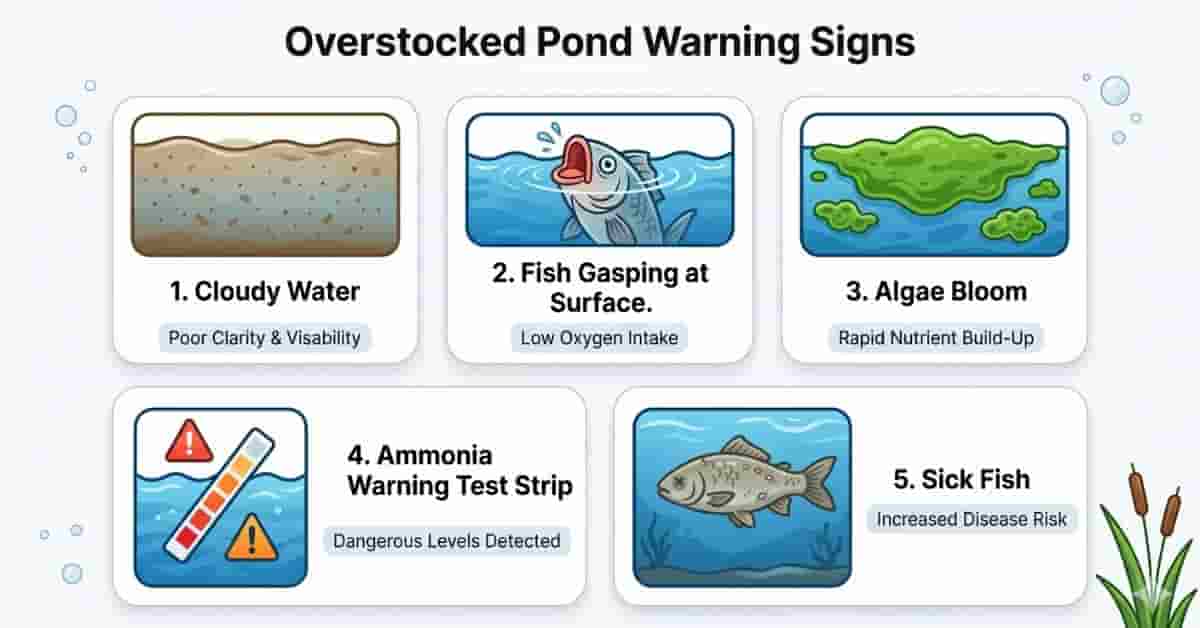
Overstocking is one of the fastest ways to damage pond health. A pond fish stocking calculator helps you avoid these issues before they start. When fish numbers exceed safe levels, water quality declines rapidly. Beginners often miss early warning signs until the problem becomes serious.
Cloudy or Green Water
Cloudy or green water is often the first sign of imbalance. Excess fish waste increases nutrients in the water. This feeds algae and reduces clarity. A fish stocking calculator pond setup helps prevent this by keeping fish levels within safe limits. Poor filtration makes this problem even worse over time.
Fish Gasping at Surface
Fish gasping at the surface usually means low oxygen levels. Overstocked ponds use oxygen faster than it can be replaced. Warm weather makes this worse. A pond fish load calculator helps you understand when oxygen demand becomes too high. Without correction, fish stress increases quickly.
High Ammonia Levels
Ammonia builds up when fish waste exceeds the biological filtration capacity. Even small increases can harm fish gills and health. A pond fish stocking calculator reduces this risk by balancing fish load with filtration strength. Regular water testing is important to catch ammonia early.
Rapid Algae Growth
Too many fish increase nutrients in the water, which fuels algae growth. This leads to green water and reduced oxygen levels. A koi pond stocking calculator often highlights this risk in koi-heavy ponds. Controlling fish numbers helps stabilize algae naturally.
Frequent Fish Disease
Overcrowded ponds spread bacteria and parasites faster. Stress weakens fish’s immune systems, making them more vulnerable. A safe fish stocking pond setup reduces disease outbreaks by improving water stability. Healthy spacing gives fish room to recover and grow.
Poor Fish Growth
Fish in overstocked ponds often stop growing properly. Limited oxygen and competition for food slow development. A pond fish stocking calculator helps ensure proper spacing for long-term growth. Balanced ponds always produce healthier, larger fish.
How to Safely Increase Pond Fish Capacity
Increasing pond capacity is possible, but only after you improve the ecosystem. A pond fish stocking calculator helps you understand your current safe limit, but upgrades can slowly expand that limit. Beginners in the USA often add too much fish too quickly, which can lead to stress and water quality problems. The goal is to increase stability first, then gradually increase fish load.
Upgrade Filtration
A stronger filtration system is the most effective way to increase safe fish capacity. Biological filtration breaks down waste and helps control ammonia levels. If your current filter struggles, even a larger pond fish stocking calculator result will not be safe in real conditions.
Upgrading to a multi-stage or bio-media system improves water clarity and stability. This allows your pond to handle more fish without harming water quality. Always clean filters regularly to maintain performance.
Improve Aeration
Aeration increases oxygen levels, which directly supports more fish. Air pumps, waterfalls, and fountains help circulate water and improve gas exchange. Low oxygen is one of the main limits in overstocked ponds.
A pond fish load calculator often includes aeration as a key factor. Better oxygen levels reduce fish stress and improve feeding behavior. This creates a healthier environment for gradual increases in stocking.
Add Aquatic Plants
Aquatic plants naturally absorb nutrients and reduce algae growth. They also improve oxygen levels during daylight hours. This helps balance the waste produced by fish.
Plants like water lilies and submerged oxygenators create a more stable ecosystem. A fish stocking calculator pond setup becomes more reliable when plants support natural filtration. However, plants should complement filtration, not replace it.
Perform Regular Water Changes
Water changes remove excess nutrients and dilute harmful compounds. This helps maintain stable ammonia and nitrate levels. Even small weekly changes can significantly improve pond health.
A koi pond stocking calculator assumes good maintenance practices. Without water changes, even a properly stocked pond can become unstable over time. Consistency is more important than large, occasional changes.
Avoid Overfeeding
Overfeeding is one of the most common mistakes in pond care. Extra food breaks down into waste and increases ammonia levels. This reduces safe stocking capacity over time.
Feed only what fish can consume in a few minutes. This keeps the ecosystem balanced and reduces filter load. A pond fish stocking calculator works best when feeding habits are controlled.
Pro Tips
A pond owner in the USA doubled fish capacity after upgrading filtration and adding aeration. However, they saw improvement only after reducing feeding and adding plants. This shows that multiple small improvements are more effective than a single big change for increasing pond capacity.
Example Fish Stocking Scenarios
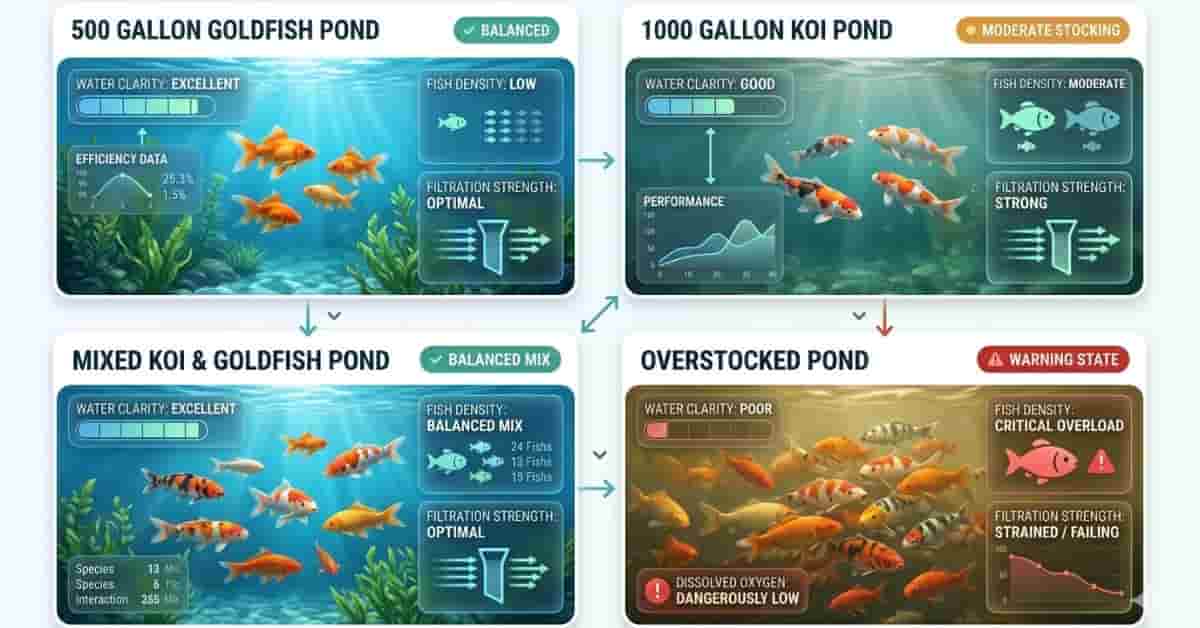
Real examples make it easier to understand how a pond fish stocking calculator works in practice. Every pond behaves differently based on filtration, aeration, and fish size. These scenarios show safe starting points and common mistakes. Beginners in the USA can use them as a practical guide before adding fish.
500 Gallon Goldfish Pond
A 500-gallon goldfish pond is a great beginner setup. Goldfish produce moderate waste, so stocking must stay light. In this size pond, a conservative approach keeps water stable and reduces maintenance issues.
A fish stocking calculator pond result for this setup usually recommends a small group of goldfish with proper filtration. Avoid adding too many at once, even if the fish look small. Goldfish grow quickly, and their waste output increases over time.
Good aeration and weekly maintenance help keep the water clear. Plants can also improve stability by reducing nutrients. This setup works best when stocking is gradual rather than instant.
1000 Gallon Koi Pond
A 1000-gallon koi pond requires more careful planning. Koi are large, active fish that produce high levels of waste. Even with moderate filtration, stocking must remain conservative.
A koi pond stocking calculator typically recommends fewer koi than beginners expect. Juvenile koi may seem small, but they grow significantly over time. Planning for adult size is essential to avoid future overstocking.
Strong biological filtration and aeration are important in this setup. Regular water changes help maintain stable conditions. This pond size works best for slow, gradual stocking over time.
Mixed Pond Example
A mixed pond contains both koi and goldfish, which creates an unbalanced waste load. Koi contribute much more to biological waste than goldfish. This makes stocking calculations more complex.
A pond fish stocking calculator adjusts for species differences, but beginners should always stock lightly. Mixing species requires strong filtration and careful monitoring.
Balanced feeding and good oxygen levels help both fish types coexist. A fish-per-gallon pond calculator can only provide a starting estimate. Real success depends on system stability.
Overstocked Pond Example
An overstocked pond often looks fine at first, but it quickly becomes unstable. Fish may appear active, but water quality declines behind the scenes. Ammonia rises, oxygen drops, and algae spreads rapidly.
A pond fish load calculator would clearly show excess capacity in this case. Common correction steps include removing fish, upgrading filtration, and increasing aeration. Reducing feeding is also important to restore balance.
Recovery takes time, but early action prevents long-term damage. This example shows why proper planning matters before adding fish.
Common Fish Stocking Mistakes
Many pond problems come from simple stocking mistakes. A pond fish stocking calculator helps you avoid guesswork and plan safely from the start. Beginners in the USA often focus only on how a pond looks, not how it functions. This leads to long-term water quality issues, fish stress, and higher maintenance costs.
Understanding these mistakes helps you build a stable pond ecosystem. A fish-stocking calculator pond setup gives structure, but proper care keeps it healthy.
Adding Too Many Small Fish
Small fish look harmless, so beginners often add too many at once. The problem starts when all these fish grow and increase waste levels. This quickly overloads the pond system.
A pond fish stocking calculator always assumes future growth, not just current size. Adding slowly is safer than filling the pond quickly. Overcrowding early leads to long-term imbalance.
Ignoring Adult Fish Size
One of the biggest mistakes is ignoring how large fish will grow. Juvenile koi or goldfish may seem small, but they change dramatically over time. This creates hidden overstocking.
A koi pond stocking calculator includes adult size estimates for this reason. Planning for long-term growth keeps your pond stable and reduces future fish removal needs.
Weak Filtration Systems
A weak filtration system cannot handle waste from even a small number of fish. Many beginners rely on basic filters that are not designed for heavy biological load.
A pond fish load calculator assumes proper filtration is in place. Without it, even safe stocking levels become risky. Upgrading filtration early prevents long-term water problems.
Not Monitoring Water Quality
Failing to test water is a major mistake in pond care. Ammonia, nitrite, and oxygen levels change quickly in stocked ponds. Without monitoring, problems appear too late.
A pond fish stocking calculator helps plan capacity, but testing confirms real conditions. Regular checks ensure fish remain healthy and stress-free.
Overstocking Based on Appearance Alone
Many ponds look fine even when they are overstocked. Clear water does not always mean healthy water. Hidden waste buildup can still harm fish.
A fish-per-gallon pond calculator provides a more accurate measure than visual judgment. Proper stocking decisions should always rely on data, not appearance.
Conclusion
This guide explained how fish stocking works and why balance matters in every pond. You learned how pond size, fish species, filtration, and aeration all affect safe stocking levels. Proper planning always leads to healthier water and happier fish.
A pond fish stocking calculator makes this process much easier for beginners. It removes guesswork and helps you avoid overstocking mistakes that harm water quality. Whether you keep koi, goldfish, or a mixed pond, smart planning is the key to long-term success.
Safe stocking builds a stable ecosystem and reduces maintenance problems. A koi pond stocking calculator, or fish per gallon pond calculator, is only useful when paired with good care practices.
🐟 Share your pond setup or questions in the comments. Explore more guides on our site to improve your pond care knowledge and build a healthier aquatic environment.
Michael Brooks and Sarah Lane are the co-founders of the Pond Pump Team, a trusted U.S.-based group helping homeowners and landscapers build better ponds and water features. Michael, an experienced pond engineer from Oregon, has worked for over 12 years on pump sizing, flow systems, and water circulation. Sarah, a pond designer from Colorado with nine years of experience, focuses on eco-friendly and easy-to-maintain pond and waterfall designs. Together, they’ve completed more than 180 pond projects and created tools like the Pond Pump Calculator and Pond Liner Calculator to make pond planning simple, accurate, and sustainable.
Need help with your pond setup? Contact the Pond Pump Team for expert advice and reliable solutions.