Introduction
Ever wondered if adding salt to your koi pond is helping your fish—or slowly stressing them out?
When learning how much salt to use in a koi pond, beginners often struggle with the safe dosage and the correct PPM balance. For many pond owners in the USA, koi pond salinity levels can feel confusing, especially when starting out. Even small mistakes in salt concentration can affect fish health, water clarity, and beneficial bacteria in the pond.
Too little salt may be ineffective for support, while too much can stress fish and disrupt filtration systems. In this guide, you will learn the ideal salt percentage, PPM chart, and safe dosing methods step by step. We also break down how pond volume changes dosage and how to measure salt accurately without guesswork.
A simple calculator is included to help you find the exact amount of salt in seconds. If you have not chosen a salt product yet, see our guide to the Best Pond Salt for Koi Ponds to compare safe options before calculating your dosage.
What Is the Ideal Salt Level for a Koi Pond?
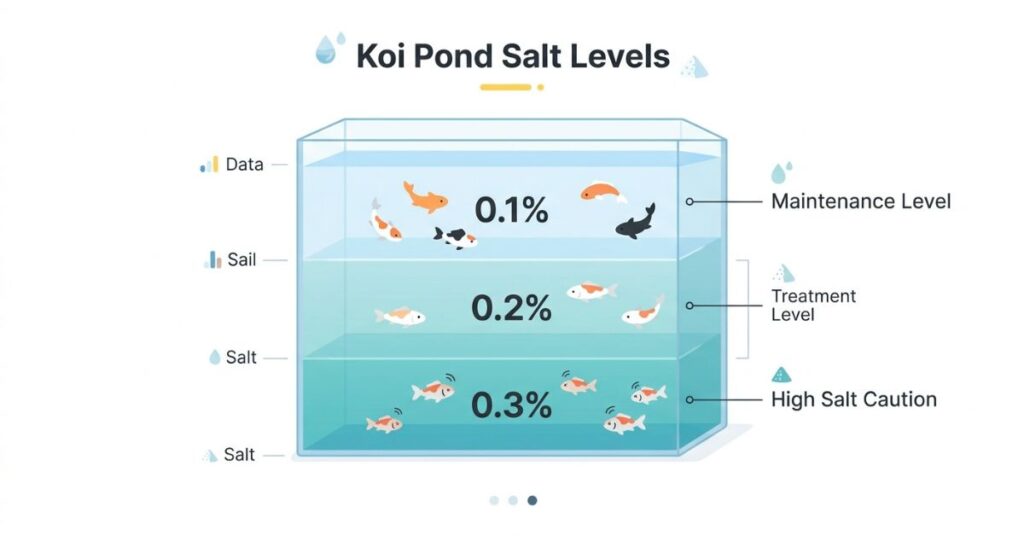
The ideal salt level for a koi pond depends on how you use salt and the condition of your fish. Most pond owners use salt in very small, controlled amounts to support koi health. The koi pond salinity level is usually kept low because koi do best in stable freshwater conditions.
For general care, salt works as a supportive tool, not a constant treatment. Many beginners in the USA overuse salt, thinking it fixes all problems. In reality, safe dosing matters more than high levels. Salt concentration is usually measured in percentage or PPM, and even small changes can affect fish behavior and filtration balance.
In most cases, koi ponds stay between maintenance and mild support levels. You only increase salt levels when fish show signs of stress or during short-term treatments. The goal is always stability, not constant salt use.
Normal Koi Pond Salt Levels
Normal koi pond salt level for maintenance stays very low. Most pond keepers use around 0.1% or less in routine conditions. This level helps reduce minor stress without harming plants or beneficial bacteria.
At this stage, salt acts more like a gentle support tool. It does not treat diseases or heavy infections. Instead, it helps koi adjust more easily to temperature changes or transport stress.
Salt Levels Used for Treatment
For short-term treatment, pond owners may slightly increase salt levels. Common treatment ranges are around 0.2%. This level is used when fish show mild stress, parasite pressure, or after handling.
Salt treatment should never be long-term. You must monitor fish closely during this stage. Always reduce salt back to maintenance levels once symptoms improve.
When Higher Salt Levels May Be Used
Higher salt levels around 0.3% are used only in controlled, short-term situations. This is usually for stronger stress recovery or serious external parasite issues.
At this level, careful monitoring becomes essential. Oxygen levels, filtration, and water testing must stay stable. Never use high salt levels continuously, as it can harm the biofilter’s health over time.
Koi Pond Salt Percentage Explained
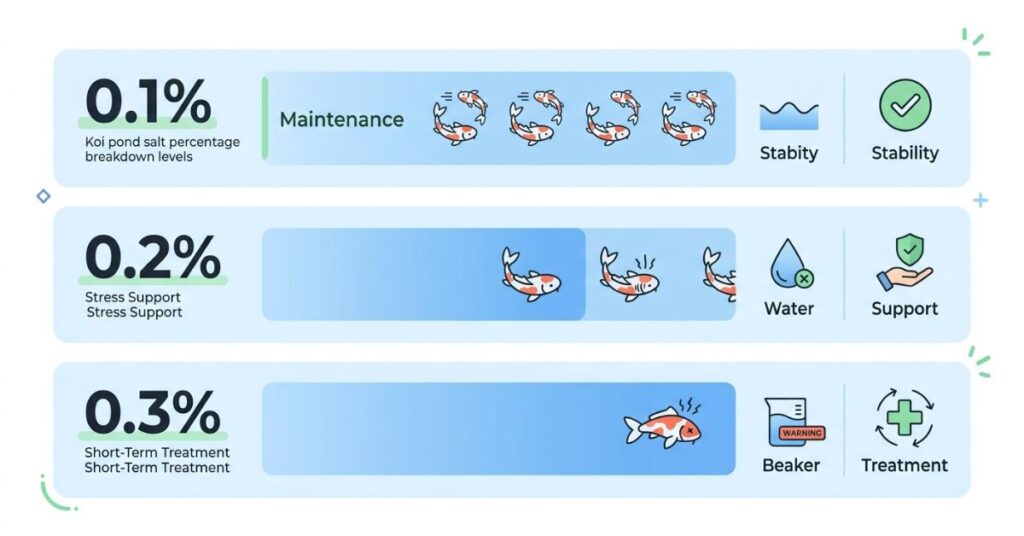
The koi pond salt percentage indicates how much salt is dissolved in the pond water. It helps you control fish health support without guessing. Even small percentage changes can affect koi stress levels, so accuracy matters.
Most koi ponds use three main levels: 0.1%, 0.2%, and 0.3%. Each level serves a different purpose, from light maintenance to short-term treatment. Beginners in the USA often overestimate how much salt they need, which can harm water balance and biological filtration.
At 0.1%, salt remains very gentle and primarily supports fish under mild stress. At 0.2%, it works as a short-term support during health issues. At 0.3%, it becomes a stronger treatment level and needs careful monitoring.
Always match the salt percentage to pond conditions, not guesswork. Stable water testing is key before adjusting any level.
Is 0.1% Salt Enough?
Yes, 0.1% salt is enough for basic maintenance in most koi ponds. It helps reduce minor stress from temperature changes or transport.
This level keeps water safe for fish, plants, and beneficial bacteria. It does not treat the disease but supports overall stability.
Many pond keepers prefer to stay at this level when no health issues arise. It is the safest long-term option for beginners.
When to Use 0.2% Salt
Use 0.2% salt when koi show mild stress or after handling. It also helps during short recovery periods.
This level provides stronger support without pushing fish into high-salinity stress. However, you should monitor water quality closely.
Do not keep this level long-term. Once the fish improve, reduce the salt to 0.1% or to freshwater conditions.
When 0.3% Salt May Be Appropriate
0.3% salt is used only for short-term treatment situations. It may help during periods of stronger external parasite pressure or for recovery support.
At this level, oxygen and filtration must stay stable. Fish should be observed frequently for signs of stress.
Avoid using 0.3% continuously. Always return to lower levels once the treatment goal is complete.
Koi Pond Salt PPM Chart
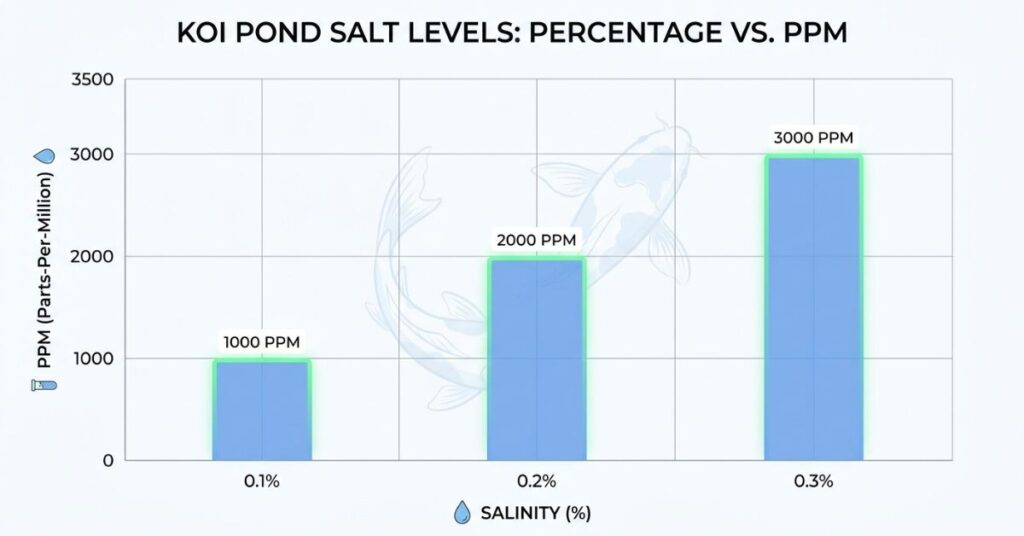
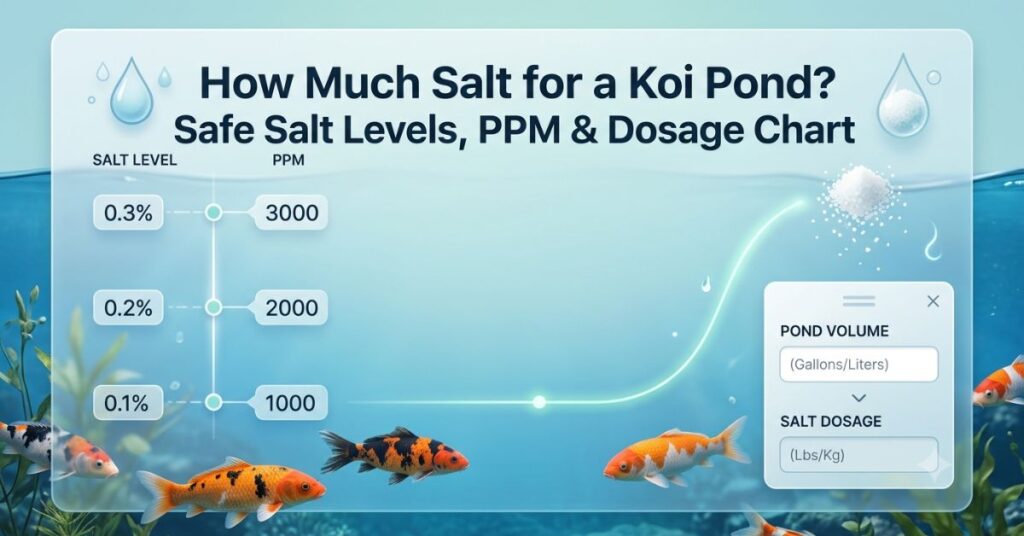
The koi pond salt ppm chart helps you understand how salt percentage converts into real water concentration. This matters because koi health depends more on PPM (parts per million) than simple percentages. Many beginners in the USA find percentages confusing, but PPM makes dosing easier to measure and control.
In simple terms, a higher salt percentage means higher PPM in your pond water. For koi ponds, small changes can significantly impact fish stress levels, so accurate measurement is important. Most pond keepers use 0.1% to 0.3% salt, depending on whether they are maintaining water quality or supporting fish recovery.
At 0.1%, salt stays mild and supports daily stability. At 0.2%, it offers moderate support during stress. At 0.3%, it becomes a short-term treatment level and requires careful monitoring.
Below is a simple koi pond salt ppm chart to help you convert values quickly and avoid guesswork.
Normal Interpretation of the PPM Chart
The chart shows how quickly salt concentration increases even with small percentage changes. At 0.1% (1000 ppm), water stays very safe for long-term koi care. This level supports fish during light stress and temperature shifts without disturbing the biofilter.
Most pond owners in the USA prefer to keep their ponds at this level under normal conditions. It maintains stability while keeping water safe for plants and bacteria. It also reduces the risk of overdosing, which is common among beginners.
What Higher PPM Levels Mean for Your Pond
At 2000 ppm (0.2%), salt begins to act as a mild treatment. It helps koi recover from stress, handling, or minor health pressure. However, it should only be used for a limited time.
At 3000 ppm (0.3%), salt becomes a stronger support level. This range is only for short-term use under controlled conditions. Oxygen levels and water quality must be closely monitored during this stage.
Never keep koi at high PPM levels long-term. It can weaken biological filtration and create an imbalance in the pond ecosystem.
- Always measure pond volume before adding salt.
- Dissolve salt in a bucket before pouring it into the pond.
- Test the water after every adjustment to avoid overdosing.
- Reduce salt gradually, not all at once
- Maintain strong aeration when using higher PPM levels.
Using a high-quality pond salt product also helps ensure accurate dosing. See our recommendations for the Best Pond Salt for Koi Ponds before starting treatment.
How Much Salt Should I Add to My Koi Pond?
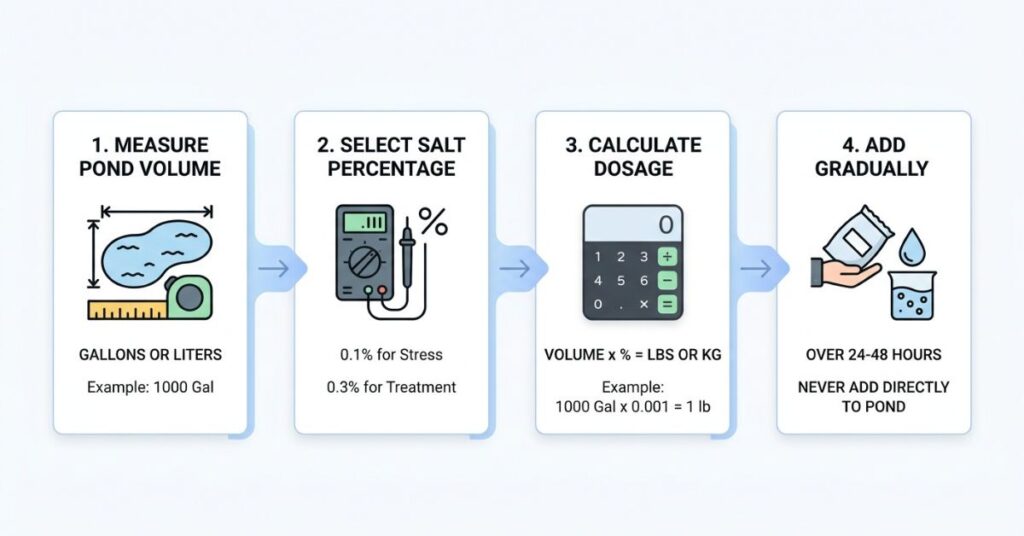
When asking how much salt to add to my koi pond, the answer depends on the pond’s size, target salinity, and fish condition. There is no fixed dose that fits every pond. You must calculate it based on water volume and the salt percentage you want.
Salt works best when added in the right amount. Too little gives no benefit, while too much can stress koi and damage the biological filter. That’s why accurate measurement matters more than guesswork.
Most koi ponds use salt levels of 0.1% to 0.3%. To reach this safely, you first calculate the pond volume, then convert your target percentage to the total salt weight. This simple process helps you avoid overdosing and keeps water stable.
Determine Pond Volume
Start by calculating your pond volume in gallons or liters. This is the most important step because every salt calculation depends on it.
Use length × width × average depth for rectangular ponds. For irregular ponds, divide into sections and estimate each part. Once you know the total water volume, you can accurately plan your salt dose.
Without correct volume, even small errors can lead to unsafe salt levels. Always measure carefully before adding anything.
Select Target Salinity
Next, choose your target salt level based on pond condition. For routine care, most koi ponds are set to 0.1%.
If fish show mild stress, you may increase to 0.2% for short-term support. For more severe issues, 0.3% may be used carefully under close monitoring.
Do not guess this step. Always match salinity to fish condition and water stability.
Calculate Salt Requirement
Now convert the percentage to an actual amount of salt. A simple rule helps beginners:
- 0.1% = 1 kg salt per 1000 liters (approx.)
- 0.2% = 2 kg per 1000 liters
- 0.3% = 3 kg per 1000 liters
These values scale with pond size. Multiply based on your total water volume.
For example, a larger pond needs proportionally more salt, but the percentage stays the same.
Add Salt Gradually
Never add salt all at once. Always dissolve it in a bucket first. Then add it slowly around the pond edges. This prevents sudden spikes in salinity and protects koi from shock. Good aeration helps distribute salt evenly.
Test the water after each addition. If levels are correct, stop immediately. Gradual dosing keeps your pond safe and stable.
How Much Salt for a 500 Gallon Koi Pond?
The amount of salt for a 500-gallon koi pond depends on your target salinity level. Most pond owners use 0.1% to 0.3% for safe koi care. You must choose the level based on whether you are doing maintenance or short-term treatment.
Small ponds react quickly to changes, so accuracy matters even more here. Always measure carefully before adding salt. Overdosing in a 500-gallon pond can raise salinity too fast and stress koi fish.
Example Calculation
For a 500-gallon koi pond, here is a simple breakdown:
- 0.1% (maintenance level): about 4.2 lbs of salt
- 0.2% (mild treatment): about 8.3 lbs of salt
- 0.3% (short-term support): about 12.5 lbs of salt
These values are approximate and depend on water conditions and evaporation. Always dissolve salt before adding it to avoid sudden spikes in concentration.
How Much Salt for a 1,000-Gallon Koi Pond?
A 1,000-gallon koi pond requires double the amount of salt compared to a 500-gallon pond. The same percentage rules apply, but total salt weight increases with volume.
This size is common in backyard ponds across the USA, so proper dosing is important for stable koi health and a balanced biofilter.
Example Calculation
For a 1,000-gallon koi pond:
- 0.1% (maintenance level): about 8.3 lbs of salt
- 0.2% (mild treatment): about 16.6 lbs of salt
- 0.3% (short-term support): about 25 lbs of salt
These values help maintain safe salinity without shocking fish. Always add salt gradually and monitor water quality after dosing.
How Much Salt for a 2,000-Gallon Koi Pond?
A 2,000-gallon koi pond needs careful planning because even small calculation errors can affect large water volumes. The same percentage system applies, but total salt increases significantly.
Larger ponds take longer to mix salt evenly, so good aeration is important during application.
Example Calculation
For a 2,000-gallon koi pond:
- 0.1% (maintenance level): about 16.6 lbs of salt
- 0.2% (mild treatment): about 33.2 lbs of salt
- 0.3% (short-term support): about 50 lbs of salt
These amounts are estimates and should always be verified with water testing. Add salt slowly to ensure even distribution and stable koi conditions.
Use Our Koi Pond Salt Calculator
Calculating salt manually can lead to mistakes, especially for beginners. A small error in pond volume or percentage can quickly change your koi pond salt level. That’s why using a calculator makes the process safer and more reliable. It removes guesswork and helps you stay within the correct koi pond salinity level every time.
Our koi pond salt calculator provides quick results based on your pond size and target salt percentage. It is designed to reduce human error and improve accuracy. Instead of doing the math manually, you simply enter your pond volume and choose your salt level. The tool instantly shows the exact amount of salt needed.
This approach also helps prevent overdosing, which is one of the most common mistakes in koi care. Too much salt can stress fish and affect beneficial bacteria. With a calculator, you can dose more precisely and protect the pond’s long-term balance.
Why Use the Calculator?
- Faster results: No manual calculations needed
- More accurate dosing: Reduces measurement errors
- Prevents overdosing: Keeps koi safe from stress
- Beginner-friendly: Simple and easy to use
Using a calculator is the safest way to manage salt in koi ponds, especially for new pond owners in the USA who want reliable results without confusion.
Signs Your Koi Pond Has Too Much Salt
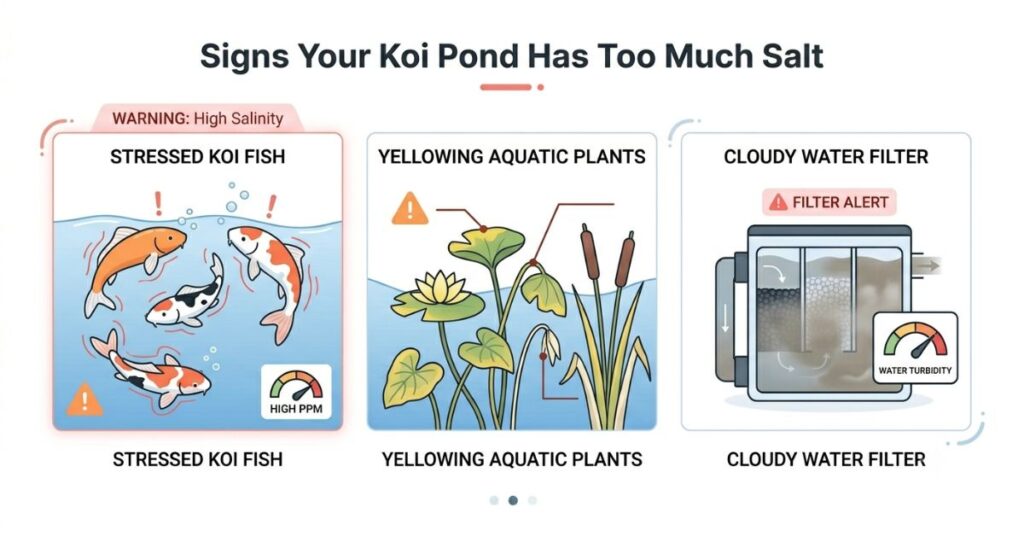
Too much salt in a koi pond can quickly disturb water balance and harm fish health. While koi pond salt levels are useful in small, controlled amounts, overdosing can stress koi and disrupt the entire ecosystem. Beginners often add extra salt, thinking it will help, but excess salinity does the opposite.
High salt concentration can reduce oxygen efficiency, disrupt beneficial bacteria, and create long-term filtration issues. That’s why regular testing is important, especially after adding salt or topping up water. Watch for early warning signs so you can correct the problem before it gets worse.
Fish Stress Symptoms
Koi fish show clear signs when salt levels become too high. You may notice unusual swimming patterns, such as gasping near the surface or moving less than normal.
Fish may also lose their appetite or stay isolated from the group. In some cases, their skin can look irritated or overly slimy. These symptoms usually appear quickly when salinity rises above safe levels, such as 0.3%.
If you see these signs, test the water immediately and gradually reduce salt levels with partial water changes.
Plant Damage
Aquatic plants are more sensitive to salt than fish. High salinity can cause leaves to turn yellow, wilt, or stop growing. Some plants may die if salt levels remain elevated for extended periods.
This is often one of the first visible signs of over-salting in a koi pond. A healthy plant’s decline should always trigger a water test. Keeping salt at maintenance levels helps protect both fish and aquatic plants.
Water Quality Issues
Excess salt can also affect biological filtration. Beneficial bacteria that break down waste may slow down or become less effective.
This leads to cloudy water, higher ammonia levels, and unstable pond conditions. You may also notice reduced water clarity over time.
If water quality drops after adding salt, it’s a strong sign that the pond has too much salt. Gradual dilution through water changes is the safest method of correction.
Signs Your Koi Pond May Need Salt
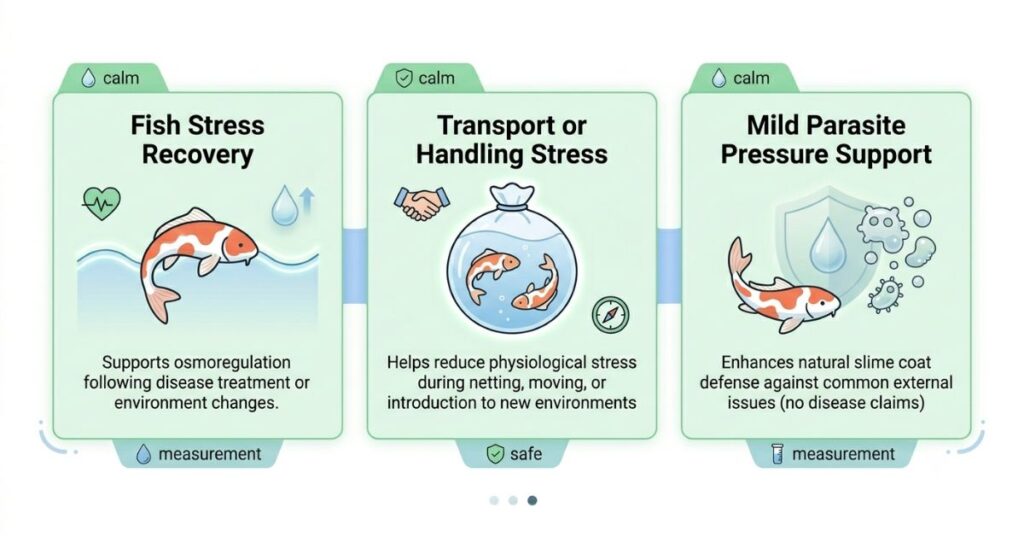
Knowing when to adjust the koi pond salt level is important for maintaining stable water conditions and supporting fish health. Salt is not a cure for disease, but it can provide short-term support in specific situations. Many koi keepers in the USA use salt carefully to help fish cope with stress or environmental changes.
The key is balance. You should only consider adding salt when fish show mild stress or after a clear trigger, such as handling, transport, or water changes. Never rely on salt as a long-term solution or replacement for proper pond care and filtration.
Used correctly, salt helps reduce osmotic stress and gives koi a more stable environment during recovery periods. Always test water before making any adjustment.
Parasite Treatment Situations
Salt may be used as part of a supportive approach when koi show signs of external parasite pressure. It does not eliminate parasites completely, but it can make conditions less stressful for fish.
In these cases, mild levels, such as 0.1% to 0.2%, are usually considered for short-term support. However, proper diagnosis and pond management are still necessary.
Never depend on salt alone for parasite control. It should always be combined with observation and correct pond hygiene practices.
Stress Recovery
Koi often experience stress after transport, netting, or sudden water changes. In these situations, salt can help stabilize their environment.
A low koi pond salinity level may support osmoregulation, allowing fish to recover more comfortably. This is especially useful in newly set-up ponds or after maintenance work.
Keep levels low and temporary. Once fish behavior returns to normal, reduce salt back to maintenance levels.
Minor Health Support
Salt can also be used for general support when koi appear slightly weak or less active. It does not treat illness but may help reduce environmental stress.
This support is most effective at low concentrations, such as 0.1%. Higher levels should only be used when necessary and for short periods.
Always monitor fish closely and avoid prolonged salt exposure to protect biological filtration and pond stability.
How to Add Salt to a Koi Pond Safely
Adding salt to a koi pond requires careful steps to avoid sudden changes in water chemistry. Even a correct koi pond salt level can become harmful if added too quickly. Fish respond strongly to rapid salinity shifts, so the process should always be slow and controlled.
The goal is to distribute salt evenly while keeping koi stress-free. Beginners in the USA often make the mistake of pouring salt directly into the pond, which creates local concentration spikes. This can irritate fish and disrupt beneficial bacteria.
A safe method always includes dissolving, gradual dosing, and regular testing. This ensures a stable koi pond salinity level and protects the pond’s long-term health.
Dissolve Before Adding
Always dissolve salt in a bucket of pond water before adding it to the pond. This helps it mix evenly and prevents concentrated salt spots.
Undissolved salt can settle on the pond bottom, potentially harming fish or plants in that area. Stir the solution until it fully dissolves before pouring.
This step is essential for safe and controlled salt application in any koi pond.
Add in Stages
Never add the full amount of salt at once. Instead, divide it into smaller portions and add it over several hours or days.
This staged approach allows koi to adjust slowly to changes in salinity. It also gives your filtration system time to adapt.
For larger ponds, spreading the dose over 24–48 hours is often the safest method.
Test Water Regularly
Testing water before and after adding salt is critical. It helps you confirm the actual salt level instead of guessing.
Use a reliable test kit to monitor salinity and ensure you stay within the safe range of 0.1% to 0.3%. Regular testing prevents overdosing and helps maintain a stable pond environment.
How to Use Pond Salt Safely for detailed step-by-step guidance on proper dosing and fish protection.
Best Salt Types for Koi Ponds
Choosing the right salt matters as much as controlling the koi pond salt level. Not all salts are safe for fish, even if they look similar. The wrong type can contain additives that harm koi or disrupt water balance. Always pick pure, additive-free salt designed for pond use.
In general, koi ponds need clean sodium chloride without anti-caking agents or iodine. This keeps the koi pond salinity level stable and safe for long-term use. Beginners in the USA often choose the cheapest option, but quality salt protects fish health and filtration systems.
Below are the most common safe and unsafe salt types used in koi ponds.
Pond Salt
Pond salt is the safest and most recommended option for koi ponds. It is specially processed for aquatic use and contains no harmful additives.
It dissolves easily and works well for both maintenance and short-term support. Most koi keepers prefer this type because it is consistent and reliable.
If available, pond salt should always be your first choice.
Solar Salt
Solar salt is another good option when it is pure and additive-free. It is made by evaporating seawater and usually comes in crystal form.
Before using, always check the label to confirm it contains only sodium chloride. Some versions may include additives, which should be avoided.
When pure, solar salt performs similarly to pond salt.
Water Softener Salt
Water softener salt can be used in koi ponds if it is 100% pure sodium chloride. Pellet or crystal forms are common.
Avoid types with added resins or cleaning agents. These can harm fish and biological filtration.
Always verify product purity before use.
Salts to Avoid
Never use table salt, rock salt with additives, or iodized salt. These often contain anti-caking agents or iodine, which are not safe for koi.
Salt mixes designed for cooking or industrial use should also be avoided. They can damage fish health and pond balance over time.
Stick only to aquarium-grade, pond-grade, or verified pure sodium chloride products.
Best Pond Salt for Koi Ponds for detailed product recommendations and comparisons.
Conclusion
This guide explained safe salt levels, dosage ranges, and step-by-step koi pond calculations. You now understand how much salt to add to my koi pond, depending on the volume, the percentage, and the fish’s condition. The safe range usually stays between 0.1% and 0.3% for most ponds.
Always remember, the koi pond salt level must be tested, not guessed. Regular monitoring protects fish health, prevents overd osing, and keeps your pond ecosystem stable. Using the correct koi pond salinity level helps you avoid common beginner mistakes.
Use these ranges as a guide, not a rule, and always adjust based on real water testing. A simple check can save your koi from unnecessary stress.
Still unsure which salt product is right for your pond? Check our Best Pond Salt for Koi Ponds guide for top-rated options suitable for different pond sizes and koi care needs.

Michael Brooks and Sarah Lane are the co-founders of the Pond Pump Team, a trusted U.S.-based group helping homeowners and landscapers build better ponds and water features. Michael, an experienced pond engineer from Oregon, has worked for over 12 years on pump sizing, flow systems, and water circulation. Sarah, a pond designer from Colorado with nine years of experience, focuses on eco-friendly and easy-to-maintain pond and waterfall designs. Together, they’ve completed more than 180 pond projects and created tools like the Pond Pump Calculator and Pond Liner Calculator to make pond planning simple, accurate, and sustainable.
Need help with your pond setup? Contact the Pond Pump Team for expert advice and reliable solutions.