Introduction
Keeping koi healthy starts with maintaining stable water conditions, and pond salt is one tool many pond owners use to support fish during stressful situations. When used correctly, pond salt can help promote electrolyte balance, support the protective slime coat, and assist fish during water changes, transport, or recovery. However, it is not an everyday solution for every pond problem.
One of the biggest mistakes beginners make is assuming that any type of salt is safe for a koi pond. In reality, different salts are made for different purposes. Some contain additives, iodine, or other ingredients that can be harmful to koi, beneficial bacteria, pond plants, or the overall pond ecosystem. Choosing the wrong product can do more harm than good.
In this guide, we’ll review the best pond salt for koi ponds, compare trusted products, explain which types of salt are safe to use, and discuss which options—such as certain pool, water softener, rock, or Epsom salts—should be avoided or used only in specific situations. By the end, you’ll know which pond salt is the best fit for your koi and how to make a safe, informed choice.
If you’re new to pond care, you may also want to read our What Is Pond Salt guide before choosing a product, as it explains what pond salt is, how it works, and when it should be used.
| Product | Best For | Salt Type | Rating |
|---|---|---|---|
| API Pond Salt | Best Overall & Beginners | Natural evaporated sea salt | 4.9/5 ⭐ |
| The Pond Guy Pond Salt | Large Koi Ponds | Natural evaporated sea salt | 4.8/5 ⭐ |
| CrystalClear ParaSalt | Best Value | Pond salt granules | 4.7/5 ⭐ |
| Koi Pharma Pure Salt | Premium Koi Care | Pure pond salt granules | 4.6/5 ⭐ |
| Water Garden Oasis Salt | Planted Koi Ponds | Specialty pond salt blend | 4.4/5 ⭐ |
| Product Names | Features | ||
|
Our Top Pick
1
 |
API Pond Salt – Best Overall |
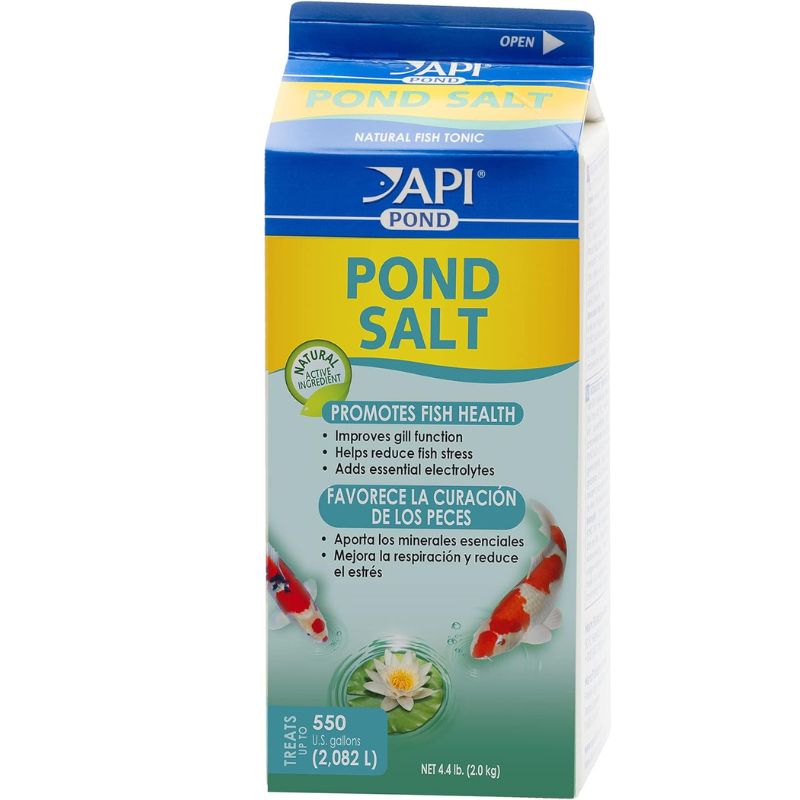
A trusted choice for most koi pond owners, API Pond Salt combines excellent customer ratings, affordability, and reliable performance for routine maintenance, water changes, and fish recovery. |
|
|
Our Pick
2
 |
CrystalClear ParaSalt – Best Value |
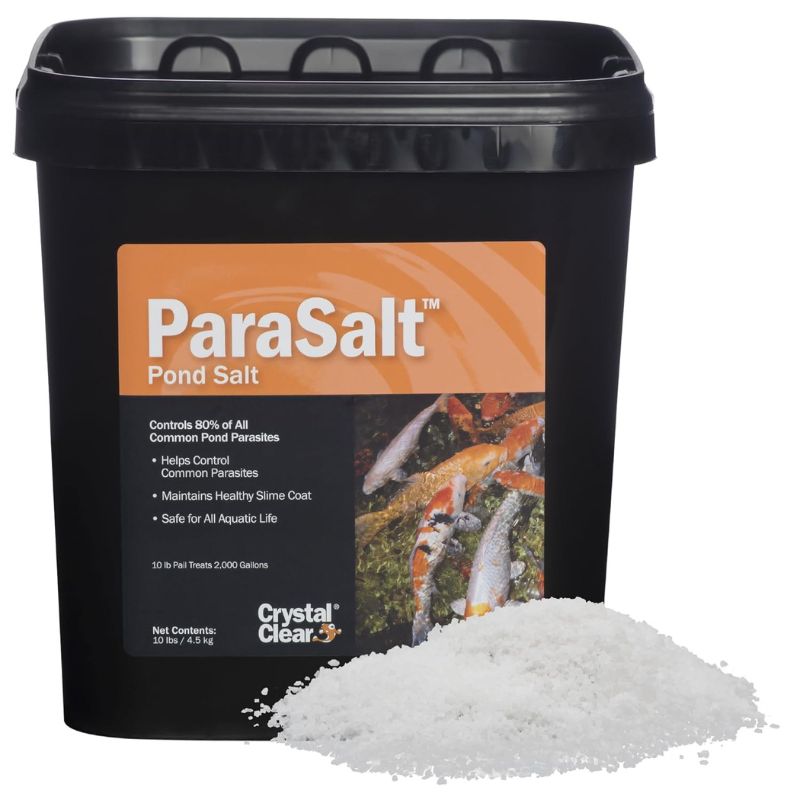
A well-balanced option for medium to large ponds, CrystalClear ParaSalt provides dependable performance with a generous treatment capacity at a reasonable price. |
|
|
Our Pick
3
 |
The Pond Guy Pond Salt – Best for Large Ponds |
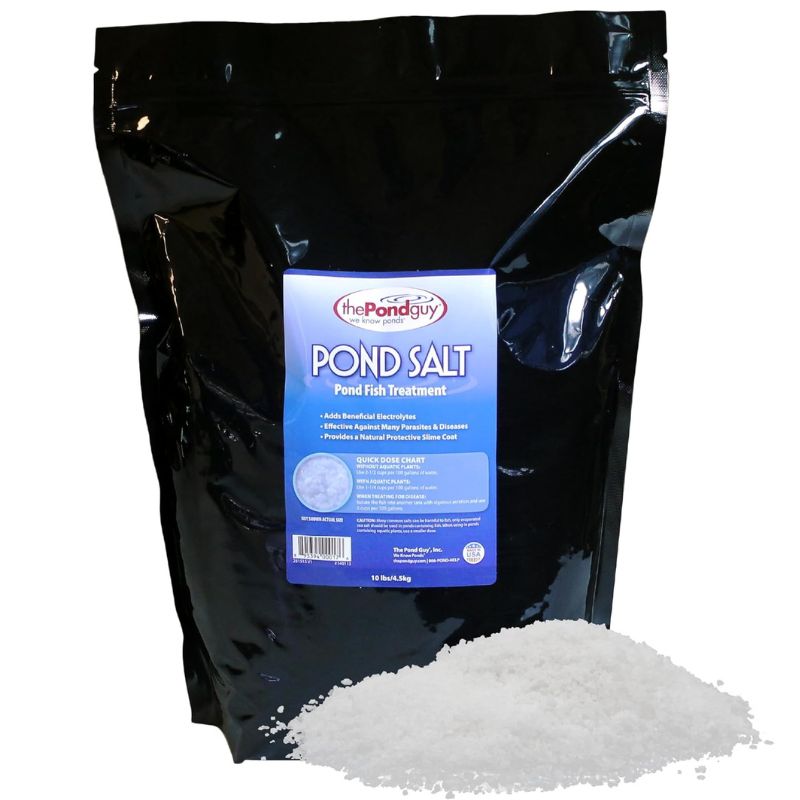
Made from natural evaporated sea salt, this 20-pound bag offers excellent value for larger koi ponds while helping support fish health, electrolyte balance, and slime coat protection.o |
What Is the Best Pond Salt for Koi Ponds?
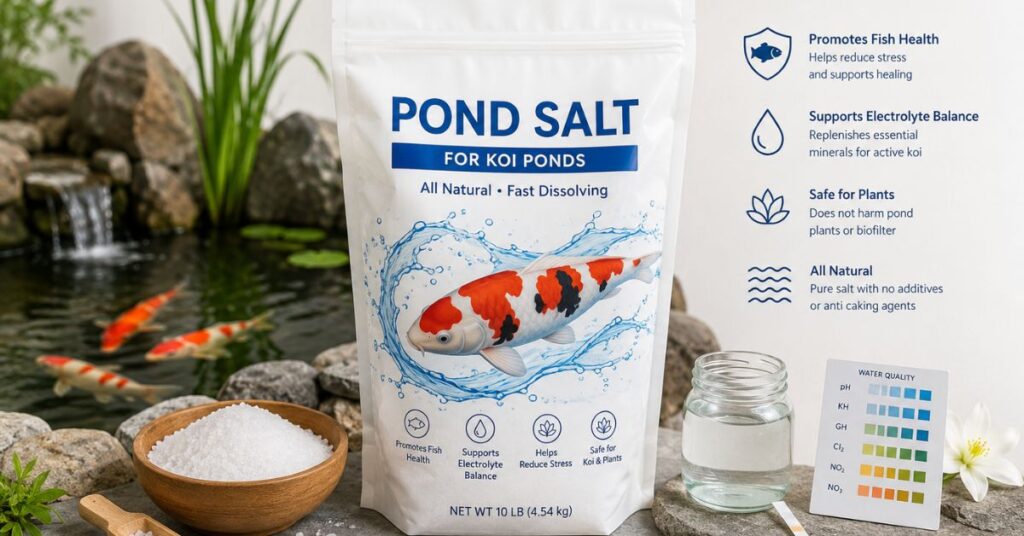
The best pond salt for koi ponds is a high-purity, non-iodized pond salt that contains no anti-caking additives or other unnecessary ingredients. Products made specifically for pond use are generally the safest choice because they are designed to support koi health without introducing substances that may harm fish, beneficial bacteria, or pond plants.
For most pond owners, a natural evaporated sea salt product offers the best balance of safety, effectiveness, and value. However, the right choice also depends on your pond size, whether you have aquatic plants, and if you’re using salt for routine maintenance, stress reduction, or short-term treatment.
What Makes a Pond Salt Safe for Koi?
Not all salt is suitable for koi ponds. Before buying any product, look for these important characteristics:
Pure Sodium Chloride
A quality pond salt should consist primarily of pure sodium chloride (NaCl). Pure salt helps support electrolyte balance and fish health without introducing unnecessary chemicals that may affect water quality.
Non-Iodized
Always choose non-iodized salt for koi ponds. Iodized table salt contains added iodine intended for human consumption and is generally not recommended for routine pond use.
No Anti-Caking Additives
Avoid products that contain anti-caking agents, yellow prussiate of soda, or other additives. These ingredients are unnecessary for pond care and may not be suitable for aquatic environments.
Fast Dissolving
A fast-dissolving granular or crystal pond salt distributes more evenly throughout the water, making it easier to achieve the desired salt concentration while reducing the risk of undissolved salt settling in one area.
If you’re still deciding whether salt is appropriate for your pond in the first place, read our Should I Add Salt to My Koi Pond guide to learn when pond salt is beneficial and when it’s best avoided.
Best Pond Salt for Koi Ponds Reviewed
Below are our top recommendations based on product quality, intended use, customer feedback, overall value, and suitability for koi ponds.
API Pond Salt
API Pond Salt is our top overall recommendation because it combines a trusted brand reputation, excellent customer ratings, and an affordable price. Made from natural evaporated sea water, it is suitable for routine pond maintenance, water changes, new pond setups, and supporting fish during recovery from stress or disease. While the 4.4-pound container is better suited to small and medium-sized ponds, its proven performance makes it an excellent choice for most koi keepers.
Product Insights & Features
Key Features
- Made from natural evaporated sea water
- Supports electrolyte balance & fish health
- Helps improve fish respiration
- Suitable for new ponds & disease recovery
- 4.7-star rating (1,800+ reviews)
Pros
- Trusted, established brand
- Excellent customer ratings
- Affordable and easy to use
- Ideal for beginners
Cons
- Small container size for very large ponds
- Requires multiple containers for high-volume treatments
CrystalClear ParaSalt
CrystalClear ParaSalt offers a good balance between price, package size, and performance, making it a solid value-focused option. The 10-pound bag treats up to 2,000 gallons, making it suitable for pond owners who need more coverage than smaller containers without moving into premium pricing.
Product Highlights
Key Features
- 10-pound package
- Treats up to 2,000 gallons
- Amazon's Choice product
- 4.5-star customer rating
Pros
- Good value for the quantity
- Suitable for medium-sized ponds
- Well-reviewed by pond owners
- Easy-to-use granular formula
Cons
- Limited product specifications provided
- Fewer specialized features than some competitors
The Pond Guy Pond Salt
Although many pool salts can be suitable when they are pure sodium chloride without additives, a pond-specific product is generally the safer choice. The Pond Guy Pond Salt delivers many of the same benefits people seek from pool salt while being specifically formulated for ponds, making it a safer alternative for koi keepers. Made from natural evaporated sea salt, it helps support slime coat development, improves gill function, and provides beneficial electrolytes for stressed fish.
Product Highlights
Key Features
- Natural evaporated sea salt
- Supports slime coat and gill function
- Helps reduce fish stress
- Suitable for routine applications and salt baths
- Safe for fish, pond plants, birds, and pets
Pros
- Large 20-pound bag
- Excellent overall value
- Versatile applications
- Pond-specific formulation
Cons
- Fewer total customer reviews than API
- May be more than small pond owners need
Koi Pharma Pure Salt Koi Therapy
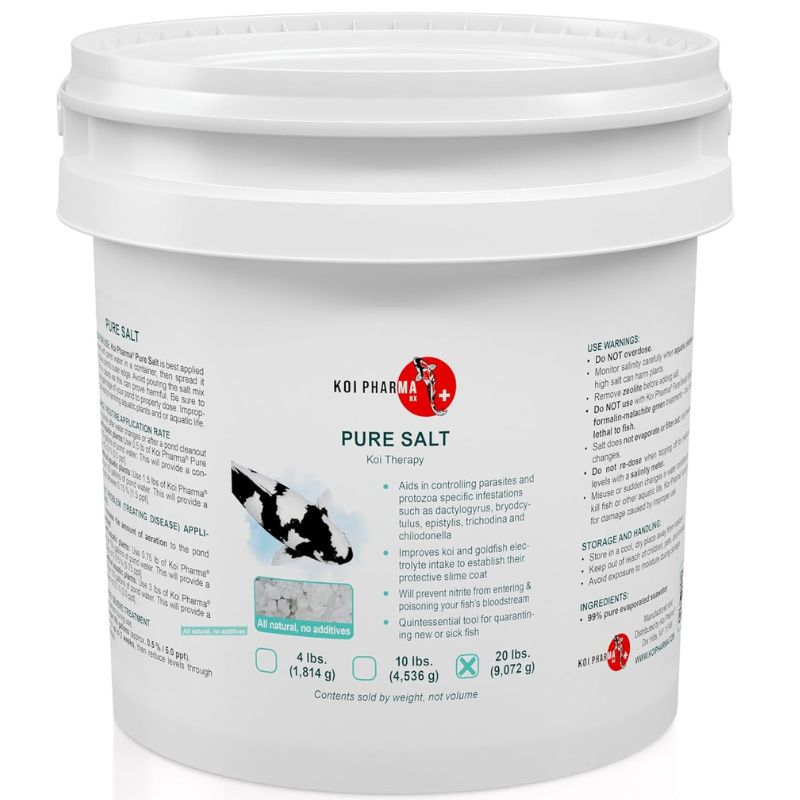
Koi Pharma Pure Salt Koi Therapy is designed specifically for koi and goldfish care, making it a premium option for hobbyists who want a specialized treatment product. It can be used during routine maintenance, disease treatment, or when quarantining new or sick fish. Its emphasis on slime coat support and protection against nitrite poisoning makes it especially appealing to experienced koi keepers.
Product Highlights
Key Features
- Designed specifically for koi and goldfish
- Supports protective slime coat
- Helps reduce nitrite poisoning risk
- Suitable for quarantine and disease treatment
- Available in a 20-pound bag
Pros
- Specialized koi-focused formula
- Multiple therapeutic uses
- Large package size
- Ideal for quarantine systems
Cons
- Highest price among our recommendations
- Limited customer review history
Pool Salt vs Pond Salt for Koi Ponds
Many koi owners wonder whether they can use pool salt for a koi pond instead of buying a product labeled as pond salt. The answer is: sometimes—but only under specific conditions.
Both pool salt and pond salt are primarily intended to increase salinity. However, not every pool salt product is suitable for aquatic life. The safest option is still a pond salt specifically marketed for koi or ornamental fish because it is designed with pond use in mind.
When Pool Salt Is Safe
Pool salt may be suitable for a koi pond if it meets all of the following criteria:
-
It is high-purity sodium chloride (NaCl).
-
It is non-iodized.
-
It contains no anti-caking agents, fragrances, chlorine additives, or other chemicals.
-
The manufacturer indicates it is pure salt without additional treatments.
Some pond owners use pure pool salt successfully because its chemical composition is similar to traditional pond salt. However, you should always verify the product label before adding it to a koi pond.
When Pool Salt Should Be Avoided
Avoid using pool salt if the product contains ingredients beyond pure sodium chloride. Products with additives may not be intended for fish and could affect water quality or aquatic life.
You should avoid pool salt if it:
-
Contains anti-caking agents or other additives.
-
Is blended with chemicals designed for swimming pool maintenance.
-
Does not clearly list its ingredients or purity.
-
Is scented, treated, or formulated for specialized pool systems rather than general salt chlorination.
If you’re unsure whether a product is appropriate, choosing a pond-specific salt is the safer option. It is formulated for koi and goldfish care, making it easier to avoid unnecessary risks while maintaining proper pond salinity.
Can You Use Water Softener Salt in a Pond?
Many pond owners ask whether water softener salt for koi ponds is a safe alternative to traditional pond salt. The short answer is not usually. While some water softener salts are made from high-purity sodium chloride, many are manufactured for household water softening systems rather than aquatic environments.
Because formulations vary between brands, you should never assume that all water softener salt is safe for koi ponds.
Potential Risks
Using the wrong water softener salt can create unnecessary risks for your pond and fish.
Common concerns include:
-
Some products may contain anti-caking agents or other additives that are not intended for aquatic life.
-
Certain water softener pellets can dissolve more slowly than pond salt, making it harder to distribute salt evenly.
-
Product labels often focus on household water treatment rather than fish safety, making it difficult to confirm suitability.
-
Choosing an unsuitable product may negatively affect koi, beneficial bacteria, or sensitive pond plants.
For these reasons, pond-specific salt remains the safer and more predictable choice.
When It May Be Safe
Some water softener salts may be appropriate only if they meet the same standards recommended for pond salt.
Look for products that are:
-
Made from high-purity sodium chloride (NaCl).
-
Non-iodized.
-
Free of anti-caking agents, rust removers, fragrances, or other additives.
-
Clearly labeled as pure salt without additional chemicals.
Even when a product appears suitable, always read the ingredient list carefully before use. If the label does not clearly identify the salt as pure sodium chloride, it is best to avoid it and choose a pond salt specifically intended for koi and goldfish.
Can You Use Rock Salt in a Koi Pond?
Many koi keepers wonder if rock salt for koi ponds is a suitable substitute for pond salt. The answer depends on the product’s purity. While some rock salt is primarily sodium chloride, it is often less refined than pond salt and may contain naturally occurring minerals or impurities that are not ideal for routine pond use.
For that reason, rock salt is generally not the first choice for koi ponds.
Pros
When it is pure and free of additives, rock salt offers a few potential benefits:
-
Contains sodium chloride, which can help raise pond salinity.
-
Often widely available and easy to purchase.
-
May be less expensive than some pond-specific products.
Cons
There are several drawbacks to consider before using rock salt in a koi pond:
-
Some products contain minerals, dirt, or other natural impurities.
-
Purity levels can vary significantly between brands.
-
Larger crystals may dissolve more slowly than pond salt.
-
Many products are not labeled for aquatic use, making it difficult to verify their suitability.
Is It Recommended?
In most cases, pond-specific salt is the better option for koi ponds. It is manufactured for aquatic use, making it easier to verify purity and avoid unwanted additives.
If you are considering rock salt, only choose a product that is high-purity sodium chloride, non-iodized, and free from anti-caking agents or other additives. When the ingredients or purity cannot be confirmed, it is safest to avoid using it in your pond.
Can You Use Solar Salt in a Koi Pond?
Solar salt for a koi pond can be a suitable option, but only if it is a high-purity, non-iodized sodium chloride product with no anti-caking agents or other additives. Solar salt is produced by evaporating seawater or brine using sunlight, and some products meet the purity standards needed for pond use. However, not every solar salt product is intended for aquatic environments, so checking the label is essential.
Advantages
When the product is pure and additive-free, solar salt offers several benefits:
-
Naturally sourced through solar evaporation.
-
Can provide the same sodium chloride content as many pond salts.
-
Often available in larger bags for better value.
-
Suitable for routine salinity management when labeled as pure salt.
Drawbacks
Not all solar salt products are created equal. Before using one, consider these potential disadvantages:
-
Purity can vary between manufacturers.
-
Some products may contain anti-caking agents or trace impurities.
-
Certain coarse crystals dissolve more slowly than fine-granule pond salt.
-
Many solar salt products are marketed for water softeners rather than koi ponds.
Best Use Cases
Solar salt may be appropriate for koi ponds when:
-
The product is high-purity sodium chloride with no additives.
-
It is non-iodized.
-
The ingredients clearly indicate it is pure salt.
-
You need a cost-effective option for maintaining salinity in larger ponds.
If you cannot verify the product’s purity or ingredient list, a pond-specific salt remains the safer and more reliable choice for protecting koi and maintaining stable pond water conditions.
Can You Use Morton Salt in a Koi Pond?
Many pond owners search for Morton salt for a koi pond because the brand offers several different salt products. However, not every Morton product is suitable for pond use. Whether it is safe depends on the specific product and its ingredients—not the brand name alone.
Is Morton Pool Salt Safe?
Some Morton Pool Salt products may be suitable for koi ponds if they are:
-
Made from high-purity sodium chloride (NaCl).
-
Non-iodized.
-
Free from anti-caking agents, chlorine additives, and other chemicals.
-
Clearly labeled as pure pool salt without additional treatments.
Always read the product label before use. If the ingredient list confirms pure sodium chloride with no unnecessary additives, it may be appropriate for maintaining pond salinity.
Which Morton Products Should Be Avoided?
Avoid Morton products that are not intended for pond use or contain additional ingredients.
These typically include:
-
Iodized table salt, which is formulated for human consumption.
-
Salt products containing anti-caking agents or other additives.
-
Specialty salts blended with minerals, flavorings, or other ingredients.
-
Any product that does not clearly identify its contents as pure sodium chloride.
If you’re uncertain about a specific Morton product, it’s safer to choose a pond salt that is specifically marketed for koi and goldfish. These products are designed for aquatic use and reduce the risk of introducing unwanted additives into your pond.
Can You Use Epsom Salt in a Pond?
Many pond owners ask whether Epsom salt for a koi pond can be used instead of regular pond salt. The answer is no. Although both are called “salt,” they are chemically different and serve different purposes. Pond salt is primarily sodium chloride (NaCl), while Epsom salt is magnesium sulfate (MgSO₄). Because of this difference, Epsom salt should not be used as a substitute for pond salt.
Pond Salt vs Epsom Salt
The biggest difference is their composition and intended use.
Pond Salt (Sodium Chloride)
-
Helps support electrolyte balance.
-
Aids in maintaining the protective slime coat.
-
Commonly used for routine pond care and certain fish health applications.
-
Designed to increase pond salinity.
Epsom Salt (Magnesium Sulfate)
-
Does not increase salinity in the same way as pond salt.
-
Provides magnesium rather than sodium chloride.
-
Used for specific fish care situations rather than routine pond maintenance.
Although both products have aquatic uses, they should not be considered interchangeable.
When Epsom Salt Is Used for Fish
Epsom salt is sometimes used as a short-term treatment for certain fish health conditions under appropriate guidance. For example, it may be used to help manage fluid retention or swelling in individual fish during treatment.
These applications are typically performed in a hospital or quarantine tank rather than as part of routine pond maintenance. Because treatment methods vary depending on the fish’s condition, Epsom salt should only be used when you understand the correct dosage and purpose.
Why It Should Not Replace Pond Salt
Epsom salt should not replace pond salt because it does not provide the same benefits or perform the same function.
It is not recommended for:
-
Routine pond salinity management.
-
Supporting electrolyte balance in the same way as sodium chloride.
-
Replacing pond salt during water changes or general maintenance.
-
Maintaining the salt concentration commonly used in koi ponds.
If your goal is to maintain proper pond salinity or support koi during routine care, choose a high-purity, non-iodized pond salt specifically formulated for aquatic use. Save Epsom salt for situations where its unique properties are actually needed rather than using it as a general substitute.
Pond Salt for Goldfish Ponds
Pond salt for goldfish can be used safely when applied correctly and in appropriate concentrations. Like koi, goldfish may benefit from pond salt during periods of stress, after water changes, or in certain fish health situations. However, salt should not be treated as a routine additive for every pond, and it should always be used only when there is a clear purpose.
Is Pond Salt Safe for Goldfish?
Yes, high-purity, non-iodized pond salt is generally considered safe for goldfish when used according to the manufacturer’s directions and the needs of your pond.
A quality pond salt can help:
-
Support electrolyte balance.
-
Maintain a healthy protective slime coat.
-
Reduce stress during handling or transportation.
-
Assist fish during certain treatment or recovery periods.
Before adding salt, consider whether your pond contains salt-sensitive aquatic plants or species that may not tolerate increased salinity.
Recommended Salt Levels
There is no single salt concentration that is ideal for every goldfish pond. The appropriate level depends on why the salt is being used, your pond volume, and the condition of your fish.
For best results:
-
Follow the dosage instructions provided with your pond salt product.
-
Add salt gradually rather than all at once.
-
Dissolve the salt before distributing it around the pond whenever possible.
-
Test the pond’s salinity if you’re maintaining a target concentration.
-
Avoid adding more salt unless it has been removed through water changes or you are following a specific treatment plan.
Using the correct amount is just as important as choosing the right product. Excessive salinity can stress fish, affect sensitive pond plants, and make future treatments more difficult, so always measure carefully instead of estimating.
How Much Pond Salt Should You Add?
The amount of pond salt you should add depends on your pond’s water volume, the current salt concentration, and the reason you’re using it. There is no universal dosage that works for every koi pond, which is why it’s important to avoid guessing.
Before adding salt:
-
Calculate your pond’s total water volume.
-
Decide whether you’re adding salt for routine support or a specific treatment.
-
Follow the dosage instructions on your chosen pond salt product.
-
Add the salt gradually and allow it to dissolve evenly throughout the pond.
-
Test the salt concentration if you’re maintaining a target salinity.
Remember that salt does not evaporate from pond water. It is typically removed through water changes, so adding more salt without checking the existing concentration can result in excessive salinity.
If you need step-by-step instructions, read our How Much Salt to Add to Pond guide for general dosage recommendations. For koi-specific advice and treatment concentrations, see our How Much Salt for Koi Pond guide.
Common Mistakes When Buying Pond Salt
Choosing the right pond salt is just as important as using the correct dosage. Many pond owners focus only on price, but overlooking product quality and ingredients can lead to poor results or unnecessary risks for koi and goldfish. Here are some of the most common mistakes to avoid.
Choosing Iodized Salt
One of the biggest mistakes is buying iodized salt instead of pond salt. Iodized salt is formulated for human consumption and contains added iodine, making it unsuitable for routine pond use. Always choose a non-iodized pond salt specifically intended for aquatic environments.
Ignoring Additives
Not all salt products contain only sodium chloride. Some include anti-caking agents, fragrances, rust removers, or other additives that are designed for household or industrial use rather than fish ponds. Before purchasing, read the ingredient list carefully and choose a product made from high-purity salt with no unnecessary additives.
Buying the Cheapest Salt Available
The lowest-priced product is not always the best value. Cheap salts may lack clear ingredient information, have inconsistent purity, or be intended for applications other than ponds. Spending a little more on a reputable pond salt can provide greater confidence that the product is appropriate for koi and goldfish.
Not Checking Purity
A quality pond salt should be made from high-purity sodium chloride (NaCl). Products with unclear ingredient lists or unknown purity levels make it difficult to know exactly what you’re adding to your pond. Whenever possible, choose a trusted brand that clearly identifies its ingredients and is specifically marketed for pond or aquatic use.
Pond Salt Buying Guide
Choosing the best pond salt involves more than comparing prices. A quality product should be safe for koi, easy to use, and appropriate for your pond’s size and purpose. Before making a purchase, consider the following factors.
Purity
Purity is the most important feature to check. Look for a pond salt made from high-purity sodium chloride (NaCl) that is non-iodized and free from anti-caking agents or other unnecessary additives. A cleaner product helps reduce the risk of introducing unwanted substances into your pond.
Grain Size
Pond salt is available in different grain sizes, including fine granules, crystals, and coarse pellets. Fine or medium-sized granules generally dissolve more quickly, making them easier to distribute evenly throughout the pond. Larger crystals may take longer to dissolve and are often better suited to larger water volumes.
Dissolving Speed
A fast-dissolving pond salt allows the desired salinity to be reached more evenly and efficiently. Products that dissolve readily are typically easier to apply during water changes, routine maintenance, or fish treatments, reducing the chance of salt accumulating in one area.
Packaging Size
Choose a package size that matches your pond’s volume and how often you expect to use salt.
-
Small containers (4–5 lbs): Suitable for small ponds or occasional use.
-
Medium bags (8–10 lbs): A practical choice for average-sized koi ponds.
-
Large bags (20 lbs or more): Better value for large ponds or owners who perform regular maintenance.
Buying the right size can help reduce costs over time while ensuring you always have enough salt available when needed.
Intended Use
Think about why you’re purchasing pond salt. Some products are designed primarily for routine maintenance, while others are marketed for fish recovery, quarantine tanks, stress reduction, or salt baths. Selecting a product that matches your intended use will help you get the best results.
Brand Reputation
Choosing a reputable brand can provide greater confidence in product quality and consistency. Look for manufacturers with positive customer feedback, transparent product information, and products specifically marketed for koi ponds or ornamental fish. A trusted brand is often a better long-term investment than an unknown product with limited information or reviews.
Final Verdict
Choosing the best pond salt for koi ponds comes down to selecting a product that is high-purity, non-iodized, and free from unnecessary additives. While many types of salt are available, not all are suitable for koi or goldfish, so it’s always worth checking the ingredients before making a purchase.
After comparing the available options, API Pond Salt stands out as our Best Overall recommendation. Its trusted reputation, excellent customer ratings, natural evaporated sea salt formula, and affordable price make it a reliable choice for most pond owners. If you have a larger pond, The Pond Guy Pond Salt offers excellent value with its 20-pound bag and versatile applications. For hobbyists looking for a specialized treatment product, Koi Pharma Pure Salt Koi Therapy is a strong premium option designed specifically for koi and goldfish care.
Ultimately, the right pond salt depends on your pond’s size, maintenance routine, and intended use. Whether you’re supporting fish during water changes, reducing stress, or maintaining proper salinity, choosing a quality pond-specific product will help you care for your koi safely and effectively.
Our Top Recommendations
-
Best Overall: API Pond Salt
-
Best Budget: CrystalClear ParaSalt
-
Best for Large Ponds: The Pond Guy Pond Salt
-
Best Premium: Koi Pharma Pure Salt Koi Therapy
-
Best for Planted Ponds: Water Garden Oasis Pond Salt
By investing in the right pond salt and using it only when needed, you’ll create a healthier, more stable environment where your koi can thrive for years to come.
📌 Frequently Asked Questions :
Is pool salt safe for koi ponds?
Pool salt can be safe for koi ponds only if it is made from high-purity, non-iodized sodium chloride and contains no anti-caking agents or other additives. Because not all pool salt products meet these requirements, pond-specific salt is generally the safer and more reliable choice.
What is the best pond salt for koi?
The best pond salt for koi is a high-purity, non-iodized pond salt with no unnecessary additives. Based on our comparison, API Pond Salt is our top overall recommendation thanks to its trusted reputation, excellent customer ratings, and reliable performance for routine pond care.
Can I use water softener salt in my pond?
Some water softener salts may be suitable if they are made from pure sodium chloride and contain no additives. However, many are designed for household water softening systems rather than aquatic use. If the ingredients or purity cannot be verified, it’s best to choose a pond salt specifically formulated for koi and goldfish.
Is rock salt safe for koi fish?
Rock salt may be suitable only if it is high-purity sodium chloride and free from additives or impurities. Since many rock salt products are less refined and not intended for ponds, a dedicated pond salt is usually the better option.
Can I use Epsom salt instead of pond salt?
No. Epsom salt is magnesium sulfate, while pond salt is sodium chloride. They serve different purposes, so Epsom salt should not be used as a replacement for pond salt in routine koi pond maintenance.
What salt level is safe for koi ponds?
The appropriate salt level depends on why you’re adding salt, your pond volume, and the product you’re using. Always follow the manufacturer’s dosage instructions and measure your pond’s salinity rather than estimating. Avoid adding more salt unless it has been removed through water changes or is part of a planned treatment.
Is pond salt safe for goldfish ponds?
Yes. High-purity, non-iodized pond salt is generally safe for goldfish when used correctly. It can help support fish during periods of stress, water changes, or recovery, but it should be added only when needed and at the recommended dosage.

Michael Brooks and Sarah Lane are the co-founders of the Pond Pump Team, a trusted U.S.-based group helping homeowners and landscapers build better ponds and water features. Michael, an experienced pond engineer from Oregon, has worked for over 12 years on pump sizing, flow systems, and water circulation. Sarah, a pond designer from Colorado with nine years of experience, focuses on eco-friendly and easy-to-maintain pond and waterfall designs. Together, they’ve completed more than 180 pond projects and created tools like the Pond Pump Calculator and Pond Liner Calculator to make pond planning simple, accurate, and sustainable.
Need help with your pond setup? Contact the Pond Pump Team for expert advice and reliable solutions.