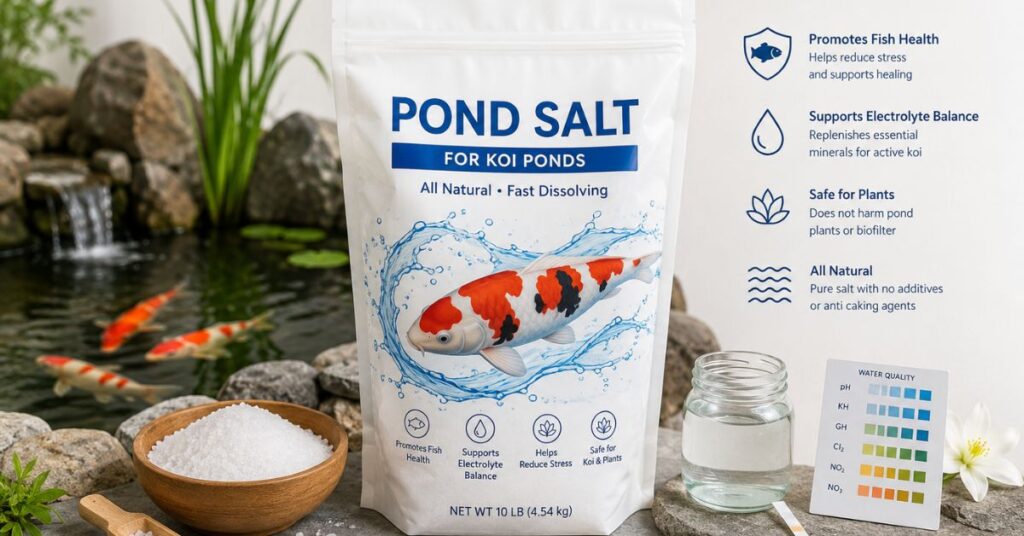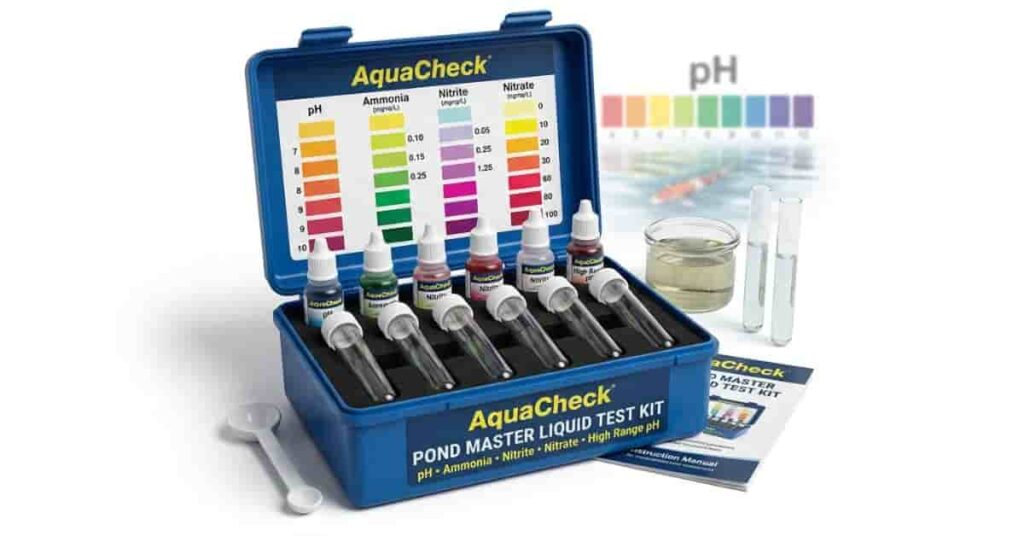
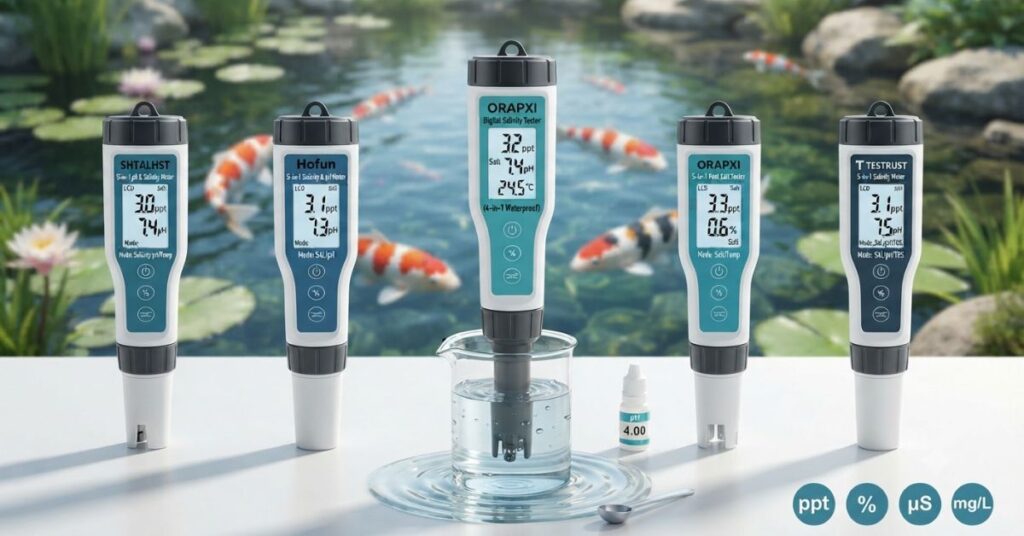
Keeping the right salt level in your pond is just as important as choosing the right type of pond salt. Whether you’re using salt to reduce fish stress, support recovery, or manage certain parasites, the treatment only works when the salinity level is accurate. Relying on guesswork can easily lead to adding too much or too little salt, and both mistakes may affect water quality and the health of your koi.
A reliable pond salt meter removes the uncertainty by providing fast, accurate salinity readings in seconds. Unlike manual calculations or test strips, digital salinity meters offer greater precision and make it easier to monitor salt levels after water changes, rainfall, or additional salt treatments. This helps you maintain a stable environment and avoid unnecessary risks.
With many digital salt testers available, choosing the right one can be challenging. Some are designed for occasional hobby use, while others offer professional-grade accuracy, automatic temperature compensation, and waterproof construction for frequent pond maintenance.
In this guide, we’ll review the best pond salt meters for koi ponds, compare their features, accuracy, and value, and explain what to look for before buying. We’ll also discuss how salt meters compare with test strips, how to use them correctly, and the key features that matter most for long-term reliability. If you’re new to measuring pond salinity, be sure to read our guide on How to Test Pond Salt Levels before choosing a meter.
To get the most accurate results, pair your salinity meter with a reliable water test kit to monitor other essential water parameters. Our Best Pond Water Test Kits for Koi Ponds guide reviews the top options for accurate pond testing. If you’re also choosing a salt product, don’t miss our Best Pond Salt for Koi Ponds review, where we compare the safest and most effective brands for maintaining healthy koi and stable pond water.
🏆 Quick Comparison Table
Compare our top-rated pond salinity meters to quickly find the right model based on your budget, testing needs, and level of pond maintenance.
| Product | Best For | Type | Reading Method |
|---|---|---|---|
| 🏆 ORAPXI Digital Salinity Tester (4-in-1) | Best Overall | Digital Salinity Meter | 📟 Digital LCD Display |
| 👑 Hofun 5-in-1 Salinity & pH Meter | Best Professional | Multi-Parameter Digital Meter | 📟 Digital LCD Display |
| 💰 SHTALHST 5-in-1 pH & Salinity Meter | Best Budget | Multi-Parameter Digital Meter | 📟 Digital LCD Display |
| ⭐ ORAPXI 5-in-1 Pool Salt Tester | Best Value | Multi-Parameter Digital Meter | 📟 Digital LCD Display |
| 🔄 T TESTRUST 5-in-1 Salinity Meter | Best Alternative | Multi-Parameter Digital Meter | 📟 Digital LCD Display |
Our Top Picks
| Product Names | Features | ||
|
Our Top Pick
1
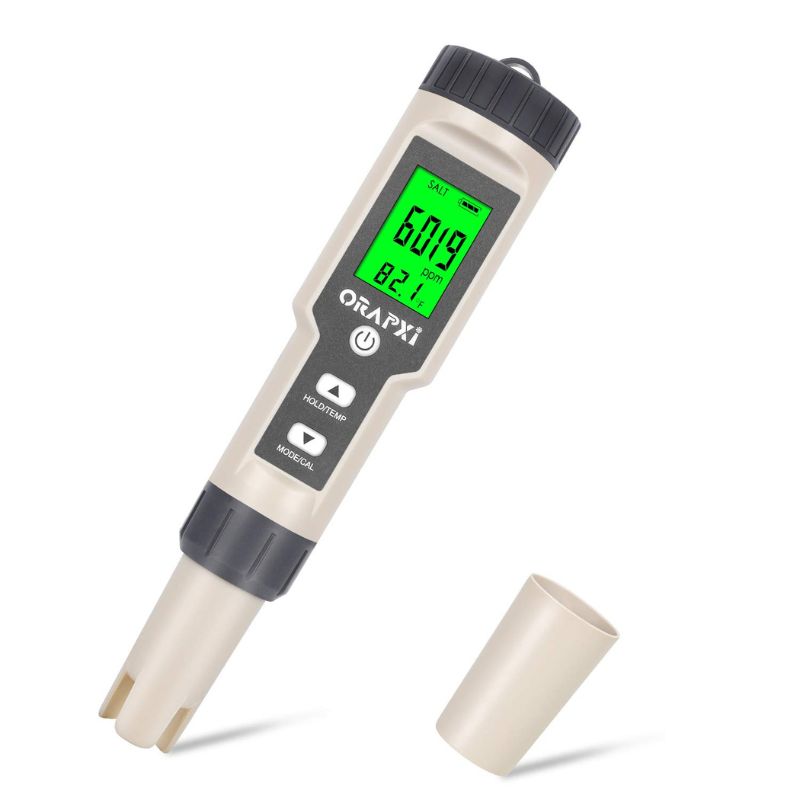 |
🏆 Best Overall: ORAPXI Digital Salinity Tester (4-in-1) |
The ORAPXI Digital Salinity Tester is our top recommendation for most koi pond owners. It offers accurate salinity readings, an IP67 waterproof design, automatic temperature compensation (ATC), and a wide measuring range, making it an excellent choice for routine pond salt monitoring. |
|
|
Our Pick
2
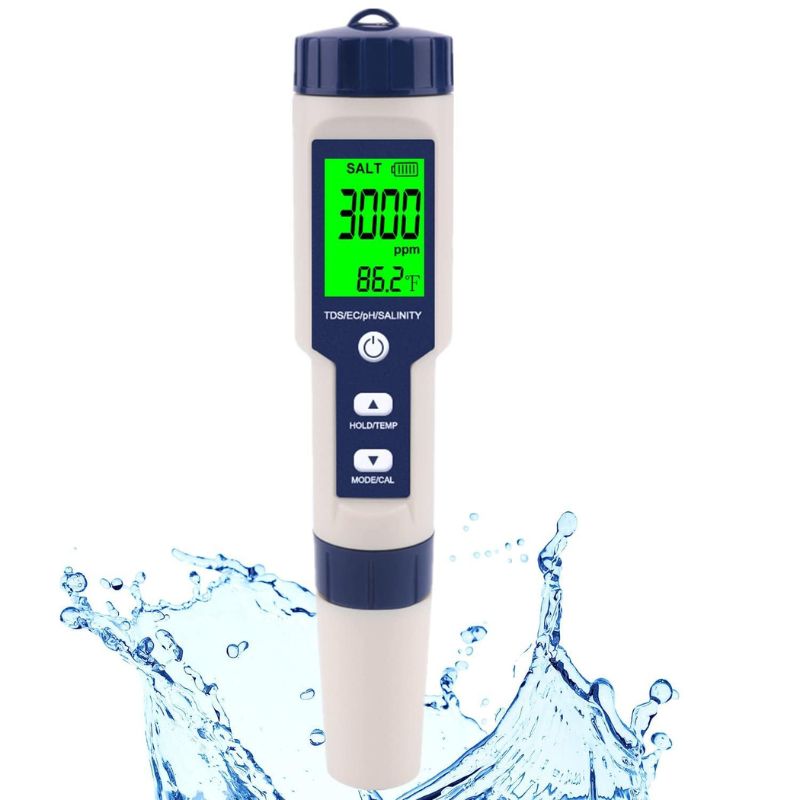 |
👑 Best Professional: Hofun 5-in-1 Salinity & pH Meter |
If you want more than just salinity testing, the Hofun 5-in-1 Meter is an excellent professional option. It measures salinity, pH, TDS, EC, and temperature in one device, making it ideal for pond keepers who regularly monitor overall water quality. |
|
|
Our Pick
3
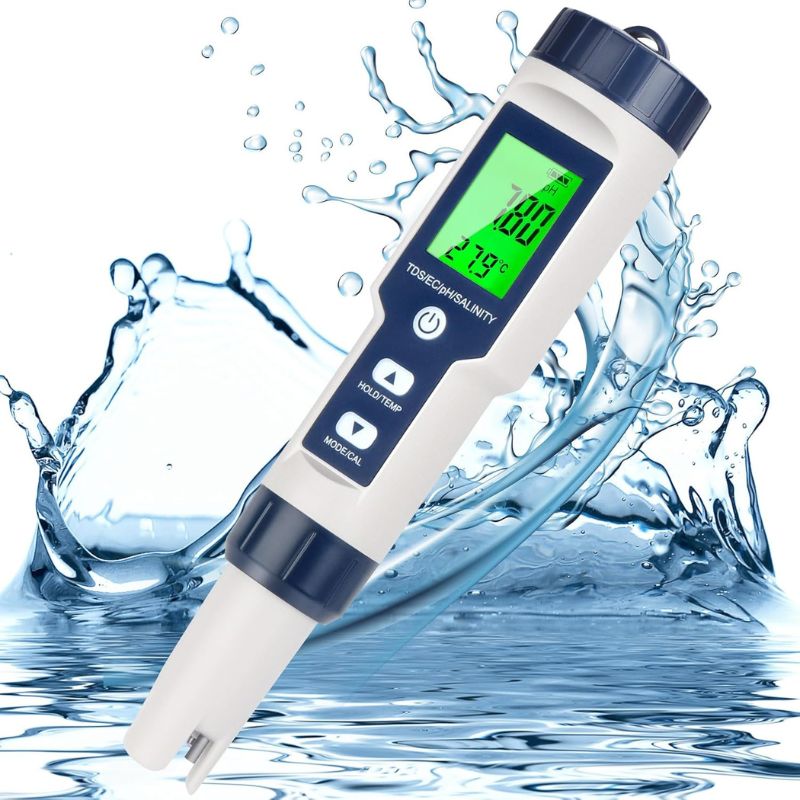 |
💰 Best Budget: SHTALHST 5-in-1 pH & Salinity Meter |
The SHTALHST 5-in-1 Meter delivers impressive features at an affordable price. With auto-calibration, multiple water testing functions, and a user-friendly design, it's a solid choice for beginners or hobbyists on a budget. |
|
|
Our Pick
4
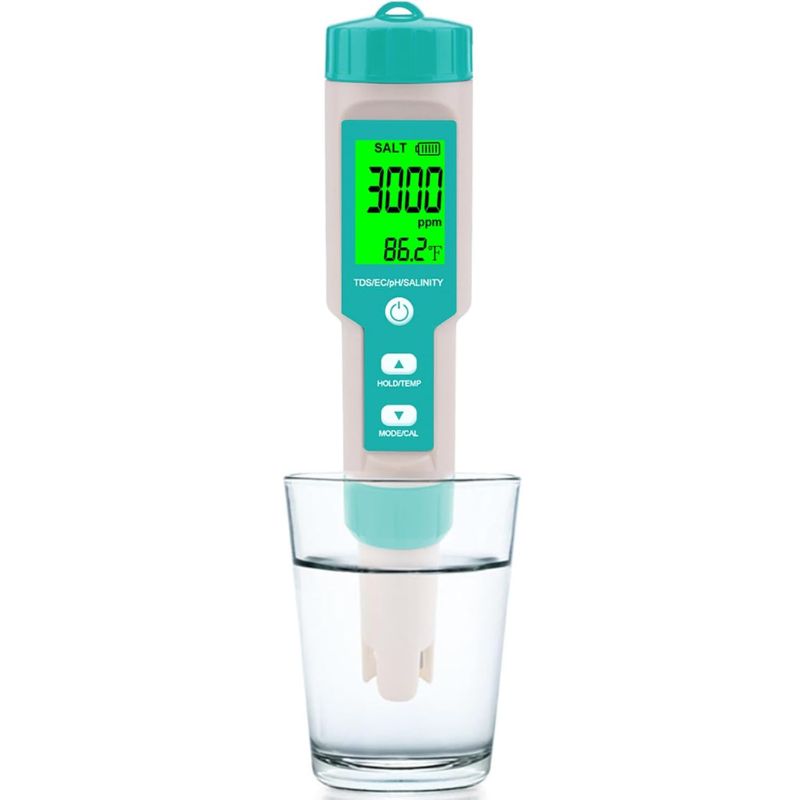 |
⭐ Best Value: ORAPXI 5-in-1 Pool Salt Tester |
The ORAPXI 5-in-1 Pool Salt Tester offers an excellent balance of features, performance, and price. Its ability to measure salinity, pH, TDS, EC, and temperature makes it a practical all-in-one meter for routine koi pond maintenance. |
|
|
Our Pick
5
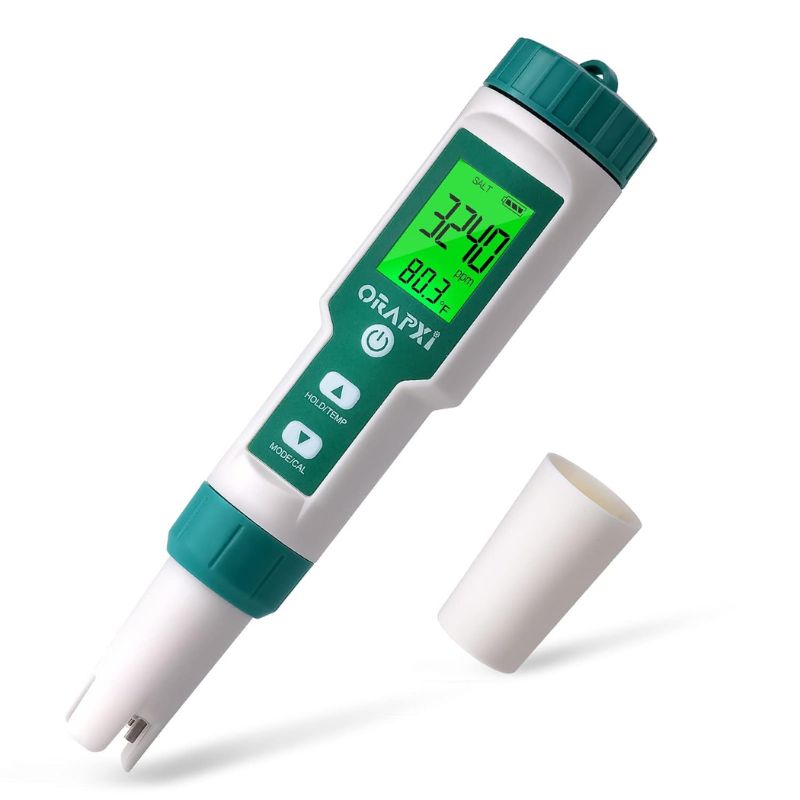 |
🔄 Best Alternative: T TESTRUST 5-in-1 Salinity Meter |
The T TESTRUST 5-in-1 Salinity Meter is a reliable alternative with accurate salinity testing and multiple water quality measurements. Its simple operation and clear digital display make it suitable for both new and experienced koi pond owners. |
Why You Need a Pond Salt Meter
Adding pond salt can benefit koi fish when used correctly, but the treatment is only effective if the salinity level stays within the recommended range. Even a small difference in salt concentration can reduce its effectiveness or expose fish to unnecessary stress. A digital pond salt meter takes the guesswork out of water testing by providing fast, accurate readings whenever you need them.
Whether you manage a small backyard pond or a large koi pond, regularly checking salinity helps maintain stable water conditions and gives you confidence that your salt level is exactly where it should be.
Pond Salt Levels Should Never Be Guessed
Many pond owners estimate salt levels based on how much salt they added, but this approach is often inaccurate. Water changes, heavy rainfall, evaporation, and filter maintenance can all change the actual salt concentration without you realizing it.
Instead of relying on calculations alone, a digital salinity meter measures the current salt level directly. This helps prevent both under-salting, where treatment may not work effectively, and over-salting, which can stress fish and affect water quality.
Accurate Readings Protect Fish Health
Koi fish thrive in stable water conditions. If salinity rises above the intended level or drops too low, the benefits of salt treatment may be reduced. Accurate readings allow you to make small adjustments before problems develop.
Using a reliable salt meter also helps you:
-
Maintain consistent salinity during treatments.
-
Monitor changes after water changes or rainfall.
-
Avoid unnecessary salt additions.
-
Reduce stress caused by fluctuating water conditions.
-
Support healthier, more stable pond management.
Salt Meters Save Time Compared to Manual Testing
Traditional methods of estimating pond salt often involve manual calculations or interpreting color-based test strips. While these methods can provide a general idea of salinity, they are usually slower and less precise.
A digital pond salt meter simplifies the process. Simply place the probe in the water, wait a few seconds, and read the result on the display. Many modern meters also include features such as Automatic Temperature Compensation (ATC), making measurements more consistent across different water temperatures.
When a Salt Meter Becomes Essential
Although every pond owner can benefit from monitoring salinity, a digital salt meter becomes especially valuable in the following situations.
Large Ponds
Larger ponds require more salt during treatment, making accurate measurements even more important. Small dosing errors can result in significant differences in total salt concentration.
Koi Ponds
Koi are valuable fish that benefit from stable water parameters. A digital salinity meter helps maintain the correct salt level while reducing the risk of accidental over- or under-dosing during routine care or short-term treatments.
Frequent Salt Treatments
If you regularly use pond salt for quarantine tanks, stress reduction, or parasite management, frequent testing is essential. A quality salt meter allows you to monitor salinity quickly, make accurate adjustments, and maintain consistent treatment levels throughout the entire process.
Best Pond Salt Meters Reviewed
After comparing features, customer feedback, ease of use, and overall value, we selected the following digital salinity meters as the best options for koi pond owners. Whether you’re looking for a simple salt tester or a multi-parameter water quality meter, these products provide reliable salinity measurements to help maintain a healthy pond environment.
ORAPXI Digital Salinity Tester (4-in-1 Waterproof)
The ORAPXI Digital Salinity Tester is our top overall pick because it combines accurate salinity testing with a durable waterproof design and an affordable price. Designed for aquariums, seawater, and koi fish ponds, it provides quick digital readings and includes Automatic Temperature Compensation (ATC) for improved accuracy under different water conditions.
Digital Salinity Meter – Key Features & Review
A waterproof digital salinity meter designed for koi pond owners who want fast, accurate salt level monitoring and reliable water quality testing for routine pond maintenance.
⭐ Key Features
Measures a wide range of salinity levels for freshwater and saltwater applications.
ATC technology improves reading accuracy across different water temperatures.
Fully waterproof housing provides reliable performance around ponds and pools.
Measures Salinity, TDS, EC, and Water Temperature with one device.
Large green display makes readings easy to view even in low light.
Provides fast digital measurements within just a few seconds.
Perfect for koi ponds, aquariums, swimming pools, marine tanks, and seawater.
✅ Pros
- Excellent value for money
- IP67 waterproof construction
- Ideal for koi pond monitoring
- Wide salinity testing range
- Very easy to use
- Large backlit display
- Highly rated by users
⚠️ Cons
- Does not measure pH
- Calibration instructions could be more detailed
🎯 Best For
🏆 Why We Recommend It
This digital salinity meter delivers an outstanding combination of accuracy, durability, and affordability. With its waterproof IP67 design, fast readings, automatic temperature compensation, and easy-to-read display, it is an excellent choice for koi pond owners who need dependable salinity monitoring throughout the year.
SHTALHST 5-in-1 pH & Salinity Meter
If you're looking for an affordable digital tester, the SHTALHST 5-in-1 Meter offers excellent features at a budget-friendly price. It measures salinity, pH, TDS, EC, and temperature while also supporting auto-calibration for convenient setup.
5-in-1 Water Quality Meter – Key Features & Review
An affordable all-in-one digital water testing meter that combines multiple essential measurements into one compact device, making routine pond water monitoring simple for beginners and hobbyists.
⭐ Key Features
Combines five essential water quality tests in one convenient handheld device.
Measures salinity, pH, electrical conductivity (EC), TDS, and temperature.
Features an automatic calibration function for improved convenience and accuracy.
Comes with calibration powder, allowing users to set up the meter right away.
Bright LCD screen makes readings easy to view in both indoor and outdoor conditions.
Lightweight, portable, and comfortable to carry for regular pond inspections.
Delivers fast digital results with clear and precise measurement values.
✅ Pros
- One of the most affordable meters available
- Automatic calibration for easier setup
- Measures five important water parameters
- Simple enough for beginners
- Compact, lightweight, and easy to carry
⚠️ Cons
- Fewer customer reviews than some competing models
- Waterproof rating is not specified by the manufacturer
🎯 Best For
🏆 Why We Recommend It
This 5-in-1 water quality meter is an excellent budget-friendly option for pond owners who want multiple water measurements in one device. Its automatic calibration, compact design, and ability to test salinity, pH, EC, TDS, and temperature make it a practical choice for beginners looking for an affordable all-in-one testing solution.
Hofun 5-in-1 Salinity & pH Meter
If you want a pond salinity meter that does more than measure salt concentration, the Hofun 5-in-1 Meter is an excellent professional choice. Besides salinity, it measures pH, TDS, EC, and temperature, making it ideal for koi keepers who regularly monitor overall water quality.
5-in-1 Water Quality Tester – Key Features & Review
A premium multi-parameter water quality tester built for serious koi pond owners who want accurate salinity monitoring alongside pH, EC, TDS, and temperature readings in one easy-to-use digital device.
⭐ Key Features
5-in-1 Water Tester
Combines five essential water quality measurements into one compact digital meter.
Complete Water Analysis
Measures Salinity, pH, EC, TDS, and Temperature for comprehensive pond monitoring.
Titanium Alloy Probe
Provides dependable performance, improved durability, and stable measurement accuracy.
Multiple Salinity Units
View salinity results in ppm, ppt, or % depending on your preference.
Wide Measuring Range
Supports salinity testing up to 200 ppt, making it suitable for a wide variety of water systems.
Fast Digital Results
Delivers quick, high-resolution readings within seconds for convenient testing.
Simple Mode Switching
Easily switch between measurement modes using intuitive controls.
✅ Pros
- Complete 5-in-1 water testing solution
- Trusted by a large number of verified buyers
- Durable titanium alloy probe
- Large and easy-to-read digital display
- Works well for koi ponds, aquariums, and swimming pools
⚠️ Cons
- More expensive than entry-level salinity meters
- Waterproof rating is not listed by the manufacturer
🎯 Best For
🏆 Why We Recommend It
If you want a single device that does much more than measure salinity, this 5-in-1 water quality tester is an outstanding choice. Its titanium alloy probe, wide 200 ppt salinity range, multiple display units, and ability to measure pH, EC, TDS, and temperature make it an excellent investment for advanced koi pond owners who regularly monitor overall water quality.
ORAPXI 5-in-1 Pool Salt Tester
The ORAPXI 5-in-1 Pool Salt Tester is an excellent digital pond salinity meter for pond owners who want quick, accurate readings without relying on color-based test strips. It measures salinity along with pH, TDS, EC, and temperature, making it a practical salt tester for koi ponds and other saltwater applications.
5-in-1 Multifunction Water Tester – Key Features & Review
A versatile digital water quality tester that combines salinity and other essential water measurements into one compact device, making it ideal for routine pond maintenance and overall water quality monitoring.
⭐ Key Features
5-in-1 Multifunction Tester
Combines five essential water quality measurements into one easy-to-use digital device.
Complete Water Testing
Measures Salinity, pH, EC, TDS, and Temperature for a more complete picture of water quality.
Clear Digital LCD Display
Bright digital screen provides easy-to-read results with minimal effort.
Fast & Easy Operation
Simple controls deliver quick digital readings within seconds.
Versatile Applications
Suitable for koi ponds, aquariums, swimming pools, hot tubs, and other water systems.
Up to 100 ppt Salinity
Supports salinity measurements up to 100 ppt, covering most freshwater pond testing needs.
✅ Pros
- Simple one-button operation
- Measures multiple important water parameters
- Accurate digital readings
- Positive customer feedback
- Greater precision than traditional test strips
⚠️ Cons
- Mainly marketed for swimming pools rather than ponds
- Lower maximum salinity range than some competing models
🎯 Best For
🏆 Why We Recommend It
This 5-in-1 multifunction water tester is an excellent choice for pond owners who want more than a basic salinity meter. With the ability to measure salinity, pH, EC, TDS, and temperature in a single handheld device, it offers a convenient and accurate way to monitor overall pond water quality while remaining simple enough for everyday use.
T TESTRUST 5-in-1 Salinity Meter
The T TESTRUST 5-in-1 Salinity Meter is our recommendation for the best salt meter for koi ponds if you want a modern, easy-to-use device with reliable digital readings. It measures salinity, pH, TDS, EC, and temperature, allowing you to monitor several key water parameters from a single handheld meter.
5-in-1 Digital Water Tester – Key Features & Review
A user-friendly 5-in-1 digital water tester that helps koi pond owners monitor salinity and other essential water quality parameters with fast, accurate readings in one convenient handheld device.
⭐ Key Features
5-in-1 Digital Water Tester
Combines five important water quality tests into one compact and easy-to-use meter.
Comprehensive Water Analysis
Measures Salinity, pH, TDS, EC, and Temperature for complete water quality monitoring.
Multiple Salinity Units
Displays salinity in ppm, ppt, or % to match different testing preferences.
Clear LCD Display
Easy-to-read digital screen provides clear measurements in any lighting condition.
Fast Digital Measurements
Delivers quick and reliable readings within seconds for efficient water testing.
Versatile Applications
Suitable for koi ponds, aquariums, marine tanks, and other saltwater systems.
✅ Pros
- High customer satisfaction ratings
- Easy for beginners to learn and operate
- Measures multiple essential water parameters
- Bright and easy-to-read LCD display
- Works well across a variety of aquatic environments
⚠️ Cons
- Has fewer customer reviews than some leading competitors
- Mainly designed for swimming pools and aquariums rather than dedicated pond use
🎯 Best For
🏆 Why We Recommend It
We recommend this 5-in-1 digital water tester for koi pond owners who want an affordable and easy-to-use solution for routine water quality monitoring. Its ability to measure salinity, pH, TDS, EC, and temperature in one device makes it a practical choice for maintaining a healthy pond without the need for multiple testing tools.
Salt Meter vs Test Strips
When monitoring pond salinity, most pond owners choose between a salt meter for ponds and traditional salt test strips. Both can measure salt levels, but they differ significantly in accuracy, convenience, and long-term value. Understanding these differences will help you choose the right tool for your koi pond.
Accuracy Comparison
Digital pond salt meters generally provide more precise and consistent readings than test strips. They display the exact salinity level on a digital screen, eliminating the need to interpret color changes manually.
Test strips can provide a rough estimate, but results may vary depending on lighting conditions, strip quality, and how accurately the colors are interpreted. For routine koi pond management, a digital salinity meter offers greater confidence and reduces the risk of incorrect dosing.
| Feature | Digital Salt Meter | Test Strips |
|---|---|---|
| Accuracy | Excellent | Moderate |
| Reading Method | Digital Display | Color Chart |
| Consistency | High | Moderate |
| Best For | Regular Monitoring | Occasional Checks |
Ease of Use
Both testing methods are easy to use, but digital meters make the process even simpler. Most only require you to dip the probe into the water and wait a few seconds for the reading.
Test strips also work quickly, but comparing colors against a chart can sometimes be difficult, especially in poor lighting or when color differences are subtle.
Long-Term Cost
Test strips usually cost less initially, but they are disposable and require regular replacement. Over time, frequent testing can become more expensive than purchasing a reusable digital meter.
A digital salt meter requires a higher upfront investment, but it can be used repeatedly for years with proper maintenance, making it a cost-effective choice for pond owners who monitor water regularly.
Which Option Is Better for Koi Keepers?
For most koi pond owners, a digital pond salt meter is the better investment. It provides faster, more accurate readings and makes routine monitoring much easier. Test strips remain useful for occasional checks, but anyone who performs regular salt treatments or wants consistent results will benefit from a quality digital salinity meter.
How Accurate Are Pond Salt Meters?
Modern digital pond salt meters are designed to provide reliable salinity measurements when used correctly. While no measuring device is perfect, a well-maintained meter typically offers far greater accuracy than estimating salt levels or relying solely on test strips.
What Affects Accuracy?
Several factors can influence measurement accuracy, including:
-
Poor calibration
-
Dirty or contaminated probes
-
Water temperature
-
Air bubbles on the sensor
-
Low battery power
-
Using the meter outside its measurement range
Keeping your meter clean and properly calibrated helps ensure dependable results.
Calibration Importance
Calibration ensures that your meter continues to provide accurate measurements over time. Some models require manual calibration, while others offer automatic calibration for greater convenience.
Always follow the manufacturer’s recommendations and calibrate the meter whenever accuracy is in doubt or after extended storage.
Temperature Compensation
Water temperature can influence electrical conductivity, which affects salinity measurements. Many quality digital salt meters include Automatic Temperature Compensation (ATC) to reduce these variations and improve consistency across different pond conditions.
Meters equipped with ATC are generally more reliable when testing outdoor ponds where water temperatures fluctuate throughout the year.
Common Reading Errors
Even a high-quality meter can produce inaccurate results if it is used incorrectly. Common mistakes include:
-
Measuring immediately after adding salt.
-
Using a dirty probe.
-
Skipping calibration.
-
Testing stagnant water that has not mixed thoroughly.
-
Reading the display before the measurement stabilizes.
Following proper testing procedures helps minimize these errors.
How to Use a Pond Salt Meter Correctly
Using a pond salt meter is straightforward, but following a few simple steps helps ensure accurate and consistent readings every time.
Preparing the Water Sample
Collect water from below the surface rather than from the very top, where floating debris or surface films may affect the reading. If you’ve recently added salt, allow sufficient time for it to dissolve and circulate throughout the pond before testing.
Taking the Reading
Turn on the meter and rinse the probe with clean water if necessary. Place the probe into the pond water until the sensing area is fully submerged. Wait a few seconds for the reading to stabilize before recording the salinity value.
If your meter offers multiple display units, confirm that you’re viewing the correct measurement before making any adjustments to your pond.
Cleaning the Probe
After each use, rinse the probe with clean fresh water to remove salt residue and mineral deposits. Avoid using abrasive materials that could damage the sensor.
Keeping the probe clean improves measurement accuracy and extends the life of the meter.
Storing the Meter
Store the meter in a clean, dry location away from direct sunlight and extreme temperatures. Replace the protective cap after every use and remove the batteries if the device will not be used for an extended period.
If you’re new to salinity testing, our guide on How to Test Pond Salt Levels explains the complete testing process and best practices for accurate results.
What Salt Level Is Safe for Koi Ponds?
The ideal salt concentration depends on why salt is being used. Routine maintenance generally requires much lower salinity than short-term therapeutic treatments. Rather than aiming for the highest possible salt level, the goal is to maintain the appropriate concentration for your specific situation.
Typical Salt Ranges
Most healthy koi ponds either contain no added salt or maintain relatively low salinity levels for occasional support. Therapeutic treatments may temporarily require higher concentrations, but these should always be monitored carefully using a digital salt meter.
When Higher Levels Are Used
Higher salinity levels are sometimes used during short-term treatments for stress reduction, quarantine, or specific parasite management. These treatments should be temporary and monitored closely to avoid unnecessary stress on fish and beneficial bacteria.
For recommended treatment ranges, see our guide on How Much Salt for Koi Pond.
Risks of Excess Salt
Adding too much salt can create unnecessary stress for koi and may interfere with certain pond treatments or medications. Over-salting can also make future water management more difficult if salt levels are not monitored properly.
Before adding additional salt, always verify the current salinity with a digital meter. If you’re calculating the correct dosage, read our guide on How Much Salt to Add to Pond.
Common Mistakes When Using Salt Meters
A digital salt meter is only as accurate as the way it is used. Avoiding these common mistakes will help ensure reliable readings and better pond management.
Not Calibrating the Meter
Skipping calibration is one of the most common causes of inaccurate readings. Regular calibration helps maintain consistent performance and should follow the manufacturer’s recommendations.
Dirty Sensors
Salt residue, algae, and mineral buildup on the probe can affect measurement accuracy. Rinse the sensor after every use and inspect it regularly for buildup.
Taking Readings Too Soon
After adding salt or performing a water change, the pond water needs time to circulate completely. Testing too early may produce readings that do not represent the pond’s actual salinity.
Ignoring Temperature Effects
Water temperature influences salinity measurements. If your meter does not include Automatic Temperature Compensation (ATC), temperature differences may affect the results. Whenever possible, choose a meter with ATC for more consistent readings.
Pond Salt Meter Buying Guide
Choosing the right pond salt meter involves more than comparing prices. The following features can help you select a meter that delivers reliable performance for years to come.
Accuracy
Accuracy should always be your top priority. A quality digital meter provides consistent readings that help you maintain safe salinity levels without relying on estimates.
Calibration Method
Some meters require manual calibration, while others offer automatic calibration. Auto-calibration is more convenient, especially for beginners, but either option works well when performed correctly.
Display Quality
A large digital display with a backlight makes readings much easier to see outdoors or in low-light conditions. Clear displays also reduce the chance of recording incorrect values.
Waterproof Design
Because pond testing is performed around water, a waterproof meter offers additional protection against accidental splashes or drops. Models with an IP67 waterproof rating provide added durability for outdoor use.
Battery Life
Long battery life reduces maintenance and ensures the meter is ready whenever you need it. Many handheld meters operate for months before requiring battery replacement.
Measurement Range
Choose a meter with a salinity range suitable for freshwater ponds, koi ponds, and occasional higher-concentration treatments. A wider measurement range provides greater flexibility for different applications.
Ease of Maintenance
Look for a meter that is easy to clean, calibrate, and store. Simple maintenance not only improves measurement accuracy but also helps extend the lifespan of your investment.
Frequently Asked Questions
Find answers to the most common questions about digital pond salt meters, salinity testing, calibration, and choosing the best meter for maintaining healthy koi pond water.
🏆 What is the best pond salt meter for koi ponds?
The ORAPXI Digital Salinity Tester (4-in-1 Waterproof) is our top recommendation for most koi pond owners. It delivers fast and accurate salinity readings, features an IP67 waterproof design, includes Automatic Temperature Compensation (ATC), and offers an excellent balance of performance and value.
If you also want to monitor pH, EC, TDS, and other important water quality parameters, a 5-in-1 meter like the Hofun Salinity & pH Meter is another excellent choice.
📊 Are digital salt meters more accurate than test strips?
Yes. Digital salt meters generally provide more accurate and consistent readings than traditional test strips because they display an exact numerical salinity value instead of relying on manual color matching.
While test strips are useful for occasional testing, digital meters are the preferred choice for regular koi pond maintenance and salt treatments.
💧 How often should pond salt levels be tested?
Test your pond's salinity whenever you:
- Add pond salt
- Perform a large water change
- Experience heavy rainfall
- Begin or monitor a salt treatment
During active treatments, daily or every-few-days testing is recommended. For normal pond maintenance, periodic testing is usually sufficient.
⚙️ Do salt meters require calibration?
Yes. Most digital salinity meters require periodic calibration to maintain accurate measurements.
Some models support automatic calibration, while others require manual calibration using a standard calibration solution. Following the manufacturer's recommendations helps ensure long-term accuracy.
🏊 Can I use a pool salinity meter in a koi pond?
Yes. Many digital pool salinity meters also work well in koi ponds, provided their measuring range supports the relatively low salt concentrations commonly used in freshwater ponds.
Several meters reviewed in this guide are suitable for ponds, aquariums, swimming pools, and marine systems.
🐟 What salinity level is safe for koi fish?
The ideal salinity level depends on the reason you're using salt. Routine pond maintenance typically requires much lower concentrations than temporary disease treatments.
Always measure the current salinity with a reliable digital meter and follow the recommended dosage guidelines for your specific treatment.
💰 Are inexpensive salt meters accurate enough?
Yes. Many affordable digital salt meters provide reliable accuracy for routine pond monitoring when they are properly calibrated and maintained.
Premium models typically offer additional advantages such as waterproof construction, Automatic Temperature Compensation (ATC), better build quality, and improved long-term reliability, making them worthwhile for frequent koi pond maintenance.
Final Verdict
Choosing the best pond salt meter depends on your budget, the size of your pond, and how often you monitor water quality. While all of the meters reviewed in this guide can accurately measure pond salinity, some stand out for their overall performance, features, and value.
🏆 Best Overall: ORAPXI Digital Salinity Tester (4-in-1 Waterproof)
The ORAPXI Digital Salinity Tester is our top recommendation for most koi pond owners. Its IP67 waterproof design, Automatic Temperature Compensation (ATC), wide salinity range, and fast digital readings make it an excellent all-around choice for routine pond maintenance. It offers the best combination of accuracy, durability, ease of use, and affordability.
💰 Best Budget Choice: SHTALHST 5-in-1 pH & Salinity Meter
If you’re looking for an affordable option, the SHTALHST 5-in-1 Meter delivers impressive value. It measures salinity, pH, TDS, EC, and temperature while offering auto-calibration at one of the lowest prices in this guide. It’s an excellent choice for beginners and hobby pond owners.
👑 Best Professional Meter: Hofun 5-in-1 Salinity & pH Meter
For pond owners who want comprehensive water testing, the Hofun 5-in-1 Salinity & pH Meter is the best professional option. In addition to salinity, it measures pH, TDS, EC, and temperature, making it ideal for experienced koi keepers who regularly monitor multiple water quality parameters.
🐟 Best for Koi Keepers: T TESTRUST 5-in-1 Salinity Meter
The T TESTRUST 5-in-1 Salinity Meter is an excellent choice for dedicated koi pond owners. Its simple operation, accurate digital readings, and ability to monitor several important water parameters make routine pond maintenance easier and more reliable.
Our Recommendation
If you only plan to buy one meter, the ORAPXI Digital Salinity Tester (4-in-1 Waterproof) is the clear winner. It provides dependable salinity measurements, is specifically suitable for koi ponds, and offers excellent value for money. Pairing a quality digital salt meter with regular water testing will help you maintain stable pond conditions and make informed decisions whenever you add or adjust pond salt.

Michael Brooks and Sarah Lane are the co-founders of the Pond Pump Team, a trusted U.S.-based group helping homeowners and landscapers build better ponds and water features. Michael, an experienced pond engineer from Oregon, has worked for over 12 years on pump sizing, flow systems, and water circulation. Sarah, a pond designer from Colorado with nine years of experience, focuses on eco-friendly and easy-to-maintain pond and waterfall designs. Together, they’ve completed more than 180 pond projects and created tools like the Pond Pump Calculator and Pond Liner Calculator to make pond planning simple, accurate, and sustainable.
Need help with your pond setup? Contact the Pond Pump Team for expert advice and reliable solutions.