Introduction
Keeping your koi healthy starts with one simple habit: testing your pond water regularly. Even when the water looks crystal clear, harmful changes in water chemistry can occur without any visible warning. High ammonia, unstable pH, rising nitrite levels, or poor water quality can stress koi, weaken their immune systems, and increase the risk of disease. By using a reliable pond water test kit, you can detect these problems early and take action before they become serious.
Poor water quality is one of the leading causes of health issues in koi ponds. Fish may stop eating, become sluggish, develop ulcers, gasp at the surface, or experience unexplained deaths long before the water appears dirty. Regular testing helps you monitor the most important water parameters, including pH, ammonia, nitrite, nitrate, and other indicators that affect koi health. Catching these issues early is much easier—and far less expensive—than treating sick fish or rebuilding a damaged pond ecosystem.
A quality pond water test kit is a smart investment for both new and experienced pond owners. It helps you avoid costly fish losses, unnecessary medications, and frequent water problems by providing accurate information about your pond’s condition. Whether you prefer a highly accurate liquid test kit or quick and convenient test strips, choosing the right kit makes routine pond maintenance easier and more effective.
In this guide, you’ll find our carefully selected recommendations for the best pond water test kits for koi ponds. We’ll compare their features, accuracy, ease of use, and overall value to help you choose the right option for your needs. You’ll also learn which water parameters matter most, how to test pond water correctly, common testing mistakes to avoid, and what to look for before buying a test kit.
To ensure our recommendations are trustworthy and practical, we evaluated each product based on several important factors, including testing accuracy, the number of water parameters measured, ease of use, value for money, refill availability, brand reputation, and verified customer feedback. We also considered how well each kit performs for routine koi pond maintenance so our recommendations match the needs of real pond owners.
Before choosing a test kit, you may also find these guides helpful:
Quick Comparison Table: Best Pond Water Test Kits for Koi Ponds
| Product | Best For | Test Type | Parameters Tested | Our Rating |
|---|---|---|---|---|
| API Pond Master Test Kit | Best Overall Pond Water Test Kit | Liquid Test Kit | pH, Ammonia, Nitrite, Phosphate | ⭐⭐⭐⭐⭐ 4.8/5 |
| AAwipes 8-in-1 Aquarium Test Kit | Best Value & Beginner-Friendly Testing | Test Strips | pH, Ammonia, Nitrite, Nitrate, Hardness, Alkalinity, Chlorine, Sodium Chloride | ⭐⭐⭐⭐☆ 4.5/5 |
| JNW Direct 7-in-1 Pond Test Strips | Best Pond Test Strips | Test Strips | pH, Nitrite, Nitrate, Hardness, Carbonate, Chlorine, Alkalinity | ⭐⭐⭐⭐☆ 4.4/5 |
Quick Summary
-
Best Overall: API Pond Master Test Kit — Ideal for koi keepers who want more accurate liquid testing and long-term pond monitoring.
-
Best Value: AAwipes 8-in-1 Test Kit — A budget-friendly choice for quick routine checks and beginners.
-
Best Test Strips: JNW Direct 7-in-1 Pond Test Strips — Convenient for fast pond water checks without mixing liquid reagents.
| Product Names | Features | ||
|
Our Top Pick
1
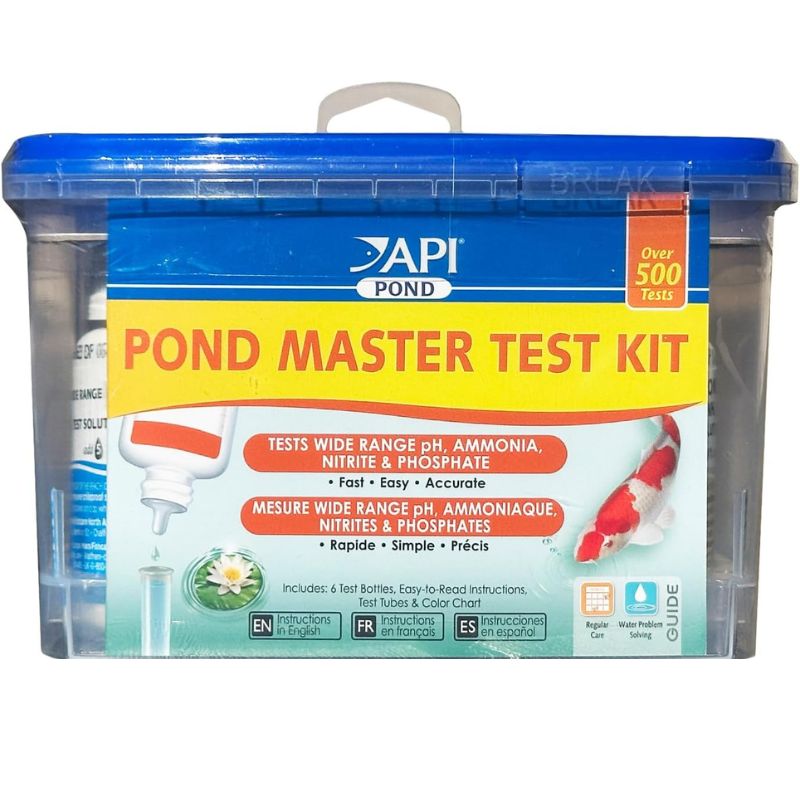 |
Pond Water Test Kit: API Pond Master Test Kit |
The API Pond Master Test Kit provides accurate liquid testing for important pond parameters like pH, ammonia, nitrite, and phosphate. It is ideal for koi pond owners who want reliable long-term water monitoring. |
|
|
Our Pick
2
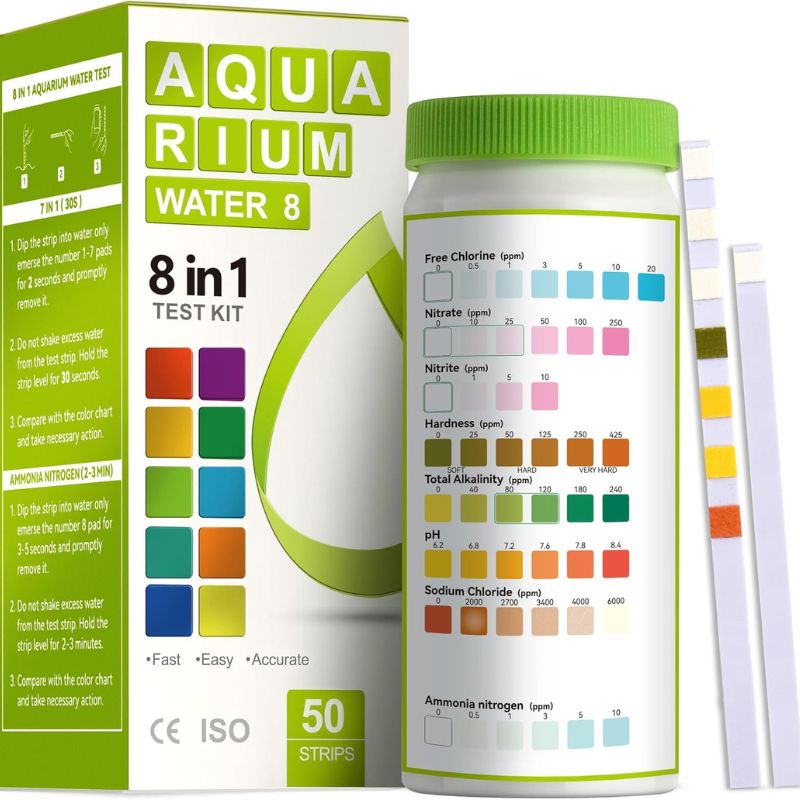 |
AAwipes 8-in-1 Aquarium Test Kit for Fish Tanks |
The AAwipes 8-in-1 Test Kit offers affordable and convenient water testing with multiple parameter checks. It is a great choice for beginners and routine pond maintenance. |
|
|
Our Pick
3
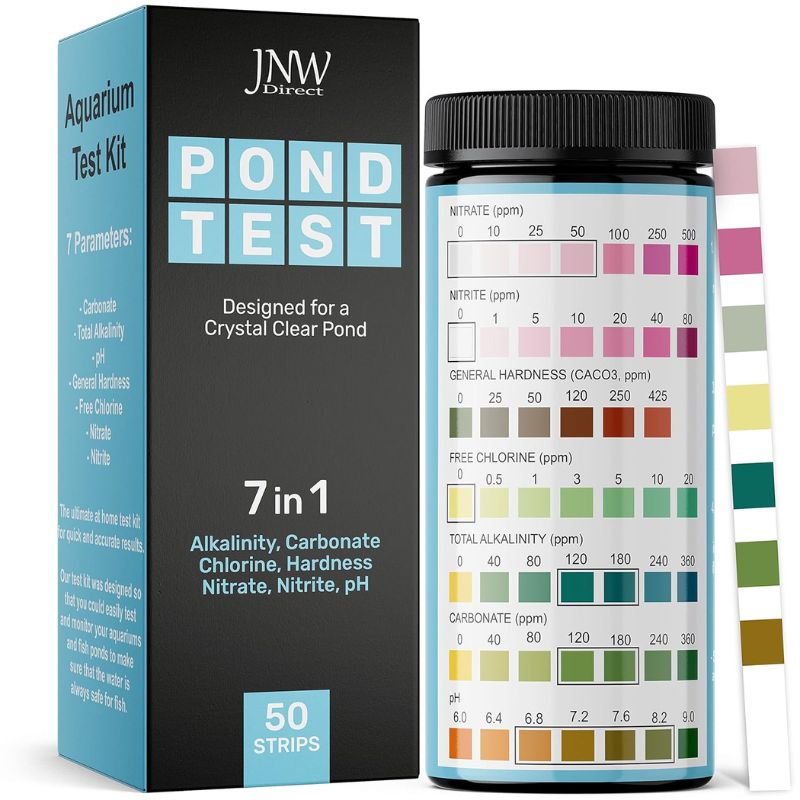 |
Pond Test Strips - 7-1 Pond Water Testing Kit with Ebook |
The JNW Direct Pond Test Strips provide quick and simple water testing at an affordable price. They are suitable for pond owners who need easy routine water checks. |
What Is the Best Pond Water Test Kit for Koi Ponds?
The best pond water test kit for koi ponds is one that provides accurate results, tests essential water parameters, and matches your maintenance needs. For most koi pond owners, a reliable liquid test kit like the API Pond Master Test Kit is a top choice because it offers accurate testing for important factors such as pH, ammonia, nitrite, and phosphate. However, the ideal kit depends on your experience level, budget, and how detailed you want your water monitoring to be.
When choosing a pond water testing kit, consider these important factors:
Accuracy
Accuracy is one of the most important features of any koi pond test kit. Koi are sensitive fish, and even small changes in water quality can create stress or health problems. Liquid test kits generally provide more precise results than basic test strips, making them a better option for serious koi keepers.
Number of Water Parameters Tested
A good pond water test kit should measure the key parameters that affect koi health, including:
-
pH levels
-
Ammonia
-
Nitrite
-
Nitrate
-
Water hardness (GH/KH)
-
Chlorine or other harmful substances
The more useful parameters a kit measures, the easier it is to identify and solve potential pond problems.
Ease of Use
The best test kit should be simple enough to use regularly. Test strips are faster and more convenient for quick checks, while liquid test kits require more steps but usually provide more detailed results. Choose a testing method that fits your maintenance routine.
Budget
Your budget also plays an important role. Affordable test strips are suitable for beginners and routine monitoring, while higher-quality liquid kits offer better long-term value because they provide more accurate testing and often include hundreds of tests.
Whether Your Pond Contains Koi
Koi ponds require more careful water monitoring than many standard garden ponds. Since koi produce more waste and are sensitive to ammonia and nitrite changes, choosing a dedicated koi pond water test kit can help maintain a stable and healthy environment.
For most koi pond owners, a combination of accuracy, reliability, and ease of use makes a quality liquid test kit the best overall choice. Beginners may prefer quick test strips, while experienced koi keepers often choose more detailed testing systems for long-term pond management.
Best Pond Water Test Kits Reviewed
After comparing the available pond water testing kits based on accuracy, testing method, parameters measured, ease of use, and overall value, we selected the following products for different types of koi pond owners. Whether you need detailed liquid testing or quick water checks, these options can help you monitor pond conditions and maintain healthier fish.
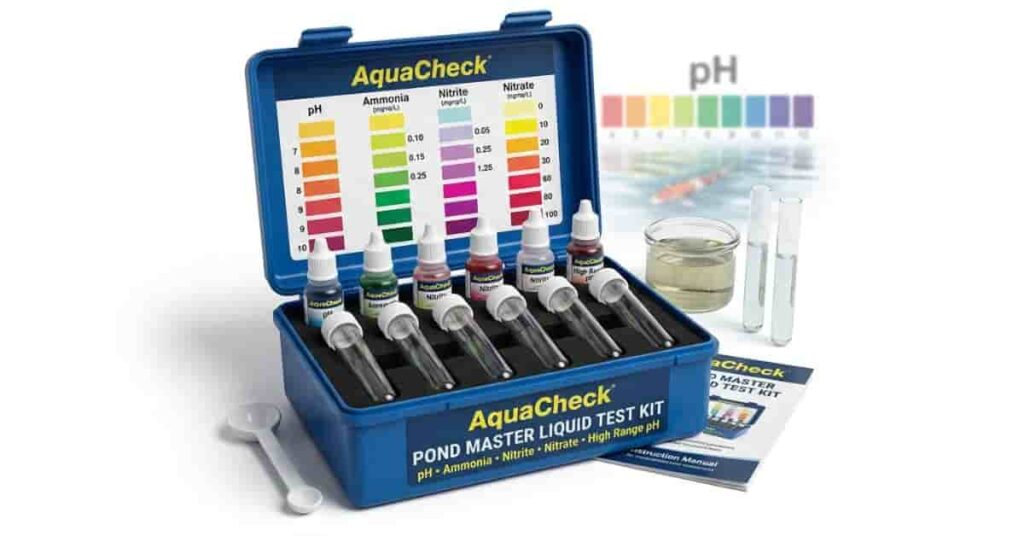
API Pond Master Test Kit
The API Pond Master Test Kit is our top pick for the best pond water test kit because it provides accurate liquid-based testing for some of the most important pond water parameters. Designed specifically for ornamental ponds, this kit helps koi owners monitor water quality and detect invisible problems before they affect fish health. With enough supplies for 500+ tests, it is a practical choice for regular pond maintenance and long-term water monitoring.
API Pond Master Test Kit – Key Features & Review
A reliable liquid testing solution designed to help pond owners monitor essential water parameters and maintain a healthy aquatic environment.
⭐ Key Features
- Liquid reagent testing system for improved accuracy
- Tests essential pond water parameters including:
- pH
- Ammonia
- Nitrite
- Phosphate
- Includes 6 testing solution bottles
- Comes with 4 test tubes and caps
- Includes color charts and easy instructions
- Provides 500+ accurate tests
- Designed specifically for ponds and garden water features
✅ Pros
- Highly rated by thousands of pond owners
- More accurate than basic test strips
- Large number of tests included
- Made specifically for pond water testing
- Excellent long-term value
⚠️ Cons
- Requires more steps compared with test strips
- Does not test every possible water parameter
- Results require manual color comparison
🎯 Best For
🏆 Why We Recommend It
We recommend the API Pond Master Test Kit because it delivers the best balance of accuracy, reliability, and long-term value. For koi keepers who want dependable water testing instead of quick estimates, this liquid test kit is one of the strongest choices available.
AAwipes 8-in-1 Aquarium Test Kit
The AAwipes 8-in-1 Test Kit is a convenient option for pond owners who prefer fast testing without mixing liquid solutions. These pond water test strips allow quick checks of multiple water conditions and are suitable for routine monitoring.
AAwipes 8-in-1 Aquarium Test Kit – Key Features & Review
A convenient test strip solution that helps pond owners quickly monitor multiple water parameters for routine pond maintenance.
⭐ Key Features
- 8-in-1 water testing strips
- Measures important pond water parameters:
- pH
- Ammonia
- Nitrite
- Nitrate
- Hardness
- Alkalinity
- Chlorine
- Sodium Chloride
- Provides quick results within minutes
- Available in multiple strip quantities
- Suitable for ponds and freshwater environments
✅ Pros
- Very easy to use
- Affordable testing option
- Checks multiple water parameters
- Ideal for frequent quick monitoring
- Beginner friendly design
⚠️ Cons
- Strip tests may be less precise than liquid kits
- Color interpretation can affect accuracy
🎯 Best For
🏆 Why We Recommend It
The AAwipes 8-in-1 Test Kit is a practical choice for pond owners who want convenience and broad testing coverage at an affordable price. It is especially useful for regular monitoring between detailed liquid tests.
🧂 Need the Correct Pond Salt Dosage?
After testing your pond water, use our Pond Salt Calculator to quickly calculate the correct amount of salt needed based on your pond volume and target salinity level.
Calculate Pond Salt Dosage JNW Direct 7-in-1 Pond Test Strips
For pond owners searching for an affordable pond water test kit, the JNW Direct 7-in-1 Test Strips provide a simple and low-cost way to monitor basic water conditions. They are designed specifically for ponds and offer quick results without complicated testing procedures.
JNW Direct Pond Test Strips – Key Features & Review
An affordable and beginner-friendly testing solution designed for quick pond water checks and basic water quality monitoring.
⭐ Key Features
- Includes 50 pond water test strips
- 7-in-1 testing system for multiple water parameters
- Measures:
- pH
- Nitrite
- Nitrate
- Hardness
- Chlorine
- Carbonate
- Alkalinity
- Provides quick results within minutes
- Includes a helpful testing guide ebook
- Suitable for regular pond water checks
✅ Pros
- Affordable testing option
- Very easy to use
- Designed for pond environments
- Convenient for beginners
⚠️ Cons
- Less detailed compared with liquid testing kits
- Does not test ammonia levels
🎯 Best For
🏆 Why We Recommend It
The JNW Direct Pond Test Strips are a great budget choice for users who need simple pond water checks without investing in a premium testing system. They provide a convenient way to monitor basic water conditions and are especially suitable for beginners and smaller ponds.
Why Every Koi Pond Needs a Water Test Kit
Maintaining a healthy koi pond is about more than keeping the water clear. Many dangerous water quality problems develop before they become visible, and koi can suffer from poor conditions long before obvious symptoms appear. A reliable pond water test kit helps you monitor important changes, maintain stable water conditions, and take action before small problems become major issues.
Regular testing gives you a clear picture of what is happening inside your pond ecosystem. By checking key parameters such as ammonia, nitrite, pH, nitrate, and other water conditions, you can create a safer environment where koi can grow, feed, and stay healthy.
Water Problems Often Can’t Be Seen
Clear pond water does not always mean healthy water. Harmful substances like ammonia and nitrite are invisible and can build up without changing the appearance of your pond.
These hidden problems can come from:
-
Fish waste buildup
-
Overfeeding
-
Dead leaves and organic debris
-
Overstocking koi
-
Poor filtration
Without regular testing, these issues may continue until fish begin showing signs of stress. A pond water test kit allows you to identify problems early and correct them before they become serious.
Early Detection Prevents Fish Stress
Koi are sensitive to sudden changes in water quality. Even small fluctuations in ammonia, nitrite, or pH can cause stress, reduce appetite, and weaken their natural defenses.
Regular water testing helps you:
-
Detect harmful changes quickly
-
Maintain stable water conditions
-
Adjust filtration or water changes when needed
-
Keep koi more active and healthy
Preventing stress is much easier than trying to recover fish after water quality has already declined.
Prevents Fish Disease
Poor water quality is one of the biggest contributors to koi health problems. When fish are exposed to unsafe conditions, their immune systems can become weaker, making them more vulnerable to infections and parasites.
Testing your pond water regularly helps reduce disease risks by allowing you to maintain:
-
Safe ammonia levels
-
Proper pH balance
-
Healthy filtration conditions
-
Stable pond chemistry
A water test kit is not a replacement for proper fish care, but it is an important tool for preventing many common pond problems.
Helps Control Algae Growth
Algae growth is often linked to imbalanced pond conditions. Excess nutrients such as nitrate and phosphate can encourage algae blooms, causing green water and reducing pond quality.
Regular testing helps you understand nutrient levels and take corrective steps, such as:
-
Improving filtration
-
Reducing overfeeding
-
Performing proper water changes
-
Managing nutrient buildup
By monitoring your water chemistry, you can create conditions that are less favorable for excessive algae growth.
Makes Salt Treatments Safer
Pond salt can be a useful tool for supporting koi health, reducing stress, and helping during certain treatments. However, adding salt without knowing your current water conditions can lead to incorrect dosing.
A water test kit helps you understand your pond before making changes and allows you to monitor conditions during treatments.
Before adding salt, always calculate the correct amount based on your pond volume and current salinity level.
Protects Your Pond Filter’s Biological Balance
Your pond filter contains beneficial bacteria that help break down fish waste and maintain a healthy nitrogen cycle. Sudden changes in water quality can disrupt this balance and affect the entire pond ecosystem.
Regular testing helps you monitor whether your filtration system is working properly by tracking important indicators such as ammonia and nitrite levels.
Maintaining stable water conditions supports:
-
Healthy beneficial bacteria
-
Better waste processing
-
Cleaner pond water
-
A safer environment for koi
A quality pond water test kit works together with your filtration system to maintain a balanced and healthy koi pond.
Recommended Water Parameters for Healthy Koi Ponds
Maintaining stable water conditions is one of the most important parts of koi pond care. Koi can adapt to different environments, but sudden changes in water chemistry can cause stress, weaken their immune system, and increase the risk of health problems.
The following water parameter ranges provide a general guide for keeping a healthy koi pond environment.
| Parameter | Ideal Range |
|---|---|
| pH | 7.0 – 8.5 |
| Ammonia | 0 ppm |
| Nitrite | 0 ppm |
| Nitrate | Below 40 ppm |
| KH (Carbonate Hardness) | 100 – 200 ppm |
| GH (General Hardness) | 100 – 250 ppm |
| Temperature | 60°F – 75°F (15°C – 24°C) |
Why These Parameters Matter
pH
Koi prefer stable pH levels rather than frequent changes. A pH range between 7.0 and 8.5 is generally suitable for koi ponds, but sudden fluctuations can cause stress even when the reading appears acceptable.
Ammonia
Ammonia is one of the most dangerous substances in a koi pond. It is produced from fish waste and organic debris. A healthy pond should maintain 0 ppm ammonia because even low levels can damage fish gills and create serious health problems.
Nitrite
Nitrite is another harmful compound created during the nitrogen cycle. Beneficial bacteria normally convert nitrite into less harmful nitrate. A properly balanced pond should have 0 ppm nitrite to protect koi from stress and toxicity.
Nitrate
Nitrate is less harmful than ammonia and nitrite, but high levels can contribute to poor water quality and excessive algae growth. Keeping nitrate below 40 ppm helps maintain a healthier pond environment.
KH (Carbonate Hardness)
KH measures the water’s buffering ability and helps prevent sudden pH swings. Maintaining adequate KH supports beneficial bacteria and keeps the pond’s biological filtration system stable.
GH (General Hardness)
GH measures minerals such as calcium and magnesium in the water. Proper hardness supports koi health, growth, and overall pond stability.
Temperature
Koi are cold-water fish that perform best in stable temperatures. A range of 60°F to 75°F (15°C to 24°C) supports good activity, digestion, and immune function.
Regular testing with a reliable koi pond water test kit helps you monitor these parameters and identify problems before they affect your fish. Stable water quality is the foundation of a healthy and thriving koi pond.
What Should a Pond Water Test Kit Measure?
A quality pond water test kit should measure the key water parameters that directly affect fish health, water stability, and the overall pond ecosystem. While clear water may look healthy, important chemical changes can happen without visible signs.
For koi ponds, regular testing helps identify problems early and allows you to maintain safe conditions for fish, beneficial bacteria, and aquatic plants. The most important parameters to monitor include pH, ammonia, nitrite, nitrate, hardness, and other factors that influence water quality.
pH
pH measures how acidic or alkaline your pond water is. It is one of the most important readings because koi need a stable pH environment to stay healthy.
A good pond water pH test kit helps you monitor changes and prevent sudden fluctuations that can stress fish. Most koi ponds perform well when pH remains stable between approximately 7.0 and 8.5.
Regular pH testing is especially important after:
-
Heavy rainfall
-
Large water changes
-
Adding treatments
-
Changing filtration systems
Stable pH is often more important than chasing a specific number.
Ammonia
Ammonia is one of the most dangerous water quality problems in koi ponds. It is produced from fish waste, uneaten food, and decomposing organic material.
A reliable pond ammonia test kit helps detect ammonia before it becomes harmful. High ammonia levels can damage koi gills, cause stress, reduce appetite, and weaken their immune system.
Healthy ponds should aim for:
Ammonia: 0 ppm
Common causes of ammonia buildup include:
-
Overstocked ponds
-
Overfeeding
-
New filtration systems
-
Poor biological filtration
Testing ammonia regularly is especially important in new ponds and heavily stocked koi ponds.
Nitrite
Nitrite is another toxic compound created during the nitrogen cycle. Beneficial bacteria normally convert ammonia into nitrite and then into nitrate, but an unbalanced pond can experience dangerous nitrite spikes.
A pond nitrite test kit helps you identify these problems before they affect koi health.
High nitrite levels can:
-
Stress fish
-
Reduce oxygen transport in the blood
-
Cause unusual swimming behavior
A healthy koi pond should maintain:
Nitrate
Nitrate is the final product of the nitrogen cycle and is much less harmful than ammonia or nitrite. However, excessive nitrate levels can contribute to poor water quality and encourage algae growth.
Testing nitrate helps you understand whether your pond filtration and maintenance routine are keeping up with fish waste production.
High nitrate levels may indicate:
-
Too much organic waste
-
Too many fish
-
Insufficient water changes
-
Poor plant balance
Keeping nitrate at manageable levels helps create a cleaner and healthier koi pond environment.
Phosphate
Phosphate is an important parameter for controlling algae growth. While it is not directly as dangerous to koi as ammonia or nitrite, excessive phosphate can encourage unwanted algae blooms.
High phosphate levels may come from:
-
Fish waste
-
Uneaten food
-
Organic debris
-
Tap water sources
Monitoring phosphate helps pond owners manage green water problems and maintain better overall water quality.
General Hardness (GH)
General Hardness (GH) measures the amount of dissolved minerals, mainly calcium and magnesium, in pond water.
GH plays an important role in:
-
Koi health
-
Fish growth
-
Osmotic balance
-
Overall water stability
A suitable GH level helps koi maintain proper body functions and supports a healthy pond ecosystem.
Carbonate Hardness (KH)
Carbonate Hardness (KH) measures the buffering capacity of your pond water. It helps prevent sudden pH changes and supports beneficial bacteria inside your filtration system.
Low KH levels can cause unstable pH swings, which may stress koi and disrupt the nitrogen cycle.
Testing KH is especially important for:
-
New ponds
-
Heavily stocked koi ponds
-
Ponds with biological filters
Maintaining proper KH helps keep your pond chemistry stable.
Chlorine & Chloramine
Chlorine and chloramine are chemicals commonly found in treated tap water. They are harmful to fish and beneficial bacteria, even at low levels.
If you add tap water during maintenance, testing for chlorine and chloramine can help prevent accidental damage to your pond ecosystem.
Many pond owners use water conditioners before adding tap water, especially during:
-
Water changes
-
Pond cleaning
-
Filter maintenance
Dissolved Oxygen (Advanced Ponds)
Dissolved oxygen measures the amount of oxygen available in your pond water. While not included in every basic pond water test kit, it can be valuable for advanced koi keepers.
Oxygen levels become especially important during:
-
Hot summer weather
-
High fish stocking levels
-
Algae blooms
-
Medication treatments
Adequate oxygen supports koi health, beneficial bacteria, and overall pond balance.
Final Thoughts
The best pond water test kit should measure the parameters that matter most for your pond type and maintenance routine. For koi ponds, monitoring pH, ammonia, nitrite, nitrate, KH, and GH provides a strong foundation for maintaining healthy water conditions.
Regular testing allows you to identify problems early, make informed adjustments, and create a safer environment for your koi.
How to Test Pond Water Correctly
Learning how to test pond water correctly is an important part of maintaining a healthy koi pond. Regular testing pond water quality allows you to detect problems early, monitor changes, and keep important water parameters within safe ranges.
Many pond problems start with small changes in ammonia, nitrite, pH, or other water conditions. By following the correct testing process, you can get more accurate results and make better decisions for your koi.
Follow these steps to learn how to test pond water quality properly.
Step 1: Collect a Fresh Water Sample
Start by collecting a clean water sample from your pond. The sample should represent the actual pond conditions, so avoid taking water directly from the surface where debris or floating particles may affect the results.
For the best results:
-
Collect water from the middle area of the pond
-
Take the sample away from filters, waterfalls, or return pipes
-
Use a clean container
-
Avoid touching the inside of the testing container
A fresh and uncontaminated sample helps ensure more accurate readings.
Step 2: Read the Instructions Carefully
Every pond water test kit works slightly differently. Before testing, carefully read the manufacturer’s instructions to understand the correct process.
Pay attention to:
-
Required water sample amount
-
Number of drops needed
-
Waiting time
-
Color chart instructions
-
Proper testing order
Following the instructions correctly prevents inaccurate readings and helps you get reliable results.
Step 3: Perform Each Test Correctly
Once your sample is ready, perform each test according to the kit instructions.
For liquid test kits:
-
Add the correct amount of water sample
-
Add testing solution drops carefully
-
Mix as instructed
-
Wait for the recommended time
-
Compare the color result
For test strips:
-
Dip the strip for the recommended time
-
Remove excess water correctly
-
Wait for the required reaction time
-
Compare colors with the chart
Avoid rushing the process because incorrect timing can affect results.
Step 4: Compare Results With Recommended Ranges
After completing the test, compare your results with the recommended ranges for a healthy koi pond.
Important parameters to check include:
-
pH
-
Ammonia
-
Nitrite
-
Nitrate
-
KH
-
GH
If any reading is outside the ideal range, investigate the possible cause before making major changes.
For example:
-
High ammonia may indicate waste buildup or filtration problems
-
Low KH may cause unstable pH
-
High nitrate may require maintenance or water changes
Step 5: Record the Results
Keeping a testing record helps you understand your pond’s long-term trends.
Record:
-
Testing date
-
Water temperature
-
pH level
-
Ammonia reading
-
Nitrite reading
-
Nitrate reading
-
Any treatments or changes made
A testing log makes it easier to identify patterns and notice problems before they become serious.
Step 6: Retest After Water Changes, Medications, or Salt Treatments
Water conditions can change after adding treatments, performing maintenance, or changing the pond environment.
Always retest after:
-
Large water changes
-
Adding pond salt
-
Using medications
-
Cleaning filters
-
Introducing new fish
Regular follow-up testing confirms that your pond remains stable and that any adjustments are working properly.
Final Tips for Accurate Pond Water Testing
For the most reliable results:
-
Test your pond regularly instead of waiting for problems
-
Use fresh testing supplies
-
Store test kits properly
-
Test at similar times when possible
-
Avoid making multiple changes at once
Correct testing is one of the easiest ways to protect your koi and maintain a balanced pond ecosystem.
Liquid Test Kits vs Test Strips: Which Is Better for Koi Ponds?
When choosing a pond water test kit, one of the biggest decisions is whether to use a liquid test kit or test strips. Both options can help monitor water quality, but they are designed for different types of pond owners.
Liquid test kits are generally preferred by experienced koi keepers who need more detailed and reliable results, while test strips are popular among beginners who want quick and convenient water checks.
The right choice depends on your experience level, testing routine, budget, and how accurately you want to monitor your koi pond.
Accuracy
Accuracy is one of the most important differences between liquid test kits and test strips.
Liquid test kits usually provide more precise results because they use measured water samples and chemical reagents. They are better suited for monitoring critical parameters such as ammonia, nitrite, and pH in koi ponds.
Test strips are faster but rely on color comparison, which can sometimes be harder to interpret. They are useful for quick checks but may not provide the same level of detail as liquid testing.
Winner: Liquid Test Kits
Cost Per Test
The cost per test depends on how often you test and how many tests the kit provides.
Liquid test kits often have a higher upfront price, but many include hundreds of tests, making the cost per use very affordable over time.
Test strips usually cost less initially, but the supply runs out faster because each strip can only be used once.
Winner: Liquid Test Kits for long-term value
Speed
Test speed is where test strips have an advantage.
Test strips can provide results within seconds or a few minutes, making them convenient for quick pond checks.
Liquid test kits require more steps, including adding reagents, waiting for reactions, and comparing results.
Winner: Test Strips
Ease of Use
Test strips are simple and require minimal preparation. They are ideal for pond owners who want a quick way to check basic water conditions.
Liquid test kits require more attention to instructions, accurate measurements, and proper timing. However, once you learn the process, they become easy to use.
Winner: Test Strips for simplicity
Best for Beginners
For beginners who are new to pond maintenance, test strips can be a convenient starting point. They allow new pond owners to monitor basic water conditions without learning a complicated testing process.
However, beginners with koi ponds should eventually consider adding a liquid test kit because koi are sensitive to ammonia and nitrite changes.
Best Choice for Beginners: Test Strips
Best for Experienced Koi Keepers
Experienced koi keepers usually prefer liquid test kits because they provide more detailed information about pond chemistry.
Serious koi owners often monitor water closely to maintain stable conditions, manage filtration performance, and prevent problems before fish show symptoms.
Best Choice for Experienced Koi Keepers: Liquid Test Kits
Liquid Test Kits vs Test Strips Comparison Table
| Feature | Liquid Test Kit | Test Strips |
|---|---|---|
| Accuracy | Higher accuracy with reagent-based testing | Good for quick checks but less detailed |
| Cost Per Test | Lower long-term cost with high test capacity | Lower upfront cost but fewer tests |
| Speed | Requires more time | Results available quickly |
| Ease of Use | Requires following multiple steps | Very simple to use |
| Best For | Experienced koi keepers and serious pond maintenance | Beginners and routine monitoring |
| Parameters Tested | Often provides detailed testing options | Convenient multi-parameter checks |
| Long-Term Value | Excellent for frequent testing | Good for occasional testing |
Final Recommendation
For most koi pond owners, the best approach is to use both methods together.
A liquid pond water test kit is ideal for accurate testing and diagnosing problems, while pond water test strips are useful for quick routine checks between detailed tests.
If maintaining a healthy koi pond is your priority, investing in a reliable liquid test kit provides better control over your pond’s water quality.
Common Pond Water Testing Mistakes
Regular water testing is one of the best ways to maintain a healthy koi pond, but incorrect testing habits can lead to inaccurate results and missed problems. Many pond owners only test when something goes wrong, while others overlook important details that affect water quality readings.
Avoiding these common mistakes will help you get more accurate results and make better decisions for your koi pond.
Ignoring Ammonia
One of the biggest mistakes pond owners make is ignoring ammonia levels. Ammonia is highly toxic to koi and can build up quickly due to fish waste, overfeeding, or an immature filtration system.
Even if your pond water looks clear, ammonia may still be present. Regularly testing ammonia helps you detect problems early and protect your fish from unnecessary stress.
A healthy koi pond should maintain:
Only Testing When Fish Look Sick
Waiting until koi show visible signs of stress or illness can allow water problems to become severe.
Fish may already be affected before you notice symptoms such as:
-
Loss of appetite
-
Slow movement
-
Gasping near the surface
-
Flashing or rubbing against surfaces
Regular testing helps identify water quality changes before they impact fish health. Prevention is much easier than correcting serious pond problems later.
Misreading Color Charts
Many pond water test kits use color charts to display results. Incorrectly reading these charts can lead to inaccurate conclusions.
Common mistakes include:
-
Comparing colors under poor lighting
-
Checking results too early or too late
-
Holding the test sample against the wrong background
-
Guessing between similar shades
Always follow the instructions included with your kit and compare results in proper lighting for better accuracy.
Using Expired Test Kits
Test kits do not last forever. Over time, testing solutions and strips can lose their effectiveness, leading to incorrect readings.
Before testing, check:
-
Expiration dates
-
Storage conditions
-
Bottle seals
-
Strip condition
Store your test kit in a cool, dry location and replace old supplies when needed to maintain reliable results.
Testing Immediately After Adding Salt
Testing your pond immediately after adding salt can create confusing results or lead to incorrect decisions.
Salt treatments should always be based on accurate pond volume calculations and current salinity levels. After adding salt, allow proper mixing time before checking conditions again.
Avoid adding more salt without testing because salt does not evaporate and can accumulate in your pond.
For accurate salt dosing, use our guide:
Internal Link: How Much Salt to Add to Pond
Forgetting Seasonal Changes
Pond conditions change throughout the year, and your testing routine should change with them.
Seasonal factors that affect water quality include:
-
Rising summer temperatures
-
Increased fish activity
-
Reduced oxygen levels
-
Falling leaves in autumn
-
Winter changes in fish metabolism
Testing more frequently during major seasonal transitions helps you maintain stable pond conditions.
Not Recording Previous Results
Many pond owners test their water but fail to keep records. Without a testing history, it is difficult to identify trends or understand whether conditions are improving or getting worse.
A simple pond testing log can include:
-
Date of testing
-
Water temperature
-
pH reading
-
Ammonia level
-
Nitrite level
-
Nitrate level
-
Recent maintenance changes
Keeping records helps you understand your pond’s normal patterns and quickly identify unusual changes.
Final Thoughts
Avoiding these common pond water testing mistakes can greatly improve your koi pond maintenance routine. Regular testing, accurate readings, and proper record keeping allow you to catch problems early and maintain a healthier environment for your fish.
A quality pond water test kit is only effective when it is used correctly and consistently.
Frequently Asked Questions (FAQs)
Find answers to common questions about pond water test kits, water parameters, testing frequency, accuracy, and maintaining healthy koi pond conditions.
The best pond water test kit depends on your testing needs, experience level, and budget. For most koi pond owners, a reliable liquid test kit such as the API Pond Master Test Kit is a strong choice because it provides accurate testing for important parameters like pH, ammonia, nitrite, and phosphate. Beginners may prefer test strips because they are faster and easier to use.
Most established koi ponds should be tested at least once a week or every two weeks. New ponds, heavily stocked ponds, or ponds experiencing problems may require more frequent testing. Testing is also recommended after adding fish, performing water changes, heavy rainfall, or using pond treatments.
Pond water test strips provide useful quick readings but are generally less precise than liquid test kits. They are a convenient option for routine monitoring, especially for beginners, while serious koi keepers often prefer liquid testing for more accurate results.
The most important koi pond water parameters include:
- Ammonia
- Nitrite
- Nitrate
- pH
- KH (Carbonate Hardness)
- GH (General Hardness)
- Temperature
Monitoring these factors helps maintain stable water conditions and prevents stress-related problems in koi.
Yes. Poor water quality can seriously harm or even kill koi fish. High ammonia, nitrite spikes, unstable pH, low oxygen, and excessive waste buildup can create dangerous conditions. Regular testing helps detect these problems before they become severe.
A separate ammonia test kit is not always required if your main pond test kit already measures ammonia. However, ammonia is one of the most important parameters to monitor, especially in new ponds or heavily stocked systems.
After adding pond salt, allow it to fully dissolve and mix throughout the pond before testing again. Avoid adding more salt based only on time because salt does not evaporate and can build up.
For accurate salt calculations, use our Pond Salt Calculator.
Most koi ponds perform well with a stable pH between 7.0 and 8.5. Stability is usually more important than achieving an exact number because sudden pH changes can stress koi.
Some aquarium water test kits can work for ponds, especially freshwater ponds. However, dedicated pond test kits are often better suited for outdoor environments and larger water systems.
Replace your pond water test kit when it reaches its expiration date, testing solutions change color, strips become damaged, or results seem inconsistent. Proper storage in a cool, dry place helps extend its life.

Michael Brooks and Sarah Lane are the co-founders of the Pond Pump Team, a trusted U.S.-based group helping homeowners and landscapers build better ponds and water features. Michael, an experienced pond engineer from Oregon, has worked for over 12 years on pump sizing, flow systems, and water circulation. Sarah, a pond designer from Colorado with nine years of experience, focuses on eco-friendly and easy-to-maintain pond and waterfall designs. Together, they’ve completed more than 180 pond projects and created tools like the Pond Pump Calculator and Pond Liner Calculator to make pond planning simple, accurate, and sustainable.
Need help with your pond setup? Contact the Pond Pump Team for expert advice and reliable solutions.