Introlduction
Have you noticed your pond fish flashing, rubbing against rocks, or acting stressed? A salt bath for pond fish can be a simple and effective treatment when used correctly. Many pond owners in the USA use salt baths to help fish recover from parasites, minor fungal infections, transport stress, and excess slime coat. However, this treatment is not suitable for every illness, and using the wrong salt concentration or leaving fish in the bath too long can cause serious harm. Understanding when to use a salt treatment for pond fish—and when to avoid it—is essential for keeping koi and other pond fish healthy.
In this guide, you’ll learn what a salt bath is, when it should and should not be used, how to prepare it safely, and the correct treatment duration. We’ll also cover common mistakes to avoid and link to helpful resources, including our Pond Salt Calculator, dosage guides, and related articles, so you can treat your fish with confidence.
Choosing the right type of salt is just as important as using the correct dosage. Before starting treatment, see our guide to the Best Pond Salt for Koi Ponds to compare safe options for koi and pond fish.
What Is a Salt Bath for Pond Fish?
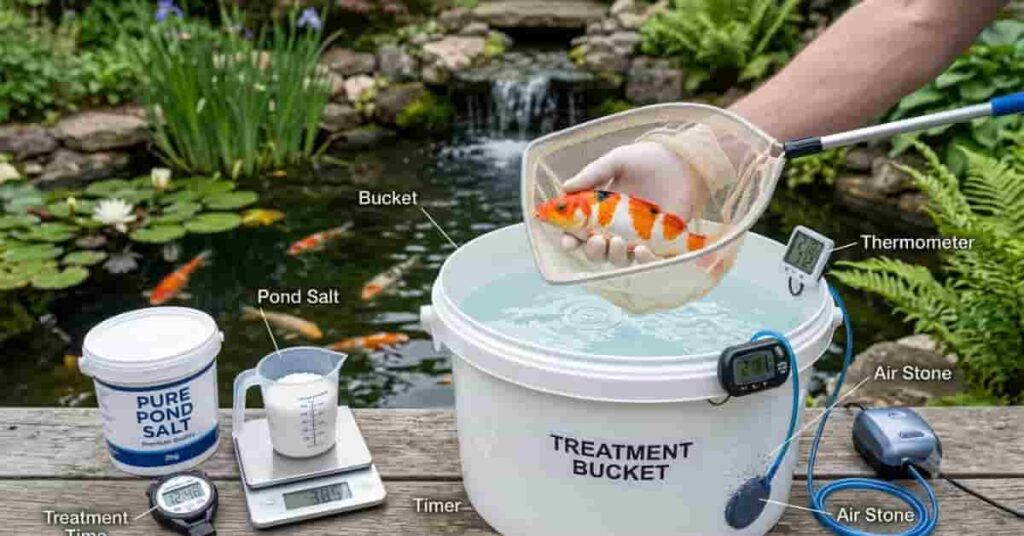
A salt bath for pond fish is a short-term treatment that places a single fish, or a small group of fish, in a separate container filled with pond water and a carefully measured amount of salt. The goal is to help reduce stress, support the fish’s natural slime coat, and assist with certain external parasites or minor fungal problems. Because the salt concentration is much higher than normal pond water, the treatment lasts only a limited time.
Unlike adding salt to your entire pond, a salt bath treats only the affected fish. Healthy fish, aquatic plants, beneficial bacteria, and the pond’s biological balance remain undisturbed. This targeted approach makes salt baths a practical option when only one or two fish need treatment.
A salt bath is not the right solution for every illness. It cannot cure all bacterial or viral diseases, and it should never replace proper water testing or an accurate diagnosis. If you are unsure whether a salt bath is appropriate, test your pond water first and identify the likely cause of the problem before starting treatment.
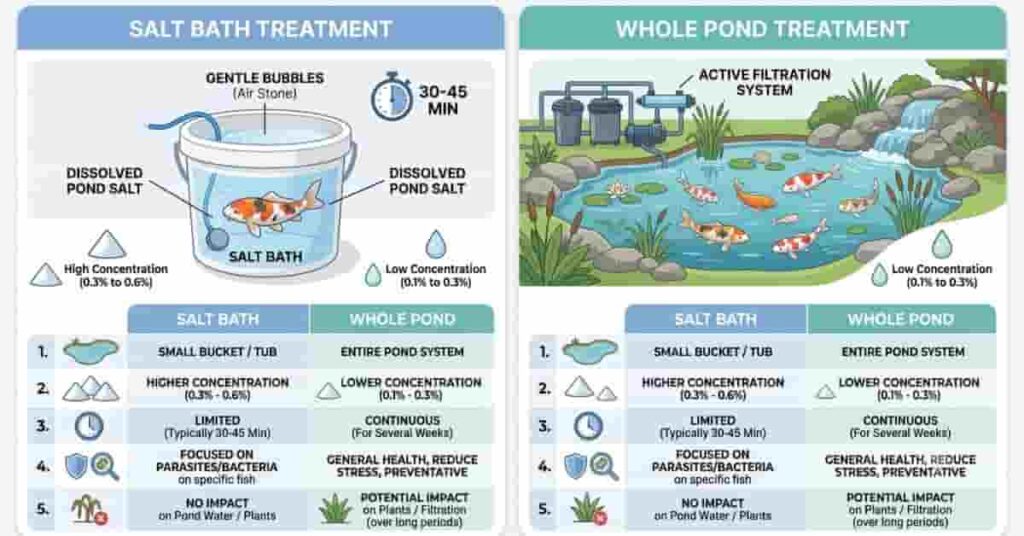
The table below highlights the main differences between a salt bath and a whole pond salt treatment.
| Salt Bath | Whole Pond Treatment |
|---|---|
| Treats fish in a small container | Salt is added to the entire pond |
| Uses a higher salt concentration | Uses a lower salt concentration |
| Lasts only a few minutes | Can remain in the pond for days or weeks |
| Targets one or a few sick fish | Treats the entire pond system |
| Used as a medical treatment | Mainly supports water conditioning and general fish care |
When Should You Give Pond Fish a Salt Bath?
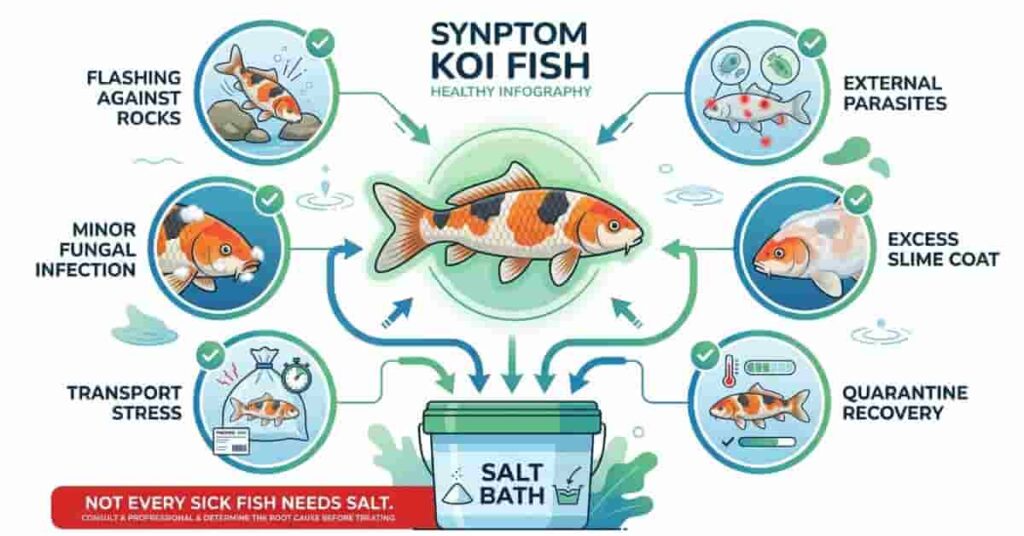
A salt bath can help pond fish recover from certain health problems, but it is not a cure for every illness. It works best as a short-term treatment for specific conditions that respond well to salt. Before treating your fish, observe its behavior and check your pond’s water quality. Poor water conditions often cause symptoms that look like disease.
You should consider a salt bath if your koi or pond fish shows one or more of these signs:
- Parasite infections: Salt baths may help reduce some external parasites, such as Costia or Trichodina, when used as part of a proper treatment plan.
- Flashing or rubbing: Fish that scrape against rocks, pond walls, or the bottom may be irritated by parasites or poor water quality.
- Excess slime coat: A thick or cloudy slime coat can be a sign of stress or irritation.
- Minor fungal infections: Small patches of fungus may improve with a correctly prepared salt bath, especially when caught early.
- Transport stress: Fish often become stressed after moving to a new pond. A salt bath may help reduce osmotic stress during recovery.
- Quarantine: Some pond keepers use salt baths before placing new fish into a quarantine tank to lower the risk of introducing external parasites.
- Recovery after shipping: Shipping can weaken fish and increase stress. A carefully monitored salt bath may support recovery before the fish enters the main pond.
Keep in mind that not every sick fish needs salt. Problems caused by poor water quality, bacterial infections, viral diseases, or serious injuries usually require a different treatment. Using salt when it is not needed can add unnecessary stress and delay proper care.
Pro Tip
Test your pond water before giving a salt bath. High ammonia, nitrite, or low oxygen levels can cause symptoms similar to disease. Fixing the water quality may solve the problem without any salt treatment.
Before giving any salt treatment, it’s a good idea to check your pond’s water quality. Our guide to the Best Pond Water Test Kits for Koi Ponds explains which kits accurately measure ammonia, nitrite, pH, and other important parameters.
Benefits of Salt Baths
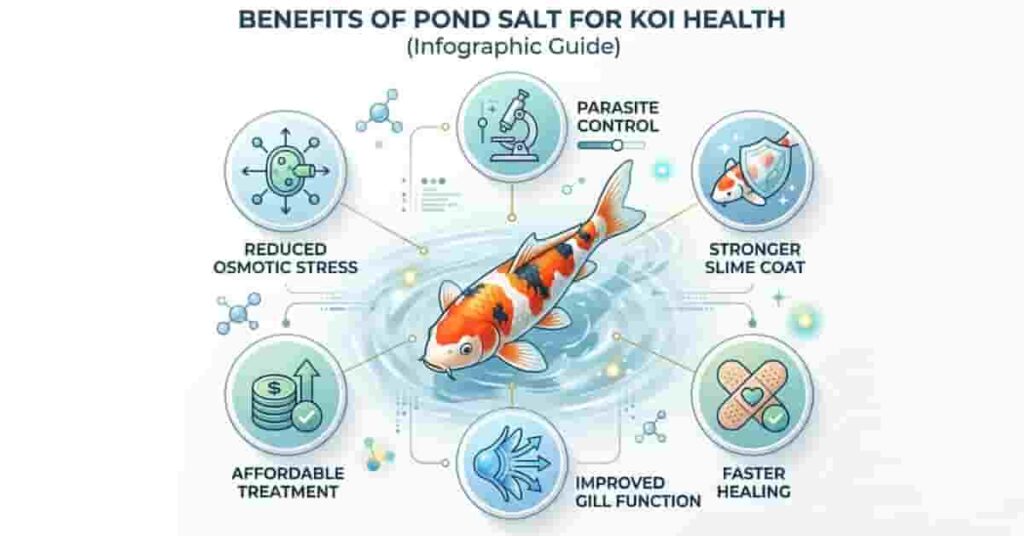
A properly prepared salt bath for pond fish offers several benefits when used for the right health conditions. Salt has been used by pond keepers for years because it is simple, affordable, and easy to apply. While it is not a cure for every disease, it can support a fish’s natural recovery and reduce stress during treatment.
Here are the main benefits of a salt bath:
- Reduces osmotic stress: Salt helps fish maintain a healthy balance of water and minerals. This reduces stress on the body, especially after transport, handling, or illness.
- Helps remove external parasites: A salt bath can help control certain external parasites that irritate the skin and gills. It works best when combined with proper diagnosis and good water quality.
- Stimulates the slime coat: The slime coat is a fish’s first line of defense against bacteria and parasites. Salt can encourage the production of this protective layer.
- Promotes healing: Fish recovering from minor injuries or early fungal infections may heal more comfortably after a correctly dosed salt bath.
- Supports healthy gill function: External parasites and excess mucus can affect breathing. A salt bath may help relieve irritation and improve normal gill function in some cases.
- An inexpensive treatment: Compared to many medications, salt is affordable, widely available, and easy to measure. This makes it a popular first-step treatment for many pond owners.
Although these benefits are helpful, a salt bath should always be used with the correct dosage and treatment time. Overusing salt or treating the wrong condition can cause more harm than good. Always observe your fish during treatment and stop the bath immediately if it shows signs of severe stress.
Risks and Side Effects of Salt Baths
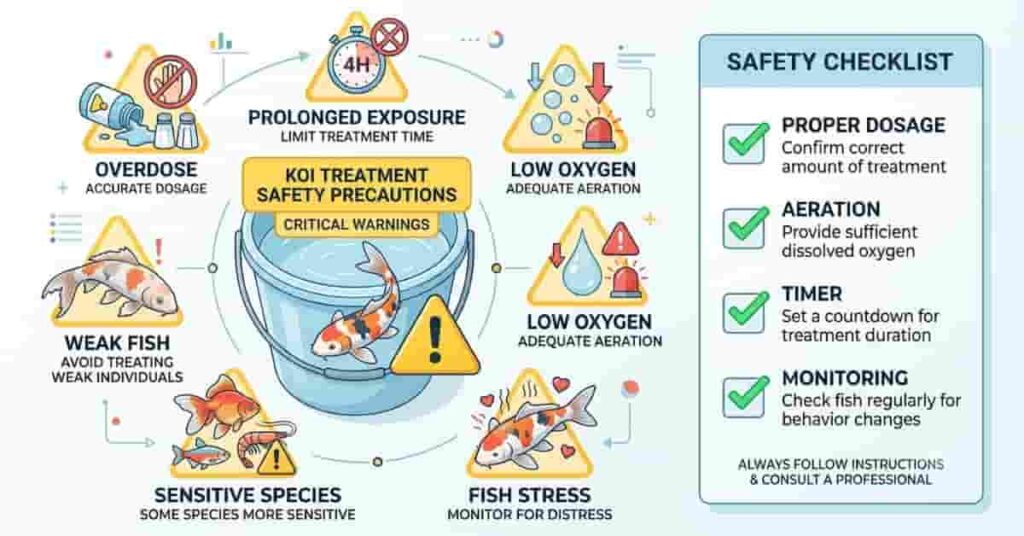
A salt bath for pond fish can be helpful, but it is not risk-free. Using too much salt or leaving a fish in the bath for too long can cause serious stress and even become life-threatening. For the safest results, always measure the salt carefully, monitor the fish throughout the treatment, and follow the recommended treatment time.
Here are the most common risks and side effects to watch for:
- Salt overdose: A salt concentration that is too high can damage a fish’s skin, gills, and internal balance. Always measure the correct amount of salt instead of guessing.
- Prolonged exposure: Fish should remain in a salt bath only for the recommended time. Leaving them in longer increases the risk of stress, breathing problems, and shock.
- Oxygen depletion: Salt baths should always have good aeration. Low oxygen levels can make breathing difficult, especially for already sick fish.
- Increased stress: Catching, handling, and moving fish into a treatment container naturally causes stress. Handle fish gently and keep treatment time as short as possible.
- Sensitive fish species: Not every freshwater fish tolerates salt equally. Some species are more sensitive and may react poorly to salt treatments. Research your fish species before using salt.
- Weak or severely ill fish: Fish that are extremely weak, badly injured, or close to death may not tolerate the additional stress of a salt bath. In these cases, improving water quality or seeking expert advice may be a safer first step.
⚠️ Warning
Never guess the salt dosage or treatment time. Always dissolve the salt completely, match the treatment water to your pond temperature, provide continuous aeration, and watch your fish closely. If the fish rolls over, loses balance, gasps heavily, or shows severe distress, remove it from the salt bath immediately and return it to clean, well-oxygenated pond water.
Key Takeaways
- Too much salt can seriously harm pond fish.
- Never leave fish in a salt bath longer than recommended.
- Good aeration is essential during treatment.
- Some fish species are more sensitive to salt than others.
- Weak or severely sick fish may need a different treatment approach.
What Type of Salt Is Safe for Pond Fish?
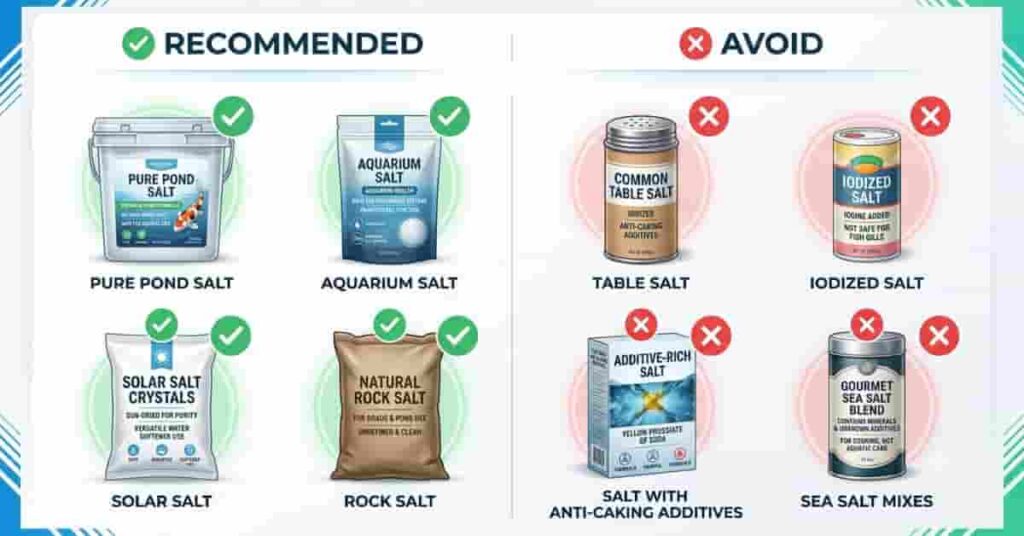
Choosing the right salt is just as important as using the correct dosage. A salt bath for pond fish should always use pure sodium chloride (NaCl) with no added chemicals, fragrances, or minerals. The wrong type of salt can harm your fish, irritate their gills, or affect water quality.
Recommended Salts for Pond Fish
The following types of salt are generally considered safe for freshwater pond fish when used correctly:
| Salt Type | Safe for Pond Fish? | Best Use |
|---|---|---|
| ✅ Pure Pond Salt | Yes | Best overall choice for salt baths and pond treatments |
| ✅ Solar Salt | Yes | Suitable if it contains only pure sodium chloride |
| ✅ Rock Salt | Yes | Safe when it is natural and free of additives |
| ✅ Aquarium Salt | Yes | Excellent for treating individual fish in salt baths |
Pure Pond Salt is the best option because it is made specifically for ponds and contains no harmful additives. Aquarium Salt is another reliable choice, especially for treating koi, goldfish, and other freshwater fish in a separate treatment container.
If you use Solar Salt or Rock Salt, always read the label carefully. Make sure the product contains only sodium chloride and does not include cleaning agents, softeners, or other chemicals.
Salts You Should Avoid
Some common household salts are not safe for pond fish.
- ❌ Table Salt: Often contains iodine and anti-caking agents that are unnecessary for fish.
- ❌ Salt with Iodine: Iodine is intended for human nutrition, not pond treatments.
- ❌ Salt with Anti-Caking Additives: Ingredients such as yellow prussiate of soda or other additives may affect fish and water quality.
- ❌ Sea Salt Mixes: Marine salt blends contain extra minerals designed for saltwater aquariums. They should not be used for freshwater pond fish unless specifically recommended for a particular treatment.
Before using any salt, check the ingredient label. If the product contains anything other than sodium chloride (NaCl), choose a different option.
Salt Bath Dosage Chart
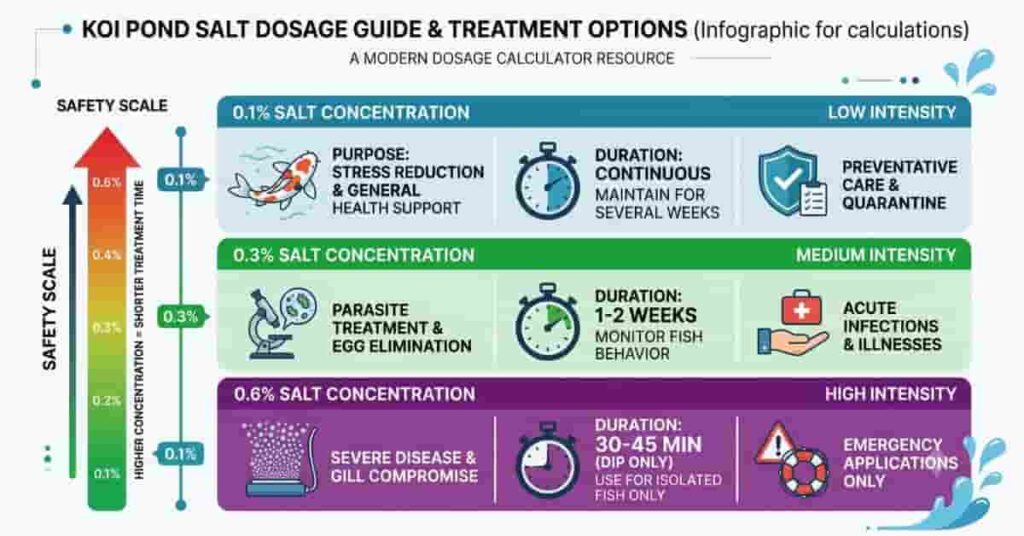
Using the correct salt concentration is the most important part of a successful salt bath for pond fish. Too little salt may not provide the desired effect, while too much salt can place unnecessary stress on your fish. Always measure the salt carefully and use a timer to avoid prolonged exposure.
The right concentration depends on why you are treating the fish. A lower concentration is commonly used for stress recovery, while a stronger solution may be used for certain external parasites. Regardless of the dosage, always observe your fish throughout the treatment. If it loses balance, rolls over, or struggles to breathe, end the salt bath immediately and return the fish to clean, well-oxygenated pond water.
The chart below provides general guidelines for common freshwater pond fish salt baths.
| Salt Concentration | Best Use | Recommended Duration |
|---|---|---|
| 0.1% | Stress recovery after transport, handling, or mild illness | 30–60 minutes |
| 0.3% | General treatment for mild external problems and slime coat support | 10–30 minutes |
| 0.6% | Short-term treatment for certain external parasites under close observation | 5–10 minutes |
These are general guidelines, not universal rules. The ideal concentration and treatment time can vary depending on the fish species, overall health, water temperature, and the condition being treated. Never increase the salt concentration or treatment time unless you are following trusted veterinary or aquatic health advice.
How to Prepare a Salt Bath (Step-by-Step)
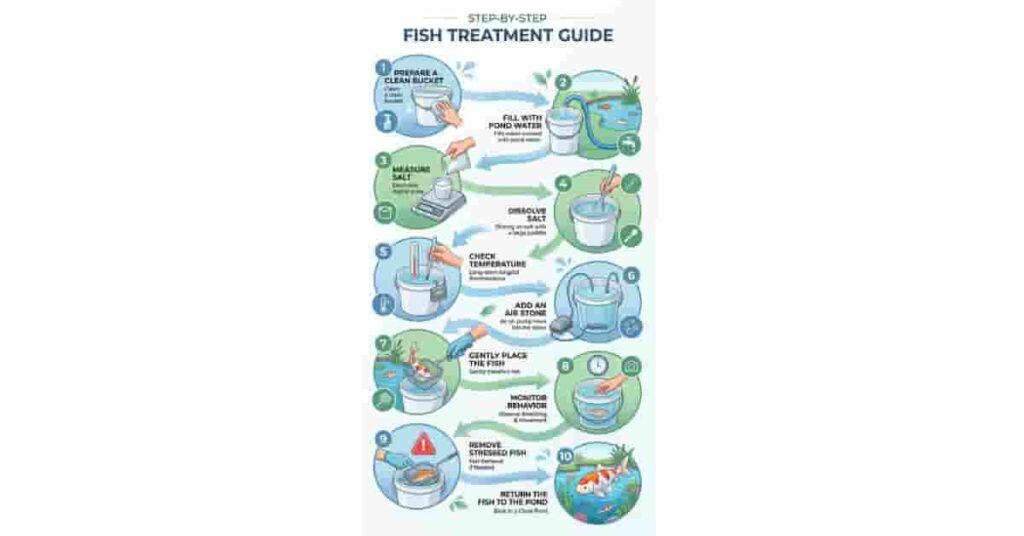
Preparing a salt bath for pond fish is simple, but every step matters. Using the correct salt concentration, matching the water temperature, and watching your fish closely will help make the treatment as safe as possible. Follow these steps carefully and never leave your fish unattended during the salt bath.
Step 1: Prepare a Clean Container
Choose a clean bucket, tub, or treatment container that has never been used with soap, detergents, or chemicals. It should be large enough for the fish to swim comfortably.
Step 2: Fill It with Pond Water
Fill the container with water taken directly from your pond. Using pond water helps prevent sudden changes in temperature, pH, and water chemistry.
Step 3: Measure the Correct Amount of Salt
Use the recommended salt concentration for your treatment. Measure the salt accurately with a measuring cup or digital scale. Never guess the amount.
Tip: Use our Pond Salt Calculator to calculate the correct amount of salt for your treatment container.
Step 4: Dissolve the Salt Completely
Add the salt to a separate container of warm pond water and stir until it dissolves completely. Then pour the solution into the treatment container. Never place undissolved salt crystals directly on the fish.
Step 5: Match the Water Temperature
Check the water temperature with a thermometer. The treatment water should match your pond temperature as closely as possible to avoid temperature shock.
Step 6: Add Aeration
Place an air stone in the container before adding the fish. Good aeration keeps oxygen levels high and helps the fish breathe comfortably during treatment.
Step 7: Place the Fish Gently
Use a soft fish net to carefully transfer the fish into the salt bath. Handle the fish as little as possible to reduce stress.
Step 8: Monitor the Fish Continuously
Watch your fish for the entire treatment. Normal swimming is expected, but signs of severe stress require immediate action.
Step 9: Remove the Fish Immediately if It Shows Stress
End the salt bath right away if the fish rolls over, loses balance, gasps heavily, or stops swimming normally. Return it to clean, well-oxygenated pond water.
Step 10: Return the Fish to the Pond
Once the treatment time is complete, gently move the fish back to the pond or quarantine tank. Continue watching it for several hours to ensure it recovers normally.
How Long Should Pond Fish Stay in a Salt Bath?
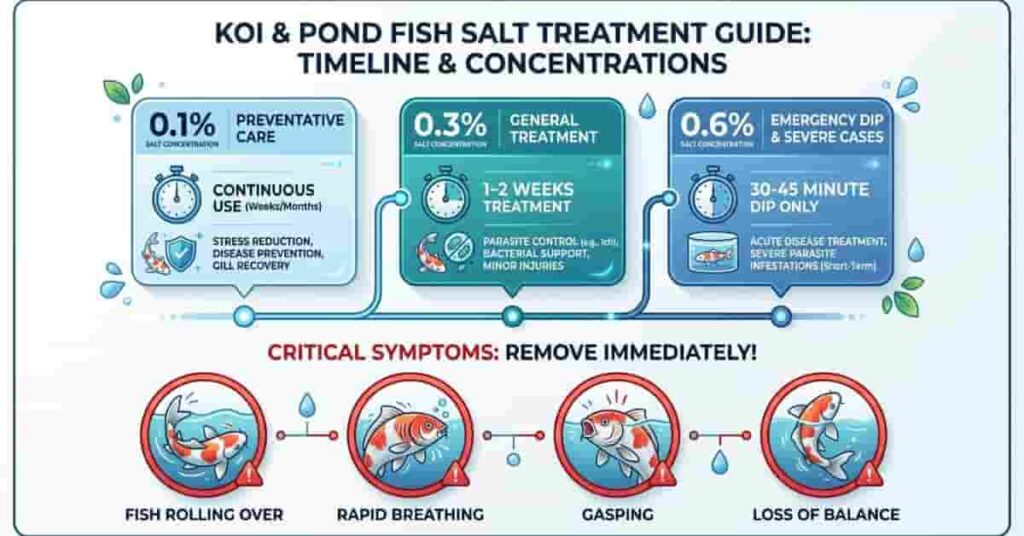
The length of a salt bath for pond fish depends on the salt concentration and the condition being treated. Higher salt concentrations should always be used for shorter periods because they place more stress on the fish. Lower concentrations are gentler and can be used for a longer time.
During the treatment, watch your fish continuously. Never leave it unattended, even for a few minutes. Every fish reacts differently, and some may show signs of stress sooner than others. If you are treating koi or goldfish for the first time, it is safer to use the lower end of the recommended treatment time.
The table below provides general guidelines for freshwater pond fish.
| Salt Concentration | Recommended Duration | Typical Use |
|---|---|---|
| 0.1% | 30–60 minutes | Stress recovery and mild support |
| 0.3% | 10–30 minutes | General salt bath treatment |
| 0.6% | 5–10 minutes | Short-term treatment for certain external parasites |
Remove the Fish Immediately If You Notice:
- Loss of balance or rolling onto its side
- Heavy or rapid gill movement
- Gasping at the surface
- Sudden panic or frantic swimming
- Lying motionless at the bottom
- No response to gentle movement in the water
If any of these signs appear, end the treatment immediately and return the fish to clean, well-oxygenated pond water. Continue observing the fish until it resumes normal swimming and breathing.
Remember that these treatment times are general guidelines. The ideal duration can vary depending on the fish species, age, health, water temperature, and the reason for treatment. When in doubt, choose a shorter treatment time and monitor your fish closely.
Signs the Salt Bath Is Working
A salt bath for pond fish does not produce instant results, but you may notice gradual improvements within a few hours or over the next day, depending on the condition being treated. The fish should appear more comfortable and less irritated after a successful treatment. Continue monitoring your fish closely after it returns to the pond or quarantine tank.
Look for these positive signs:
- Less flashing: The fish rubs against rocks, plants, or the pond bottom less often. This may indicate reduced irritation from external parasites.
- Calmer swimming: Healthy fish swim smoothly and naturally instead of darting around or acting restless.
- Improved breathing: Gill movement becomes slower and more regular, showing the fish is breathing more comfortably.
- Reduced mucus: An excessive slime coat may begin to return to a normal level as the fish recovers.
- Normal posture: The fish holds itself upright and maintains good balance while swimming and resting.
- Better appetite: As the fish feels better, it may begin eating normally again. Offer a small amount of food only after it has fully recovered from the treatment.
Keep in mind that a salt bath is only one part of the recovery process. If symptoms continue, become worse, or return after treatment, check your pond’s water quality and identify the underlying cause. Some diseases require medications or other treatments beyond salt.
Aftercare Following a Salt Bath
A salt bath for pond fish does not end when the treatment is over. Proper aftercare is just as important as the salt bath itself. The next 24 to 48 hours are a good time to watch your fish closely and make sure it continues to recover. A healthy pond environment will give your fish the best chance to heal.
Observe Your Fish
After returning the fish to the pond or quarantine tank, watch its behavior for several hours. Healthy recovery signs include calm swimming, steady breathing, and normal posture. If symptoms return or become worse, investigate the underlying cause instead of repeating the treatment immediately.
Reduce Stress
Keep the pond as calm as possible. Avoid catching or handling the fish again unless it is absolutely necessary. Minimize loud noises, sudden movements, and unnecessary disturbances around the pond.
Improve Water Quality
Clean, stable water supports faster recovery than any treatment alone. Check your filtration system, remove debris, and perform a partial water change if needed. Good water quality helps reduce stress and lowers the risk of future disease.
Monitor Ammonia and Other Water Parameters
Test your pond water over the next few days. Pay close attention to ammonia, nitrite, pH, and temperature. Poor water quality can cause many of the same symptoms that led to the salt bath.
Do Not Repeat the Salt Bath Unnecessarily
Avoid giving repeated salt baths unless there is a clear reason to do so. Frequent treatments can place additional stress on your fish. If the fish does not improve after the first treatment, identify the cause before considering another salt bath or a different treatment.
Feed Lightly
Wait until your fish appears calm and active before feeding. Start with a small amount of high-quality food and remove any uneaten feed to keep the water clean. A healthy appetite is often a positive sign of recovery.
Common Salt Bath Mistakes
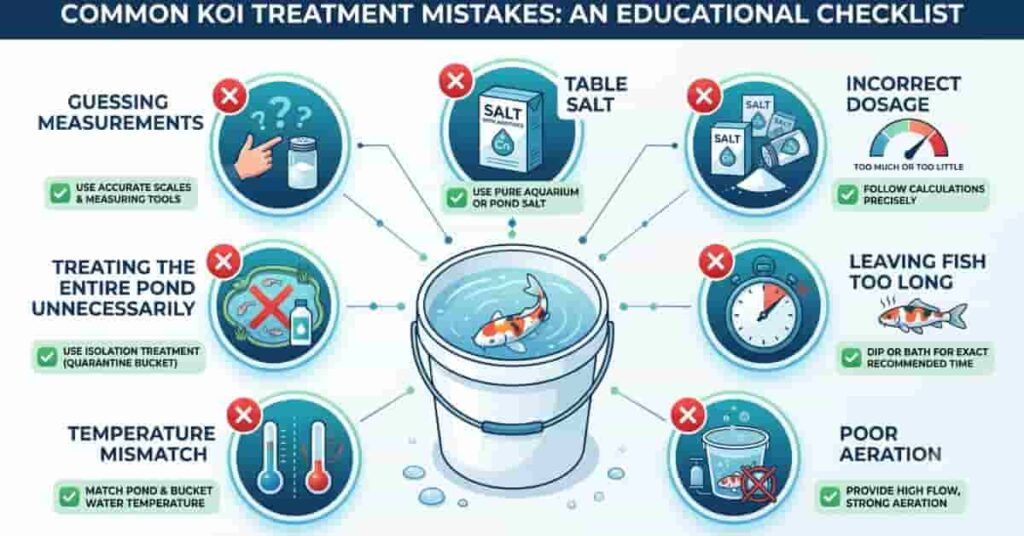
A salt bath for pond fish is effective only when it is done correctly. Small mistakes can increase stress, delay recovery, or even harm your fish. Fortunately, most of these problems are easy to avoid with careful preparation and accurate measurements.
Here are the most common salt bath mistakes made by beginners:
Using Table Salt
Regular table salt is not the best choice for pond fish. It often contains iodine and anti-caking additives that are unnecessary for freshwater fish. Always use Pure Pond Salt, Aquarium Salt, or another additive-free sodium chloride product.
Using the Wrong Dosage
Too much salt can damage the fish’s gills and increase stress. Too little salt may not provide the intended benefit. Always measure the salt accurately instead of estimating the amount.
Leaving the Fish in Too Long
Treatment time is just as important as salt concentration. Leaving a fish in the salt bath beyond the recommended duration increases the risk of shock and breathing problems. Always use a timer.
Poor Aeration
Salt baths should have continuous aeration with an air stone. Without enough oxygen, fish may struggle to breathe, especially if they are already weak or sick.
Temperature Mismatch
The treatment water should match your pond’s temperature as closely as possible. Sudden temperature changes can shock the fish and add unnecessary stress.
Treating the Entire Pond Unnecessarily
A salt bath is designed for individual fish, not the whole pond. If only one fish is sick, there is usually no need to increase the salinity of the entire pond. Treating the whole pond may affect plants, beneficial bacteria, and healthy fish.
Guessing Measurements
Never estimate the amount of salt or the volume of water. Even small measuring errors can change the salt concentration. Use a measuring cup, digital scale, or Pond Salt Calculator to calculate the correct dosage.
Key Takeaways
- Never use table salt with iodine or additives.
- Measure both the salt and water volume accurately.
- Follow the recommended treatment time.
- Always provide good aeration during the salt bath.
- Match the treatment water temperature to the pond.
- Treat only the affected fish unless a whole pond treatment is necessary.
When Should You Avoid Salt Treatments?
A salt bath for pond fish is helpful in many situations, but it is not always the right choice. Some fish, pond conditions, and health problems require a different approach. Using salt when it is unnecessary can increase stress and delay proper treatment.
Avoid salt treatments in the following situations:
Sensitive Fish Species
Not all freshwater fish tolerate salt equally. Some species are naturally more sensitive to changes in salinity and may become stressed during a salt bath. Always research your fish species before using salt.
Severely Injured or Extremely Weak Fish
Fish that are badly injured, unable to swim properly, or close to death may not tolerate the added stress of a salt bath. In these cases, improving water quality and seeking expert advice may be a safer first step.
Already High Pond Salinity
If your pond already contains salt from previous treatments, adding more can raise the salinity to unsafe levels. Test the water before using additional salt and avoid unnecessary treatments.
Medication Conflicts
Some fish medications should not be combined with salt unless the product instructions specifically allow it. Mixing treatments without guidance may reduce their effectiveness or increase stress on the fish. Always read the medication label carefully.
Planted Ponds
Salt can damage or kill many aquatic plants. If your pond contains water lilies, marginal plants, or other freshwater vegetation, avoid adding salt to the entire pond unless it is absolutely necessary. A separate salt bath is usually a safer option.
Unknown Illness
Never assume that every sick fish needs salt. Flashing, poor appetite, and breathing problems can also result from poor water quality, bacterial infections, viral diseases, or parasites that require different treatments. Test your pond water and identify the cause before using salt.
⚠️ Important: If you are unsure what is making your fish sick, check your water quality first. High ammonia, nitrite, low oxygen, or sudden temperature changes often cause symptoms that look like disease. Correcting the water conditions may solve the problem without using salt.
Not all salts are suitable for fish treatments. If you’re unsure which product to buy, read our Best Pond Salt for Koi Ponds guide for safe recommendations and products to avoid.
Salt Bath vs Whole Pond Salt Treatment
Many pond owners confuse a salt bath for pond fish with a whole pond salt treatment, but they are not the same. Both methods use salt, yet they serve different purposes. Choosing the right approach can improve your fish’s recovery while protecting your pond’s plants, beneficial bacteria, and overall water quality.
A salt bath is a short-term treatment for one sick fish or a small group of fish. The fish is placed in a separate container with a higher salt concentration for a limited time. This method targets specific health problems without changing the salinity of the entire pond.
A whole pond salt treatment adds a lower concentration of salt directly to the pond. It affects every fish and the entire pond ecosystem. This approach may be appropriate in certain situations, but it should only be used after checking your pond’s water quality, plant life, and existing salt levels.
The table below compares both treatment methods.
| Salt Bath | Whole Pond Salt Treatment |
|---|---|
| Treats one or a few fish | Treats all fish in the pond |
| Uses a higher salt concentration | Uses a lower salt concentration |
| Lasts a few minutes | Lasts several days or longer |
| Performed in a separate container | Salt is added directly to the pond |
| Best for parasites, mild fungal issues, and transport stress | Best when the entire pond requires treatment or salinity support |
| Does not affect pond plants or beneficial bacteria | May affect sensitive plants and the pond ecosystem |
| Uses less salt | Requires much more salt |
Which One Should You Choose?
Choose a salt bath if:
- Only one or two fish are sick.
- Your pond contains aquatic plants.
- You need a targeted treatment for parasites or minor fungal infections.
- You want to avoid changing the pond’s overall salinity.
A whole pond salt treatment may be appropriate if:
- Multiple fish are affected by the same problem.
- Your treatment plan requires increasing the pond’s salinity.
- You have confirmed that your pond plants and filtration system can tolerate the added salt.
- You have tested the existing salinity and calculated the correct dosage.
For most pond owners, a salt bath is the safer first option because it treats the affected fish without exposing the entire pond to unnecessary salt.
Conclusion
A salt bath for pond fish can be a safe and effective treatment when used correctly. In this guide, you learned when to use a salt bath, the right salt types, proper dosage, treatment times, common mistakes to avoid, and the care your fish needs afterward. You also discovered when a salt treatment for pond fish is appropriate and when another solution may be a better choice.
Always identify the cause of your fish’s illness before adding salt. Good water quality, careful observation, and accurate measurements are the keys to successful treatment and long-term pond health.
Need help calculating the correct salt amount? Try our Pond Salt Calculator and explore our other pond care guides for more expert advice. If you’ve used a salt bath for your koi or pond fish, share your experience in the comments to help other pond owners learn from your success.

Michael Brooks and Sarah Lane are the co-founders of the Pond Pump Team, a trusted U.S.-based group helping homeowners and landscapers build better ponds and water features. Michael, an experienced pond engineer from Oregon, has worked for over 12 years on pump sizing, flow systems, and water circulation. Sarah, a pond designer from Colorado with nine years of experience, focuses on eco-friendly and easy-to-maintain pond and waterfall designs. Together, they’ve completed more than 180 pond projects and created tools like the Pond Pump Calculator and Pond Liner Calculator to make pond planning simple, accurate, and sustainable.
Need help with your pond setup? Contact the Pond Pump Team for expert advice and reliable solutions.