Table of Contents
Introduction
Is your pond turning green no matter how often you clean it? Learning how to get rid of pond algae is one of the biggest challenges for new pond owners in the USA. Algae can spread quickly, turning clear water into a cloudy mess and covering rocks, plants, and waterfalls with slippery growth. If left untreated, it can reduce your pond’s beauty and upset the balance of its ecosystem.
The good news is that algae problems are usually caused by a few common issues, such as too much sunlight, excess nutrients, or poor water circulation. Once you understand the cause, choosing the right solution becomes much easier. Whether you’re trying to remove algae from a pond naturally or need a faster fix for stubborn green water or string algae, there are safe and effective options available.
In this guide, you’ll learn what causes pond algae, the fastest ways to remove it, natural and chemical treatment methods, and practical tips to stop it from coming back. By the end, you’ll know how to keep your pond clear, healthy, and easy to maintain all year.
If you want to control algae without immediately relying on chemical treatments, there are several natural approaches worth considering. Learn how to get rid of pond algae naturally with fish-friendly, chemical-free methods.
What Causes Pond Algae Growth?
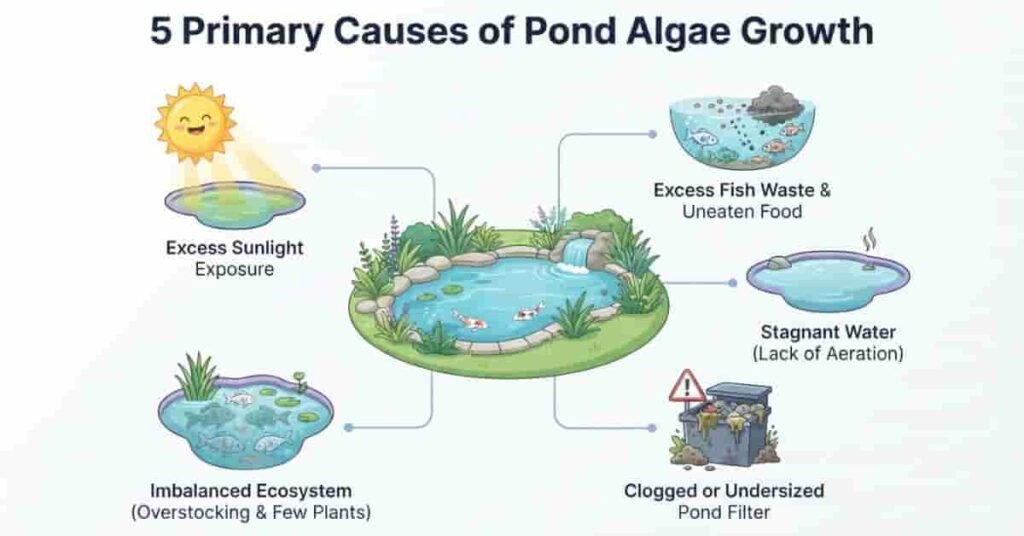
Pond algae grow when conditions allow them to multiply faster than the pond can stay balanced. Sunlight, nutrients, and poor water movement are the biggest reasons behind most algae problems. Understanding these causes makes it easier to choose the right treatment instead of relying on temporary fixes.
Too much sunlight exposure gives algae the energy they need to grow quickly. Most ponds need several hours of sunlight each day, but constant direct sun can trigger green water or thick algae blooms. Adding floating plants or placing the pond where it receives partial shade can help reduce this problem.
Excess nutrients are another common cause. Fish waste, leftover food, decaying leaves, and other organic debris release nutrients into the water. Algae use these nutrients as food, allowing them to spread much faster. Feeding fish only what they can eat in a few minutes helps reduce waste.
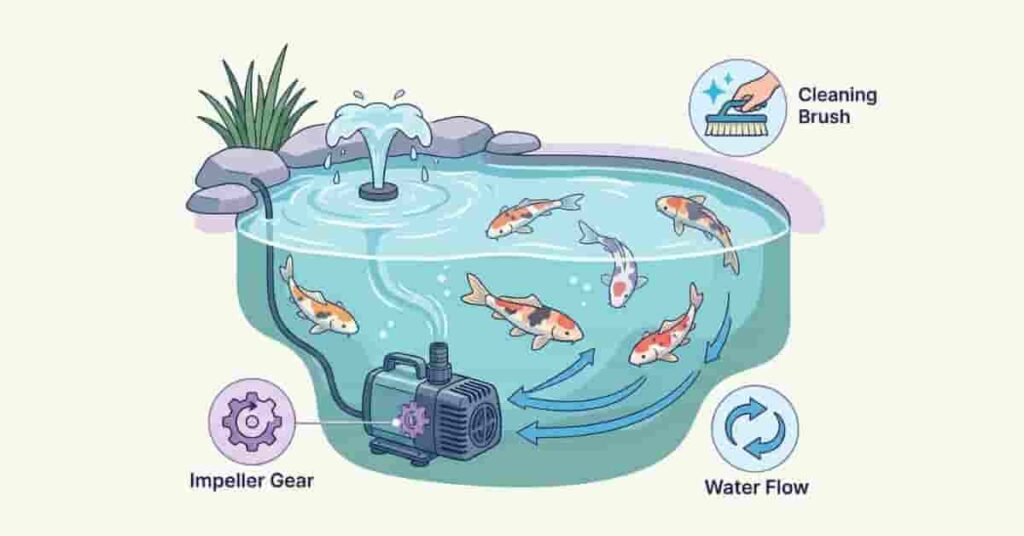
Stagnant water also encourages algae growth. When water does not circulate well, oxygen levels can drop and nutrients collect in one area. A pond pump or waterfall keeps water moving and creates a healthier environment for fish and beneficial bacteria.
Poor filtration makes the problem worse. A filter removes debris and supports beneficial bacteria that break down waste before algae can use it. If the filter is too small or clogged, nutrients build up quickly.
Finally, an imbalance in the pond ecosystem often leads to recurring algae issues. Too many fish, too few aquatic plants, or a lack of beneficial bacteria can upset the natural balance. A healthy pond relies on all these elements working together to keep algae under control.
Expert Tip: Instead of treating algae first, identify the root cause. Fixing the underlying problem helps prevent algae from returning after treatment.
Types of Pond Algae You Need to Remove
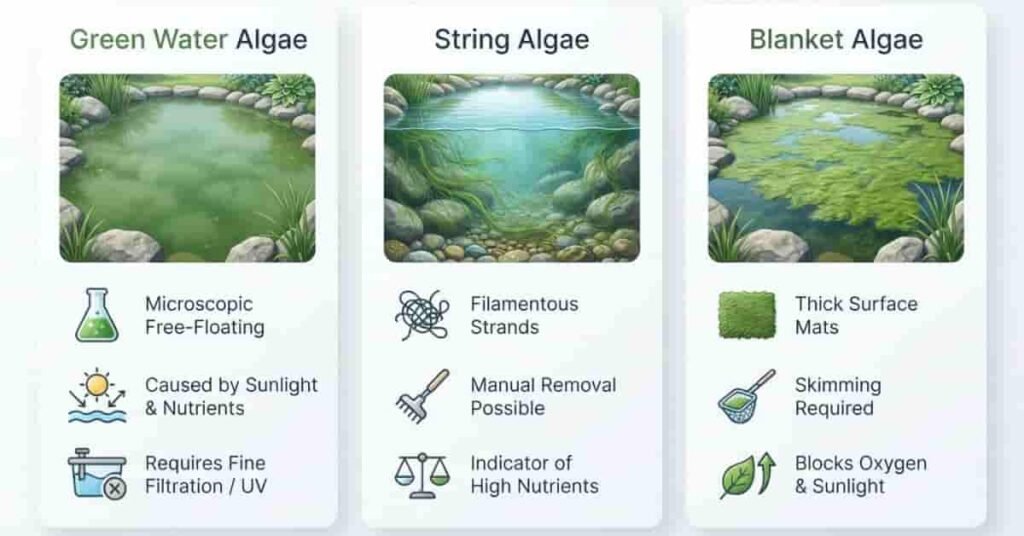
Not all pond algae look the same, and each type requires a slightly different approach. Identifying the algae in your pond helps you choose the fastest and safest treatment. The three most common types are green water algae, string algae, and blanket algae.
Green Water Algae (Cloudy Green Water)
Green water algae consist of tiny floating algae cells that make pond water look cloudy or bright green. Even though you cannot see individual algae, they multiply rapidly in warm, sunny conditions with excess nutrients.
This type of algae usually does not attach to rocks or plants. Instead, it floats throughout the water, reducing visibility and making the pond look unhealthy. UV clarifiers, improved filtration, and better nutrient control are often the most effective solutions.
Pro Tip: If you cannot see fish more than a few inches below the surface, green water algae are likely the main problem.
String Algae (Hair-Like Growth)
String algae grow in long, green strands that attach to rocks, waterfalls, pond liners, and plant baskets. They are sometimes called hair algae because of their thread-like appearance.
Small amounts are normal, but rapid growth can block water flow, trap debris, and spoil the pond’s appearance. Manual removal is usually the first step. After removing the algae, improve circulation and reduce excess nutrients to slow future growth.
Expert Tip: Remove string algae by hand before using any treatment. This reduces nutrient release from dying algae.
Blanket Algae (Surface Mats)
Blanket algae form thick mats that spread across the pond surface or cover rocks, edges, and shallow areas. They often begin as string algae before growing into dense layers that trap debris and block sunlight from reaching underwater plants.
Large blanket algae mats can reduce oxygen levels as they die and decompose. Removing the mats by hand, improving filtration, increasing aeration, and controlling nutrient levels usually provide the best long-term results.
Pro Tip: Never remove all blanket algae at once in a heavily affected pond. Gradual removal helps avoid sudden water quality changes that may stress fish.
Pond owners with koi or goldfish need to be especially careful when treating algae. For safer options, see how to get rid of pond algae without killing fish and learn how to protect fish while controlling excessive growth.
Fast Methods to Get Rid of Pond Algae (Immediate Fix)
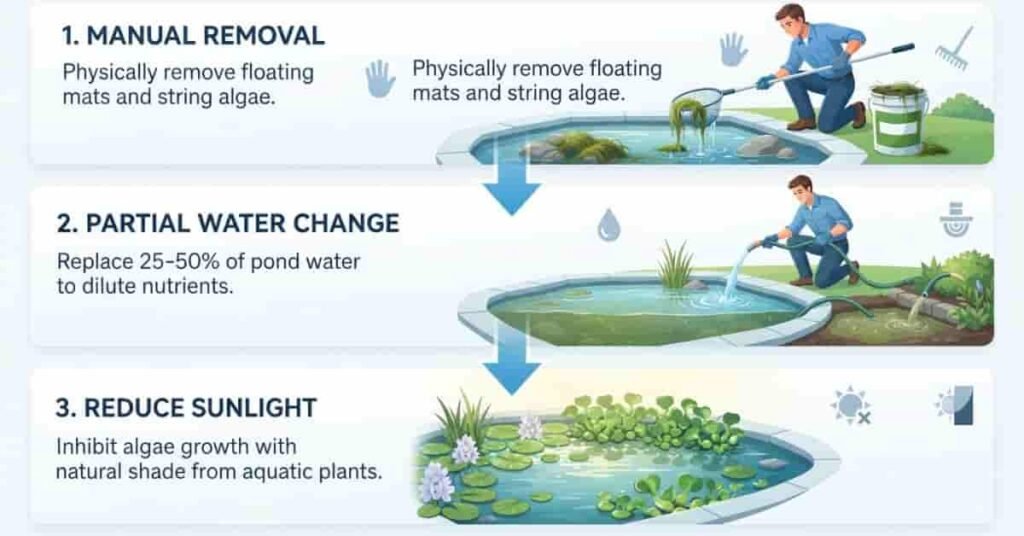
If you need how to get rid of pond algae quickly, start with methods that reduce algae right away. These solutions improve your pond’s appearance while you work on fixing the root cause. For the best results, combine more than one method instead of relying on a single treatment.
Manual Removal
Manual removal is the fastest way to reduce visible algae. Use a pond net, algae brush, or rake to lift string algae and blanket algae from the water. Remove as much algae as possible before using any other treatment.
Scrub rocks, waterfalls, and pond walls with a soft brush to loosen algae stuck to surfaces. Collect the loose algae with a net so it does not break apart and release more nutrients into the water. Dispose of the removed algae away from the pond to prevent it from washing back in.
Water Change Method
A partial water change helps lower nutrient levels that feed algae. Replace about 10–20% of the pond water at one time instead of draining the entire pond. Large water changes can stress fish and disturb beneficial bacteria.
This method works best when the pond has excess fish waste, leftover food, or cloudy water. Always use a water conditioner if your replacement water contains chlorine or chloramine. Clean the filter during the same maintenance session if it is clogged, but avoid washing all filter media at once.
Pro Tip: Perform partial water changes only when needed. Frequent large changes can slow the pond’s natural balance.
Reduce Sunlight Exposure
Algae need sunlight to grow. Reducing direct sunlight can slow algae growth and help keep water clearer. If your pond receives full sun all day, adding shade can make a noticeable difference.
Floating plants like water lilies naturally block sunlight while adding beauty to the pond. You can also install a shade sail or place the pond where it receives partial afternoon shade. Avoid covering the entire pond, as fish and aquatic plants still need light and good air exchange.
Expert Tip: Aim to shade part of the pond rather than all of it. This creates a healthier balance for fish and aquatic plants.
Natural Ways to Remove Pond Algae (Fish Safe)
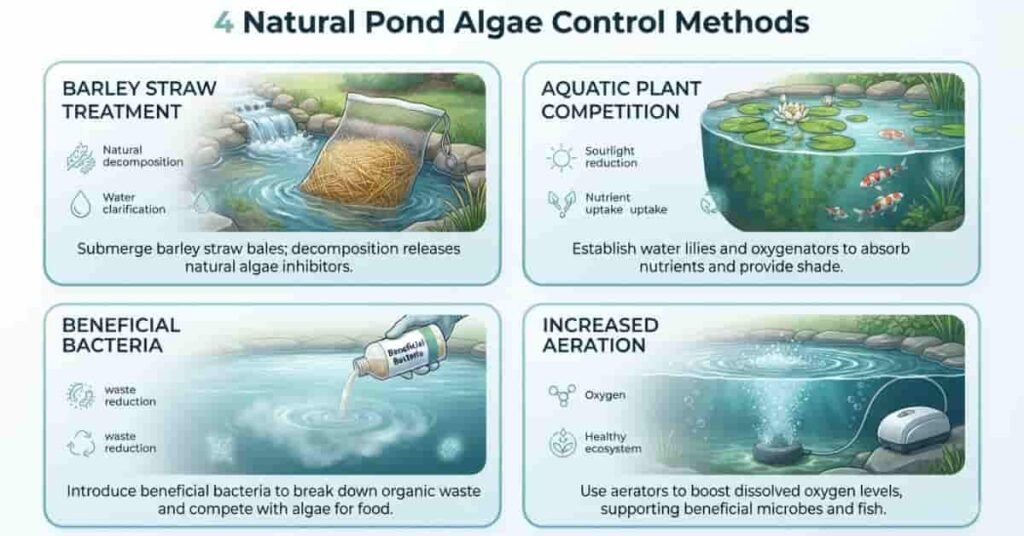
Natural algae control focuses on restoring balance instead of simply killing algae. These methods are safe for fish when used correctly and provide longer-lasting results. They work best when combined with regular pond maintenance and good filtration.
Barley Straw
Barley straw is a popular natural option for controlling algae. As it slowly breaks down in the water, it releases compounds that may help reduce algae growth over time. It works gradually, so do not expect immediate results.
Place barley straw in an area with good water flow and follow the manufacturer’s recommendations for the correct amount. Replace it as needed to maintain its effectiveness.
Removing existing algae is only part of the solution. Once the pond is clear, learning how to prevent pond algae can help reduce the chance of another bloom developing.
Pond Plants
Aquatic plants compete with algae for nutrients and sunlight. Floating plants, such as water lilies, provide shade that slows algae growth. Oxygenating plants help improve water quality by supporting a healthier pond environment.
Choose a mix of floating and submerged plants to create a balanced ecosystem. Healthy plant growth leaves fewer nutrients available for algae.
Beneficial Bacteria
Beneficial bacteria break down fish waste, leftover food, and decaying organic matter before algae can use these nutrients. They support your pond’s biological filtration and help keep the water cleaner.
Use bacteria products as directed and continue regular pond maintenance for the best results. These products work over time rather than overnight.
Improving Aeration
Good aeration increases oxygen levels and keeps water moving. Higher oxygen levels support beneficial bacteria and reduce stagnant areas where algae often thrive.
Air pumps, waterfalls, fountains, and properly sized pond pumps all improve circulation. Better water movement also helps distribute oxygen throughout the pond.
Expert Tip: Natural methods take longer than chemical treatments, but they often provide more stable, long-term algae control.
Chemical Treatment Options (When Problem Is Severe)
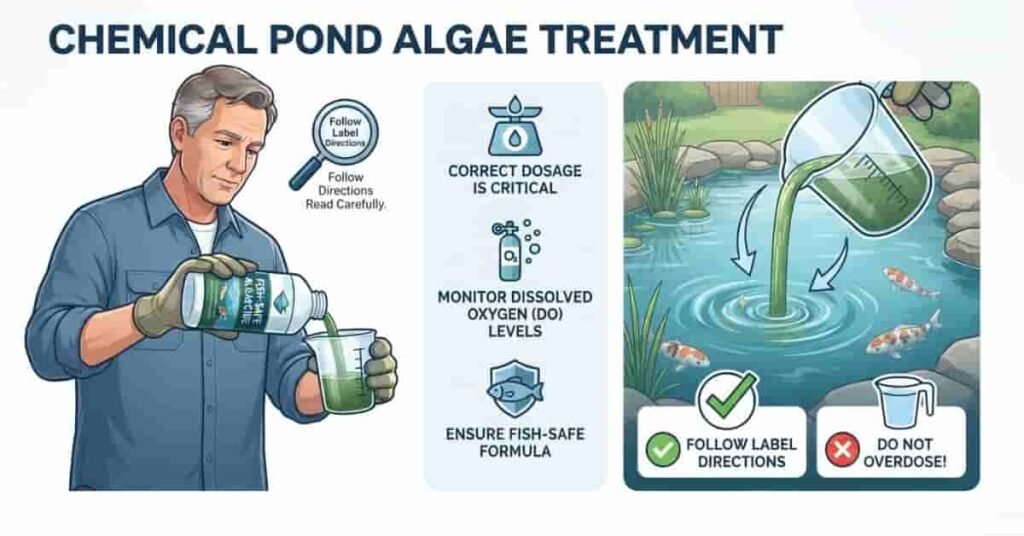
Chemical treatments can help when algae growth becomes too severe for manual or natural methods alone. However, they should be your last option, not your first. Before using any product, remove as much visible algae as possible and fix the conditions that caused the outbreak.
Using Algaecides
Algaecides are designed to kill algae quickly. They can be effective against green water, string algae, and blanket algae when used according to the product label. Always choose an algaecide that is labeled as safe for ponds with fish and aquatic plants if your pond contains them.
Treat only the recommended amount of water at one time. Killing too much algae at once can lower oxygen levels as the algae decompose. This may stress or even harm fish.
Follow the Correct Dosage
Never add more algaecide than the manufacturer recommends. Using extra product will not solve the problem faster. Instead, it can damage the pond’s ecosystem and increase the risk of fish loss.
Measure your pond’s water volume before applying any treatment. If you are unsure, use a pond volume calculator or the product’s dosage guide.
Keep Fish Safety First
Watch your fish closely after treatment. If they begin gasping near the surface, increase aeration immediately with an air pump, waterfall, or fountain. Avoid treating the pond during very hot weather when oxygen levels are naturally lower.
Expert Tip: Chemical treatments work best after manual algae removal. Less algae means lower oxygen demand during treatment.
How to Kill Pond Algae Completely (Advanced Control)
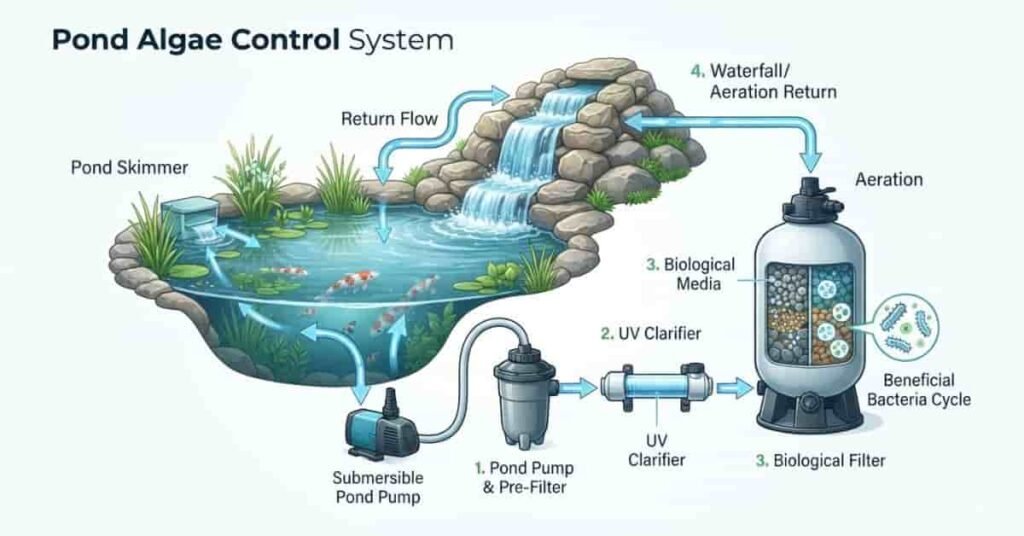
Completely eliminating pond algae is rarely possible because small amounts are part of a healthy ecosystem. The real goal is to keep algae under control so they do not affect water quality or the appearance of your pond. Long-term success comes from combining several proven methods.
Start by removing visible algae with a pond net or brush. Next, improve filtration to remove suspended debris and excess nutrients. A properly sized filter supports beneficial bacteria that naturally break down waste before algae can use it as food.
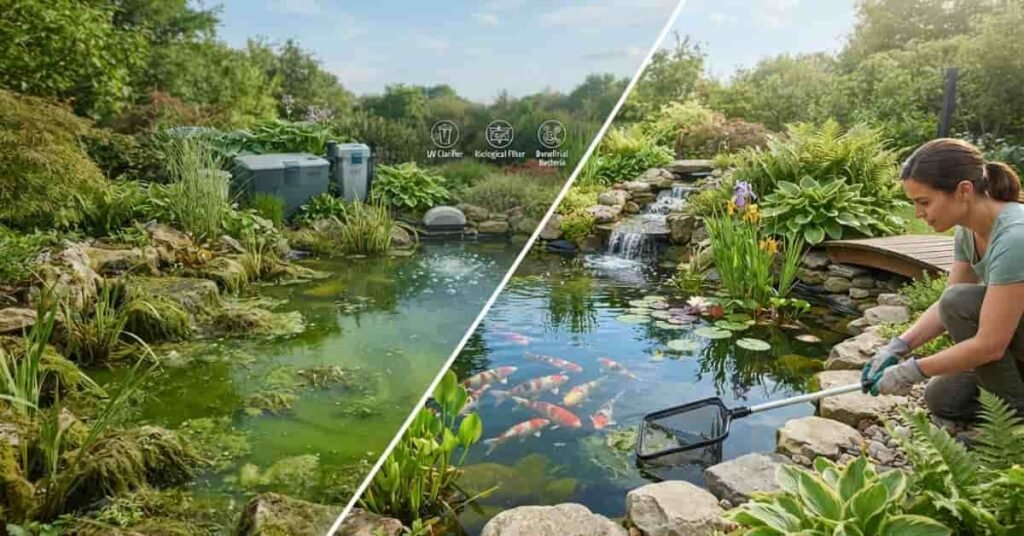
If green water remains a problem, consider installing a UV clarifier. As water passes through the unit, ultraviolet light damages free-floating algae cells, helping clear the water within several days. UV clarifiers work best on green water algae and are less effective against attached string algae.
The best results come from combining manual removal, good filtration, beneficial bacteria, proper aeration, and UV clarification when needed. This approach addresses both the algae and the conditions that allow it to grow.
Expert Tip: A UV clarifier clears green water, but it does not remove the excess nutrients that caused the algae. Keep maintaining your pond to prevent future blooms.
How to Prevent Algae From Coming Back
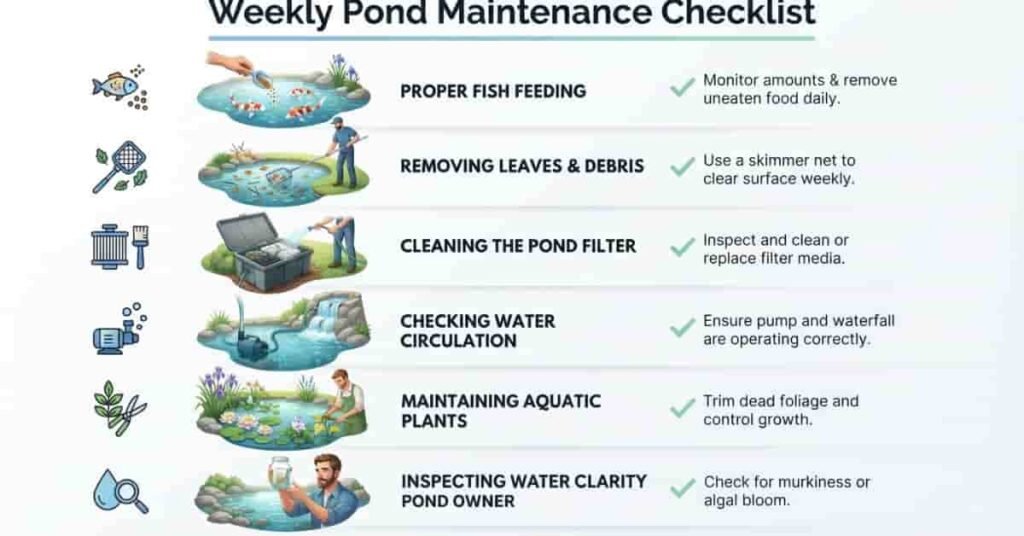
The best way to get rid of pond algae is to stop it from returning. Regular maintenance keeps nutrients under control and supports a healthy pond ecosystem. A few simple habits can prevent major algae problems throughout the year.
Feed fish only what they can eat within a few minutes. Uneaten food sinks to the bottom, where it breaks down and releases nutrients that feed algae. Avoid overstocking your pond, as too many fish create more waste.
Remove fallen leaves, dead plants, and other debris before they decay. A pond skimmer or net makes this job quick and prevents organic matter from building up. Clean your filter regularly, but avoid washing all filter media at the same time to protect beneficial bacteria.
Maintain good water circulation with a properly sized pump, waterfall, or fountain. Moving water improves oxygen levels and helps beneficial bacteria work more efficiently. Healthy aquatic plants also compete with algae for nutrients while providing natural shade.
Consistent maintenance creates a balanced ecosystem where algae struggle to take over. Small weekly tasks are much easier than dealing with a major algae bloom later.
Expert Tip: Spend a few minutes each week checking your pond. Early action is much easier than treating a severe algae outbreak.
Common Mistakes People Make
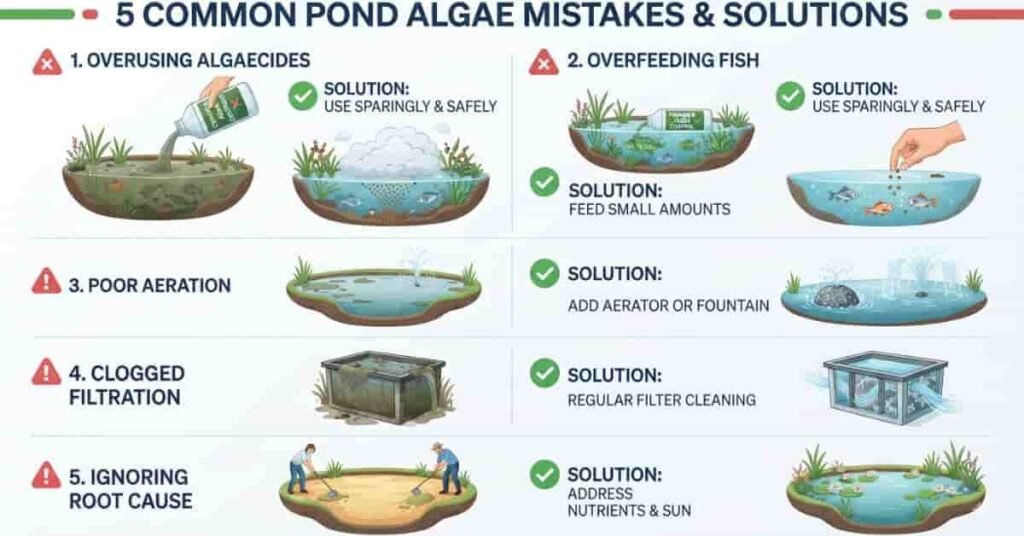
Many pond owners focus on removing algae but overlook the habits that caused the problem. As a result, algae often return within a few weeks. Avoiding these common mistakes will help you keep your pond clear and healthy for the long term.
Overusing Chemicals
Chemical treatments can provide quick results, but using them too often can do more harm than good. Excessive use may reduce oxygen levels, stress fish, and disturb the beneficial bacteria that keep your pond balanced. Always follow the product label and treat only when necessary.
Overfeeding Fish
Overfeeding is one of the most common reasons algae keep coming back. Uneaten fish food sinks to the bottom and breaks down into nutrients that algae use to grow. Feed only the amount your fish can finish within two or three minutes, and remove any leftover food.
Skipping Aeration
Many beginners underestimate the importance of aeration. Without enough oxygen and water movement, nutrients collect in the pond and create ideal conditions for algae. A properly sized air pump, fountain, or waterfall keeps water circulating and supports beneficial bacteria.
Ignoring the Root Cause
Treating visible algae without fixing the underlying problem is only a temporary solution. Too much sunlight, poor filtration, excess nutrients, or overcrowded fish will continue to fuel algae growth. Identify the main cause first, then choose the right treatment for lasting results.
Expert Tip: If algae return soon after treatment, don’t apply more chemicals immediately. Check your filtration, feeding routine, sunlight exposure, and water circulation before treating the pond again.
Conclusion
Learning how to get rid of pond algae starts with understanding what causes it and choosing the right solution for your pond. Simple steps like reducing nutrients, improving filtration, increasing aeration, and removing algae by hand often deliver the best long-term results. If the problem becomes severe, use fish-safe treatments carefully and always follow the recommended directions.
Remember, prevention is the key to keeping your pond clear and healthy. Regular maintenance, proper feeding, and good water circulation can stop algae before it becomes a major problem. If you need to remove algae from your pond or prevent future blooms, staying consistent with pond care will save time and effort.
If you found this guide helpful, share it with other pond owners or leave a comment below with your experience. You can also explore our other pond care guides to learn more about filtration, water quality, and year-round pond maintenance.
Frequently Asked Questions
How quickly can pond algae be removed?
The time depends on the type of algae and the treatment you choose. Manual removal provides immediate results for string and blanket algae, while a UV clarifier can clear green water within a few days. Natural methods, such as beneficial bacteria and barley straw, usually take several weeks. For the best long-term results, remove visible algae first and then fix the conditions that caused it.
Is pond algae harmful to fish?
A small amount of algae is normal and can even benefit a healthy pond. However, excessive algae growth can reduce oxygen levels, especially when large amounts die and decompose. Severe algae blooms may stress fish, reduce water quality, and block sunlight from reaching aquatic plants. Keeping algae under control helps create a safer and healthier environment for fish.
Can pond algae come back after treatment?
Yes. Algae often return if the root cause is not corrected. Excess nutrients, overfeeding fish, poor filtration, stagnant water, and too much sunlight all encourage new algae growth. Removing algae without improving pond conditions usually provides only temporary results. Regular maintenance and balanced water conditions are the best ways to prevent future outbreaks.
What is the fastest way to clear pond water?
The fastest approach combines several methods. Remove visible algae by hand, perform a partial water change if nutrient levels are high, clean the filter, and improve water circulation. If green water is caused by free-floating algae, a UV clarifier is one of the quickest long-term solutions. Avoid draining the entire pond unless absolutely necessary.
What causes pond algae to grow so fast?
Pond algae grow rapidly when they receive plenty of sunlight and nutrients. Fish waste, uneaten food, decaying leaves, and poor filtration provide the nutrients algae need to multiply. Warm weather and stagnant water can make the problem even worse. Reducing these conditions is the most effective way to slow algae growth naturally.
Can I get rid of pond algae without using chemicals?
Yes. Many ponds can be cleared without chemical treatments. Manual removal, beneficial bacteria, aquatic plants, improved filtration, better aeration, and regular debris removal all help control algae naturally. These methods are generally safer for fish and support a healthier pond ecosystem over time.
Do pond plants help prevent algae?
Yes. Pond plants compete with algae for nutrients and provide shade that limits sunlight reaching the water. Floating plants, such as water lilies, help reduce green water by blocking excess light, while oxygenating plants support overall water quality. A healthy mix of aquatic plants can significantly reduce future algae problems.
Should I remove all the algae from my pond?
Not necessarily. A small amount of algae is a natural part of a balanced pond ecosystem. The goal is to control excessive growth rather than eliminate every trace. Removing all algae at once, especially with chemicals, can reduce oxygen levels as the algae decompose. Gradual removal is usually the safer option for ponds with fish.
How can I stop pond algae from coming back?
Preventing algae starts with regular pond maintenance. Feed fish only what they can eat, remove leaves and organic debris, maintain proper filtration, and keep water circulating with a pump or aerator. Adding beneficial bacteria and healthy aquatic plants also helps create a balanced ecosystem where algae are less likely to thrive.

Michael Brooks and Sarah Lane are the co-founders of the Pond Pump Team, a trusted U.S.-based group helping homeowners and landscapers build better ponds and water features. Michael, an experienced pond engineer from Oregon, has worked for over 12 years on pump sizing, flow systems, and water circulation. Sarah, a pond designer from Colorado with nine years of experience, focuses on eco-friendly and easy-to-maintain pond and waterfall designs. Together, they’ve completed more than 180 pond projects and created tools like the Pond Pump Calculator and Pond Liner Calculator to make pond planning simple, accurate, and sustainable.
Need help with your pond setup? Contact the Pond Pump Team for expert advice and reliable solutions.