Table of Contents
Introduction
Have you noticed green algae taking over your pond and wondered how to stop it without using harsh chemicals? If you’re searching for how to get rid of pond algae naturally, you’re not alone. Many pond owners across the USA face algae problems, especially during warm months. While chemical treatments may offer quick results, they can stress fish, harm beneficial bacteria, and upset your pond’s natural balance. Choosing natural pond algae control is a safer way to protect fish, aquatic plants, and helpful microorganisms while supporting a healthier ecosystem. The good news is that you don’t need expensive products or complicated techniques to see lasting improvements. In this guide, you’ll learn the most effective natural ways to remove algae from a pond, from improving water circulation to using beneficial plants and bacteria. By the end, you’ll know how to clear algae safely, prevent it from returning, and keep your pond clean, balanced, and healthy for years to come.
Natural algae control works best when you also address the conditions that encourage growth. Learn how to prevent pond algae by controlling nutrients, sunlight, circulation, and other common triggers.
Why Pond Algae Happens (Natural Causes)
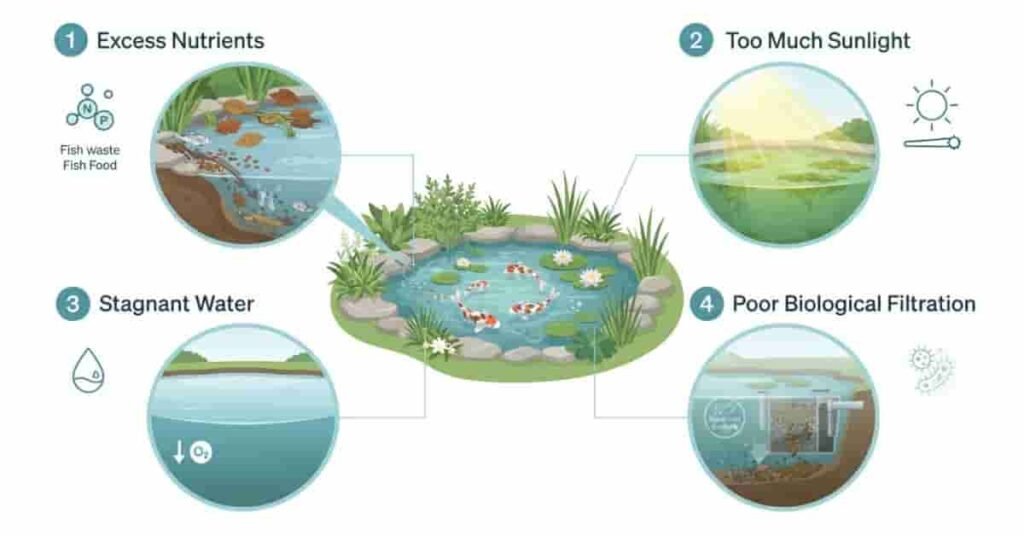
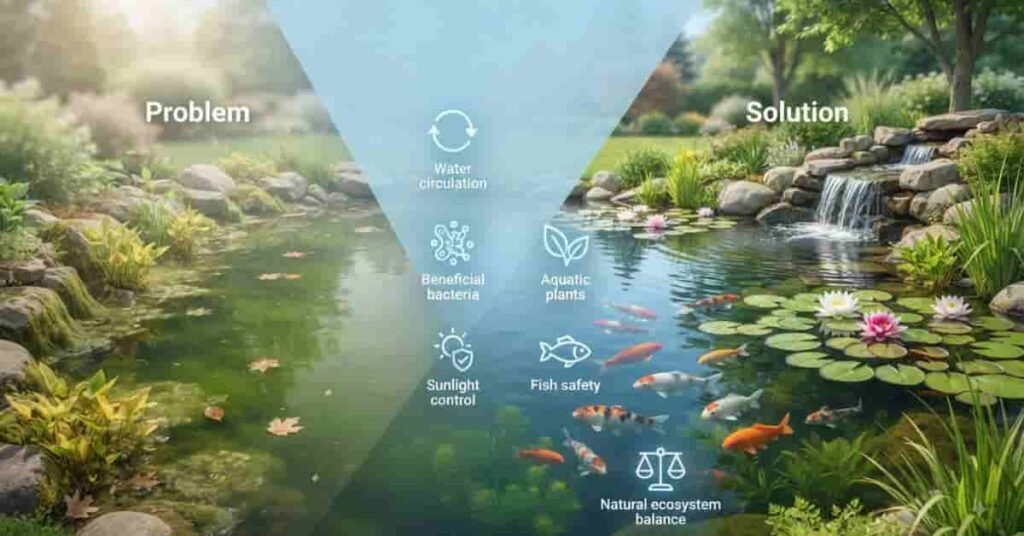
Pond algae are a natural part of every healthy pond. Problems begin when conditions allow algae to grow faster than the rest of the ecosystem can control. Understanding these causes helps you choose the right natural solution instead of treating only the symptoms.
One of the biggest causes is excess nutrients. Fish waste, uneaten food, decaying leaves, and plant debris release nitrogen and phosphorus into the water. These nutrients act like fertilizer, allowing algae to multiply quickly.
Too much sunlight is another common trigger. Most algae thrive when ponds receive several hours of direct sunlight each day. Warm, sunny conditions encourage rapid growth, especially during spring and summer.
Poor water circulation also contributes to algae blooms. Stagnant water contains less oxygen and allows organic matter to settle on the pond bottom. This creates an ideal environment for algae to spread.
Finally, a pond with weak biological filtration struggles to stay balanced. Beneficial bacteria normally break down waste before it feeds algae. When these bacteria are limited, nutrients build up and algae take over.
Expert Tip: Algae often signal that your pond ecosystem is out of balance. Solving the root cause provides longer-lasting results than removing algae alone.
Best Natural Ways to Get Rid of Pond Algae
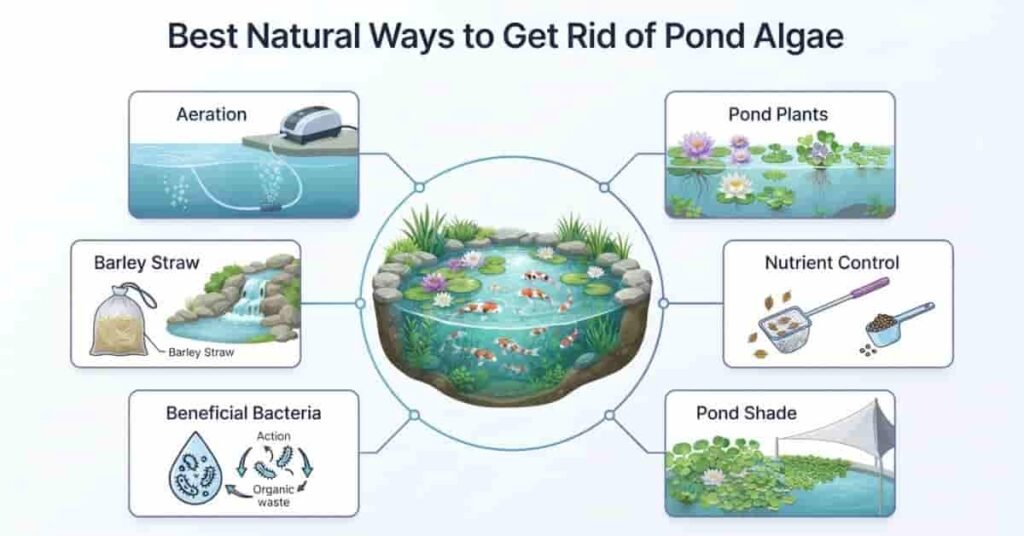
Natural algae control focuses on restoring balance instead of killing algae overnight. While these methods take more time than chemical treatments, they create healthier water and reduce the chance of future algae blooms. Many pond owners find that combining several techniques produces the best long-term results.
The following methods are safe for fish, aquatic plants, and beneficial microorganisms. Together, they improve water quality, reduce excess nutrients, and create conditions where algae struggle to thrive.
Takeaways
- Natural methods solve the causes of algae, not just the symptoms.
- Combining several techniques delivers the best results.
- Consistent maintenance keeps algae under control year-round.
When fish live in the pond, even natural treatments should be chosen carefully. See how to get rid of pond algae without killing fish for safer ways to manage algae while protecting koi and goldfish.
1. Improve Water Circulation (Aeration)
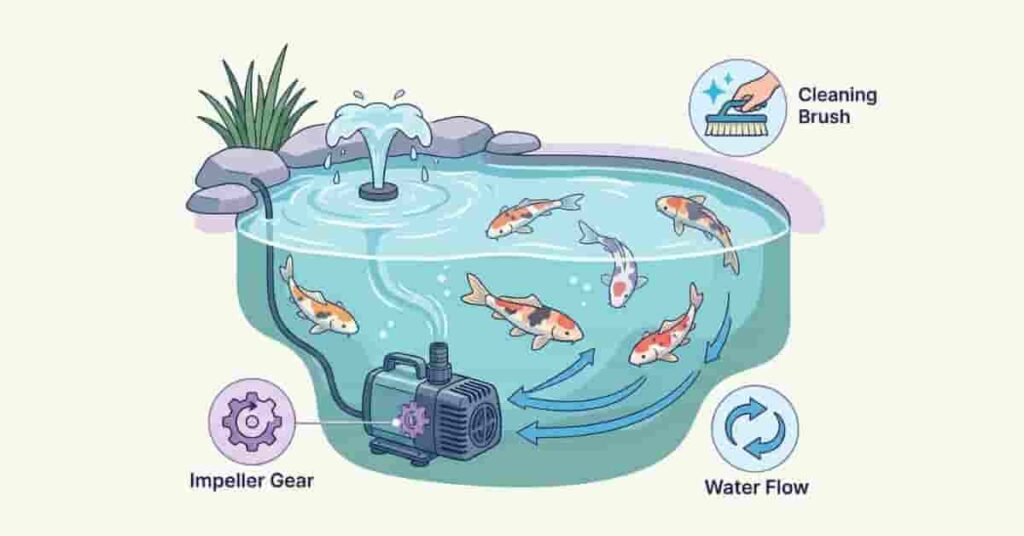
Good water movement is one of the simplest ways to control algae naturally. Aeration increases oxygen levels throughout the pond, helping fish, beneficial bacteria, and aquatic plants stay healthy. It also prevents stagnant areas where algae often grow.
You can improve circulation with an air pump, fountain, waterfall, or pond aerator. Moving water mixes oxygen into the pond and helps beneficial bacteria break down organic waste before it feeds algae.
Aeration works best when combined with regular maintenance and biological filtration. Although it will not remove algae overnight, it creates conditions that make future algae growth much less likely.
2. Add Beneficial Pond Plants
Aquatic plants are one of nature’s best defenses against algae. Water lilies, floating plants, and oxygenating plants compete with algae for the same nutrients. As plants absorb nitrogen and phosphorus, less food remains for algae.
Floating plants also shade the water surface, reducing sunlight that algae need to grow. Water lilies create similar benefits while adding beauty to the pond.
Choose a mix of plant types for the best results. Healthy plant coverage supports fish, improves water quality, and helps maintain a balanced ecosystem throughout the growing season.
Pro Tip: Aim for about 50–60% surface coverage with pond plants to help limit sunlight naturally.
3. Use Barley Straw (Natural Algae Suppressor)
Barley straw is a traditional, chemical-free way to slow algae growth. As it slowly decomposes in oxygen-rich water, it releases natural compounds that discourage algae from multiplying. The process is gradual, so patience is important.
Place barley straw in an area with good water flow, such as near a pump or waterfall. This allows water to circulate through the straw and improve its effectiveness.
Barley straw works best as a preventive measure rather than a quick fix for severe algae blooms. It is generally safe for fish, pond plants, and beneficial bacteria when used correctly.
Pro Tip: Install barley straw before algae season begins for better long-term prevention.
4. Reduce Nutrient Overload
Too many nutrients give algae everything they need to grow. Reducing these nutrients naturally limits future algae blooms and improves overall water quality.
Feed fish only what they can eat within a few minutes. Remove fallen leaves, dead plants, and other organic debris before they decay. Clean sludge from the pond bottom when it begins to build up, and rinse filters regularly according to the manufacturer’s recommendations.
Small maintenance tasks performed each week are often more effective than large cleanups after algae become a problem.
Pro Tip: Installing a leaf net during fall can greatly reduce nutrient buildup.
5. Natural Bacteria Treatment
Beneficial bacteria are essential for a healthy pond ecosystem. These naturally occurring microorganisms break down fish waste, decaying plants, and sludge before they release nutrients that feed algae.
Many pond owners add commercial beneficial bacteria to strengthen the pond’s biological filtration. These products support the natural nitrogen cycle rather than killing algae directly.
When combined with aeration and good maintenance, beneficial bacteria help create cleaner water and a more stable ecosystem over time.
Pro Tip: Add beneficial bacteria regularly during the growing season for consistent biological filtration.
6. Shade the Pond (Sunlight Control)
Algae depend on sunlight for rapid growth. Reducing direct sunlight naturally slows photosynthesis and helps prevent algae blooms.
Water lilies, floating plants, shade sails, and nearby landscaping can all provide effective shade. If possible, choose a pond location that receives partial afternoon shade instead of full sun all day.
Shade works best alongside other natural algae control methods. Together, these strategies create a healthier pond with fewer opportunities for algae to spread.
Natural Methods That Work for Different Algae Types
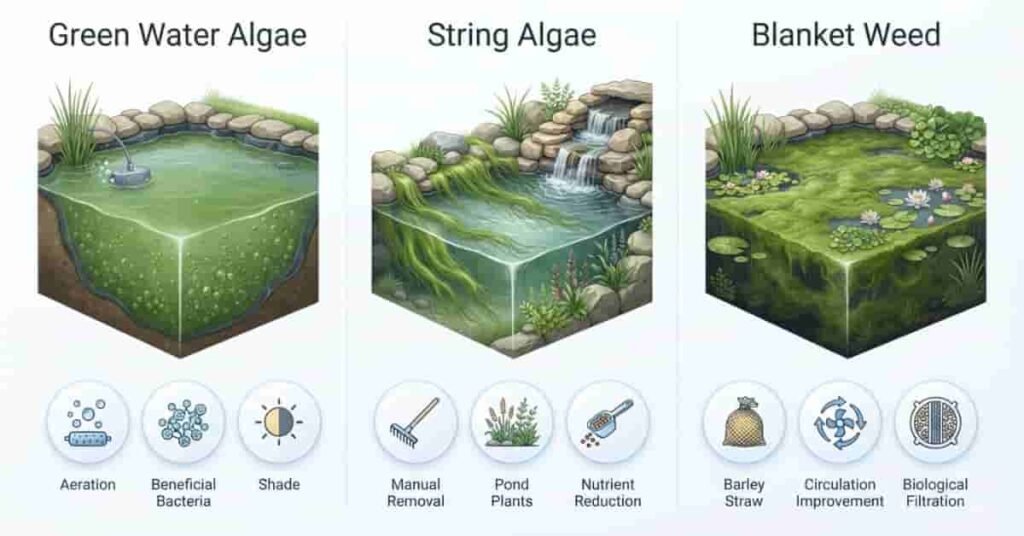
Not all pond algae look or behave the same. Choosing the right natural solution depends on the type of algae in your pond. While all algae benefit from excess nutrients and sunlight, some respond better to specific treatments. Identifying the problem first helps you get faster and longer-lasting results without using chemicals.
Green Water Algae
Green water algae consist of tiny floating algae cells that turn pond water cloudy or bright green. Although the water looks unhealthy, this type of algae usually appears when nutrients and sunlight are abundant.
The best natural approach is to improve water circulation, add floating plants, and increase biological filtration. Beneficial bacteria help reduce the nutrients that feed green water algae. Shading the pond also limits the sunlight needed for algae growth.
String Algae
String algae, sometimes called hair algae, grow in long green strands that attach to rocks, waterfalls, and pond liners. Small amounts are normal, but excessive growth can affect water flow and pond appearance.
Remove large clumps by hand before using natural control methods. Then reduce nutrient buildup, improve aeration, and add aquatic plants to compete for nutrients. These steps help prevent string algae from returning.
Blanket Weed
Blanket weed forms thick green mats that spread across the pond surface or wrap around plants and decorations. Left untreated, it can block sunlight, reduce oxygen levels, and interfere with fish movement.
Natural control starts with removing as much blanket weed as possible. Then use barley straw, beneficial bacteria, and pond plants to reduce future growth. Improving circulation and limiting direct sunlight also help keep blanket weed under control.
What NOT to Do (Common Mistakes)
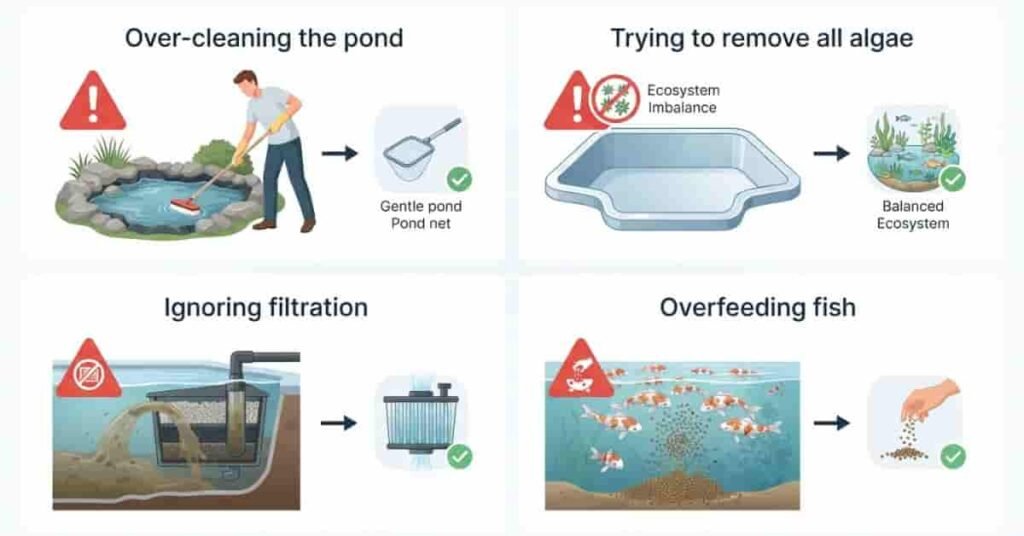
Natural algae control works best when you avoid habits that create an unhealthy pond. Many beginners accidentally make algae problems worse by trying to fix them too quickly. A balanced pond needs time to recover.
One common mistake is over-cleaning the pond. Removing all plants, scrubbing every surface, or changing too much water can eliminate beneficial bacteria. Without these helpful microorganisms, nutrients build up faster and algae return.
Another mistake is trying to kill every bit of algae. A small amount of algae is normal and even supports the pond ecosystem. The goal is to control excessive growth, not remove algae completely.
Many pond owners also ignore filtration. Dirty filters cannot remove waste efficiently, allowing nutrients to feed algae. Clean and maintain your filtration system according to the manufacturer’s instructions.
Finally, overfeeding fish adds unnecessary waste to the pond. Feed only what your fish can finish within a few minutes. Removing uneaten food prevents nutrient buildup and helps keep the water clear.
Natural control becomes much easier when you understand why the algae appeared in the first place. Learn more about what causes algae in ponds and the environmental conditions that fuel growth.
How Long Natural Methods Take to Work
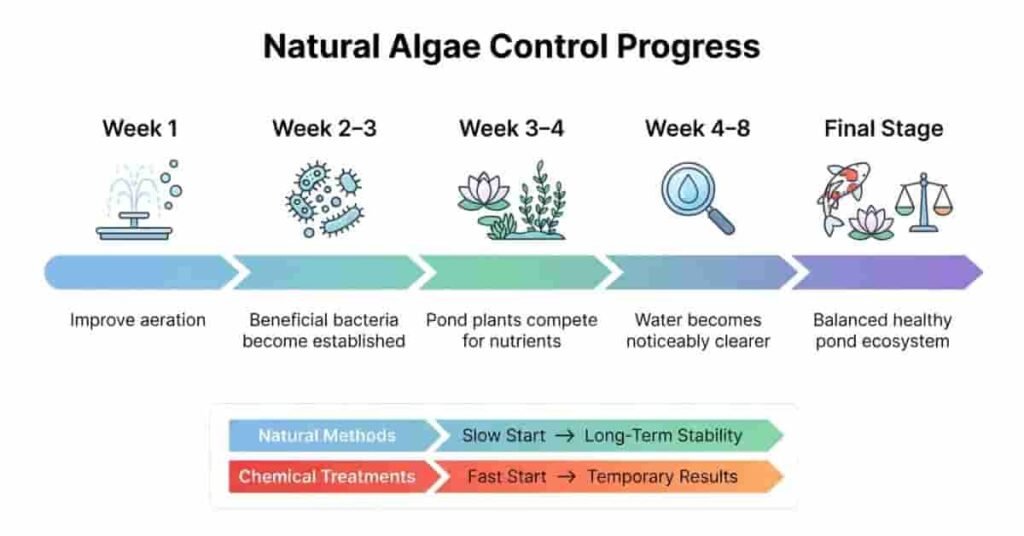
Natural pond algae control requires patience, but the results are more stable than many chemical treatments. Instead of removing algae instantly, natural methods improve the pond ecosystem so algae become less likely to return.
Most ponds begin showing small improvements within one to three weeks, depending on the method used and the severity of the algae problem. Larger ponds or heavy algae blooms may take several weeks or even a few months to reach a healthy balance. Consistent maintenance is the key to lasting success.
Chemical treatments often produce faster results by killing algae quickly. However, they may not solve the underlying causes, such as excess nutrients or poor biological filtration. Without correcting these issues, algae often return.
| Treatment Method | When Results Begin | Long-Term Control |
|---|---|---|
| Natural methods | 1–3 weeks | Excellent |
| Chemical treatments | 1–3 days | Often temporary |
Natural methods work best when you combine aeration, aquatic plants, beneficial bacteria, nutrient control, and regular maintenance. Together, these solutions create healthier water for fish, plants, and beneficial microorganisms.
Mini Case Study: Many pond owners notice clearer water after improving aeration and reducing nutrient buildup. Continued maintenance helps keep algae under control throughout the season.
Natural vs Chemical Treatment (Quick Comparison)
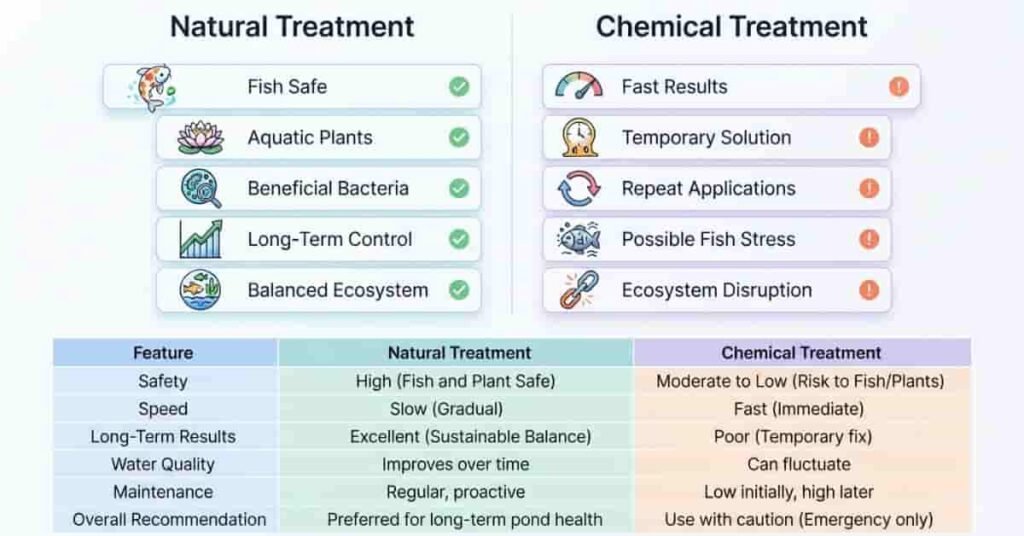
Choosing between natural and chemical algae treatments depends on your goals. If you want fast results, chemical products may seem appealing. However, if you want a healthier pond with fewer algae problems over time, natural methods are often the better choice.
Natural algae control works by restoring the pond’s ecosystem. Methods such as aeration, beneficial bacteria, aquatic plants, and nutrient management reduce the conditions that allow algae to grow. Although these solutions take longer to show results, they help create a stable environment that supports fish, plants, and beneficial microorganisms.
Chemical treatments usually kill algae within a few days. While this can quickly improve the pond’s appearance, chemicals do not always fix the underlying causes. If excess nutrients and poor filtration remain, algae often return. Some products may also require careful use to avoid stressing fish or beneficial bacteria.
For most backyard ponds, a combination of natural prevention and regular maintenance provides the safest long-term solution.
| Feature | Natural Treatment | Chemical Treatment |
|---|---|---|
| Fish Safety | Excellent when used correctly | Varies by product |
| Speed | Slow (1–6 weeks) | Fast (1–3 days) |
| Long-Term Results | Excellent | Often temporary |
| Pond Balance | Improves ecosystem | May disturb ecosystem |
| Ongoing Maintenance | Prevents future blooms | Repeat treatments often needed |
Prevention Tips
The easiest way to control pond algae is to stop it from becoming a problem. Regular maintenance keeps your pond balanced and reduces the nutrients that algae need to grow. Small weekly tasks are much easier than dealing with a major algae bloom later.
Start with a simple maintenance routine. Remove fallen leaves, trim dead aquatic plants, and clean out debris before it begins to decay. Check your pond each week so you can spot changes early and fix small problems before they grow.
Feed fish in moderation. Only offer the amount they can eat within a few minutes. Uneaten food quickly breaks down into nutrients that encourage algae growth. Keeping fish populations appropriate for your pond size also helps maintain water quality.
A reliable filtration system is another key to long-term algae prevention. Clean mechanical filters regularly, and make sure your biological filter has enough beneficial bacteria to process waste efficiently. If your pond has frequent algae blooms, consider upgrading to a larger filtration system designed for your pond’s volume.
Seasonal care is equally important. Remove leaves during autumn, restart pumps and filters in spring, and monitor water quality during hot summer months when algae grow fastest. Winter is also a good time to inspect equipment and prepare for the next growing season.
With consistent care, your pond will stay healthier, clearer, and less likely to experience recurring algae problems.
Conclusion
Learning how to get rid of pond algae naturally starts with understanding what causes algae and fixing the problem at its source. Simple steps like improving water circulation, adding pond plants, reducing excess nutrients, and supporting beneficial bacteria create a healthier pond over time. These natural pond algae control methods may take longer than chemicals, but they provide safer, longer-lasting results for fish, plants, and the entire ecosystem.
With regular maintenance and a balanced approach, you can enjoy clearer water and fewer algae problems throughout the year. If you need faster results for a severe algae bloom, check out our guide on fast and chemical pond algae treatments to compare your options. If you found this guide helpful, share it with other pond owners, leave a comment with your experience, or explore more of our pond care resources for expert tips and advice.
Frequently Asked Questions
What is the safest way to remove pond algae naturally?
Does barley straw really work for pond algae?
Can pond algae be removed without chemicals?
How long does natural algae control take to work?
Why does pond algae keep coming back?
Are natural algae control methods safe for koi and goldfish?
Which pond plants help reduce algae naturally?
Should I remove all algae from my pond?

Michael Brooks and Sarah Lane are the co-founders of the Pond Pump Team, a trusted U.S.-based group helping homeowners and landscapers build better ponds and water features. Michael, an experienced pond engineer from Oregon, has worked for over 12 years on pump sizing, flow systems, and water circulation. Sarah, a pond designer from Colorado with nine years of experience, focuses on eco-friendly and easy-to-maintain pond and waterfall designs. Together, they’ve completed more than 180 pond projects and created tools like the Pond Pump Calculator and Pond Liner Calculator to make pond planning simple, accurate, and sustainable.
Need help with your pond setup? Contact the Pond Pump Team for expert advice and reliable solutions.