Table of Contents
Introduction
Have you ever looked at your pond and wondered why the water suddenly turned thick and green?
Green pond water can appear quickly, especially during warm, sunny weather. For beginners, it can be worrying when fish become harder to see. The good news is that you can often improve the water without draining the entire pond.
Learning how to clear green pond water fast starts with understanding what causes the algae. Excess nutrients, strong sunlight, and weak filtration can all fuel rapid algae growth.
This guide will show you the fastest and safest ways to get rid of green pond water. You’ll learn which methods can work within days and which solutions need more time. We’ll also cover filtration, UV clarifiers, partial water changes, shade, and natural options.
By the end, you’ll know how to clear your pond safely and prevent green water from returning. The goal is simple: cleaner water, healthier fish, and a pond that stays clearer for longer.
Before trying to clear the water, it helps to understand what caused the green appearance. Learn why pond water is green and which conditions commonly trigger algae blooms.
Why Green Pond Water Happens
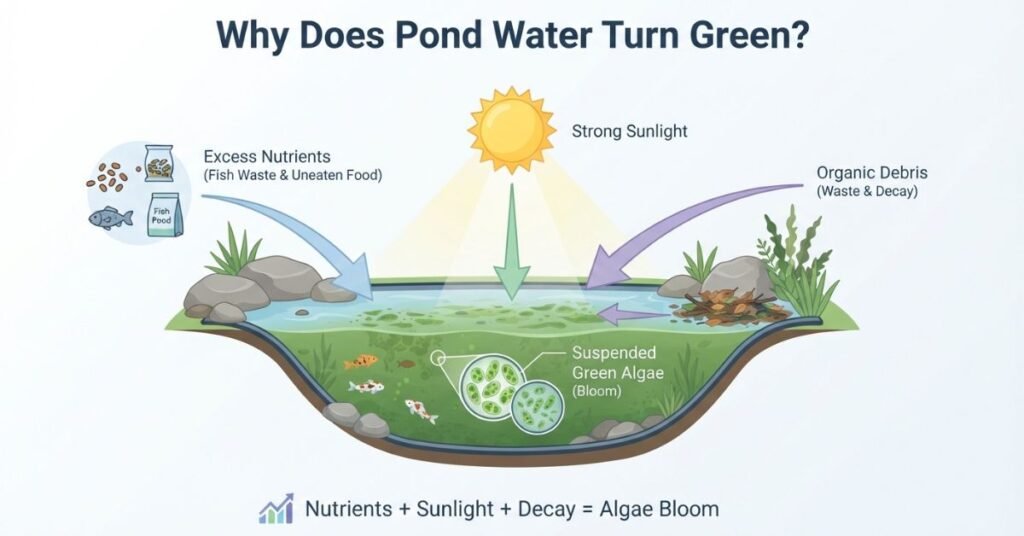
Green pond water usually comes from suspended algae growing rapidly in the pond. Excess nutrients from fish waste, uneaten food, and decaying debris can feed this growth. Strong sunlight gives algae the energy they need to multiply quickly.
For a deeper explanation, see our guide on [Why Is My Pond Water Green?].
Fastest Way to Clear Green Pond Water
The fastest approach combines several methods instead of relying on one solution. A UV clarifier can quickly target suspended algae as pond water passes through the unit. Good filtration then removes the algae and other particles from the water.
A partial water change can also improve water quality when nutrients have built up. However, avoid replacing all the pond water at once. Combining UV treatment, filtration, and sensible water changes usually gives better results.
Step 1: Reduce Green Water Immediately
Start by reducing the conditions that help algae grow. If your fish are healthy, temporarily reduce feeding while you work on the water. Uneaten food adds nutrients that can encourage more algae growth.
Next, remove leaves, dead plants, and other debris from the pond. These materials break down and release nutrients into the water. Also, improve water movement with your pump or air system. Better circulation increases oxygen levels and helps distribute cleaner water throughout the pond.
These simple steps can support faster clearing while you prepare stronger filtration or UV treatment.
Step 2: Use Mechanical and Filtration Methods
Your filtration system plays a major role when you want to clear green water in a pond. Start by checking the pond filter and remove trapped algae, leaves, and other debris. Clean mechanical filter media with pond water instead of chlorinated tap water. This helps protect beneficial bacteria living in the filter.
Next, check your pump and make sure it provides steady water movement. Remove blockages around the intake and clean the pump if needed. Better circulation helps move more pond water through the filtration system.
If available, add a UV clarifier to your filtration setup. UV light can help control suspended algae as water passes through the unit. Follow the manufacturer’s instructions for installation and maintenance.
Keep the filter running consistently while the pond clears. Avoid repeatedly switching the system off because algae can quickly build up again.
Different algae-control methods work in different situations. If you need a treatment option, learn what kills pond algae and how vinegar, UV, copper, and barley compare.
Step 3: Perform a Partial Water Change
A partial water change can help dilute excess nutrients and improve overall pond water quality. For a green pond, changing around 20–30% of the water is a reasonable starting point for many setups.
Avoid draining the entire pond to fix green water. A complete water replacement can disrupt the pond’s biological balance and create unnecessary stress for fish. It also won’t solve the underlying cause if excess nutrients remain.
Before adding fresh water, check its temperature when possible. Large temperature differences can stress pond fish. Add the new water gradually, and always treat tap water with an appropriate dechlorinator when required.
A partial water change works best alongside filtration and algae control. It should support the clearing process rather than serve as the only solution.
Step 4: Natural Quick Fix Options
Natural methods can support your efforts to reduce green pond water. They work best alongside filtration and proper nutrient control. Don’t expect them to clear heavy algae growth overnight.
Floating plants can provide shade by covering part of the water surface. This reduces the amount of sunlight reaching the water. Choose suitable pond plants and avoid covering the entire surface, especially if fish need good gas exchange.
Barley straw may help control algae over time as it breaks down. However, results can vary, and it isn’t a guaranteed fast solution. Treat it as a supportive method rather than your main algae treatment.
You can also use temporary shade during periods of intense sunlight. A pond shade cloth can reduce direct sunlight without permanently changing the pond. Keep enough open surface area for proper oxygen exchange.
Once your water becomes clear again, prevention is the key to keeping it that way. Learn how to prevent green pond water with better nutrient, sunlight, and circulation control.
How to Fix Green Pond Water at the Root
Fast clearing won’t last if the pond continues receiving excess nutrients. To fix green pond water long term, focus on reducing the nutrients that feed algae growth.
Start by controlling fish feeding. Give fish only what they can consume quickly, and remove uneaten food when possible. Excess food breaks down and adds nutrients to the water.
Next, remove leaves, dead plants, sludge, and other organic waste regularly. These materials can release nutrients as they decompose. Keep your filter working properly and clean mechanical media when it becomes clogged.
Also review your fish stocking level and pond plant coverage. Too many fish can create more waste than the pond system can handle. Combining good filtration, sensible feeding, waste removal, and adequate shade can help keep water clearer.
How Long Does It Take to Clear Green Pond Water?
The clearing time depends on algae levels, pond size, sunlight, filtration, and the method you use. A lightly affected small pond may show noticeable improvement within a few days.
Larger ponds with heavy green water may take one to two weeks when using effective filtration and algae-control methods. Severe algae growth can take longer, especially when sunlight and nutrient levels remain high.
A UV clarifier can speed up the process when properly sized and installed. However, it still needs good water flow and effective filtration to remove the algae from the pond.
If the water stays green after treatment, check the filter, pump, nutrient levels, and sunlight exposure. The problem may need a broader long-term solution.
Common Mistakes to Avoid
Several common mistakes can make green pond water harder to control. Avoiding them can save time and protect your fish and pond ecosystem.
- Overusing chemicals: Don’t repeatedly add algae treatments without addressing the cause. Some treatments can also affect oxygen levels or stress pond life.
- Replacing all the water: A full water change can disrupt the pond’s biological balance. Use partial changes when appropriate instead.
- Ignoring the root cause: Removing algae won’t solve the problem if excess nutrients continue entering the pond.
- Overfeeding fish: Uneaten food adds nutrients that can encourage more algae growth.
- Neglecting filtration: A dirty filter or weak pump can reduce your pond’s ability to remove suspended algae and waste.
How to Prevent Green Pond Water From Coming Back
Clearing green water is only half the job. Regular maintenance helps prevent algae from returning and keeps your pond healthier throughout the season.
Clean mechanical filter media regularly and remove leaves, dead plants, and other debris before they break down. Check your pump and filtration system to make sure water keeps moving properly.
Keep your fish population balanced with the pond’s size and filtration capacity. Avoid overfeeding, since leftover food adds nutrients that can fuel algae growth.
A healthy plant ecosystem can also provide natural support. Floating and submerged plants compete with algae for nutrients while some plants provide useful shade. Avoid covering the entire surface, though, because ponds still need good air and gas exchange.
Conclusion
You can often clear green pond water quickly, but fast results don’t always solve the underlying problem. Algae can return when excess nutrients, strong sunlight, or poor filtration remain.
For the best results, combine immediate action with long-term pond care. Start with effective filtration, proper circulation, and sensible feeding. Then reduce nutrient buildup and improve shade and plant coverage where appropriate.
This approach helps you get rid of green pond water while creating conditions that make future algae blooms less likely. A clear pond needs both a fast solution and consistent maintenance.
Frequently Asked Questions
The fastest approach usually combines a UV clarifier with effective filtration and good water circulation. Remove debris, reduce feeding, and consider a partial water change when appropriate. UV treatment can help control suspended algae, while filtration removes particles from the water. Results depend on algae levels, pond size, sunlight, and equipment.
Green pond water can improve within a few days in smaller ponds with effective filtration and algae control. Larger ponds or severe algae blooms may take one to two weeks or longer. Strong sunlight, high nutrient levels, poor filtration, and heavy algae growth can slow the process.
A properly sized UV clarifier can be highly effective against suspended algae that cause green water. Water must pass through the unit at the correct flow rate for effective treatment. A UV clarifier works best with good mechanical filtration because dead algae still need to leave the water.
No, completely draining the pond usually isn’t the best solution. A full water replacement can disrupt the pond’s biological balance and stress fish. A moderate partial water change can help reduce dissolved nutrients while preserving more of the pond’s established ecosystem.
Temporarily reducing feeding can help limit additional nutrient buildup, especially during a severe algae bloom. Avoid feeding more than the fish can quickly consume. Once water conditions improve, gradually return to an appropriate feeding routine.
Floating plants can help by providing shade and competing with algae for nutrients. However, they usually won’t clear severe green water by themselves. Use plants as part of a broader approach that includes filtration, proper feeding, debris removal, and nutrient control.
Barley straw may provide supportive algae control as it breaks down, but it isn’t a reliable instant fix. Results can vary between ponds and conditions. For a fast improvement, combine long-term natural methods with effective filtration and other appropriate algae-control measures.
Green water often returns when the conditions that caused the algae remain. Excess nutrients, strong sunlight, heavy fish stocking, overfeeding, and weak filtration can all contribute. Cleaning the pond removes existing algae but doesn’t always address these underlying factors.
Yes. A high fish load can produce more waste than the pond’s filtration system can process efficiently. Fish waste adds nutrients that can support algae growth. Keeping fish numbers appropriate for the pond and filtration capacity can help reduce nutrient buildup.
Check your filter, pump, UV clarifier, feeding routine, and debris levels first. Make sure water flows properly through the filtration system. If the pond remains green, look for ongoing nutrient sources or excessive sunlight instead of repeatedly adding algae treatments.

Michael Brooks and Sarah Lane are the co-founders of the Pond Pump Team, a trusted U.S.-based group helping homeowners and landscapers build better ponds and water features. Michael, an experienced pond engineer from Oregon, has worked for over 12 years on pump sizing, flow systems, and water circulation. Sarah, a pond designer from Colorado with nine years of experience, focuses on eco-friendly and easy-to-maintain pond and waterfall designs. Together, they’ve completed more than 180 pond projects and created tools like the Pond Pump Calculator and Pond Liner Calculator to make pond planning simple, accurate, and sustainable.
Need help with your pond setup? Contact the Pond Pump Team for expert advice and reliable solutions.