Table of Contents
Introduction
Have you ever looked at your pond and wondered why the water suddenly turned green?
If you’re asking, why is my pond water green, you’re not alone. Green pond water is one of the most common problems for pond owners in the USA. It can make clear water look cloudy, reduce visibility, and make your pond look unhealthy.
The good news is that green water does not always mean your fish are in immediate danger. In most cases, microscopic algae cause the green appearance. However, heavy algae blooms can affect oxygen levels and upset your pond’s natural balance.
This guide will explain what causes green pond water and why pond water turning green happens. You’ll learn how sunlight, nutrients, fish waste, feeding, and filtration affect water clarity.
You’ll also discover practical ways to clear green water and prevent it from returning. These solutions will help you build a cleaner, healthier, and more balanced pond.
Green water is usually connected to conditions that allow microscopic algae to multiply rapidly. Learn what causes algae in ponds to better understand the source of the problem.
What Is Green Pond Water?
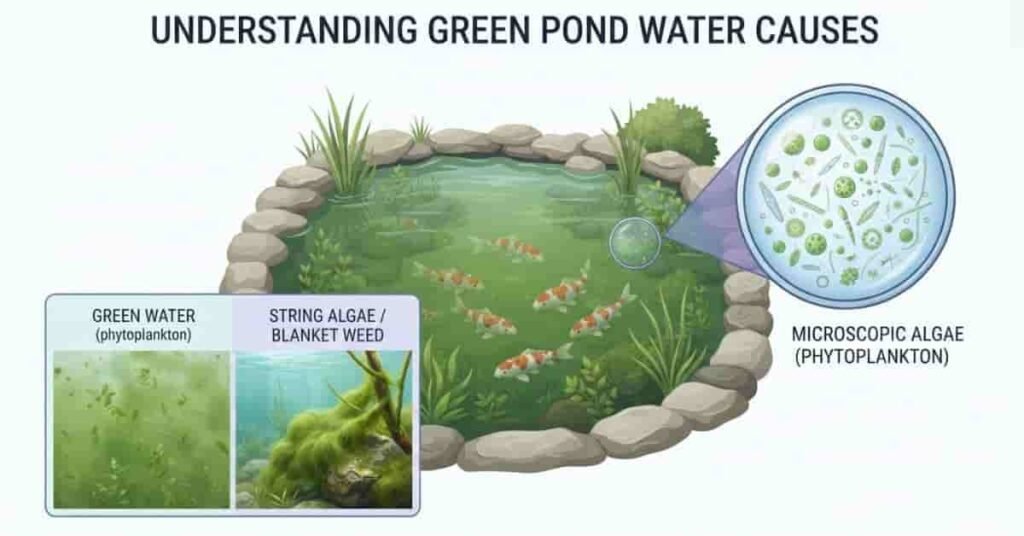
Green pond water usually develops when microscopic algae multiply quickly throughout the water. These tiny organisms, often called phytoplankton, create a green or cloudy appearance. This condition is commonly known as an algae bloom.
Green water differs from string algae or blanket weed. Green water comes from microscopic algae floating in the water column. String algae forms visible green threads, mats, or strands around pond surfaces.
The difference matters because each type needs a different approach. A pond can also have green water and string algae at the same time.
If you’re dealing with visible green strands, see our guide on [String Algae vs. Blanket Weed] for identification and control tips.
Why Is My Pond Water Green?
If you’re wondering why is my pond water green, three main factors usually work together: nutrients, sunlight, and filtration.
Excess nutrients give microscopic algae the food they need to grow. Fish waste, uneaten food, and decaying leaves can add these nutrients to the pond.
Strong sunlight can then encourage faster algae growth. Poor filtration makes the problem worse by allowing nutrients and suspended algae to remain in the water.
What Causes Green Pond Water?
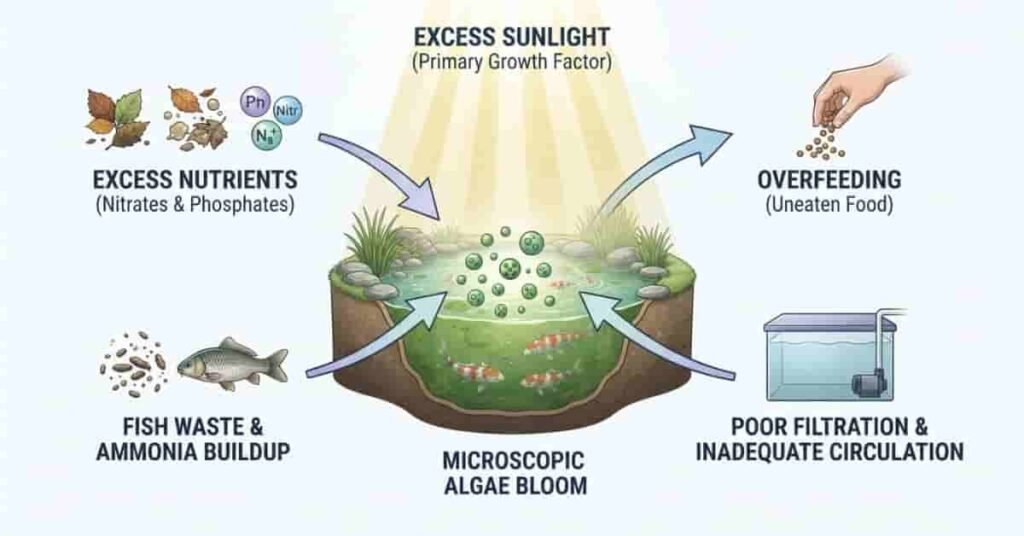
Several everyday pond conditions can contribute to green water. Understanding these causes helps you fix the underlying problem instead of treating the symptoms.
Fish waste buildup adds nutrients as waste breaks down. Larger fish populations can produce more waste, especially when filtration cannot keep up.
Overfeeding fish can also increase nutrient levels. Uneaten food sinks and decomposes, providing additional nutrients for algae growth.
Dead leaves and organic debris create another nutrient source. As this material breaks down, it releases compounds that can support algae growth.
Poor water circulation can create stagnant areas where debris and nutrients collect. Good circulation helps move water through filtration and improves overall pond conditions.
Once you identify the likely cause, you can focus on improving water clarity. Here are practical ways to how to clear green pond water fast and get your pond looking better.
Pro Tips
Remove fallen leaves regularly and feed fish only what they can consume quickly. Good maintenance reduces the nutrients available to algae.
Pond Water Turning Green: Early Warning Signs
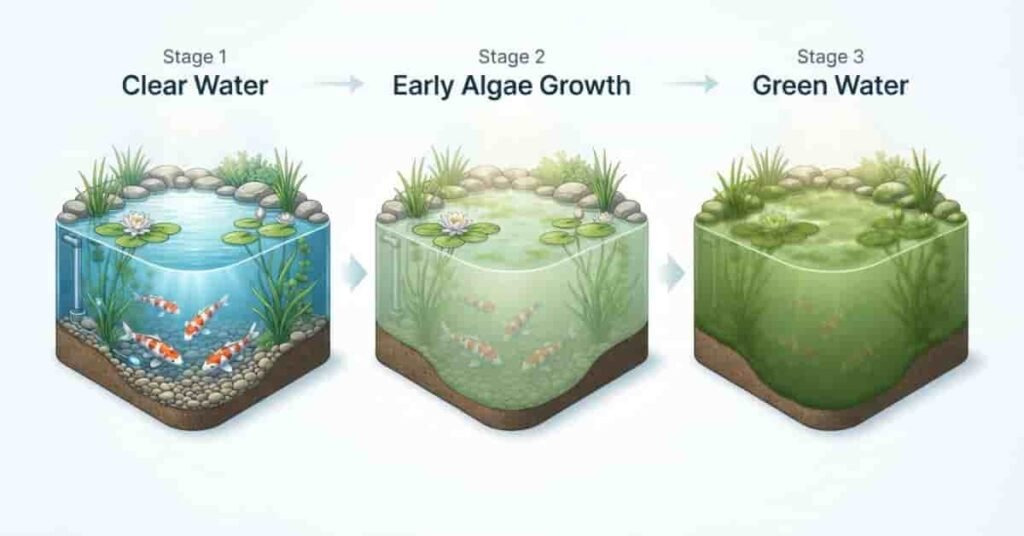
Pond water turning green often starts gradually rather than becoming bright green overnight. You may first notice a slight haze that makes the water look less clear than usual.
As microscopic algae multiply, the water can become increasingly cloudy or green. You may also notice reduced visibility when looking toward the pond bottom or watching your fish.
These changes can signal an early algae bloom. Acting early makes it easier to control nutrient buildup before the bloom becomes heavy.
Is Green Pond Water Bad for Fish?
Green pond water isn’t usually an immediate threat to healthy fish. However, a heavy algae bloom can create stressful conditions that deserve attention.
Algae produce oxygen during daylight through photosynthesis. At night, algae and other organisms consume oxygen instead. Heavy blooms can therefore contribute to larger oxygen fluctuations.
The risk becomes greater when the pond has poor circulation or a dense algae bloom. Fish may show stress by staying near the surface or gathering around moving water.
If fish appear distressed, improve aeration and circulation promptly. Avoid relying only on water clarity to judge pond health.
Clearing the water is only the first step. You should also learn how to prevent green pond water from returning through better pond management.
How to Get Rid of Green Water in a Pond
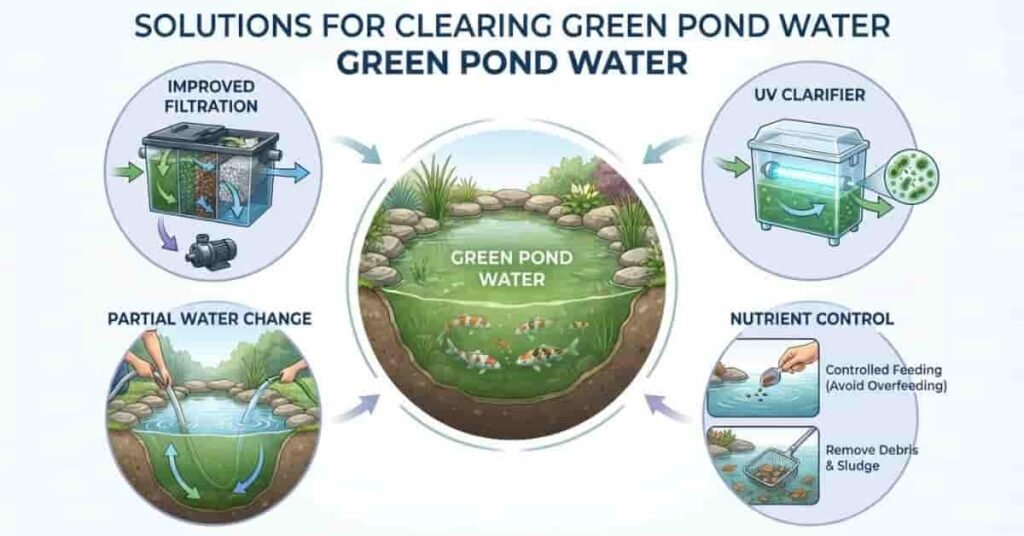
The best way to clear green pond water depends on what causes the algae bloom. Focus on reducing nutrients while improving the pond’s filtration and circulation.
Start by checking whether your filtration system matches the pond’s needs. Remove excess debris and avoid feeding fish more than necessary.
A partial water change can help reduce dissolved nutrients when conditions call for it. Avoid replacing large amounts of water unnecessarily, since sudden changes can stress fish.
A UV clarifier can also help clear suspended green-water algae. It works as part of a filtration system rather than fixing the nutrient source itself.
Long-term control depends on reducing the nutrients that feed algae. Plants, sensible feeding, debris removal, filtration, and circulation can all support better water balance.
Natural Ways to Clear Green Pond Water
Natural methods can help reduce green pond water by limiting the conditions algae need to grow. The goal isn’t to remove every trace of algae. Instead, focus on creating a better-balanced pond environment.
Pond plants can absorb nutrients that algae would otherwise use for growth. Choose suitable plants for your pond and avoid overcrowding, since excessive plant growth can create other maintenance problems.
Shade control can also help limit strong sunlight reaching the water. Aquatic plants can provide shade, while carefully placed structures may offer additional coverage.
Reducing fish feeding is another simple step. Feed only what your fish can consume without leaving excess food behind. Uneaten food breaks down and adds nutrients to the pond.
For more natural methods, see our guide to [Natural Algae Control].
Pro Tips
Combine several natural methods instead of depending on one solution. A balanced approach usually provides more consistent long-term control.
Fast Fix vs. Long-Term Fix
A fast solution can improve cloudy green water quickly, but it may not solve the underlying cause. UV clarification can target suspended algae, while a partial water change can reduce some dissolved nutrients.
These methods can improve water clarity, but the green water may return if excess nutrients continue entering the pond. Think of them as short-term tools rather than complete solutions.
Long-term control focuses on ecosystem balance. Improve filtration, manage fish feeding, remove organic debris, control sunlight, and maintain suitable plant coverage.
Quick fixes alone often fail because they address the visible algae rather than its food sources. Once nutrient levels rise again, algae can multiply and cause another bloom.
How to Prevent Green Pond Water in the Future
Preventing green pond water starts with consistent maintenance. Small routine tasks can reduce the nutrients that support algae growth.
Clean leaves and other organic debris before they accumulate. Check your filtration system regularly and make sure it provides suitable mechanical and biological filtration for your pond.
Fish feeding control also matters. Give fish appropriate portions and remove obvious leftover food when necessary. Excess food eventually becomes another nutrient source.
Maintain a sensible balance of pond plants as well. Plants can compete with algae for nutrients and provide shade, but overcrowding can reduce water movement.
Common Mistakes That Cause Green Pond Water
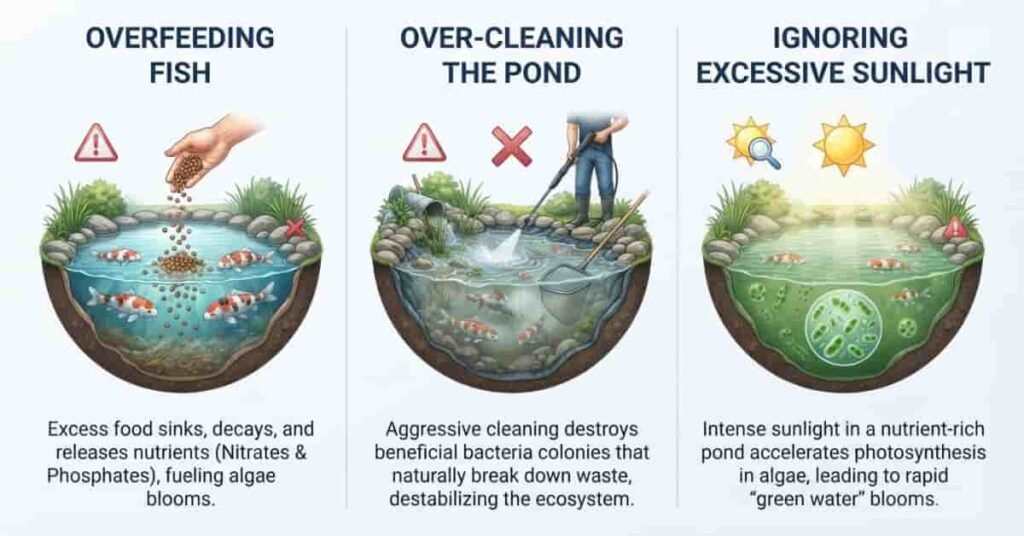
Many green-water problems start with simple maintenance mistakes. Correcting these habits can make algae control much easier.
Overfeeding fish adds unnecessary nutrients to the water. Feed appropriate amounts and avoid adding extra food simply because fish appear eager to eat.
Over-cleaning the pond can also cause problems. Removing too much biological material at once can disturb the pond’s natural ecosystem and filtration processes.
Ignoring sunlight exposure is another common mistake. Strong sunlight can encourage algae growth, especially when nutrients are already available.
Instead of chasing algae repeatedly, focus on the conditions that allow it to thrive. Balanced maintenance works better than aggressive cleaning or constant treatments.
Conclusion
Green pond water usually develops when nutrients and sunlight create favorable conditions for microscopic algae. Fish waste, excess food, organic debris, and weak filtration can add to the problem.
The best solution focuses on long-term pond balance rather than temporary water clarity. Improve filtration, manage feeding, remove debris, control sunlight, and maintain suitable plants.
Fast options such as UV clarification can help when used appropriately. However, lasting results come from reducing the conditions that fuel recurring algae blooms.
For additional solutions, explore our related algae removal guides and natural algae control resources. These can help you choose a practical approach for your pond.
Frequently Asked Questions
Green pond water usually comes from a bloom of microscopic algae. Excess nutrients, strong sunlight, fish waste, overfeeding, and poor filtration can encourage algae growth. Improving filtration and circulation while reducing nutrient buildup can help clear the water and prevent recurring blooms.
Green pond water isn’t usually immediately harmful to healthy fish. However, heavy algae blooms can contribute to oxygen fluctuations, especially at night. Poor circulation can increase this risk. If fish gasp at the surface or behave unusually, improve aeration and water movement promptly.
Common causes include excess nutrients, sunlight, fish waste, uneaten food, decaying leaves, and poor filtration. These conditions give microscopic algae the resources they need to multiply. Reducing nutrient sources and improving filtration can help control green water over time.
Start by reducing nutrient sources and improving filtration and circulation. Remove excess debris and avoid overfeeding fish. A partial water change may help in some situations. A UV clarifier can also help clear suspended microscopic algae from the water.
The clearing time varies depending on the algae bloom and its underlying cause. Improving filtration, reducing nutrients, and controlling sunlight can gradually improve clarity. A suitable UV clarifier may clear suspended algae faster, but the underlying nutrient problem still needs attention.
A properly sized UV clarifier can help control suspended microscopic algae that cause green water. It works by exposing passing water to UV light. However, it doesn’t remove the nutrients that feed algae. Good filtration and nutrient control remain important for long-term results.
Yes, suitable pond plants can help by absorbing nutrients and providing shade. However, plants shouldn’t completely cover the pond. Maintain a balanced amount of vegetation while keeping good water circulation and filtration.
Sunlight can encourage algae growth, especially when the pond contains excess nutrients. Strong, prolonged sunlight gives algae favorable conditions for photosynthesis. Adding suitable shade and maintaining healthy plant coverage can help reduce excessive algae growth.
A partial water change may help reduce dissolved nutrients in some situations. However, replacing water alone won’t solve the underlying cause. Focus on filtration, debris removal, feeding control, and nutrient management to reduce the chance of another algae bloom.
Maintain effective filtration, remove leaves and debris regularly, avoid overfeeding fish, and maintain balanced plant coverage. Good circulation also helps distribute water through the filtration system. Managing nutrients consistently is one of the most important steps.
Green water can return when cleaning doesn’t address the conditions feeding algae. Excess nutrients and strong sunlight can quickly support another bloom. Over-cleaning can also disturb the pond’s biological balance. Focus on stable filtration and nutrient control instead of repeated deep cleaning.
No. Green water comes from microscopic algae suspended throughout the water. String algae, also called blanket weed, forms visible threads or mats. These are different algae problems and may require different control methods.

Michael Brooks and Sarah Lane are the co-founders of the Pond Pump Team, a trusted U.S.-based group helping homeowners and landscapers build better ponds and water features. Michael, an experienced pond engineer from Oregon, has worked for over 12 years on pump sizing, flow systems, and water circulation. Sarah, a pond designer from Colorado with nine years of experience, focuses on eco-friendly and easy-to-maintain pond and waterfall designs. Together, they’ve completed more than 180 pond projects and created tools like the Pond Pump Calculator and Pond Liner Calculator to make pond planning simple, accurate, and sustainable.
Need help with your pond setup? Contact the Pond Pump Team for expert advice and reliable solutions.