Table of Contents
Introduction
Is your pond turning green while every algae treatment seems to promise a miracle?
Knowing what kills pond algae can save beginners time, money, and frustration. Many pond owners in the USA try vinegar, UV clarifiers, copper treatments, or barley straw. However, each method works differently and has important limitations.
Some treatments target green water algae but do little against string algae. Others can work quickly but may create risks for fish, plants, or beneficial pond life. Natural options may seem safer, but they often take longer to show results.
This guide compares the most common algae-control methods in simple terms. You’ll learn does vinegar kill algae, whether UV actually works, and when copper or barley straw makes sense.
By the end, you’ll know which method fits your pond and which options you should avoid. You’ll also learn how to control algae long-term through better pond management.
If algae has already taken over your pond, choosing the right treatment is important. Learn how to get rid of pond algae safely before trying different control methods.
What Actually Kills Pond Algae?
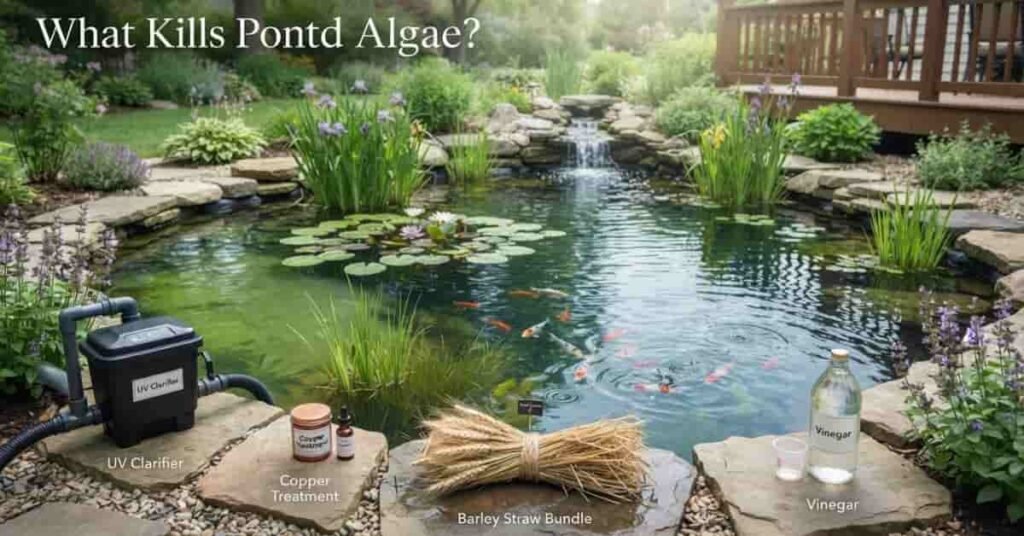
If you’re wondering what kills pond algae, there isn’t one solution that works for every pond. Different algae types need different control methods. Green water algae, string algae, and surface growth can respond very differently to treatment.
Effective algae control usually combines several steps. UV clarifiers can control free-floating algae, while good filtration removes waste that feeds future growth. Chemical treatments can help with severe problems, but you must choose them carefully around fish and plants.
Natural methods can also support algae control, especially when you use them alongside good pond maintenance. Reducing excess nutrients, avoiding overfeeding, and improving water circulation can make a major difference.
Takeaways
- UV clarifiers: Best suited for green water caused by suspended algae.
- Filtration: Removes particles and helps control nutrients.
- Algaecides: Can provide strong control but require careful use.
- Natural methods: Offer slower, supportive algae management.
- Pond maintenance: Helps prevent algae from returning.
Does Vinegar Kill Algae?
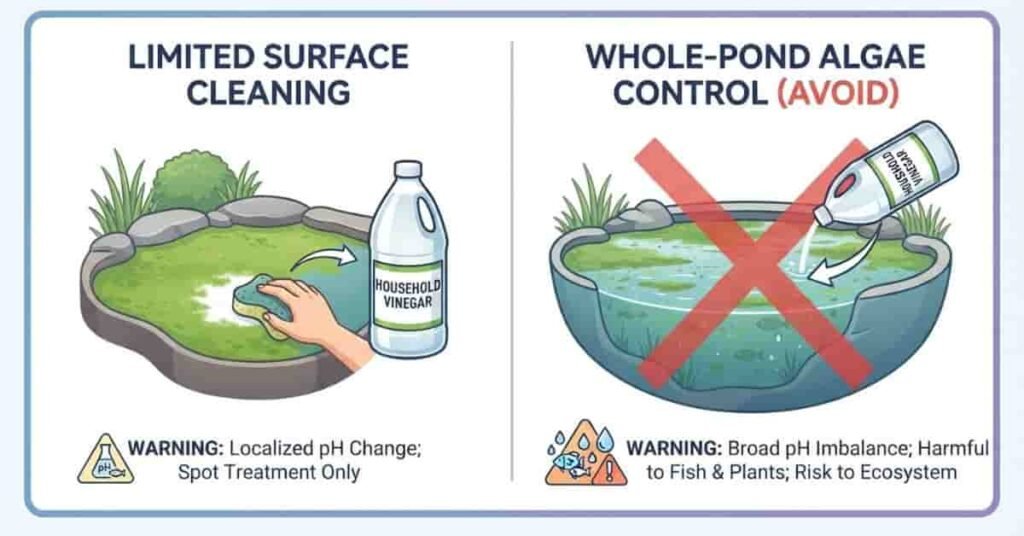
So, does vinegar kill algae? Vinegar can damage or kill some algae through its acidity, especially during small-scale cleaning. However, that doesn’t make it a good treatment for an entire pond.
Adding vinegar directly to a pond can change water chemistry and affect aquatic life. Fish, plants, beneficial microorganisms, and other pond organisms depend on stable water conditions. For this reason, vinegar isn’t a reliable long-term algae solution.
Vinegar may have limited use for cleaning algae from certain hard surfaces outside the pond. It should not replace proper pond management or a treatment designed for aquatic environments.
If algae keeps returning, focus on the underlying cause. Excess nutrients, sunlight, poor circulation, and organic waste can all support algae growth.
Pro Tip
Avoid treating your whole pond with household vinegar. Use pond-safe products when treatment becomes necessary.
If the main problem is cloudy or green-looking water, you may need a different approach. See how to clear green pond water fast with practical methods that target green water algae.
Does UV Kill Algae?
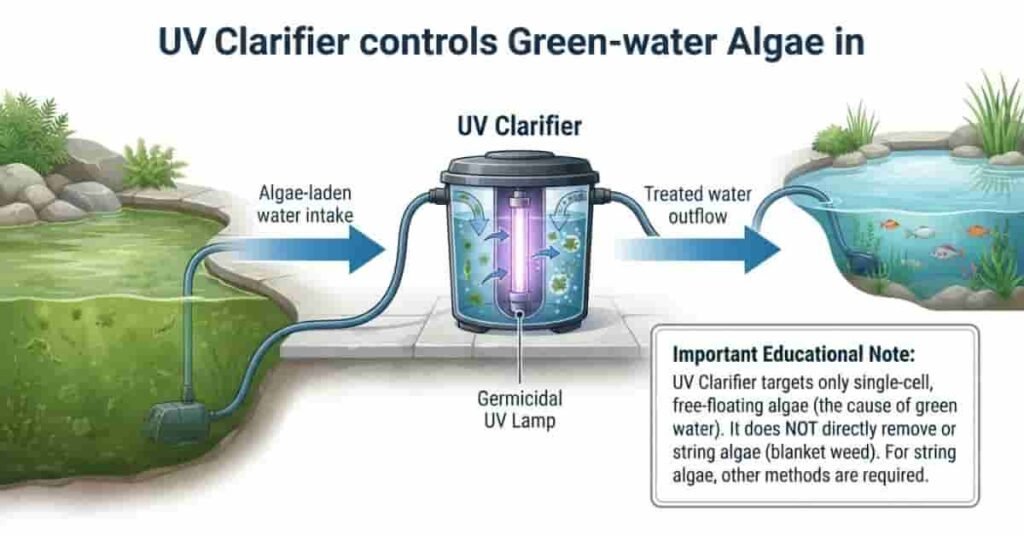
Yes, does UV kill algae? A properly sized UV clarifier can effectively control free-floating algae that causes green or cloudy pond water. UV light damages algae cells as water passes through the unit.
UV works best as part of a complete filtration system. The pump sends pond water through the UV clarifier, where the light treats suspended algae. The filter then helps remove the resulting particles from the water.
However, UV does not solve every algae problem. It works mainly on algae suspended in the water column. It won’t directly remove string algae or blanket weed attached to pond surfaces, rocks, or plants.
For beginners, UV is one of the most practical tools for persistent green water. Choose a unit that matches your pond size and water flow. Proper installation and regular maintenance also affect performance.
Pro Tip
Keep the UV unit clean and replace its lamp according to the manufacturer’s instructions. A dirty or aging system can reduce performance.
Does Copper Kill Algae?
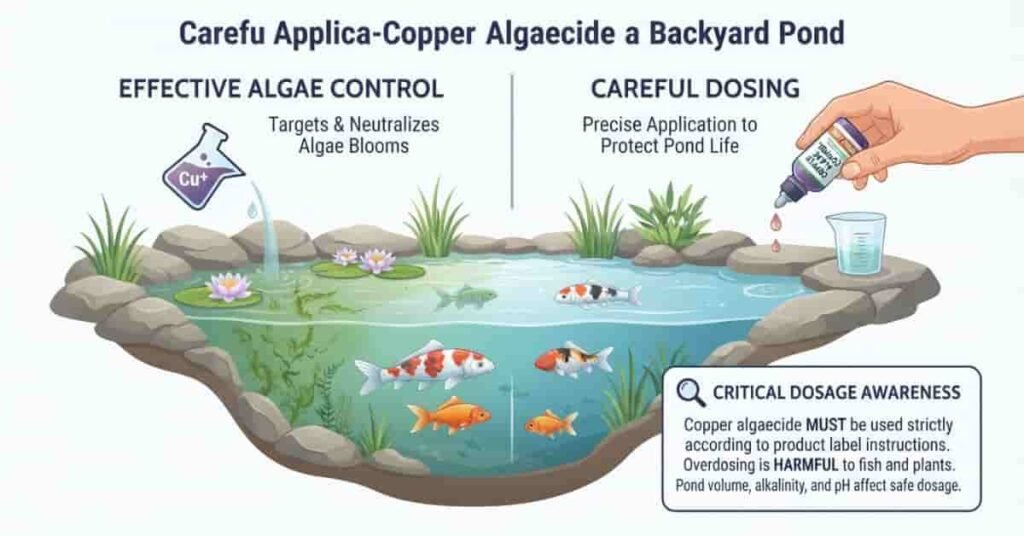
Yes, does copper kill algae? Copper-based algaecides can control many types of algae in ponds. They can work faster than natural methods when algae growth becomes severe.
However, copper requires careful handling around fish, plants, and other aquatic life. The risk depends on the product, dose, water conditions, and pond inhabitants. Some fish and invertebrates can be especially sensitive to copper.
Never assume that more copper means better algae control. Overdosing can harm aquatic life and create water-quality problems. Always follow the product label and check whether it suits your pond.
Copper also treats algae rather than fixing the conditions that caused it. Excess nutrients, sunlight, and organic waste can still encourage new growth.
Pro Tip
Check your pond’s fish and invertebrates before using a copper-based algaecide. Follow the exact label dosage.
Does Barley Straw Kill Algae?
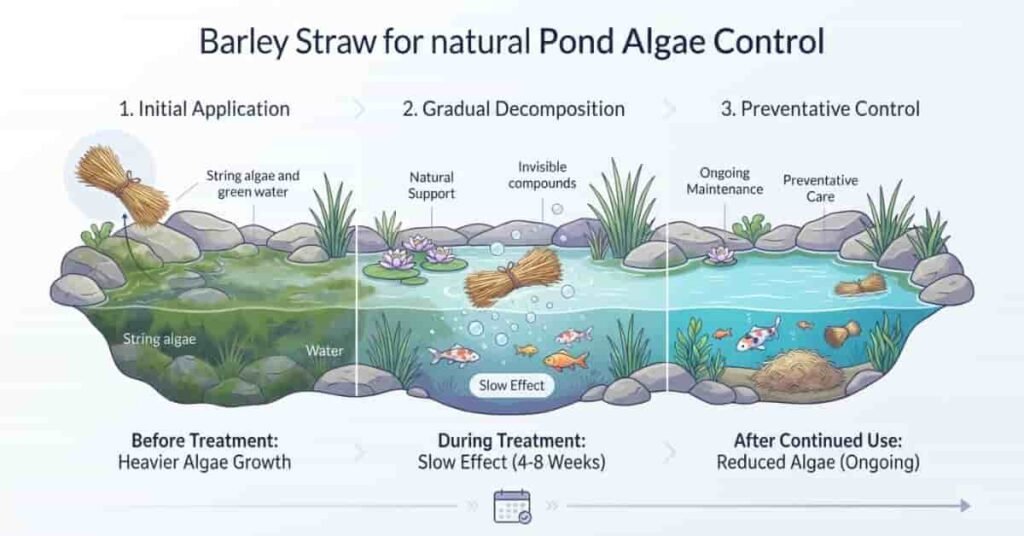
So, does barley straw kill algae? Barley straw may help reduce algae growth, but it works slowly and shouldn’t replace proper pond maintenance.
As barley straw breaks down, it can release compounds that may interfere with algae growth. However, results can vary with pond conditions, algae type, water movement, and the amount of straw used.
Barley straw works better as a supportive or preventative method than as a quick solution for heavy algae growth. It also won’t remove an existing algae bloom overnight.
For better results, combine natural methods with good filtration, water circulation, and nutrient control. Remove excess organic debris and avoid overfeeding fish. These steps reduce the resources algae needs to grow.
Which Method Works Best?
The best algae-control method depends on the type and severity of algae in your pond. No single treatment works equally well for every situation.
| Method | Best For | Speed | Main Concern |
|---|---|---|---|
| UV | Green water | Fast | Needs proper filtration |
| Copper | Many algae types | Fast | Aquatic life safety |
| Barley straw | Ongoing prevention | Slow | Limited effectiveness |
| Vinegar | Small surface areas | Variable | Poor whole-pond choice |
For green water, UV usually offers the most practical approach when paired with effective filtration. Copper can provide stronger chemical control, but you need to use it carefully.
Barley straw can support long-term maintenance, while vinegar has limited value for whole-pond algae control. The best strategy combines appropriate treatment with nutrient and water-quality management.
Best Combination Strategy for Pond Owners
The most reliable algae control comes from combining several methods instead of relying on one treatment. This approach works better because algae often grows from multiple causes.
Start with UV and filtration if green water is your main problem. UV targets suspended algae, while filtration helps remove particles and waste from the water. Together, they can keep the pond clearer.
Next, focus on nutrient control. Remove decaying leaves, avoid overfeeding fish, and maintain healthy water circulation. Lower nutrient levels give algae fewer resources to grow.
Natural methods can provide additional support. Barley straw may help with ongoing maintenance, but it shouldn’t replace filtration or good pond care. Use chemical algaecides only when other methods cannot control the problem.
What Kills Algae Long-Term?
Long-term algae control starts with fixing the conditions that help algae grow. Killing existing algae only provides temporary relief if those conditions remain.
Excess nutrients are a major concern. Fish waste, uneaten food, decaying leaves, and organic debris can add nutrients to pond water. Regular cleaning and controlled feeding can help reduce this buildup.
A balanced pond ecosystem also supports better algae management. Aquatic plants can compete with algae for available nutrients. Good circulation and filtration can further improve overall water quality.
Fish feeding deserves special attention. Feed only what your fish can consume without leaving excess food behind. Uneaten food breaks down and adds nutrients that algae can use.
Takeaways
- Control excess nutrients.
- Keep filtration working properly.
- Maintain good water circulation.
- Manage fish feeding.
- Encourage healthy aquatic plants.
Common Mistakes People Make
Many pond owners treat algae as an isolated problem. They remove the visible growth but ignore what caused it.
One common mistake involves relying on a single solution. UV can help with green water, but it won’t remove blanket weed. Similarly, barley straw cannot replace proper filtration and nutrient control.
Another mistake involves overusing chemical treatments. More algaecide does not automatically produce better results. Excessive treatment can create risks for fish, plants, and other aquatic organisms.
Ignoring water quality can also allow algae to return quickly. Poor circulation, organic waste, and excess nutrients can keep supporting new growth.
Pro Tip
Before treating algae, check your filtration, water movement, feeding habits, and visible organic waste.
Removing algae is only part of the solution. Learning how to prevent pond algae can help reduce future growth and keep your pond cleaner for longer.
Safe Algae Control Tips
Safe algae control starts with choosing a treatment that matches your pond and its inhabitants. Always consider fish, plants, and other aquatic life before adding any product.
Choose treatments specifically labeled for pond use. Follow the manufacturer’s instructions carefully, especially when using chemical algaecides. Never increase the dose simply because algae growth looks severe.
A gradual cleaning approach can also reduce stress on your pond ecosystem. Remove excess algae and debris carefully instead of disturbing everything at once. Maintain filtration and circulation throughout the process.
Regular maintenance makes future algae problems easier to manage. Check equipment, remove organic debris, control feeding, and monitor water quality as part of your routine.
Pro Tip
Keep a simple pond maintenance schedule. Small, regular tasks can prevent algae from becoming a major problem.
Conclusion
Controlling pond algae doesn’t require one magic solution. We compared vinegar, UV, copper, and barley straw to see where each method fits.
If you’re wondering what kills pond algae, start by identifying the algae type and its cause. UV offers one of the strongest immediate options for green water. Copper can work well but needs careful use around aquatic life. Barley straw provides slower, supportive control, while vinegar has limited value for whole-pond treatment.
For lasting results, combine proper filtration, nutrient control, circulation, and regular maintenance. This approach helps prevent algae from quickly returning.
Have you tried any of these algae-control methods? Share your experience in the comments, or explore more pond care guides for practical tips.
Frequently Asked Questions
UV clarifiers can quickly control free-floating algae that causes green pond water. Copper-based algaecides can also work quickly, but they require careful dosing. The best choice depends on the algae type, pond conditions, and aquatic life.
Vinegar can damage some algae because of its acidity, but it isn’t a reliable whole-pond treatment. It may also affect water chemistry and aquatic life. Use pond-specific treatments instead of adding household vinegar to the pond.
Yes, UV clarifiers can control free-floating algae that causes green water. UV works as pond water passes through the unit. However, it does not directly remove string algae or blanket weed attached to pond surfaces.
Yes, copper-based algaecides can control many types of pond algae. However, excessive copper can harm fish, plants, and aquatic organisms. Always choose a pond-safe product and follow its label directions carefully.
Barley straw may help reduce algae growth over time, but it works slowly. It works better as a supportive or preventative method than as a quick treatment for heavy algae growth.
Long-term algae control requires more than killing existing algae. Reduce excess nutrients, avoid overfeeding fish, maintain good filtration, improve circulation, and encourage healthy aquatic plants. These steps make the pond less favorable for algae growth.
UV is often a better choice for recurring green water because it avoids adding chemicals to the pond. Copper can provide stronger treatment for some algae types but carries greater safety concerns. The right option depends on your pond and algae problem.
Yes. Algae can return when the conditions that caused it remain. Excess nutrients, sunlight, poor circulation, and organic waste can encourage new growth. Fixing these underlying conditions helps make algae control more effective.
Start with filtration, UV for green water, nutrient control, and regular pond maintenance. If you use an algaecide, make sure it is specifically labeled for ponds containing your fish and follow the recommended dosage.
Each method has a different purpose. UV works well for green water, copper provides chemical control, and barley straw offers slower natural support. Vinegar has limited value and isn’t recommended as a whole-pond algae treatment.

Michael Brooks and Sarah Lane are the co-founders of the Pond Pump Team, a trusted U.S.-based group helping homeowners and landscapers build better ponds and water features. Michael, an experienced pond engineer from Oregon, has worked for over 12 years on pump sizing, flow systems, and water circulation. Sarah, a pond designer from Colorado with nine years of experience, focuses on eco-friendly and easy-to-maintain pond and waterfall designs. Together, they’ve completed more than 180 pond projects and created tools like the Pond Pump Calculator and Pond Liner Calculator to make pond planning simple, accurate, and sustainable.
Need help with your pond setup? Contact the Pond Pump Team for expert advice and reliable solutions.