Table of Contents
Introduction
Have you ever looked at your pond and wondered why the water suddenly turned green?
Pond algae is a common problem for many pond owners across the USA, especially during warm months. New pond keepers often try cleaning algae away without understanding what caused it to grow in the first place. Learning what causes algae in ponds helps you solve the real issue instead of dealing with repeated algae blooms.
In this guide, you will discover the main reasons algae appears, including excess nutrients, sunlight, poor circulation, and fish waste. You will also learn why pond water turns green and how different conditions encourage algae growth. By understanding the causes, you can create a healthier pond environment and prevent future problems more effectively.
Excess algae can change clear pond water into a cloudy green color. If you are dealing with this problem, learn why is my pond water green and what may be happening beneath the surface.
What Exactly Is Pond Algae?
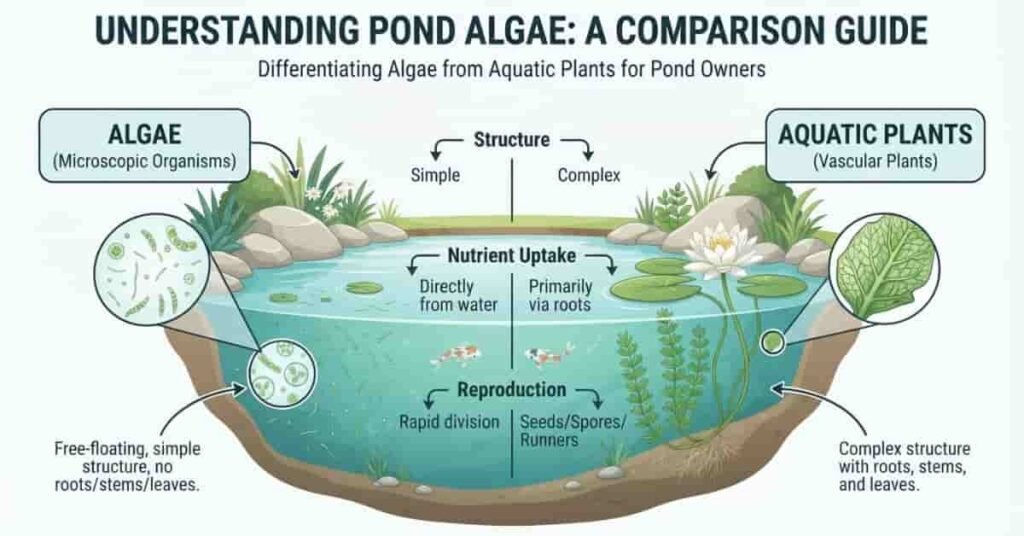
Pond algae is a simple aquatic organism that grows in water when conditions support its growth. It uses sunlight and nutrients to multiply, which can create green water, slimy surfaces, or string-like growth around your pond. Small amounts of algae are normal and can even support a healthy ecosystem.
The problem starts when algae grows faster than your pond can control. Excess nutrients, warm temperatures, and too much sunlight often create the perfect environment for algae blooms. Understanding what causes algae in ponds helps you fix the imbalance instead of only removing the visible growth.
Algae is different from aquatic plants. Pond plants like water lilies and submerged plants have roots, stems, and leaves. They also help absorb nutrients and compete with algae for resources. Algae does not have these structures and can spread quickly when extra nutrients are available.
Understanding the causes of algae is important because many of the same conditions can be controlled before a bloom develops. Learn how to prevent pond algae by reducing excess nutrients, managing sunlight, and improving overall pond conditions.
Main Causes of Algae in Ponds
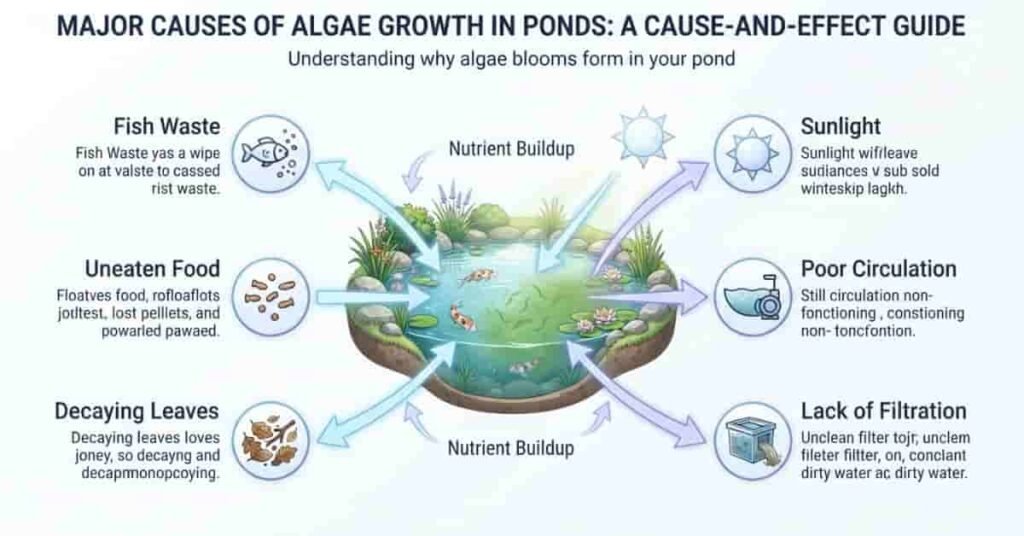
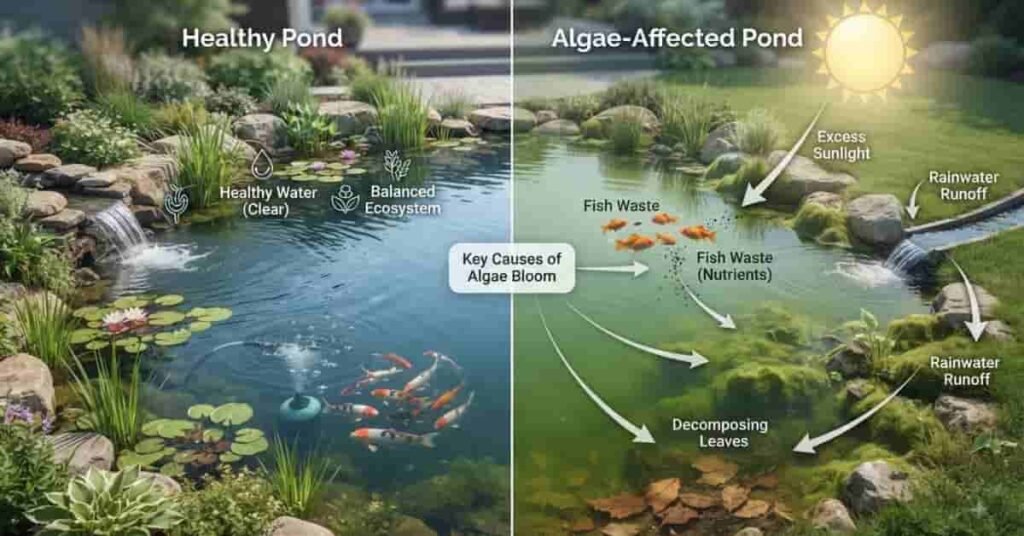
Pond algae usually appears because several conditions combine to support rapid growth. The biggest factors include excess nutrients, sunlight, poor circulation, and unstable water conditions. When your pond receives more nutrients than plants and filtration can handle, algae gets the resources it needs to spread.
Many beginners focus only on removing algae from the surface. However, the better approach is finding the source of the problem. Reducing nutrient buildup, improving water movement, and balancing your pond environment can help prevent future algae blooms.
The following causes explain why pond water turns green and why algae grows faster in some ponds than others.
1. Excess Nutrients in Water (Biggest Cause)
Excess nutrients are the biggest driver behind pond algae growth. Algae needs nutrients like nitrogen and phosphorus to survive. When these nutrients build up, algae can multiply quickly and create cloudy green water or thick growth.
Fish waste is one common source of extra nutrients. As fish release waste, it breaks down and adds organic material to the pond. Too many fish in a small pond can increase this buildup and encourage algae problems.
Uneaten fish food creates another nutrient source. Extra food sinks to the bottom and starts decomposing, which adds more nutrients for algae to use. Feeding fish more than they need can slowly affect water quality.
Decaying leaves, dead plants, and other organic debris also contribute to nutrient buildup. These materials break down over time and release compounds that support algae growth.
2. Too Much Sunlight
Sunlight plays an important role in algae growth because algae uses light to produce energy. Ponds that receive many hours of direct sunlight often have a higher risk of algae problems.
Shallow ponds are especially vulnerable because sunlight reaches more of the water surface. Warm, bright conditions can help algae reproduce faster, especially when nutrients are already available.
Adding shade can help reduce excessive sunlight exposure. Floating plants, nearby landscaping, or pond covers can limit direct light while keeping the ecosystem balanced.
However, sunlight alone does not always cause algae. A pond with good filtration, healthy plants, and balanced nutrients can usually handle normal sunlight levels.
Pro Tip: Create partial shade instead of blocking all sunlight. Pond plants still need light to grow.
3. Stagnant or Poor Water Circulation
Water movement helps keep a pond healthy by spreading oxygen and preventing waste from settling in one area. When water becomes stagnant, algae can find better conditions to grow.
Still water allows nutrients and organic debris to collect. These areas often become ideal locations for algae blooms because the pond lacks proper circulation.
Pumps, waterfalls, and fountains can improve water movement. Better circulation also supports beneficial bacteria that break down waste naturally.
Poor circulation does not always create algae by itself. However, it can make existing nutrient problems worse by allowing waste to accumulate.
Expert Tip: Check for dead zones where water barely moves. These areas often show algae growth first.
4. Lack of Filtration System
A filtration system helps remove waste and excess nutrients from pond water. Without proper filtration, organic material can build up and provide food for algae.
Mechanical filters remove floating debris, while biological filters support helpful bacteria. These bacteria break down harmful waste and improve water quality.
Ponds without filtration often struggle with cloudy water and frequent algae growth. This problem becomes more common when fish produce more waste than the pond can naturally process.
Choosing the right filter size for your pond is important. A small filter may not handle the amount of waste produced by fish and plants.
Pro Tip: Clean filters regularly, but avoid removing all beneficial bacteria during maintenance.
5. Rainwater Impact on Pond Algae
Rain does not directly create algae, but it can trigger growth by changing your pond conditions. Rainwater often carries extra nutrients into ponds through runoff from gardens, soil, and nearby areas.
Fertilizers, dust, and organic particles can enter the pond after heavy rain. These materials increase nutrient levels and may contribute to algae blooms.
Rain can also affect water chemistry by changing nutrient balance and diluting existing pond conditions. The impact depends on what enters the pond with the runoff.
Preventing runoff is one of the best ways to reduce rain-related algae problems. Simple steps like creating barriers around the pond can help block unwanted materials.
Expert Tip: Avoid using fertilizers near ponds, especially before heavy rainfall.
6. Overfeeding Fish
Overfeeding fish is a common mistake among beginner pond owners. Extra food that fish do not eat settles at the bottom and begins to decay.
As leftover food breaks down, it releases nutrients into the water. These nutrients feed algae and can contribute to poor water quality.
Fish should receive only the amount of food they can eat within a few minutes. Feeding less can improve water clarity and reduce unnecessary waste.
A healthy feeding routine also protects fish because cleaner water creates a safer environment.
Pro Tip: Watch your fish during feeding. If food remains after a few minutes, reduce the amount next time.
Before trying to solve an algae problem, it also helps to understand the different forms algae can take. Our guide to what pond algae is and the different types explains how common algae behaves and affects pond water.
Why Algae Grows So Fast in Some Ponds
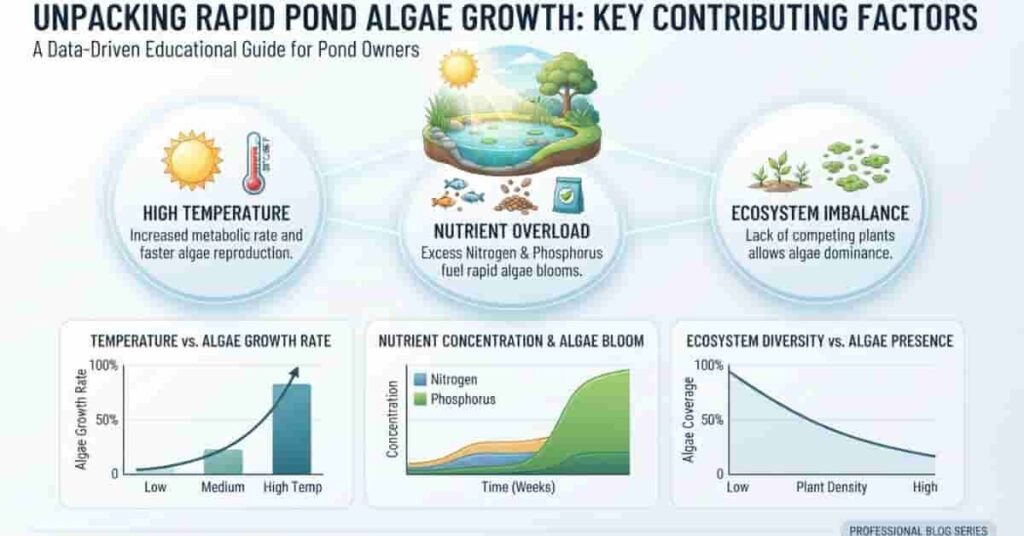
Some ponds develop algae much faster because their conditions support rapid growth. Algae needs three main things to spread: nutrients, sunlight, and suitable water conditions. When these factors combine, a small amount of algae can quickly become a larger problem.
Warm temperatures speed up algae growth because algae becomes more active in warmer water. Summer heat can increase reproduction, especially when the pond already contains extra nutrients.
Nutrient overload is another major reason algae spreads quickly. Fish waste, leftover food, and decaying organic matter release nutrients into the water. When the pond receives more nutrients than plants and filtration can manage, algae uses those resources to grow.
An unhealthy pond balance can also encourage algae blooms. Too many fish, poor circulation, or limited plant growth can disturb the ecosystem. A balanced pond gives algae less opportunity to dominate.
Seasonal Factors That Increase Algae
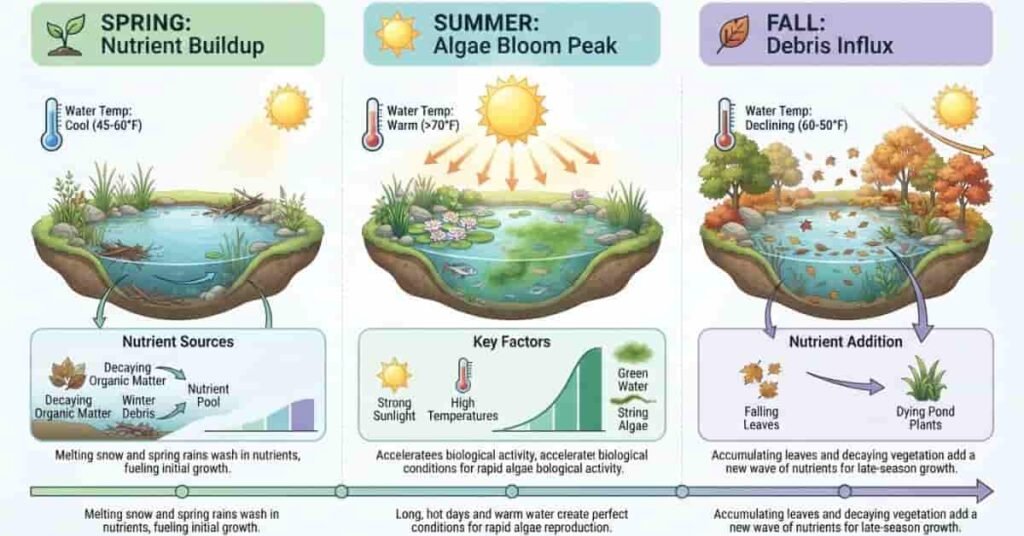
Algae growth often changes throughout the year because pond conditions change with the seasons. Temperature, sunlight levels, and nutrient availability all affect how quickly algae can spread.
During spring, ponds often experience increased algae growth because nutrients may build up over winter. Fallen leaves, dead plants, and organic waste break down and create extra food sources for algae.
Summer usually creates the highest algae risk. Longer daylight hours and stronger sunlight provide more energy for algae growth. Warm water also speeds up biological activity, especially in ponds with poor circulation.
Warm stagnant water can become a problem during hot months. When water movement slows, oxygen levels may decrease, and nutrients can collect in certain areas. These conditions make it easier for algae blooms to develop.
Fall can also contribute to algae issues because leaves and plant debris enter the pond. If this organic material remains in the water, it can increase nutrient levels.
Pro Tip: Remove fallen leaves regularly, especially during spring and fall, to reduce algae-friendly conditions.
Types of Algae Caused by These Conditions
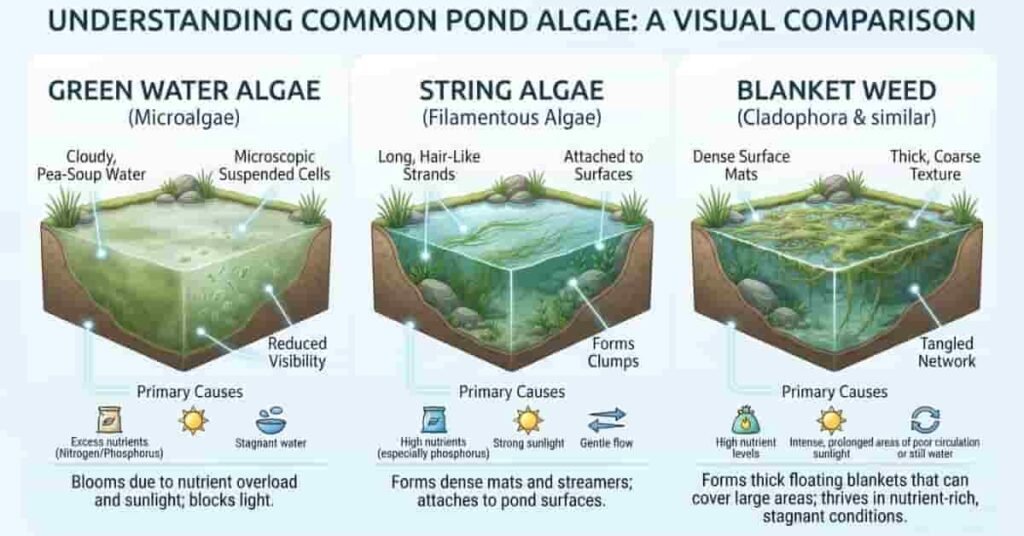
Different pond conditions can lead to different types of algae. Identifying the type of algae helps you understand what may be causing the problem.
Green Water Algae
Green water algae are tiny organisms that float throughout the pond water. They often make the water look cloudy or bright green.
This type commonly appears when ponds have excess nutrients and strong sunlight. Too much fish waste, fertilizer runoff, or decaying matter can increase the nutrients algae needs.
Green water algae can spread quickly because it grows throughout the entire water column.
String Algae
String algae, also called filamentous algae, grows in long strands that attach to pond surfaces. It often appears around rocks, waterfalls, and shallow areas.
Nutrient imbalance and excess sunlight commonly encourage string algae growth. Poor maintenance and extra organic waste can make the problem worse.
Blanket Weed
Blanket weed is a type of string algae that can form thick mats across the pond surface. It often develops when ponds have high nutrients and low water movement.
Poor circulation allows nutrients to collect, creating better conditions for this algae type.
Does Rain Cause Algae in Ponds?
Rain does not directly create algae, but it can increase the conditions that help algae grow. Many pond owners notice algae problems after heavy rainfall because rain can introduce extra nutrients into the water.
Rainwater can carry fertilizer, soil particles, dust, and organic debris from nearby areas. When these materials enter a pond, they can increase nutrient levels and contribute to algae blooms.
Garden runoff is one of the biggest concerns after storms. Water flowing from lawns or soil may contain nutrients that algae can use as food.
Heavy rain can also disturb water balance by changing nutrient levels and water conditions. A healthy pond usually handles normal rainfall, but ponds with existing problems may experience faster algae growth.
Preventing runoff and maintaining good filtration can reduce the impact of rain-related algae issues.
Expert Tip: Create a small barrier around your pond to reduce soil and fertilizer runoff after storms.
How Understanding Causes Helps in Control
Knowing what causes algae in ponds makes controlling it much easier. Many pond owners remove visible algae but do not fix the conditions that allow it to return. Without addressing the source, algae often comes back again.
Prevention is usually easier than removal. Reducing excess nutrients, improving circulation, and maintaining proper filtration can stop algae problems before they become severe.
A balanced pond ecosystem creates long-term stability. Healthy aquatic plants, beneficial bacteria, and proper maintenance work together to keep nutrient levels under control. This reduces the amount of food available for algae.
Understanding the cause also helps reduce unnecessary chemical use. Algae treatments may provide quick results, but they often do not solve the reason algae grew in the first place. A healthy pond management routine creates better results over time.
Expert Tip: Focus on improving pond conditions instead of only treating algae after it appears.
Common Misconceptions About Pond Algae
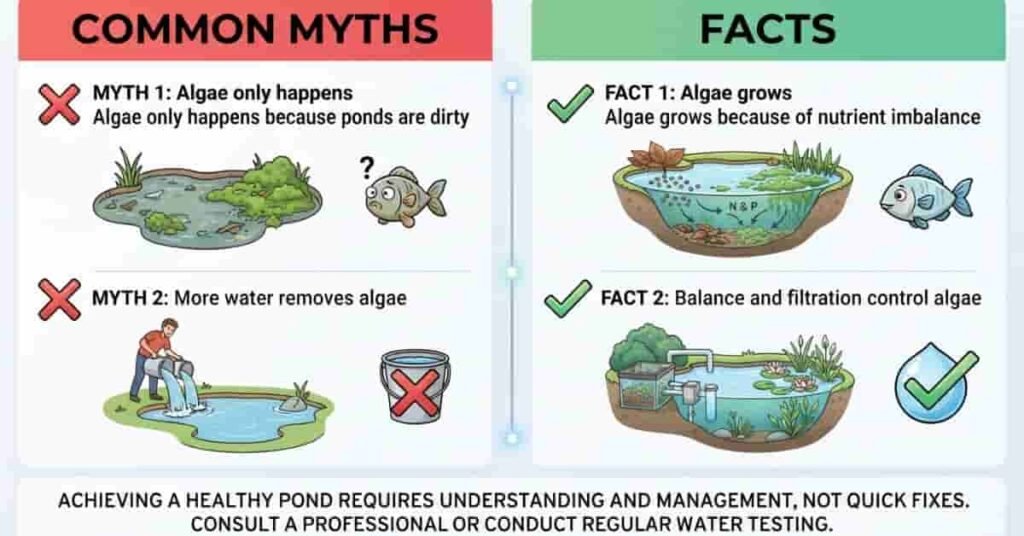
Many beginners misunderstand why algae grows in ponds. These myths can lead to ineffective solutions and repeated algae problems.
One common belief is that algae only happens because a pond is dirty. This is not always true. Even clean ponds can develop algae if they contain too many nutrients or receive excessive sunlight.
A pond can look clean but still have conditions that support algae growth. Water quality depends on balance, not just appearance.
Another misconception is that adding more water will automatically reduce algae. While a water change can sometimes help, adding more water does not remove the main causes of algae. If nutrient levels remain high, algae can return quickly.
The key is managing the factors that encourage growth. Proper filtration, plant balance, and nutrient control are more effective than relying on quick fixes.
When algae growth has already become noticeable, identifying the cause can help you choose a more effective solution. See these practical methods for how to get rid of pond algae and deal with existing growth safely.
Prevention Overview: What to Do Next
Understanding algae causes is the first step toward a healthier pond. The next step is learning how to prevent and remove algae effectively.
Good algae prevention starts with controlling nutrients. Avoid overfeeding fish, remove organic debris, and prevent fertilizer runoff from entering the pond.
Improving filtration and water movement also helps maintain better water quality. A suitable filter removes waste, while pumps and waterfalls prevent stagnant areas where algae can thrive.
Plant balance is another important part of prevention. Aquatic plants compete with algae for nutrients and can provide shade that limits excessive sunlight.
For a complete step-by-step solution, continue with our guide on how to remove algae from a pond. It explains practical methods for reducing algae and keeping your pond clear.
Conclusion
Algae growth is not just a cleaning issue; it is usually a sign of an underlying pond imbalance. Nutrients, sunlight, poor circulation, and water conditions all play a role in algae problems.
Understanding what causes algae in ponds helps you solve the real problem instead of only removing what you see. A healthy pond depends on balanced nutrients, proper filtration, and good ecosystem management.
Remember, algae is a symptom, not the root problem. Once you identify the cause, you can take better steps to prevent future growth and maintain clear water.
Explore our related guides on how to remove algae from a pond, improve filtration, and create a healthier pond environment. Share your pond experience and let us know what algae challenges you have faced.
Frequently Asked Questions
The main cause of algae in ponds is excess nutrients in the water. Fish waste, uneaten food, decaying leaves, and organic debris release nutrients that algae uses to grow. Too much sunlight and poor water circulation can make the problem worse. Controlling nutrient levels is one of the best ways to prevent repeated algae growth.
Yes, rain can increase algae growth indirectly. Rainwater often carries fertilizers, soil particles, dust, and organic materials into ponds through runoff. These extra nutrients can create better conditions for algae blooms. Rain itself does not cause algae, but it can disturb water balance and encourage growth when nutrient levels are already high.
Pond water turns green when microscopic green water algae multiply throughout the pond. This usually happens when the water contains excess nutrients and receives plenty of sunlight. Poor filtration, warm temperatures, and limited circulation can make green water algae spread faster.
Yes, fish waste can cause algae growth. As fish waste breaks down, it releases nutrients that algae uses as a food source. Overfeeding fish or keeping too many fish in a pond can increase waste levels and encourage algae blooms. Proper feeding and filtration help reduce this problem.
Sunlight helps algae grow because algae needs light for photosynthesis. Ponds with long hours of direct sunlight, especially shallow ponds, often have a higher algae risk. However, sunlight alone does not create algae problems. Excess nutrients and poor pond balance usually contribute to faster growth.
Yes, stagnant water can encourage algae growth. Poor water circulation allows nutrients and organic waste to collect in certain areas. Still water also reduces oxygen movement and creates conditions where algae can spread more easily. Pumps, waterfalls, and proper circulation help maintain healthier pond conditions.
You can reduce algae growth by controlling the causes behind it. Avoid overfeeding fish, remove decaying leaves, improve filtration, increase water movement, and add suitable pond plants. Creating a balanced ecosystem reduces the nutrients and conditions algae needs to grow.
Not always. Algae is usually a sign of an imbalance rather than simply a dirty pond. Even clean ponds can develop algae if they have excess nutrients, too much sunlight, or poor circulation. Finding the cause helps solve the problem more effectively than only removing algae.
Common pond algae types include green water algae, string algae, and blanket weed. Green water algae makes ponds look cloudy or green. String algae grows in long strands around surfaces, while blanket weed forms thick mats. Each type is linked to different conditions, such as nutrient buildup and poor circulation.
Yes, aquatic plants can help reduce algae by competing for nutrients and providing shade. Plants such as water lilies and submerged plants absorb some nutrients that algae would otherwise use. A balanced mix of plants, filtration, and circulation helps create a healthier pond environment.

Michael Brooks and Sarah Lane are the co-founders of the Pond Pump Team, a trusted U.S.-based group helping homeowners and landscapers build better ponds and water features. Michael, an experienced pond engineer from Oregon, has worked for over 12 years on pump sizing, flow systems, and water circulation. Sarah, a pond designer from Colorado with nine years of experience, focuses on eco-friendly and easy-to-maintain pond and waterfall designs. Together, they’ve completed more than 180 pond projects and created tools like the Pond Pump Calculator and Pond Liner Calculator to make pond planning simple, accurate, and sustainable.
Need help with your pond setup? Contact the Pond Pump Team for expert advice and reliable solutions.