Table of Contents
Introduction
What if the green mats covering your pond could be controlled by the right algae-eating animals?
String algae, also called blanket weed, can quickly turn a clean-looking pond into a tangled mess. Many beginners look for natural ways to control it before reaching for chemical treatments.
So, what eats string algae, and can these animals actually keep your pond under control? The answer depends on the algae species and the animal doing the grazing.
Some fish may nibble on string algae, while others offer little help. Grass carp, koi, goldfish, and pond snails can all play different roles in pond maintenance.
In this guide, you’ll learn which animals eat string algae and how effective they really are. You’ll also discover why algae eaters alone may not solve a serious blanket weed problem.
By the end, you’ll know which natural options make sense for your pond and when other control methods may be needed.
Not all green growth in a pond is the same. If you are unsure what you are dealing with, start by learning about string algae and blanket weed.
Do Any Animals Actually Eat String Algae? (Reality Check)
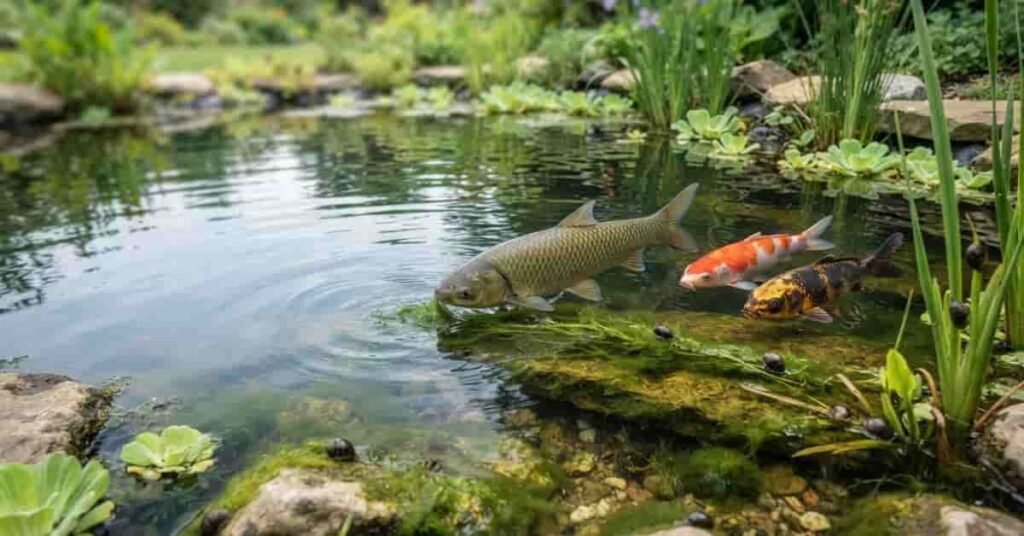
Yes, some animals will eat or graze on string algae, but the choices are limited. Not every algae-eating fish can handle thick, tangled mats of blanket weed.
String algae grows in long, thread-like strands that can form dense clumps. Many popular algae eaters prefer softer algae, biofilm, or algae growing on surfaces instead.
That means adding an “algae eater” doesn’t automatically solve a string algae problem. The animal must actually feed on filamentous algae and consume enough to make a noticeable difference.
For pond owners, this distinction matters. A fish may nibble on algae without controlling a large infestation.
Expert tip: Treat algae-eating animals as part of your pond management plan, not as a guaranteed cure. Removing excess algae and reducing nutrient buildup still matters.
Best Fish That Eat String Algae
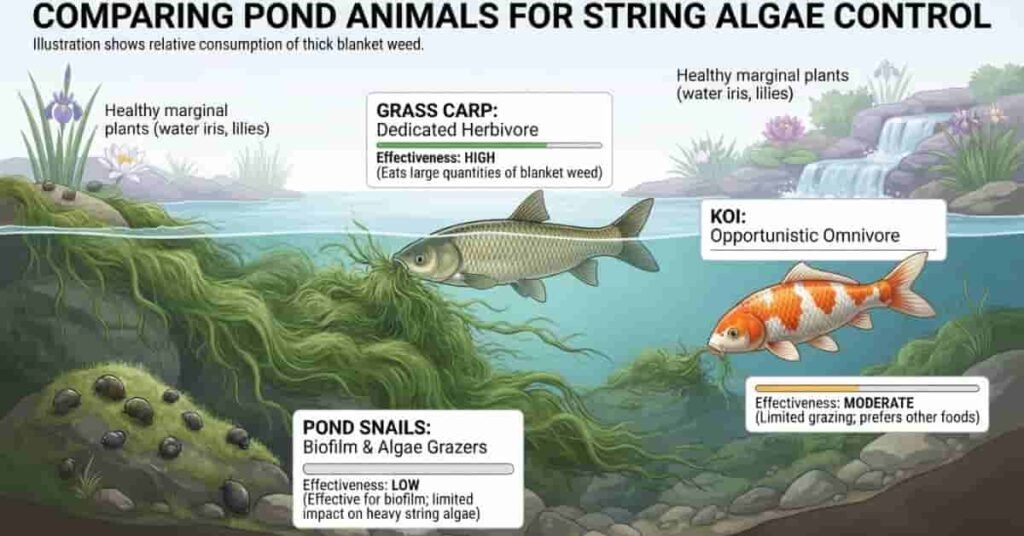
A few pond fish may graze on string algae, but their effectiveness varies. Grass carp are often considered for aquatic vegetation control, although their feeding preferences can vary by plant type and conditions.
Koi may also graze on string algae when they encounter it. However, koi usually won’t consume enough blanket weed to control a heavy growth problem. They work better as occasional grazers than as dedicated algae-control fish.
Goldfish can contribute to algae grazing as well, but their impact on thick string algae is usually limited. They shouldn’t become your main solution for a serious infestation.
| Fish | String Algae Grazing | Main Role |
|---|---|---|
| Grass carp | Variable | Aquatic vegetation control |
| Koi | Limited | Occasional grazing |
| Goldfish | Limited | Minor algae grazing |
The right choice depends on your pond’s size, algae type, fish population, and local regulations. Grass carp also require careful consideration because they can consume desirable aquatic vegetation.
Pro Tip: Don’t Rely on Fish Alone
Use fish alongside physical algae removal, good circulation, appropriate plants, and nutrient management. This approach targets the conditions that allow string algae to grow.
Do Koi Eat String Algae?
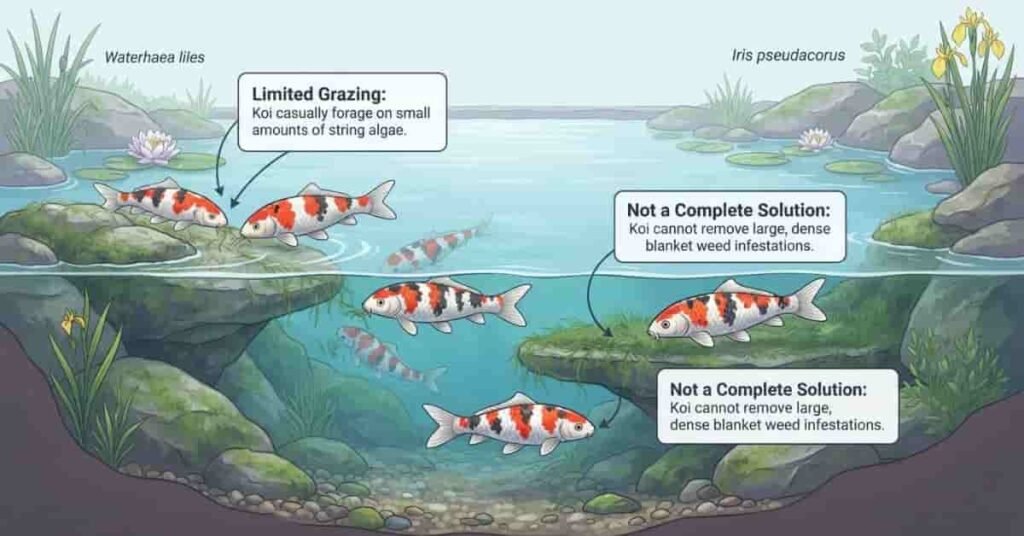
Yes, koi can eat string algae, but they usually won’t control heavy blanket weed on their own. Koi are opportunistic grazers and may nibble on algae growing around the pond.
Koi may pick at loose strands, surfaces, and other natural growth while searching for food. However, their grazing behavior doesn’t make them a reliable solution for thick algae mats.
If your pond has a small amount of string algae, koi may help keep some growth in check. A large blanket weed problem needs more than occasional grazing.
Expert tip: Don’t add extra koi just to fight algae. Overstocking can increase waste and nutrients, which may encourage more algae growth.
For serious blanket weed, combine limited koi grazing with manual removal and better pond management. This gives you a more reliable long-term strategy than relying on koi alone.
Natural algae eaters can help, but they may not solve the underlying problem. Understanding what causes string algae can help you reduce the conditions that encourage it.
Best Snails That Help Control Algae
Pond snails can help with algae control, but their impact on string algae remains limited. They usually graze on algae, biofilm, and organic material found on pond surfaces.
Snails can clean algae from rocks, plant surfaces, pond walls, and other areas. However, they won’t usually remove thick mats of string algae or blanket weed.
Their small size also limits how much algae they can consume. A few snails may provide useful grazing, but they cannot keep up with a large algae infestation.
Pond snails work best as part of a balanced pond ecosystem. They can provide continuous grazing while other methods handle larger algae growth.
Avoid adding large numbers of snails simply to fight algae. Their population can increase when food becomes abundant, creating another management issue.
For serious string algae, combine snail grazing with manual removal and better nutrient management. This gives you more control without relying on snails alone.
Pro Tip: Use Snails as Supporting Grazers
Think of pond snails as cleanup helpers rather than dedicated algae-control animals. They can reduce surface growth while your main management strategy addresses thick blanket weed.
Grass Carp – The Most Effective Algae Eater
Grass carp are often considered one of the strongest biological options for controlling aquatic vegetation. However, they don’t automatically solve every string algae problem.
Grass carp have a strong appetite and can consume large amounts of plant material. Their effectiveness depends on the type of vegetation available and the conditions in your pond.
They may help with certain filamentous algae, but you shouldn’t assume they will eliminate every blanket weed infestation. Their feeding preferences can vary, so results aren’t guaranteed.
Pond size also matters when considering grass carp. These fish can grow large and may consume desirable aquatic plants along with unwanted vegetation.
Before adding grass carp, check your local regulations and consider your pond’s existing plant life. Some areas restrict their use or require specific permits.
For the best results, combine grass carp with manual algae removal and proper pond management. This reduces your dependence on any single algae-control method.
What Eats Blanket Weed Specifically?
If you’re wondering what eats blanket weed, the answer isn’t as simple as adding any algae-eating animal. Thick blanket weed can be difficult for many pond animals to consume effectively.
Grass carp may provide biological control in some situations, but their effectiveness varies with the type of vegetation. Koi and pond snails may graze on algae, but they usually provide limited control of thick mats.
Manual removal often works better when blanket weed has already formed dense growth. Use a pond rake or similar tool to remove large mats before they break apart and spread.
After removal, address the conditions supporting algae growth. Excess nutrients, sunlight, poor circulation, and organic debris can all contribute to recurring growth.
The most reliable approach combines biological grazing with physical removal and good pond management. This helps control existing blanket weed while reducing the conditions that encourage it.
Pro Tip: Combine Methods
Don’t expect one animal to eliminate a heavy blanket weed problem. Use algae-eating species as support while managing nutrients, circulation, and excessive growth.
When natural grazing is not enough, other control options may be necessary. Learn more about pond algae control methods and when they may be appropriate.
Why Algae Eaters Alone Are Not Enough
Algae-eating animals can help, but they rarely solve a serious string algae problem by themselves. They remove some algae while the conditions causing growth remain unchanged.
Excess nutrients are one major factor. Fish waste, decaying leaves, uneaten food, and other organic matter can add nutrients to pond water.
Sunlight also supports algae growth. A pond with plenty of nutrients and strong sunlight can continue producing algae faster than animals can consume it.
Adding more algae eaters isn’t always the answer. More fish can produce additional waste, potentially increasing nutrient levels and creating conditions that support further algae growth.
A balanced approach works better. Remove existing algae, reduce excess nutrients, improve water movement, and maintain suitable plant coverage.
Pro Tip: Fix the Cause, Not Just the Algae
Use algae eaters as one part of your control strategy. Focus on the conditions that allow string algae to grow repeatedly.
Best Natural Combination Strategy
The most effective natural approach combines several methods instead of relying on one algae-eating species. Each part of the pond ecosystem can support better long-term control.
Fish can provide grazing, while pond snails help clean algae from surfaces. Aquatic plants can compete for available nutrients and provide useful habitat.
Good filtration also helps remove suspended waste and organic particles from the water. Proper circulation keeps water moving and can improve overall pond conditions.
Manual removal remains important when string algae forms thick mats. Removing excess growth prevents large amounts of algae from breaking down inside the pond.
A balanced pond needs the right combination of fish, plants, filtration, circulation, and maintenance. The goal isn’t to remove every trace of algae.
Instead, aim for manageable growth and a stable ecosystem. This approach reduces the chance of recurring algae problems and keeps your pond healthier.
Pro Tip: Build a Balanced System
Don’t add multiple algae eaters without considering the pond’s size and existing population. Every species should serve a specific role.
When to Add Algae Eaters in Your Pond
Adding algae-eating animals makes the most sense when your pond has a manageable algae problem. They can provide ongoing grazing and support regular pond maintenance.
For a new pond setup, focus first on establishing proper filtration, circulation, plants, and water quality. Adding algae eaters shouldn’t replace these basic systems.
If your pond has moderate algae growth, selected fish or snails may provide useful support. Choose species based on your pond size, existing animals, and local regulations.
Heavy infestations require a different approach. Thick blanket weed can grow faster than animals can consume it, especially when nutrient levels remain high.
Start by removing excessive algae manually. Then address the conditions supporting growth before relying on algae-eating species for ongoing maintenance.
Limitations of Algae-Eating Species
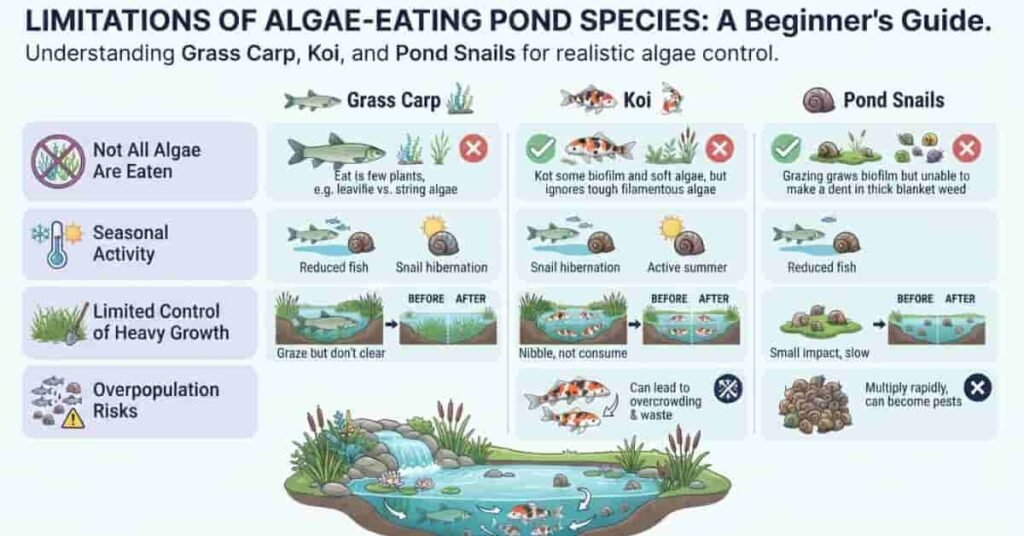
Algae-eating animals have clear limitations, so don’t expect them to control every type of pond algae. Different species prefer different foods and may ignore thick string algae.
Seasonal changes can also affect feeding activity. Temperature, available food, and overall pond conditions can influence how actively fish and snails graze.
Overpopulation creates another concern, especially with larger fish such as grass carp. Too many fish can increase waste and add nutrients to the water.
Algae-eating species can also consume desirable plants. This can become a problem when fish have limited food or when the pond contains valuable aquatic vegetation.
Local regulations may also restrict certain species. Always check applicable rules before adding grass carp or other regulated fish.
Conclusion
Knowing what eats string algae can help you choose a natural control method for your pond. Grass carp can offer the strongest biological control, but results vary by algae type and pond conditions.
Koi and pond snails can provide useful grazing, but they rarely control heavy blanket weed alone. A better strategy combines algae eaters with manual removal, filtration, proper circulation, plants, and nutrient control.
The goal isn’t to remove every trace of algae. Instead, aim for a balanced pond where algae stays manageable and the ecosystem remains healthy.
Before adding any fish or snails, consider your pond size and local regulations. Choose species that fit your pond rather than adding animals simply for algae control.
Have you used grass carp, koi, or pond snails for algae control? Share your experience and explore more pond care guides on our website.
Frequently Asked Questions
Grass carp may eat certain types of string algae and aquatic vegetation, but their effectiveness varies. Koi and goldfish may also graze on string algae, while pond snails provide limited surface grazing. No single animal reliably removes heavy blanket weed alone.
Yes, koi can nibble on string algae, but they usually don’t eat enough to control heavy growth. Koi work better as supporting grazers than as dedicated algae-control fish. For thick blanket weed, combine koi grazing with manual removal and better nutrient management.
Pond snails can graze on algae growing across pond surfaces, but they have limited impact on thick blanket weed. They work best as supporting cleaners within a balanced pond ecosystem. Don’t rely on snails alone when string algae has formed large, dense mats.
Grass carp can help control certain aquatic vegetation, but they aren’t a guaranteed solution for every type of string algae. Their feeding preferences vary with available vegetation and pond conditions. Check local regulations before adding grass carp, as some areas restrict their use.
Some grass carp may consume certain types of filamentous algae, while koi and pond snails offer limited grazing. However, natural grazers rarely eliminate heavy blanket weed alone. Manual removal, nutrient control, filtration, and proper circulation can improve long-term control.
Not necessarily. Adding more fish can increase waste and nutrient levels, which may encourage additional algae growth. Choose algae-eating species based on your pond’s size, conditions, and existing fish population. Managing the causes of algae growth remains essential.
Goldfish may nibble on algae, but they usually have a minor effect on thick string algae. They shouldn’t serve as your main algae-control method. Use them as part of a broader pond management strategy rather than expecting them to remove blanket weed.
The best approach combines several methods. Remove thick algae manually, reduce excess nutrients, improve circulation, maintain filtration, and use suitable aquatic plants. Fish and snails can provide additional grazing, but they work best as part of this broader strategy.
Michael Brooks and Sarah Lane are the co-founders of the Pond Pump Team, a trusted U.S.-based group helping homeowners and landscapers build better ponds and water features. Michael, an experienced pond engineer from Oregon, has worked for over 12 years on pump sizing, flow systems, and water circulation. Sarah, a pond designer from Colorado with nine years of experience, focuses on eco-friendly and easy-to-maintain pond and waterfall designs. Together, they’ve completed more than 180 pond projects and created tools like the Pond Pump Calculator and Pond Liner Calculator to make pond planning simple, accurate, and sustainable.
Need help with your pond setup? Contact the Pond Pump Team for expert advice and reliable solutions.