Table of Contents
Introduction
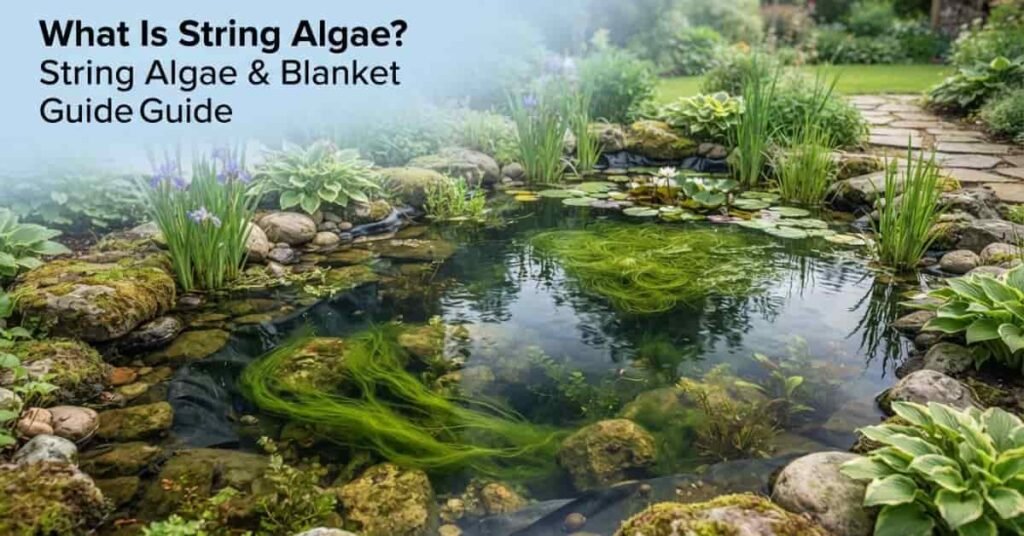
Have you ever looked into your pond and wondered, “Is that string algae or something else?”
If you’re asking what is string algae, you’re not alone. Many beginner pond owners in the USA struggle to identify the green threads growing around rocks, plants, and pond edges. The terms string algae and blanket weed can also create confusion.
String algae can look harmless at first. But dense growth can quickly spread across your pond and form thick, tangled mats. Knowing what you’re seeing is the first step toward managing it properly.
In this guide, you’ll learn exactly what string algae is and how it grows in ponds. We’ll also explain what is blanket weed and whether the two terms mean the same thing.
You’ll see clear descriptions of their appearance, growth patterns, and common locations. By the end, you’ll know how to identify string algae with confidence and understand when it may become a pond problem.
Identifying string algae is only the first step. Understanding what causes string algae can help explain why it appears and why it may keep returning.
What Is String Algae?
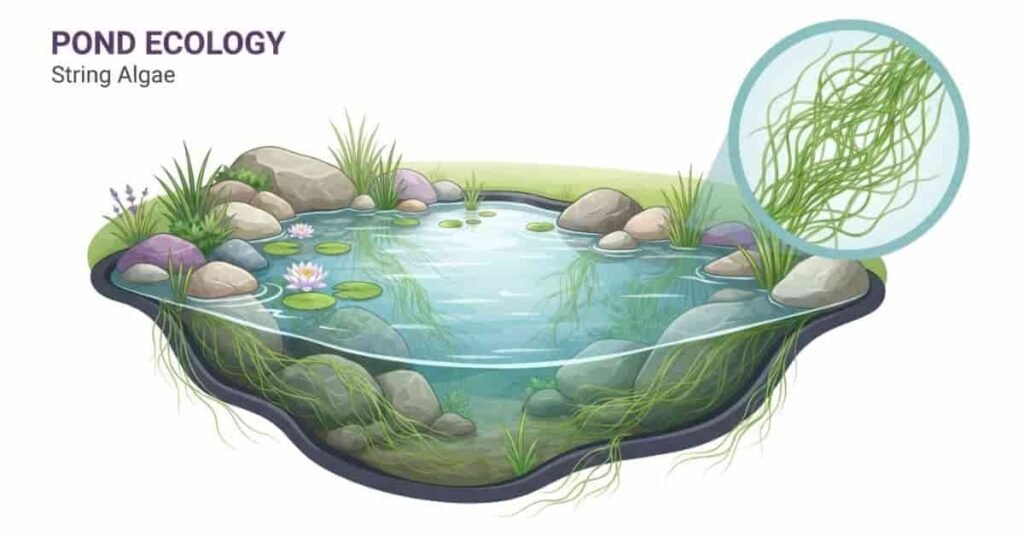
String algae is a type of filamentous algae that grows as long, thin, green strands in ponds. These strands can form loose clumps or become tangled into thick masses over time. Pond owners often find it attached to rocks, pond liners, plants, and shallow edges.
It gets the name string algae because its growth looks like fine green strings or threads. The strands may feel slippery or slimy when you pull them from the water. They can also stretch several inches as they grow and tangle together.
String algae often starts in areas with plenty of sunlight and available nutrients. You may notice it around rocks, along pond edges, or between aquatic plants. Small amounts can blend into the pond environment, but heavy growth becomes much easier to spot.
Pro Tip: Look closely at the strands before removing them. Long, thread-like growth that pulls away in tangled clumps often points to filamentous algae.
What Is Blanket Weed?
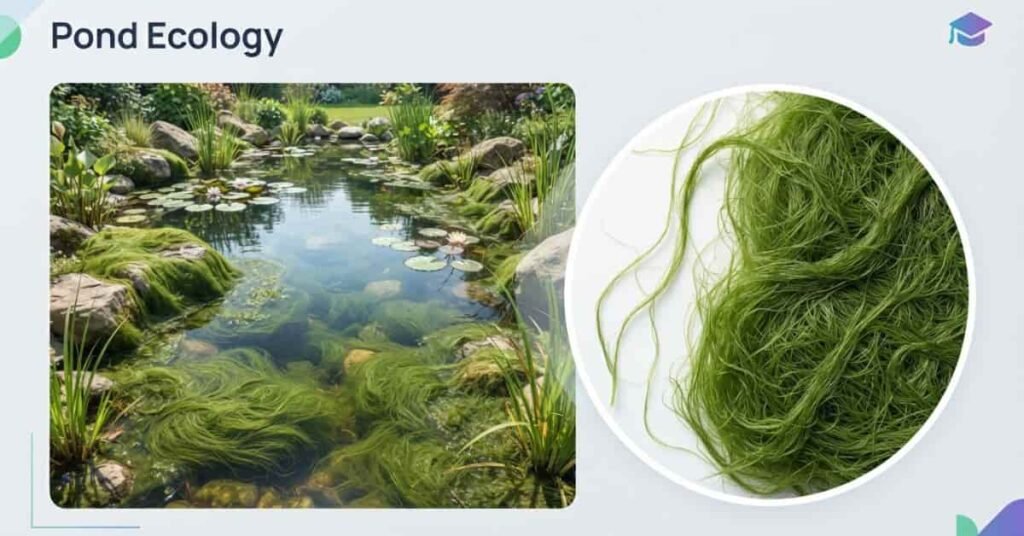
Blanket weed is a common name for dense growth made from filamentous algae. Instead of appearing as a few loose strands, the algae can tangle together and create thick, floating mats. These mats can look like a green blanket covering parts of the pond.
The structure usually starts with long, thread-like strands. As more strands grow and tangle, they form larger clumps or mats. This explains why many pond owners use the term blanket weed for heavy string algae growth.
Water movement can also affect how these mats develop. In still or slow-moving areas, loose strands may collect together and form dense masses. Flowing water can keep strands moving and may prevent some areas from developing thick mats.
The terms string algae and blanket weed can overlap, so they don’t always describe completely different algae. Local pond-keeping terminology also varies.
Pro Tip: Focus on the algae’s appearance rather than its name. Long green threads forming dense mats are a strong visual clue.
Some pond animals can naturally graze on filamentous algae. Find out what eats string algae and how effective these natural options can be.
String Algae vs Blanket Weed: Key Differences
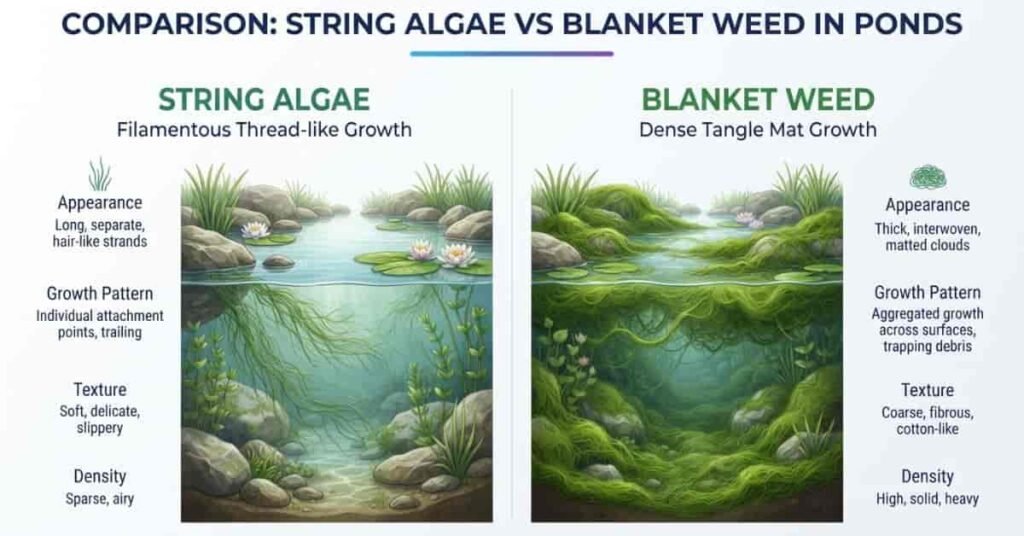
Blanket weed vs string algae can be confusing because pond owners often use these terms interchangeably. Both usually describe filamentous algae that grows as long, thread-like strands. The main difference often comes down to how the algae looks and how densely it grows.
String algae usually describes individual green threads, loose strands, or smaller tangled clumps. Blanket weed often describes those same types of algae when they grow densely and form thick mats. The terminology can vary between pond owners and regions.
| Feature | String Algae | Blanket Weed |
|---|---|---|
| Appearance | Long, hair-like threads | Thick, tangled mats |
| Growth | Loose strands or clumps | Dense masses or carpets |
| Location | Rocks, plants, liner, edges | Rocks, liner, plants, surface |
| Texture | Slimy or slippery | Thick, tangled, and slimy |
| Pond impact | Usually minor when limited | Can become noticeable when heavy |
When identifying what is string algae, focus on its physical appearance rather than the name alone. Long green threads that tangle together are a strong clue.
Pro Tip: Don’t rely on color alone. Check the shape, texture, and growth pattern before identifying pond algae.
What Does String Algae Look Like?
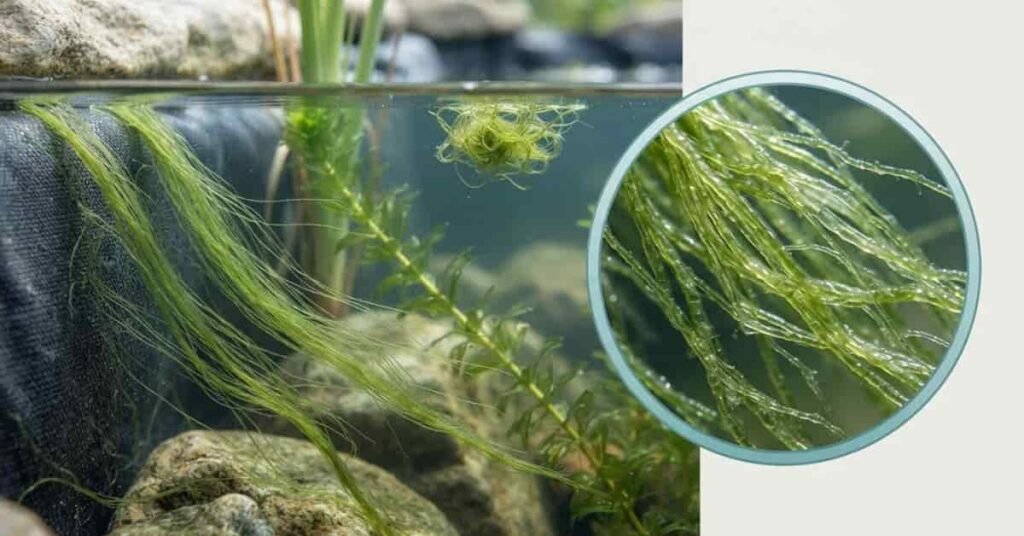
String algae usually looks like long, thin green threads growing together in tangled strands. The threads can resemble wet hair or fine green strings. Their color may range from bright green to darker green, depending on conditions and growth stage.
You may find string algae attached to rocks, pond liners, plants, or other underwater surfaces. Some strands remain attached while others break loose and float across the pond. Over time, several strands can twist together and form loose mats.
String algae often feels slippery or slimy when handled. However, texture alone isn’t enough to identify it. Look for the combination of thread-like strands, green coloring, and tangled growth.
Underwater, the algae may appear as soft green threads waving with water movement. Near the surface, larger clumps can float and collect along pond edges. This changing appearance can make identification confusing for beginners.
Expert Tip: Gently lift a suspected clump from the water. If it stretches into long, thread-like strands, it may be filamentous algae.
What Does Blanket Weed Look Like?
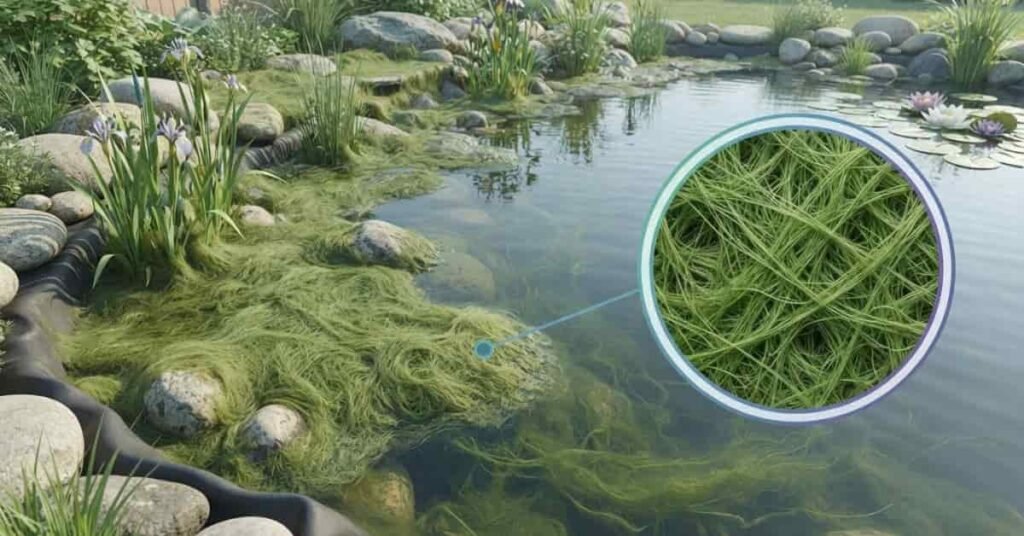
Blanket weed usually looks like a thick green carpet or blanket across parts of a pond. It forms when long filamentous algae strands become tightly tangled. The result can look much denser than individual string algae strands.
Dense clumps may develop around stones, pond liners, plants, and shallow edges. Some mats stay underwater, while others rise toward the surface as they become larger. The mats can also collect along sheltered pond areas where water movement is limited.
The texture often looks soft, tangled, and slightly fluffy from a distance. Up close, you can usually see many individual green threads woven together. This tangled structure helps distinguish a dense algae mat from simple green water.
Blanket weed can vary in thickness and color. Fresh growth may look brighter green, while older or decaying material can appear darker or duller.
Pro Tip: Look underneath the mat. Individual green threads are often visible when you separate a dense blanket weed clump.
If string algae becomes difficult to control, you may need a broader algae-management strategy. Learn how to get rid of pond algae using different control methods.
Where Does String Algae Grow in a Pond?
String algae can grow in several parts of a pond, especially where sunlight and nutrients support algae growth. Beginners often notice it first along shallow edges or on underwater surfaces.
Common places include:
- Pond liner: Strands can attach to liner surfaces and spread across nearby areas.
- Rocks: Rough rock surfaces give algae a good place to attach and grow.
- Aquatic plants: String algae can wrap around stems, leaves, and plant bases.
- Shallow areas: Sunlight reaches these areas easily, which can support algae growth.
You may also find loose strands floating near the surface. Water movement can carry detached algae toward corners or sheltered areas.
Growth can become more noticeable when the pond receives strong sunlight and has excess nutrients. However, seeing string algae doesn’t automatically mean something is wrong with the pond.
Expert Tip: Check shaded and sunny areas separately. Comparing them can help you spot where algae growth is strongest.
Is String Algae Harmful?
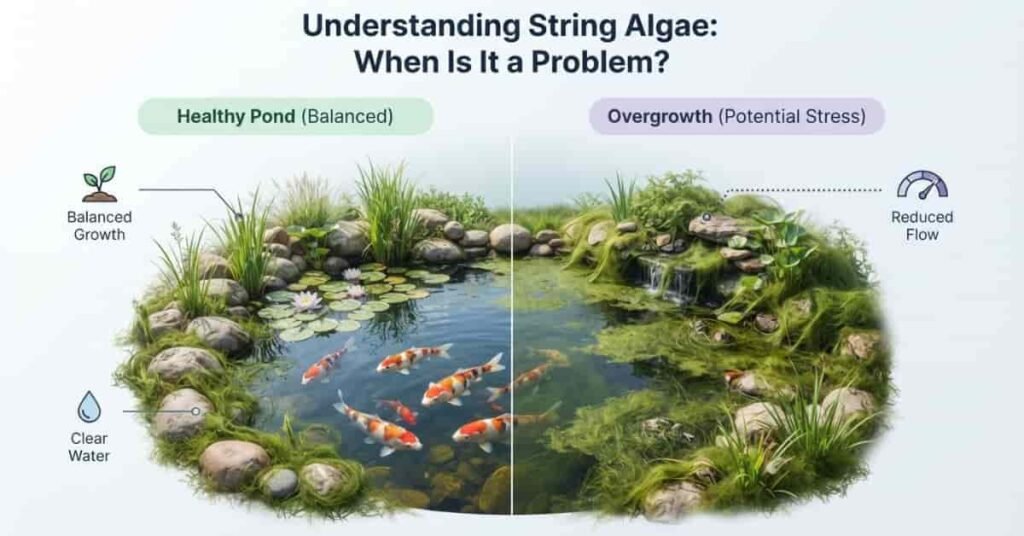
Small amounts of string algae aren’t necessarily harmful to pond fish. In fact, algae naturally occurs in many outdoor ponds. The concern usually starts when growth becomes excessive.
Heavy algae growth can create problems for the pond environment. Large amounts of algae can affect oxygen levels as algae photosynthesize during daylight and respire at night. Dense growth can also trap debris and interfere with pond circulation.
Fish may face greater risks when severe algae growth combines with poor circulation, warm water, or other water-quality problems. A thick algae mass can also make the pond look unhealthy and become difficult to manage.
Watch for rapidly increasing growth, large floating mats, blocked water movement, or worsening water quality. These signs suggest the algae has moved beyond a minor cosmetic issue.
Expert Tip: Don’t judge the pond’s condition by algae alone. Check water quality, circulation, and fish behavior before deciding how serious the problem is.
Quick Identification Checklist
Not sure whether the green growth in your pond is string algae? A quick visual check can help you narrow it down.
Look for these common signs:
- Green threads: Does the growth look like long, thin strands?
- Thick mats: Have several strands tangled into dense clumps?
- Slimy texture: Does the growth feel slippery or slimy when removed?
- Rapid spread: Is it becoming noticeably larger across the pond?
- Attached growth: Is it growing on rocks, liner, plants, or pond edges?
- Floating clumps: Are loose strands collecting near the surface?
The more of these features you see together, the more likely you’re looking at filamentous algae. However, visual identification alone may not always identify the exact species.
Pro Tip: Take a clear photo before removing the algae. Comparing its shape and growth pattern can make future identification easier.
Conclusion
String algae can look confusing at first, especially when pond owners use different names for similar growth. Understanding what is string algae makes identification much easier.
Look for long green threads, tangled clumps, slimy textures, and growth around rocks, plants, and pond liners. Dense growth may also form thick mats commonly called blanket weed. Remember that these terms can overlap, depending on local pond-keeping usage.
Identifying the algae correctly is the first step toward choosing the right management approach. If your pond has heavy growth, don’t panic. Start by checking where it grows and how quickly it spreads.
Ready to tackle the next step? Read our guide on How to Remove String Algae for practical pond management methods. You can also share your experience with string algae in the comments.
Frequently Asked Questions
String algae is filamentous algae that grows as long, thin green strands. It commonly attaches to rocks, pond liners, plants, and shallow areas.
Blanket weed is a common term for dense, tangled growth of filamentous algae. The strands can form thick green mats that resemble a blanket.
The terms often overlap. String algae usually describes the thread-like growth, while blanket weed often describes dense mats formed by those strands.
String algae usually looks like long, green, hair-like threads. These strands may grow underwater, attach to surfaces, or gather into loose floating clumps.
Blanket weed typically appears as thick green mats or tangled clumps. It can cover rocks, pond liners, plants, and shallow areas.
String algae commonly grows on pond liners, rocks, aquatic plants, and shallow areas with plenty of sunlight. Loose strands may also float near the surface.
Small amounts aren’t usually a major concern. Excessive growth can contribute to poor pond conditions, especially when circulation and oxygen levels become problematic.
Rapid growth can occur when sunlight and available nutrients support algae growth. Warm conditions and poor water movement may also contribute.
Look for long green threads, tangled strands, and a slimy texture. Growth attached to rocks, plants, or liners is another useful clue.
Start by removing excessive growth and checking the pond’s overall conditions. For detailed removal methods, follow a dedicated guide on how to remove string algae.

Michael Brooks and Sarah Lane are the co-founders of the Pond Pump Team, a trusted U.S.-based group helping homeowners and landscapers build better ponds and water features. Michael, an experienced pond engineer from Oregon, has worked for over 12 years on pump sizing, flow systems, and water circulation. Sarah, a pond designer from Colorado with nine years of experience, focuses on eco-friendly and easy-to-maintain pond and waterfall designs. Together, they’ve completed more than 180 pond projects and created tools like the Pond Pump Calculator and Pond Liner Calculator to make pond planning simple, accurate, and sustainable.
Need help with your pond setup? Contact the Pond Pump Team for expert advice and reliable solutions.