Table of Contents
Introduction
Is your pond turning green even though you clean it regularly?
If you are wondering what eats algae in a pond, you are not alone. Pond algae can quickly become a frustrating problem for beginners across the USA. Excess sunlight, nutrients, and poor water circulation can all encourage algae growth.
Some pond animals naturally graze on algae and help keep surfaces cleaner. Fish, snails, shrimp, and other small creatures can become part of a balanced pond ecosystem. However, not every algae eater works well in every pond.
In this guide, you will discover what fish eat algae in ponds and which other creatures can help. We will explain what each algae eater does and how effective it really is. You will also learn their limitations and potential risks.
By the end, you will know which algae eaters may suit your pond. You will also understand why natural grazers work best alongside proper pond maintenance.
Algae eaters can help, but they work best as part of a balanced pond-management plan. You can also learn how to prevent pond algae by controlling nutrients, sunlight, and water conditions.
What Eats Algae in a Pond?
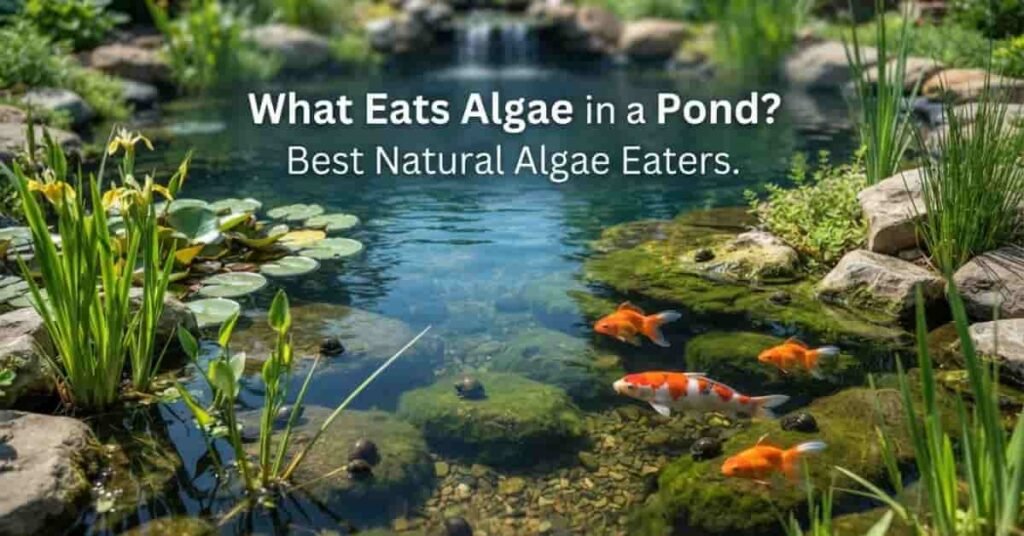
Several pond animals naturally feed on algae, including certain fish, snails, shrimp, insects, and tadpoles. These creatures can help reduce algae growing on rocks, plants, and other surfaces. However, they rarely solve a serious algae problem by themselves.
Fish and snails are often the most noticeable algae grazers. Some species scrape algae from surfaces, while others consume it as part of their normal diet. Their impact depends on the species, pond size, available food, and overall water conditions.
Think of algae eaters as one part of your pond’s natural cleaning system. Plants, beneficial microorganisms, filtration, aeration, and nutrient control also play important roles. If your pond has persistent algae, first understand what causes pond algae before adding algae-eating animals.
Best Fish That Eat Algae in Ponds
Several fish may eat algae, but their effectiveness varies greatly. If you’re researching what fish eat algae in ponds, focus on species that suit your pond’s climate and conditions.
Koi carp may graze on algae growing on pond surfaces. However, koi are not dedicated algae-eating fish. They also produce waste, which can add nutrients to the water when ponds become overcrowded or fish receive too much food.
Goldfish may nibble on algae, especially when grazing around plants, rocks, and other surfaces. They can provide some algae control, but they should not be your only solution for a serious algae problem.
Grass carp are better known for eating aquatic vegetation. Their diet can include some types of algae, but they should not be treated as a universal solution for pond algae. Their suitability also depends on local regulations and pond conditions.
Plecos commonly eat algae in aquariums, but outdoor ponds require caution. Many pleco species are tropical and may struggle with cold water. They can also become invasive if released into unsuitable environments.
Pro Tips
Before adding any pond algae eating fish, check your local rules and climate. Choose species based on the pond’s size, temperature, and existing fish.
Avoid adding fish simply because they are marketed as algae eaters. A balanced pond with proper filtration and nutrient control usually provides more reliable long-term algae management.
Best Snails That Eat Algae
Snails can be useful algae grazers because they spend much of their time moving across surfaces. They scrape and consume algae from rocks, plants, decorations, and other areas where algae grows.
Pond snails are common freshwater grazers and can contribute to natural algae control. They are especially useful for cleaning algae from surfaces. However, their population can increase when food becomes abundant.
Ramshorn snails also feed on algae and organic material. Their small size lets them reach areas larger animals may miss. They can help keep surfaces cleaner, but they won’t remove heavy algae growth.
Mystery snails are popular freshwater aquarium snails that can consume some algae. They are better suited to controlled freshwater environments than many outdoor ponds. Temperature and water conditions can affect whether they thrive.
The best snails that eat algae should match your pond’s environment. Avoid introducing aquarium species without checking whether they can safely live outdoors in your area.
Some animals are better suited to specific types of algae than others. Find out what eats string algae and which natural grazers may help with blanket weed.
Do Shrimp or Small Creatures Eat Algae?
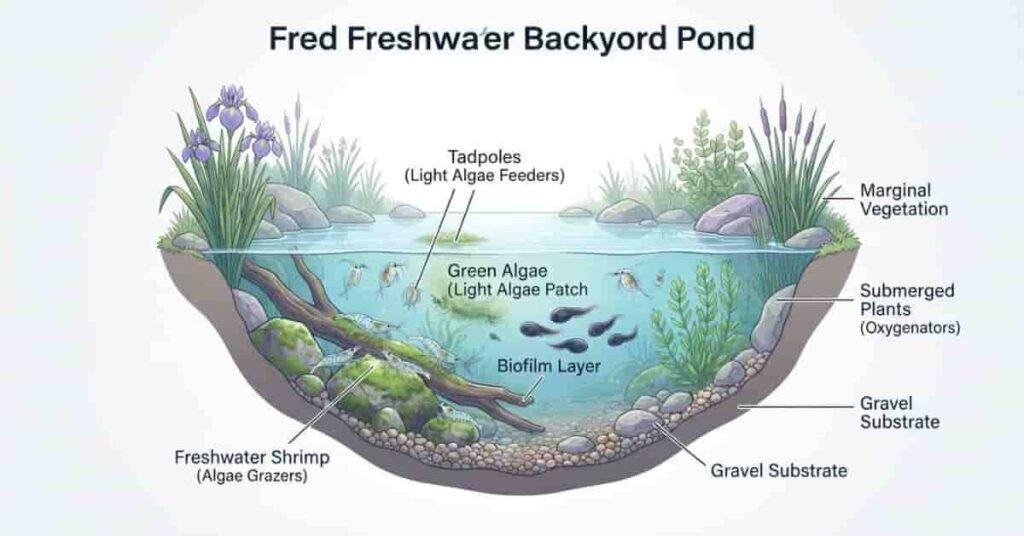
Freshwater shrimp can eat algae, biofilm, and other tiny organic materials. However, their role in outdoor ponds is usually limited. Many shrimp need stable water conditions and suitable temperatures to thrive.
Shrimp work best in smaller, controlled freshwater environments. Larger ponds can expose them to predators, temperature changes, and other challenges. Fish, frogs, and birds may also eat them before they make a noticeable difference.
Tadpoles can also consume algae and other organic matter while developing. Their contribution usually remains minor compared with proper filtration and pond maintenance. Some tadpoles may even shift their diet as they mature.
These small creatures can support a healthy pond ecosystem. However, they shouldn’t become your main strategy for controlling algae. Their value comes from adding natural grazing activity rather than removing large algae growths.
How Effective Are Algae Eaters Really?
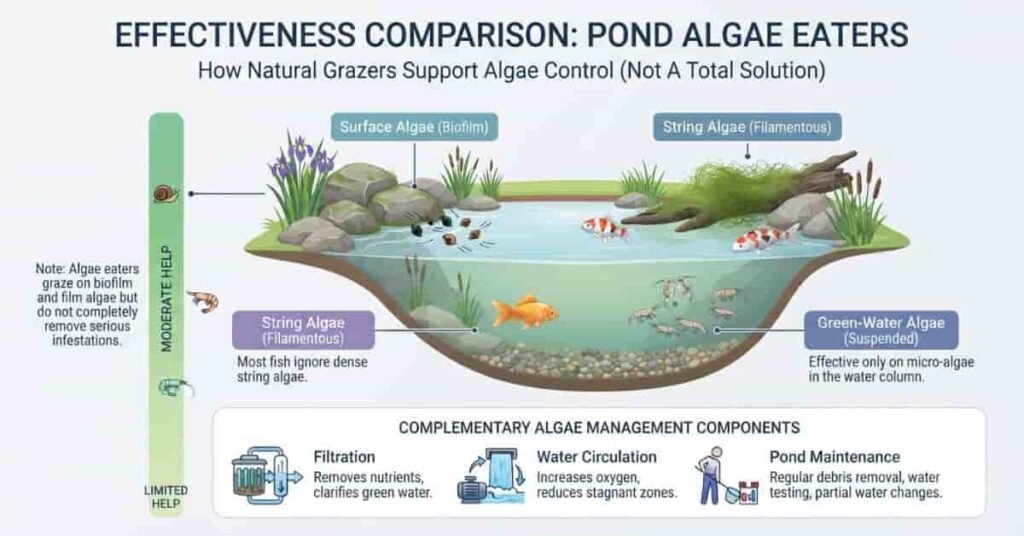
Algae eaters can help control algae, but they rarely eliminate it completely. Their effectiveness depends on the animal species, algae type, pond conditions, and available food.
Fish and snails may reduce algae growing on rocks, plants, and other surfaces. However, heavy green water or thick string algae can quickly outgrow their grazing ability. Adding more animals doesn’t always solve the underlying problem.
A healthy pond needs more than algae-eating animals. Filtration removes waste and suspended particles, while water movement supports oxygen levels. Plants can also compete with algae for available nutrients under suitable conditions.
The best approach combines algae eaters with regular maintenance. Avoid overfeeding fish and remove excess organic debris when necessary. These steps can reduce the nutrients that support unwanted algae growth.
Best Combination for Natural Algae Control
Using several natural methods usually works better than relying on one algae eater. Fish, snails, plants, filtration, and proper maintenance can each support a different part of pond health.
Natural algae eaters may not be enough when growth becomes heavy. If that happens, learn how to get rid of pond algae with additional control methods.
Fish may graze on algae around the pond, while snails clean smaller surfaces. Pond plants can compete with algae for nutrients and provide additional habitat. Good circulation and filtration help maintain better water conditions.
A single solution often fails because algae has several causes. Excess nutrients, sunlight, poor circulation, and organic waste can all support algae growth. Removing one factor may not address the others.
A balanced pond ecosystem focuses on prevention as well as grazing. Keep fish populations reasonable, feed carefully, and maintain your filtration system. Regular observation also helps you spot algae growth before it becomes severe.
Things That Help Algae Eaters Work Better
Algae eaters work best when the pond already has healthy water conditions. Good oxygen levels help fish and other aquatic animals stay active and healthy. Strong aeration also supports beneficial organisms that help break down organic waste.
Balanced feeding is equally important. Overfeeding fish leaves uneaten food and increases waste in the pond. Those extra nutrients can encourage more algae growth and make algae control harder.
Clean water circulation also improves pond conditions. Moving water helps distribute oxygen and prevents stagnant areas from developing. Good circulation can also help filtration systems remove waste more effectively.
Keep the pond clean without trying to remove every natural organism. A healthy ecosystem gives algae eaters better conditions to contribute naturally.
Limitations of Algae Eaters
Algae eaters can help, but they have clear limitations. Adding too many fish or snails can create new problems instead of solving the original algae issue.
Overpopulation increases waste and can raise nutrient levels. Those nutrients may encourage additional algae growth. Always consider the pond’s size and existing animal population before adding more algae eaters.
Algae eaters also struggle with heavy blanket algae and thick string algae. Some animals may graze on small amounts, but they usually cannot keep up with severe growth.
Seasonal changes can affect their activity too. Cold temperatures may reduce feeding activity in some species. Tropical algae eaters may also struggle outdoors during colder months.
Should You Use Algae Eaters?
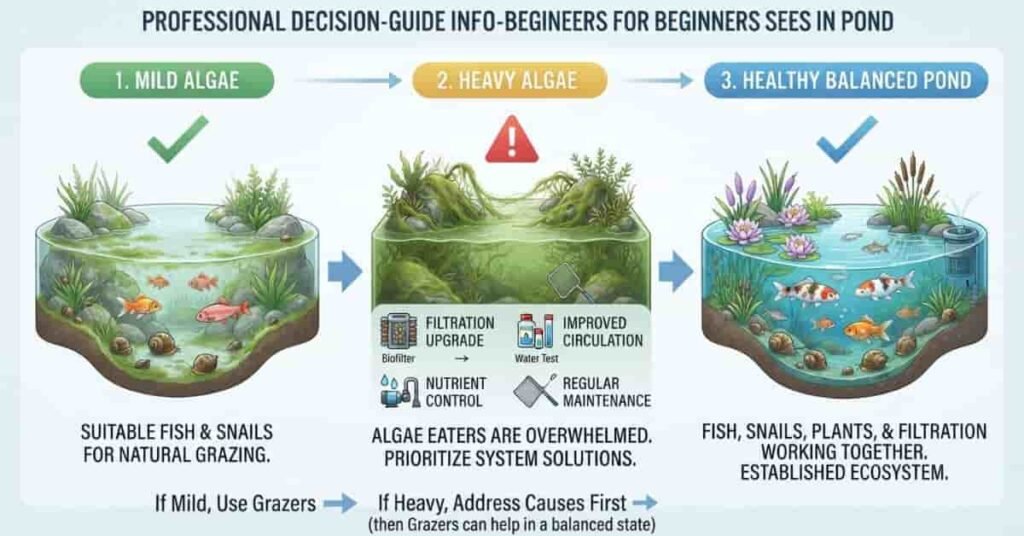
Algae eaters can make sense for small ponds with manageable algae growth. Fish and snails may provide useful grazing while becoming part of a balanced pond ecosystem.
However, don’t rely on them for heavy algae problems. Thick string algae, blanket algae, or persistent green water usually points to underlying water-quality issues. Address nutrients, sunlight, filtration, and circulation alongside natural grazers.
You should also avoid adding algae eaters when your pond cannot support them. Consider water temperature, available space, predators, existing fish, and local regulations first.
The goal isn’t to fill your pond with algae-eating animals. The goal is to create conditions where algae stays manageable naturally.
Pro Tips
Start by identifying why algae is growing before choosing an algae eater. If the cause remains untreated, adding more animals may only provide temporary improvement.
Conclusion
Fish, snails, shrimp, and other small creatures can help control algae in your pond. However, they work best as part of a larger pond care strategy.
Knowing what eats algae in a pond helps you choose natural grazers that fit your pond. Koi, goldfish, pond snails, and other algae eaters can provide useful support. They won’t replace proper filtration, water circulation, nutrient control, or regular maintenance.
For the best results, focus on a balanced ecosystem rather than one quick fix. Prevent excess nutrients, avoid overfeeding, and keep water moving properly.
If you’re dealing with pond algae, start by identifying its cause before adding algae eaters. Explore our other pond care guides for more practical tips, and share your algae-control experience with us.
Frequently Asked Questions
Fish, snails, shrimp, tadpoles, and some aquatic insects can eat pond algae. Koi and goldfish may graze on algae, while pond snails often feed on algae growing on surfaces. These animals can help control algae, but they rarely remove a serious algae problem alone.
Koi and goldfish may eat some algae while grazing around the pond. Grass carp mainly feed on aquatic vegetation and may consume certain algae. Plecos can eat algae but are usually better suited to aquariums. Always choose fish based on your pond’s climate and conditions.
Yes, many pond snails eat algae growing on rocks, plants, and other surfaces. They can help keep surfaces cleaner as they graze. However, snails cannot control heavy algae blooms. Their population should also remain balanced to prevent excess waste.
Koi may graze on algae growing on rocks, plants, and pond surfaces. However, algae is not a reliable primary food source for koi. Overfeeding and overcrowding can increase pond nutrients, which may encourage more algae growth.
Goldfish may nibble on algae and naturally graze around pond surfaces. They can provide some algae control but won’t eliminate heavy growth. Proper filtration, feeding, and water circulation remain important for long-term algae management.
Freshwater shrimp can eat algae and biofilm, but their impact in outdoor ponds is usually limited. Predators, changing temperatures, and unsuitable water conditions can affect their survival. Shrimp are better viewed as supporting members of a balanced ecosystem.
No, algae-eating fish usually cannot completely remove pond algae. They may reduce algae growth but cannot address excess nutrients, sunlight, or poor circulation. Effective control combines natural grazers with filtration, maintenance, and prevention.
A balanced combination of suitable fish, pond plants, snails, filtration, and good water circulation works better than one algae eater. Reducing excess nutrients and avoiding overfeeding also helps prevent recurring algae growth.
Yes. Too many fish or snails can increase waste and add nutrients to the water. Excess nutrients can encourage additional algae growth. Always consider your pond’s size, animal population, and filtration capacity before adding more algae eaters.
Algae eaters can help with mild or manageable algae growth when they suit your pond’s conditions. They shouldn’t be your only solution for severe algae problems. First identify the cause, then improve filtration, circulation, feeding, and nutrient control.

Michael Brooks and Sarah Lane are the co-founders of the Pond Pump Team, a trusted U.S.-based group helping homeowners and landscapers build better ponds and water features. Michael, an experienced pond engineer from Oregon, has worked for over 12 years on pump sizing, flow systems, and water circulation. Sarah, a pond designer from Colorado with nine years of experience, focuses on eco-friendly and easy-to-maintain pond and waterfall designs. Together, they’ve completed more than 180 pond projects and created tools like the Pond Pump Calculator and Pond Liner Calculator to make pond planning simple, accurate, and sustainable.
Need help with your pond setup? Contact the Pond Pump Team for expert advice and reliable solutions.