Introduction
Is your pond waterfall losing strength even though the pump is running?
Many beginners in the USA struggle with this issue, especially when trying to increase water flow from a pond pump without replacing the entire system. It can affect oxygen levels, filtration, and overall pond clarity. Small mistakes in setup or maintenance often reduce performance over time. Clogged intakes and poor placement are often the main causes. Regular cleaning can quickly restore proper flow without expensive repairs.
This guide explains simple ways to restore strong water flow and fix common pump problems. You will also learn whether flow depends on water pressure or other factors and how to keep performance stable year-round. By the end, you will feel confident managing pond pump performance like a pro. This works for most garden ponds and small backyard water features.
If you’re dealing with weak circulation or a struggling waterfall, you may also want to check why your system is losing water during operation. Read more here: Why Is My Pond Losing Water When the Pump Is On?
How to Check If Your Pond Pump’s Water Flow Is Proper
Before you fix anything, confirm whether your pump is truly underperforming. Many pond owners assume there is a major issue, but sometimes the flow is still within a normal range. Correctly checking water flow helps you avoid unnecessary repairs or upgrades. It also helps you understand how your system behaves in real conditions. The keyword how to tell a pond pump has water flow fits naturally here because the goal is to identify proper performance first.
Visual Signs of Proper Water Flow
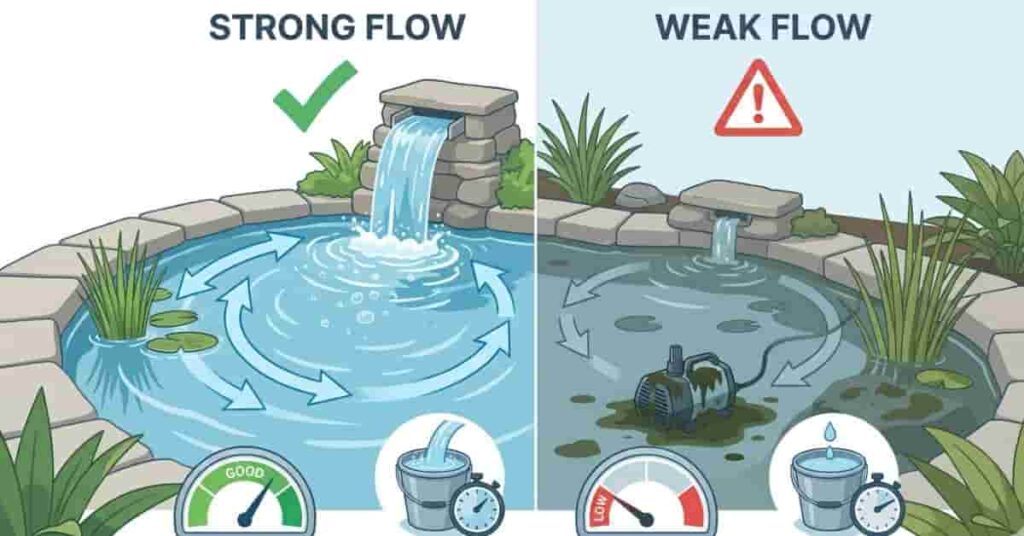
Start with simple visual checks around your pond. A healthy pump creates steady movement across the entire surface. You should see gentle ripples spreading evenly without dead zones. Waterfalls and fountains should run smoothly with consistent pressure. If everything looks active and balanced, your pump is likely working fine.
- Strong surface movement across the pond
- Consistent waterfall or fountain output
- No stagnant or still water areas
Simple Flow Testing Methods
If visuals are not enough, use basic testing methods to measure performance more accurately. The bucket test is the easiest option for beginners. You measure how much water the pump moves in one minute. A flow meter gives more precise readings, especially for larger systems or complex setups.
- Bucket test (measure output per minute)
- Flow meter (for accurate readings)
Signs of Low or Weak Flow
Weak water flow usually shows clear warning signs. You may notice reduced waterfall strength or uneven circulation. In many cases, the corners of the pond become still, leading to algae growth. Cloudy water is another common indicator of poor movement and low oxygen levels.
- Weak waterfall or fountain pressure
- Reduced circulation in the corners of the pond
- Cloudy or stagnant water
Common Reasons for Low Water Flow in Pond Pumps
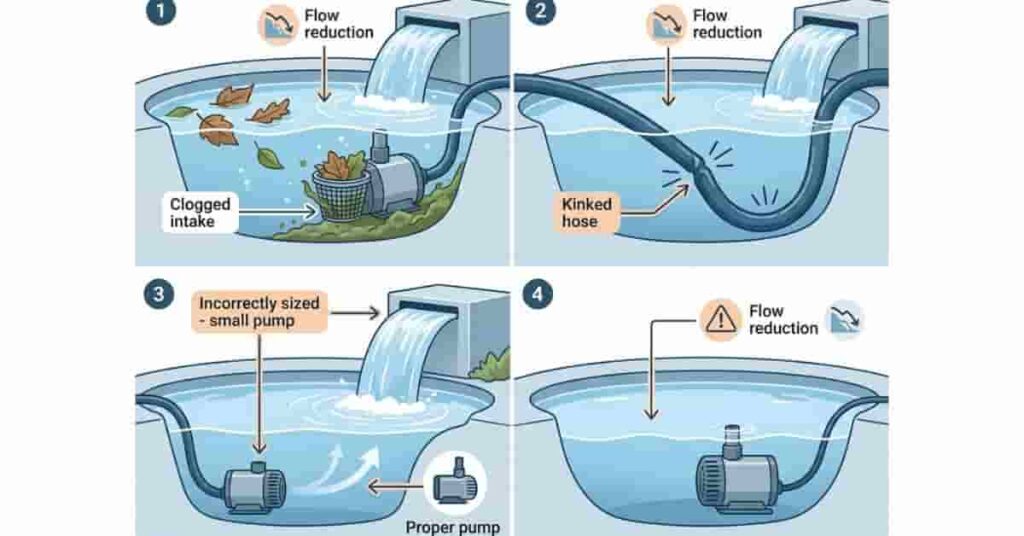
Low water flow usually comes from simple issues that build up over time. Most beginners think the pump is broken, but the real cause is often blockage, setup mistakes, or poor maintenance. Once you understand these causes, it becomes much easier to fix the problem without replacing the pump. The keyword “ water flow on pond pumps ” relies on water pressure, which fits here because many users confuse pressure with actual flow performance.
Blockages and Debris Build-Up
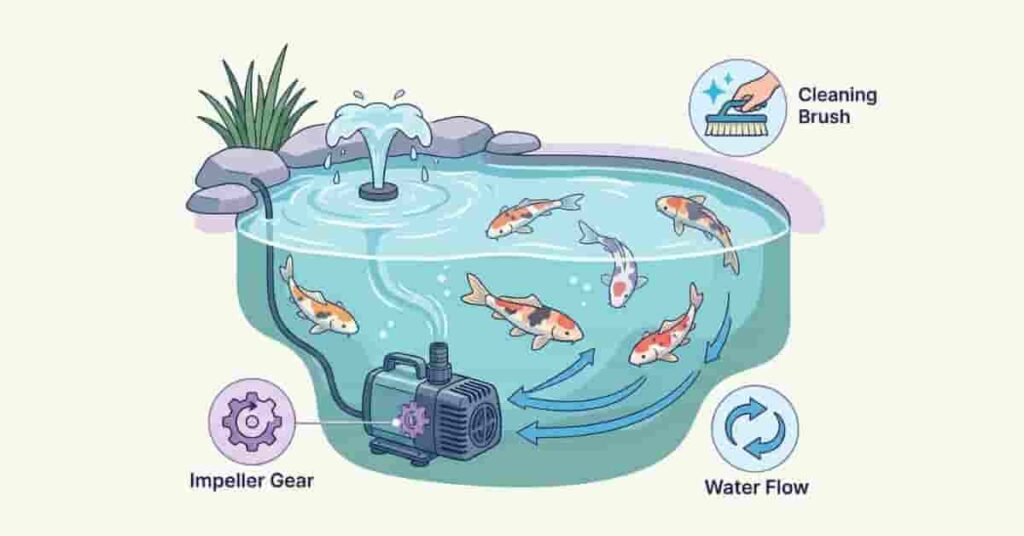
Debris is the most common reason for weak water flow. Leaves, algae, and sludge slowly collect at the intake. This restricts suction and reduces overall performance. A dirty impeller also lowers efficiency and forces the pump to work harder.
- Leaves, algae, and sludge are blocking the intake
- A dirty impeller reduces pump efficiency.
Incorrect Pump Size or Installation
Pump size matters more than most people realize. A small pump cannot effectively handle a large pond. Poor placement can also reduce suction strength and disrupt circulation patterns.
- Pump too small for pond size.
- Wrong positioning is affecting suction.
Hose or Pipe Restrictions
Flow can drop sharply if the tubing is not optimized. Even a powerful pump will struggle with blocked or narrow pipes. Kinks in the hose can also interrupt steady water movement.
- Kinks in tubing
- Narrow-diameter pipes limit flow
Low Water Level Issues
Water level directly affects suction performance. If the pump is too close to the surface, it may pull air rather than water. This leads to unstable or reduced flow.
- Pump partially exposed
- Air enters the system.
Water Pressure vs Flow Relationship
Many beginners assume water pressure controls everything, but pond pumps work differently. Flow depends more on head height, tubing resistance, and suction efficiency. High pressure does not always mean better flow if the system has restrictions.
How to Increase Water Flow in Your Pond Pump (Proven Methods)
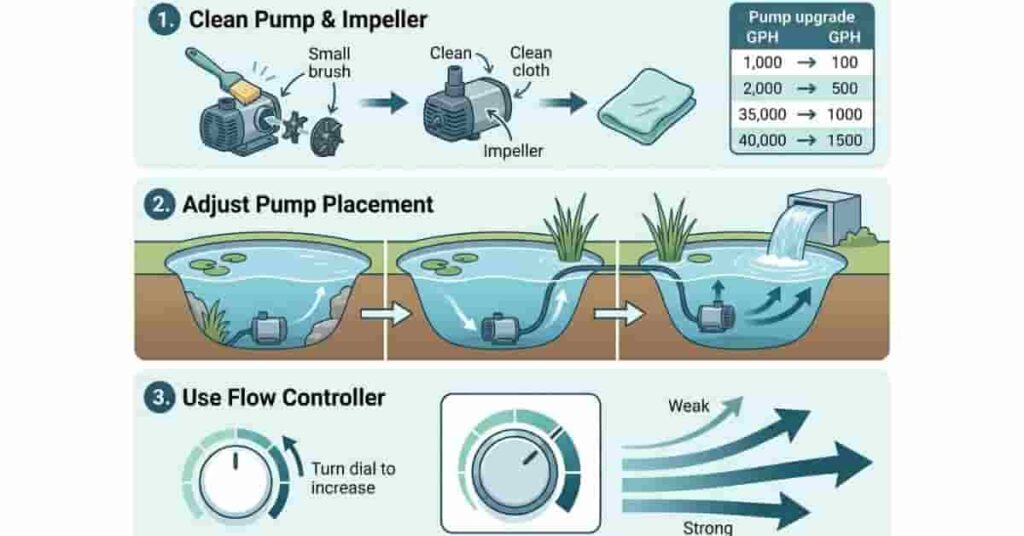
If your pond pump feels weak, you can often fix it without replacing the unit. In most cases, poor maintenance, bad placement, or wrong settings reduce performance. By making a few smart adjustments, you can quickly restore strong water flow. These methods are simple, beginner-friendly, and highly effective for improving circulation and water flow strength.
Clean and Maintain Your Pump Regularly
Regular cleaning is the fastest way to bring back lost water flow. Dirt and algae slowly block key parts of the system. This reduces suction and puts extra load on the motor. A quick maintenance routine can instantly improve performance and prevent future issues.
- Clean the impeller and intake screen
- Remove algae and debris buildup.
- Flush hoses and filters
- Ensure no blockage in the outlet path.
Keeping the system clean ensures smooth, steady water flow. Even a small buildup can reduce flow more than most people expect.
Optimize Pump Placement for Maximum Flow
Pump placement has a direct impact on suction strength and circulation. A poorly placed pump often struggles, even when powerful. Correct positioning helps water move more efficiently through the system.
- Keep the pump fully submerged.
- Avoid placing near sludge-heavy bottom areas.
- Reduce sharp bends in tubing.
- Position near the water flow path for better circulation
Good placement reduces resistance and improves overall efficiency. This alone can solve many low-flow issues.
Use a Pond Pump Water Flow Controller
A pond pump water flow controller gives you better control over output without damaging the pump. It lets you adjust performance to your pond’s needs. This is especially useful for waterfalls and fountains.
Benefits include:
- Fine-tuned flow adjustment
- Better energy efficiency
- Improved waterfall control
- Reduced pump strain
Using a controller helps you balance performance and power usage more effectively. It also extends pump life by preventing overworking.
Upgrade to the Right Pump Size (Higher GPH)
If your pump is too small, no amount of cleaning will fully solve the issue. Pump capacity must match pond size and design. Otherwise, water flow will always feel weak.
- Choose the correct GPH based on pond size.
- Consider head height when selecting a pump.
- Example: 2000 GPH adjustable flow pond pump for medium ponds
A properly sized pump ensures stable circulation and strong water features. It also reduces long-term maintenance problems.
Advanced Tips to Maintain Strong and Stable Water Flow
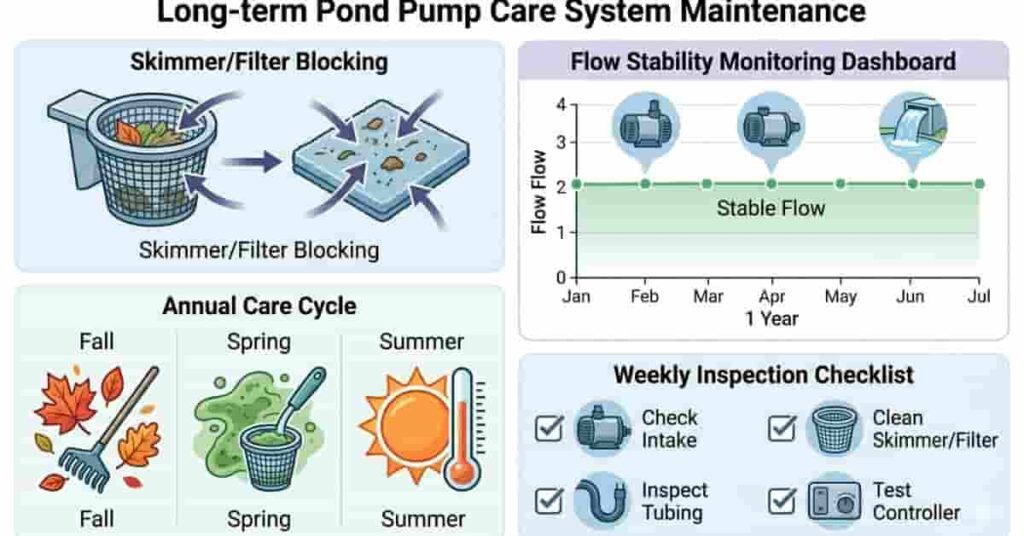
Once your pond pump is working properly, the next step is keeping the flow stable long-term. Many pond owners fix the issue once but forget regular care. This leads to repeated clogging, weak circulation, and sudden performance drops. These advanced tips help you maintain consistent water flow all year with less effort and fewer breakdowns.
Install Pre-Filters or Skimmers
Pre-filters and skimmers protect your pump before debris even reaches it. They act as the first line of defense against leaves, algae, and sludge. This reduces stress on the pump and improves long-term performance.
- Blocks leaves and debris before they reach the pump.
- Reduces clogging risk significantly
A clean intake system keeps water moving freely and reduces maintenance needs. This is especially useful for outdoor ponds with heavy seasonal debris.
Seasonal Maintenance Routine
Different seasons affect pond conditions in different ways. Adjusting your maintenance routine helps prevent flow issues before they start. A simple seasonal plan keeps your system efficient year-round.
- Fall: Remove leaves frequently to prevent intake blockage
- Spring: Control algae growth as water warms up
- Summer: Check overheating and monitor flow reduction
Regular seasonal care helps your pump work smoothly without sudden performance drops.
Monitor Flow Consistently
Small changes in water flow often precede major problems. Regularly watching your system helps you catch issues early. This prevents costly repairs and keeps your pond healthy.
- Observe waterfall strength weekly.
- Check for a gradual performance drop.
- Clean before blockage becomes severe
Consistent monitoring ensures your pond stays balanced and oxygen-rich. It also helps you maintain strong circulation without unexpected failures.
Quick Fixes for Low Pond Pump Water Flow (Fast Solutions)
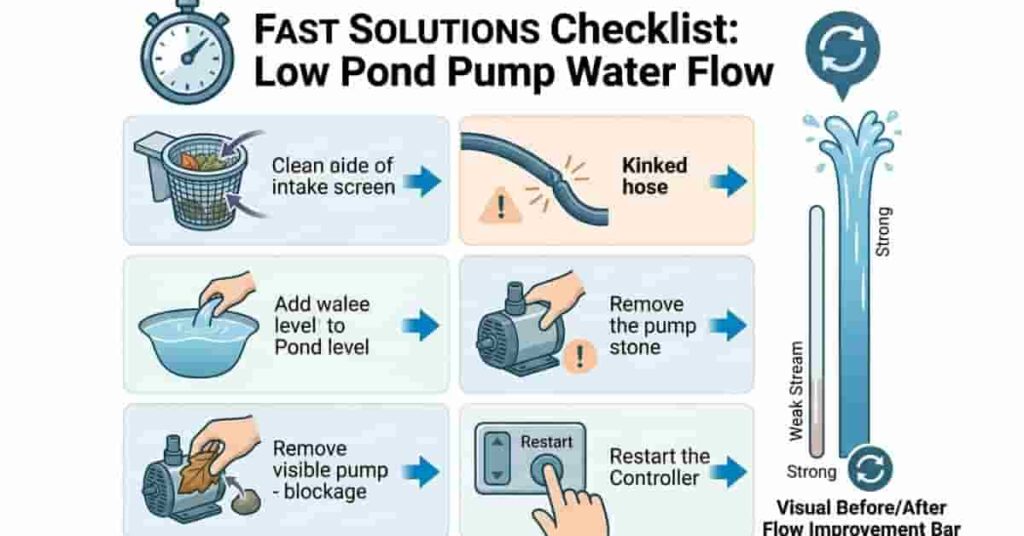
When your pond pump suddenly loses strength, you don’t always need complex repairs. In many cases, the issue comes from simple blockages or setup problems. These quick fixes help you restore water flow in minutes and avoid long downtime. Start with the easiest checks first before moving to deeper troubleshooting.
If your pump still struggles after basic cleaning, it may point to hidden debris or air issues in the system. Acting fast prevents stress on the motor and protects long-term performance.
- Clean the intake screen immediately to restore suction.
- Check for hose kinks that restrict water movement.
- Raise the water level to ensure proper submersion.
- Remove any visible blockage near the intake or outlet.
- Restart the pump after cleaning to reset the normal flow.
These steps often fix most sudden flow drops without tools or technical skills. Regular checks can also prevent these issues from happening again and keep your pond water circulating smoothly.
For deeper system issues like air blockage or poor startup, this guide will also help: How to Prime a Pond Pump (Fix Pond Pump Not Priming – Complete Guide).
Conclusion
This guide covered how pond pump water flow works and why it often drops over time. You learned how to spot weak circulation, fix common issues, and improve overall performance with simple steps. Proper setup and regular care make a big difference in pond health.
Improving how to increase water flow in the pond pump comes down to three key actions: cleaning, correct placement, and using the right equipment. Small changes often restore strong circulation without the need for a new pump. Good maintenance also prevents clogging, noise, and overheating.
Try these tips on your own pond and see the difference in water clarity and movement. Share your experience in the comments or explore more guides on pond pump clogging, noise fixes, and overheating solutions for better results.

Michael Brooks and Sarah Lane are the co-founders of the Pond Pump Team, a trusted U.S.-based group helping homeowners and landscapers build better ponds and water features. Michael, an experienced pond engineer from Oregon, has worked for over 12 years on pump sizing, flow systems, and water circulation. Sarah, a pond designer from Colorado with nine years of experience, focuses on eco-friendly and easy-to-maintain pond and waterfall designs. Together, they’ve completed more than 180 pond projects and created tools like the Pond Pump Calculator and Pond Liner Calculator to make pond planning simple, accurate, and sustainable.
Need help with your pond setup? Contact the Pond Pump Team for expert advice and reliable solutions.