Introduction
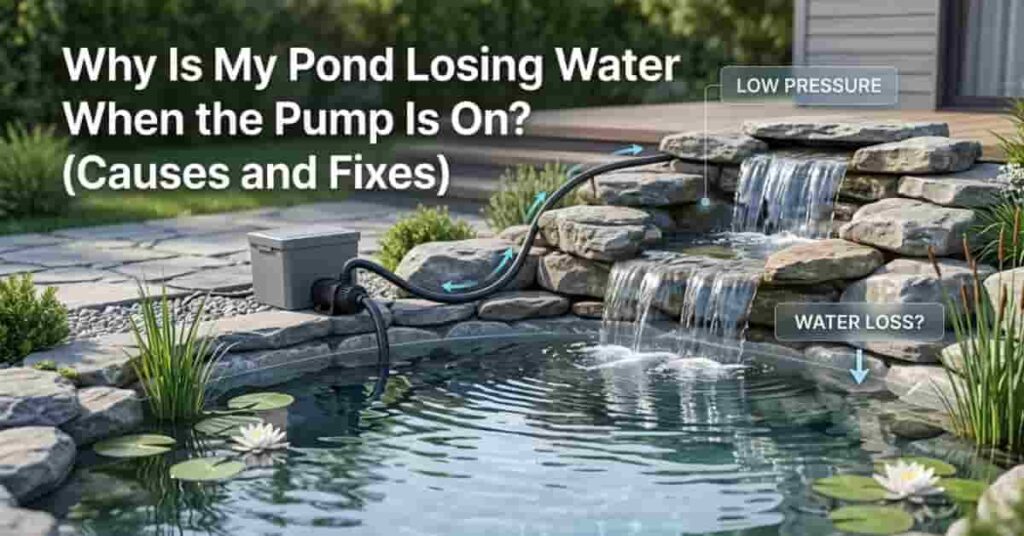
Have you noticed your pond losing water when the pump is on, but everything looks normal when it’s off?
This problem confuses many beginner pond owners in the USA. A sudden drop in water level often points to low pressure, plumbing leaks, or poor pond pump performance. In some cases, water may escape from waterfalls, filters, or damaged tubing without obvious signs.
A healthy pond pump should keep water flowing smoothly through the system. When pond water flow starts dropping, circulation weakens, and filtration suffers. That can lead to cloudy water, algae growth, and extra strain on the pump.
The good news is that most pond pump losing suction or pressure problems are easy to fix at home. You just need to know where to look first.
This guide explains the most common causes behind pond water loss and weak water flow. You’ll also learn simple step-by-step fixes to restore proper circulation and keep your pond healthy year-round.
If your pond is losing water due to poor circulation, improving flow efficiency can solve many hidden issues. See this guide: How to Increase and Optimize Water Flow in a Pond Pump (Complete Guide).
Signs Your Pond Pump Is Losing Water Flow or Pressure
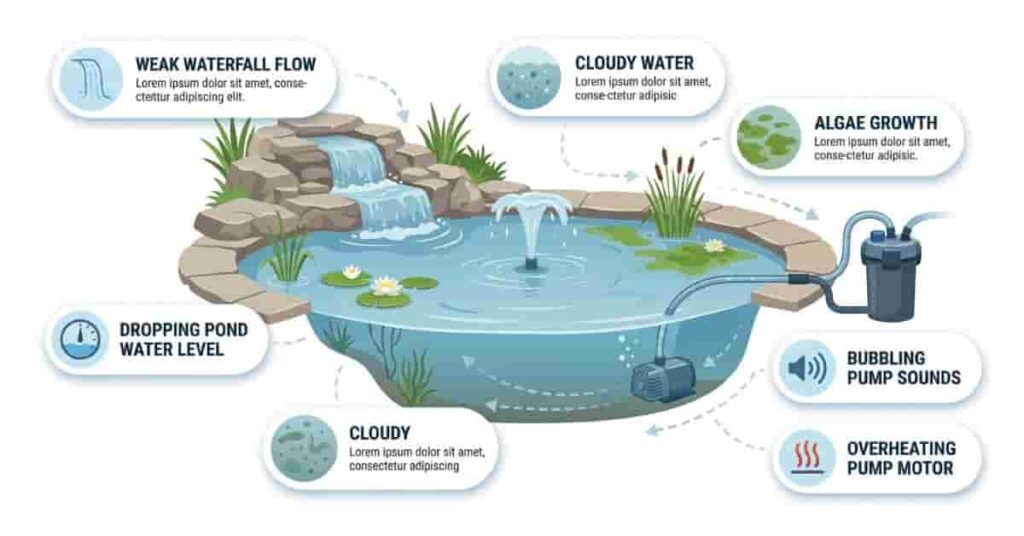
A pond pump rarely fails without warning signs. In many cases, small changes appear before serious water flow problems start. If you notice weak circulation, unusual noises, or a drop in water levels, your pump may already be struggling.
Many beginners ignore these early symptoms until the pond becomes cloudy or the pump overheats. Catching the problem early can prevent expensive repairs and protect your pond fish and filtration system.
Water Level Drops When the Pump Runs
One of the clearest warning signs is water loss that occurs only while the pump is operating. When you turn the pump off, the water level may stop dropping completely.
This usually points to a plumbing leak, loose hose connection, or waterfall splash-out. Water may escape outside the pond instead of returning properly. Even a small liner shift near a stream or waterfall can slowly drain the pond over time.
Low pond water can also cause the pump to pull in air. That reduces suction and weakens circulation throughout the system.
Expert Tip: Mark the pond water level with tape before turning the pump off overnight. This simple test helps quickly identify pump-related water loss.
Weak Waterfall or Fountain Flow
A weak waterfall or slow fountain usually means the pond pump is losing pressure. Water may flow unevenly or struggle to reach the top of the feature.
Clogged filters, blocked intake screens, and dirty tubing often reduce pond water flow. Kinked hoses can also restrict circulation and lower pressure. In some ponds, a worn impeller can cause poor performance even when the pump still runs.
You may notice that the waterfall looks thinner than usual, or that the fountain spray becomes uneven. These changes often happen gradually, so many pond owners miss them at first.
Poor circulation affects more than appearance. Weak flow can lower oxygen levels and reduce filtration efficiency.
Pro Tip: Compare the current waterfall flow to older photos or videos of your pond. Small pressure changes become easier to spot visually.
Pump Sounds Different Than Normal
A healthy pond pump usually produces a soft and steady sound. Strange noises often signal water flow restrictions or internal pump problems.
Humming may happen when debris blocks the impeller. Gurgling sounds often indicate trapped air inside the pump housing. Grinding or whining noises can indicate worn internal parts or insufficient lubrication due to poor water flow.
These sounds may become louder as circulation problems worsen. In some cases, the pump starts and stops repeatedly because it cannot maintain proper suction.
Never ignore sudden noise changes. A noisy pump often warns of pressure loss before complete failure.
Expert Tip: Listen to your pond pump during quiet evening hours. Subtle humming or bubbling sounds become easier to notice.
Poor Filtration and Cloudy Water
Low water circulation directly affects pond cleanliness. When the pump loses flow, filters cannot process water efficiently.
You may notice cloudy water, floating debris, or fast algae growth. Fish waste and organic material can build up quickly when circulation slows down.
Many beginners treat cloudy water with chemicals first. However, the real issue often comes from weak pond pump performance. If water does not move properly through the filter, the pond cannot stay balanced.
Poor circulation also creates stagnant areas where algae grows faster. This problem becomes more common during warm summer weather in the USA.
Mini Case Study: A backyard pond owner cleaned algae repeatedly for weeks. The real problem turned out to be a clogged intake, reducing water flow by nearly half.
Pump Overheating or Shutting Off
Pond pumps rely on moving water to stay cool. When water flow drops, the motor may overheat and struggle to operate safely.
Some pumps shut off automatically to prevent damage. Others continue running even as they become unusually hot. Overheating often happens when the intake becomes clogged or the pond water level drops too low.
You may also notice inconsistent performance before shutdowns occur. The pump might restart after cooling down, then stop again later.
Ignoring overheating can shorten the pump’s lifespan and permanently damage internal components.
Is the Pond Losing Water or Just Losing Flow?
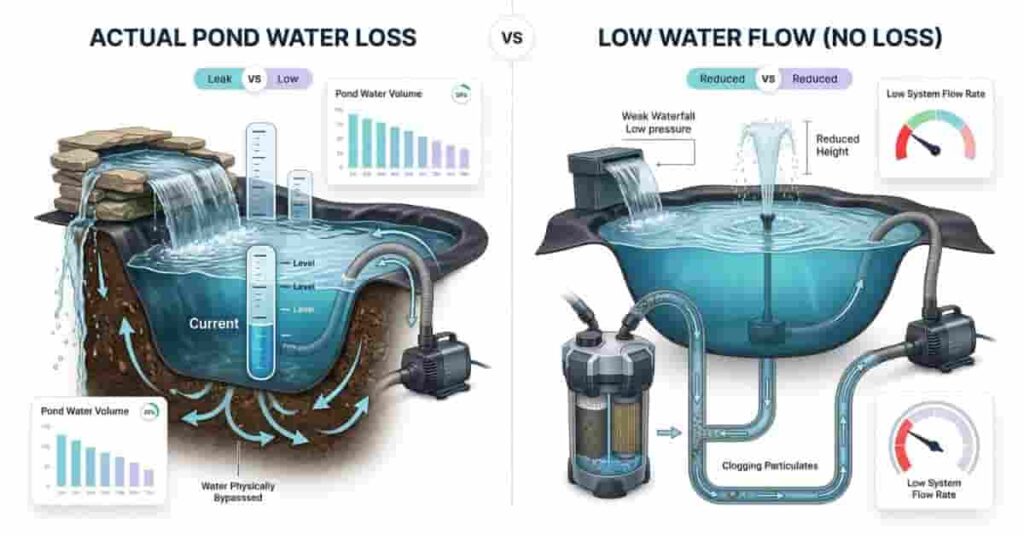
Many pond owners assume they have a leak when water flow suddenly weakens. In reality, some ponds only suffer from poor circulation or low pump pressure. Knowing the difference helps you avoid unnecessary repairs and saves time during troubleshooting.
A pond losing water when the pump is on usually points to a plumbing or circulation issue. However, weak waterfalls and slow fountains do not necessarily indicate that the pond is actually losing water. Sometimes the pump simply cannot move water efficiently.
Before replacing equipment or patching the liner, test the system carefully. A few simple checks can reveal whether the problem involves water loss, pressure loss, or both.
Normal Evaporation vs Real Water Loss
Every pond loses some water naturally, especially during hot summer weather in the USA. Sunlight, wind, and heat increase evaporation throughout the day.
Normal evaporation happens slowly and evenly. Most ponds lose only a small amount of water daily under typical conditions. You may notice a slight drop near the pond edges, but the level should remain fairly stable.
Real water loss looks different. The pond water level drops faster than usual, especially when the pump is running. Water may disappear overnight or continue falling until it reaches a certain level.
This often signals plumbing leaks, a waterfall splash-out, or a pond pump losing suction. In some cases, water escapes through cracked tubing or shifted liners near streams and waterfalls.
Expert Tip: Check the pond early in the morning before sunlight increases evaporation. This gives a more accurate reading of overnight water loss.
How to Test if the Pump Is Causing Water Loss
One simple test can quickly identify the source of the problem. Turn the pond pump off for several hours or overnight and monitor the water level carefully.
If the water level stops dropping, the issue likely involves the pump system. Common causes include leaking pipes, loose fittings, waterfall overflow, or poor suction. Water may escape only when the pump pushes water through the plumbing.
If the pond continues to lose water while the pump is off, the liner may have a leak. Check around rocks, edges, folds, and low spots where water could escape slowly.
This basic test helps distinguish between pond plumbing issues and structural pond leaks. Many beginners skip this step and replace pumps unnecessarily.
Difference Between Low Pressure and Water Loss
Low pressure and water loss often happen together, but they are not the same problem. Understanding the difference makes pond pump troubleshooting much easier.
Low pressure affects water movement inside the system. Waterfalls weaken, fountains spray unevenly, and circulation slows. This usually happens because of clogged filters, blocked intake screens, trapped air, or damaged impellers.
Actual water loss reduces the pond’s overall water level. The pond physically loses water through leaks, splash-out, cracked plumbing, or liner damage.
Some ponds experience both issues simultaneously.
For example, a leaking hose may reduce water pressure while slowly draining the pond.
Pay attention to both symptoms during inspection. Weak flow alone does not always mean the pond is leaking.
Common Causes of a Pond Losing Water When the Pump Is On
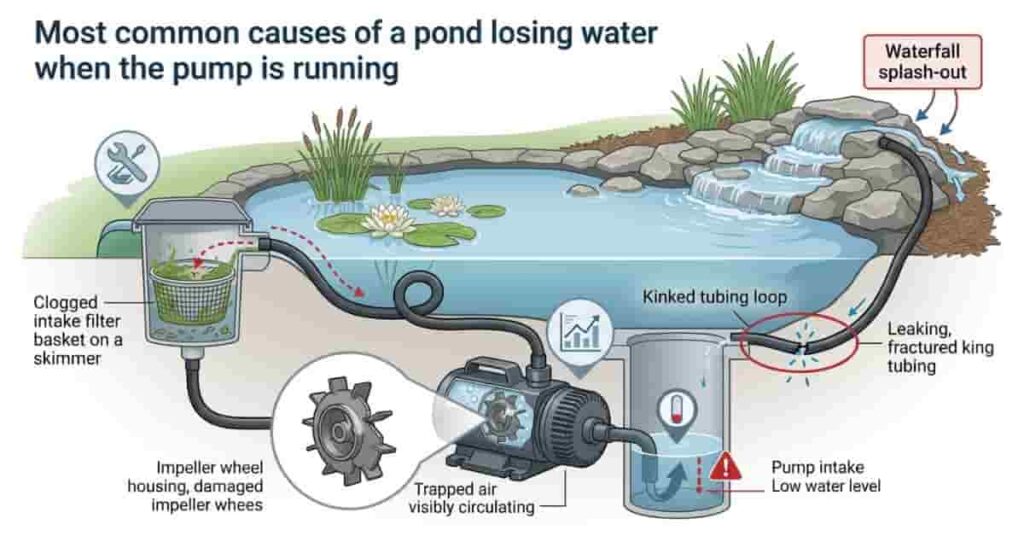
If your pond loses water only while the pump is running, several hidden problems could be to blame. Some issues reduce water pressure, while others allow water to escape outside the system. In many ponds, more than one problem appears at the same time.
The good news is that most pond pump flow problems are easy to diagnose with a careful inspection. Start by checking the most common trouble spots first before replacing expensive equipment.
Clogged Pump Intake or Filter
A clogged intake is one of the most common causes of low pressure in a pond pump. Leaves, algae, fish waste, and sludge can block the pump from properly drawing water.
When the intake becomes restricted, the pump struggles to maintain normal circulation. Waterfalls may weaken, fountains may spray unevenly, and filtration performance can drop quickly.
Dirty filters create similar problems. Water cannot move freely through the system, which lowers overall flow and increases strain on the motor.
Many beginners overlook small debris buildup because the pump still runs. However, reduced water movement often starts long before the pump stops completely.
Pond Water Level Too Low
Low pond water levels often cause the pump to draw in air instead of water. This weakens suction and interrupts steady circulation.
Submersible pond pumps need enough water around them to operate correctly. When water levels drop too far, the pump may start bubbling, sputtering, or losing pressure.
This problem becomes more common during the summer heat in the USA because evaporation increases quickly. Small leaks can also lower the water level over time.
If ignored, low water levels can overheat the pump and shorten the motor’s life.
Expert Tip: Keep the pond water level above the pump intake at all times, especially during hot weather.
Air Trapped Inside the Pump
Air pockets in the pump housing can impede smooth water flow. This problem often appears after cleaning, restarting, or refilling the pond.
When air becomes trapped, the pump may hum loudly or produce bubbling sounds. Water flow may surge unevenly or stop temporarily.
External pond pumps are especially vulnerable to airlock problems if they lose prime. Even small air leaks around fittings can reduce the efficiency of circulation.
Removing trapped air usually restores normal pond pump performance quickly.
Mini Case Study: A pond owner noticed weak waterfall flow after cleaning the filter. Bleeding trapped air restored full pressure within minutes.
Pro Tip: Restart the pump slowly after maintenance to help trapped air escape safely.
Leaking Hoses or Pipe Connections
Small plumbing leaks can waste surprising amounts of water over time. Cracked tubing, loose clamps, and damaged fittings often leak only when the pump is running.
Because the system stays under pressure during operation, water may spray or drip outside the pond unnoticed. Wet soil, muddy areas, or sinking water levels often reveal hidden leaks.
Flexible pond tubing may also crack after long exposure to sunlight and changing temperatures.
Inspect every hose connection carefully, especially near waterfalls and filters.
Water Escaping From Waterfalls or Streams
Waterfalls and streams commonly cause ponds to lose water when the pump is on. Splashing water may slowly escape from the liner rather than return to the pond.
Shifted rocks, uneven edges, and folded liners can redirect water into nearby soil. Wind can also push the waterfall spray outside the pond during operation.
This type of water loss often goes unnoticed because the leak happens gradually. Many pond owners suspect the liner first, even though the real problem sits near the waterfall.
Check all stream edges carefully while the pump runs.
Damaged or Worn Impeller
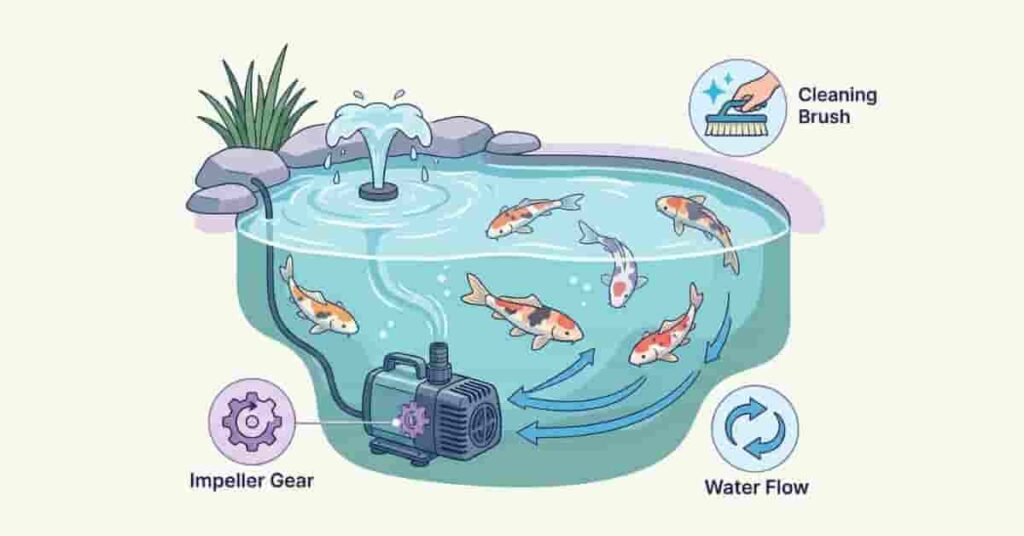
The impeller is the part that pushes water through the pump system. If it becomes damaged or worn, water pressure drops significantly.
Debris, mineral buildup, and normal wear can reduce impeller performance over time. In some cases, broken blades create rattling or grinding noises inside the pump.
A weak impeller may still move water, but circulation often becomes inconsistent and slow.
Regular cleaning helps extend impeller life and maintain strong flow.
Incorrect Pump Size for Pond Setup
An undersized pond pump may struggle to move water through filters, waterfalls, and long plumbing runs. This often creates weak circulation and poor filtration performance.
Many beginners choose pumps based only on pond size. However, tubing length, waterfall height, and filter systems also affect water pressure.
A small pump may work initially, but its performance declines as debris builds up or demand increases.
Choosing the correct pump size improves circulation and reduces long-term maintenance problems.
Blocked or Kinked Tubing
Water cannot circulate properly through damaged or restricted tubing. Kinked hoses reduce pressure, forcing the pump to work harder.
Algae buildup, sludge, or debris inside pipes can also slow water movement. Flexible tubing may bend over time, especially near tight corners or heavy rocks.
Even partial blockages can weaken waterfalls and reduce filtration efficiency.
Inspect tubing regularly for bends, buildup, and crushed sections.
Dirty Skimmer or Filter System
Skimmers and filters help remove debris before it reaches the pump. When these systems become dirty, water circulation throughout the pond slows.
A blocked skimmer basket may starve the pump of water, reducing suction. Dirty biological filters can also restrict flow and cause cloudy water. This issue becomes more common during the fall leaf season or heavy algae growth. Routine cleaning keeps water moving efficiently and protects overall pond health.
Expert Tip: Check skimmer baskets every few days during peak debris season.
In some cases, air lock or startup failure can worsen water loss symptoms, so this article may also help: How to Prime a Pond Pump (Fix Pond Pump Not Priming – Complete Guide).
How to Fix a Pond Pump Losing Water Flow or Pressure
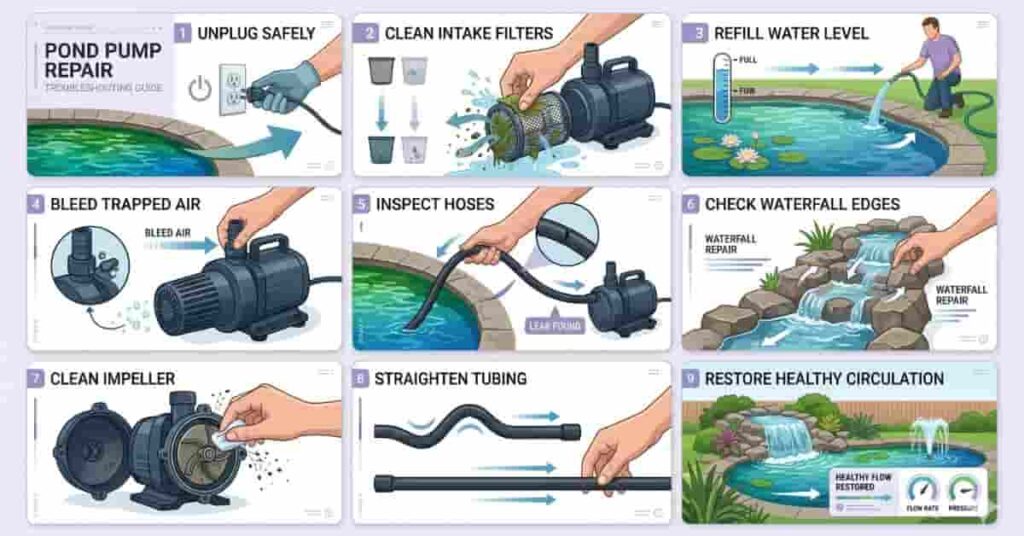
Once you identify the cause, most pond pump problems become fairly simple to fix. In many cases, basic cleaning and small adjustments restore normal water flow within minutes.
Work through each step carefully before replacing the pump. Many beginners spend money on new equipment when the real issue is debris, trapped air, or a leaking plumbing pipe.
Always start with the safest and easiest checks first.
Turn Off and Unplug the Pond Pump
Before inspecting any pond equipment, disconnect the power completely. Water and electricity create serious safety risks, especially around wet surfaces.
Unplug the pump from the outlet and wait a few minutes before handling it. This allows the motor to cool if overheating occurs during operation.
Never clean or open the pump while it remains connected to power. Even small pond pumps can cause electrical shock if handled improperly.
Once the pump is off, you can inspect the system safely for leaks, blockages, or damaged parts.
Clean the Pump Intake and Filter
Debris buildup is one of the most common causes of low pressure in a pond pump. Leaves, algae, sludge, and fish waste can quickly block water flow.
Remove the intake cover and rinse away debris using clean water. Check the filter pads, intake screens, and skimmer baskets carefully for buildup.
If the filter looks heavily clogged, rinse it thoroughly or replace it if needed. Avoid using harsh chemicals because they may harm pond fish and beneficial bacteria.
After cleaning, water should move more freely through the system.
Check Pond Water Level
Low water levels often cause the pump to pull in air instead of water. This reduces suction and weakens circulation throughout the pond.
Make sure the pump stays fully submerged if you use a submersible model. External pond pumps should remain properly primed with a steady water supply.
Refill the pond if evaporation or leaks lowered the water level too far. Watch the pump closely after refilling to confirm a stronger water flow returns.
If the water level drops again quickly, inspect the system for hidden leaks.
Remove Air From the Pump Housing
Trapped air inside the pump housing can interrupt smooth water movement. This problem often appears after cleaning, restarting, or draining part of the system.
Listen for bubbling or gurgling sounds during operation. These noises usually indicate air pockets affecting circulation.
Some pumps include built-in air release valves. Others require loosening fittings slightly to let trapped air escape safely.
Restart the pump slowly after bleeding the air. Water flow should become steadier once circulation stabilizes.
Mini Case Study: A pond owner noticed weak waterfall flow after changing filter pads. Releasing trapped air restored full pressure immediately.
Inspect Hoses, Pipes, and Fittings
Leaks in pond plumbing can waste water and reduce pressure simultaneously. Check every hose, clamp, and fitting carefully while the pump operates.
Look for dripping water, wet soil, or cracked tubing around the pond system. Even small leaks can slowly drain water during continuous pump operation.
Flexible tubing often weakens near bends or areas exposed to direct sunlight. Tighten loose clamps and replace damaged sections immediately.
Proper plumbing connections help maintain strong water circulation and stable pressure.
Expert Tip: Run your hand along hose connections during operation to feel hidden moisture or spray.
Check Waterfalls and Stream Edges
Waterfalls and streams often lose water through splash-out or shifted liner edges. Water may escape outside the pond instead of returning correctly.
Inspect all stream edges while the pump runs. Watch for overflowing water, uneven rocks, or splashing near the liner.
Strong pumps sometimes push more water than narrow streams can handle safely. Wind can also redirect the waterfall spray outside the pond.
Adjust rocks, reposition liners, and reduce excessive splashing where necessary.
Pro Tip: Inspect waterfalls after dark using a flashlight. Escaping water becomes easier to detect.
Inspect and Clean the Impeller
The impeller controls how strongly the pump moves water. Dirt, algae, and debris can reduce its performance over time.
Open the pump housing carefully and inspect the impeller for buildup or broken blades. Clean away debris using a soft brush and water.
If the impeller looks cracked, loose, or badly worn, replace it immediately. A damaged impeller often causes weak water flow and unusual pump noises.
Restoring impeller performance can significantly improve circulation.
Straighten or Replace Kinked Tubing
Bent or crushed tubing restricts water movement through the pond system. Even partial blockages can lower pressure and weaken waterfalls.
Inspect the entire plumbing line carefully for sharp bends, heavy objects, or algae buildup inside the hose.
Straighten flexible tubing where possible. Replace old or collapsed tubing that no longer maintains proper shape.
Using wider tubing can also improve circulation in larger pond systems.
Restart the Pump and Monitor Performance
After completing repairs, restart the pond pump slowly and monitor the system carefully. Watch waterfalls, fountains, and return lines for consistent flow.
Check whether the water level remains stable during operation. Listen for unusual noises and confirm the pump runs smoothly without overheating.
Strong circulation should return gradually once blockages, leaks, or suction issues are resolved.
Continue monitoring the pond over the next day to ensure the problem does not return.
How to Prevent Pond Pump Pressure and Flow Problems
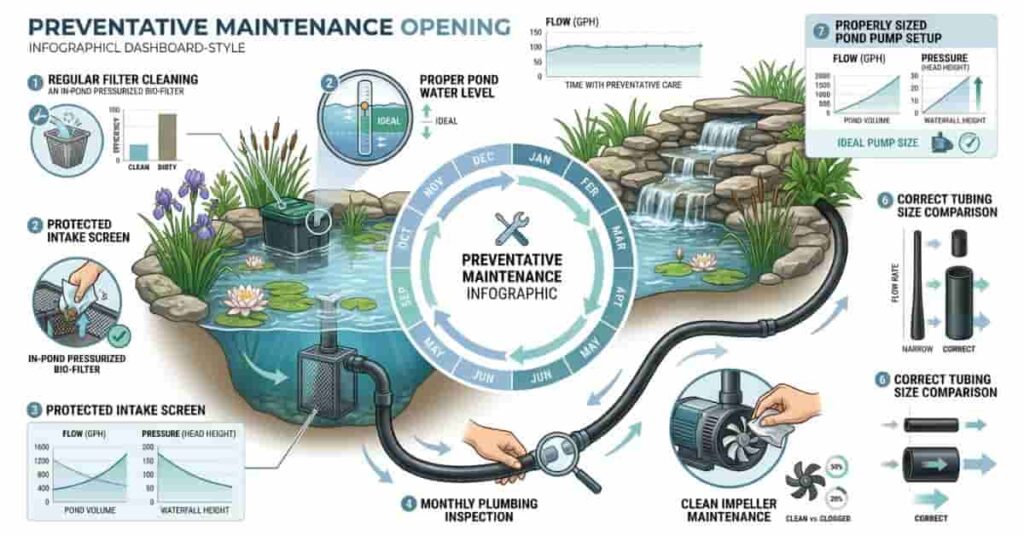
Preventive maintenance keeps your pond pump running efficiently and reduces the risk of sudden water flow problems. Most circulation issues develop slowly over time because of debris buildup, poor plumbing, or neglected equipment.
Simple routine checks can protect your pump, improve water quality, and extend the life of the entire pond system. For beginners, prevention is usually easier and cheaper than emergency repairs.
A few minutes of maintenance each week can help you avoid major pressure problems with your pond pump later.
Clean the Pump and Filter Regularly
Regular cleaning keeps water moving smoothly through the pond system. Leaves, algae, fish waste, and sludge can slowly restrict circulation if ignored.
Check the intake screen, skimmer basket, and filter pads often for buildup. Heavy debris can reduce water pressure and force the pump motor to work harder than normal.
Most backyard ponds need more frequent cleaning during the fall leaf season and warm summer months. Cleaning schedules may also increase if your pond contains many fish.
Routine maintenance helps maintain stable water flow and better filtration performance.
Maintain Proper Pond Water Level
A stable water level protects the pump from suction loss and overheating. When the water drops too low, the pump may pull in air instead of water.
Low water levels often weaken circulation and reduce filtration efficiency. Over time, repeated exposure to air can damage internal pump components.
Check the pond water level frequently during hot weather in the USA, as evaporation increases rapidly in summer.
Refill the pond gradually whenever levels fall below the recommended range.
Inspect Plumbing Connections Monthly
Small plumbing leaks often start unnoticed and worsen over time. Monthly inspections help catch loose fittings, cracked tubing, and worn hose clamps early.
Run the pump during inspections to spot dripping water or damp areas around connections. Flexible pond tubing may weaken over time due to prolonged exposure to sunlight and changing temperatures.
Fixing small leaks early prevents major pressure loss and unnecessary water waste.
Routine plumbing checks also help maintain stronger waterfall and fountain performance.
Use Proper Tubing Size
Correct tubing size plays a major role in pond pump performance. Narrow hoses restrict water movement and reduce overall flow efficiency.
Undersized tubing forces the pump to work harder, especially in ponds with waterfalls or long plumbing runs. This extra strain can shorten pump life over time.
Most manufacturers recommend tubing sizes based on pump flow rate and pond setup. Following those recommendations improves circulation and reduces pressure loss.
Smooth tubing with fewer sharp bends also helps water move more efficiently.
Expert Tip: Upgrade to wider tubing if your waterfall flow remains weak after cleaning the system.
Protect the Pump From Heavy Debris
Pond pumps handle small debris well, but heavy buildup can quickly clog the system. Leaves, twigs, algae, and fish waste often collect around intake areas.
Using skimmer baskets, pre-filters, or pump guards helps block larger debris before it reaches the pump. These protective accessories reduce clogging and improve long-term reliability.
Debris protection becomes especially important in ponds located near trees or heavy landscaping.
Cleaner water flow reduces stress on filters, impellers, and plumbing lines.
Check the Impeller Periodically
The impeller controls water movement inside the pump. Even small amounts of wear can reduce circulation strength over time.
Inspect the impeller every few months for debris, mineral buildup, or damaged blades. Clean it carefully using water and a soft brush.
Replacing worn impellers early helps maintain stable pressure and prevents motor strain. Many pond owners ignore impeller maintenance until major flow problems appear.
Routine inspections help catch issues before circulation drops significantly.
Choose the Right Pump for Your Pond Size
Proper pump sizing improves water circulation, filtration performance, and long-term reliability. A pump that is too small may struggle with waterfalls, filters, and long tubing systems.
Many beginners focus only on pond volume and ignore flow resistance from plumbing and elevation changes. This often leads to weak waterfalls and poor circulation.
Choose a pump designed for your pond’s entire setup, not just its water capacity.
A correctly sized pump operates more efficiently and usually requires less maintenance.
Mini Case Study: A pond owner upgraded from a small fountain pump to a properly sized waterfall pump and restored full circulation immediately.
Pond Pump Troubleshooting Checklist
Pond pump problems often become easier to fix when you match the symptom to the likely cause. Instead of guessing, use this quick troubleshooting checklist to narrow down the issue faster.
Many beginners notice weak water flow or dropping water levels, but struggle to identify the real problem. A simple inspection can usually reveal whether the issue is clogged filters, low water pressure, trapped air, or leaking plumbing.
Use this checklist before replacing your pond pump or calling for repairs.
| Water level drops only when pump runs | Plumbing leak or waterfall splash-out | Inspect tubing and waterfall edges |
| Weak waterfall flow | Clogged intake or dirty filter | Clean intake and filter |
| Pump losing suction | Low water level or trapped air | Refill pond and bleed air |
| Pump humming but weak flow | Impeller blockage or wear | Clean or replace impeller |
| Pump overheating | Restricted circulation | Remove debris and improve flow |
| Uneven fountain spray | Pressure loss or kinked tubing | Check hoses and fittings |
| Cloudy water and algae | Poor circulation | Restore proper flow |
Even small circulation problems can affect pond health over time. Weak water flow reduces filtration efficiency and increases algae growth. Catching these warning signs early helps prevent larger repairs later.
If the same problem returns after cleaning and inspection, check the impeller, tubing size, and overall pump capacity carefully. Some older pumps may struggle to handle larger waterfalls or upgraded filtration systems.
Expert Tip: Save this troubleshooting checklist on your phone for quick reference during pond maintenance.
Conclusion
A pond losing water when the pump is on usually points to low water flow, plumbing leaks, suction problems, or waterfall splash-out. The good news is that most pond pump losing pressure issues are simple to diagnose and fix with regular maintenance.
Cleaning filters, checking water levels, inspecting tubing, and maintaining the impeller can quickly restore healthy circulation. These small maintenance steps also help prevent cloudy water, algae growth, and future pump damage.
If your pond water flow keeps dropping, avoid replacing the pump immediately. Start with basic troubleshooting first, since many problems stem from clogged filters or hidden leaks.
For better pond performance, explore our related guides on pond pump clogging, priming problems, overheating, and unusual pump noises.
Have you dealt with pond pump pressure problems before? Share your experience or troubleshooting tips in the comments to help other pond owners.

Michael Brooks and Sarah Lane are the co-founders of the Pond Pump Team, a trusted U.S.-based group helping homeowners and landscapers build better ponds and water features. Michael, an experienced pond engineer from Oregon, has worked for over 12 years on pump sizing, flow systems, and water circulation. Sarah, a pond designer from Colorado with nine years of experience, focuses on eco-friendly and easy-to-maintain pond and waterfall designs. Together, they’ve completed more than 180 pond projects and created tools like the Pond Pump Calculator and Pond Liner Calculator to make pond planning simple, accurate, and sustainable.
Need help with your pond setup? Contact the Pond Pump Team for expert advice and reliable solutions.