Introduction
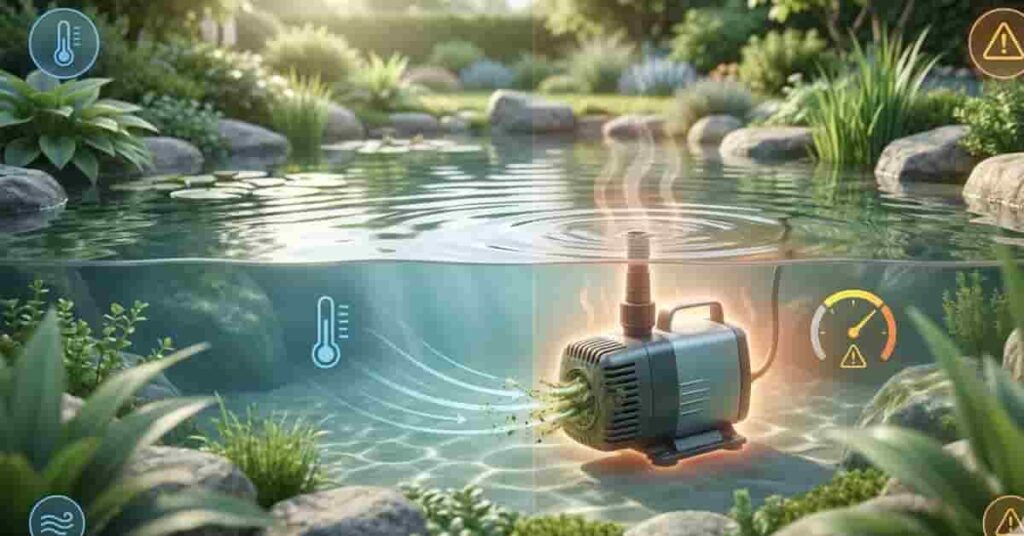
A pond pump overheating problem can quickly affect your entire pond system. Pond pumps usually stay cool when water moves properly through the motor and filter system. If the pump starts running hot, something is often blocking water flow or forcing the motor to work harder than normal.
An overheating pond pump can reduce circulation, lower oxygen levels, and stress fish during warm weather. In some cases, excessive heat may damage the motor, filters, or internal pump parts. Common causes include clogged pump intakes, dirty filters, low pond water levels, blocked pipes, and poor ventilation around the motor.
Many pond owners first notice weaker water flow or a pump that feels unusually hot to the touch. Some pumps may even shut off automatically because of thermal overload protection. Fixing the problem early can help you avoid expensive repairs or full pump replacement.
One pond owner noticed their waterfall slowing down during the summer heat. After cleaning a heavily clogged intake screen, the pump temperature returned to normal within minutes. Small maintenance problems often lead to bigger overheating issues if ignored.
This guide explains why pond pumps overheat, how to safely fix an overheating pond pump, and the best ways to prevent it in the future.
Signs Your Pond Pump Is Overheating
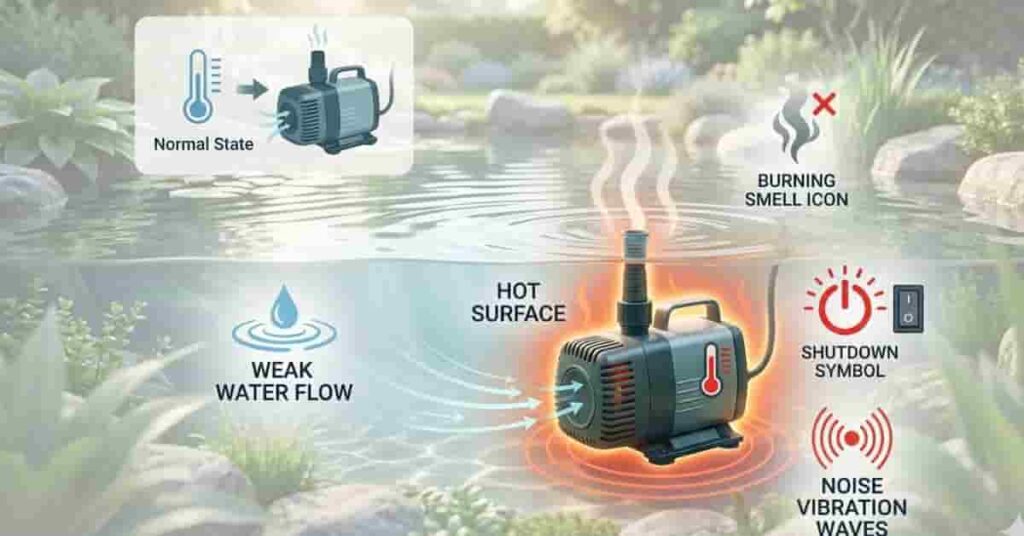
A pond pump overheating problem often starts with small warning signs. Catching these problems early can prevent motor damage and expensive repairs. Most pumps do not fail suddenly. Instead, they show changes in temperature, water flow, or noise before shutting down completely.
Many overheating problems happen when water cannot move freely through the pump system. Debris buildup, clogged filters, or low water levels force the motor to work harder. Over time, the extra strain creates excess heat inside the pump housing.
Before checking for specific symptoms, it helps to know which signs signal an overheating problem. If you notice one or more of the following, inspect your pond pump as soon as possible.
Overheating often happens when water flow is restricted, so improving circulation can reduce pump stress. Learn more here: How to Increase and Optimize Water Flow in a Pond Pump (Complete Guide).
Pump Feels Extremely Hot
Most pond pumps feel slightly warm during normal operation. Water moving through the system helps cool the motor while it runs. A pump that becomes too hot to touch comfortably often has a cooling problem or restricted water flow.
Submersible pond pumps depend on the surrounding water to control motor temperature. If the water level drops too low, the pump may overheat quickly. Dirt buildup around the intake can also trap heat inside the housing.
A very hot pump should never be ignored. Continued overheating may damage seals, bearings, or the motor itself.
Reduced Water Flow
Weak water circulation is one of the most common signs of an overheating pond pump. You may notice a smaller waterfall, weak fountain spray, or slow-moving pond water.
Clogged filters, blocked pipes, or dirty impellers often reduce water flow. When water cannot move properly, the motor works harder and creates more heat. This extra strain can lead to overheating over time.
Low water flow also affects pond health. Poor circulation lowers oxygen levels and allows debris to accumulate more quickly in the pond.
One pond owner noticed their waterfall losing pressure during a heat wave. After cleaning the intake screen of algae, normal flow returned almost immediately.
Pump Keeps Shutting Off
Many modern pond pumps include thermal overload protection. This safety feature turns the motor off when temperatures reach dangerous levels. The pump may restart after cooling down.
Repeated shutdowns usually indicate a problem with the pond pump rather than a faulty switch. Restricted water flow, clogged intakes, and worn motors are common triggers of thermal protection systems.
Some pond owners mistake this issue for an electrical failure. In reality, the motor often shuts down to prevent permanent damage.
If your pump cycles on and off regularly, inspect the intake, filter, and water level first. Continuous overheating can shorten the motor’s lifespan.
Strange Noises or Vibrations
An overheating pond pump may produce unusual sounds before it fails completely. Grinding, humming, rattling, or vibrating noises often occur when internal parts wear down due to excess heat.
A clogged impeller is a common cause of vibration and humming. Debris trapped inside the housing can make the motor struggle during operation. Overheated bearings may also create loud grinding sounds.
These noises usually become worse over time if the problem remains untreated. Ignoring them can lead to permanent motor damage or broken internal components.
Check the pump immediately if new noises appear suddenly. Cleaning the impeller area often solves minor vibration problems early.
Burning Smell Near the Pump
A burning smell near your pond pump is a serious warning sign. Overheated electrical components or motor windings may create a hot plastic or burning odor.
This smell often appears after prolonged overheating or poor ventilation. External pond air pumps may also produce burning odors if airflow becomes restricted.
Turn off the pump immediately if you notice this problem. Continuing to run the motor may create permanent electrical damage or safety risks.
Inspect the power cord, housing, and ventilation areas after the pump cools down. If the smell continues after cleaning, the motor may need professional repair or replacement.
Pro Tip
Never ignore a burning smell around electrical pond equipment. Early shutdown can prevent major motor failure.
Why Is My Pond Pump Overheating?
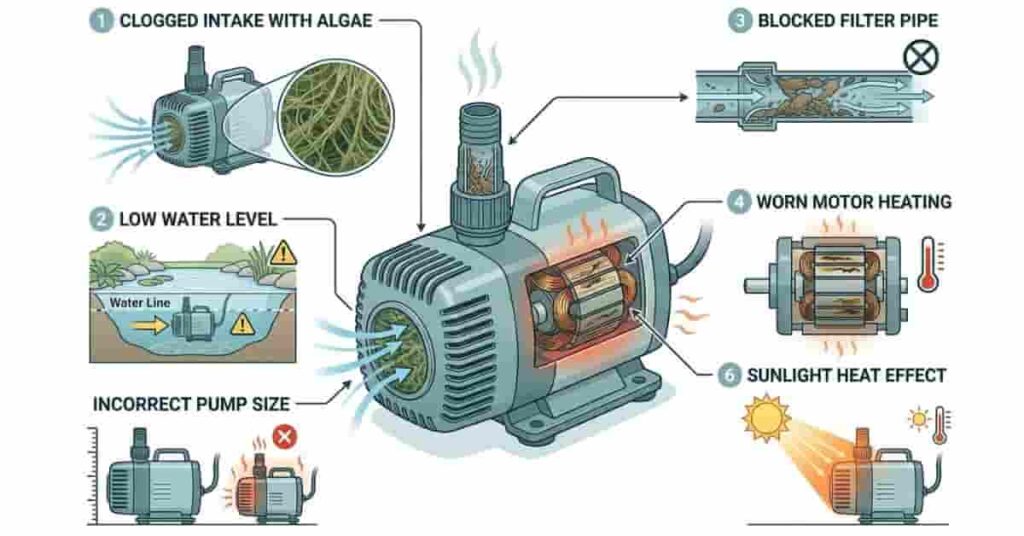
A pond pump overheating problem usually happens when the motor cannot cool itself properly. Most pond pumps depend on steady water flow or good airflow to control heat. If something blocks circulation or forces the motor to work harder, temperatures rise quickly.
Small maintenance issues often create bigger overheating problems over time. Dirty filters, clogged intakes, low water levels, and poor ventilation are some of the most common causes. Identifying the exact cause early can help you prevent costly pump damage.
Below are the most common reasons a pond pump starts running hot.
Clogged Pump Intake
A clogged intake is one of the leading causes of pond pump overheating. Leaves, algae, sludge, and small debris can block the intake screen and restrict water flow through the pump.
When less water moves through the system, the motor loses its main cooling source. The pump then works harder to maintain circulation, creating excess heat inside the housing.
This problem becomes more common during the fall and algae-growth periods. Ponds with heavy fish waste or nearby trees may clog faster than others.
Regularly cleaning the intake can prevent overheating and improve overall pond circulation. Many pond owners solve overheating problems simply by removing debris from the intake screen and impeller area.
Low Pond Water Level
Submersible pond pumps rely on the surrounding water to cool the motor during operation. If the pond water level drops too low, parts of the pump may become exposed to air.
Without enough water around the housing, heat builds up much faster. This problem often appears during hot summer weather or long dry periods.
Evaporation can lower pond water levels more than many beginners expect. Small leaks around waterfalls or liners may also reduce water depth slowly over time.
Check the water level regularly, especially during warm months. Keeping the pump fully submerged helps maintain safe operating temperatures and stable circulation.
Dirty Filter or Blocked Pipes
Dirty filters and blocked pipes force a pond pump to work harder than normal. As debris accumulates in the filtration system, water struggles to flow freely through the pond setup.
Restricted flow increases pressure inside the pump and places extra strain on the motor. Over time, the added workload raises operating temperatures and may trigger thermal shutdown protection.
Small blockages inside flexible hoses can also reduce circulation without obvious signs. Many pond owners focus only on the pump itself and forget to inspect pipes and filters.
Regularly cleaning filters helps maintain healthy water flow and reduces overheating. It also improves water clarity and oxygen circulation for fish.
Running the Pump Dry
Running a pond pump without water can damage the motor very quickly. Water cools and lubricates many internal pump components during operation.
If the pump runs dry, heat builds up within minutes. Seals, bearings, and motor parts may crack or fail from excessive temperatures.
This issue often happens after low water levels, clogged intakes, or maintenance mistakes. Some pumps shut off automatically, but others continue running until serious damage occurs.
Always check the water flow before restarting the pump after cleaning or repairs. Even short dry runs can significantly shorten the motor’s life.
Worn or Aging Pump Motor
Older pond pumps naturally become less efficient over time. Internal motor parts wear down after years of constant use, especially in ponds with heavy debris or poor maintenance.
As efficiency drops, the motor creates more heat during normal operation. Worn bearings, damaged seals, and aging electrical components can also increase friction and overheating.
A pump that repeatedly overheats after cleaning may have internal wear. Strange noises, weak flow, and frequent shutdowns often appear as the motor ages.
In some cases, replacing an old pump costs less than repeated repairs. Modern energy-efficient pumps also use less electricity and run cooler.
Incorrect Pump Size
Using the wrong pump size can lead to overheating. An undersized pond pump may struggle continuously to move enough water through filters, waterfalls, and pipes.
Constant overworking places stress on the motor and raises operating temperatures. Small pumps often wear out faster when used in large pond systems.
Oversized pumps may also cause circulation issues if the plumbing cannot handle the flow. Matching the pump size to your pond volume helps maintain stable performance.
Most pond experts recommend choosing a pump that circulates the entire pond volume every 1 to 2 hours. [placeholder]
Hot Summer Weather
Hot weather can increase the risk of the pond pump overheating, especially during heat waves. Warm pond water removes heat less effectively than cooler water.
Direct sunlight also raises motor temperature throughout the day. Shallow ponds heat up faster and place more stress on the pump system.
Summer algae growth can worsen the problem by clogging intakes and filters more often. Many pond owners notice overheating issues during the hottest weeks of the year.
Adding shade, maintaining water levels, and cleaning filters regularly can reduce summer overheating risks.
Poor Ventilation Around External Pumps
External pond pumps and pond air pumps need proper airflow to safely dissipate heat. If ventilation openings become blocked, heat can build up around the motor housing.
This problem often occurs when pumps are installed in tight boxes, sheds, or enclosed filter areas. Dust buildup around cooling vents may also reduce airflow over time.
Poor ventilation can shorten motor life and increase the chance of thermal shutdowns. Air pumps exposed to direct sunlight may overheat even faster during summer. Keep external pumps in shaded, well-ventilated areas with enough open space around the housing.
If your pump is also making unusual noise along with heat issues, check this troubleshooting guide: Pond Pump Making Noise? Causes, Fixes & Easy Solutions.
Can Hot Weather Cause Pond Pump Overheating?
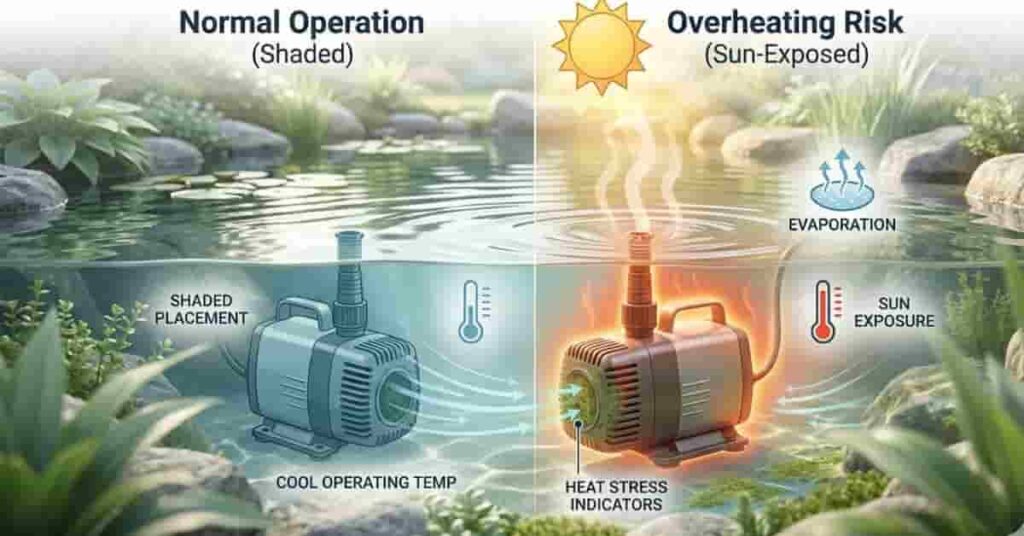
Yes, hot weather can increase the risk of the pond pump overheating, especially during summer heat waves. Warm temperatures place extra stress on both submersible and external pond pumps. Shallow ponds heat up faster, which reduces the pump’s ability to stay cool during operation.
Pumps exposed to direct sunlight often run much hotter throughout the day. Dark-colored pump housings can absorb even more heat during peak afternoon temperatures. If the pond water becomes too warm, it cannot cool the motor as efficiently as cooler water.
Warm water also contains less dissolved oxygen. Lower oxygen levels may stress fish and reduce overall pond health during summer. At the same time, algae growth increases faster in hot weather, leading to clogged filters and blocked pump intakes.
Older pond pumps usually struggle more during extreme heat. Worn motors already operate less efficiently, so additional summer heat may trigger thermal overload protection or repeated shutdowns.
One pond owner noticed their pump shutting off every afternoon during a heat wave. After adding shade cloth above the pond and cleaning the filter system, the overheating problem stopped within two days.
Quick Prevention Tips
You can reduce overheating risks during hot weather with a few simple maintenance steps:
- Add shade around the pond with plants, covers, or shade sails.
- Keep pond water topped up during dry weather.
- Improve aeration to increase oxygen circulation.
- Clean filters and pump intakes more often in summer.
- Move external pumps out of direct sunlight.
- Check water flow regularly during heat waves.
How Hot Should a Pond Pump Be?
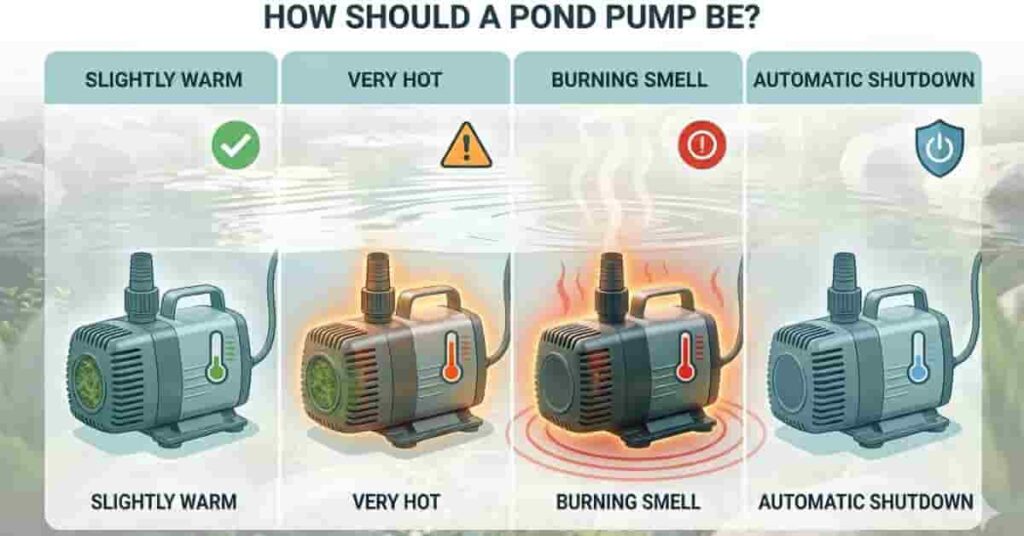
A pond pump should feel slightly warm while running. Most pumps generate heat during normal operation, especially after several hours of operation. Water moving through the system helps cool the motor and keeps temperatures stable.
However, a pond pump should never become so hot that it is uncomfortable to touch. If the housing feels extremely hot, the motor may not be cooling properly. Restricted water flow, clogged filters, or low pond water levels are often the cause of this problem.
Excessive heat can damage seals, bearings, and internal motor parts over time. Some pond owners first notice overheating when the waterfall slows down or the pump suddenly shuts off during warm weather.
Smoke, melted plastic smells, or a strong burning odor usually indicate a serious electrical or motor issue. Turn off the pump immediately if you notice these warning signs. Continuing to run an overheating pond pump may lead to permanent damage.
Many modern pumps include thermal overload protection. This safety feature shuts the motor down automatically when temperatures become dangerous. While this helps prevent complete motor failure, repeated shutdowns still signal an underlying problem that needs attention.
One beginner pond owner thought their pump was failing because it felt warm during the summer. After checking the flow and water level, they discovered the pump temperature was actually normal. Slight warmth alone does not always mean the motor is overheating.
Normal vs Dangerous Heat
| Slightly warm | Normal operation |
| Very hot surface | Restricted cooling or blockage |
| Burning smell | Possible motor damage |
| Automatic shutdown | Thermal overload protection activated |
Pro Tip
If you cannot hold your hand on the pump housing for more than a few seconds, inspect the system for overheating problems.
How to Fix an Overheating Pond Pump
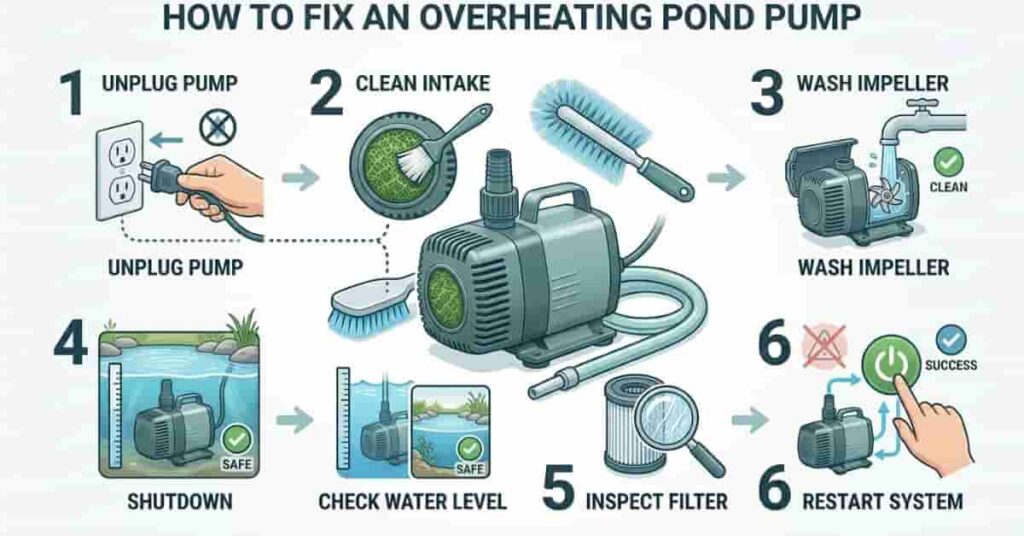
Fixing a pond pump overheating problem usually starts with improving water flow and reducing motor strain. In many cases, simple cleaning and maintenance prevent serious damage.
Always inspect the pump carefully before restarting it. Dirt buildup, blocked filters, and low water levels are some of the most common causes of overheating. Taking a few minutes to clean the system can often restore normal performance quickly.
Follow these steps to safely fix an overheating pond pump.
Turn Off and Unplug the Pump
Always disconnect the power before inspecting or cleaning a pond pump. Water and electricity can become dangerous when combined, especially around damaged cords or wet connections.
Turning off the pump also prevents the motor from overheating further during inspection. Some pumps remain hot for several minutes after shutdown, so allow the housing to cool before touching internal parts.
Check the power cord for visible damage while unplugging the system. Cracked insulation or exposed wiring may indicate additional electrical problems.
Remove Debris From the Intake
A clogged intake is one of the most common reasons a pond pump gets hot. Leaves, algae, sludge, and dirt can block water from moving through the pump properly.
Remove the intake cover and carefully clear away any visible debris. Use clean water or a soft brush to rinse buildup from the screen and surrounding areas.
Improving water flow helps cool the motor and reduces strain on internal parts. Many overheating problems disappear immediately after intake cleaning.
Ponds with heavy algae growth or nearby trees may require more frequent maintenance during summer and fall.
Clean the Impeller and Pump Housing
The impeller pushes water through the pond system. If dirt, algae, or small stones collect around it, water circulation slows, and the motor generates excess heat.
Open the pump housing carefully and inspect the impeller for debris buildup. Clean the area gently with water and remove trapped material by hand if needed.
A dirty impeller often causes humming, vibration, and reduced water flow, along with overheating. Regular cleaning improves efficiency and helps the pump run cooler.
Avoid using sharp tools that could damage the impeller blades or housing seals.
Check the Pond Water Level
Submersible pond pumps need sufficient water around them to cool the motor properly. If the water level drops too low, parts of the pump may become exposed to air.
Low water levels often occur during hot weather due to evaporation. Small leaks around waterfalls or pond liners can also reduce water depth slowly over time.
Refill the pond if the pump is not fully submerged. After restoring the correct water level, monitor the pump temperature and water flow closely.
Keeping stable water levels also helps maintain healthy oxygen circulation for fish.
Inspect Filters, Pipes, and Hoses
Blocked filters and hoses can slow water movement through the pond system. Restricted circulation forces the motor to work harder, increasing operating temperatures.
Inspect filter pads, pipes, and flexible hoses for sludge, algae, or trapped debris. Flush out blockages and replace heavily clogged filter media if needed.
Some pipe blockages develop slowly and may not appear obvious at first. Weak waterfalls or reduced fountain pressure often signal restricted flow somewhere in the system.
Regular inspections improve circulation and reduce stress on the pump motor.
Allow the Pump to Cool Down
After cleaning and inspection, allow the motor to cool fully before restarting the pump. Running the system immediately while the housing remains extremely hot may increase internal stress.
Place the pump in a shaded area during cooling if possible. External pond air pumps especially benefit from improved airflow during this step.
Cooling time depends on the pump size and the temperature the motor reaches. Most pumps cool within 15 to 30 minutes after shutdown.
If the housing still smells burnt after cooling, internal motor damage may already exist.
Restart and Monitor Performance
Reconnect the pump and monitor its performance closely after cleaning. Watch for strong water flow, stable operation, and normal motor temperature.
Listen for humming, grinding, or rattling sounds during the first few minutes. These noises may indicate remaining blockages or worn internal parts.
Touch the housing carefully after the pump runs for a while. Slight warmth is normal, but the pump should not become extremely hot again.
If overheating persists after a thorough cleaning and inspection, the motor may need repair or replacement.
Pro Tip
Monitor the pump again later in the afternoon when summer temperatures are highest.
Pond Air Pump Overheating
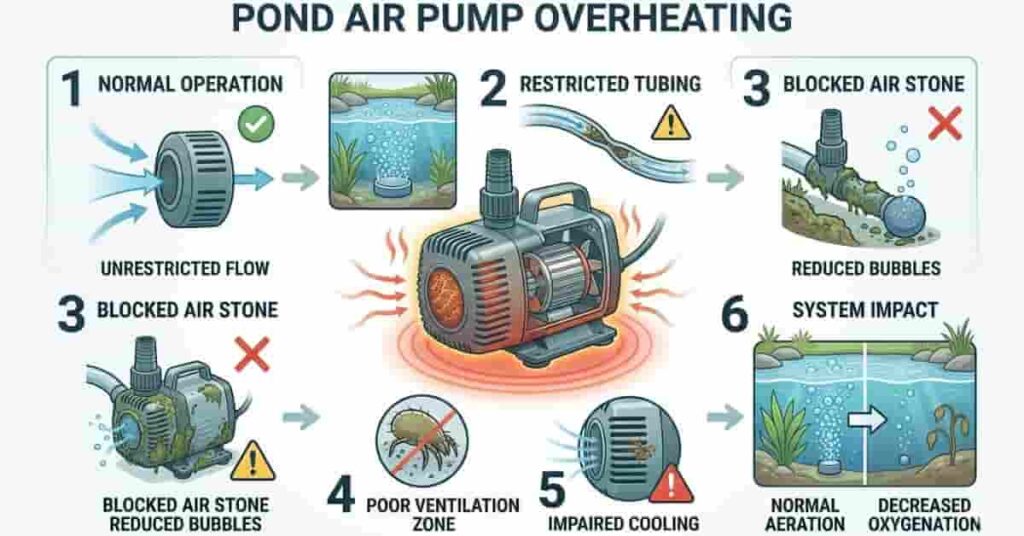
Pond air pump overheating problems differ from standard water pump issues. Water pumps use water from the surrounding pond to help control motor temperature, but air pumps rely on steady airflow for cooling.
When airflow is restricted, heat builds up inside the motor housing much more quickly. Overheated air pumps may feel unusually hot, become noisy, or shut down during warm weather.
Summer heat, dust buildup, and clogged air stones are some of the most common causes. Fortunately, many pond air pumps’ overheating problems are easy to fix with simple maintenance and better ventilation.
Blocked Air Stones
Clogged air stones create extra pressure inside the airline system. As airflow becomes restricted, the air pump motor must work harder to push air through the blockage.
Over time, this added strain increases heat buildup inside the pump housing. You may also notice weaker bubbles, unusual humming sounds, or reduced pond aeration.
Mineral buildup, algae, and dirt often gradually clog air stones. Many pond owners do not notice the restriction until the pump starts overheating or making noise.
Cleaning or replacing dirty air stones usually restores airflow quickly. Regular inspection helps keep the motor cooler and improves oxygen circulation for fish.
Poor Ventilation
Pond air pumps need proper airflow around the housing to safely dissipate heat. Pumps placed inside small boxes, tight cabinets, or enclosed filter areas often trap hot air around the motor.
Poor ventilation becomes a bigger problem during summer when outdoor temperatures rise. Dust buildup around cooling vents can also reduce airflow and increase operating temperatures.
An overheating air pump may feel very hot to the touch or shut off unexpectedly after running for long periods. In some cases, trapped heat can significantly shorten motor life.
Place the pump in a well-ventilated area with enough open space around all sides. Keeping vents clean also improves cooling performance.
Direct Sunlight Exposure
Direct sunlight can raise the temperature of pond air pumps very quickly during hot weather. Dark pump housings absorb heat throughout the day, especially in the afternoon sun.
Air pumps sitting on concrete or metal surfaces, or inside hot sheds, may overheat even faster. Combined with poor airflow, direct sunlight places heavy stress on the motor.
Many pond owners notice overheating problems during heat waves or long summer afternoons. Moving the pump into a shaded location often lowers operating temperatures immediately.
Shade cloths, covered filter areas, or nearby plants can help protect outdoor pumps from excessive heat.
Quick Fixes for an Overheating Pond Air Pump
Most pond air pump overheating problems can be resolved with simple maintenance and improved airflow. Start by checking the air stones, airline tubing, and cooling vents for blockages.
Use these quick fixes to reduce overheating risk:
- Replace clogged or worn air stones.
- Improve airflow around the pump housing.
- Move the pump into a shaded area.
- Keep cooling vents clean and dust-free
- Inspect airline tubing for kinks or blockages.
- Avoid placing pumps inside sealed containers.
One pond owner solved recurring overheating problems by moving their air pump from a closed wooden box to an open, shaded shelf. The pump temperature dropped noticeably on the same day.
How to Prevent Pond Pump Overheating
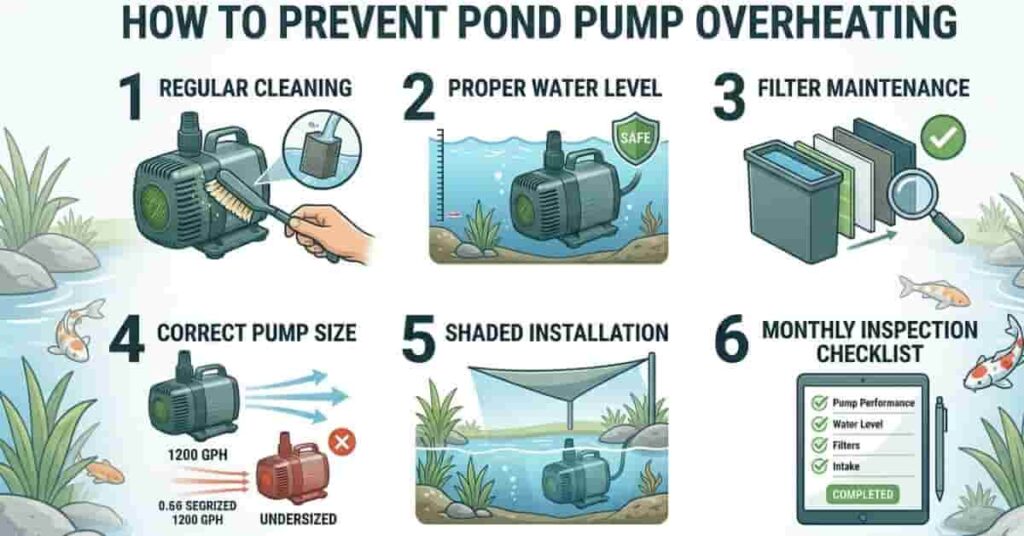
Preventing a pond pump overheating problem is much easier than fixing a damaged motor. Most overheating issues start slowly due to poor maintenance, blocked flow, or environmental stress. With regular care, you can keep your pump running cool and extend its lifespan.
A well-maintained pond pump also improves water circulation and oxygen levels. This keeps fish healthier and reduces algae growth. Simple habits make a big difference over time.
Below are the most effective ways to prevent overheating.
Clean the Pump Regularly
Regular cleaning is the most important step in preventing overheating. Dirt, algae, and leaves can quickly block the intake and reduce water flow.
When water flow drops, the motor works harder and produces more heat. Over time, this extra strain can lead to thermal shutdowns or permanent damage.
Cleaning the intake screen, impeller, and outer housing keeps water moving freely. Most pond owners benefit from cleaning their pump every 2–4 weeks, especially during warm seasons.
Maintain Proper Water Levels
Pond pumps rely on consistent water levels to stay cool. If the water drops too low, the pump may draw air instead of water. This reduces cooling efficiency and increases heat buildup.
Low water levels often happen due to evaporation during hot weather or small leaks in the pond liner. Even a few inches of water loss can affect pump performance.
Check your pond water level regularly, especially in summer. Keeping the pump fully submerged ensures stable cooling and smooth circulation.
Clean Filters and Pipes Frequently
Filters and pipes control how water moves through your pond system. When they become clogged, the pump must work harder to push water through.
This extra pressure increases motor strain and raises operating temperature. Blocked pipes can also reduce the performance of waterfalls or fountains without obvious warning signs.
Regular filter cleaning improves water flow and reduces the risk of overheating. Many pond owners overlook hidden pipe blockages, so full system checks are important.
Use the Correct Pump Size
Choosing the right pump size is essential for preventing overheating. An undersized pump works too hard to move water through the system.
Constant overworking increases heat and shortens motor life. Oversized pumps can also cause problems if the plumbing system cannot handle the flow.
The right pump should match your pond size, waterfall height, and filtration needs. A properly sized pump runs more efficiently and stays cooler.
Protect Pumps From Direct Sunlight
Direct sunlight increases pump temperature, especially during hot summer days. Outdoor pumps placed in open areas absorb heat throughout the day.
Shaded environments help reduce temperature buildup and improve motor performance. Even partial shade from plants or covers can make a noticeable difference.
External air pumps and exposed systems are especially vulnerable to heat stress. Keeping them out of direct sunlight helps maintain stable operation.
Inspect the Pump Monthly
Monthly inspections help you catch small problems before they turn into overheating failures. Early signs like weak flow, noise changes, or dirt buildup should never be ignored.
Regular checks also help you spot worn parts, leaks, or blocked components. Fixing these issues early reduces long-term repair costs.
A quick monthly inspection keeps your pond system stable and prevents sudden pump breakdowns.
Quick Troubleshooting Checklist
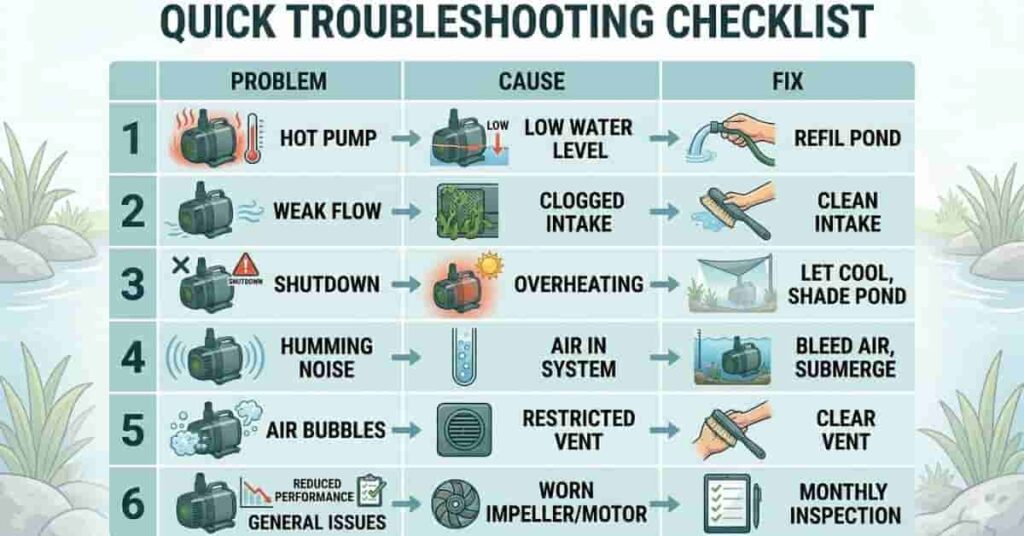
A pond pump overheating problem often shows early warning signs before it gets serious. This checklist helps you quickly match symptoms with likely causes and simple fixes. Use it as a fast reference when your pump stops working properly or starts running hot.
Most issues come from restricted water flow, blocked parts, or poor ventilation. Fixing these small problems early can prevent motor damage and restore normal circulation within minutes.
| Pump feels hot | Restricted water flow | Clean intake |
| Weak waterfall flow | Dirty filter | Wash filter |
| Pump shuts off | Thermal overload | Let pump cool |
| Loud humming noise | Blocked impeller | Clean impeller |
| Air bubbles in flow | Low water level | Refill pond |
| Hot air pump motor | Poor ventilation | Improve airflow |
Pro Tip
Always start troubleshooting with water flow issues first. In most cases, poor circulation is the root cause of overheating.
When Should You Replace an Overheating Pond Pump?
A pond pump overheating problem does not always mean you need a new pump. Many issues come from dirt, blockages, or low water flow, and can be fixed with cleaning. However, some signs indicate that the motor is nearing the end of its life.
If the pump continues to overheat even after proper maintenance, the internal components may already be damaged. In that case, repairs may not solve the root problem, and replacement becomes the better long-term option.
Look for the warning signs below before deciding.
- The pump overheats repeatedly, even after cleaning and inspection.
- The motor produces a strong burnt smell during or after operation.
- Water flow remains weak even after clearing the intake and filters.
- Bearings become noisy, grinding, or constantly vibrating.
- The pump housing is cracked, damaged, or leaking water.
- Thermal shutdown happens frequently without a clear blockage.
Older pond pumps often struggle to maintain efficiency over time. Internal wear reduces performance and increases heat buildup. In many cases, replacing an old pump is more cost-effective than repeated repairs or energy losses due to poor performance.
One common situation is when pond owners clean the system multiple times, only for overheating to return within days. This usually indicates internal motor wear rather than surface-level blockages.
Conclusion
Pond pump overheating usually happens due to poor water flow, blocked filters, or low maintenance. This guide explained the main causes, warning signs, fixes, and simple prevention methods.
Most pond pump overheating problems come from restricted circulation or improper setup. Regular cleaning, correct water levels, and routine inspections can prevent most issues. Simple troubleshooting steps often restore performance and protect your pond ecosystem.
If you maintain your pond regularly, your pond pump will run cooler and last longer. You will also reduce the risks of the pond pump overheating and improve water quality for fish. If this guide helped you, share it with other pond owners. Leave a comment with your experience or explore more pond care guides for better results.

Michael Brooks and Sarah Lane are the co-founders of the Pond Pump Team, a trusted U.S.-based group helping homeowners and landscapers build better ponds and water features. Michael, an experienced pond engineer from Oregon, has worked for over 12 years on pump sizing, flow systems, and water circulation. Sarah, a pond designer from Colorado with nine years of experience, focuses on eco-friendly and easy-to-maintain pond and waterfall designs. Together, they’ve completed more than 180 pond projects and created tools like the Pond Pump Calculator and Pond Liner Calculator to make pond planning simple, accurate, and sustainable.
Need help with your pond setup? Contact the Pond Pump Team for expert advice and reliable solutions.