Introduction
Should I add salt to my koi pond, or could it actually harm my fish?
Should I add salt to my koi pond is one of the most common questions among new koi keepers in the USA. Many beginners feel confused because advice online is often conflicting. Some sources recommend salt for almost every situation, while others avoid it completely.
This topic matters because incorrect salt use can affect fish health, plant life, and water balance in your pond. In this guide, you will learn when pond salt is helpful and when it should be avoided. We will also explain the benefits, risks, and safe use practices in simple terms.
For many pond owners, especially in colder US regions, seasonal changes make this decision even more important. Understanding proper salt use can help you avoid unnecessary risks and keep your koi healthy year-round.
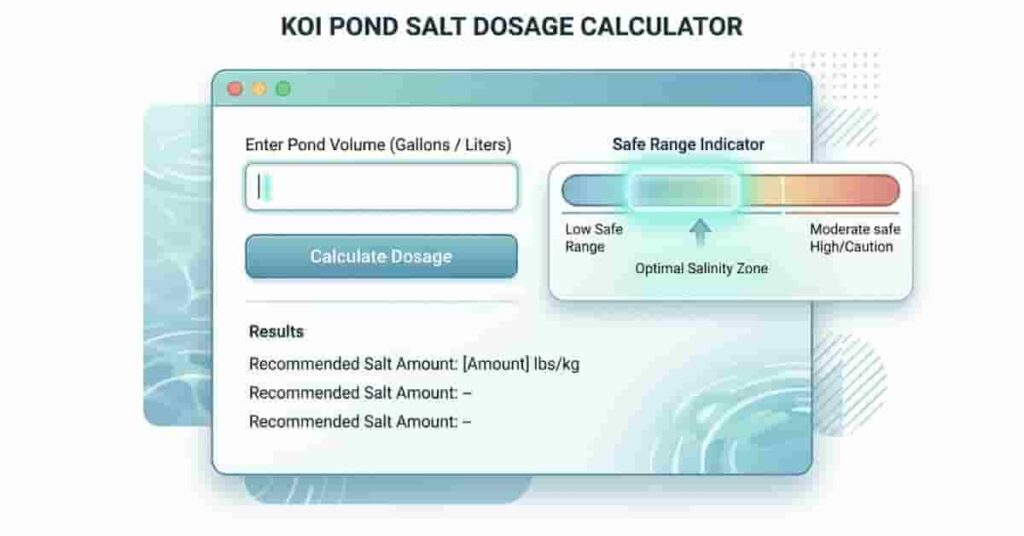
Not sure how much salt your pond needs? Use our Pond Salt Calculator to calculate a safer and more accurate dosage before treatment. If you still need to choose the right product, explore our Best Pond Salt for Koi Ponds guide to compare the top fish-safe options for your pond.
Is Pond Salt Necessary for a Koi Pond?
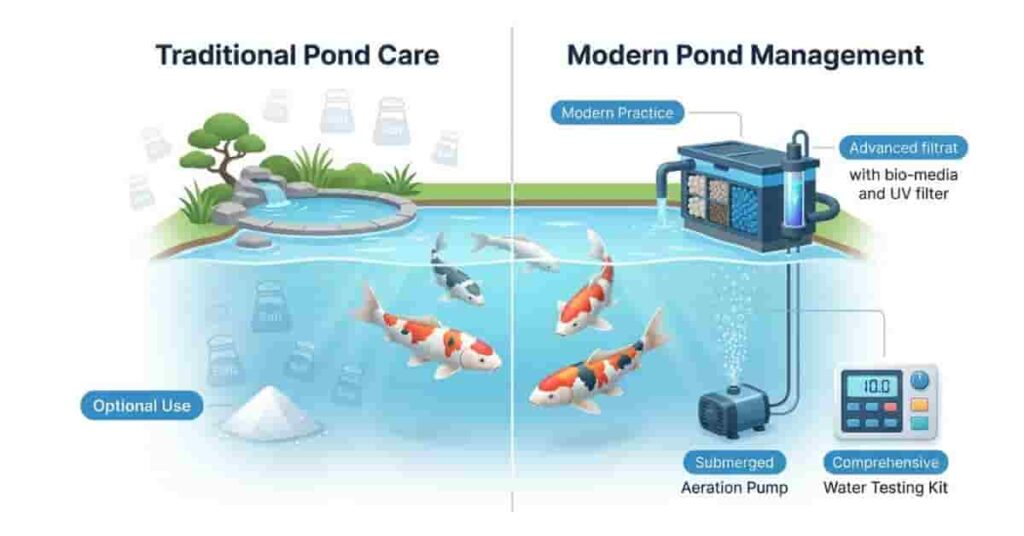
The question of whether pond salt is necessary depends on how your koi pond is managed and the conditions your fish live in.
Traditionally, many koi keepers used salt as a regular part of pond care. It was believed to help prevent disease, reduce stress, and support fish health in a simple way.
However, modern koi pond management in the USA takes a more balanced and science-based approach. Today, salt is no longer considered a required or permanent part of most koi pond systems. Instead, it is viewed as a temporary treatment tool used only in specific situations, such as fish stress, handling recovery, or short-term water quality issues.
For most healthy, well-maintained ponds with proper filtration, salt is optional rather than essential. Overuse can also lead to long-term buildup and unwanted side effects in the ecosystem.
Why Some Koi Keepers Use Salt
Some pond owners still prefer salt because it can help stabilize fish during stress events. It is also used temporarily after transport, during water changes, or in response to minor health concerns. In these cases, it is seen as a quick-support tool rather than a permanent solution.
Why Others Avoid Routine Salt Use
Many modern koi keepers avoid regular salt use because good filtration and stable water conditions are usually enough. They also worry about plant sensitivity, salt accumulation, and reduced flexibility when using other treatments.
Choosing the right product is just as important as using the correct amount. After calculating your dosage with our Pond Salt Calculator, explore our Best Pond Salt for Koi Ponds guide to compare trusted products made specifically for koi ponds.
Benefits of Pond Salt
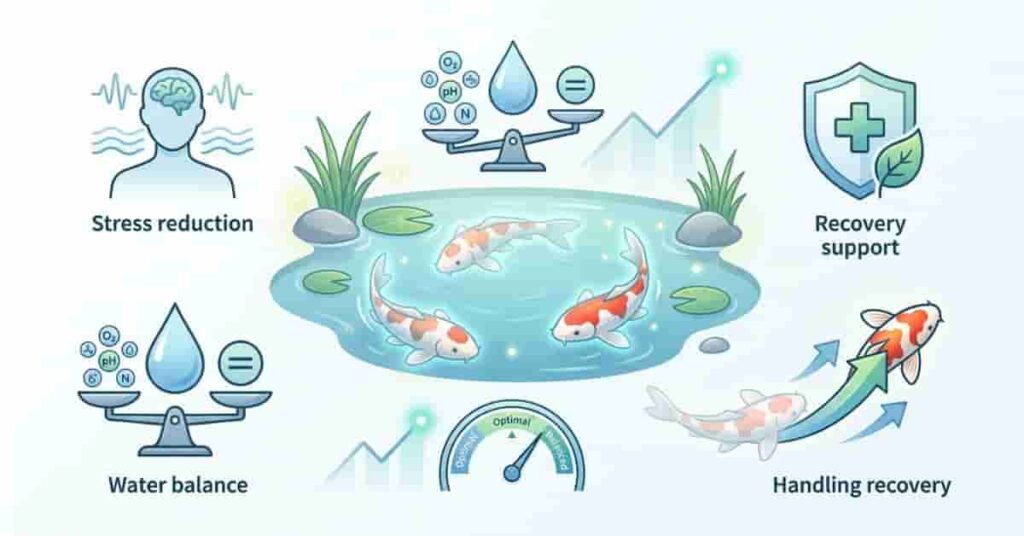
The benefits of pond salt depend on how and when you use it in a koi pond. It is not a daily requirement, but it can provide short-term support in specific situations. When used correctly, pond salt helps stabilize fish during stress and temporary water changes. It works best as a controlled treatment tool, not a long-term pond condition.
Salt helps koi fish maintain internal balance when their environment changes quickly. This is important in ponds where temperature shifts, transport, or handling events can disrupt normal conditions. It does not replace good filtration or clean water, but it can support fish during recovery periods when extra stability is needed.
In modern pond care, experts treat salt as a supportive option rather than a permanent solution. It is most effective when paired with proper water testing and careful dosing. Overuse should always be avoided to protect long-term pond health.
Helps Reduce Fish Stress
Salt can help koi cope with short-term stress from sudden environmental changes. This includes transport, pond cleaning, or water changes. It helps create a more stable environment for fish while they adjust. However, it should be used only for temporary support, not for ongoing stress management.
Supports Osmoregulation
Koi fish naturally regulate salt and water balance inside their bodies. When pond conditions change quickly, this balance can become harder to maintain. Adding a controlled amount of salt may reduce the effort required for osmoregulation, helping fish stay stable during short disruptions.
May Assist During Certain Health Issues
In some pond-keeping situations, salt is used as part of general supportive care when fish show signs of discomfort or environmental stress. It does not replace proper diagnosis or treatment, but it may be used as a temporary supportive measure under careful observation.
Can Aid Recovery After Handling
After handling or moving koi, salt can help reduce environmental shock. It supports fish during the adjustment period when they return to the pond. This is especially useful in breeding, transport, or pond maintenance situations where fish experience short-term stress.
Risks of Pond Salt
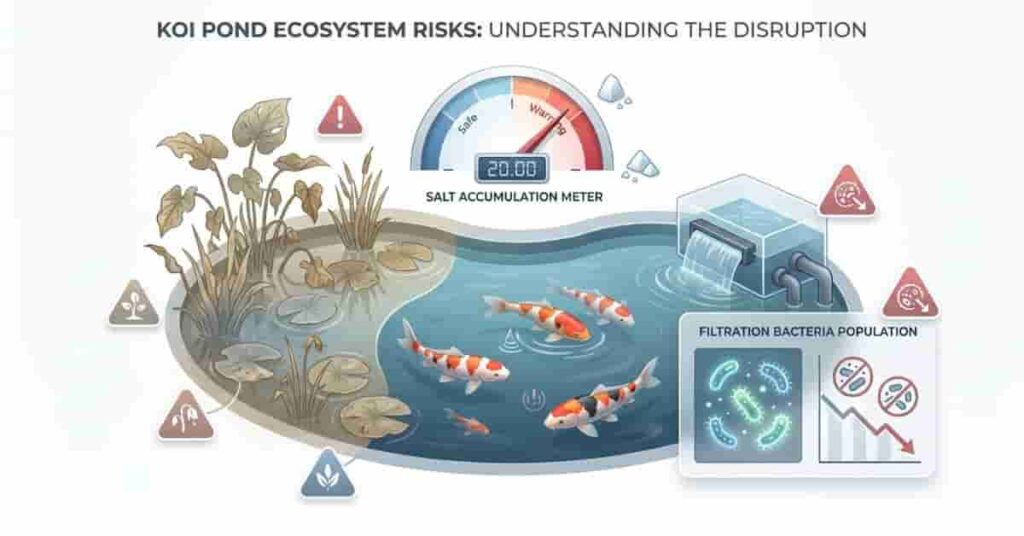
Understanding the risks of pond salt is just as important as knowing its benefits. While salt can offer short-term support in koi ponds, improper or excessive use can cause long-term problems. In modern pond management, experts treat salt as a controlled treatment rather than a routine additive. Overuse or poor dosing can affect fish, plants, and overall water balance.
Salt does not disappear from the pond as other treatments do. It remains in the water until removed through water changes. This makes it easy to build up over time if added repeatedly without testing. For beginners, this is one of the most common mistakes and can lead to unintended stress on the pond system.
Another concern is that salt affects more than just fish. It also interacts with plants, beneficial bacteria, and water chemistry. Because of this, careful monitoring is always necessary before adding any amount of salt.
Harm to Pond Plants
One of the major risks of pond salt is damage to aquatic plants. Many common pond plants are sensitive to salt and may show slowed growth, leaf damage, or complete decline. Even small increases in salinity can affect delicate plant species, especially in planted koi ponds where balance is important.
Salt Buildup Over Time
Salt does not evaporate or break down in water. If added repeatedly without testing, it gradually accumulates in the pond. This buildup can create long-term stress for fish and make water conditions harder to manage. Regular water changes are required to prevent this issue.
Reduced Treatment Options
High salt levels can limit your ability to use other pond treatments safely. Some medications or water conditioners may not work effectively in salted water. This reduces flexibility when managing fish health issues and can complicate future care decisions.
Incorrect Dosing Problems
Incorrect salt dosing is a common beginner mistake. Adding too much too quickly can shock fish and disrupt the pond environment. On the other hand, too little salt may provide no real benefit. Accurate measurement and water testing are essential before any application.
Potential Water Quality Issues
Salt can indirectly affect overall water quality by influencing biological filtration. Beneficial bacteria may become less efficient in imbalanced conditions. This can lead to unstable ammonia or nitrite levels if the pond system is already under pressure.
When Should You Add Salt to a Koi Pond?
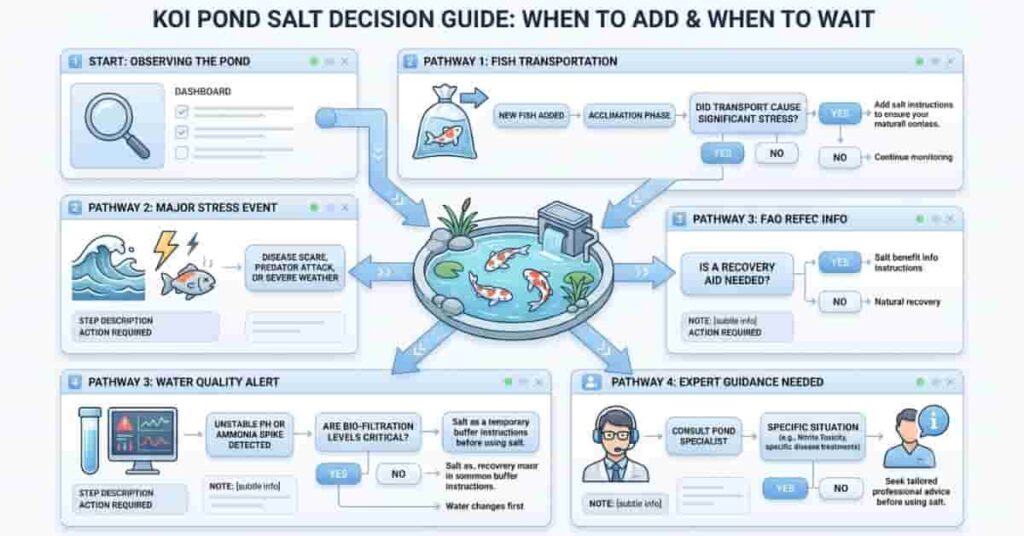
The question of when to add salt to a koi pond comes down to timing, purpose, and water conditions. Salt is not meant for routine use in modern koi keeping. Instead, it works best as a short-term support tool during specific situations. In a well-maintained pond, stable filtration and clean water usually do most of the work.
Adding salt without a clear reason can lead to unnecessary buildup and long-term imbalance. That is why experienced koi keepers always test water first and decide based on real need, not habit. Salt should only be used when fish need temporary support during stress or environmental changes.
Used correctly, salt can help stabilize fish while the pond system adjusts. It is most effective when applied carefully and for a limited time, followed by monitoring and partial water changes.
After Fish Transport
Salt is commonly added after koi are moved from one location to another. Transport can cause stress due to handling, temperature changes, and water differences. A controlled amount of salt may help fish adjust more comfortably during this transition period.
During Stress Events
Salt may be used during short-term stress events such as sudden temperature shifts, pond cleaning, or rapid water changes. It provides temporary environmental stability while fish recover and adjust to new conditions.
Following Water Quality Problems
If a pond experiences temporary water quality issues, such as sudden parameter swings, salt may be used as a supportive measure. However, it should only be considered after testing the water and identifying the issue. It is not a replacement for fixing the root cause.
Under Professional Guidance
In more complex situations, salt use should follow advice from experienced koi keepers or aquatic professionals. This helps prevent overdosing and ensures safe use alongside other treatments or pond management practices.
When Should You NOT Add Salt to a Koi Pond?
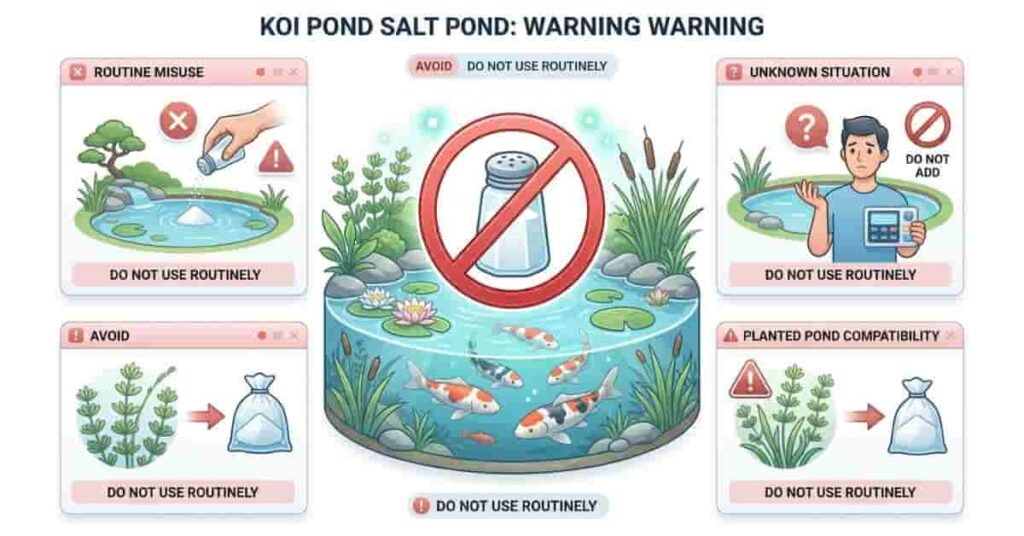
Knowing when NOT to add salt to a koi pond is just as important as knowing when to use it. In modern koi care, salt is a targeted treatment, not a routine habit. Adding it without a clear reason can disrupt pond balance and create long-term management issues. The safest approach is always to test water first and understand your pond conditions before making any changes.
Salt becomes risky when it is added blindly or repeatedly without monitoring. Because it does not break down or evaporate, it can accumulate and affect fish, plants, and beneficial bacteria. This is why many experienced koi keepers in the USA avoid unnecessary salt use unless there is a specific need.
A simple rule is this: if your pond is stable and well-filtered, and your fish show no stress, you likely do not need salt at all.
Heavily Planted Ponds
Avoid adding salt to ponds with many aquatic plants. Many pond plants are sensitive to salinity and can show damage even at low levels. Over time, salt exposure can reduce plant growth and harm the overall natural balance of the pond ecosystem.
Unknown Water Conditions
Never add salt if you do not know your current water parameters. Without testing, you cannot judge how much salt is already present or how your pond will respond. This increases the risk of overdosing and unexpected stress on fish and biological filtration.
If Existing Salt Levels Are Unknown
If you are unsure whether salt has been added before, avoid adding more. Salt accumulates over time and does not naturally leave the system. Without proper measurement, you may unintentionally push salinity to unsafe levels.
Routine Use Without Purpose
Adding salt as a routine practice without a specific reason is not recommended in modern koi pond management. Healthy ponds rely on stable filtration, aeration, and clean water rather than constant chemical support. Excessive salt use can limit flexibility in future treatments and disrupt long-term pond stability.
What Happens If You Add Too Much Salt?
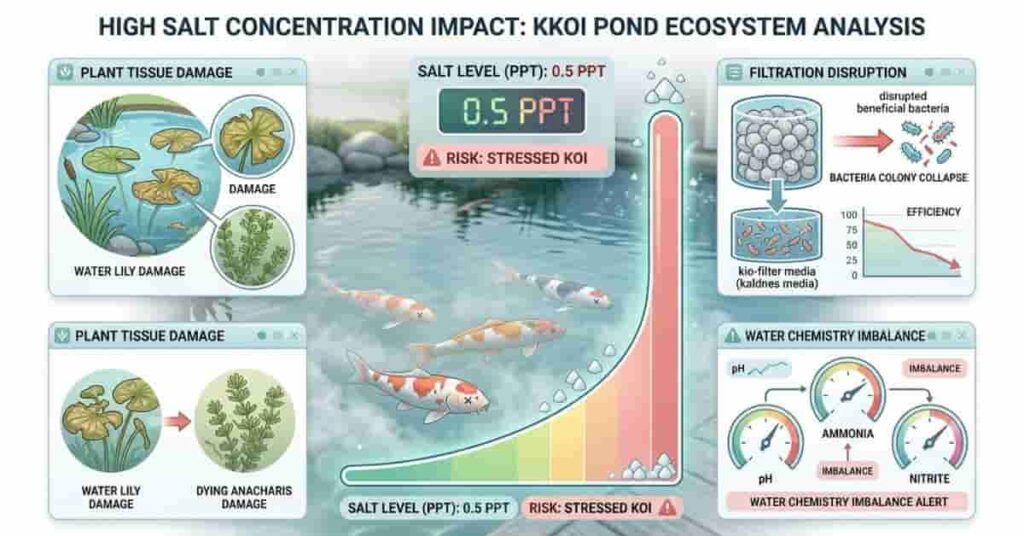
Adding too much salt to a koi pond can quickly turn a helpful treatment into a serious problem. The risks of pond salt increase when dosing is inaccurate or repeated without water testing. Salt does not evaporate or break down, so it remains in the system and accumulates over time. This can stress fish, weaken plants, and disturb the biological balance of your pond.
In small amounts, salt may offer short-term support. But in high concentrations, it changes how fish regulate water inside their bodies. This creates stress instead of relief. Beginners often assume “more is better,” but in koi care, precision always matters more than quantity.
Over-salting also reduces your ability to correct water problems later. Once levels become too high, you must rely on water changes to restore balance. That makes pond management harder and more time-consuming.
Fish Symptoms
When koi are exposed to too much salt, they often show clear signs of stress. You may notice reduced activity, loss of appetite, or irregular swimming patterns. Fish may also stay near the surface or spend more time in areas with stronger water flow, where oxygen is higher.
In severe cases, koi can appear lethargic and refuse to feed. These symptoms happen because their bodies struggle to maintain internal balance. Salt affects osmoregulation, making it harder for fish to control water movement in and out of their systems. Quick action is important if these signs appear, especially in smaller ponds where conditions change faster.
Plant Damage
Excess salt can seriously harm aquatic plants. Many pond plants are not designed to handle elevated salinity levels. You may see yellowing leaves, slow growth, or complete plant decline over time.
Sensitive plants react first, while more resilient species may take longer to show damage. This imbalance can reduce natural oxygen production in the pond and affect overall ecosystem health. In planted koi ponds, over-salting often leads to long-term loss of plant diversity.
Water Chemistry Effects
Too much salt changes the overall chemistry of pond water. It can interfere with beneficial bacteria that support biological filtration. This may reduce the efficiency of ammonia and nitrite processing, leading to unstable water conditions.
As filtration performance drops, water quality may fluctuate more easily. This creates a cycle where the pond becomes harder to stabilize. Even if fish appear fine at first, a long-term imbalance can silently build in the background.
Long-Term Accumulation Problems
Salt accumulation is one of the biggest hidden risks in koi ponds. Since salt does not disappear naturally, repeated additions can slowly push levels higher over time.
Without regular testing, pond owners may not notice this buildup until problems appear. Once salt concentration becomes high, correction requires multiple water changes. This can be time-consuming and stressful for fish.
Long-term imbalance can also reduce flexibility in pond management, especially when other treatments are needed.
Pro Tips
Always test water before adding salt and record every treatment. Use a pond salt calculator to avoid guessing. Treat salt as a temporary tool, not a routine habit.
Takeaways
- Too much salt disrupts fish health and pond balance
- Plants and beneficial bacteria are highly sensitive to over-salting
- Salt buildup is long-term and requires water changes to fix
- Careful dosing and testing prevent most problems
How Much Salt Is Safe for a Koi Pond?
Understanding how much salt is safe for a koi pond is important because even small mistakes can affect fish health and water balance. There is no single fixed amount that works for every pond. Safe salt use always depends on pond size, water conditions, and why you are adding it. In modern koi keeping, salt is treated as a temporary support tool, not a permanent water condition.
For beginners, the safest approach is to avoid guessing and always measure before adding anything. Water testing is essential because salt does not naturally leave the pond. It only changes when you remove water and replace it with fresh water.
If you need more detailed calculations, you can refer to our guide: How Much Salt for a Koi Pond?
Common Salt Percentages
In general koi-keeping practice, salt is used in very low, controlled amounts rather than at high concentrations. Most pond keepers use light levels only for short-term support. The goal is stability, not heavy salinity. Exact levels vary depending on fish condition and pond setup, so careful measurement is always recommended.
Safe Temporary Salt Levels
Safe salt use is always temporary and closely monitored. It is typically applied only during stress events or short recovery periods, then gradually reduced through water changes. Long-term or continuous salt use is not considered safe for modern koi ponds. The key is to use the minimum amount needed for the shortest time possible to achieve the intended support.
How to Check Whether Your Pond Already Contains Salt
Before adding anything, it’s important to confirm how to check whether your pond already contains salt. Many pond problems occur because salt is added multiple times without first testing. Since salt does not evaporate or break down, it can remain in the water for a long time and gradually accumulate.
If you are unsure about your pond’s history, always assume salt may already be present. This helps you avoid accidental over-salting, which can stress fish and disrupt biological balance. Checking salt levels is a simple but essential step in responsible koi pond care.
For a detailed testing method, you can also read: How to Test Pond Salt Levels.
Use a Salinity Meter
A salinity meter is the most reliable way to measure salt levels in your pond. It provides quick, accurate readings, helping you understand exactly how much salt is already in the water. This is especially useful for larger ponds or systems that have been treated multiple times. Regular use of a meter helps prevent guesswork and keeps dosing safe.
Review Previous Treatments
Always check your pond’s treatment history if available. Many pond owners forget how often salt was added in the past. Reviewing logs, notes, or past maintenance records can help you estimate existing salt levels. If no records exist, it is safer to assume some salt buildup may already be present.
Test Before Adding More
Never add salt without testing first. Even small additions can become unsafe if the pond already contains residual salt. Testing before dosing ensures you maintain safe conditions for koi fish and avoid long-term accumulation issues. This simple habit significantly improves overall pond health and stability.
Alternatives to Using Pond Salt
Many koi keepers today prefer long-term stability over chemical adjustments, which is why they look for alternatives to using pond salt. In most healthy koi ponds, salt is not essential because good water management practices can handle everyday stress and maintain fish health more consistently. Instead of relying on salt, focus on building a strong pond system that prevents problems before they start.
Modern koi care in the USA emphasizes prevention rather than treatment. When water quality remains stable, fish experience less stress naturally, and the need for additives like salt becomes minimal. These alternatives also reduce long-term risks such as buildup, plant damage, or treatment limitations.
A well-balanced pond system works like a full ecosystem. When each part is optimized, fish remain healthier without frequent chemical intervention. This approach is more sustainable and safer for beginners who want predictable results.
Water Quality Management
Strong water quality management is the foundation of a healthy koi pond. This includes regular partial water changes, removing waste buildup, and maintaining stable pH levels. Clean, well-balanced water reduces stress naturally and supports fish’s immune function without requiring salt supplementation.
Proper Filtration
A high-quality filtration system is one of the most effective replacements for pond salt. Mechanical and biological filtration remove waste, break down harmful compounds, and maintain stable water conditions. When filtration is working properly, fish rarely need external support because their environment stays consistent.
Aeration Improvements
Good aeration increases oxygen levels, which directly reduces fish stress. Air pumps, fountains, or waterfall features help improve circulation and prevent stagnant areas. Improved oxygen flow supports fish health and reduces the need for temporary additives such as salt during mild stress events.
Routine Water Testing
Regular water testing allows you to detect issues early before they affect fish health. Monitoring ammonia, nitrite, nitrate, and pH helps you maintain balance without guesswork. When problems are identified early, you can fix them directly instead of relying on salt as a general solution.
What Type of Salt Is Safe for Koi Ponds?
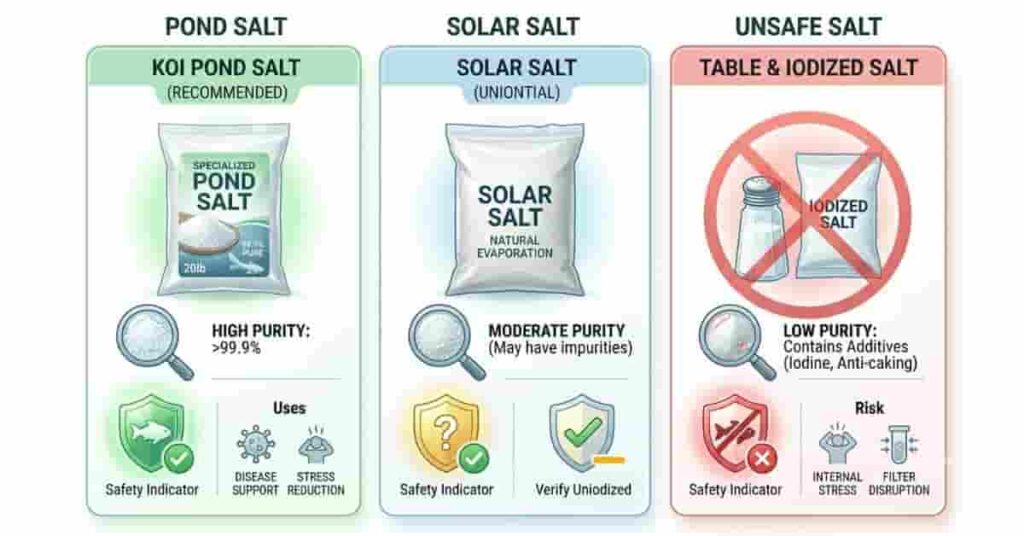
Choosing the right product is important when understanding what type of salt is safe for koi ponds. Not all salts are suitable for aquatic use, and the wrong type can introduce harmful additives or impurities. In koi pond care, purity matters more than anything else because fish are sensitive to contaminants and water chemistry changes.
Always select salt that is simple, clean, and designed for pond or water treatment use. Avoid anything with added chemicals, fragrances, or anti-caking agents. If you want a detailed breakdown of product options, see our guide: Best Pond Salt for Koi Ponds.
Pond Salt
Pond salt is the safest and most recommended option for koi ponds. It is specifically formulated for aquatic environments and typically contains high-purity sodium chloride with no unnecessary additives. This makes it predictable, stable, and safe for short-term use when needed.
Solar Salt
Solar salt is another acceptable option if it is 100% pure and free from additives. It is often used in water softening systems, but can also be used in ponds when labeled as pure sodium chloride. Always check the label carefully before using it in a koi pond.
Salts to Avoid
Avoid table salt, iodized salt, and any salt containing anti-caking agents or additives. These extra ingredients can harm fish, disrupt biological filtration, or introduce unwanted chemicals into the pond. Rock salt with impurities should also be avoided unless it is confirmed to be pond-safe.
Conclusion
This guide explained whether pond salt is necessary for koi ponds, as well as its benefits and risks. You learned when salt can help and when it should be avoided for better pond health.
The question of whether pond salt is necessary depends on your pond conditions, but it is not required for routine care. It should always be used carefully and only when needed.
Salt has benefits, but it also carries risks, such as buildup and plant damage. Always test water first and use it only for short-term support.
Accurate dosing and the right product go hand in hand. First, use our Pond Salt Calculator to determine exactly how much salt your pond needs, then visit our Best Pond Salt for Koi Ponds guide to find the safest and highest-quality option for your koi.

Michael Brooks and Sarah Lane are the co-founders of the Pond Pump Team, a trusted U.S.-based group helping homeowners and landscapers build better ponds and water features. Michael, an experienced pond engineer from Oregon, has worked for over 12 years on pump sizing, flow systems, and water circulation. Sarah, a pond designer from Colorado with nine years of experience, focuses on eco-friendly and easy-to-maintain pond and waterfall designs. Together, they’ve completed more than 180 pond projects and created tools like the Pond Pump Calculator and Pond Liner Calculator to make pond planning simple, accurate, and sustainable.
Need help with your pond setup? Contact the Pond Pump Team for expert advice and reliable solutions.