Introduction
Ever wondered if adding pond salt could actually harm your fish instead of helping them?
For many beginners in the USA, pond salt is a simple but misunderstood treatment for fish ponds. Used correctly, it supports fish health and reduces stress. Used incorrectly, it can quickly cause a serious water imbalance.
This guide to using pond salt safely will walk you through the correct method from start to finish. You will learn exact steps, proper pond salt dosage, and safe adding techniques. We will also cover common mistakes and how to avoid them using simple tools like a calculator.
Whether you maintain koi, goldfish, or backyard pond fish, correct salinity matters more than most people realize. And small measurement errors can lead to unnecessary stress or even fish loss. That’s why understanding the right process is essential before adding anything to your water.
Before adding any salt, use our Pond Salt Calculator to determine the correct dosage for your pond and avoid costly mistakes. Once you’ve calculated the correct dosage, it’s equally important to choose a high-quality product. Our Best Pond Salt for Koi Ponds guide compares trusted brands to help you select a safe option for your pond.
What Is Pond Salt Used For?
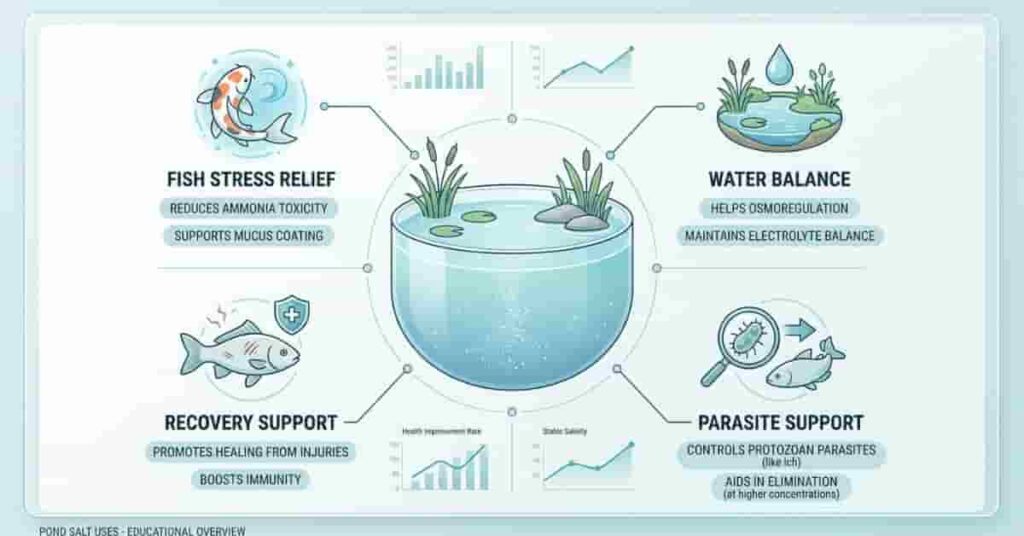
Pond salt plays a key role in keeping fish healthy when water conditions change. When used correctly, pond salt is an important part of pond care for beginners in the USA. It is not a cure-all, but it helps fish handle stress and recover from minor health issues. Many pond owners use it during seasonal changes or after fish transport.
Pond salt mainly supports fish by reducing stress. It helps fish regulate fluids in their bodies, especially when water quality shifts. This makes it useful after water changes, handling, or shipping stress. It does not replace good filtration or clean water, but it provides fish with extra support in tough conditions.
Another common use is short-term fish support during illness or recovery. It can help reduce external parasites in mild cases and improve overall resilience. However, it should never replace proper diagnosis or treatment when fish show serious symptoms. Always combine it with stable water conditions.
Pond salt also helps maintain temporary water balance support. It can improve osmoregulation, which keeps fish stable in changing environments. This is why pond owners often rely on it as a supportive tool rather than a permanent solution.
For a deeper understanding, you can link this section to your guide, “What Is Pond Salt?” After calculating the right amount, make sure you’re using a high-purity product designed for pond fish. Our Best Pond Salt for Koi Ponds guide reviews trusted brands and explains which options are best for koi ponds.
Step-by-Step Guide on How to Use Pond Salt
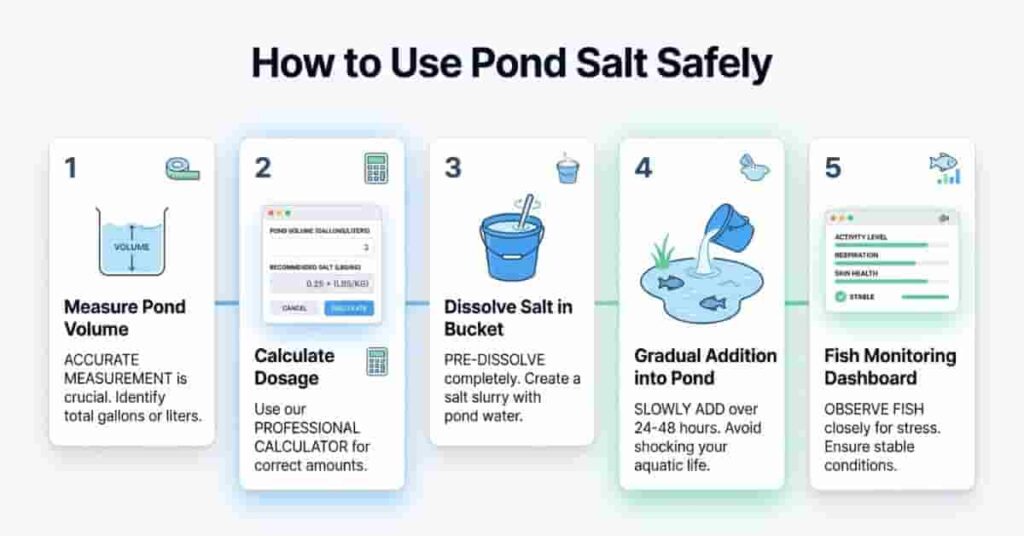
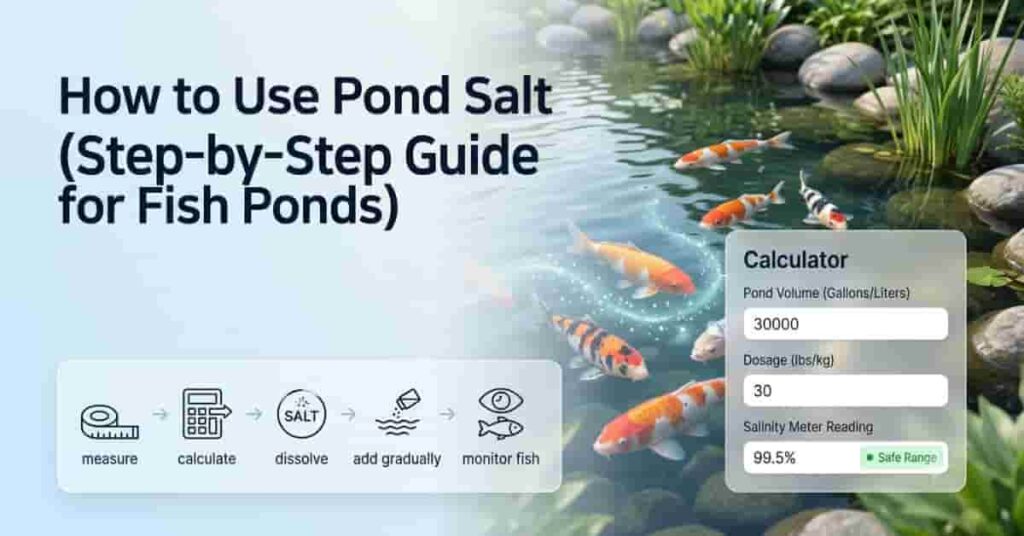
Understanding how to use pond salt correctly starts with a simple but careful process. Many beginners in the USA make mistakes by guessing the amount or adding salt too fast. This can stress fish and disrupt the pond’s balance. A proper step-by-step method keeps your fish safe and ensures the salt works as intended. Follow each step in order for the best results.
Step 1 – Measure Your Pond Volume
Start by measuring your pond volume accurately. This is the most important step because every dosage depends on the water size. Even small errors can lead to overdosing or underdosing. Use length, width, and depth to estimate the volume in gallons or liters.
For detailed help, you can link this section internally to: How Much Salt to Add to a Pond.
Step 2 – Calculate Correct Salt Dosage
Once you know your pond’s volume, calculate the correct amount of salt. Never guess the dosage. Use a reliable calculator to match salinity levels with your pond size. This ensures safe and controlled dosing.
Step 3 – Dissolve Salt Before Adding
Always dissolve pond salt in a bucket of pond water before adding it. This prevents undissolved crystals from settling at the bottom. Direct dumping can burn fish gills or create salty hotspots in the water. Mix until fully dissolved for safe distribution.
Step 4 – Add Salt Gradually
Do not add all the salt at once. Divide the total dose into 2–3 stages over several hours. This gradual method helps fish adjust slowly to changing salinity. Sudden changes can shock sensitive species like koi or goldfish.
Step 5 – Monitor Fish Behavior
After adding salt, observe your fish closely for at least 24 hours. Watch for signs of stress such as gasping, unusual swimming, or hiding. Healthy fish should remain active and calm. Monitoring ensures early detection of any imbalance and allows quick correction if needed.
How to Add Pond Salt Safely
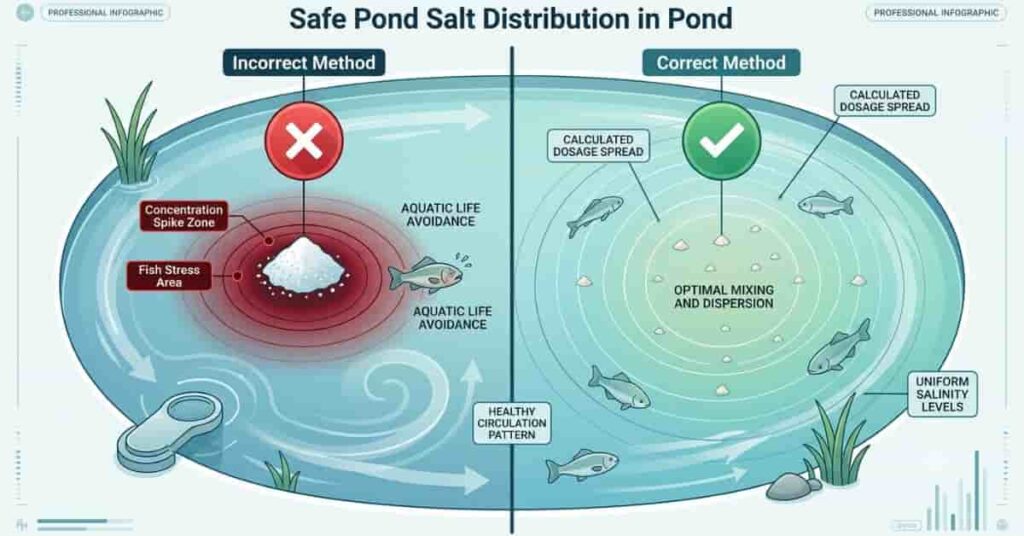
Knowing how to add pond salt safely is just as important as calculating the right dose. Many pond owners in the USA make the mistake of rushing this step. Poor application can create salt pockets that stress fish and damage water balance. A careful approach ensures even distribution and protects sensitive fish like koi and goldfish.
Never dump pond salt directly into one spot. This creates a high-salinity zone that can burn fish gills and harm beneficial bacteria near the bottom. Instead, always spread the salt across the pond or dissolve it first before adding. This keeps the concentration balanced throughout the water.
Distribute the salt evenly across the pond surface. You can walk around the edges and slowly pour the dissolved salt solution into different areas. This helps the salt mix naturally with water movement and filtration flow. Good circulation ensures faster and safer mixing without stressing fish.
Avoid sudden salinity spikes at all costs. Fish need time to adjust to changes in water chemistry. Adding salt too quickly can cause shock, especially in small or shallow ponds. That’s why gradual application works best alongside aeration and stable water conditions.
How Often to Add Pond Salt?
Understanding how often to add pond salt is important for keeping your pond stable and safe. There is no fixed schedule for adding pond salt in most ponds. Beginners in the USA often assume it should be added weekly or monthly, but that can lead to over-salting. Instead, dosing should always depend on actual pond conditions, not a routine calendar.
The need for pond salt usually varies with water changes. When you replace or top up pond water, the salt concentration drops. In that case, you may need to re-dose based on the new water volume. If you are not doing water changes, there is often no need to add more salt at all. Constant dosing without reason can slowly build up harmful salinity levels.
Another factor is the treatment purpose. If you are using salt for short-term stress or recovery in fish, add it only during that treatment period. Once the issue is resolved, you should stop adding salt. It should not be treated as a permanent additive in a healthy pond.
Avoid unnecessary repeated dosing because salt does not evaporate. It stays in the water until it is removed through water changes or dilution. Over time, repeated additions can create a long-term imbalance that affects fish, plants, and beneficial bacteria.
When You Should Recheck Salt Levels
You should recheck salt levels after any significant water change or rainfall. Heavy rain can dilute pond water and reduce salinity. It is also important to test levels after completing a treatment cycle. This ensures you are not leaving excess salt behind.
Regular testing helps maintain a safe balance and prevents accidental overdosing. A simple salinity meter or test kit can give accurate readings in minutes. Always base your next dose on real measurements, not assumptions.
How Long Does Pond Salt Stay in Water?
Understanding how long pond salt stays in water helps you manage pond health more safely. Pond salt behaves differently from many other pond treatments. Once you add it, it does not disappear on its own. This surprises many beginners in the USA, especially those expecting it to fade like chemicals or treatments.
Salt does not evaporate from pond water. It remains dissolved in the water until something physically removes it. That means rain, evaporation, or time alone will not reduce salt levels. The only natural way salt leaves the system is through water removal and replacement.
The main way salt is reduced is through water changes. When you drain part of the pond and refill it with fresh water, you dilute the salt concentration. The more water you replace, the lower the salinity becomes. This is why regular maintenance plays a key role in controlling long-term salt buildup.
Because salt stays in the water, testing becomes very important. Without checking levels, it is easy to accidentally over-salt your pond over time. A simple salinity test kit or meter helps you track changes accurately and avoid harmful buildup for fish and plants.
For better accuracy, you can link this section internally to: How to Test Pond Salt Levels.
Can You Add Too Much Pond Salt?
Yes, you can add too much pond salt, and it is a common mistake among beginners. When learning, you can add too much pond salt; it is important to understand that salt may help fish in small, controlled amounts. But excess levels quickly turn harmful. In the USA, many pond owners overestimate dosage and end up stressing their fish instead of helping them. Even a small miscalculation can change water chemistry and create long-term problems.
Overdosing Effects on Fish
Too much salt puts direct stress on fish bodies. It forces fish to work harder to balance fluids, which can lead to weak behavior and breathing issues. You may notice fish staying near the surface, gasping, or avoiding movement. Sensitive species like koi and goldfish are especially affected. In severe cases, overdosing can become life-threatening if not corrected quickly.
Plant Damage
Aquatic plants do not tolerate high salinity well. Excess pond salt can slow growth, damage leaves, or even kill delicate plants. This reduces natural oxygen levels and disrupts the pond’s balance. Healthy plant life is important for filtration, so the misuse of salt can indirectly harm fish by disrupting the ecosystem.
Long-Term Salt Build-Up
Salt does not disappear on its own. If you keep adding it without proper water changes, it builds up over time. This slow accumulation often goes unnoticed until fish start showing stress. Long-term salt buildup also reduces beneficial bacteria activity, which can impact overall water quality.
Recovery from Over-Salting
If you suspect over-salting, act quickly. The safest method is partial water changes over time. Replace small amounts of water to gradually dilute the salt concentration instead of making sudden changes. This prevents additional shock to fish. Always retest water after each change to ensure safe recovery.
Common Mistakes When Using Pond Salt
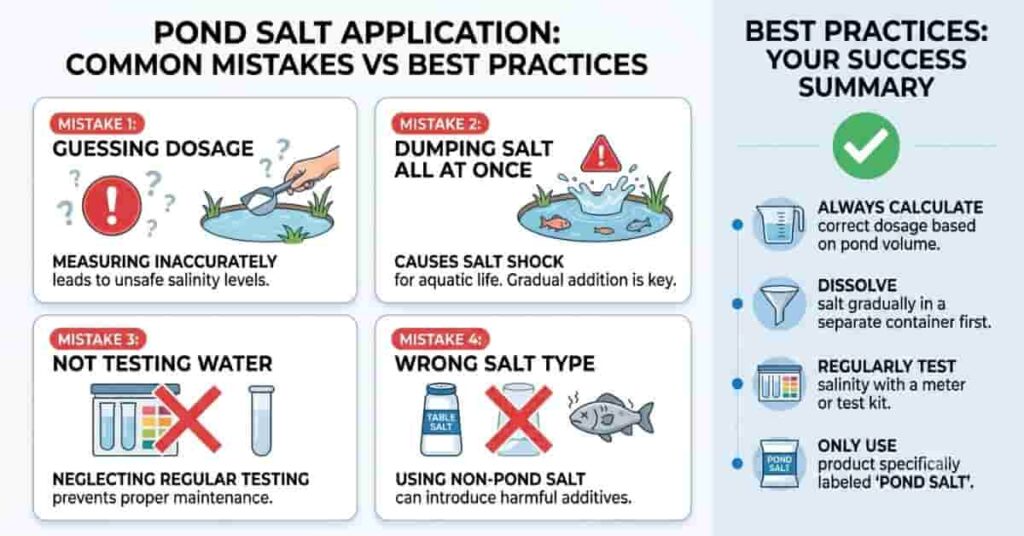
Many pond owners struggle with how to use pond salt safely because small mistakes can quickly affect fish health. In the USA, most issues come from guessing, rushing, or skipping basic water checks. Pond salt is useful, but only when applied with care and accurate measurement. Avoiding these common mistakes keeps your pond stable and your fish stress-free.
Guessing Dosage Instead of Calculating
One of the biggest mistakes is guessing how much salt to add. Every pond is different, so volume matters. Even a small error can lead to overdosing or underdosing. Always calculate based on the pond size rather than relying on rough estimates. This ensures safe and controlled salinity levels.
Adding Salt All at Once
Adding all the pond salt at once is risky. It creates sudden salinity changes that can shock fish. Sensitive species like koi may react badly to rapid water changes. Instead, always divide the dose into stages so fish can adjust slowly and safely.
Not Testing Water
Skipping water tests is another common problem. Without testing, you cannot know the actual salt level in your pond. This increases the risk of repeated dosing and long-term buildup. Regular testing helps you stay within safe limits and avoid a hidden water imbalance.
Using the Wrong Type of Salt
Not all salt is safe for ponds. Some types contain additives or anti-caking agents that can harm fish and plants. Always choose pond-safe salt designed for aquatic use. Using the wrong type can reduce water quality and create unnecessary risks.
For better guidance, you can link this section internally to: Best Pond Salt for Koi Ponds.
Safety Tips for Using Pond Salt
Using pond salt correctly is key to keeping fish healthy and stable. If you are learning how to use pond salt safely, focus on simple habits that reduce stress on your pond ecosystem. In the USA, many beginners improve their results simply by following safe handling steps rather than changing the dosage. Small actions make a big difference in fish health and water balance.
Always Pre-Dissolve Salt
Never add dry salt directly into the pond. Always dissolve it in a bucket of pond water first. This prevents sharp salt crystals from sitting at the bottom and harming fish or plants. Pre-dissolving also helps the salt disperse evenly upon addition, creating a safer environment for aquatic life.
Use Gradual Dosing
Do not add the full dose at once. Split it into smaller portions and add them over time. Gradual dosing allows fish to adjust slowly to changes in salinity. This reduces shock and keeps sensitive species like koi and goldfish stable during treatment or stress recovery.
Monitor Fish Reaction
After adding salt, always watch your fish closely. Look for changes in swimming behavior, breathing, or activity levels. Healthy fish should remain calm and active. Early observation helps you detect problems quickly and adjust water conditions before they become serious.
Avoid Frequent Unnecessary Use
Pond salt should not be a routine additive. Overuse can slowly build up salinity and harm the long-term balance of the pond. Only use it when needed, such as during stress, transport, or minor health support. Regular water testing helps you decide when it is truly required.
When Should You NOT Use Pond Salt?
Knowing how to use pond salt safely also means knowing when to avoid it completely. Many beginners in the USA assume pond salt is always helpful, but that is not true. In the wrong conditions, it can do more harm than good. You should use salt only when you clearly understand your water quality and your pond’s needs.
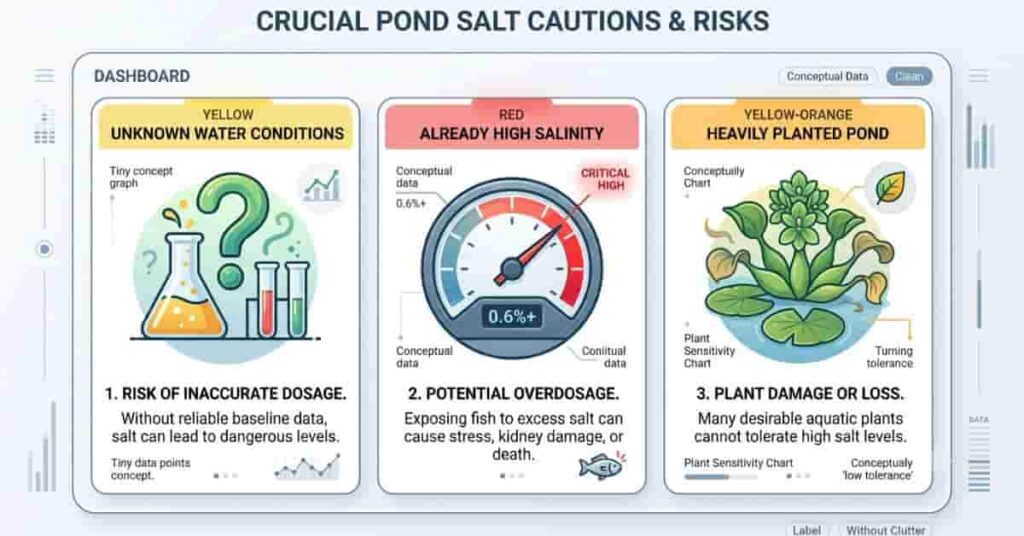
Unknown Water Conditions
Avoid adding pond salt if you do not know your current water parameters. Without testing, you cannot confirm existing salinity or water balance. Adding salt blindly can push levels into a dangerous range. Always test first so you make informed decisions instead of guessing.
Already High Salinity
Do not add more salt if your pond already has elevated salinity levels. Extra salt can quickly stress fish and reduce oxygen efficiency in water. Over time, this can lead to chronic health issues in koi and other pond fish. If levels are high, focus on dilution through partial water changes instead.
Heavily Planted Ponds
Be careful using pond salt in ponds with dense aquatic plants. Many plants cannot tolerate higher salinity and may weaken or die. This affects oxygen production and natural filtration. In planted ponds, salt should only be used in very controlled, minimal amounts when absolutely necessary.
Best Tools to Measure Pond Salt
Accurate measurement is key to using pond salt safely. Without proper tools, it is easy to underdose or overdose, which can stress fish and damage pond balance. Beginners in the USA often rely on guesswork, which leads to long-term problems. Using the right tools ensures your pond stays within a safe salinity range and your fish remain healthy.
Salinity Meter
A salinity meter is one of the most reliable tools for checking salt levels. It provides quick, accurate readings so you can see exactly how much salt is in the water. Many digital meters are simple to use and suitable for home pond owners. Just dip the probe into the water and wait for the reading. This helps you make confident decisions before adding more salt.
Test Kits
Test kits are another affordable option for monitoring pond salt levels. They usually come in liquid drop form or strips. You mix or dip them into pond water and compare the color change to a chart. While they may not be as precise as digital meters, they are still useful for regular checks and routine maintenance.
For better accuracy and step-by-step guidance, you can link this section internally to: How to Test Pond Salt Levels.
Use the calculator before adding salt
Before you add anything to your pond, always use a calculator. It is the safest way to understand the exact amount needed for your water volume. When learning how to use pond salt safely, accuracy is not optional. Even a small mistake can affect fish health and pond balance, especially for beginners in the USA.
A pond salt calculator helps you avoid guesswork. It uses your pond size and target salinity to give precise results. This improves accuracy and reduces the risk of overdosing. Instead of relying on estimates, you get a clear, safe dose every time.
Using a calculator also improves safety. It protects sensitive fish like koi and goldfish from sudden changes in water chemistry. Stable dosing means less stress and better long-term health for your pond ecosystem.
Most importantly, it prevents overdosing. Too much salt can build up over time and harm fish, plants, and beneficial bacteria. A calculator keeps your dosing controlled, consistent, and based on real data.
Conclusion
This guide explained how pond salt supports fish health and improves water stability. You learned safe dosing, correct application, and common mistakes to avoid. We also covered when to use it and when to avoid it completely.
When applying pond salt safely, accuracy and patience always matter most. Never guess the dosage, and always avoid sudden changes in salinity. Simple tools like a calculator and a test kit make a big difference in keeping your pond stable and healthy.
Remember to test water regularly and monitor fish behavior after every treatment. These small habits protect your fish from stress and long-term water imbalance.
If this guide helped you, share it with other pond owners or leave your experience in the comments. You can also explore more tools and guides on our website to keep your pond in top condition.
Always calculate your pond salt dosage first using our Pond Salt Calculator, then choose a high-quality product designed for koi ponds. Our Best Pond Salt for Koi Ponds guide compares trusted brands to help you make a safe and informed choice.

Michael Brooks and Sarah Lane are the co-founders of the Pond Pump Team, a trusted U.S.-based group helping homeowners and landscapers build better ponds and water features. Michael, an experienced pond engineer from Oregon, has worked for over 12 years on pump sizing, flow systems, and water circulation. Sarah, a pond designer from Colorado with nine years of experience, focuses on eco-friendly and easy-to-maintain pond and waterfall designs. Together, they’ve completed more than 180 pond projects and created tools like the Pond Pump Calculator and Pond Liner Calculator to make pond planning simple, accurate, and sustainable.
Need help with your pond setup? Contact the Pond Pump Team for expert advice and reliable solutions.