Introduction
Have you ever wondered if your pond salt levels are actually safe for your fish, or are you just guessing? One small mistake can quickly stress or even harm your pond life.
Understanding how to test pond salt levels is essential for every pond owner, especially beginners in the USA, who rely on trial and error. Many people add salt without checking the actual concentration, which can lead to overdosing or ineffective treatment. This is where accuracy becomes critical for fish health and long-term pond balance.
In this guide, you will learn simple, reliable ways to measure salt levels using tools such as a salinity meter, test kits, and basic reading methods. We will also explain how calculators can help estimate salt dosage, but why verification is still necessary.
By the end, you will know exactly how to keep your pond water safe, stable, and properly balanced without guesswork using the right testing tools and a pond salt calculator.
Once you know your pond’s actual salt concentration, the next step is choosing a high-quality product. If you’re unsure which one to buy, explore our guide to the Best Pond Salt for Koi Ponds, where we compare trusted brands and explain which options are safe for koi and other pond fish.
Why You Need to Test Pond Salt Levels
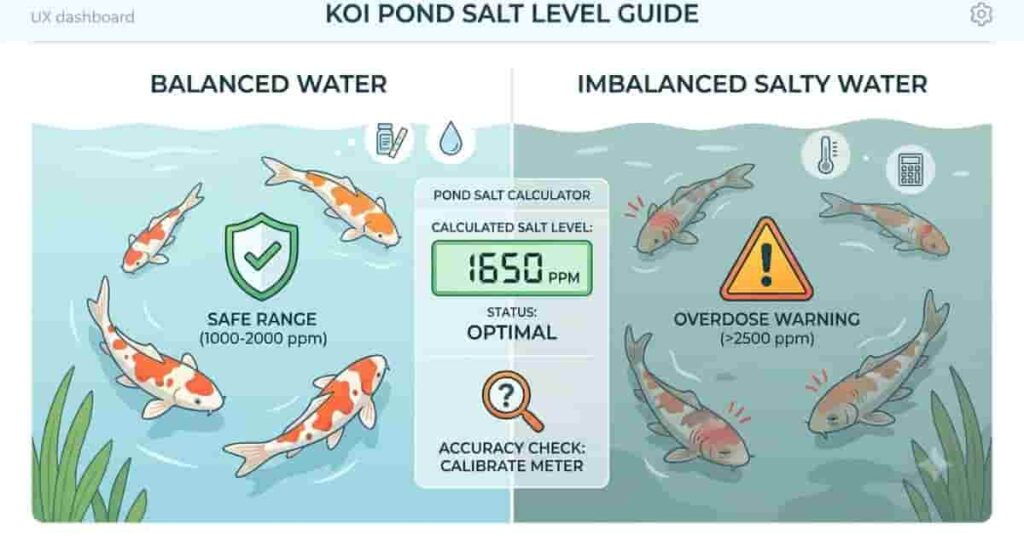
Testing pond salt levels protects your fish and keeps water conditions stable. Even small mistakes in salt dosing can quickly stress fish or reduce the effectiveness of treatment. This is why knowing how to test pond salt levels matters for every pond owner, especially beginners who often rely on guessing.
One of the biggest risks is salt overdose. Too much salt can damage fish gills and disrupt their natural balance. It can also harm beneficial bacteria that keep your pond clean. On the other hand, too little salt may be ineffective at treating stress, parasites, or poor water conditions.
Testing also ensures fish safety during seasonal changes or after water replacement. Water dilution can shift salt concentration without warning. Regular checks help you catch these changes early.
Accurate testing improves treatment results. When you know the exact levels, you can adjust salt with confidence rather than by guesswork. This is especially important for koi and goldfish ponds where precision matters.
Always test before adding new salt, not after. This prevents accidental buildup and keeps levels stable.
How to Test Salt Level in a Pond
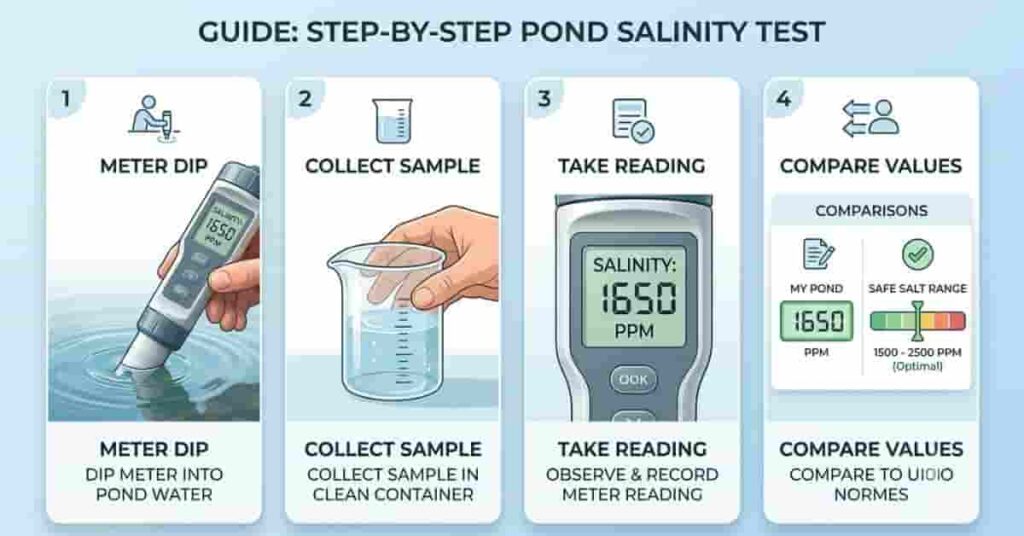
Learning how to test the salt level in pond water is simple when you follow the right steps. A proper method helps you avoid guessing and keeps fish safe. It also gives you more control over water quality during treatments or routine maintenance.
Step 1 – Use a Salinity Meter
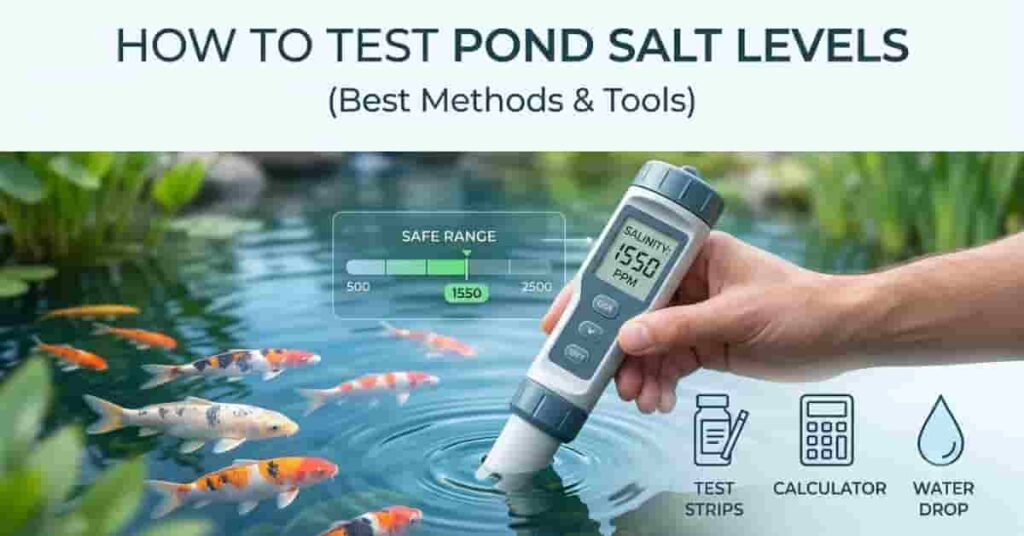
A digital salinity meter gives the most accurate reading. Turn it on and calibrate it if needed. Then place the probe into clean pond water. Wait a few seconds for the reading to stabilize. This tool quickly shows salt concentration in PPM or percentage. It is the preferred method for koi and goldfish ponds because it reduces human error.
Step 2 – Take a Water Sample Properly
Always collect water from a few inches below the surface. Avoid scooping from the top layer, as it may not reflect true conditions. Do not take water near filters or waterfalls. These areas can give false readings due to constant movement. Use a clean container if your meter requires a sample instead of direct dipping.
Step 3 – Read PPM or Salinity Percentage
Your meter will show results in PPM or percentage. PPM means “parts per million,” while percentage shows the salt ratio in water. For example, 0.1% equals 1,000 PPM. Understanding this helps you avoid over- or underdosing salt treatments.
Step 4 – Compare With Safe Levels
Compare your reading with the recommended pond salt ranges. This helps you decide if an adjustment is needed. If levels are off, correct slowly to avoid shocking fish. For detailed guidance, see “How Much Salt for a Koi Pond.“
Pond Salinity Test Methods
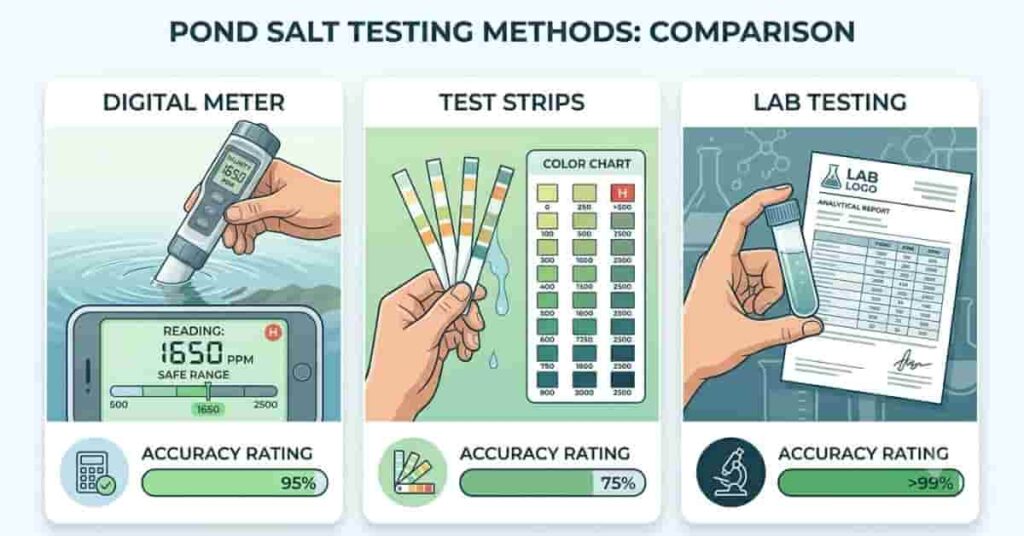
A proper pond salinity test helps you understand how much salt is actually in your water. Different methods yield varying levels of accuracy, so choosing the right one depends on your pond setup and experience level. Beginners often start with simple tools, while koi keepers prefer more precise tools for long-term control.
Digital Salinity Meters
Digital salinity meters offer the best accuracy for pond owners. They measure salt levels instantly in PPM or percentage. You simply dip the probe into water or test a sample, depending on the model. These meters reduce guesswork and give consistent readings. They are ideal for koi ponds, fish treatment, and regular maintenance where precision matters most.
Test Strips
Test strips are a basic and budget-friendly option. You dip the strip into pond water and compare the color change with a chart. While easy to use, they are less accurate than digital meters. They work best for quick checks, not precise dosing. Many beginners use them as a starting point before upgrading to better tools.
Lab Testing (Optional)
Lab testing is the most accurate, but it is rarely used for home ponds. You send a water sample to a lab, and they analyze salt concentration in detail. This method is useful for professional setups or serious water quality issues. However, it takes time and costs more, so most pond owners don’t rely on it regularly.
Pro Tip
Use test strips only for quick checks, but confirm results with a digital meter for accuracy.
Koi Pond Salinity Meter Explained
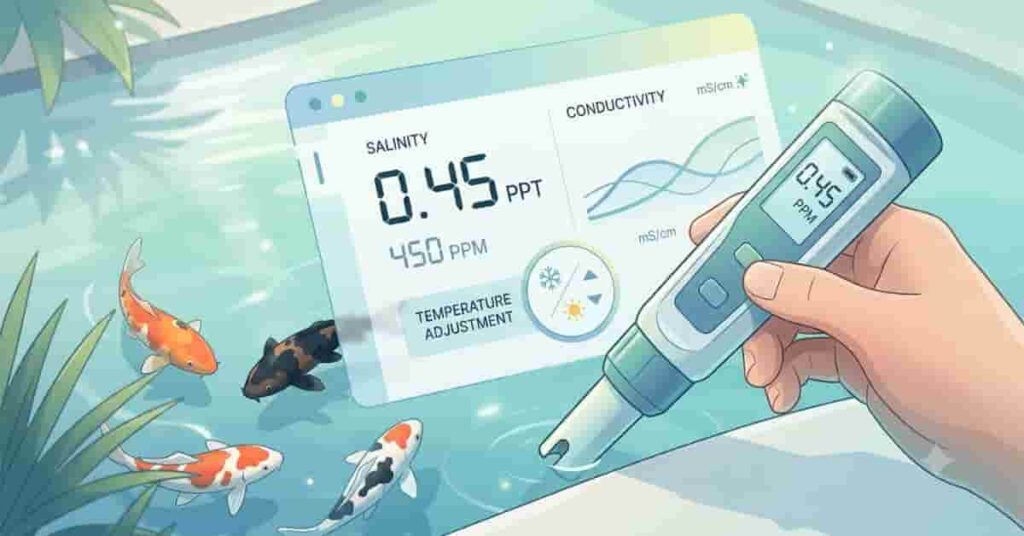
A koi pond salinity meter is a digital tool that measures the salt content in your pond water. Koi owners use it to maintain safe, stable water conditions. Even small changes in salt levels can affect koi health, so accuracy is very important.
This tool helps you avoid guesswork and maintain the right balance during treatment or routine care. It is especially useful in ponds where salt is added for stress control or parasite prevention.
What It Is
A koi pond salinity meter is a handheld device with a probe or sensor. It measures salt concentration in water and displays results in PPM or as a percentage. Most modern meters are waterproof and easy to use. You simply dip the probe into the pond or a water sample and wait for the reading.
How It Works
The meter measures electrical conductivity in water. Salt increases conductivity, so the device converts that signal into a readable value. This gives you a quick and accurate idea of salt concentration. Some advanced models also include temperature compensation for better accuracy.
Why Koi Keepers Use It
Koi fish are sensitive to sudden water changes. That’s why keepers rely on salinity meters instead of guessing. These tools help prevent overdosing and ensure treatment levels stay safe. They also support long-term pond health by ensuring consistent, reliable monitoring.
Pro Tip
Check salinity before and after any water change to avoid sudden shifts that can stress koi.
Salt Meter for Pond – Is It Necessary?
A salt meter for a pond is not always required, but it becomes very useful when accuracy matters. Many pond owners start without one and rely on estimates or calculators. However, as fish care becomes more serious, testing tools become important for safety and control.
Beginners vs Advanced Users
Beginners often rely on simple methods like pond salt calculators or test strips. These tools give a rough idea of salt levels and are easy to use. They work fine for light maintenance and small ponds.
Advanced users, especially koi keepers, prefer digital salt meters. They need precise readings because koi are sensitive to sudden changes. A small mistake in salt levels can quickly affect fish health. That is why experienced pond owners invest in better testing tools.
When You Really Need It
You need a salt meter when you are doing regular treatments, managing large ponds, or keeping sensitive fish like koi. It is also important after water changes, rain dilution, or salt dosing. In these situations, guessing is risky and can lead to imbalance.
When a Calculator Is Enough
A pond salt calculator is enough for basic maintenance and first-time dosing. It helps estimate how much salt to add based on pond volume. However, it does not measure real-time conditions. That’s why it should be used as a starting point, not the final check.
For quick estimation, you can use the Calculator as a reference tool.
How to Measure Pond Salt Concentration
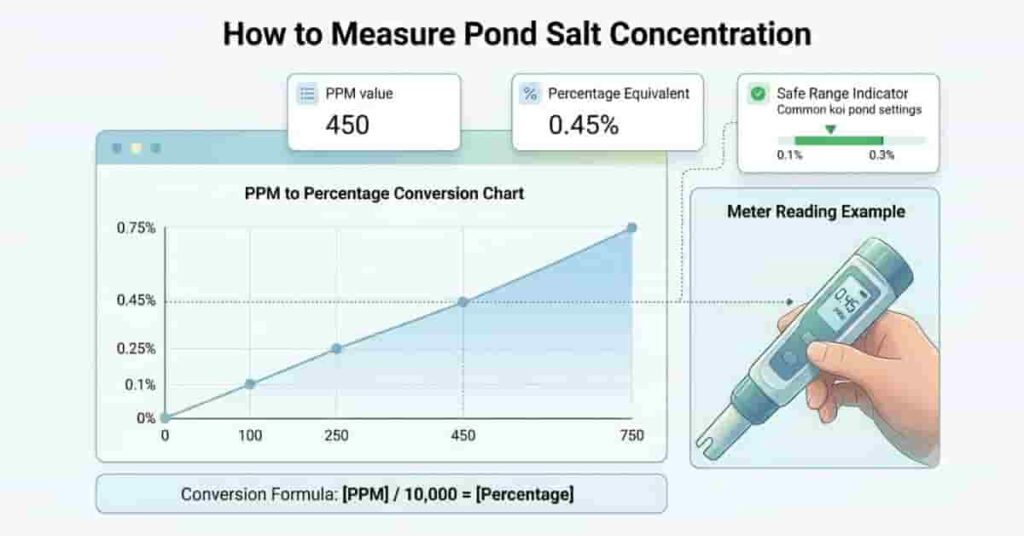
Understanding how to measure pond salt concentration helps you maintain safe, stable water conditions. Instead of guessing, you rely on clear readings to guide accurate dosing and prevent stress in fish. This is especially important for koi and goldfish ponds where even small changes matter.
PPM Concept
PPM stands for “parts per million.” It shows how much salt exists in one million parts of water. Higher PPM means more salt concentration. For example, many pond owners use 1,000 PPM as a reference for 0.1% salinity, while higher values indicate higher salinity.
Percentage Conversion
Salt levels are often expressed as percentages or PPM. You can easily convert between them for better understanding. A simple rule is: 0.1% equals about 1,000 PPM. This conversion helps when using different meters or calculators.
Knowing both formats is useful because some tools display percentages, while others show PPM. Understanding both ensures you never misread your pond’s actual condition.
Importance of Consistent Testing
Consistent testing is more important than one-time readings. Salt levels can change due to rain, evaporation, or water changes. Regular checks help you catch these shifts early and avoid sudden stress for fish.
Testing at the same time and location each time improves accuracy. It also helps you track trends rather than react to problems after they happen.
Common Mistakes When Testing Salt Levels
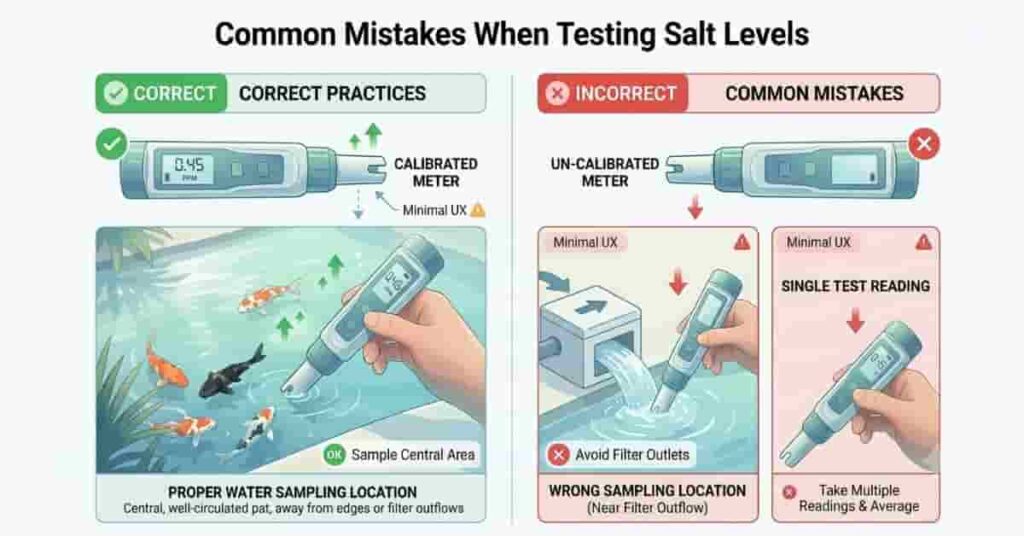
Even when you know how to measure pond salt concentration, small mistakes can still lead to wrong readings. These errors often cause overdosing or underdosing, which can stress fish and reduce treatment success. Understanding these issues helps you get more accurate results every time.
Not Calibrating Meter
A common mistake is using a digital salinity meter without calibration. Over time, meters lose accuracy if not adjusted properly. This leads to false readings and poor dosing decisions. Always calibrate your meter using the solution recommended by the manufacturer before testing pond water.
Testing Only Once
Many beginners test the water only once and assume the reading is final. This is risky because pond conditions can vary throughout the day. Temperature changes, water movement, and mixing can affect results. It is better to test multiple times and compare readings for consistency.
Wrong Water Sample Location
Taking water from the wrong spot can also distort results. Surface water near waterfalls or filters may not represent the full pond condition. Always take samples from a stable area, a few inches below the surface, where water is well mixed.
Ignoring Evaporation Effects
Evaporation slowly increases salt concentration in ponds because water is reduced, but salt remains. Many pond owners ignore this natural change. Over time, it can raise salt levels beyond expected levels, especially in hot weather. Regular testing helps you catch these gradual shifts early.
Ideal Pond Salt Levels You Should Compare Against
To get accurate results from any method for measuring pond salt concentration, you must compare readings with safe target levels. These ranges help you understand whether your pond is balanced, underdosed, or too salty. They also guide safe adjustments for koi and other pond fish.
Most pond owners use simple reference levels instead of complex calculations. These levels help you make quick decisions without stressing fish or damaging water quality.
- 0.1% — Safe maintenance range for everyday pond stability
- 0.2% — Moderate treatment level for stress support or mild issues
- 0.3% — Higher temporary level used only for short-term treatment
Staying within these ranges helps you avoid sudden changes that can shock fish. Always increase or decrease salt slowly rather than making large adjustments at once. This keeps your pond ecosystem stable and predictable.
For more detailed dosing guidance, you can check this internal resource: How Much Salt for a Koi Pond.
What Happens If Salt Levels Are Too High?
When salt levels go above safe limits, pond water becomes stressful for fish and unstable for the ecosystem. This is why accurate monitoring matters, especially when learning how to measure pond salt concentration. Even a small overdose can slowly harm fish health and reduce water quality.
Fish Stress Symptoms
High salt levels can quickly affect fish behavior and health. Koi and goldfish may show signs like rapid breathing, reduced activity, or staying near the surface. Their gills can also become irritated, making it harder for them to absorb oxygen. Over time, this stress weakens their immune system and increases their risk of disease.
Oxygen Imbalance Effects
Excess salt can disrupt oxygen balance in pond water. Fish may struggle to get enough oxygen even if the pond looks clean. In severe cases, they may gasp at the surface or gather near areas of water movement. This imbalance becomes more dangerous in warm weather when oxygen levels naturally drop.
Plant Damage Risks
Aquatic plants are also sensitive to high salt levels. Excess salt can damage roots, slow growth, or even kill delicate plants. This reduces natural filtration in the pond and affects overall water quality. A loss of plant life can also lead to algae growth and unstable conditions.
Best Tools for Measuring Pond Salt
Choosing the right tools makes a big difference when learning how to measure pond salt concentration. Some tools give fast estimates, while others provide high accuracy. Your choice depends on the pond size, fish type, and the precision of your readings.
Digital Salinity Meters
Digital salinity meters are the most accurate option for pond owners. They give instant readings in PPM or percentage and reduce human error. You simply dip the probe into the water and wait for a stable reading. These meters are ideal for koi ponds where precision is important for fish safety and treatment control.
Multi-parameter Water Test Kits
Multi-parameter test kits measure more than just salt. They often include checks for pH, ammonia, and other water conditions. This makes them useful for monitoring overall pond health. While not as fast as digital meters, they provide a broader picture of water quality, especially for beginners managing new ponds.
Basic Test Strips
Test strips are the simplest and most affordable option. You dip them into water and compare the color change with a chart. They are useful for quick checks but less accurate than digital tools. Many pond owners use them as a backup method rather than a primary testing tool.
For quality salt options that support stable pond conditions, you can also explore: Best Pond Salt for Koi Ponds.
Can You Rely Only on a Calculator?
A pond salt calculator is helpful, but it should not be your only tool when managing water quality. It provides a quick estimate but cannot show real-time pond conditions. This is important when learning to measure the concentration of pond salt safely and accurately.
A calculator works by using pond volume and target salt level. It helps you decide how much salt to add. However, it assumes ideal mixing and stable conditions, which do not always match real ponds. Rain, evaporation, and water changes can quickly change actual salinity.
A meter, on the other hand, gives real readings from your pond water. It shows the true salt concentration in PPM or percentage. This helps you confirm whether your dosing worked correctly or if adjustments are needed.
The best approach is to use both together. Start with a calculator to estimate the correct amount of salt. Then use a salinity meter to verify the final level. This combination reduces risk and keeps fish safer, especially in koi ponds where accuracy matters most.
You can use the (Calculator) as a starting point for quick dosing estimates.
Conclusion
In this guide, we covered the safest ways to manage pond salt levels. You learned testing methods, tools, and ideal ranges for fish health. We also explained common mistakes and why guessing can harm the balance of your pond.
Understanding how to test pond salt levels is essential for keeping koi and other fish safe. It helps you avoid overdosing, maintain stable water conditions, and improve treatment accuracy. Using a salinity meter gives precise results, while calculators help with quick dosing estimates. Together, they create the most reliable approach for pond care.
The best results always come from combining both tools instead of relying on one method alone.
If this guide helped you, share it with other pond owners or leave your experience in the comments. You can also explore more pond care resources on our website to keep your water healthy year-round. If you’re planning to add salt after testing your pond water, make sure you choose a product that’s safe for koi and free from harmful additives. Our Best Pond Salt for Koi Ponds guide reviews the top-rated options to help you buy with confidence.

Michael Brooks and Sarah Lane are the co-founders of the Pond Pump Team, a trusted U.S.-based group helping homeowners and landscapers build better ponds and water features. Michael, an experienced pond engineer from Oregon, has worked for over 12 years on pump sizing, flow systems, and water circulation. Sarah, a pond designer from Colorado with nine years of experience, focuses on eco-friendly and easy-to-maintain pond and waterfall designs. Together, they’ve completed more than 180 pond projects and created tools like the Pond Pump Calculator and Pond Liner Calculator to make pond planning simple, accurate, and sustainable.
Need help with your pond setup? Contact the Pond Pump Team for expert advice and reliable solutions.