Introduction
Have you ever added pond salt and expected algae to disappear overnight?
Many beginners assume salt is a quick fix for green, cloudy pond water. In reality, managing a healthy pond is more complex, especially for new pond owners in the USA who are still learning the basics of water balance. Algae growth is usually tied to nutrients, sunlight, and filtration issues, not just salt levels.
When people search for ” Does pond salt kill algae, they are often hoping for a simple solution. However, pond salt is not a dedicated treatment for algae. It may slightly slow algal growth under certain conditions, but it does not eliminate the root cause.
In this article, you will learn what pond salt actually does in pond water. We will also break down when it can help, when it can harm, and why water quality matters far more than salt alone.
By the end, you will clearly understand how to manage algae safely without risking fish, plants, or your pond’s biological balance. If you decide to use pond salt, a pond salt calculator can help you determine the correct amount for your pond and avoid costly mistakes. If you’re also unsure which pond salt products are actually safe to use, check out our Best Pond Salt for Koi Ponds guide, where we compare trusted brands and explain which options are suitable for koi ponds.
Does Pond Salt Kill Algae?
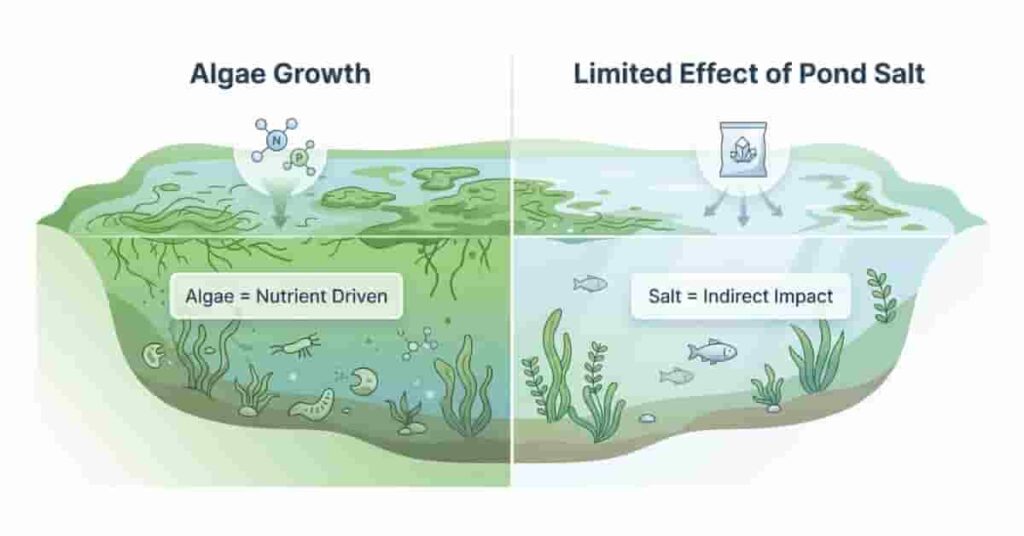
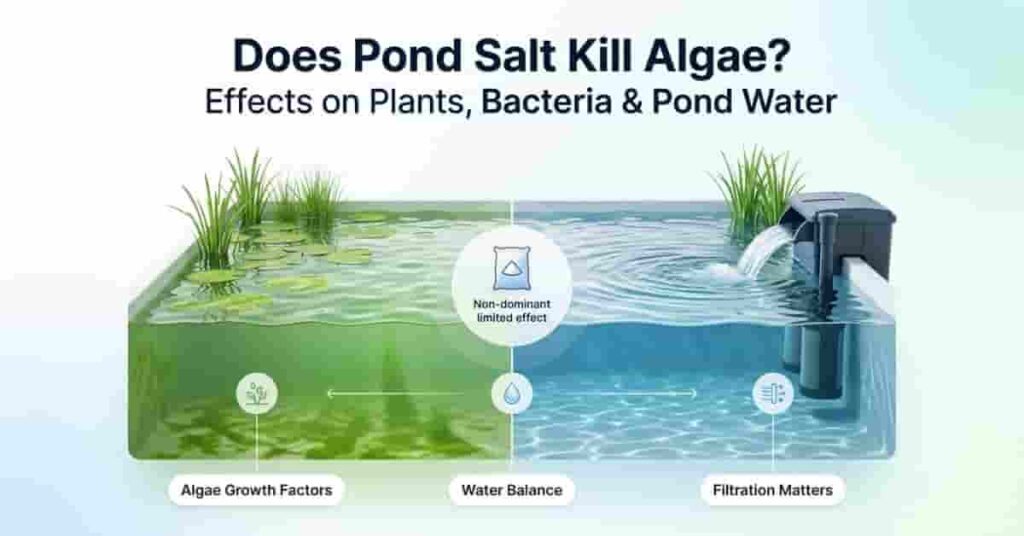
When you ask whether pond salt kills algae, the short answer is no in most pond setups. Pond salt does not work like a true algaecide. It cannot directly remove or destroy algae at the source.
Instead, its effect is limited and mostly indirect. In some cases, salt can slow algae growth slightly by creating mild stress in the water environment. However, this only happens under certain conditions and is not consistent in real pond systems.
The impact of pond salt also depends on concentration. Lower levels usually have almost no effect on algae. Higher levels may influence algae behavior, but they can also stress fish, plants, and beneficial bacteria. Because of this, salt is not a reliable or safe long-term method for controlling algae.
Algae growth is mainly driven by nutrients, sunlight, and poor filtration. If these factors are not managed, algae will continue to return even if salt is added. That is why most pond experts avoid using salt as a primary solution for algae.
In simple terms, pond salt is a supporting tool, not a treatment. It may help slightly in specific situations, but it does not solve the root cause of algae problems.
Pro Tips
- Focus on reducing nutrient inputs rather than relying on chemicals.
- Use salt only for specific fish-stress situations, not for algae control.
- Keep filtration strong to prevent algae from returning.
Does Salt Stop Algae Growth?
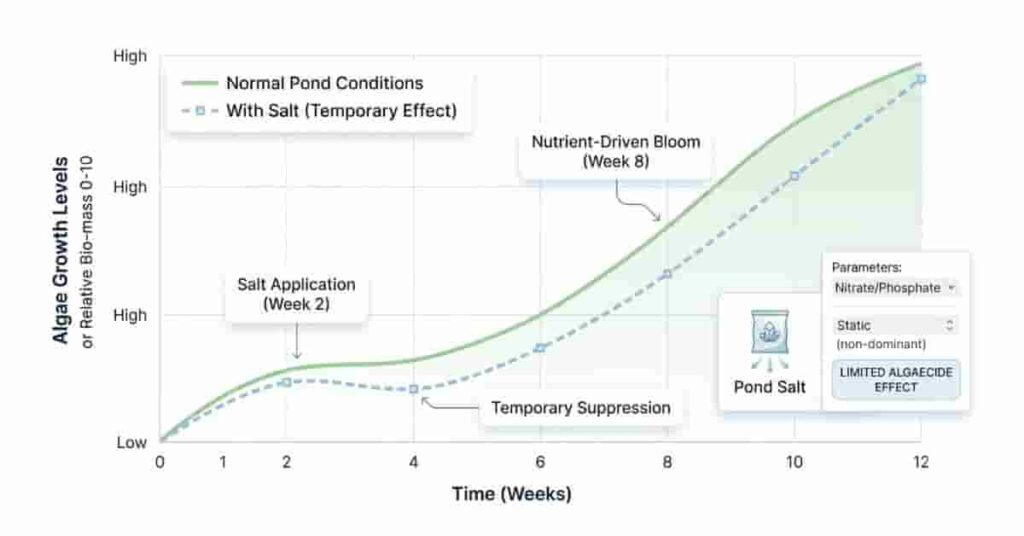
When looking at whether salt stop algae growth, the answer is only partially and not in a reliable way. Salt can slow algae in some cases, but it does not stop it completely or permanently.
High salinity levels can stress algal cells. This may temporarily reduce their growth rate. However, this effect is inconsistent and depends heavily on water conditions. In many ponds, algae adapts quickly, especially if nutrients and sunlight remain high.
The main issue is that salt does not target algae specifically. It affects all living organisms in the pond. Fish, aquatic plants, and beneficial bacteria can also become stressed when salinity rises. This makes salt a risky option for long-term algae control.
Even if algae growth slows, the root causes remain the same. Excess nutrients, poor filtration, and strong sunlight will continue to support algae growth. Once conditions return to normal, algae usually come back quickly.
Because of this, salt is not a dependable method for controlling algae growth. It may offer temporary suppression in controlled situations, but it should never replace proper pond management.
Takeaways
- Salt may slow algae growth under high salinity conditions.
- It does not stop algae permanently.
- Fish, plants, and bacteria can also be affected.
- Long-term control depends on water balance, not salt.
Pond Salt as an Algae Treatment
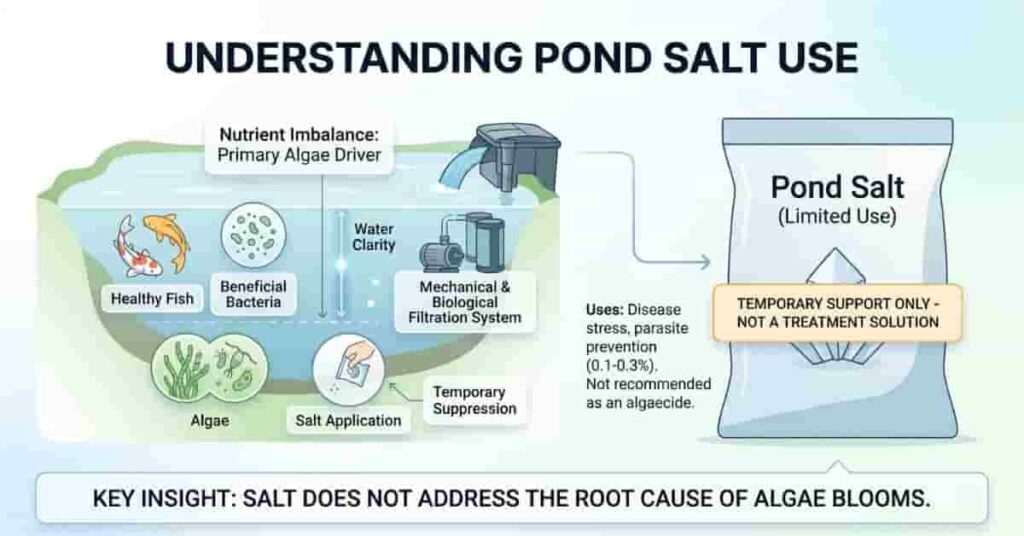
When people search for pond salt algae treatment, they often expect a simple solution for green pond water. Some pond owners use salt because it feels natural, affordable, and easy to apply compared to chemical algaecides. In a few situations, salt may slightly slow algae activity by changing water conditions, but this effect is usually short-lived.
The key point is that pond salt only offers temporary suppression. It does not remove algae or fix the reason it grows. Once water conditions return to normal, algae often come back quickly. That is why results are inconsistent and unpredictable for most ponds.
Salt also does not replace proper pond maintenance. Healthy ponds rely on balanced nutrient levels, effective filtration, and controlled sunlight exposure. If these factors are ignored, algae will continue to grow even with repeated salt applications. Over time, relying on salt can also increase stress on fish, aquatic plants, and beneficial bacteria.
For safer, more effective use, always follow proper dosing and application before adding salt. You can learn more here: How Much Salt to Add to a Pond.
Pond Salt and Aquatic Plants
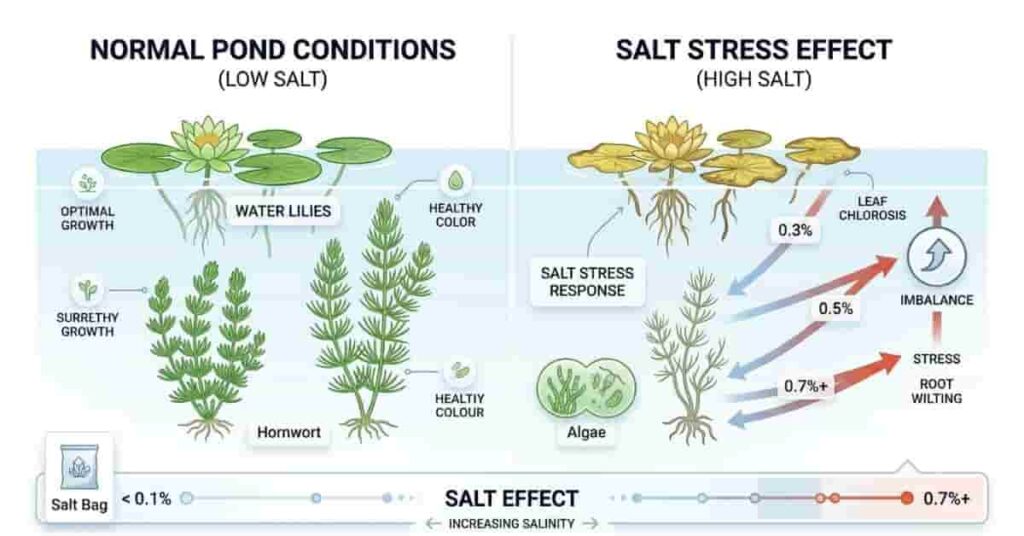
When studying pond salt and aquatic plants, one important fact stands out. Most aquatic plants are sensitive to salt, even at low levels. Unlike fish, plants cannot easily adjust to changes in water salinity.
Salt can weaken plant health over time. It may slow growth, damage leaves, and reduce the plant’s ability to absorb nutrients. In planted ponds, this creates an imbalance because plants play a key role in naturally controlling algae. When plants suffer, algae often get more space to grow.
This is why pond owners with decorative or heavily planted ponds must be very careful. Even small or repeated salt use can gradually stress the ecosystem. Instead of improving water quality, it may reduce the natural filtration that plants provide.
Effects on Floating Plants
Floating plants like water lettuce and duckweed are especially vulnerable. They absorb nutrients directly from the water surface, which also exposes them to salt stress more quickly. In salted water, these plants may turn yellow, shrink, or stop spreading.
Because floating plants help block sunlight, damaging them can indirectly increase algae growth. This creates a cycle in which salt use may actually worsen algal problems over time.
Effects on Submerged Plants
Submerged plants such as hornwort and anacharis are also affected by salt exposure. These plants absorb nutrients through their leaves, making them sensitive to changes in water chemistry. Salt can reduce their growth rate and weaken their structure.
Over time, stressed submerged plants may decay, releasing more nutrients back into the water. This can unintentionally feed algae and make the pond harder to balance.
Pond Salt and Water Quality
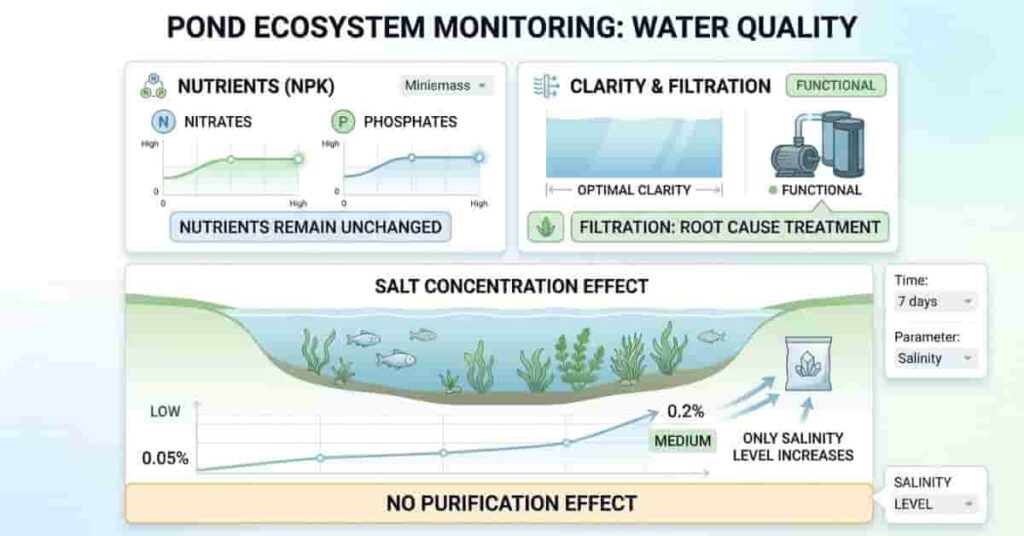
When looking at pond saltwater quality, many beginners assume salt helps “clean” pond water. In reality, pond salt does not clean or purify water in any way. It does not remove dirt, waste, or dissolved nutrients that cause algae growth.
Salt only changes the water’s salinity. It does not reduce nitrates, phosphates, or organic debris. These are the main factors that control algae growth. If these nutrients stay high, algae will continue to grow even if salt is added.
Another important concern is water balance. Overusing salt can create stress in the pond ecosystem. Fish, plants, and beneficial bacteria may struggle when salinity changes too much. This can weaken the natural biological processes that keep water stable.
In some cases, repeated salt use may also lead to long-term imbalance. Instead of improving water quality, it can reduce the pond’s natural ability to self-regulate. This is why salt should never be seen as a water treatment solution.
Healthy pond water depends on filtration, oxygen levels, and nutrient control—not salt.
Pro Tips
- Focus on removing excess waste instead of adding chemicals.
- Test water regularly to track nutrient levels.
- Maintain strong biological filtration for stable water quality.
Does Pond Salt Affect Beneficial Bacteria?
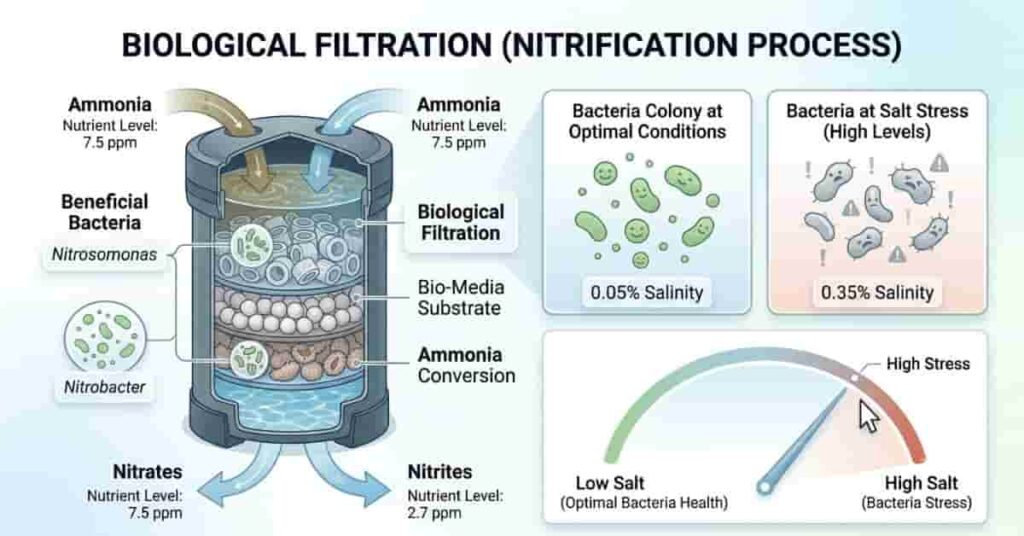
Beneficial bacteria play a key role in pond health. When users ask about whether pond salt affects beneficial bacteria, the answer is yes, but it depends on the level used. These bacteria break down waste, reduce harmful toxins, and keep water stable.
At mild levels, pond salt usually has little impact on biological filtration. However, at higher concentrations, salt can stress these bacteria. This may slow down the natural breakdown of ammonia and organic waste. When that happens, water quality can drop over time, even if algae looks slightly reduced.
This is important because biological filtration is the foundation of a healthy pond. If beneficial bacteria weaken, waste builds up faster. That can lead to more algae growth later, not less. So while salt may seem helpful in the short term, it can indirectly create new problems if not used carefully.
That is why controlled and minimal use is always recommended. Pond keepers should focus on protecting the biological filter first, as it maintains long-term water balance and clarity.
For safe application guidelines, see “How to Use Pond Salt Safely.”
Choosing the right product is just as important as using the correct dosage. Our Best Pond Salt for Koi Ponds guide reviews trusted pond salt brands that are safe for koi and suitable for different pond care situations.
What Actually Causes Algae Growth in Ponds?
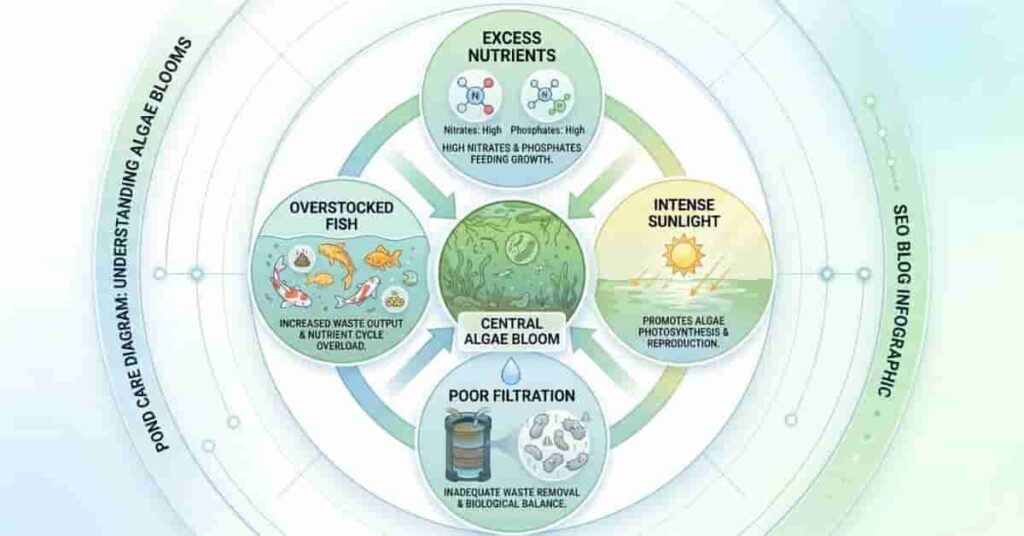
When people search for algae control, they often focus on treatments like salt. But real algae problems come from pond conditions, not one single product. To understand whether pond salt kills algae, you first need to know what actually drives algae growth in the first place.
Algae grows when the pond has an imbalance of nutrients, sunlight, and waste buildup. If these conditions stay uncontrolled, algae will keep returning, no matter what treatment you use. That is why long-term pond health depends more on prevention than quick fixes.
Excess Nutrients (Nitrates & Phosphates)
Algae feed on nutrients, especially nitrates and phosphates. These build up from fish waste, uneaten food, and decaying organic matter. When levels rise, algae get a constant food supply and grow quickly. Even small increases can trigger green water and surface blooms.
Sunlight Exposure
Sunlight is another major driver of algae growth. Strong or direct sunlight helps algae multiply faster. Ponds without shade or cover often struggle with repeated algae outbreaks, even if the water is otherwise balanced.
Poor Filtration
Weak or undersized filtration systems cannot remove waste efficiently. This allows nutrients to build up in the water. Without proper mechanical and biological filtration, algae will continue to thrive regardless of other treatments.
Overstocking Fish
Too many fish in a pond create excess waste. This increases ammonia and nutrient levels, which later become food for algae. Overstocked ponds almost always experience recurring algae issues unless fish load is reduced or filtration is upgraded.
Best Ways to Control Algae Without Overusing Salt
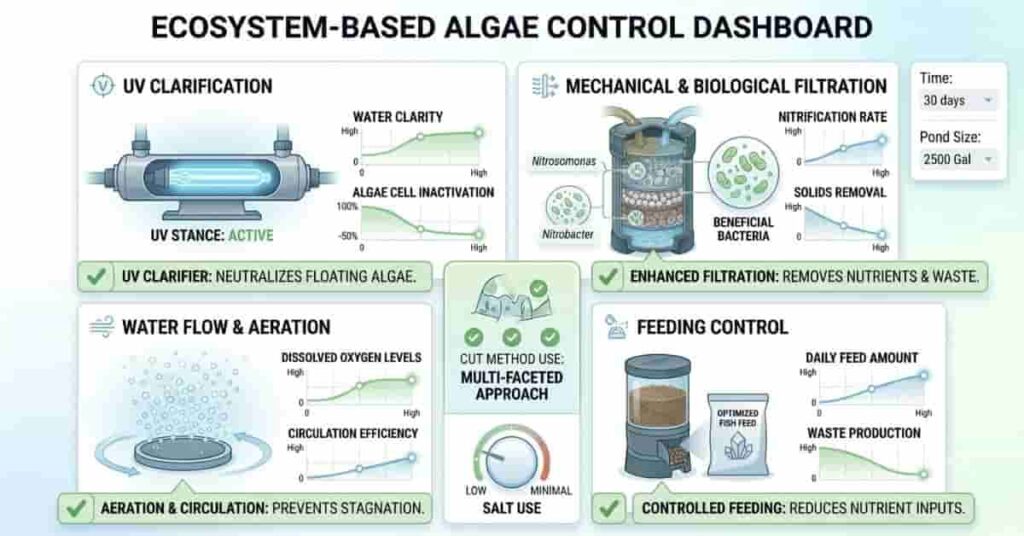
Controlling algae works best when you address the root causes rather than relying on pond salt. Since salt does not directly remove algae, long-term results depend on improving water conditions. A balanced pond system keeps algae under control naturally and reduces the need for constant treatments.
Below are the most effective and proven methods used in healthy pond management.
Improve Filtration System
A strong filtration system is the first line of defense against algae. It removes waste, breaks down harmful compounds, and supports beneficial bacteria. When filtration is weak or clogged, nutrients build up, and algae grow faster.
Upgrading your filter or cleaning it regularly can make a noticeable difference in water clarity. A properly sized filter also helps maintain stable water conditions throughout the year.
Reduce Feeding Waste
Overfeeding fish is one of the most common causes of algae problems. Uneaten food sinks and breaks down into nutrients that feed algae. Even small amounts of extra food can impact water quality over time.
Feed only what fish can eat in a few minutes. This simple habit reduces waste and helps maintain a cleaner, more stable pond environment.
Add UV Clarifier
A UV clarifier helps control green water algae by damaging algae cells as water passes through the unit. It does not fix the root cause, but it is very effective for improving water clarity.
This tool works best when combined with good filtration and balanced nutrient levels. It is especially useful for ponds that struggle with repeated algae blooms.
Increase Water Movement
Stagnant water allows algae to grow more easily. Adding water movement improves oxygen levels and helps distribute nutrients more evenly. This creates a less favorable environment for algae growth.
Waterfalls, fountains, or air pumps can all help improve circulation and support overall pond health.
Pro Tips
- Combine multiple methods for the best long-term results.
- Clean filters regularly to maintain efficiency
- Avoid relying on a single solution, such as salt or chemicals.
When Can Pond Salt Be Helpful?
Although ” Does pond salt kill algae is a common question, salt is not mainly used for algae control. However, there are a few situations where pond salt can be helpful when used carefully and in controlled conditions.
One common use is during temporary fish stress. For example, fish may become stressed after transportation, minor injuries, or sudden water changes. In these cases, salt can help support the fish’s osmoregulation process and reduce stress for a short period.
Salt may also be used in controlled pond environments where keepers understand the exact water conditions and closely monitor changes. Even then, it is only a short-term support tool, not a long-term treatment strategy.
The key point is that pond salt should never be treated as a general solution for algae or water quality issues. It does not fix the root causes of algae growth and should not replace proper filtration or maintenance routines. Overusing salt can create more problems than it solves.
For safe, detailed guidance, read “Should I Add Salt to My Koi Pond?“
Risks of Using Too Much Pond Salt
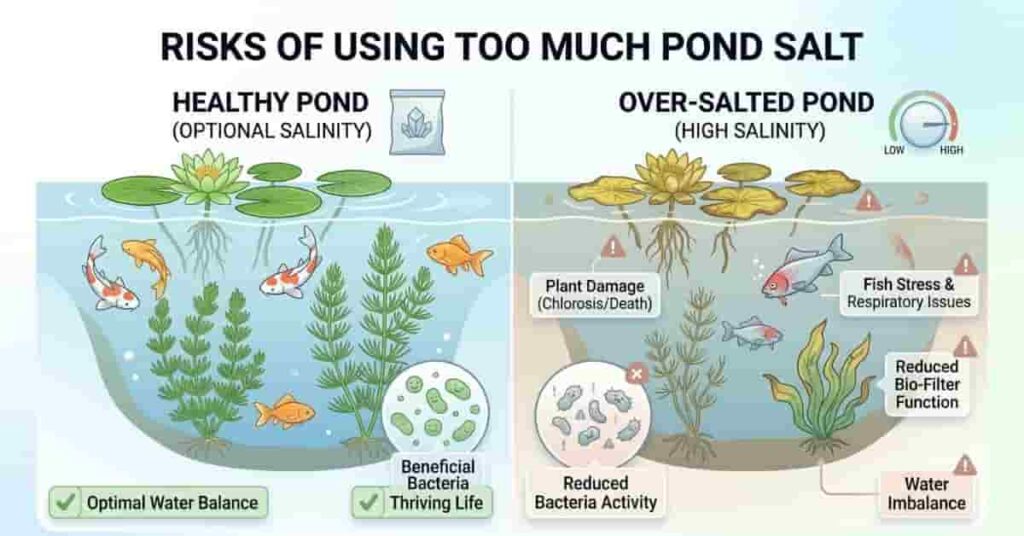
Using pond salt in excess can create serious long-term problems in a pond ecosystem. While it may seem helpful at first, overuse often disrupts the natural balance that keeps water healthy. Instead of improving conditions, it can gradually worsen algae and water quality issues.
Fish Stress
Too much salt can put stress on fish by forcing their bodies to constantly adjust to changing salinity levels. This can weaken their immune system over time. Stressed fish may also become less active, lose appetite, or show signs of discomfort. In severe cases, prolonged exposure can lead to health decline, especially in sensitive species.
Plant Damage
Aquatic plants are highly sensitive to salt. Excess salt can damage leaves, slow growth, or even kill plants in planted ponds. Since plants help absorb nutrients and naturally control algae, their loss can indirectly worsen algal problems. A weak plant system often leads to unbalanced pond conditions.
Biological Filter Disruption
Beneficial bacteria in filters help break down waste and keep water clean. High salt levels can interfere with this biological process. When bacteria become less effective, ammonia and organic waste begin to build up. This leads to poor water quality and can trigger more algae growth rather than reducing it.
Long-Term Water Imbalance
Repeated or excessive salt use can gradually change the pond’s natural balance. Over time, the ecosystem becomes less stable and harder to maintain. This often results in recurring algae blooms and unpredictable water conditions. Once an imbalance sets in, it may take significant effort to restore healthy pond function.
Does Pond Salt Improve Overall Pond Water Quality?
When discussing pond salt water quality, many beginners assume salt improves or “cleans” pond water. This is a common misconception. Pond salt does not purify water or remove waste, algae, or harmful nutrients.
In reality, pond salt only changes the water’s salinity. It does not filter impurities or improve clarity in a biological or chemical sense. It has no ability to remove nitrates, phosphates, or organic debris, which are the main causes of algae growth and poor water quality.
Because of this, salt cannot be considered a water treatment or purification method. It does not replace filtration, water changes, or proper pond maintenance. If water quality issues already exist, adding salt will not solve the root problem.
In some cases, salt may temporarily change how fish and bacteria respond to the environment, but this is not the same as improving water quality. In fact, incorrect use can sometimes disturb the pond’s natural balance.
For healthy pond water, the focus should always be on filtration, oxygen levels, and nutrient control rather than salinity changes.
Alternative Algae Control Methods
If you are wondering whether pond salt kills algae, the answer is limited. That is why most pond experts focus on proven, long-term solutions instead of salt. The best algae control methods target the root causes, such as nutrients, sunlight, and waste buildup. These approaches improve pond health without risking fish, plants, or bacteria.
UV Sterilizers
UV sterilizers are one of the most effective tools for controlling green water algae. They work by passing water through UV light, which damages algae cells and stops them from multiplying. This helps clear cloudy water quickly.
However, UV systems do not fix the root cause. They should always be combined with good filtration and proper feeding habits for long-term results.
Proper Filtration Systems
A strong filtration system is the backbone of algae control. Mechanical filtration removes debris, while biological filtration breaks down harmful waste. This reduces nutrients that feed algae.
When filtration is properly sized and maintained, algae growth naturally slows down. It also helps keep water stable throughout seasonal changes.
Regular Water Changes
Water changes help dilute excess nutrients that build up over time. Even partial water replacement can reduce nitrates and phosphates, which directly feed algae.
This method is simple but very effective when done consistently. It also supports overall pond clarity and fish health.
Shade & Pond Design
Reducing sunlight exposure is another powerful way to control algae. Shade from plants, pond covers, or strategic design can limit algae growth.
Deeper ponds also help reduce direct sunlight on the entire water surface. Combining shade with good circulation creates a more balanced ecosystem.
Takeaways
- UV sterilizers control algae growth, but don’t fix root causes.
- Filtration is the most important long-term solution.
- Water changes reduce nutrient buildup effectively.
- Shade and design reduce algae-friendly conditions.
Conclusion
In this article, we explored how pond salt interacts with algae and pond ecosystems. We also covered why algae growth depends more on nutrients, sunlight, and filtration than salt alone. Salt has limited effects and is not a long-term solution for pond health.
The keyword does pond salt kill algae often leads to confusion. In most cases, pond salt does not directly control algae. It cannot replace proper water management, filtration, or nutrient control in a healthy pond system.
For lasting results, focus on balanced water quality and strong pond maintenance habits. These methods are more reliable than chemical-based shortcuts and help create a stable ecosystem.
Before adding salt to your pond, calculate the correct dosage using a pond salt calculator, then choose a product that’s safe for koi ponds. Our Best Pond Salt for Koi Ponds guide reviews trusted brands to help you make the right choice with confidence.

Michael Brooks and Sarah Lane are the co-founders of the Pond Pump Team, a trusted U.S.-based group helping homeowners and landscapers build better ponds and water features. Michael, an experienced pond engineer from Oregon, has worked for over 12 years on pump sizing, flow systems, and water circulation. Sarah, a pond designer from Colorado with nine years of experience, focuses on eco-friendly and easy-to-maintain pond and waterfall designs. Together, they’ve completed more than 180 pond projects and created tools like the Pond Pump Calculator and Pond Liner Calculator to make pond planning simple, accurate, and sustainable.
Need help with your pond setup? Contact the Pond Pump Team for expert advice and reliable solutions.