Introduction
Have you noticed your koi becoming less active as the weather changes? The ideal pond temperature for koi fish plays a major role in their health, growth, and feeding habits. Even a few degrees can affect how your koi eat, breathe, and respond to stress.
Many new pond owners focus on filters and water quality first. However, pond water temperature is just as important. Water that becomes too hot or too cold can reduce oxygen levels, slow digestion, and weaken your koi’s immune system. Learning the right koi pond temperature helps prevent common seasonal problems before they start.
For most koi, the ideal temperature range is 60°F to 75°F (15.5°C to 24°C). Within this range, they stay active, digest food well, and grow more efficiently. Seasonal changes may require you to adjust feeding, aeration, and general pond maintenance.
This guide explains the best temperature range for koi, how temperatures change throughout the year, when to stop feeding, and how to monitor your pond correctly. You’ll also learn practical tips to keep your fish healthy in every season.
Water temperature affects ammonia toxicity, oxygen levels, and overall water quality. A reliable Pond Water Test Kit helps you monitor these conditions and keep your koi healthy throughout the year.
What Is the Ideal Pond Temperature for Koi Fish?
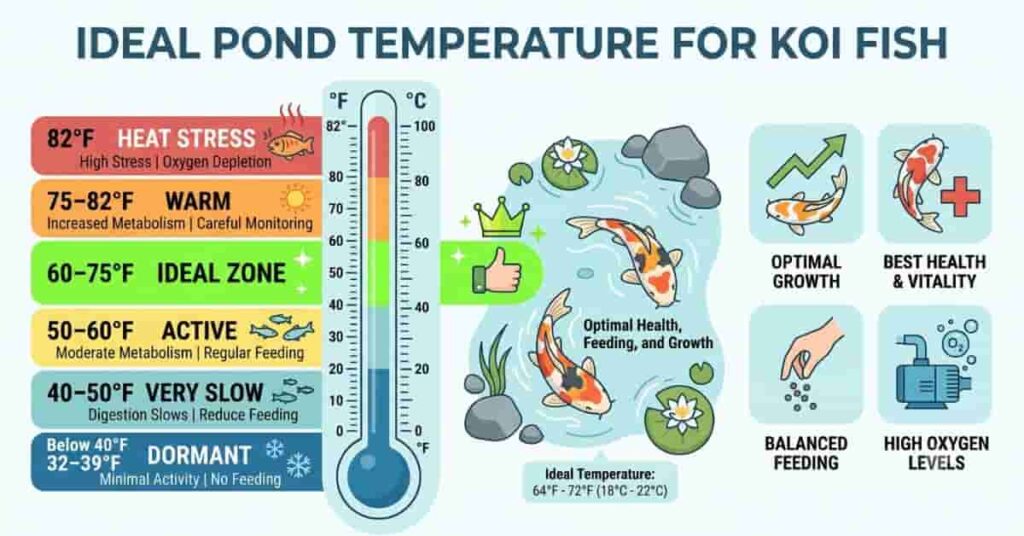
The ideal pond temperature for koi fish is 60°F to 75°F (15.5°C to 24°C). Within this range, koi stay active, digest food efficiently, and maintain a strong immune system. This temperature also supports healthy growth, normal swimming behavior, and better resistance to common pond diseases.
Koi are hardy fish and can survive outside this range. However, their activity and feeding habits change as the water warms or cools. Water that is too cold slows their metabolism, while very warm water holds less oxygen and increases stress.
Instead of aiming for one exact number, focus on keeping your koi pond temperature as stable as possible. Sudden temperature swings can stress fish more than gradual seasonal changes. Regular monitoring with a reliable pond thermometer helps you adjust feeding, aeration, and maintenance before problems develop.
Ideal Temperature Range
Most koi thrive when pond water stays between 60°F and 75°F (15.5°C–24°C). This range provides the best balance for metabolism, digestion, oxygen availability, and overall health.
Benefits of maintaining this temperature include:
- Healthy appetite and digestion
- Strong immune system
- Active swimming behavior
- Improved growth and body condition
- Lower risk of temperature-related stress
Although koi can tolerate colder winters and warmer summers, keeping water within this range whenever possible promotes the best long-term health.
Seasonal temperature changes can increase stress in koi, and some pond owners use salt as a short-term supportive treatment. Our Best Pond Salt for Koi Ponds guide explains which products are safe and when they should be used.
Best Temperature for Growth
Koi grow best when water temperatures remain between 68°F and 75°F (20°C–24°C). At these temperatures, their metabolism works efficiently, allowing them to convert food into healthy growth.
Healthy growth also depends on:
- High water quality
- Good filtration
- Proper aeration
- A balanced diet
- Consistent feeding schedules
Rapid temperature changes can slow growth and increase stress. Try to maintain stable conditions instead of allowing large daily fluctuations.
Pro Tip: Warm water speeds up metabolism, but avoid overheating the pond. Extremely warm water reduces dissolved oxygen and can harm koi.
Best Temperature for Feeding
Feeding should always match the pond’s water temperature rather than the season alone.
For most ponds:
- 60°F–75°F: Feed normally with a quality koi food.
- 50°F–60°F: Reduce feeding and choose an easily digestible wheat germ food.
- 40°F–50°F: Feed only small amounts if the fish remain active.
- Below 40°F: Stop feeding because koi cannot digest food properly.
Watching both the thermometer and your koi’s behavior helps prevent overfeeding and protects water quality.
Safe Temperature Range
Koi are resilient fish and can safely tolerate temperatures from 40°F to 82°F (4°C–28°C) for limited periods when water quality remains high.
Within this range:
- Oxygen levels should remain adequate.
- Temperature changes should be gradual.
- Aeration becomes increasingly important during hot weather.
- Feeding should be adjusted as temperatures rise or fall.
The goal is not simply keeping koi alive but providing conditions where they can remain healthy and active throughout the year.
Dangerous Temperature Range
Water temperatures below 40°F (4°C) or above 82°F (28°C) can place significant stress on koi.
Very cold water slows metabolism to the point where digestion nearly stops. Feeding during this time may lead to digestive problems.
Very warm water creates different challenges. Warm water contains less dissolved oxygen, making it harder for koi to breathe. Fish may become sluggish, gather near waterfalls or aerators, or gasp near the surface.
Warning signs of temperature stress include:
- Loss of appetite
- Slow or unusual swimming
- Gasping at the surface
- Staying near moving water
- Lethargy or isolation from other fish
If temperatures move into these ranges, monitor your pond closely and improve aeration, reduce feeding when necessary, and avoid sudden water temperature changes.
Koi Pond Temperature Guide
| Water Temperature | Koi Condition | Feeding | Risk Level |
|---|---|---|---|
| Below 40°F (4°C) | Dormant | Stop feeding | High |
| 40–50°F (4–10°C) | Very slow activity | Minimal feeding | Moderate |
| 50–60°F (10–15.5°C) | Active | Limited feeding | Low |
| 60–75°F (15.5–24°C) | Ideal condition | Normal feeding | Best |
| 75–82°F (24–28°C) | Warm | Reduce feeding | Moderate |
| Above 82°F (28°C) | Heat stress | Limited feeding | High |
Why Pond Temperature Is So Important
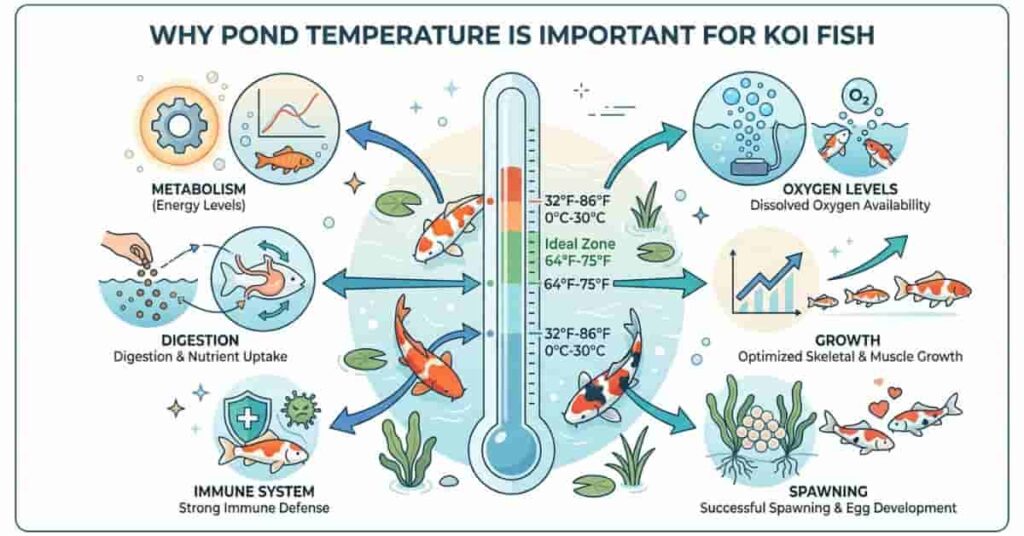
Pond temperature affects almost every aspect of a koi’s health. It controls how fast they digest food, how much oxygen they need, and how well their immune system works. Even if your pond has clean water and a good filter, the wrong temperature can stress your fish and increase the risk of health problems.
Unlike mammals, koi are cold-blooded fish. Their body temperature changes with the surrounding water. As pond water warms or cools, their metabolism, activity level, and feeding habits change as well. This is why monitoring pond water temperature is just as important as checking water quality.
Understanding how temperature affects koi helps you make better decisions throughout the year. You can adjust feeding schedules, improve aeration during hot weather, and prepare your pond for seasonal changes before they become a problem.
Fish Metabolism
Water temperature directly controls a koi’s metabolism. As temperatures rise, their metabolism speeds up. They become more active, eat more food, and burn energy faster.
When temperatures fall, the opposite happens. Koi become less active, their metabolism slows, and they need much less food. During winter, they may spend most of their time resting near the bottom of the pond.
Keeping your koi pond temperature within the recommended range helps maintain steady energy levels and reduces unnecessary stress.
Digestion
A koi’s digestive system works best when pond water stays between 60°F and 75°F (15.5°C–24°C). At these temperatures, fish can process food efficiently and absorb the nutrients they need.
Cold water slows digestion significantly. If you continue feeding large amounts during cold weather, uneaten food may remain in the digestive tract longer than normal. This can affect your koi’s health and also reduce water quality.
As temperatures drop below 50°F (10°C), feeding should be reduced. Below 40°F (4°C), feeding should stop because koi can no longer digest food properly.
Pro Tip: Always check your pond thermometer before feeding. Let the water temperature guide your feeding schedule instead of relying on the calendar.
Immune System
Healthy koi have a stronger immune system when water temperatures remain stable. Sudden temperature changes can weaken their natural defenses and make them more vulnerable to stress.
Cold water slows many biological processes, while extreme heat places additional strain on the fish. Frequent temperature swings are often more harmful than gradual seasonal changes.
Maintaining stable temperatures helps koi recover more quickly from minor injuries and reduces environmental stress.
Oxygen Levels
Water temperature also affects how much dissolved oxygen your pond can hold. Cooler water naturally contains more oxygen, while warmer water holds much less.
During hot summer weather, koi need more oxygen because their metabolism is higher. At the same time, warm water provides less oxygen. This combination can create stressful conditions, especially in crowded ponds.
Adding an aerator, waterfall, or fountain helps increase oxygen levels during warm months and keeps your koi more comfortable.
Disease Risk
Unstable or extreme pond temperatures can increase the risk of disease. Temperature stress weakens koi, making it easier for parasites and harmful bacteria to affect them.
Poor water quality combined with incorrect temperatures creates ideal conditions for many common pond problems. Monitoring temperature regularly allows you to identify seasonal risks early and make adjustments before fish become stressed.
Good water quality, stable temperatures, and proper nutrition work together to keep koi healthy throughout the year.
Growth
Young and growing koi develop best when water temperatures remain within their preferred range. Warm, stable water supports healthy digestion, allowing fish to use nutrients more efficiently for growth.
Growth slows naturally as temperatures decrease because metabolism becomes less active. This seasonal slowdown is normal and should not be mistaken for illness.
Providing consistent water quality, balanced nutrition, and the right temperature encourages healthy body development without placing unnecessary stress on the fish.
Spawning
Temperature is one of the main triggers for koi spawning. As spring arrives and pond water gradually warms, adult koi become more active and breeding behavior begins.
In many ponds, spawning starts when water temperatures reach approximately 65°F to 70°F (18°C–21°C), although other factors such as daylight, nutrition, and overall fish health also play important roles.
If you plan to breed koi, maintaining stable spring temperatures and excellent water quality will help create a healthy environment for both adult fish and fry.
How Water Temperature Affects Koi Throughout the Year
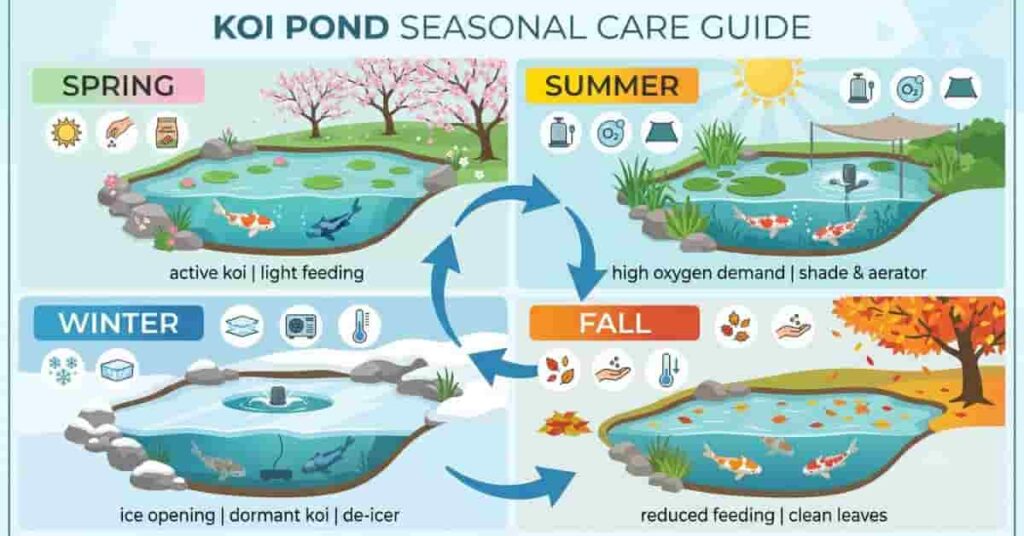
Pond water temperature changes with every season, and your koi respond to those changes naturally. Their activity level, appetite, growth, and overall health depend on how warm or cold the water becomes. Understanding these seasonal changes helps you adjust feeding, maintenance, and pond equipment at the right time.
Instead of following the calendar alone, use your pond thermometer to guide your care routine. Seasonal temperatures vary across the United States, so water temperature is a more reliable indicator than the month of the year.
Spring Pond Temperature
Spring is a transition period for koi. As water gradually warms, their metabolism increases, and they become more active after winter. However, sudden weather changes are common during spring, so water temperatures can fluctuate from day to day.
Fish Behavior
During early spring, koi begin swimming more often and slowly return to their normal activity level. They may still spend time near the bottom until the water becomes consistently warmer.
Watch for signs such as:
- Increased swimming activity
- More interest in food
- Exploring different pond areas
- Brighter colors as activity increases
Feeding Schedule
Start feeding only when the water temperature remains above 50°F (10°C) for several days. Begin with a highly digestible wheat germ food and offer small portions.
As temperatures reach 60°F (15.5°C), you can gradually return to a regular feeding schedule.
Avoid overfeeding during spring because digestion is still slower than in summer.
Pond Maintenance
Spring is the perfect time to prepare your pond for the growing season.
Focus on:
- Cleaning pond debris
- Checking filters and pumps
- Testing water quality
- Inspecting fish for winter damage
- Removing dead plants
- Restarting equipment if it was turned off during winter
Pro Tip: Avoid large water changes during early spring. Sudden temperature shifts can stress koi.
Summer Pond Temperature
Summer brings the warmest pond temperatures and the highest activity levels for koi. While fish grow quickly during this season, high temperatures also create new challenges.
Heat Stress
When water temperatures rise above 75°F (24°C), koi begin experiencing additional stress. Extremely hot weather can reduce their appetite and make them less active.
Signs of heat stress include:
- Gasping near the surface
- Staying close to waterfalls
- Reduced feeding
- Sluggish swimming
Low Oxygen
Warm water holds less dissolved oxygen than cool water. At the same time, koi need more oxygen because their metabolism is faster.
This combination makes proper aeration essential during summer.
Algae Growth
Longer daylight hours and warm temperatures encourage algae growth. Excess algae can compete with fish for oxygen, especially at night.
Regular maintenance and balanced nutrients help control algae naturally.
Provide Shade
Adding shade helps prevent excessive water heating.
Good options include:
- Water lilies
- Floating pond plants
- Shade sails
- Pergolas
- Nearby trees that do not drop excessive debris
Shaded ponds usually experience smaller temperature swings during hot afternoons.
Increase Aeration
Extra aeration is one of the best ways to protect koi during summer.
Consider using:
- Air pumps
- Air stones
- Waterfalls
- Fountains
- Venturi systems
Moving water improves oxygen levels and helps create a healthier environment.
Fall Pond Temperature
Fall is a preparation season. As temperatures gradually decline, koi begin slowing down and eating less. This is the time to prepare both your fish and your pond for winter.
Reduce Feeding
Reduce feeding as water temperatures fall below 60°F (15.5°C).
Switch to a wheat germ diet because it is easier to digest in cooler water.
Once temperatures approach 40°F (4°C), stop feeding completely.
Prepare for Winter
Complete routine maintenance before freezing weather arrives.
Tasks include:
- Cleaning the pond
- Servicing pumps and filters
- Checking aeration equipment
- Inspecting liners
- Removing excess sludge
Preparing early helps prevent emergency repairs during winter.
Manage Falling Leaves
Leaves can quickly reduce water quality if left in the pond.
Use these simple methods:
- Install a pond net
- Remove leaves regularly
- Trim nearby plants
- Clean skimmer baskets often
Keeping organic debris out of the pond reduces nutrient buildup and improves water quality.
Winter Pond Temperature
Winter is the least active season for koi. Their metabolism slows dramatically, and they spend most of their time resting near the bottom of the pond.
Healthy koi can survive cold winters if the pond remains stable and oxygen levels stay adequate.
Dormancy
Below 40°F (4°C), koi enter a dormant state. They conserve energy and rarely swim unless disturbed.
This behavior is completely normal.
Avoid handling or disturbing fish during winter unless absolutely necessary.
Ice Formation
In colder parts of the United States, ponds may develop a layer of ice.
Never break ice with force. The shock waves can stress or injure koi.
Instead, use safe methods to keep a small opening in the ice.
Maintain Oxygen Exchange
Even during winter, harmful gases must escape from the pond while oxygen enters the water.
Maintaining an open area in the ice supports healthy gas exchange and improves water quality throughout the season.
Use a Pond De-Icer
A floating pond de-icer helps prevent a complete ice seal. Its purpose is to maintain a small opening rather than heat the entire pond.
This allows oxygen to enter and harmful gases to escape safely.
Keep an Aerator Running
A pond aerator continues supplying oxygen during winter.
Place the air stone in shallow water instead of the deepest part of the pond. This helps preserve the warmer water layer where koi rest.
Koi Feeding Temperature Chart
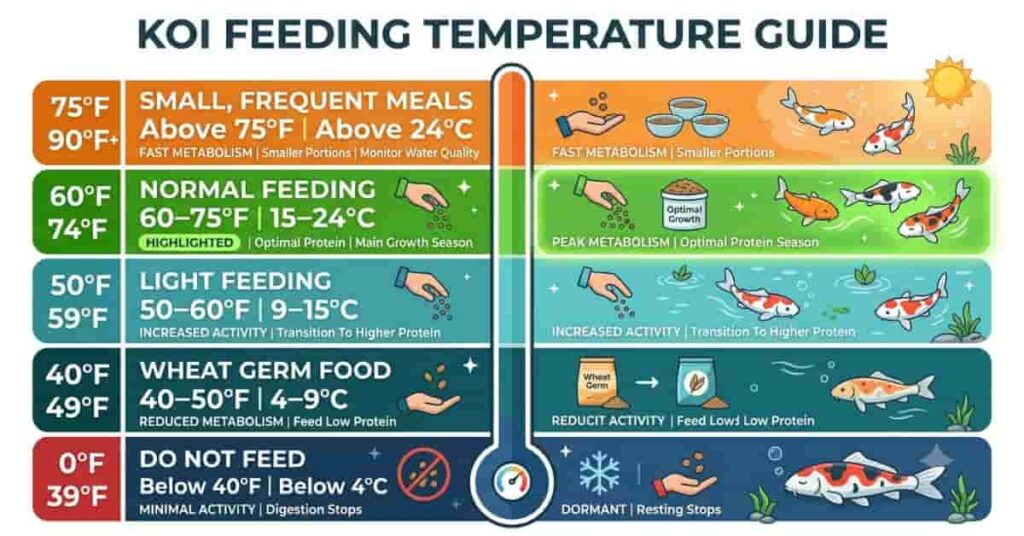
Water temperature determines how well koi can digest food. Instead of feeding on a fixed schedule, adjust your feeding routine based on your pond thermometer. As water cools, a koi’s metabolism slows, and it needs less food. When water warms, digestion improves, allowing koi to eat more efficiently.
Feeding at the wrong temperature can cause digestive problems, reduce water quality, and increase stress. That’s why experienced pond owners monitor pond water temperature before every feeding, especially during spring and fall when temperatures change quickly.
Use the chart below as a simple guide for feeding koi throughout the year.
| Water Temperature | Feeding Recommendation |
|---|---|
| Below 40°F (4°C) | Do not feed. Koi become dormant, and their digestive system nearly stops working. |
| 40–50°F (4–10°C) | Feed a wheat germ diet in very small amounts only if the fish remain active. |
| 50–60°F (10–15.5°C) | Offer light feeding once a day with an easily digestible koi food. |
| 60–75°F (15.5–24°C) | Normal feeding. This is the ideal temperature range for healthy digestion and growth. |
| Above 75°F (24°C) | Feed small meals two to three times daily while monitoring oxygen levels and fish behavior. |
Feeding Tips for Every Season
Following a few simple practices can help keep your koi healthy year-round.
- Always check the pond temperature before feeding.
- Feed only what your koi can eat within 3 to 5 minutes.
- Remove uneaten food to maintain good water quality.
- Switch to a wheat germ formula as temperatures fall below 50°F (10°C).
- Increase aeration during hot weather because warm water contains less dissolved oxygen.
- Watch your koi’s behavior. If they stop eating, avoid forcing additional food.
Pro Tip: Let your pond thermometer, not the calendar, determine your feeding schedule. Water temperature changes from year to year, even in the same location.
Key Takeaways
- Water temperature has a direct impact on koi digestion and appetite.
- Stop feeding when the pond falls below 40°F (4°C).
- Use a wheat germ diet between 40°F and 50°F.
- Feed normally only when water stays between 60°F and 75°F, the ideal pond temperature for koi fish.
- During hot weather, offer smaller meals and keep oxygen levels high with proper aeration.
When Should You Stop Feeding Koi?
One of the most common questions among new pond owners is, “When should I stop feeding koi?” The answer depends on your pond water temperature, not the season or the date on the calendar.
As water cools, a koi’s metabolism slows. This means it digests food more slowly and needs fewer nutrients. Feeding too much in cold water can leave food undigested, reduce water quality, and place unnecessary stress on your fish.
Use a reliable pond thermometer and follow these temperature guidelines to decide when to reduce or stop feeding.
At 55°F (13°C)
When the water reaches 55°F (13°C), begin reducing the amount of food you offer.
At this temperature:
- Feed once a day or every other day.
- Switch to a wheat germ-based koi food.
- Offer small portions only.
- Watch your koi’s appetite before each feeding.
Koi remain active, but their digestion is slower than during summer.
At 50°F (10°C)
When the pond cools to 50°F (10°C), feed only if your koi are still swimming actively and looking for food.
Follow these tips:
- Feed very small amounts.
- Use easily digestible wheat germ food.
- Skip feeding on colder days.
- Remove any uneaten food immediately.
Many pond owners begin stopping regular feeding around this temperature.
At 45°F (7°C)
At 45°F (7°C), koi become much less active. Their metabolism slows significantly, and they spend more time resting near the bottom of the pond.
If you notice your koi showing little interest in food:
- Stop feeding completely.
- Avoid encouraging them to eat.
- Continue monitoring water quality and oxygen levels.
Feeding at this stage provides little benefit and may cause digestive problems.
Below 40°F (4°C)
When the water falls below 40°F (4°C), stop feeding your koi completely.
At this temperature:
- Koi enter a dormant state.
- Their digestive system is nearly inactive.
- They survive using stored energy reserves.
- Food cannot be processed efficiently.
Do not feed koi again until the water has warmed consistently above 50°F (10°C) in spring and the fish become active.
Pro Tip: Never decide feeding by the season alone. A warm winter or cool spring can change pond temperatures significantly. Always let your pond thermometer guide your feeding schedule.
Signs Your Koi Are Ready to Stop Feeding
Your koi often show clear signs before they stop eating completely.
Look for these changes:
- Swimming more slowly
- Resting near the bottom of the pond
- Losing interest in food
- Eating only small amounts
- Spending less time near the surface
These behaviors are a normal response to colder water and should not be mistaken for illness.
Signs Your Pond Water Is Too Hot
Hot summer weather can quickly raise your pond water temperature, especially in shallow ponds. As water warms, it holds less dissolved oxygen while koi need more oxygen to support their faster metabolism. This combination can cause heat stress if temperatures remain too high for long periods.
Recognizing the warning signs early allows you to improve aeration, provide shade, and prevent more serious health problems.
Gasping at the Surface
One of the first signs of heat stress is koi gasping for air near the water’s surface.
This usually happens because warm water contains less oxygen. Fish may repeatedly open and close their mouths while staying close to the surface.
If several koi show this behavior, increase aeration immediately.
Staying Near the Waterfall
Koi often gather around waterfalls, fountains, or air stones when oxygen levels are low.
Moving water contains more oxygen than still water, making these areas more comfortable during hot weather.
If most of your fish remain near the waterfall all day, your pond may need additional aeration.
Loss of Appetite
Healthy koi usually eat well during warm weather. However, when water temperatures become too high, they may lose interest in food.
If your koi suddenly stop eating during a heat wave:
- Check the pond temperature.
- Test water quality.
- Reduce feeding until conditions improve.
Avoid overfeeding because uneaten food will further reduce water quality.
Floating Near the Surface
Heat-stressed koi may spend long periods floating near the surface instead of swimming normally.
This behavior often occurs when fish are trying to reach oxygen-rich water.
Floating alone does not always indicate illness, but it should never be ignored during hot weather.
Lethargy
Lethargic koi swim slowly and respond less to movement or feeding.
You may notice them:
- Resting for long periods
- Moving very little
- Avoiding other fish
- Showing little interest in food
If these symptoms appear with high water temperatures, improve oxygen levels and reduce additional stress as quickly as possible.
Pro Tip: Keep your pond below 82°F (28°C) whenever possible. Adding shade and increasing aeration are the most effective ways to reduce summer heat stress.
Key Takeaways
- Warm water holds less oxygen than cool water.
- Gasping and gathering near waterfalls often indicate low oxygen.
- Loss of appetite and lethargy are common signs of heat stress.
- Monitor pond temperature daily during summer.
- Increase aeration before temperatures become dangerous.
Signs Your Pond Water Is Too Cold
Cold weather naturally slows a koi’s metabolism. As the koi pond temperature falls, fish become less active and need much less food. These changes are normal, but understanding them helps you distinguish between healthy winter behavior and possible health problems.
Slow Movement
As water cools, koi swim more slowly to conserve energy.
They may:
- Move gently around the pond.
- Spend longer periods resting.
- React more slowly to people and food.
This behavior is expected during late fall and winter.
Staying at the Bottom of the Pond
When temperatures become very cold, koi usually remain near the deepest part of the pond.
The bottom stays slightly warmer than the surface, making it the safest place for fish during winter.
This is completely normal unless the fish also show signs of illness.
No Feeding
Healthy koi naturally stop eating when water temperatures drop below 40°F (4°C).
Their digestive system becomes inactive, so forcing food can do more harm than good.
If your koi ignore food during cold weather, simply stop feeding until spring temperatures rise again.
Dormancy
Below 40°F (4°C), koi enter a dormant state.
During dormancy, they:
- Conserve energy.
- Move very little.
- Eat nothing.
- Remain calm near the pond bottom.
Dormancy is a normal survival response and does not mean your koi are unhealthy.
Pro Tip: Avoid disturbing dormant koi during winter. Excessive handling or sudden temperature changes can create unnecessary stress.
How Temperature Affects Oxygen Levels
Water temperature and dissolved oxygen are closely connected. As pond water temperature changes, the amount of oxygen available for your koi changes as well. This relationship has a direct impact on fish health, feeding, and overall pond conditions.
Many pond owners focus on water temperature alone. However, oxygen levels are just as important. During summer, warm water naturally holds less oxygen, while koi need more oxygen because their metabolism speeds up. Understanding this balance helps you prevent heat stress and maintain a healthy pond throughout the year.
Warm Water Holds Less Oxygen
As water becomes warmer, its ability to hold dissolved oxygen decreases.
This creates two challenges:
- Koi become more active and require more oxygen.
- The pond contains less oxygen than it did in cooler weather.
During hot summer afternoons, oxygen levels may drop enough to stress your fish, especially in shallow or heavily stocked ponds.
Common signs of low oxygen include:
- Gasping at the water surface
- Gathering near waterfalls or fountains
- Slow swimming
- Loss of appetite
- Lethargy
If you notice these behaviors, check your pond temperature and increase aeration immediately.
Cold Water Holds More Oxygen
Cool water naturally contains more dissolved oxygen than warm water.
During fall and winter, oxygen levels usually improve because colder water can hold more oxygen. At the same time, koi become less active and need less oxygen due to their slower metabolism.
Although oxygen shortages are less common during winter, gas exchange is still important if the pond develops an ice cover. Keeping a small opening in the ice allows oxygen to enter while harmful gases escape.
Why Aeration Matters
Aeration is one of the best ways to maintain healthy oxygen levels throughout the year. Air pumps, waterfalls, fountains, and air stones keep water moving, allowing more oxygen to dissolve into the pond.
Aeration is especially important when:
- Water temperatures rise above 75°F (24°C).
- Your pond contains many koi.
- The pond is shallow.
- Algae growth becomes excessive.
- Fish begin showing signs of oxygen stress.
A properly sized aeration system improves water circulation, supports beneficial bacteria, and creates a healthier environment for both koi and pond plants.
Pro Tip: Increase aeration before a summer heat wave arrives. Preventing low oxygen is much easier than correcting it after your koi become stressed.
Key Takeaways
- Warm water holds less dissolved oxygen than cool water.
- Koi need more oxygen as water temperatures increase.
- Cold water naturally contains more oxygen, but winter ponds still need proper gas exchange.
- Aeration helps maintain healthy oxygen levels throughout the year.
- Monitor both water temperature and oxygen-related fish behavior during hot weather.
Related Resources
To improve pond circulation and oxygen levels, check out these helpful tools:
- Pond Air Pump Calculator – Calculate the right air pump size for your pond based on its volume and fish load.
- Pond Pump Calculator – Estimate the recommended water flow rate for proper filtration and circulation.
How to Measure Pond Temperature Correctly
Measuring your pond water temperature correctly is just as important as measuring it regularly. A single reading taken in the wrong location or at the wrong time may not represent the actual temperature your koi experience.
For the most accurate results, measure your pond at the same time each day and use a reliable thermometer. Consistent readings help you adjust feeding, aeration, and seasonal maintenance before temperature changes affect your fish.
Best Place to Measure
Choose an area where your koi spend most of their time.
Avoid measuring:
- Directly beside waterfalls
- Near fountains or aerators
- In shallow areas exposed to full sunlight
- Close to water inlets
Instead, measure in an open area with normal water circulation. This provides a more accurate average pond temperature.
Morning vs. Afternoon
Pond temperature changes throughout the day.
- Morning: Usually the coolest water temperature.
- Afternoon: Usually the warmest water temperature.
Checking your pond at both times during summer helps you understand daily temperature swings. If you only measure once a day, choose the same time each day for consistent results.
Surface vs. Deep Water
The surface of the pond warms and cools much faster than deeper water.
For the most accurate reading:
- Measure about 12–18 inches (30–45 cm) below the surface in deeper ponds.
- In shallow ponds, measure near the middle of the water column.
- Take readings from the same location each time.
This gives a better picture of the temperature where your koi spend most of their time.
Digital vs. Floating Thermometer
Both thermometer types can measure pond temperature, but they serve different needs.
Digital Pond Thermometer
Pros
- Fast and accurate readings
- Easy-to-read display
- Suitable for year-round monitoring
- Some models record minimum and maximum temperatures
Floating Thermometer
Pros
- Affordable
- Simple to use
- No batteries required
- Ideal for basic temperature checks
For most koi ponds, a quality digital thermometer offers better accuracy and makes seasonal monitoring easier.
Pro Tip: Check your pond temperature daily during spring and summer when weather conditions change quickly.
How to Keep Pond Temperature Stable
Keeping your pond temperature stable is one of the best ways to reduce stress on your koi. While seasonal changes are normal, sudden temperature swings can affect feeding, oxygen levels, and overall fish health.
A few simple improvements can help maintain a more consistent koi pond temperature throughout the year.
Provide Shade
Direct sunlight can quickly heat shallow ponds during summer.
Adding shade helps keep water cooler and reduces daily temperature fluctuations.
Good shading options include:
- Water lilies
- Floating plants
- Shade sails
- Pergolas
- Carefully placed trees
Aim to shade part of the pond while still allowing enough sunlight for healthy aquatic plants.
Build a Deeper Pond
Deep ponds experience smaller temperature changes than shallow ponds.
In many climates, a depth of 3 to 5 feet provides a more stable environment for koi throughout the year.
Deeper water also offers a cooler refuge during summer and a warmer area near the bottom during winter.
Improve Water Circulation
Good circulation helps distribute warm and cool water evenly throughout the pond.
Proper circulation also:
- Prevents stagnant areas
- Improves oxygen distribution
- Supports biological filtration
- Maintains more consistent temperatures
A correctly sized pond pump is essential for effective water movement.
Use Waterfalls
Waterfalls improve both circulation and oxygen levels.
Although waterfalls do not dramatically cool the pond, they help reduce heat stress by increasing dissolved oxygen during warm weather.
They also improve water movement across the pond.
Increase Aeration
Additional aeration becomes especially important during summer.
Air pumps and air stones:
- Increase dissolved oxygen
- Improve water circulation
- Support beneficial bacteria
- Help koi cope with warmer temperatures
Aeration should run continuously during periods of hot weather.
Add Aquatic Plants
Aquatic plants naturally help regulate pond conditions.
Benefits include:
- Providing shade
- Reducing algae growth
- Cooling the water surface
- Creating shelter for koi
Choose a balanced mix of floating and marginal plants to avoid excessive coverage.
Install a Pond Cover
During winter, a pond cover helps reduce heat loss caused by cold winds.
In autumn, it also prevents leaves from entering the pond, helping maintain better water quality before winter arrives.
Use covers that still allow adequate air circulation and light when appropriate.
Perform Partial Water Changes
Small, regular water changes help maintain stable water quality.
During summer, adding a moderate amount of cooler, dechlorinated water can help reduce temperature slightly.
Avoid large or sudden water changes because rapid temperature shifts may stress your koi.
Pro Tip: Never try to cool a hot pond quickly with large amounts of cold water. Gradual temperature changes are much safer for koi.
Common Pond Temperature Mistakes
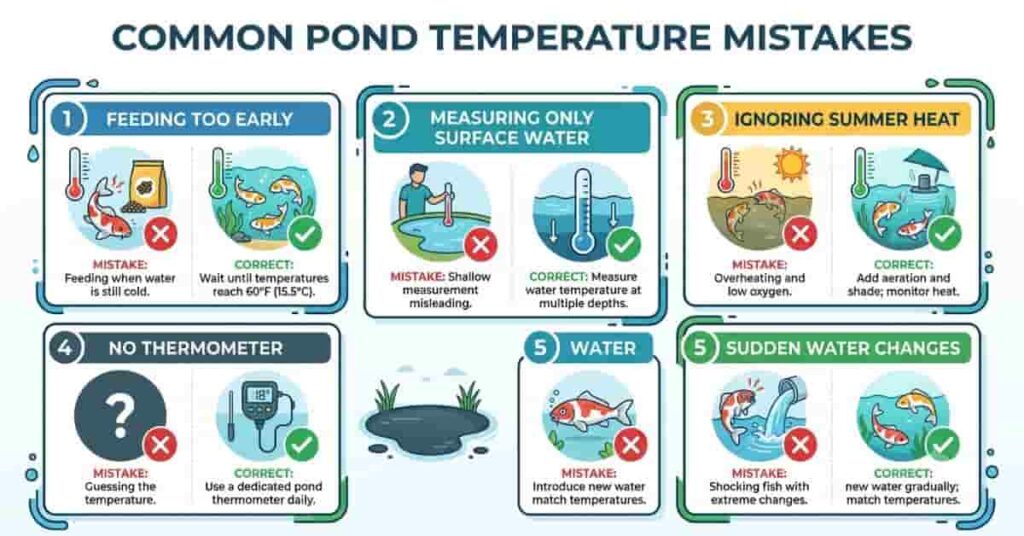
Even experienced pond owners can make mistakes when managing pond water temperature. Most problems happen because small changes go unnoticed until koi begin showing signs of stress.
The good news is that these mistakes are easy to avoid with regular temperature checks and a few simple habits. By understanding the most common errors, you can protect your koi throughout every season.
Feeding Too Early
Many beginners start feeding as soon as spring arrives. However, the calendar does not determine when koi are ready to eat—water temperature does.
If the pond is still below 50°F (10°C), your koi may not be able to digest food properly.
Instead:
- Check the pond temperature before feeding.
- Wait until water stays above 50°F (10°C).
- Start with small amounts of wheat germ food.
- Increase feeding gradually as temperatures rise.
Feeding too early can lead to digestive problems and poor water quality.
Measuring Only Surface Water
Surface water warms much faster than deeper water. If you only measure the surface, the reading may not reflect the temperature where your koi spend most of their time.
For better accuracy:
- Measure 12–18 inches (30–45 cm) below the surface.
- Take readings from the same location each day.
- Avoid areas near waterfalls or direct sunlight.
A consistent measuring routine gives you a more reliable picture of your pond’s actual temperature.
Ignoring Summer Heat
Many pond owners prepare for winter but underestimate the risks of summer.
During hot weather:
- Water holds less dissolved oxygen.
- Koi need more oxygen.
- Heat stress becomes more likely.
- Algae grows more quickly.
Monitor your pond daily during heat waves and increase aeration before temperatures become dangerous.
Not Using a Pond Thermometer
Guessing the water temperature often leads to poor feeding and maintenance decisions.
A pond thermometer helps you:
- Feed at the right time.
- Monitor seasonal changes.
- Detect sudden temperature swings.
- Reduce stress on your koi.
- Make better maintenance decisions.
A quality digital thermometer is one of the simplest and most valuable tools for any koi pond.
Making Sudden Water Changes
Large water changes can quickly alter pond temperature, especially during summer and winter.
Rapid temperature shifts may shock your koi and cause unnecessary stress.
Instead:
- Perform small partial water changes.
- Match the new water temperature as closely as possible.
- Add fresh water gradually.
- Monitor fish behavior after each water change.
Slow, steady changes are always safer than sudden adjustments.
Pro Tip: Koi adapt well to gradual seasonal temperature changes. Sudden changes of just a few degrees in a short period can be far more stressful.
Conclusion
Keeping your koi healthy starts with understanding how water temperature changes throughout the year. You learned the ideal pond temperature for koi fish, how each season affects your pond, when to adjust feeding, and why oxygen levels and regular monitoring are so important.
Whenever possible, keep your koi pond temperature between 60°F and 75°F (15.5°C–24°C). Check your pond water temperature throughout the year, adjust feeding as the seasons change, and use a reliable thermometer to make informed decisions. Small, consistent actions can prevent stress and help your koi thrive for years.
If your koi become inactive or show signs of stress, don’t rely on temperature alone. Use one of the Best Pond Water Test Kits for Koi Ponds to rule out hidden water quality problems before taking further action.
If you found this guide helpful, share it with other pond owners or leave a comment below with your questions or experiences. You can also explore our other pond care guides and free calculators to keep your koi pond healthy in every season.

Michael Brooks and Sarah Lane are the co-founders of the Pond Pump Team, a trusted U.S.-based group helping homeowners and landscapers build better ponds and water features. Michael, an experienced pond engineer from Oregon, has worked for over 12 years on pump sizing, flow systems, and water circulation. Sarah, a pond designer from Colorado with nine years of experience, focuses on eco-friendly and easy-to-maintain pond and waterfall designs. Together, they’ve completed more than 180 pond projects and created tools like the Pond Pump Calculator and Pond Liner Calculator to make pond planning simple, accurate, and sustainable.
Need help with your pond setup? Contact the Pond Pump Team for expert advice and reliable solutions.