Introduction
Adding fresh water to a pond seems simple, but the water coming from your garden hose may not be safe for fish. Many pond owners refill their ponds after evaporation, perform water changes, or set up new ponds without realizing that tap water often contains chemicals designed to make it safe for humans — not aquatic life. Chlorine, chloramine, and certain heavy metals can quickly stress fish and damage the natural balance of a pond ecosystem.
Unlike people, pond fish such as koi and goldfish are directly exposed to the water they live in. Even low levels of chlorine can harm their gills, weaken their immune system, and create unnecessary stress. Chloramine is especially concerning because it does not evaporate as quickly as chlorine and requires proper treatment before adding tap water to a fish pond.
A pond water conditioner helps neutralize harmful chemicals in tap water, making it safer for fish, aquatic plants, and beneficial bacteria. You typically need one when filling a new pond, adding water during maintenance, performing water changes, introducing new fish, or after heavy rainfall that affects water quality.
In this guide, we review the best pond water conditioners available for koi ponds, goldfish ponds, and outdoor water gardens. We compare their chlorine and chloramine removal abilities, dosage requirements, coverage, fish safety, ease of use, and overall value to help you choose the right product for your pond.
To select these recommendations, we evaluated products based on manufacturer information, ingredient performance, pond owner feedback, dosing efficiency, brand reputation, and suitability for different pond sizes. Our goal is to help you find a reliable water conditioner that protects your fish and keeps your pond water healthy.
Quick Answer: Best Pond Water Conditioner
A highly concentrated formula that removes chlorine and chloramine, detoxifies ammonia, and treats up to 5,000 gallons, making it an excellent choice for most koi and fish ponds.
A simple and reliable pond dechlorinator that works well for regular water changes, pond refills, and beginner pond owners.
A trusted option that not only makes tap water safe but also helps protect fish with its aloe vera-based slime coat support formula.
Ideal for koi keepers who want extra fish protection during water changes, handling, and stressful situations.
A large-volume conditioner that removes chlorine, chloramine, and heavy metals while providing excellent coverage for bigger outdoor ponds.
PondFirst Pond Water Conditioner
- Removes Chlorine: ✅ Yes
- Removes Chloramine: ✅ Yes
- Safe for Fish: ✅ Koi, goldfish, plants & aquatic life
- Rating: ⭐ 4.8/5
AquaDoc Fish Pond Water Conditioner
- Removes Chlorine: ✅ Yes
- Removes Chloramine: Not specifically listed
- Safe for Fish: ✅ Koi ponds, outdoor ponds & water gardens
- Rating: ⭐ 4.5/5
API POND STRESS COAT
- Removes Chlorine: ✅ Yes
- Removes Chloramine: Not specifically listed
- Safe for Fish: ✅ Fish, plants & freshwater ponds
- Rating: ⭐ 4.8/5
TetraPond AquaSafe
- Removes Chlorine: ✅ Yes
- Removes Chloramine: ✅ Yes
- Safe for Fish: ✅ Outdoor pond fish & plants
- Rating: ⭐ 4.8/5
🏆 Best Overall: PondFirst Pond Water Conditioner
PondFirst is our top choice because it offers an excellent combination of performance, coverage, and value. Its concentrated formula removes chlorine and chloramine while also detoxifying ammonia, and one 500 mL bottle treats up to 5,000 gallons. It is a great all-around option for koi ponds, goldfish ponds, and outdoor water gardens.
💰 Best Budget: AquaDoc Fish Pond Water Conditioner
AquaDoc is a simple and affordable option for pond owners who need an easy-to-use conditioner for regular maintenance. It works well for removing harmful chemicals from tap water during refills, top-offs, and new pond setups.
⭐ Best Premium: API POND STRESS COAT
API POND STRESS COAT stands out because it does more than basic dechlorination. Along with making tap water safe, it contains aloe vera to help replace the fish’s natural protective slime coat, making it useful during stressful events like handling, transportation, or adding new fish.
🐟 Best for Koi Ponds: API POND STRESS COAT
Koi are sensitive to sudden water changes, and API POND STRESS COAT is a strong choice for koi keepers who prioritize fish health. Its protective coating formula can help reduce stress when adding new water or introducing new koi.
🌱 Best for Large Ponds: TetraPond AquaSafe
TetraPond AquaSafe is ideal for larger outdoor ponds because it comes in a large-volume bottle and provides long-lasting coverage. It removes chlorine, chloramine, and binds harmful heavy metals commonly found in municipal water supplies.
How We Chose the Best Pond Water Conditioners
Choosing the right pond water conditioner is about more than simply finding a product that removes chlorine. A quality conditioner should make tap water safe for fish, protect the pond ecosystem, and provide reliable performance during routine maintenance, water changes, and new pond setups.
For this guide, we evaluated each product based on important factors that matter most to pond owners, including fish safety, treatment effectiveness, ease of use, value, and overall reliability. Water conditioners that remove chlorine and chloramine are especially important because these chemicals are commonly used to disinfect municipal tap water and can be harmful to fish when added directly to ponds. (CDC)
We considered:
🐟 Fish Safety
A good pond water conditioner should be safe for common pond fish such as koi and goldfish. We looked for products designed specifically for aquatic environments and evaluated whether they are suitable for fish, plants, and other pond inhabitants.
🐠 Koi Safety
Koi are sensitive to sudden water changes, so we prioritized conditioners that are suitable for koi ponds. Products offering additional protection, such as slime coat support or stress reduction benefits, received extra consideration.
💧 Chlorine Removal
Chlorine is commonly added to tap water to control harmful microorganisms, but it can damage fish gills and harm beneficial bacteria in ponds. We checked whether each conditioner effectively neutralizes chlorine before water enters the pond. (Aquarium Co-Op)
⚗️ Chloramine Removal
Because many water supplies use chloramine, we considered whether products specifically address this longer-lasting disinfectant. Unlike chlorine, chloramine does not easily dissipate and requires proper treatment before being added to fish ponds. (CDC)
🔩 Heavy Metal Detoxification
Some tap water may contain trace amounts of metals such as copper, lead, or other contaminants from water systems. We considered products that provide heavy metal detoxification as an added layer of protection for pond fish. (Api Fish Care)
🧴 Ease of Dosing
A conditioner should be simple to measure and apply. We compared dosing instructions, bottle design, concentration levels, and how easy each product is to use during regular pond maintenance.
💰 Bottle Value
We compared treatment coverage rather than only the purchase price. A cheaper bottle may not always provide better value if it treats fewer gallons, while concentrated formulas can offer more treatments per container.
⭐ Brand Reputation
Established aquatic brands with a history of producing pond and aquarium care products were considered more favorably. Brand reliability helps ensure consistent quality and clearer product instructions.
👥 User Feedback
Customer ratings and review volume were considered as part of our evaluation process. Products with strong user satisfaction and proven real-world use received additional consideration.
🏆 Overall Value
Finally, we looked at the complete package: performance, safety, features, coverage, price, and suitability for different pond owners. The products featured in this guide were selected because they provide the best balance of effectiveness and value for koi ponds, goldfish ponds, and outdoor water gardens.
Best Pond Water Conditioners Reviewed
Finding the right pond water conditioner is about more than simply removing chlorine from tap water. The best products also help protect koi and goldfish from chloramine, support healthy water quality, and make routine pond maintenance safer and easier.
To help you make the right choice, we compared the top-rated pond water conditioners based on fish safety, treatment performance, concentration, coverage, ease of use, brand reputation, and overall value. Whether you’re looking for the best all-around option, a budget-friendly choice, or a conditioner for a large koi pond, the products below represent the strongest options for keeping your pond water safe and your fish healthy.
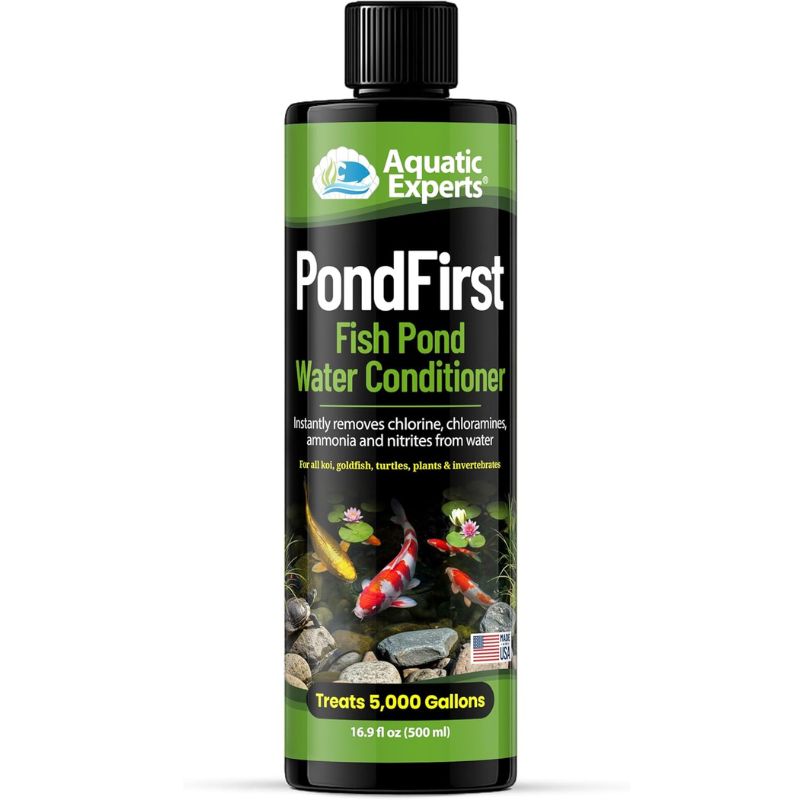
PondFirst Pond Water Conditioner
PondFirst Pond Water Conditioner by Aquatic Experts is our top overall choice because it combines strong performance, high treatment capacity, and excellent value in one concentrated formula. Designed specifically for fish ponds, it quickly makes tap water safer by removing chlorine and chloramine while also detoxifying ammonia. With one 500 mL bottle treating up to 5,000 gallons, it provides more coverage than many competing pond conditioners in the same price range. This conditioner is suitable for koi ponds, goldfish ponds, water gardens, and ponds with aquatic plants. Its concentrated formula makes it a practical choice for routine water changes, topping off evaporation loss, and preparing new pond water. For pond owners looking for an effective all-purpose conditioner without paying premium prices, PondFirst offers one of the strongest balances of performance and affordability.
Key Specifications
| Type | Liquid concentrated pond water conditioner |
| Brand | Aquatic Experts |
| Bottle Sizes | 250 mL, 500 mL, 1 Liter, 2 Liters |
| Coverage | Up to 5,000 gallons (500 mL bottle) |
| Removes Chlorine | ✅ Yes |
| Removes Chloramine | ✅ Yes |
| Detoxifies Heavy Metals | Not specifically listed |
| Detoxifies Ammonia | ✅ Yes |
| Safe for Koi | ✅ Yes |
| Safe for Aquatic Plants | ✅ Yes |
| Suitable Pond Size | Small to large backyard ponds |
Key Features
- Concentrated formula treats up to 5,000 gallons.
- Removes chlorine and chloramine from tap water.
- Detoxifies ammonia during water treatment.
- Safe for koi, goldfish, shrimp, snails, and aquatic plants.
- Easy dosing: 1 teaspoon per 50 gallons.
- Made in the USA.
- Suitable for ponds, freshwater aquariums, and water gardens.
Pros
- Extremely high coverage compared with many competitors.
- Removes both chlorine and chloramine.
- Helps detoxify ammonia.
- Good value per gallon treated.
- Safe for koi and aquatic plants.
- Easy-to-use liquid formula.
- Suitable for different pond sizes.
Cons
- Does not specifically mention heavy metal detoxification.
- Less well-known brand compared with API and Tetra.
⭐ Why We Recommend It
What makes PondFirst stand out is its concentrated formula. A 500 mL bottle treating up to 5,000 gallons provides excellent value, especially for koi pond owners who regularly perform water top-offs or partial water changes. The added ammonia detoxification feature is also useful because maintaining stable water quality is an important part of keeping fish healthy.
While brands like API and Tetra have stronger name recognition, PondFirst offers a more budget-friendly option with comparable core water treatment benefits, making it a strong choice for most backyard pond owners.
Best For
- ✅ Koi pond owners looking for an affordable all-in-one conditioner
- ✅ Medium and large backyard ponds
- ✅ Regular water changes and pond refills
- ✅ Pond owners who want maximum gallons per bottle
- ❌ Pond owners specifically looking for heavy metal detoxification.
- ❌ Users who prefer only well-established mainstream brands like API or Tetra.
- ❌ Very small ponds where a highly concentrated large-volume bottle may not be necessary.
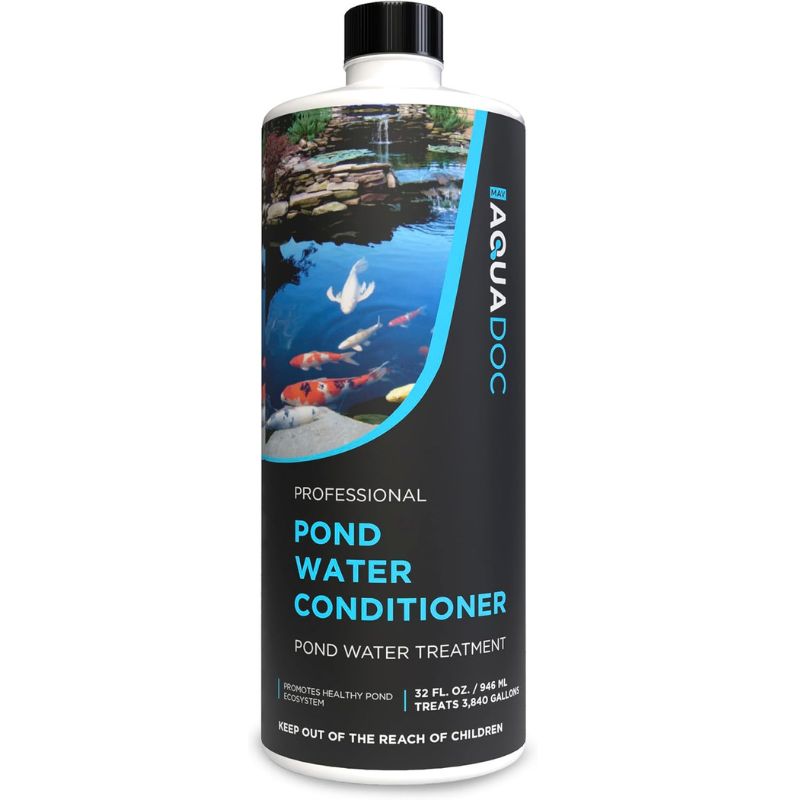
AquaDoc Fish Pond Water Conditioner
AquaDoc Fish Pond Water Conditioner is a simple and practical option for pond owners who need an easy way to treat tap water during routine maintenance. Designed for outdoor ponds, koi ponds, water gardens, and decorative water features, this conditioner helps make new tap water safer before it reaches fish and other aquatic life. The 32 oz liquid formula treats up to 3,840 gallons, making it suitable for small to medium-sized ponds and regular water changes. While it does not include as many additional benefits as some premium formulas, AquaDoc focuses on the essential job of conditioning tap water and provides a straightforward solution for beginners. Its simple dosing instructions and pond-specific design make it a convenient choice for homeowners who want reliable protection without paying for extra features they may not need.
Key Specifications
| Type | Liquid pond water conditioner |
| Brand | MAV AquaDoc |
| Bottle Sizes | 32 oz (1 liter) |
| Coverage | Up to 3,840 gallons |
| Removes Chlorine | ✅ Yes |
| Removes Chloramine | Not specifically listed |
| Detoxifies Heavy Metals | Not specifically listed |
| Detoxifies Ammonia | Not specified |
| Safe for Koi | ✅ Designed for koi ponds |
| Safe for Aquatic Plants | Suitable for water gardens |
| Suitable Pond Size | Small to medium backyard ponds |
Key Features
- Designed specifically for outdoor ponds and water gardens.
- Makes tap water safer during pond refills and water changes.
- Treats up to 3,840 gallons per bottle.
- Simple dosage instructions.
- Easy liquid application.
- Made in the USA.
- Suitable for koi ponds and decorative ponds.
Pros
- Easy to use for beginners.
- Designed specifically for outdoor ponds.
- Good bottle size for regular maintenance.
- Simple dosing instructions.
- Suitable for koi ponds and water gardens.
- Reliable option for routine water changes.
Cons
- Lower treatment coverage compared with PondFirst.
- Does not highlight chloramine removal.
- Fewer additional water treatment benefits.
- Less concentrated value compared with premium formulas.
⭐ Why We Recommend It
Its biggest advantage is ease of use. The straightforward dosing instructions make it beginner-friendly, especially for homeowners maintaining smaller backyard ponds or performing occasional water changes. While it does not offer the same level of concentration as PondFirst or the extra protective benefits of API POND STRESS COAT, it provides a practical balance of performance and affordability.
For pond owners who want a dependable conditioner without spending more on premium features, AquaDoc is a solid everyday option.
Best For
- ✅ Beginner pond owners
- ✅ Small to medium backyard ponds
- ✅ Regular tap water treatments
- ✅ Water gardens and decorative ponds
- ✅ Users who want a simple conditioner without complicated dosing
- ❌ Large ponds requiring maximum gallons per bottle
- ❌ Pond owners looking for ammonia detoxification benefits
- ❌ Users specifically needing heavy metal protection
- ❌ Fish keepers wanting extra slime coat support during stressful events
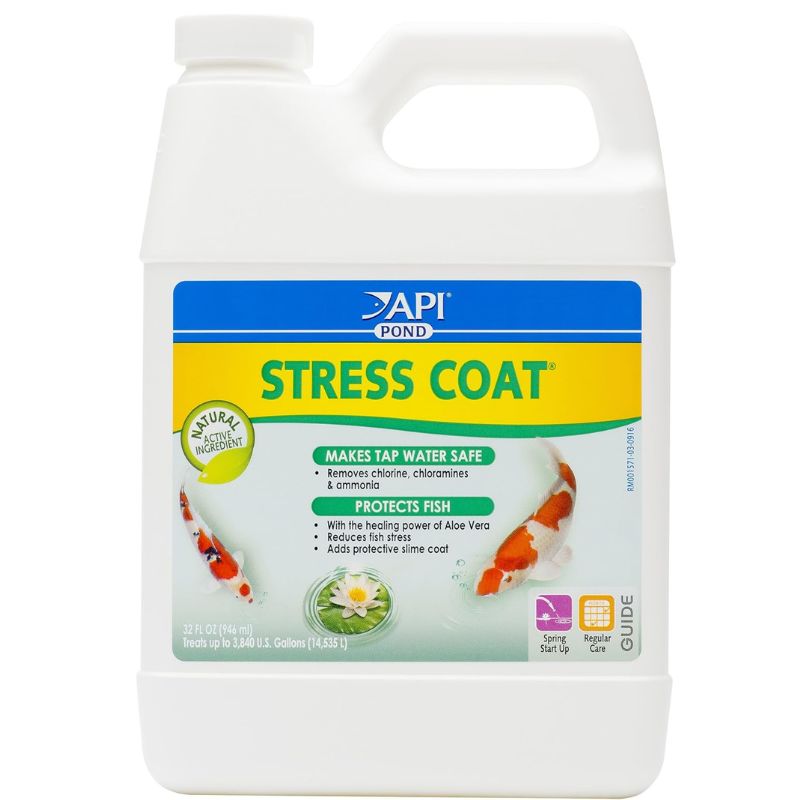
API POND STRESS COAT
API POND STRESS COAT is a premium pond water conditioner designed for fish owners who want more than basic chlorine removal. Along with making tap water safer by removing harmful chemicals, it contains aloe vera to help replace the natural protective slime coat that fish can lose during handling, transportation, or stressful conditions. With a strong reputation in the aquarium and pond care industry, API is a trusted choice among many fish keepers. The 32 oz bottle treats up to 3,840 gallons, making it suitable for many backyard ponds and koi setups. While it costs more than some basic conditioners, its added fish protection benefits make it a valuable option for pond owners who prioritize fish health during water changes, new fish introductions, and stressful situations.
Key Specifications
| Type | Liquid pond water conditioner with slime coat protection |
| Brand | API |
| Bottle Sizes | 16 oz, 32 oz, 64 oz, 1 gallon |
| Coverage | Up to 3,840 gallons (32 oz bottle) |
| Removes Chlorine | ✅ Yes |
| Removes Chloramine | Not specifically listed |
| Detoxifies Heavy Metals | Not specifically listed |
| Detoxifies Ammonia | ✅ Listed as ammonia protection |
| Safe for Koi | ✅ Yes |
| Safe for Aquatic Plants | ✅ Yes |
| Suitable Pond Size | Small to medium backyard ponds |
Key Features
- Removes harmful chemicals from tap water.
- Helps make new water safe for pond fish.
- Contains aloe vera to support fish slime coat protection.
- Helps reduce stress caused by handling and water changes.
- Safe for freshwater pond fish and aquatic plants.
- Trusted API brand reputation.
- Available in multiple bottle sizes.
Pros
- Excellent brand reputation.
- Strong customer feedback and high review volume.
- Provides slime coat protection benefits.
- Suitable for koi, goldfish, and pond plants.
- Useful during stressful events like fish handling.
- Available in multiple sizes.
Cons
- Higher price compared with basic conditioners.
- Lower treatment coverage than highly concentrated formulas.
- Chloramine and heavy metal treatment are not specifically highlighted.
⭐ Why We Recommend It
This extra protection can be valuable when adding new fish, moving koi, handling fish during maintenance, or performing larger water changes. The strong API brand reputation and thousands of customer reviews also make it a reliable choice for pond owners who prefer a proven product.
Although it may not provide the highest gallons-per-dollar value, its added fish care benefits justify the premium positioning. For pond owners who consider fish health the top priority, API POND STRESS COAT is one of the strongest options available.
Best For
- ✅ Koi pond owners who prioritize fish protection
- ✅ New fish introductions
- ✅ Reducing stress during handling or maintenance
- ✅ Pond owners who prefer established aquatic brands
- ✅ Small to medium-sized backyard ponds
- ❌ Large ponds requiring maximum treatment coverage
- ❌ Budget-focused pond owners looking for the lowest cost per gallon
- ❌ Users who only need a basic chlorine remover
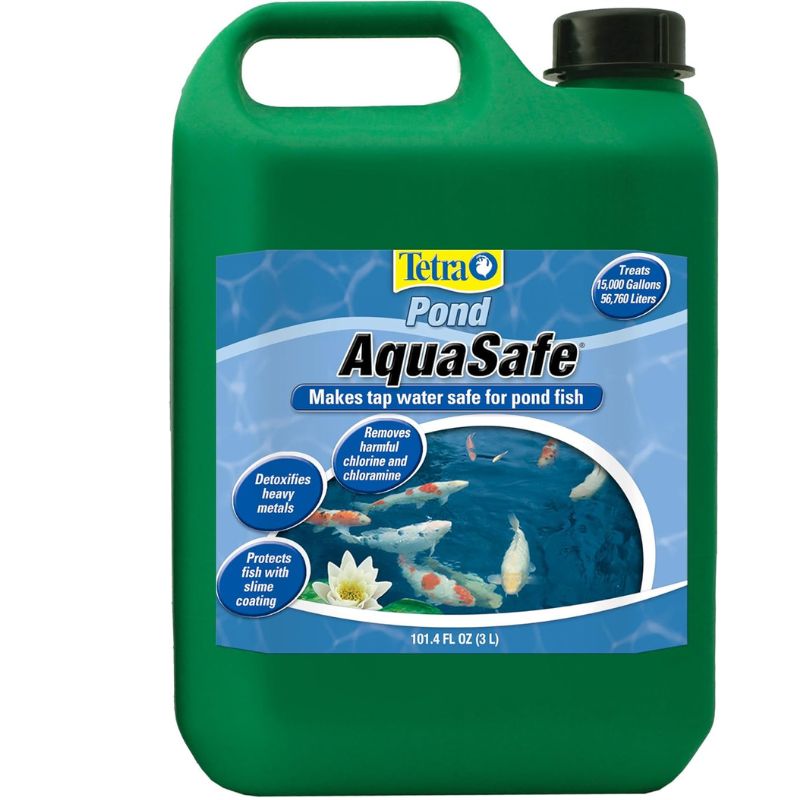
TetraPond AquaSafe
TetraPond AquaSafe is a reliable pond water conditioner designed for outdoor ornamental ponds, koi ponds, and water gardens where larger volumes of tap water need to be treated. Its main advantage is the large 101.4 oz bottle size, making it a practical choice for pond owners who regularly perform water changes or maintain larger pond systems. This formula helps remove chlorine and chloramine while also binding and detoxifying heavy metals that may be present in municipal water supplies. It also provides a protective coating to help support fish gills and membranes, adding an extra layer of protection during water changes. With its trusted brand reputation and large container size, TetraPond AquaSafe is a strong option for pond owners who want a dependable conditioner for frequent maintenance.
Key Specifications
| Type | Liquid pond water conditioner |
| Brand | Tetra |
| Bottle Sizes | 101.4 oz |
| Coverage | Large-volume pond treatment (based on product dosage) |
| Removes Chlorine | ✅ Yes |
| Removes Chloramine | ✅ Yes |
| Detoxifies Heavy Metals | ✅ Yes |
| Detoxifies Ammonia | Not specifically listed |
| Safe for Koi | ✅ Yes |
| Safe for Aquatic Plants | ✅ Yes |
| Suitable Pond Size | Medium to large outdoor ponds |
Key Features
- Removes chlorine and chloramines from tap water.
- Binds and detoxifies harmful heavy metals.
- Provides protective coating for fish gills and membranes.
- Designed for outdoor ornamental ponds.
- Suitable for koi ponds and water gardens.
- Large bottle size for frequent pond maintenance.
- Trusted Tetra aquatic care formula.
Pros
- Excellent choice for larger ponds.
- Removes chlorine, chloramine, and heavy metals.
- Large bottle reduces frequent repurchasing.
- Trusted aquatic brand with strong reputation.
- Helps protect sensitive fish during water changes.
- Suitable for outdoor pond environments.
Cons
- Large bottle may be unnecessary for small ponds.
- Less concentrated coverage information compared with some competitors.
- May cost more upfront than smaller bottles.
⭐ Why We Recommend It
Another advantage is its broad protection. In addition to chlorine and chloramine removal, TetraPond AquaSafe also addresses heavy metals commonly found in municipal tap water. This makes it a strong choice for pond owners who want extra protection beyond basic dechlorination.
While smaller pond owners may prefer more concentrated formulas like PondFirst, TetraPond AquaSafe is a practical solution for larger garden ponds where reliability, brand trust, and long-term use matter most.
Best For
- ✅ Large garden ponds
- ✅ Pond owners performing frequent water changes
- ✅ Koi and ornamental fish ponds
- ✅ Users wanting chlorine, chloramine, and heavy metal protection
- ✅ Long-term pond maintenance
- ❌ Small backyard ponds with minimal water changes
- ❌ Owners looking for the lowest cost per gallon treated
- ❌ Pond keepers who only need a basic dechlorinator
How to Choose the Best Pond Water Conditioner
Choosing the right pond water conditioner depends on more than just picking the most popular product. The best option for your pond depends on factors such as pond size, fish type, water source, and the specific contaminants you need to remove. A good conditioner should make tap water safe, protect fish health, and support a stable pond environment.
Before buying a pond water conditioner, consider these important factors.
1. Pond Size
The size of your pond plays a major role in choosing the right water conditioner. Every product has a specific treatment capacity, usually measured in gallons. A small bottle may work well for a backyard water garden, but larger ponds may require a concentrated formula or a larger container to avoid frequent repurchasing.
For example, a conditioner that treats 5,000 gallons may provide better value for a large koi pond, while a smaller pond owner may prefer a compact bottle that is easier to store and measure.
Always check the product label for:
- Total gallons the bottle can treat
- Recommended dosage per gallon
- Cost per treatment
- How often you perform water changes
Choosing a product based on coverage instead of bottle size helps ensure you get the best value.
2. Fish Species (Koi vs Goldfish)
Different pond fish can have different care requirements, especially when dealing with water changes and stress.
Koi Ponds
Koi are valuable and sensitive fish that require stable water conditions. A good conditioner for koi ponds should:
- Quickly neutralize chlorine and chloramine
- Be safe for sensitive fish
- Support fish health during water changes
- Avoid harming beneficial bacteria
Products with additional protective benefits, such as slime coat support, can be useful when koi are stressed from handling, transportation, or maintenance.
Goldfish Ponds
Goldfish are generally hardy, but they are still vulnerable to untreated tap water. A basic pond conditioner that removes chlorine and makes new water safe is usually sufficient for most goldfish ponds.
For both koi and goldfish, untreated tap water should never be added directly to the pond.
3. Chlorine vs Chloramine: What Is the Difference?
Understanding the difference between chlorine and chloramine helps you choose a more effective pond water conditioner.
Chlorine
Chlorine is commonly used in municipal water supplies to kill harmful bacteria. However, it can be dangerous for pond fish because it may damage their gills and harm beneficial bacteria in the pond filter.
Chlorine can disappear naturally over time, but this process is too slow and unreliable when adding tap water directly to a fish pond.
Chloramine
Chloramine is a combination of chlorine and ammonia that is used by many water suppliers because it lasts longer in the water system.
Unlike chlorine, chloramine does not quickly evaporate and requires a proper water conditioner to neutralize it.
When choosing a pond conditioner, look for products that specifically mention:
- Removes chlorine
- Removes chloramine
- Detoxifies ammonia (if included)
For most modern water supplies, a conditioner that handles both chlorine and chloramine is the safer choice.
4. Heavy Metal Protection
Some tap water can contain trace amounts of heavy metals such as copper, lead, or zinc. These contaminants may come from municipal water systems and can be harmful to fish over time.
A pond water conditioner with heavy metal detoxification provides an additional layer of protection by binding these metals and making them safer for aquatic life.
Heavy metal protection is especially useful for:
- New pond setups
- Urban water supplies
- Large water changes
- Sensitive koi ponds
If your water source is known to contain metals, choose a conditioner that specifically lists heavy metal removal.
5. Liquid vs Powder Pond Water Conditioner
Pond water conditioners are available in liquid and powder forms. Both can be effective, but each has different advantages.
Liquid Conditioners
Advantages:
- Easy to measure
- Dissolves immediately
- Simple for beginners
- Great for routine water changes
Liquid formulas are the most common choice for backyard pond owners.
Powder Conditioners
Advantages:
- Often more concentrated
- Easier to store
- Can provide more treatments per container
However, powders may require more accurate measuring and mixing before use.
For most home pond owners, liquid conditioners are usually the easiest and most convenient option.
6. Concentration & Coverage
A lower-priced bottle does not always mean better value. The important factor is how much water the product can treat.
Compare:
- Bottle size
- Dosage requirements
- Total gallons treated
- Cost per treatment
For example, a concentrated conditioner that treats 5,000 gallons may provide better long-term value than a larger bottle that treats fewer gallons.
Always choose coverage based on your actual pond volume rather than buying only by price.
7. Ease of Use
A good pond water conditioner should be simple to apply, especially during emergency water changes or regular maintenance.
Look for:
- Clear dosage instructions
- Easy measuring cap
- Fast dissolving formula
- Simple application method
Liquid conditioners are often preferred because they can be added directly to the pond or near water flow areas such as waterfalls and pumps.
A product that is easy to use is more likely to be used correctly and consistently.
8. Brand Reliability
Brand reputation matters when choosing products that directly affect fish health. Established aquatic brands often have years of experience developing water treatments and provide clearer usage instructions.
Reliable brands typically offer:
- Detailed dosage information
- Consistent product quality
- Better customer support
- Proven customer feedback
Brands such as API, Tetra, and other specialized pond care companies have become popular because pond owners trust their products for maintaining healthy aquatic environments.
However, a lesser-known brand can still be a good choice if it provides strong performance, clear labeling, and positive user feedback.
Final Buying Tip
The best pond water conditioner is the one that matches your pond’s needs. For small ponds, ease of use and simple dosing may matter most. For large koi ponds, concentration, coverage, and extra protection become more important.
Always calculate your pond volume first, check the conditioner’s treatment capacity, and choose a product that safely handles the chemicals found in your local tap water.
Pond Water Conditioner vs Dechlorinator
Many pond owners use the terms pond water conditioner and pond dechlorinator interchangeably, but there can be differences between the two. Both products are designed to make tap water safer for fish, but water conditioners often provide additional benefits beyond basic chlorine removal.
Understanding the difference can help you choose the right product for your koi pond, goldfish pond, or outdoor water garden.
What Is a Pond Water Conditioner?
A pond water conditioner is a water treatment product designed to make tap water safe before it enters a fish pond. It neutralizes harmful chemicals commonly found in municipal water supplies, including chlorine and chloramine, which can damage fish gills and harm beneficial bacteria.
Many modern pond water conditioners do more than simple dechlorination. Depending on the formula, they may also:
- Remove chlorine and chloramine
- Detoxify ammonia
- Bind heavy metals
- Support fish slime coat protection
- Reduce stress during water changes
- Protect beneficial bacteria in pond filters
Because of these additional benefits, pond water conditioners are often preferred by koi keepers and pond owners who want broader protection for their fish.
What Is a Pond Dechlorinator?
A pond dechlorinator is a product specifically designed to remove or neutralize chlorine from tap water. Its main purpose is to eliminate chlorine before adding treated water to a pond.
Traditional dechlorinators are usually simpler formulas that focus on one primary task:
- Neutralizing chlorine
- Making tap water safer for fish
Some dechlorinators can also handle chloramine, but not all products provide the same level of protection. Always check the product label to confirm what chemicals it removes.
For basic ponds without sensitive fish or complex water quality concerns, a simple dechlorinator may be enough.
Pond Water Conditioner vs Dechlorinator: Key Differences
| Feature | Pond Water Conditioner | Pond Dechlorinator |
|---|---|---|
| Main Purpose | Complete tap water treatment | Removes chlorine from tap water |
| Removes Chlorine | ✅ Usually | ✅ Yes |
| Removes Chloramine | ✅ Many formulas | ⚠️ Depends on product |
| Heavy Metal Protection | ✅ Some products | ⚠️ Less common |
| Ammonia Detoxification | ✅ Some formulas | ❌ Usually not included |
| Fish Protection Benefits | ✅ Often included | ❌ Usually basic protection |
| Best For | Koi ponds, fish ponds, regular maintenance | Simple ponds and basic water changes |
| Price Range | Usually higher | Usually lower |
| Features | More comprehensive | More limited |
Which One Should You Buy?
Choose a pond water conditioner if you have:
- ✅ Koi fish
- ✅ Goldfish ponds
- ✅ Large outdoor ponds
- ✅ Valuable fish
- ✅ Frequent water changes
- ✅ Concerns about heavy metals or ammonia
A pond dechlorinator may be enough if you only need simple chlorine removal and have a small, low-maintenance pond.
For the best overall protection, look for a product that removes both chlorine and chloramine, is safe for koi and aquatic plants, and matches your pond size. Products like PondFirst Pond Water Conditioner, API POND STRESS COAT, and TetraPond AquaSafe provide broader water treatment benefits compared with basic dechlorinators.
When Should You Use Pond Water Conditioner?
A pond water conditioner is not something you need to add every day. It is mainly used whenever untreated tap water or outside water enters your pond. Since municipal water often contains chlorine, chloramine, and other chemicals that can harm fish, treating new water before it reaches your pond helps protect fish health and maintain a stable ecosystem.
Here are the most common situations when you should use a pond water conditioner.
1. New Pond Setup
When filling a brand-new pond, using a water conditioner is one of the first steps before adding fish.
Tap water may contain chlorine or chloramine that can:
- Damage fish gills
- Stress newly introduced fish
- Kill beneficial bacteria in filters
- Disrupt the pond’s natural balance
Always treat the water before adding koi, goldfish, or other aquatic life. This gives your pond a safer starting environment and helps beneficial bacteria establish properly.
2. During Water Changes
Partial water changes are an important part of pond maintenance, but adding untreated tap water directly can create problems.
Whenever you replace pond water:
- Calculate how much new water is being added
- Dose the conditioner according to the amount of replacement water
- Treat the water before fish are exposed to it
Regular water changes are especially common in koi ponds, where maintaining good water quality is essential for fish health.
3. When Filling or Topping Off the Pond
Ponds naturally lose water through evaporation, especially during hot weather. Many pond owners simply refill the pond with a garden hose, but fresh tap water should be treated first.
Use a pond water conditioner when:
- Adding water after evaporation
- Refilling after cleaning
- Adjusting pond water levels
- Adding large amounts of tap water
Even small amounts of untreated tap water can introduce chlorine and chloramine into the pond.
4. After Heavy Rain
Rainwater is usually not chlorinated, but heavy rainfall can still affect pond water quality.
After storms, you may need to use a conditioner if you add municipal water to restore the pond level. It can also be useful when testing reveals water quality changes after major weather events.
Heavy rain can cause:
- Sudden water chemistry changes
- Lower oxygen levels
- Increased stress on fish
- Runoff contamination
Always test your pond water after significant weather changes and treat new water additions when needed.
5. When Adding New Fish
Adding new koi or goldfish is a stressful event for fish. A water conditioner can help create a safer environment when introducing new arrivals.
Use a conditioner when:
- Adding new fish from a store or breeder
- Moving fish between ponds
- Setting up a quarantine tank or temporary holding container
Some conditioners, such as those with slime coat protection, can provide additional support during stressful situations.
Use a pond water conditioner whenever new water enters your pond, including:
- ✅ New pond installation
- ✅ Water changes
- ✅ Hose top-offs
- ✅ Adding replacement water
- ✅ Introducing new fish
- ✅ Any situation involving untreated tap water
A quality conditioner is a simple but important tool for protecting koi, goldfish, and other pond fish from harmful chemicals commonly found in tap water.
How to Use Pond Water Conditioner Correctly
Using a pond water conditioner correctly is important because adding too little may not fully neutralize harmful chemicals, while unnecessary overdosing can waste the product. The process is simple, but following the correct steps helps protect koi, goldfish, aquatic plants, and beneficial bacteria in your pond.
Follow these steps whenever you add tap water to your pond.
Step 1: Measure Your Pond Volume
Before adding any conditioner, you need to know how many gallons of water your pond holds. The correct dosage depends on the amount of water being treated.
You can estimate your pond volume by measuring:
- Length
- Width
- Average depth
- Pond shape
For irregular ponds, use a pond volume calculator for a more accurate estimate.
Knowing your pond size helps you avoid underdosing and ensures you use the right amount of conditioner.
Step 2: Read the Product Dosage Instructions
Every pond water conditioner has different concentration levels, so always follow the label instructions before adding it.
Check:
- Dosage per gallon
- Total water being treated
- Bottle measurement markings
- Recommended application method
For example, a concentrated formula may require only a small amount per gallon, while another product may need a higher dose.
Never assume all pond conditioners have the same dosage.
Step 3: Add Conditioner Near Water Flow Areas
For the best distribution, add the conditioner near areas with strong water movement, such as:
- Waterfalls
- Pond pumps
- Filter returns
- Aeration areas
Moving water helps spread the treatment quickly throughout the pond.
For large water additions, some pond owners prefer treating the incoming tap water directly as it enters the pond.
Step 4: Allow Time for the Conditioner to Work
Most modern pond water conditioners work quickly, but you should still allow time for the product to circulate through the pond.
During this period:
- Keep pumps and filters running
- Allow water to mix completely
- Avoid adding untreated tap water nearby
The conditioner needs proper contact with the water to neutralize chlorine, chloramine, and other chemicals.
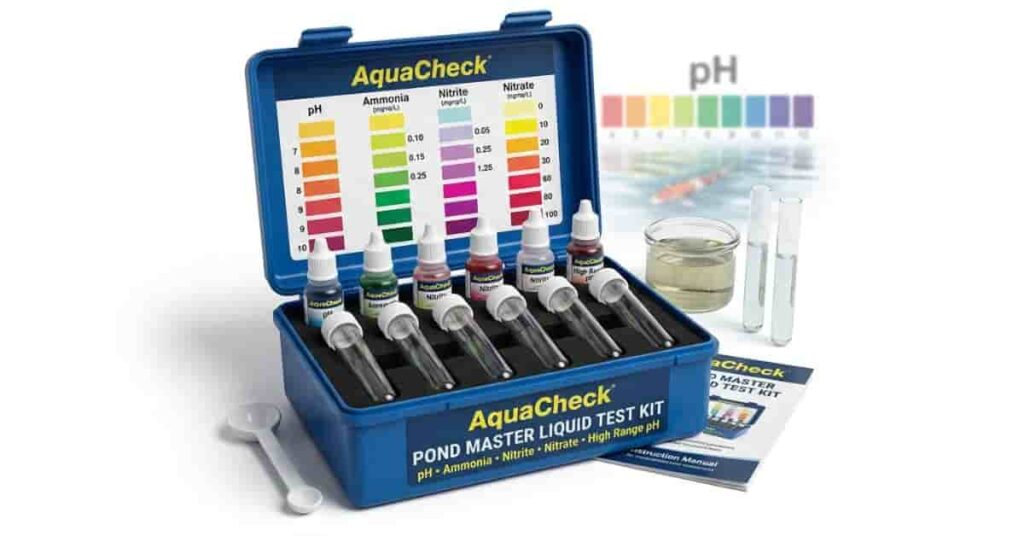
Step 5: Test Your Water Quality
After adding a conditioner, testing your pond water helps confirm that the environment remains safe for fish.
Important water parameters to monitor include:
- Chlorine levels
- Ammonia
- Nitrite
- pH
- Water hardness (if needed)
Regular testing is especially important after large water changes, new pond setups, or adding new fish.
- ✅ Treat tap water before adding fish
- ✅ Follow the manufacturer's dosage instructions
- ✅ Calculate pond volume accurately
- ✅ Keep pumps running for better circulation
- ✅ Use a water test kit after major changes
- ✅ Choose a conditioner suitable for your pond size and fish species
Using a pond water conditioner correctly is a simple step that can prevent unnecessary fish stress and protect the overall health of your pond ecosystem.
Common Mistakes to Avoid When Using Pond Water Conditioner
A pond water conditioner is easy to use, but small mistakes can reduce its effectiveness and leave fish exposed to harmful chemicals. Many pond problems happen because owners use the wrong dosage, choose the wrong product, or overlook important water quality factors.
Avoid these common mistakes to get the best results from your pond conditioner.
1. Guessing Pond Volume
One of the most common mistakes is estimating pond size without accurate measurements. Water conditioner dosage is based on the amount of water being treated, so an incorrect pond volume can lead to using too little or too much product.
Before adding conditioner, calculate your pond volume using:
- Length
- Width
- Average depth
- Pond shape
For irregular ponds, use a pond volume calculator to get a more accurate estimate.
An accurate water volume calculation helps ensure your fish receive the correct level of protection.
2. Overdosing the Product
Many pond owners assume that adding extra conditioner provides better protection, but more is not always necessary.
Overdosing can:
- Waste product
- Increase maintenance costs
- Make water treatment less predictable
- Create unnecessary chemical changes
Always follow the manufacturer's dosage instructions. Concentrated formulas are designed to work effectively at specific amounts, so using the correct dose is the safest approach.
3. Forgetting About Chloramine
Some pond owners only look for chlorine removal and forget about chloramine. This can be a problem because many municipal water systems use chloramine as a disinfectant.
Unlike chlorine, chloramine does not disappear quickly and requires a conditioner that specifically handles it.
When choosing a product, look for labels that mention:
- Removes chlorine
- Removes chloramine
- Detoxifies ammonia (if included)
A conditioner that only handles chlorine may not provide complete protection.
4. Using Aquarium Dosage Instructions Incorrectly
Not all water conditioners are designed the same way. Some products are made for aquariums, while others are specifically formulated for outdoor ponds.
Using aquarium dosage instructions for a pond product can result in incorrect treatment levels.
Always:
- Check the exact product label
- Follow pond-specific instructions
- Measure according to the amount of water being treated
Pond conditioners are often designed for much larger water volumes than aquarium products.
5. Buying Based Only on Price
The cheapest pond conditioner is not always the best value. A low-cost bottle may treat fewer gallons or provide fewer benefits compared with a concentrated formula.
Instead of comparing only purchase price, consider:
- Total gallons treated
- Chlorine and chloramine removal
- Fish safety
- Additional features
- Cost per treatment
A slightly more expensive product may save money over time if it provides better coverage.
6. Ignoring Expiration Date
Like many pond care products, water conditioners can become less reliable over time. Using an old or improperly stored product may reduce its effectiveness.
Always check:
- Expiration date (if provided)
- Storage instructions
- Bottle condition
Store conditioners in a cool, dry place away from extreme temperatures to help maintain product quality.
Using a pond water conditioner correctly is just as important as choosing the right product. Accurate dosing, proper product selection, and regular water testing help keep koi, goldfish, and other pond fish safe during water changes and maintenance.
Frequently Asked Questions
The best pond water conditioner depends on your pond size, fish type, and water quality needs. PondFirst Pond Water Conditioner is a strong overall choice because it removes chlorine and chloramine, detoxifies ammonia, and treats up to 5,000 gallons with its concentrated formula. Other good options include API POND STRESS COAT for extra fish protection, TetraPond AquaSafe for larger ponds, and AquaDoc for simple routine water treatment.
Yes, you should use a pond water conditioner whenever you add untreated tap water during a water change. Chlorine and chloramine found in municipal water can harm fish gills, stress pond fish, and damage beneficial bacteria. Always treat replacement water before adding it to your pond.
Some aquarium water conditioners can work in ponds if they are safe for your fish and treat the same chemicals. However, pond-specific conditioners are usually better because they are designed for larger water volumes and outdoor pond conditions.
Yes, quality pond water conditioners are safe for koi when used according to the manufacturer's instructions. They help protect koi by removing harmful chemicals from tap water and reducing stress during water changes.
Many pond water conditioners remove or neutralize chloramine, but not every product does. Always check the label and choose a conditioner that specifically mentions chloramine removal if your water supply contains this disinfectant.
Most pond water conditioners work immediately after being added to water. Storage life depends on the product formula and storage conditions. Keep the bottle sealed and store it in a cool, dry place for the best results.
In most cases, fish can be added after using a pond water conditioner designed for immediate tap water treatment. However, allow the product to circulate properly and check water parameters whenever possible before introducing fish.
Yes, most pond water conditioners are safe for aquatic plants when used correctly. Many formulas are designed for complete pond ecosystems and can be used around fish, plants, and beneficial bacteria.
No, pond water conditioner does not remove algae or fix green water problems. Green water is usually caused by excess algae growth due to sunlight, nutrients, poor filtration, or fish waste. UV clarifiers, filtration improvements, and beneficial bacteria are usually needed.
Some advanced pond water conditioners can detoxify ammonia, but basic dechlorinators may only remove chlorine. If ammonia is a concern, choose a product that specifically lists ammonia detoxification and continue testing your pond water regularly.

Michael Brooks and Sarah Lane are the co-founders of the Pond Pump Team, a trusted U.S.-based group helping homeowners and landscapers build better ponds and water features. Michael, an experienced pond engineer from Oregon, has worked for over 12 years on pump sizing, flow systems, and water circulation. Sarah, a pond designer from Colorado with nine years of experience, focuses on eco-friendly and easy-to-maintain pond and waterfall designs. Together, they’ve completed more than 180 pond projects and created tools like the Pond Pump Calculator and Pond Liner Calculator to make pond planning simple, accurate, and sustainable.
Need help with your pond setup? Contact the Pond Pump Team for expert advice and reliable solutions.