Table of Contents
Introduction
Have you noticed pond algae taking over and worried that removing it could harm your fish? Learning how to get rid of pond algae without killing fish is essential because the wrong treatment can lower oxygen levels, upset water quality, and even kill koi or goldfish. Many beginners in the USA make the mistake of using harsh chemicals or removing algae too quickly, which can do more harm than good. Fortunately, there are safer ways to control algae in fish ponds while protecting the pond’s natural balance.
In this guide, you’ll discover fish-safe methods to remove algae, improve water quality, and prevent future blooms without putting your fish at risk. We’ll cover manual removal, aeration, beneficial bacteria, aquatic plants, and safe treatment options that work for both backyard ponds and algae in koi ponds. By the end, you’ll know how to clear algae the right way and keep your pond healthy, balanced, and safe for your fish all year.
Many fish pond owners prefer gentler solutions before considering stronger treatments. You can explore how to get rid of pond algae naturally for methods that support a healthier pond environment.
Why Algae Is Dangerous for Fish (When Overgrown)
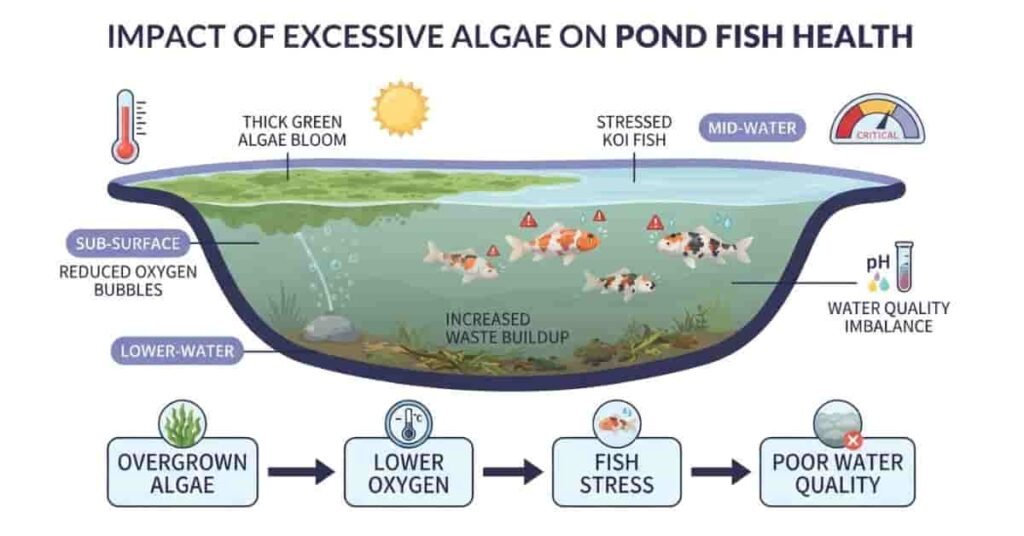
A small amount of algae is normal and even helpful in a healthy pond. Problems begin when algae grows out of control. Thick algae blooms can change water quality quickly and create unsafe conditions for fish. This is especially true in warm weather when algae grows faster.
One of the biggest risks is oxygen depletion. During the day, algae produces oxygen through photosynthesis. At night, however, algae consumes oxygen like other living organisms. Heavy algae growth can lower dissolved oxygen levels enough to stress or even suffocate fish, especially koi and goldfish.
Some algae, such as blue-green algae (cyanobacteria), may also produce harmful toxins. These toxins can irritate fish, damage their gills, and make the water unsafe for pets and wildlife. If you suspect a toxic bloom, avoid handling the water until you identify the algae type.
Overgrown algae can also upset your pond’s biological balance. As large amounts of algae die and decompose, they release waste that may increase ammonia levels. High ammonia stresses fish and can damage their gills, making them more vulnerable to disease.
Koi and goldfish often show stress before water tests reveal a problem. They may gasp at the surface, become less active, or stop eating. Acting early helps prevent these issues and keeps your pond stable.
Expert Tip: If your fish gather near waterfalls or air stones, low oxygen may be the problem. Increase aeration before treating algae.
Safe Methods to Remove Algae With Fish in Pond
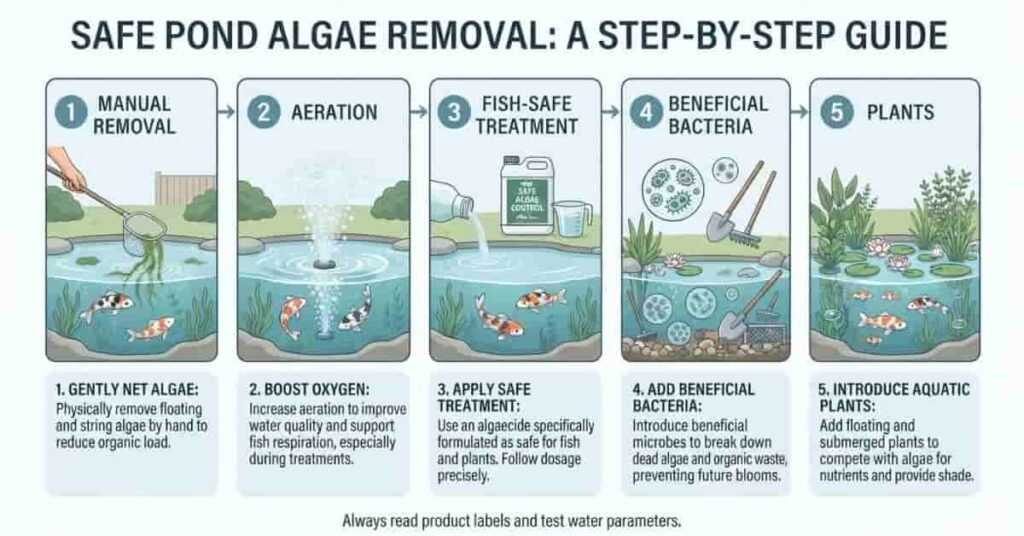
Removing algae from a pond with fish requires patience. Quick fixes often cause more harm than the algae itself. The safest approach is to remove algae gradually while protecting water quality and oxygen levels.
Start with natural methods before using any treatment. Manual cleaning, better aeration, beneficial bacteria, and aquatic plants help reduce algae without putting fish at risk. If algae remains a problem, choose a product that is clearly labeled as safe for ponds containing fish.
Avoid trying multiple treatments at the same time. Sudden changes can stress koi, goldfish, and other pond fish. Instead, make one improvement, monitor the water, and give the pond time to stabilize before moving to the next step.
The following methods are beginner-friendly and help control algae while keeping your pond’s ecosystem balanced.
After removing an algae bloom, preventing it from returning is just as important as the initial treatment. Learn how to prevent pond algae with long-term strategies for maintaining better water quality.
1. Manual Algae Removal (Safest Method)
Manual removal is the safest way to reduce algae when fish are already in the pond. It removes excess algae without changing the water chemistry or exposing fish to chemicals.
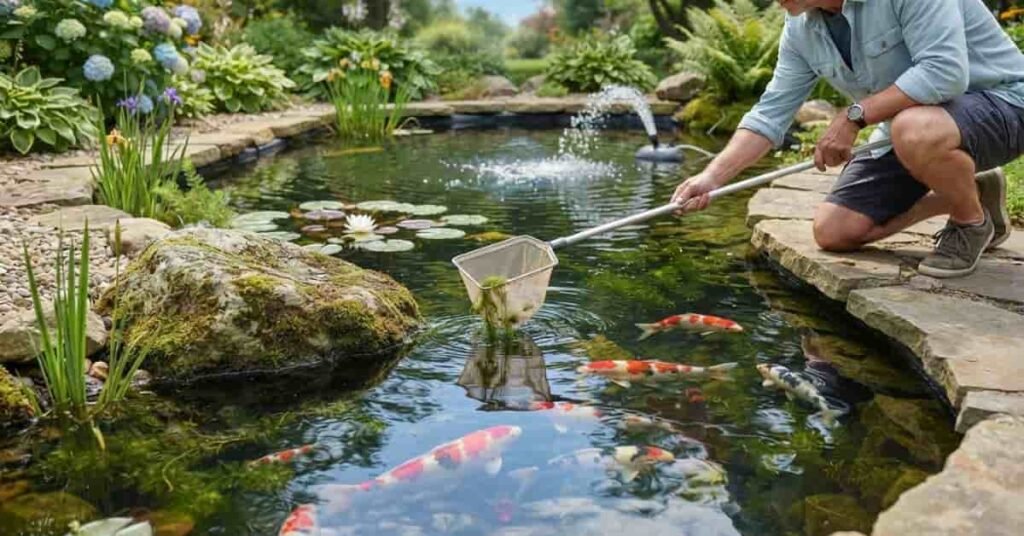
Use a fine pond net to scoop out floating algae every few days. For string algae attached to rocks or waterfalls, gently scrub the surfaces with a pond-safe brush. Remove loosened algae with the net so it does not break down in the water.
Work slowly and clean only part of the pond at a time. Removing every bit of algae at once can disturb beneficial bacteria and reduce shelter for small aquatic life.
Pro Tip: Clean algae during cooler morning hours when oxygen levels are generally more stable, and avoid stirring up large amounts of pond debris.
2. Improve Aeration (Critical for Fish Survival)
Good aeration helps fish breathe and supports a healthier pond environment. Higher oxygen levels also help beneficial bacteria break down waste that feeds algae.
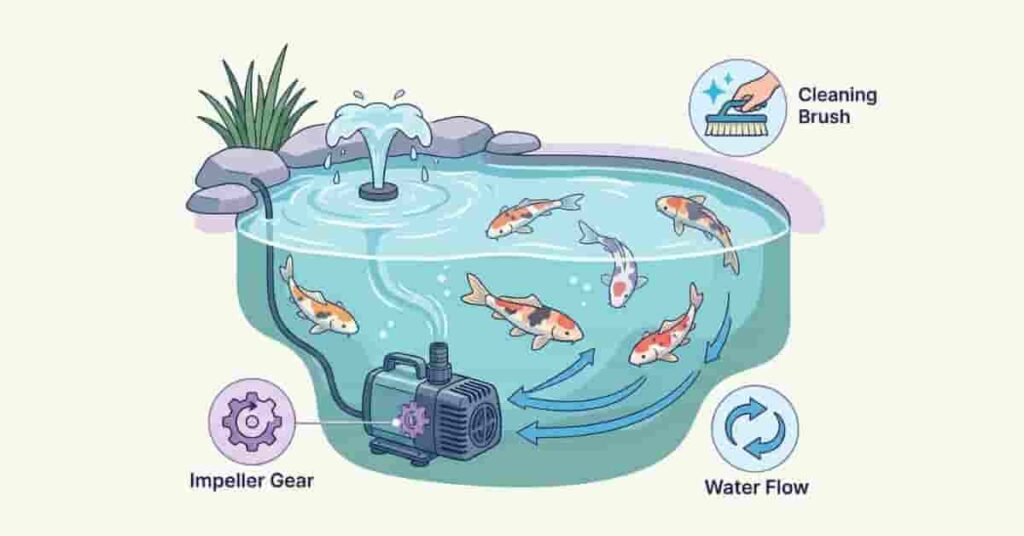
Install an air pump, fountain, or waterfall to keep water moving. Better circulation prevents stagnant areas where algae often grows. It also reduces stress on koi and goldfish during warm weather.
If you plan to use a fish-safe algae treatment, increase aeration before and during treatment. This simple step helps protect fish from sudden drops in oxygen caused by dying algae.
Pro Tip: If fish begin gathering near the surface or around waterfalls, add more aeration immediately and test your water quality.
3. Use Fish-Safe Algae Treatments
Sometimes natural methods are not enough to control heavy algae growth. In these cases, use an algae treatment that is clearly labeled as safe for ponds with fish.
Read the product instructions carefully and follow the recommended dosage. Never assume that using more product will work faster. Overdosing can stress fish and reduce oxygen as algae dies.
Treat only part of the pond if the algae growth is severe. This gradual approach lowers the risk of sudden water quality changes and gives your filtration system time to handle the dying algae.
Pro Tip: Test ammonia and oxygen levels for several days after treatment to make sure your pond remains stable.
4. Add Beneficial Bacteria
Beneficial bacteria help create a healthier pond by breaking down organic waste before algae can use it as food. They do not kill algae directly, but they reduce the nutrients that support algae growth.
Regular use can improve water clarity, reduce sludge, and support your pond’s natural biological filter. Healthy bacteria also help maintain better water quality for fish.
Choose a bacteria product made specifically for ponds and follow the recommended application schedule. Results take time, but they are more sustainable than relying only on chemical treatments.
Pro Tip: Beneficial bacteria work best when combined with good filtration and proper aeration.
5. Add Aquatic Plants (Natural Balance)
Aquatic plants naturally compete with algae for sunlight and nutrients. As plants grow, they leave fewer resources available for unwanted algae.
Water lilies provide shade that helps cool the water and limit sunlight. Floating plants reduce light reaching the pond, while oxygenating plants help support a balanced aquatic environment.
Choose plants that match your pond size and climate. Healthy plant growth is one of the best long-term ways to reduce algae without harming fish.
Pro Tip: Aim to shade about 50–60% of the pond surface during summer to help discourage algae growth naturally.
6. Partial Water Changes (Emergency Control)
A partial water change can help when algae has reduced water quality or increased ammonia levels. It dilutes harmful substances without causing the stress of a complete water replacement.
Replace only about 10–20% of the pond water at one time unless a larger change is recommended for a specific water quality issue. Match the new water as closely as possible to the pond’s temperature and treat it with a suitable dechlorinator if needed.
Avoid draining the entire pond. A full water change removes beneficial bacteria, shocks fish, and can make algae problems worse in the long run.
Pro Tip: Test the water before and after each water change to track improvements and avoid unnecessary changes.
Special Case – Algae in Koi Ponds
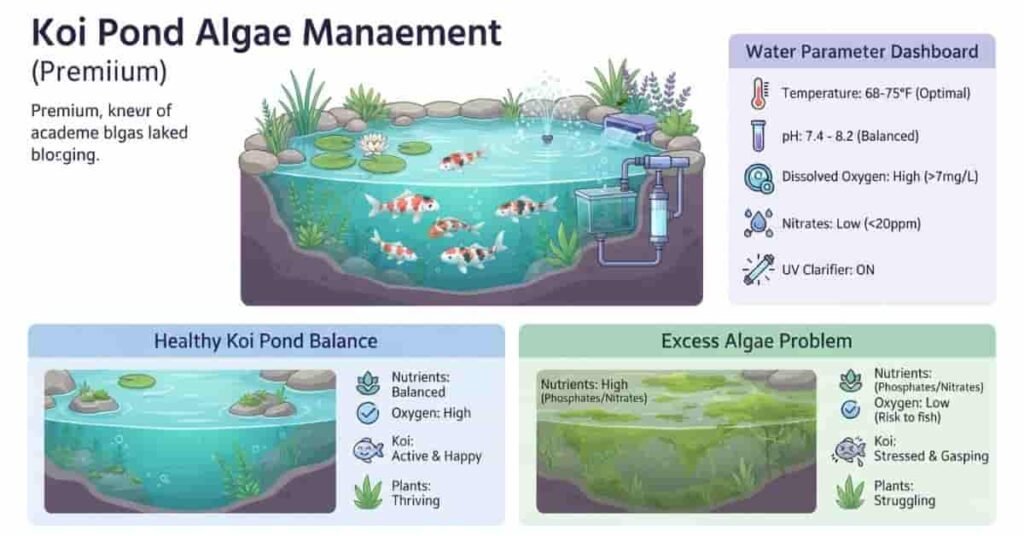
Koi ponds need extra care because koi are sensitive to sudden water changes. These fish produce a lot of waste, which can increase nutrients that algae use for growth. A small algae problem can quickly become a larger issue if the pond lacks proper filtration and aeration.
When controlling algae in koi ponds, focus on keeping the ecosystem stable. Start with gentle methods like manual algae removal, improving oxygen levels, and adding beneficial bacteria. These steps help reduce algae while protecting koi health.
Avoid aggressive treatments that remove algae too quickly. When large amounts of algae die at once, they can lower oxygen levels and release waste into the water. This can stress koi and create ammonia problems.
Koi keepers should also monitor fish behavior during algae treatment. Gasping at the surface, reduced movement, or loss of appetite may signal water quality issues.
The right approach depends on the type and severity of the algae problem. If you need a broader overview of treatment options, read how to get rid of pond algae for fast, natural, and other control methods.
Types of Algae in Fish Ponds
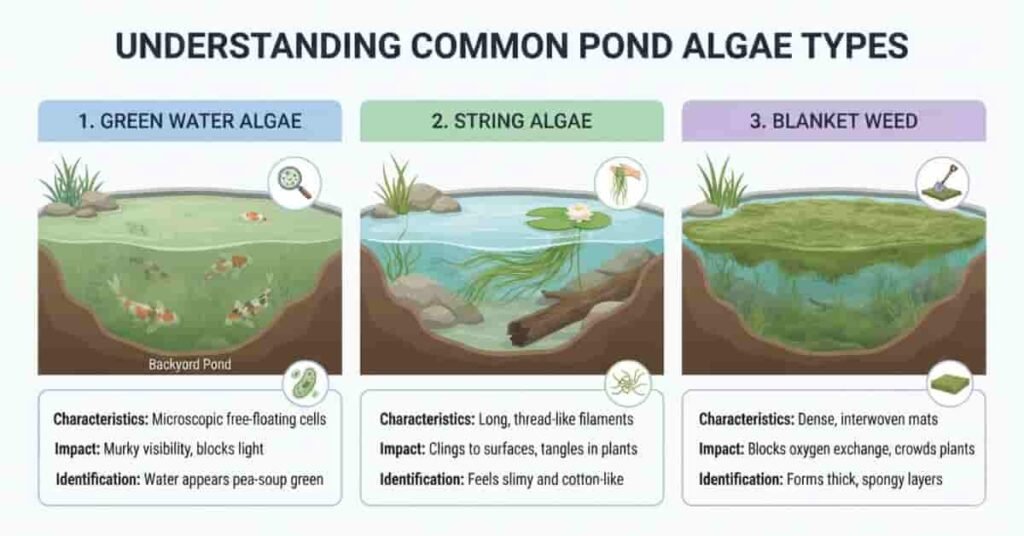
Not all pond algae grows the same way. Identifying the type of algae helps you choose the safest removal method for your fish pond. Some algae types float in the water, while others attach to surfaces like rocks and pond walls.
Green water algae is one of the most common types. It creates cloudy, green-colored water by spreading tiny algae cells throughout the pond. It often appears when sunlight and nutrients increase.
String algae, also called hair algae, grows in long strands that attach to rocks, waterfalls, and pond surfaces. It can quickly become thick mats if left untreated. Manual removal and better nutrient control often help manage this type.
Blanket weed is a type of string algae that forms dense layers across pond surfaces. It can trap debris and reduce water movement if it becomes excessive.
Understanding the algae type prevents unnecessary treatments and protects your fish. A targeted approach works better than trying to remove every form of algae with strong chemicals.
What NOT to Do (Very Important)
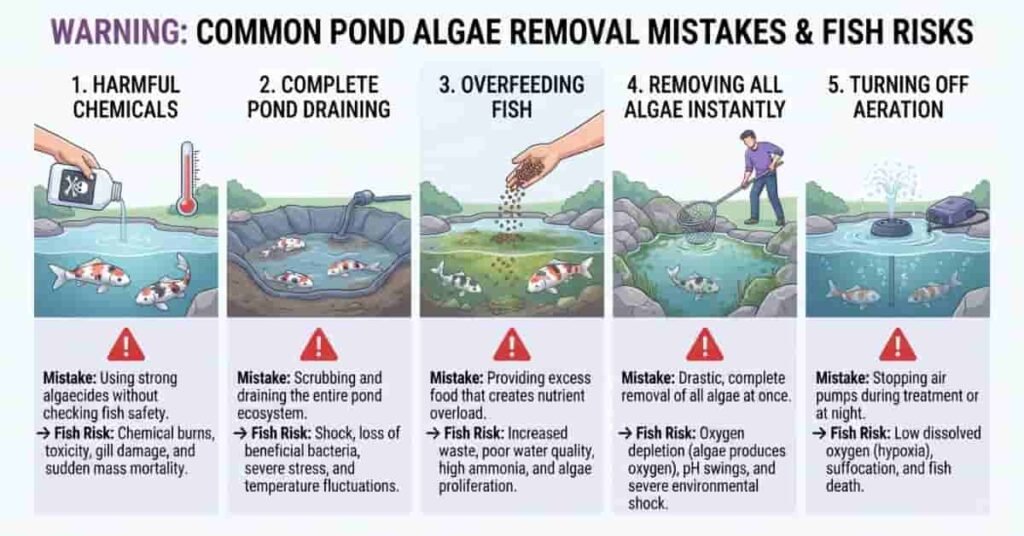
Removing pond algae requires a careful approach. Many fish deaths happen because pond owners try to fix algae problems too quickly. A rushed solution can damage water quality and create more stress for fish.
Avoid using strong chemicals without checking if they are safe for fish ponds. Some products may kill algae quickly but can harm koi, goldfish, beneficial bacteria, or other pond life.
Do not perform a sudden full pond cleaning. A complete drain removes helpful bacteria and changes the environment fish have adapted to. Instead, make smaller improvements over time.
Overfeeding fish can also make algae worse. Uneaten food breaks down into waste and adds nutrients that algae needs to grow. Feed only what your fish can consume within a short period.
Removing every piece of algae may seem like the goal, but a completely sterile pond is not healthy. Fish ponds need a balanced ecosystem with beneficial microorganisms and some natural growth.
How to Keep Fish Safe During Algae Treatment
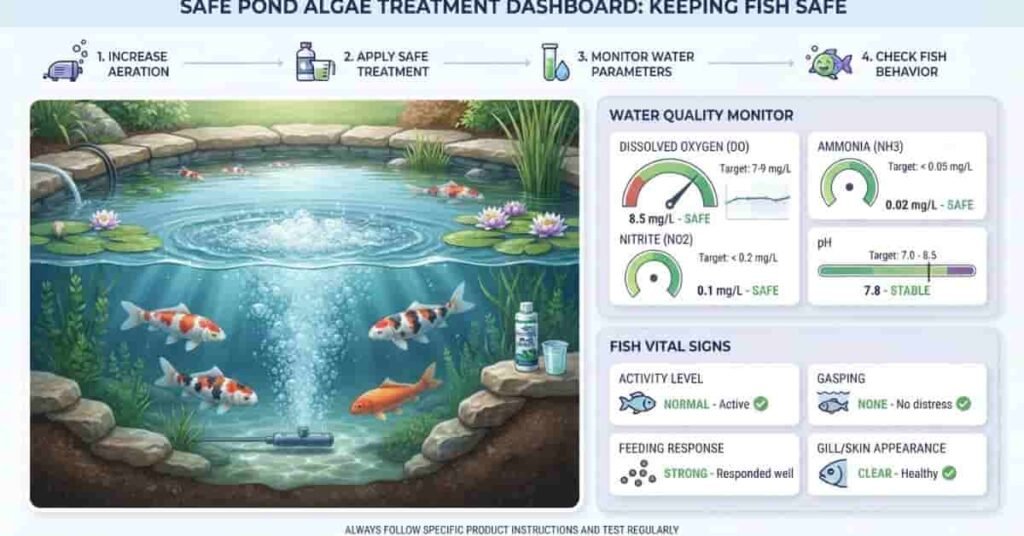
Algae treatment can help restore pond clarity, but fish safety should always come first. The wrong approach can create sudden water changes that stress koi, goldfish, and other pond fish. A slow and controlled process gives your pond time to adjust.
Start by treating algae gradually instead of removing large amounts at once. When algae dies quickly, it can reduce oxygen levels and increase organic waste in the water. This is why extra aeration becomes important during and after treatment.
Monitor your fish closely throughout the process. Healthy fish should swim normally and show regular feeding behavior. Fish gasping near the surface, staying still, or hiding may indicate low oxygen or poor water quality.
Testing your water helps you catch problems early. Check important parameters like ammonia and nitrite, especially after using an algae treatment. Stable water conditions help your fish recover while your pond returns to balance.
Prevention Tips (Long-Term Control)
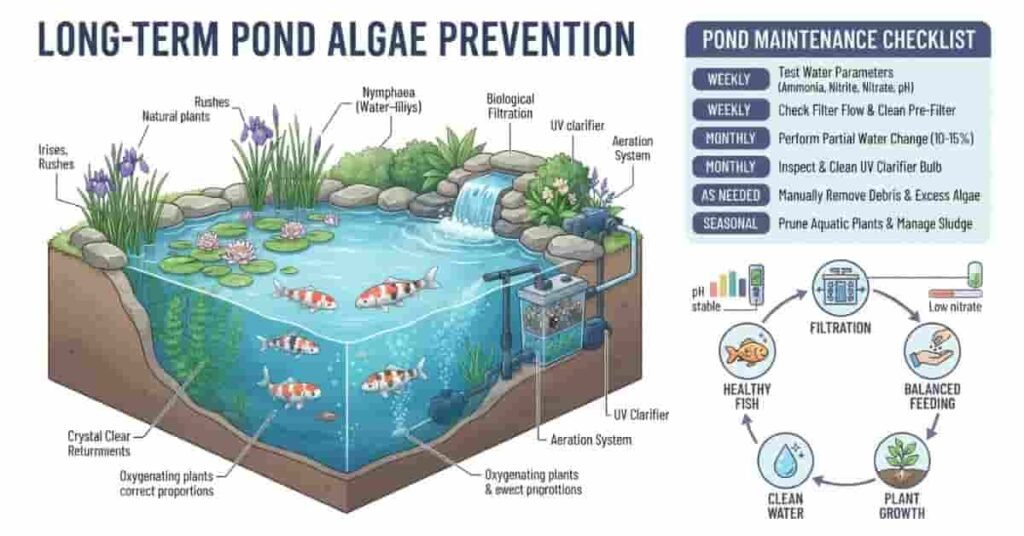
The best way to control pond algae is to prevent large blooms before they start. A healthy pond ecosystem naturally limits algae growth by keeping nutrients, sunlight, and waste under control.
Regular filtration plays an important role in long-term algae control. A properly maintained filter removes debris and supports beneficial bacteria that break down fish waste. Clean your filter according to the manufacturer’s instructions without removing all biological media at once.
Avoid nutrient buildup because excess waste feeds algae growth. Remove fallen leaves, decaying plants, and uneaten fish food before they break down in the pond. These small maintenance steps can make a big difference.
Balanced feeding also protects water quality. Overfeeding creates extra waste that algae uses as a food source. Feed your fish only what they can finish quickly and adjust feeding amounts during colder months.
Seasonal maintenance keeps your pond prepared throughout the year. Spring cleaning, summer oxygen checks, and fall debris removal help prevent future algae problems.
For pond owners who prefer to avoid harsh treatments, natural control can be another useful approach. Explore how to get rid of pond algae naturally using methods such as better circulation, aquatic plants, and beneficial bacteria.
Conclusion
Keeping pond algae under control does not mean removing every trace of it. A healthy pond needs balance, clean water, proper oxygen levels, and safe maintenance methods. The best approach is slow, steady, and focused on protecting your fish.
Learning how to get rid of pond algae without killing fish helps you choose safer solutions for koi, goldfish, and other pond life. Methods like manual removal, better aeration, beneficial bacteria, and proper filtration support long-term pond health.
Avoid quick fixes that damage your ecosystem. Instead, create a stable environment where fish and plants can thrive together. If you found these tips helpful, share this guide with other pond owners or tell us about your algae control experience in the comments.
Frequently Asked Questions
A small amount of algae is normal and can support a healthy pond ecosystem. However, excessive algae growth can reduce oxygen levels, increase waste when algae dies, and stress fish. Some algae types may also produce harmful toxins. Proper filtration, aeration, and maintenance help keep algae balanced and protect koi, goldfish, and other pond fish.
Remove algae gradually using safe methods like manual removal, better aeration, beneficial bacteria, and aquatic plants. If you use an algae treatment, choose a product labeled fish-safe and follow the instructions carefully. Avoid removing all algae at once because sudden changes can stress koi and disturb the pond ecosystem.
The safest algae treatment is one designed specifically for ponds with fish. Natural methods such as improving filtration, increasing aeration, reducing nutrients, and adding beneficial bacteria are usually the best first steps. If you use an algaecide, follow the label directions and never overdose.
Yes, fish can live with some algae in a pond. A balanced amount of algae can be part of a natural ecosystem. Problems occur when algae grows excessively and affects oxygen levels or water quality. Regular filtration, proper feeding, aeration, and plant balance help keep fish safe.
Control algae naturally by reducing the nutrients it uses to grow. Add aquatic plants like water lilies and oxygenating plants, improve filtration, remove debris, avoid overfeeding, and support beneficial bacteria. These steps help create a balanced koi pond without using harsh treatments.
Yes, removing large amounts of algae too quickly can harm fish. Dying algae uses oxygen during decomposition and may increase organic waste in the pond. This can stress fish, especially during warm weather. Gradual removal with proper aeration is a safer approach.
No, removing all algae is unnecessary. A small amount of algae can support a healthy ecosystem. The goal is to control excessive growth that affects water quality, oxygen levels, and fish health. A balanced pond is better than a completely algae-free pond.
Fish may gasp at the surface because oxygen levels can drop after algae dies. Increase aeration immediately and monitor water quality. Check ammonia and nitrite levels if the problem continues. Quick action helps prevent serious stress and protects fish health.
There is no fixed treatment schedule because algae growth depends on sunlight, nutrients, filtration, and weather. Focus on prevention instead. Maintain proper filtration, control feeding, remove debris, and support beneficial bacteria to reduce the need for frequent algae treatments.
Prevent algae by maintaining a balanced pond ecosystem. Keep filters working properly, provide enough aeration, reduce excess nutrients, avoid overfeeding, and add aquatic plants. Regular seasonal maintenance also helps prevent future algae blooms.
Avoid strong chemicals without checking fish safety, complete pond cleanouts, and removing all algae suddenly. Do not overfeed fish or turn off aeration during treatment. These mistakes can damage water quality and stress koi, goldfish, and other pond fish.

Michael Brooks and Sarah Lane are the co-founders of the Pond Pump Team, a trusted U.S.-based group helping homeowners and landscapers build better ponds and water features. Michael, an experienced pond engineer from Oregon, has worked for over 12 years on pump sizing, flow systems, and water circulation. Sarah, a pond designer from Colorado with nine years of experience, focuses on eco-friendly and easy-to-maintain pond and waterfall designs. Together, they’ve completed more than 180 pond projects and created tools like the Pond Pump Calculator and Pond Liner Calculator to make pond planning simple, accurate, and sustainable.
Need help with your pond setup? Contact the Pond Pump Team for expert advice and reliable solutions.