Table of Contents
Introduction
Have you ever looked at your pond and found green strands covering the water, rocks, and edges?
String algae, also called blanket weed, can spread quickly and turn a clean pond into a tangled mess. For beginners in the USA, controlling it can feel confusing. Pulling it out may help, but the algae can return if the underlying cause remains.
Sunlight, excess nutrients, poor circulation, and overfeeding can all encourage rapid growth. That is why removing the visible algae is only part of the solution.
In this guide, you’ll learn how to get rid of string algae using practical methods that work for different pond setups. We’ll start with manual removal and then cover natural control methods.
You’ll also learn when treatments may help and how to use them safely around pond fish. Finally, we’ll explain how to control blanket weed and prevent it from coming back.
By the end, you’ll have a simple plan for removing string algae and keeping your pond clearer for longer.
What Is String Algae / Blanket Weed?
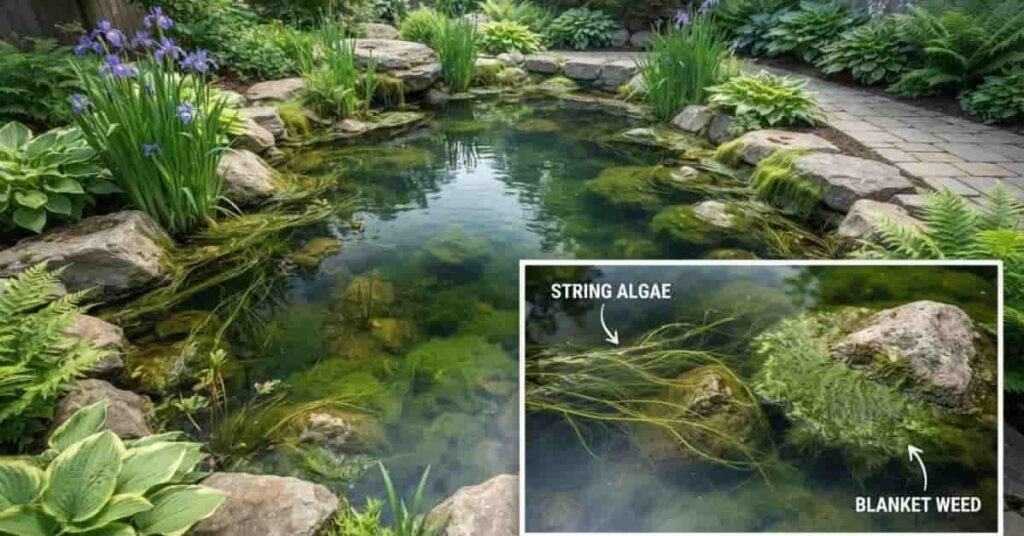
String algae is a type of green algae that grows in long, thread-like strands. It often forms loose clumps around pond edges, rocks, plants, and other surfaces.
Many pond owners use string algae and blanket weed interchangeably. Both names commonly describe the same stringy algae growth found in garden ponds.
For a detailed explanation of its appearance, growth, and common types, see our guide on [What Is String Algae?].
Why Does String Algae Grow So Fast?
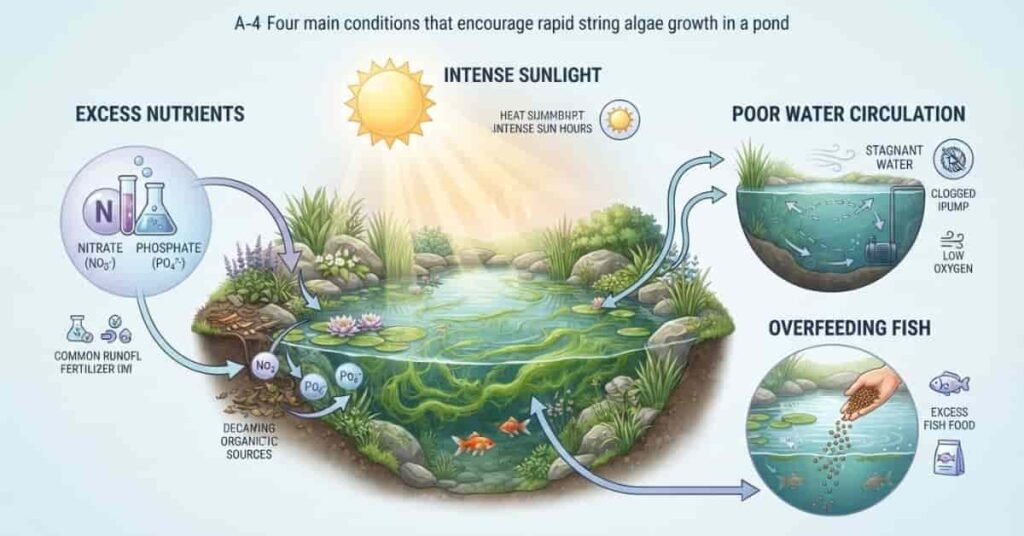
String algae can spread quickly when pond conditions provide plenty of food and light. Several factors can work together and create ideal conditions for rapid growth.
Excess nutrients are one of the main factors. Nitrates and phosphates can enter ponds through fish waste, decaying leaves, uneaten food, and runoff. When these nutrients build up, algae can take advantage of them.
Sunlight exposure also supports algae growth. Ponds that receive strong sunlight for much of the day can develop more algae, especially when nutrients are already available.
Poor water circulation can make the problem worse. Stagnant areas may collect debris and nutrients, giving string algae favorable places to grow.
Overfeeding fish adds another source of nutrients. Uneaten food breaks down and increases the organic waste in your pond.
Pro Tip
Focus on the cause as well as the algae itself. Removing visible growth helps, but reducing excess nutrients can make long-term control much easier.
Manual Removal Method: The First Step
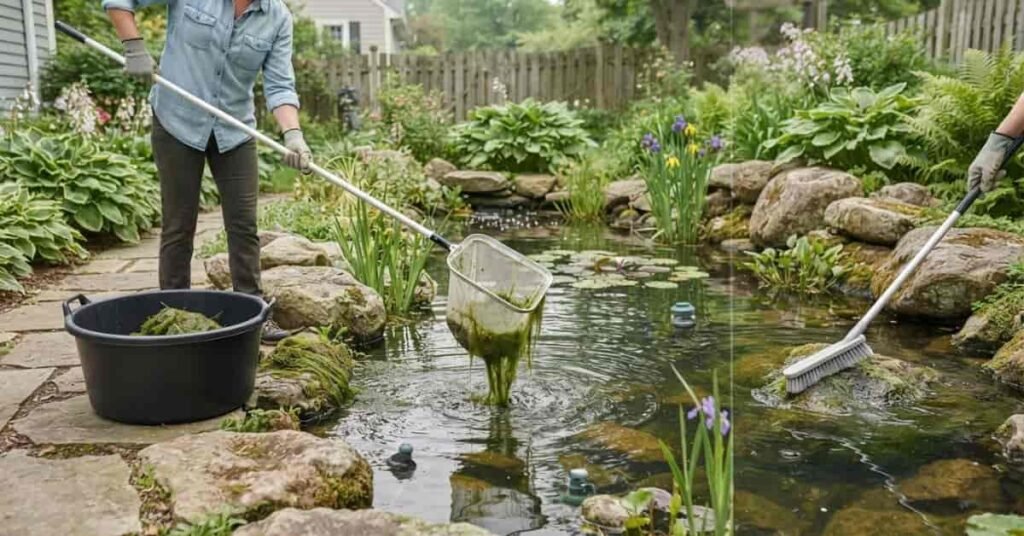
Manual removal is often the best place to start when string algae covers your pond. It removes existing growth without adding chemicals to the water.
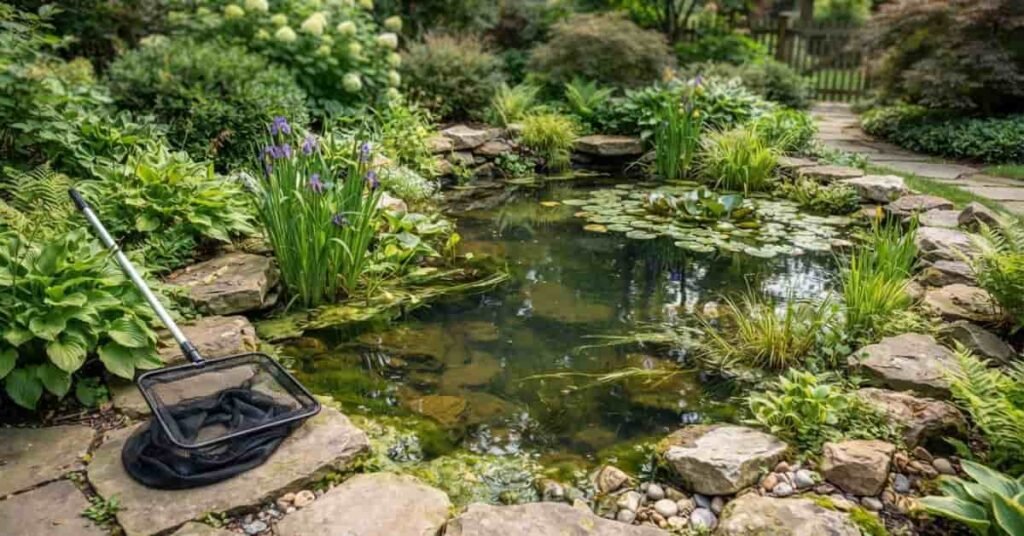
Use a pond net, stick, rake, or algae brush to pull out loose strands. Work slowly around plants, rocks, filters, and other areas where algae collects. Remove the algae from the pond instead of leaving it floating.
For algae attached to pond walls and rocks, use a suitable pond brush. Gently scrub affected surfaces and collect the loosened algae with a net. Avoid damaging pond liners, plants, or beneficial surfaces.
Physical removal also reduces the amount of decaying algae left in the water. This matters because dead organic material can add nutrients back into the pond.
For heavy growth, remove algae in manageable sections rather than disturbing the entire pond at once. This approach helps keep the water cleaner while you work.
Pro Tip
Remove pulled-out algae from the pond immediately. Leaving large clumps in the water can allow nutrients to return as they break down.
Natural Control Methods
Natural methods can help reduce string algae while supporting a healthier pond environment. They work best when you also address excess nutrients and other causes.
Barley straw is a commonly used natural option for pond algae control. As barley straw breaks down, it can release compounds that may help limit algae growth. However, results can vary, so don’t treat it as an instant solution.
Shade can also help reduce the sunlight available for algae. Floating plants can provide natural cover while adding visual appeal to the pond. Avoid covering too much of the surface, because aquatic plants still need healthy gas exchange and light.
Improving overall water balance is equally important. Remove excess organic debris, maintain good filtration, and keep water moving through the pond.
If you’re looking for practical ways to control blanket weed, focus on combining these methods rather than relying on one solution.
Chemical and Treatment Options: Use With Care
Algaecides can help control stubborn string algae when physical and natural methods aren’t enough. However, they should usually be a last resort, especially in ponds containing fish.
Choose only products specifically labeled for your pond type and intended algae problem. A product marketed as fish-safe still requires careful use according to its label directions.
Avoid treating large amounts of algae at once. Rapid algae die-off can increase decomposing organic matter and may reduce dissolved oxygen in the water. This can create additional stress for pond fish.
Before treatment, remove as much visible algae as practical. Then follow the product’s dosing instructions carefully. Never assume that using more product will produce faster results.
For ponds with koi or other valuable fish, consider improving filtration, circulation, and nutrient control before reaching for an algaecide.
Expert Tip
Don’t choose a treatment based only on the phrase “fish-safe.” Check the label for your specific pond conditions, algae type, dosage, and application instructions.
Long-Term String Algae Control Strategy
Removing string algae solves the visible problem, but long-term control requires better pond management. Focus on reducing the conditions that encourage algae growth.
Start by checking your filtration system. Clean clogged filter media and make sure water moves properly through the pond. Good circulation helps prevent stagnant areas where debris and nutrients can collect.
Next, reduce excess nutrients. Remove fallen leaves, dead plant material, and uneaten food before they break down. Regular water changes may also help maintain better water conditions when appropriate for your pond.
Create a simple maintenance schedule instead of waiting for algae to return. Check the pond regularly and remove small amounts of algae before it forms thick mats.
Fish feeding control also matters. Feed only what your fish can consume within a short period. Uneaten food eventually breaks down and adds nutrients to the water.
How to Remove Blanket Weed Specifically
Thick blanket weed can form dense mats that are harder to remove than loose strands. Start by breaking large mats into smaller sections with a pond rake, net, or suitable algae brush.
Pull the mats out gradually and place them beside the pond for disposal. Don’t leave large amounts floating in the water. This helps prevent removed algae from breaking apart and spreading around the pond.
Next, focus on the pond floor and edges. Blanket weed often collects around rocks, shallow areas, plant containers, and other surfaces. Gently remove loose debris and algae without aggressively disturbing the entire pond.
For deep cleaning, work in sections rather than stripping everything at once. Keep beneficial pond plants and established surfaces as undisturbed as possible.
If the pond contains fish, avoid creating excessive disturbance. Give the water time to settle between larger cleaning tasks.
Expert Tip
For heavy blanket weed, remove the largest mats first. Then clean smaller patches around the edges and bottom during follow-up maintenance.
Common Mistakes to Avoid
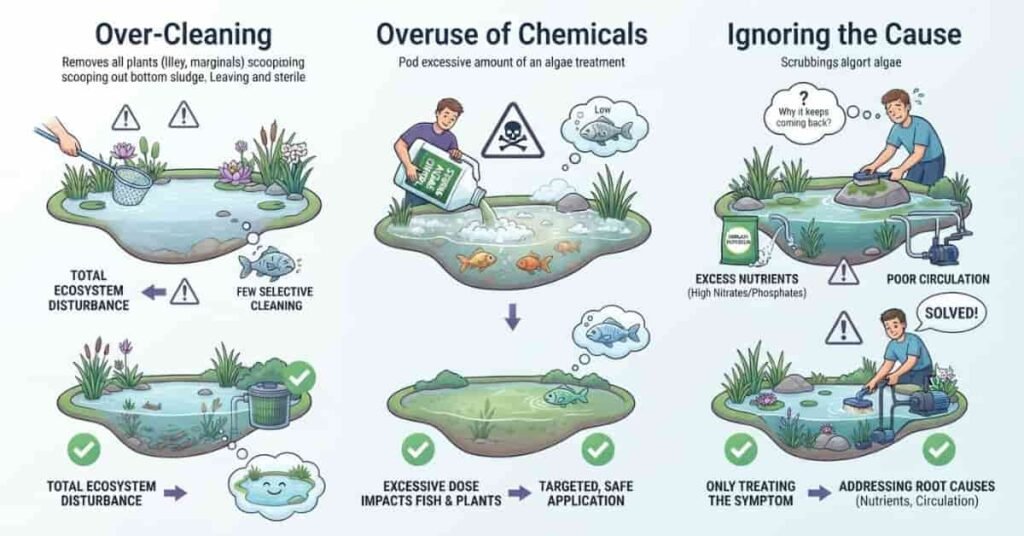
Getting rid of string algae can become harder when pond owners focus only on fast results. Avoid these common mistakes during removal and treatment.
Over-cleaning the pond can disturb plants, surfaces, and other parts of the pond ecosystem. Remove excessive algae and debris, but avoid stripping the entire pond unnecessarily.
Overusing chemicals is another common mistake. More treatment doesn’t always mean better control. Incorrect dosing can create water-quality problems and may stress pond fish.
Another mistake is ignoring the root cause. You can remove every visible strand, but algae may quickly return if excess nutrients, sunlight, or poor circulation remain.
Don’t rely on one method alone. Manual removal can clear existing growth, while better filtration and nutrient control address the conditions behind it.
How to Prevent String Algae After Removal
Prevention starts immediately after you remove the existing algae. A simple weekly maintenance routine can help you catch new growth before it becomes difficult to manage.
Check pond edges, rocks, plants, and shallow areas for returning algae. Remove small strands with a net or brush before they form thick mats.
Keep a healthy balance of aquatic plants without allowing them to completely cover the pond surface. Plants can compete for available nutrients and provide shade, but overcrowding can create other maintenance problems.
Water testing can also help identify changes in pond conditions. Test appropriate parameters for your pond setup and watch for trends that may indicate excess nutrients.
Keep filters clean, remove fallen leaves, and avoid overfeeding fish. These small tasks reduce the organic material that can support algae growth.
Conclusion
String algae can take over a pond quickly, but you can manage it with the right approach. Manual removal clears existing growth, while natural controls and better pond care help limit its return.
Learning how to get rid of string algae starts with removing thick growth and improving the conditions around it. Reduce excess nutrients, maintain good circulation, control fish feeding, and keep up with regular maintenance.
You don’t need to rely on chemicals for every algae problem. Careful prevention often makes long-term control easier and safer for pond fish.
If blanket weed keeps returning, review your pond’s nutrient levels, filtration, and maintenance routine.
Have you dealt with string algae in your pond? Share what worked for you in the comments, and explore our other pond care guides for more practical tips.
Frequently Asked Questions
The best approach combines physical removal with long-term prevention. Start by removing visible algae with a pond net, rake, or brush. Then reduce excess nutrients by removing debris and uneaten food. Improve filtration and water circulation where needed. Floating plants can provide some shade and compete for nutrients. If algae keeps returning, identify the underlying cause before considering an algaecide.
Manual removal is usually the fastest way to improve the pond’s appearance. Use a pond rake, net, or suitable brush to pull out thick mats. Remove the algae from the pond rather than leaving it floating. For heavy growth, work in sections instead of disturbing the entire pond at once. After removal, address nutrients, sunlight, and circulation to reduce the chance of rapid regrowth.
String algae often returns when the conditions that support its growth remain unchanged. Excess nutrients, strong sunlight, poor circulation, and organic debris can all contribute. Overfeeding fish can also add nutrients to the water. Removing algae alone may only provide temporary results. Long-term control requires regular maintenance, effective filtration, good water movement, and careful control of nutrients entering the pond.
Barley straw may help limit algae growth as it breaks down, but it should not be viewed as an instant cure. Results can vary depending on pond conditions and the amount of algae present. Remove existing algae manually first, then use natural controls as part of a broader maintenance strategy. Reducing excess nutrients and improving circulation can also make the pond less favorable for recurring string algae.
Blanket weed itself is not necessarily harmful to fish, but heavy growth can create pond management problems. Large amounts of algae can affect water quality as they grow and decompose. Thick mats may also interfere with normal pond maintenance and reduce open water space. If you have fish, remove heavy algae gradually and avoid sudden large-scale treatments. Always follow product instructions when using an algaecide.
You can remove string algae without chemicals by using a pond net, rake, stick, or algae brush. Pull out visible strands and thick mats, then remove the algae from the pond. Keep filters working properly and remove leaves, dead plant material, and uneaten food. Floating plants can provide shade and compete for nutrients. Regular maintenance can help prevent new growth from becoming established.
Aquatic plants can support algae control by using available nutrients and providing shade. Floating plants can reduce the amount of direct sunlight reaching parts of the pond. However, plants alone won’t solve a severe algae problem. Keep plant growth balanced and avoid covering too much of the pond surface. Combining plants with physical removal, filtration, circulation, and nutrient control usually provides a more practical approach.
An algaecide may help with stubborn blanket weed, but it should usually be considered after physical and natural control methods. Choose a product specifically labeled for your pond and algae type. Follow the dosage instructions carefully, especially when fish are present. Avoid treating large amounts of algae at once because rapid decomposition can affect water quality. Always follow the product label before applying any treatment.
Check your pond regularly and remove new algae before it develops into thick mats. A weekly inspection works well for many pond owners, especially during periods of active growth. Check pond edges, rocks, plants, and shallow areas for new strands. Remove small amounts with a net or brush as needed. Your maintenance frequency may vary depending on sunlight, nutrients, pond size, and seasonal conditions.
Preventing blanket weed requires consistent pond maintenance rather than one quick treatment. Remove leaves and other organic debris, avoid overfeeding fish, and keep filtration and circulation working properly. Maintain a balanced amount of aquatic plants and monitor relevant water parameters. Regularly check for early algae growth and remove it before thick mats develop. Most importantly, address the conditions that caused the algae problem in the first place.

Michael Brooks and Sarah Lane are the co-founders of the Pond Pump Team, a trusted U.S.-based group helping homeowners and landscapers build better ponds and water features. Michael, an experienced pond engineer from Oregon, has worked for over 12 years on pump sizing, flow systems, and water circulation. Sarah, a pond designer from Colorado with nine years of experience, focuses on eco-friendly and easy-to-maintain pond and waterfall designs. Together, they’ve completed more than 180 pond projects and created tools like the Pond Pump Calculator and Pond Liner Calculator to make pond planning simple, accurate, and sustainable.
Need help with your pond setup? Contact the Pond Pump Team for expert advice and reliable solutions.