
Maintaining the correct salt level is essential for the health of koi fish, goldfish, and other pond fish. Pond salt is commonly used to reduce stress, support recovery, and maintain stable water conditions. However, incorrect dosing can cause issues—too little may be ineffective, while too much can stress fish, plants, and beneficial bacteria.
Our Pond Salt Calculator helps you quickly determine the exact amount of salt your pond needs. Whether you are doing routine maintenance, increasing salinity for stress relief, or following a treatment plan, it provides fast and accurate results based on pond volume, current salinity, target salinity, salt type, and water change percentage.
Unlike basic dosage charts, this advanced pond salinity calculator considers existing salt already present in the water, helping you avoid over-dosing and maintain safer salinity levels. It is suitable for koi ponds, ornamental ponds, and backyard fish systems of all sizes.
If you need a reliable koi pond salt calculator, this tool gives instant calculations, clear dosing guidance, and practical salinity insights for better pond management.
👉 Enter your pond volume, current salinity, and target level to instantly calculate the exact salt required.
🌟 Smart Features of Pond Salt Calculator
Our Pond Salt Calculator is designed to make pond salinity management fast, accurate, and stress-free. Instead of manual guessing, it gives you precise salt dosage based on real pond conditions.
⚡ Instant Results
Get accurate pond salt dosage within seconds based on your pond volume and salinity levels.
📏 Gallons & Liters Support
Works with both measurement systems, so you can calculate easily no matter where your pond is located.
🧪 Accurate Salinity Calculation
Automatically calculates the difference between current and target salinity for precise dosing.
💧 Water Change Adjustment
Adjusts calculations after water changes so your salt levels stay balanced and accurate.
🧂 Salt Type Correction
Accounts for different salt types like rock salt, pool salt, and aquarium salt based on purity levels.
📊 Safe Dosing Plan
Creates a step-by-step dosing schedule to reduce fish stress during salinity changes.
🧠 Smart Insights
Shows safe, caution, and danger salinity zones to help you make better pond care decisions.
✔ Perfect for koi ponds, fish ponds, and all types of backyard pond systems.
PondSaltPro
Ready to Calculate
Enter your pond volume and target salinity to get a precise, professional treatment plan.
No Salt Needed
Recommended Products
After calculating the required salt amount, reliable pond-care products can help you accurately measure salinity, choose suitable pond salt, and monitor overall water conditions.
Salinity measurement
Best Pond Salt Meters for Koi Ponds
After adding or adjusting pond salt, an accurate salinity meter helps you verify the actual salt level and avoid over- or under-dosing.
View Pond Salt MetersPond treatment
Best Pond Salt for Koi Ponds
Once you know how much salt your pond needs, choosing a pond-safe salt without harmful additives is an important next step.
View Best Pond SaltWater quality
Best Pond Water Test Kits
Salt is only one part of healthy pond water. A reliable test kit helps monitor pH, ammonia, nitrite, and other important water-quality factors.
View Pond Water Test KitsWhat Is a Pond Salt Calculator?
A pond salt calculator is a tool that calculates the exact amount of salt needed to reach a desired salinity level in a pond. Instead of relying on estimates or basic charts, it uses real pond data to provide accurate salt dosage recommendations.
Whether you manage a koi pond, ornamental pond, or fish pond, maintaining correct salinity is important for fish health and water stability. A pond salt dosage calculator helps prevent both underdosing, which reduces effectiveness, and overdosing, which can stress fish, plants, and beneficial bacteria.
To calculate salt accurately, the tool considers key factors such as pond volume, current salinity, and target salinity. It also adjusts for water changes, since replacing water reduces dissolved salt levels and changes overall concentration.
Unlike simple salt charts, a pond salinity calculator also accounts for existing salt already in the water and adjusts for different salt types like rock salt, pool salt, and aquarium salt based on purity. This ensures more precise and reliable results.
By combining salinity adjustment, water change correction, existing salt levels, and salt purity in one process, a pond salt calculator provides a safer and more accurate way to manage pond salinity and support healthy fish care.
How to Use the Pond Salt Calculator
Our Pond Salt Calculator is designed to make salinity management simple and accurate. Follow the steps below to calculate the correct amount of salt for your pond and generate a customized treatment plan.
- ⚗️ Step 1
- ⚗️ Step 2
- ⚗️ Step 3
- ⚗️ Step 4
- ⚗️ Step 5
- ⚗️ Step 6
Step 1: Enter Pond Volume
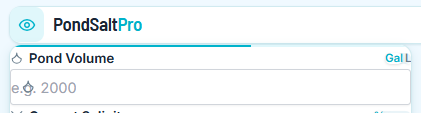
Start by entering your pond’s total water volume. You can calculate pond salt using either gallons (Gal) or liters (L), depending on your preference. Accurate pond volume is essential because every salt dosage calculation is based on the total amount of water in the pond.
Step 2: Add Current Salinity
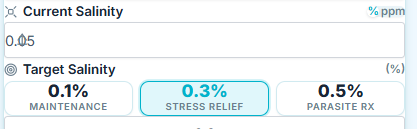
Enter your current pond salinity level as a percentage (%) or parts per million (ppm). This tells the calculator how much salt is already dissolved in the water and helps prevent over-treatment. If you’ve recently added salt or performed a treatment, use the most recent salinity reading available.
Step 3: Choose Target Salinity
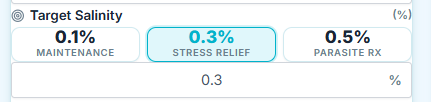
Select the salinity level you want to achieve based on your treatment goal.
- 0.1% Salinity – Routine pond maintenance
- 0.3% Salinity – Stress relief and recovery support
- 0.5% Salinity – Short-term parasite treatment
Choosing the correct target salinity ensures the calculator provides an appropriate dosage recommendation for your specific situation.
Step 4: Select Salt Type
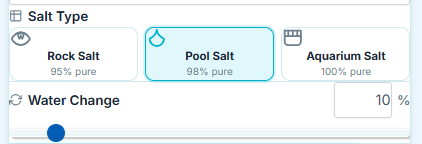
Choose the type of salt you plan to use:
- Rock Salt – Approximately 95% pure
- Pool Salt – Approximately 98% pure
- Aquarium Salt – Typically 100% pure
Different salt products contain different purity levels. The calculator automatically adjusts the dosage so you add the correct amount of usable salt to reach your target salinity.
Step 5: Enter Water Change Percentage
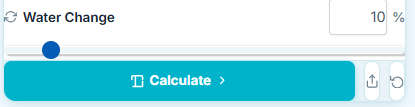
If you’ve recently replaced pond water, enter the percentage of water changed. Water changes dilute existing salt concentrations, which can significantly affect salinity levels. This optional adjustment allows the calculator to provide more accurate results after partial water replacements.
Step 6: Calculate Your Salt Treatment Plan
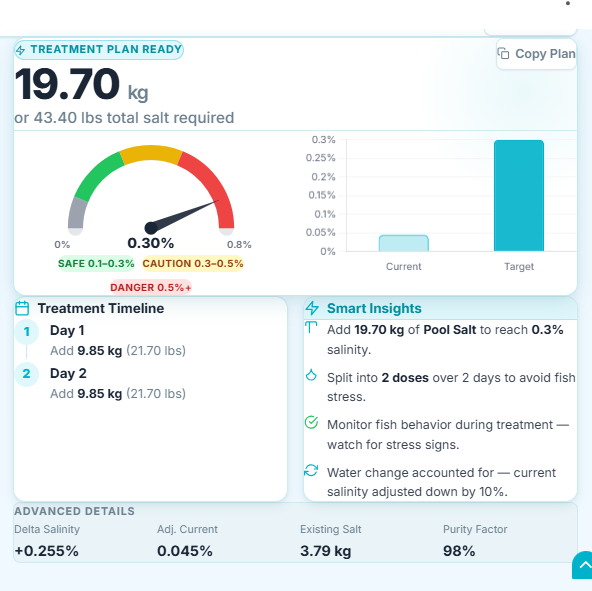
Click the Calculate button to generate your personalized pond salt treatment plan instantly.
The calculator provides:
- Total salt required in kilograms and pounds
- Recommended salinity level
- Safe treatment guidance
- Multi-day dosing schedule
- Water change adjustments
- Salt purity corrections
- Advanced salinity calculations
For example, a 2,000-gallon pond with a current salinity of 0.05%, a target salinity of 0.3%, pool salt, and a 10% water change may require approximately 19.70 kg (43.40 lbs) of salt. The calculator can also recommend splitting the dosage into multiple applications to reduce stress on fish and promote safer treatment.
Once your results are displayed, review the treatment timeline, monitor fish behavior during dosing, and follow the recommended plan to safely reach your desired pond salinity.
Recommended Pond Salt Levels
Different pond situations require different salinity levels. Using the correct concentration helps support fish health while reducing unnecessary stress on the pond ecosystem. The Pond Salt Calculator lets you choose your target salinity and calculates the exact salt dose safely.
🟢 0.1% Salinity – Routine Maintenance
0.1% salinity is commonly used for everyday pond care and seasonal maintenance. It helps maintain stable water conditions and supports fish health without significantly affecting the pond system.
Best for: Routine care, seasonal changes, transport recovery
🟡 0.3% Salinity – Stress Relief
0.3% salinity is used when fish experience stress from handling, water changes, temperature shifts, or recovery periods. It helps support balance and reduces stress on fish.
Best for: Stress recovery and post-maintenance support
🔴 0.5% Salinity – Parasite Treatment
0.5% salinity is a short-term treatment level used in specific cases. It should be applied carefully, as higher salinity can affect sensitive pond life.
Best for: Temporary parasite treatment only
🐟 Choosing the Right Level
0.1% → Maintenance & stability
0.3% → Stress relief & recovery
0.5% → Short-term treatment
✔️ Important Tip
Always calculate salt dosage before adding it. Use a pond salt calculator to consider pond volume, existing salinity, water changes, and salt type for safe and accurate results.
Pond Salt Dosage Chart
A pond salt dosage chart provides a quick reference for estimating the amount of salt needed to reach common salinity levels. While exact requirements depend on your pond’s current salinity, water changes, and salt purity, the chart below offers a useful starting point for routine pond maintenance and treatment planning.
For the most accurate results, use the Pond Salt Calculator above, which automatically accounts for existing salt levels, target salinity, water replacement, and salt purity corrections.
| Pond Volume | 0.1% Salinity | 0.3% Salinity | 0.5% Salinity |
|---|---|---|---|
| 500 Gallons | 4.17 lbs (1.89 kg) | 12.51 lbs (5.67 kg) | 20.85 lbs (9.46 kg) |
| 1,000 Gallons | 8.34 lbs (3.78 kg) | 25.02 lbs (11.35 kg) | 41.70 lbs (18.92 kg) |
| 2,000 Gallons | 16.68 lbs (7.57 kg) | 50.04 lbs (22.70 kg) | 83.40 lbs (37.83 kg) |
| 5,000 Gallons | 41.70 lbs (18.92 kg) | 125.10 lbs (56.75 kg) | 208.50 lbs (94.57 kg) |
How to Read the Pond Salt Chart
The chart shows the approximate amount of pure salt required to reach a specific salinity level in a pond with no existing salt concentration. For example, a 2,000-gallon pond would require approximately 50.04 pounds (22.70 kg) of salt to reach a salinity level of 0.3%.
If your pond already contains dissolved salt or you’ve recently performed a water change, the actual amount required may be different. In these situations, a standard pond salt chart may overestimate or underestimate the correct dosage.
Why Use a Pond Salt Calculator Instead of a Salt Chart?
A pond salt dosage chart is useful for quick estimates, but every pond is different. The Pond Salt Calculator provides a more accurate calculation by considering:
- Current pond salinity
- Desired target salinity
- Pond volume in gallons or liters
- Water change percentage
- Salt purity level
- Existing dissolved salt
This helps ensure safer salinity management and reduces the risk of adding too much or too little salt during maintenance or treatment.
Tip: Always add pond salt gradually and monitor fish behavior when increasing salinity, especially when targeting levels above 0.1%.
Benefits of Adding Salt to a Pond
When used properly, pond salt can support fish health and help maintain a stable pond environment. It is commonly used in koi ponds and fish ponds during periods of stress, recovery, and certain treatment situations.
🐟 Reduces Fish Stress
Salt can help fish cope with environmental stress caused by temperature fluctuations, handling, transportation, or water quality changes.
⚖️ Supports Osmoregulation
Freshwater fish constantly work to maintain the correct balance of water and minerals in their bodies. Proper salinity levels can reduce this workload and support overall fish health.
💙 Helps During Recovery
Many pond owners use salt to support fish recovering from illness, injury, or stressful events by creating a more stable environment.
🦠 Assists Certain Parasite Treatments
Elevated salinity levels are sometimes used as part of a treatment plan for certain external parasites. Salt should always be used appropriately based on the specific condition being treated.
🐠 Useful for Koi Pond Management
Koi can experience stress from seasonal changes, handling, spawning, and pond maintenance. Proper salt management can help support koi during these situations.
✔️ Use Salt Responsibly
While pond salt offers several benefits, excessive amounts can affect fish, plants, and beneficial bacteria. Always calculate the correct dosage and adjust for existing salinity, water changes, and salt purity before adding salt to your pond.
Types of Pond Salt
Not all salt products are the same. The type of salt you choose can affect dosage accuracy, water quality, and overall pond health. Most pond owners use high-purity salt products that contain few or no additives, allowing them to safely manage pond salinity without introducing unwanted chemicals into the water.
The Pond Salt Calculator supports multiple salt types and automatically adjusts calculations based on salt purity to provide more accurate dosage recommendations.
Pool Salt
Pool salt is one of the most popular choices for koi ponds and fish ponds. It is typically around 98% pure sodium chloride and is designed to dissolve quickly in water.
Because pool salt usually contains very few additives, it is commonly used by pond keepers who need a reliable and cost-effective source of salt for salinity management and treatment applications.
Advantages of Pool Salt:
High purity level
Widely available
Dissolves quickly
Suitable for most pond applications
Often more affordable than specialty pond products
Rock Salt
Rock salt is a natural salt product that is generally around 95% pure sodium chloride, although purity can vary depending on the source and manufacturer.
Because it may contain trace minerals and impurities, rock salt is often slightly less efficient than higher-purity options. However, many pond owners still use it successfully when a suitable product without harmful additives is selected.
Advantages of Rock Salt:
Readily available
Economical option
Effective for many pond treatments
Suitable for large ponds when properly sourced
Aquarium Salt
Aquarium salt is typically 100% pure sodium chloride and is specifically produced for aquatic use. Its high purity level makes dosage calculations straightforward and minimizes concerns about unwanted additives.
While aquarium salt is often considered the purest option, it is usually more expensive than pool salt or rock salt, especially when treating larger ponds.
Advantages of Aquarium Salt:
Extremely high purity
Designed for aquatic environments
Consistent quality
Accurate dosing
Which Salt Is Best for Koi Ponds?
For most koi pond owners, pool salt is often the best balance of purity, availability, and cost-effectiveness. It provides a high purity level while remaining affordable for routine maintenance and larger treatment applications.
Aquarium salt is an excellent option when maximum purity is desired, while rock salt can be a practical choice if a suitable additive-free product is available.
Regardless of the salt type used, always avoid products containing:
Anti-caking agents
Added chemicals
Fragrances
Cleaning additives
Colorants
Iodine when possible
Using pure sodium chloride helps ensure safer salinity management and more predictable treatment results.
Pond Salt Comparison Chart
| Salt Type | Typical Purity | Best For | Advantages | Considerations |
|---|---|---|---|---|
| Pool Salt | ~98% | Koi ponds, fish ponds, routine treatments | High purity, affordable, easy to find | Verify no unwanted additives |
| Rock Salt | ~95% | Large ponds and budget-conscious pond owners | Cost-effective and widely available | Purity can vary by source |
| Aquarium Salt | ~100% | Precision dosing and smaller ponds | Highest purity and consistency | Usually the most expensive option |
Choosing the Right Salt for Your Pond
The best pond salt depends on your pond size, treatment goals, and budget. Most pond owners achieve excellent results with high-quality pool salt, while aquarium salt is preferred when maximum purity is required.
Before adding any salt, use the Pond Salt Calculator to determine the correct dosage based on pond volume, current salinity, target salinity, water changes, and salt purity. This helps ensure accurate treatment and reduces the risk of over- or under-dosing.
How Water Changes Affect Pond Salinity
Water changes are an important part of pond maintenance, but they also directly affect pond salinity. Whenever water is removed and replaced with fresh water, a portion of the dissolved salt leaves the pond as well. Understanding this relationship is essential for maintaining accurate salt levels and avoiding underdosing after routine maintenance.
Why Does Pond Salinity Drop After a Water Change?
Salt does not evaporate with water. Instead, it remains dissolved in the pond until water is physically removed. During a water change, some of the salt-containing water is drained and replaced with fresh water that contains little or no salt.
As a result, the overall salt concentration decreases even though no fish, filters, or equipment have directly removed salt.
For example:
- A pond at 0.3% salinity
- A 10% water change
- Fresh water was added back to the pond
The salinity will decrease because 10% of the dissolved salt was removed along with the old water.
How Much Salt Is Lost During a Water Change?
In most situations, the percentage of salt lost is approximately equal to the percentage of water removed.
Water Change Approximate Salt Lost
10% 10% of dissolved salt
20% 20% of dissolved salt
30% 30% of dissolved salt
50% 50% of dissolved salt
For example, if your pond contains 40 pounds (18.1 kg) of dissolved salt and you perform a 25% water change, approximately 10 pounds (4.5 kg) of salt will be removed from the system.
The larger the water change, the greater the reduction in pond salinity.
Re-Dosing Pond Salt After Water Changes
Many pond owners make the mistake of adding the full original salt dose after every water change. This can gradually increase salinity beyond the intended level, potentially stressing fish, plants, and beneficial bacteria.
Instead, only replace the amount of salt that was actually lost during the water change.
A proper re-dosing plan should consider:
- Current salinity level
- Pond volume
- Water change percentage
- Target salinity
- Existing dissolved salt
- Salt purity
This is where a pond salt calculator becomes especially useful. Rather than relying on estimates, it automatically adjusts for water replacement and calculates the exact amount of additional salt needed to restore the desired salinity level.
Why Our Pond Salt Calculator Includes Water Change Adjustments
Unlike basic pond salt charts, the Pond Salt Calculator includes a dedicated Water Change option that helps improve dosing accuracy. Simply enter the percentage of water replaced, and the calculator will adjust the current salinity level before determining how much salt is required.
This feature helps:
- Prevent accidental over-salting
- Maintain stable pond salinity
- Improve treatment accuracy
- Support healthier fish and koi
- Reduce guesswork after maintenance
Whether you’ve completed a small 10% water change or a major seasonal water replacement, accounting for salt loss is one of the most important steps in effective pond salinity management.
How Pond Salt Is Calculated
The Pond Salt Calculator uses your pond volume, current salinity level, and target salinity level to determine how much additional salt is needed. It also adjusts the result based on factors such as water changes and the purity of the salt product you select.
Pond Salt Calculation Formula
Understanding the Formula
Although the calculation happens automatically, it helps to understand what each part means:
- Pond Volume – The total amount of water in your pond, entered in gallons or liters.
- Target Salinity – The salinity level you want to reach, such as 0.1%, 0.3%, or 0.5%.
- Current Salinity – The amount of Salt already dissolved in the pond water.
- Adjustment Factor – Additional corrections for water changes and salt purity.
The calculator first determines the difference between your current salinity and your desired target salinity. It then calculates how much Salt is needed to bridge that gap, based on the pond’s total water volume.
Example Calculation
Suppose you have:
- Pond Volume: 2,000 gallons
- Current Salinity: 0.05%
- Target Salinity: 0.30%
- Salt Type: Pool Salt (98% purity)
- Water Change: 10%
The calculator will:
- Adjust the current salinity to account for the water change.
- Calculate the increase needed to reach the target salinity.
- Correct the dosage based on the purity of the selected Salt.
- Generate the exact amount of Salt required in both pounds and kilograms.
Why the Calculator Is More Accurate Than a Salt Chart
Traditional pond salt charts assume your pond starts at 0% salinity and uses perfectly pure Salt. In reality, most ponds already contain some dissolved salt, and different salt products vary in purity.
Our Pond Salt Calculator provides more accurate results by accounting for:
- Existing Salt is already present in the pond
- Water changes that dilute salinity
- Different salt purity levels
- Gallon and liter volume inputs
- Custom salinity targets
This helps ensure safer pond salt dosing while reducing the risk of underdosing or overdosing.
Why Use Our Pond Salt Calculator?
Managing pond salinity correctly can be difficult when factors like existing salt levels, water changes, and different salt types all affect the final dosage. Our Pond Salt Calculator removes the guesswork by delivering fast, accurate, and tailored results for your pond.
Whether you are maintaining a koi pond, treating stressed fish, or adjusting after a water change, it ensures precise dosing every time.
📏 Supports Gallons and Liters
The calculator works with both gallons and liters, so you can calculate pond salt easily without manual conversions. Simply enter your pond volume and get instant results.
🧪 Accounts for Existing Salt
Most ponds already contain dissolved salt from previous treatments. The calculator checks current salinity first and only adds what is actually needed, preventing over-dosing.
💧 Water Change Adjustment
Water changes reduce salinity as salt leaves with the removed water. By entering the water change percentage, the calculator adjusts results for accurate post-maintenance dosing.
🧂 Salt Purity Correction
Different salts have different purity levels, which affects dosage accuracy. The calculator automatically adjusts for:
- Rock Salt (~95%)
- Pool Salt (~98%)
- Aquarium Salt (100%)
This ensures correct dosing regardless of salt type.
📊 Safe Multi-Day Dosing
Large salt increases can stress fish if done at once. The calculator can split the total dose into smaller daily treatments for safer salinity adjustment.
🐟 Built for All Pond Types
Designed for real pond environments, including:
- Koi ponds
- Goldfish ponds
- Ornamental ponds
- Backyard fish ponds
- Water gardens
It adapts to both routine care and treatment scenarios.
⚡ Fast, Accurate & Reliable
Instead of manual charts or rough estimates, the calculator combines pond volume, salinity levels, water changes, and salt purity into one precise result.
This makes pond salt management faster, safer, and more reliable for long-term fish health.
Common Pond Salt Mistakes
Pond salt is useful when applied correctly, but incorrect dosing can negatively affect fish health and pond balance. Avoiding these common mistakes helps ensure safe and accurate salinity management.
⚠️ Overdosing Salt
Adding too much salt can stress fish and disturb the pond ecosystem. Always calculate dosage based on pond volume and target salinity.
🧪 Ignoring Existing Salt Levels
Many ponds already contain dissolved salt. Not checking current salinity can lead to accidental over-dosing.
💧 Not Accounting for Water Changes
Water changes remove dissolved salt. Failing to adjust after maintenance can result in inaccurate salinity levels.
🧂 Using Salt With Additives
Avoid salt with chemicals, fragrances, or anti-caking agents. Always use clean, pond-safe salt types.
⏱️ Raising Salinity Too Quickly
Sudden salinity increases can stress fish. It is safer to raise salt levels gradually over time.
✔️ How to Avoid These Mistakes
Use accurate measurements, test salinity regularly, and follow calculated dosing instead of guessing. A pond salt calculator helps automate this process for safer and more reliable results.
📌 Pond Salt Calculator FAQs :
How much salt should I add to my pond?
The amount of salt required depends on your pond volume, current salinity, target salinity, and the type of salt being used. There is no single dosage that works for every pond. Using a Pond Salt Calculator is the most accurate way to determine exactly how much salt your pond needs.
What is the ideal pond salinity level?
The ideal salinity level depends on your goal:
- 0.1% for routine pond maintenance
- 0.3% for stress relief and recovery support
- 0.5% for short-term parasite treatment
Higher salinity levels should only be used when appropriate and monitored carefully.
Is salt safe for koi fish?
Yes, pond salt can be safe for koi fish when used correctly. Many koi keepers use salt to support fish during stressful periods, recovery, and certain treatment situations. However, excessive salinity can cause problems, so accurate dosing is important.
Can I use pool salt in my pond?
Yes. Pool salt is one of the most commonly used salt types for koi ponds and fish ponds. It is typically around 98% pure and dissolves quickly. Always verify that the product does not contain unwanted additives or chemicals before use.
How often should pond salt be added?
Pond salt is not usually added on a fixed schedule. Instead, it should be used when needed based on your pond’s salinity level, treatment goals, and water conditions. Regular testing helps determine whether additional salt is necessary.
Does rain lower pond salinity?
Yes. Heavy rainfall can dilute pond water and reduce salinity levels, especially if excess water overflows from the pond. Frequent rain events may gradually lower salt concentrations and affect treatment effectiveness.
Can too much salt harm pond fish?
Yes. Excessive salinity can stress fish and may negatively affect pond plants and beneficial bacteria. Overdosing is one of the most common pond salt mistakes, which is why calculating the correct dosage and monitoring salinity levels is important.
How do I test pond salinity?
Pond salinity can be measured using salinity meters, conductivity meters, digital testers, or pond salt test kits. Regular testing provides a more accurate understanding of current salt levels and helps prevent underdosing or overdosing.
What type of salt is best for ponds?
Most pond owners prefer high-purity pool salt because it offers a good balance of purity, availability, and cost. Aquarium salt is typically the purest option, while suitable additive-free rock salt can also be used successfully in many ponds.
Should I add salt after every water change?
Not necessarily. Water changes remove a portion of the dissolved salt from the pond, but you should only replace the amount that was lost. Adding a full treatment dose after every water change can gradually increase salinity beyond the desired level. A Pond Salt Calculator can help determine the correct amount to re-add after maintenance.