Introduction
Have you ever wondered why some pond fish stay healthy while others get stressed for no clear reason? One overlooked factor is water conditioning.
For beginners in the USA, managing a fish or koi pond can feel confusing at first. Water quality, temperature, and minerals all play a role in fish health. Many pond owners also misunderstand the role of salt in pond care, which can lead to mistakes. That is where pond salt becomes important for proper pond maintenance and fish support.
In this article, you will learn exactly what pond salt is, how it works, and why it is different from table salt. We will also explain its safe uses in fish ponds and when it should or should not be used. You will get a clear, beginner-friendly guide to help you avoid common dosing mistakes and maintain a balanced pond environment.
By the end, you will understand how pond salt supports fish health, when it should be used, and how to apply it correctly with confidence. You will also learn why using a pond salt calculator is the best way to determine the correct dosage and avoid common mistakes that can affect fish health and water balance. Once you understand how pond salt works, the next step is choosing a high-quality product. Our Best Pond Salt for Koi Ponds guide reviews trusted brands to help you find a safe option for your pond.
What Is Pond Salt?
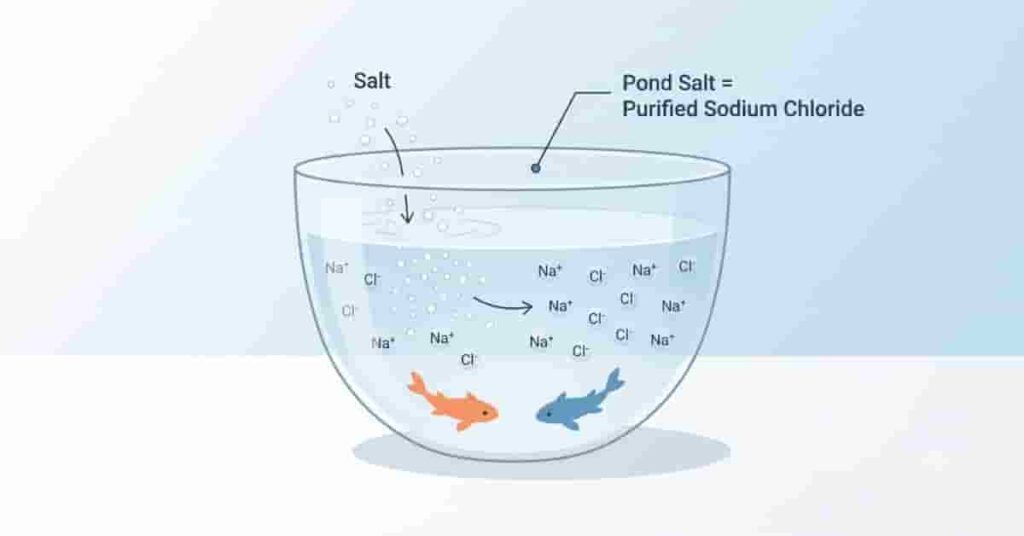
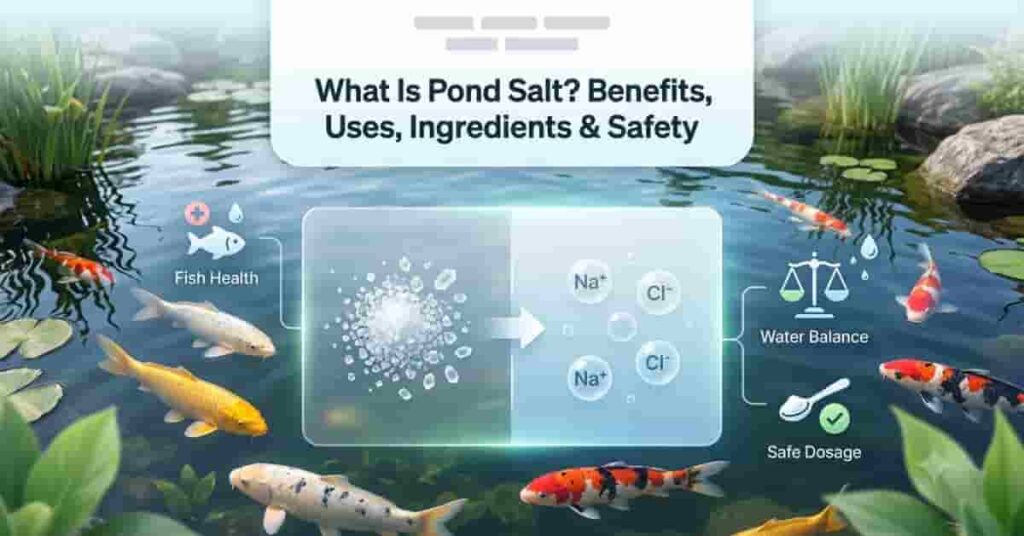
Pond salt is a purified form of sodium chloride used in fish ponds to support fish health and water stability. It does not contain additives like iodine or anti-caking agents, which are common in table salt. The “what is pond salt” question often comes up because many beginners assume all salt works the same, but pond salt is specifically made for aquatic use.
Pond salt dissolves completely in water and releases sodium and chloride ions. These ions help fish manage stress, especially during handling, transport, or sudden changes in water conditions. It also supports natural osmoregulation, which helps fish control fluid balance inside their bodies. This makes it useful during recovery periods or stressful events in the pond.
Pond owners use pond salt mainly to reduce short-term stress and improve water stability. It does not replace filtration or regular pond care, but it acts as a supportive tool when fish face environmental pressure. Beginners often use it after water changes, fish introductions, or mild signs of health stress. Used correctly, it can help maintain a safer and more stable pond environment.
Why Use Pond Salt in a Fish Pond?
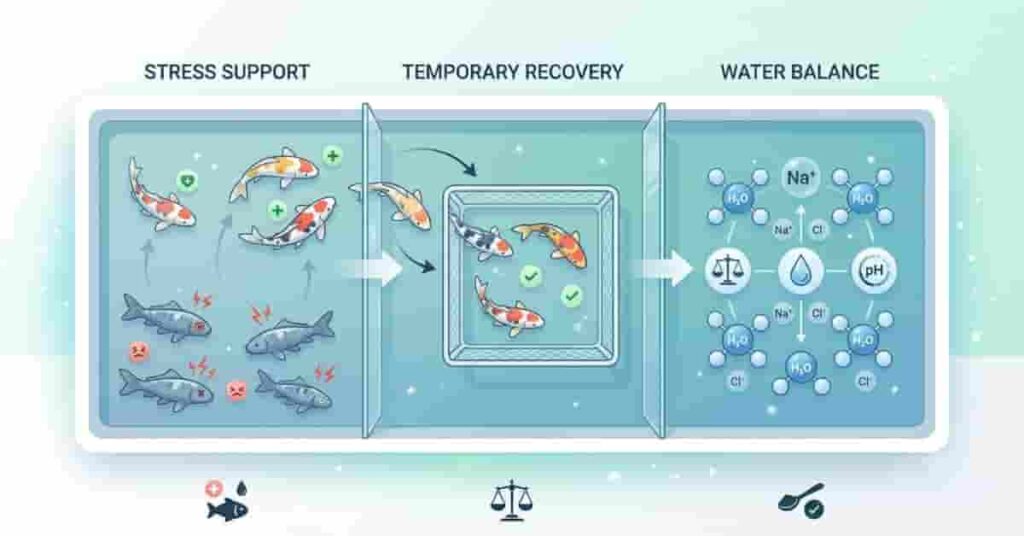
The why use pond salt question usually comes down to one goal: keeping fish stable during stress. Pond salt helps reduce stress in fish caused by handling, transport, or sudden water changes. It supports the fish’s natural body balance, so they can adjust more easily to new or changing conditions. This is especially helpful for beginners who may not always control every water parameter perfectly.
Pond salt is also used as a temporary support tool during mild health challenges. It does not cure diseases, but it can help fish cope better as their immune systems respond. Many pond keepers add it after introducing new fish or after routine maintenance. It creates a more stable environment where fish can recover without extra pressure from poor water conditions or environmental shock.
Another key reason is the balance of water conditions. Pond salt helps improve the water’s overall ionic balance, which supports healthy fish function. It works best as a short-term aid rather than a permanent solution. For more in-depth guidance on safe use, you can read “Should I Add Salt to My Koi Pond?”
What Is Pond Salt Made Of?
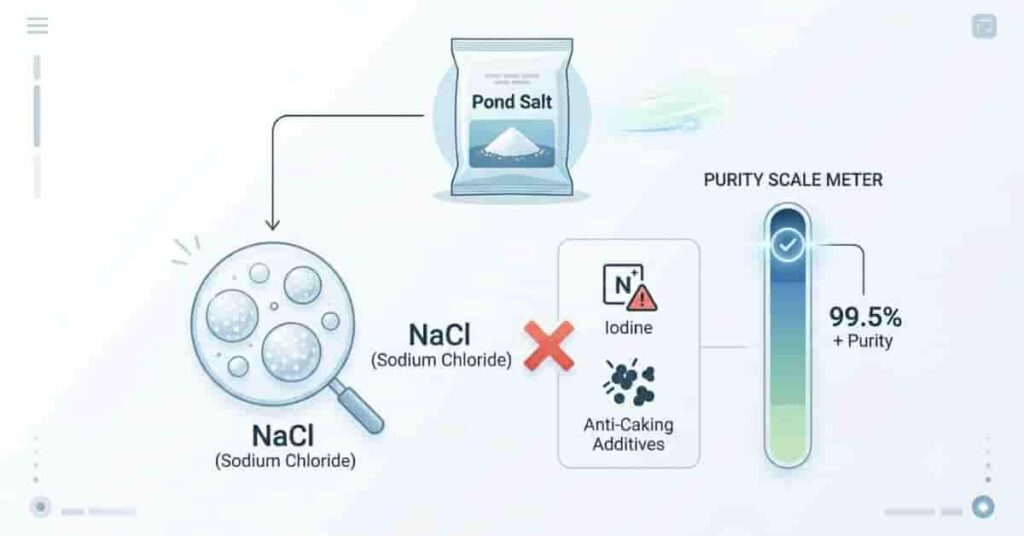
The ingredients in pond salt are simple, but quality matters a lot. Pond salt is mainly made of sodium chloride (NaCl), the same base compound found in table salt. However, pond salt is processed differently to ensure it is safe for aquatic life and dissolves cleanly in water. It is designed for pond environments where fish and biological balance are sensitive.
A key difference is that good-quality pond salt contains no harmful additives. Unlike table salt, it does not include iodine, anti-caking agents, or other chemicals that may affect fish health or pond bacteria. This makes it safer for koi and other pond fish when used correctly. Because of this, pond salt is considered a cleaner and more controlled form of salt for aquatic use.
Purity levels are very important when choosing pond salt. Higher purity means fewer impurities that could cloud water or disturb the biological balance in your pond. Low-quality salt may contain unwanted minerals that can affect water clarity and fish comfort. That is why experienced pond owners always check the purity before adding it to their system.
Since product quality can vary, it’s worth comparing trusted options before making a purchase. Our Best Pond Salt for Koi Ponds guide reviews high-purity products that are safe for koi ponds and free from unnecessary additives.
Why Purity Matters in Pond Salt
Purity directly affects how safely pond salt performs in water. High-purity salt dissolves evenly, reducing the risk of residue buildup. It also helps maintain stable water conditions without introducing unwanted substances that can stress fish or disrupt beneficial bacteria.
Lower-purity salt may contain trace minerals or additives that are harmless in food use but risky in ponds. These impurities can slowly impact water quality over time. For long-term pond health, choosing high-purity pond salt ensures more predictable and safer results for your fish.
Pond Salt Benefits
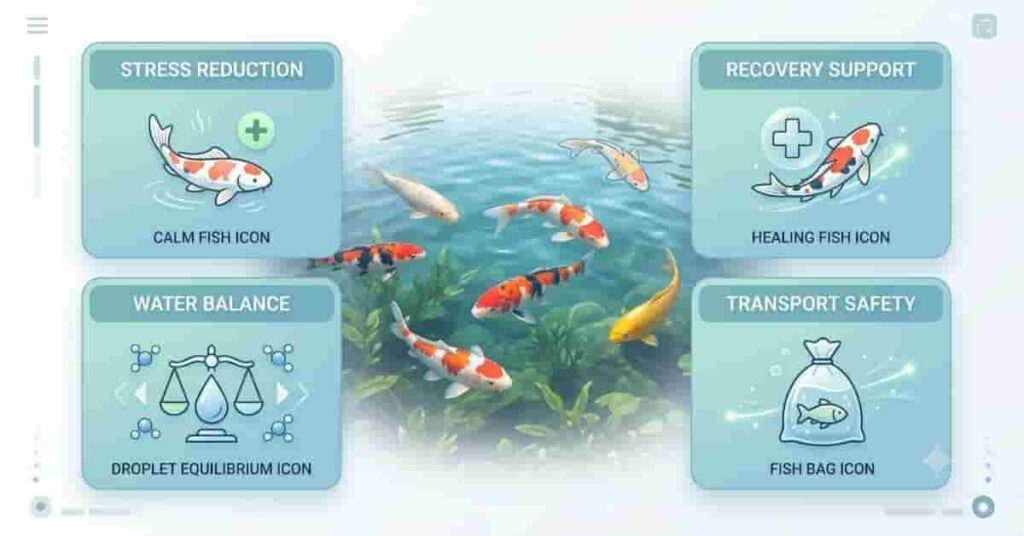
The benefits of pond salt mainly support fish under stress and improve short-term water stability. Pond salt is not a treatment or cure, but it works as a helpful support tool in managed pond environments. Beginners often use it to reduce sudden stress in fish and help them adjust to changing conditions more smoothly.
When used correctly, pond salt can make pond care easier in specific situations, such as water changes or fish introductions. It helps maintain a more stable environment in which fish can function normally without additional pressure. This makes it a common choice for koi ponds and ornamental fish setups where stability matters.
Helps Reduce Fish Stress
One of the main benefits is reducing stress in fish. Changes in temperature, water quality, or handling can cause fish to become weak or inactive. Pond salt helps support their natural body balance, allowing them to cope better with these sudden changes. This is especially useful for beginners who may face frequent water fluctuations.
Supports Fish Recovery in Certain Conditions
Pond salt can support fish recovery after minor environmental stress. It helps the fish maintain proper fluid balance while their natural systems adjust. However, it should never be seen as a cure for diseases. It simply provides a more stable environment where fish can recover more comfortably.
Helps Maintain Temporary Water Balance
Another benefit is temporary water stabilization. Pond salt helps improve ionic balance in the water, which supports overall fish comfort. This effect is short-term and works best when paired with proper filtration and regular pond maintenance.
Useful During Transport or Handling
Fish often experience stress during transport or when being moved between ponds. Pond salt helps reduce the shock by supporting their osmoregulation process. This makes the transition smoother and lowers the risk of stress-related issues during handling.
Pond Salt vs Aquarium Salt
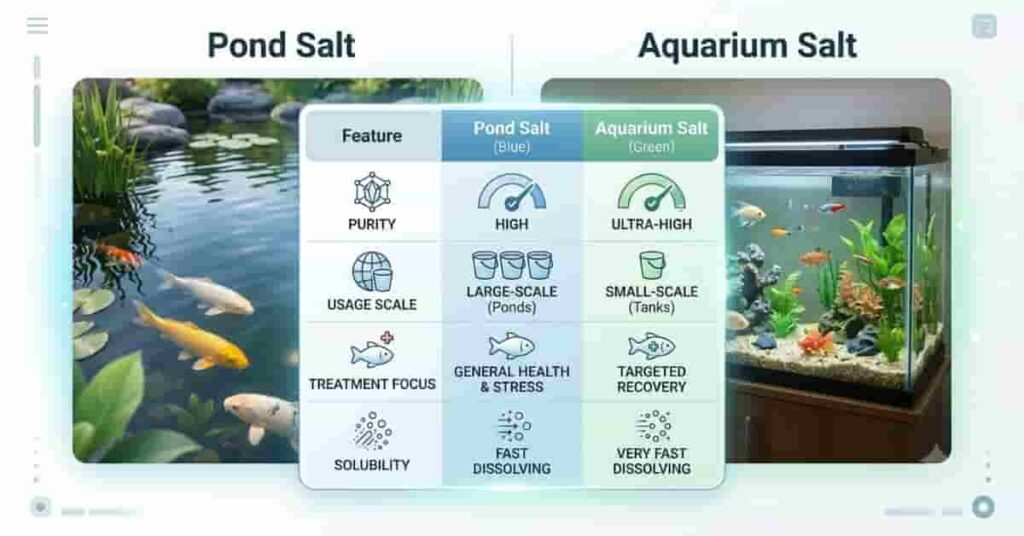
The pond salt vs aquarium salt comparison is important for beginners who often assume both products work the same. While both are mainly composed of sodium chloride, their design purpose, purity level, and usage environment differ. Choosing the right one ensures better safety and stability for your fish and water system.
Pond salt is designed for larger outdoor ponds where water volume is high, and conditions change more slowly. Aquarium salt is made for smaller, controlled indoor tanks where dosing precision matters more. Using the wrong type can lead to improper dosing or inconsistent water effects, especially in sensitive pond environments.
Here is a simple comparison to help you understand the key differences:
| Feature | Pond Salt | Aquarium Salt |
| Purity differences | Higher purity with minimal additives | May vary slightly by brand |
| Usage scale | Large outdoor ponds | Small indoor aquariums |
| Treatment focus | Short-term stress support in ponds | General fish support in tanks |
| Solubility | Designed to dissolve in large water volumes | Fast dissolving for small volumes |
In short, pond salt works better for ponds because of their scale and stability needs, while aquarium salt is better suited to controlled tank environments. Always choose based on your setup, not just the name on the product.
Is Pond Salt Safe for Fish?
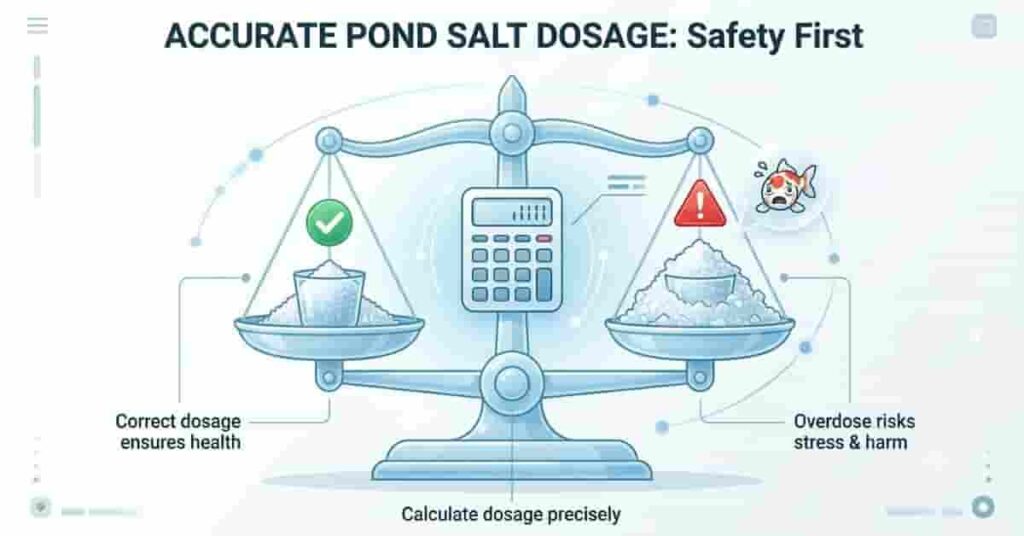
Pond salt is generally safe for fish when used in the correct amount. The key factor is dosage, not the salt itself. When added properly, it can help support fish during stress and improve short-term water stability. This is why many pond owners use it as part of routine pond care, especially during water changes or fish handling.
However, overdosing is where problems start. Too much salt can disrupt the fish’s natural osmoregulation, causing stress instead of reducing it. It may also affect beneficial bacteria in the pond filter system if levels become too high. Beginners often make the mistake of guessing amounts instead of measuring accurately.
That is why calculation is essential. Every pond has a different volume, fish load, and water condition, so salt should always be measured carefully before use. Using an appropriate calculation method helps prevent errors and maintain a stable, safe pond environment for fish.
For accurate dosing guidance, you can read: How Much Salt to Add to a Pond.
How Pond Salt Works in Water
When pond salt is added to water, it quickly dissolves, dissociating into sodium and chloride ions. The way pond salt works in water is simple, but it has an important effect on fish health and pond stability. These dissolved ions spread evenly through the water, creating a controlled change in salinity.
This slight change in salinity helps fish maintain their internal balance. Fish constantly manage water and salt levels inside their bodies through a process called osmoregulation. When pond water conditions change suddenly, fish can become stressed. Pond salt helps reduce that stress by supporting this natural balance system.
It does not change the pond into saltwater. Instead, it creates a mild and controlled environment that supports fish during stressful situations. This is why pond salt is often used after water changes, transport, or when fish show signs of environmental stress.
The effect is temporary and depends on correct dosing. If used properly, pond salt helps stabilize water conditions without harming fish or disrupting the pond ecosystem. It works best as a supportive tool, not a permanent water treatment solution.
Common Misconceptions About Pond Salt
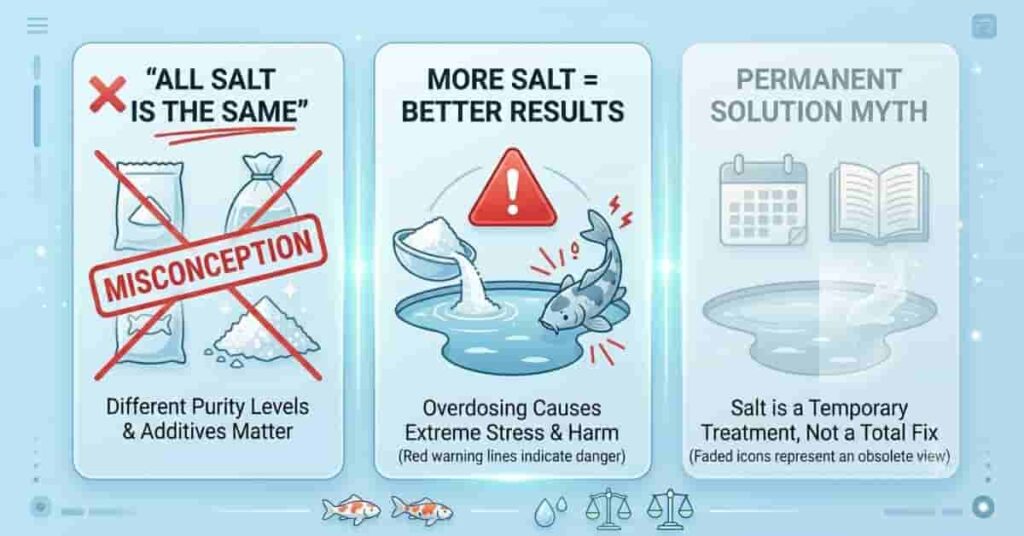
Many beginners misunderstand how pond salt actually works, which can lead to poor results or even stress for fish. Common misconceptions about pond salt often stem from assuming it behaves like table salt or serves as a permanent pond treatment. Clearing up these myths helps you use it more safely and effectively.
Pond salt is a helpful support tool, but it must be used with proper knowledge and correct dosing. It is not a cure-all solution, and it does not replace good filtration, water changes, or regular pond maintenance. Understanding what your pond can and cannot do is key to keeping it healthy.
“All salt is the same”
This is a common mistake. Not all salt is suitable for ponds. Table salt often contains iodine or anti-caking agents that can harm fish or disrupt beneficial bacteria. Pond salt is specially made to be purer and safer for aquatic use, making it more suitable for fish ponds.
“More salt = better results”
Adding extra salt does not improve results. In fact, overdosing can stress fish and damage the pond balance. The effectiveness of pond salt depends on correct measurement, not quantity. Proper dosing is always safer and more effective than guessing or overusing.
“Salt permanently improves pond health”
Pond salt does not permanently improve water quality or fish health. Its effect is temporary and primarily supports fish under stress or during environmental changes. Long-term pond health depends on filtration, oxygen levels, and regular maintenance, not continuous salt use.
When Should You Use Pond Salt?
The question of when to use pond salt is important because timing affects both safety and results. Pond salt is not meant for daily use. It works best in specific situations where fish need short-term support due to stress or environmental changes. Using it at the right time helps maintain stability without disturbing the pond ecosystem.
One common situation is during stress events. This includes sudden water changes, temperature shifts, or poor water conditions. In these moments, fish may struggle to adjust quickly. A controlled dose of pond salt can help support their natural balance and reduce stress response.
Pond salt is also useful in temporary support situations. For example, when new fish are introduced to a pond or after cleaning and maintenance work, fish often experience environmental shock. Adding pond salt can help them adjust more smoothly while the pond stabilizes.
It is also commonly used after fish handling. Moving, transporting, or netting fish can cause stress and temporary weakness. Pond salt helps support recovery by assisting osmoregulation during this sensitive period. For safe, step-by-step usage, read “How to Use Pond Salt Safely.”
When You Should Avoid Pond Salt
The when you should avoid pond salt topic is just as important as knowing when to use it. Pond salt can support fish in certain situations, but it is not suitable for all pond conditions. Using it in the wrong setup can disturb water balance or stress sensitive aquatic life.
In many cases, beginners assume pond salt is always safe. However, certain environments already have delicate ecosystems that do not respond well to added salinity. Understanding these limits helps you avoid unnecessary risk and keep your pond stable in the long term.
Unknown water conditions
Avoid adding pond salt when you do not fully understand your pond’s current water parameters. If salinity, hardness, or overall water quality is unknown, adding salt can create an imbalance. Always test or assess water conditions first to prevent accidental stress on fish.
Already salted pond
If your pond already contains salt, avoid adding more without calculation. Excess salt levels can quickly build up and affect fish osmoregulation. Over-salting may also reduce oxygen efficiency and disrupt beneficial bacteria in the filter system.
Planted ponds with sensitive species
Ponds with aquatic plants or sensitive fish species may react poorly to salt. Some plants do not tolerate salinity well, and delicate species can experience stress even at low levels. In such setups, pond salt should only be used with careful consideration and minimal dosing.
Types of Salt That Should NOT Be Used
Choosing the right salt is just as important as using the correct dose. Certain types of salt should NOT be used in ponds, as they can harm fish health and disrupt the water’s biological balance. Many beginners make the mistake of using kitchen salt, but not all salt is safe for aquatic environments.
Pond salt is specifically formulated for fish ponds, whereas household salt often contains additives unsuitable for aquatic life. These additives may seem harmless in cooking, but they can stress fish and harm beneficial bacteria in your filtration system.
Table Salt
Table salt should never be used in ponds. It often contains anti-caking agents and sometimes iodine. These additives can impair fish health and disrupt the natural balance of pond water. Even small amounts can create unnecessary risk over time.
Cooking Salt
Cooking salt may look similar to pond salt, but it is not designed for aquatic use. It can contain impurities or additives depending on the brand. These substances may cloud water or affect fish comfort, especially in sensitive pond setups.
Iodized Salt
Iodized salt is particularly unsuitable for ponds. The added iodine is meant for human nutrition, not aquatic environments. In fish ponds, it can harm fish health and disrupt biological processes in aquatic ecosystems.
For safe and reliable options, always choose products designed specifically for ponds. You can learn more here: Best Pond Salt for Koi Ponds.
How to Use Pond Salt Safely
Using pond salt correctly is more important than simply adding it to water. The how to use pond salt safely process focuses on careful measurement and slow application to avoid stressing fish. When used properly, it can support fish in stressful conditions without disrupting the pond’s balance.
The first step is always to calculate the correct dosage based on your pond size. Every pond is different, so guessing can lead to overdosing or ineffective results. Accurate calculation helps ensure fish safety and stable water conditions.
Next, always dissolve the salt in a separate container before adding it to the pond. This helps it mix evenly and prevents undissolved crystals from settling at the bottom, which could harm fish or plants.
Finally, add the solution gradually to the pond. Slow addition allows fish to adjust to changes in salinity without shock. Avoid pouring it all in one spot to ensure even distribution across the water.
For a detailed step-by-step guide, read: How to Use Pond Salt Safely.
Do You Need a Calculator for Pond Salt?
Using a pond salt calculator is highly recommended, especially for beginners. The do you need a calculator for pond salt question usually comes up when pond owners try to estimate dosage by eye. This often leads to mistakes that can make the treatment ineffective or unsafe for fish.
A calculator helps prevent overdose by giving you a precise measurement based on your pond’s actual water volume. Since every pond varies in size, depth, and shape, estimating the amount of salt is risky. Even a small error can affect fish comfort and water balance. Once you’ve calculated the correct dosage, the next step is choosing a reliable product. Our Best Pond Salt for Koi Ponds guide compares trusted brands so you can confidently select the right pond salt for your setup.
It also improves accuracy and consistency. When you use a calculator, you get reliable results every time, which helps maintain a stable pond environment. This is especially important when dealing with stress events or new fish introductions.
For beginners, using a calculator is considered best practice. It removes confusion and makes pond care simpler and safer. Instead of relying on assumptions, you follow a clear, data-based approach that protects your fish and reduces maintenance errors.
Conclusion
In this article, we explored what pond salt is, how it works, and why it matters for fish health. We also covered its ingredients, benefits, safe usage, and common mistakes beginners should avoid.
Pond salt is a helpful support tool for fish ponds when used correctly. It is not a cure or permanent solution, but it can reduce stress and support fish during difficult conditions. The key takeaway is simple: proper dosing and timing matter more than frequent use.
Always avoid overusing pond salt and rely on accurate calculation before adding it to your pond. This helps protect fish, plants, and the overall water balance. If you found this guide helpful, share it with other pond owners or explore more resources on our site. You can also leave your questions or experiences in the comments to help other beginners learn.
Before adding salt to your pond, calculate the correct dosage using a pond salt calculator, then choose a high-quality product designed specifically for koi ponds. Our Best Pond Salt for Koi Ponds guide compares trusted brands to help you make a safe and informed choice.

Michael Brooks and Sarah Lane are the co-founders of the Pond Pump Team, a trusted U.S.-based group helping homeowners and landscapers build better ponds and water features. Michael, an experienced pond engineer from Oregon, has worked for over 12 years on pump sizing, flow systems, and water circulation. Sarah, a pond designer from Colorado with nine years of experience, focuses on eco-friendly and easy-to-maintain pond and waterfall designs. Together, they’ve completed more than 180 pond projects and created tools like the Pond Pump Calculator and Pond Liner Calculator to make pond planning simple, accurate, and sustainable.
Need help with your pond setup? Contact the Pond Pump Team for expert advice and reliable solutions.