Table of Contents
Introduction
Have you ever looked at your pond and wondered why green, stringy algae appeared almost overnight?
If you are a beginner pond owner, what causes string algae can seem confusing. String algae, also called blanket weed, often appears during warm, sunny periods. It can quickly cover rocks, plants, and other pond surfaces.
However, string algae usually does not appear without a reason. It often points to changes in nutrients, sunlight, water movement, or overall pond balance. Fish waste, excess food, decaying leaves, and runoff can also add nutrients that algae uses to grow.
This guide explains why string algae grows and what conditions encourage it. You will learn the main causes behind blanket weed and why it keeps returning.
Most importantly, this article focuses on understanding the root cause, not simply removing visible algae. Once you know what is driving the growth, you can make smarter decisions about your pond’s long-term health.
Before looking at why it grows, it helps to identify exactly what you are seeing. This guide explains what is string algae and how to recognize common blanket weed growth.
What Is String Algae?
String algae is a type of filamentous algae that forms long, thread-like green strands in ponds. Blanket weed is a common name for this same general type of algae growth.
It can attach to rocks, pond walls, plants, and other surfaces. For a deeper explanation, link naturally to your “What Is String Algae?” guide.
Main Cause: Excess Nutrients in Water
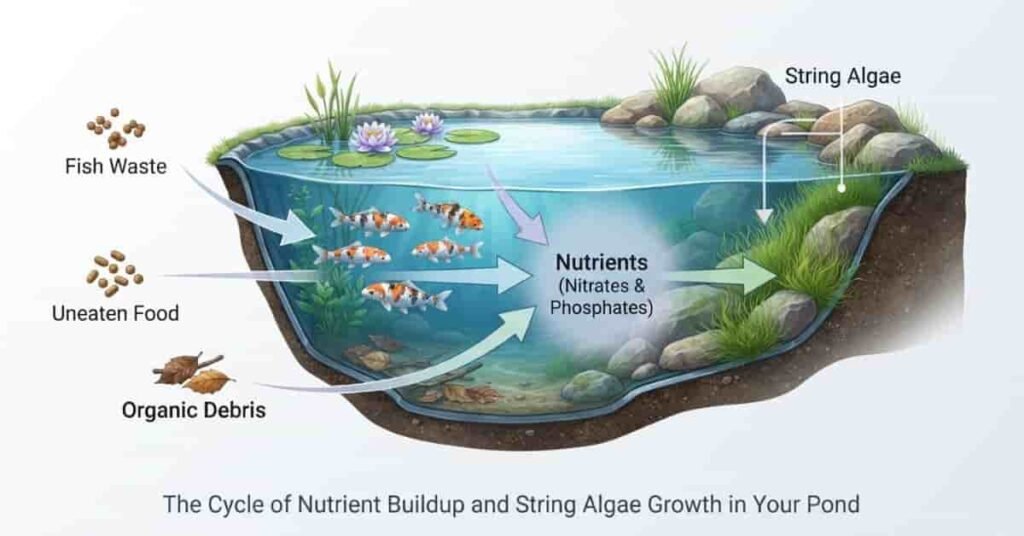
One of the biggest reasons string algae grows is an excess of nutrients in pond water. Nitrates and phosphates can provide the nutrients algae needs to grow and spread.
These nutrients can build up from several everyday sources. Fish waste, uneaten food, decaying leaves, and other organic debris can all add nutrients as they break down.
Overfeeding fish is another common contributor. Extra food sinks into the pond and decomposes, adding more nutrients to the water. Without enough nutrient uptake or removal, algae can take advantage of this supply.
How Nutrients Build Up
A healthy pond naturally processes nutrients through plants, beneficial microorganisms, filtration, and water changes. Problems can develop when nutrient input becomes greater than the pond’s ability to process it.
Common nutrient sources include:
- Fish waste
- Uneaten fish food
- Decaying leaves and plant material
- Organic sludge on the pond bottom
- Nutrient-rich runoff entering the pond
Expert tip: Look for the source of excess nutrients before blaming the algae itself. Reducing nutrient buildup can help make the pond less favorable for repeated string algae growth.
Once you understand what is causing the growth, the next step is choosing an effective control method. Learn what kills pond algae and how different treatments work.
Too Much Sunlight Exposure
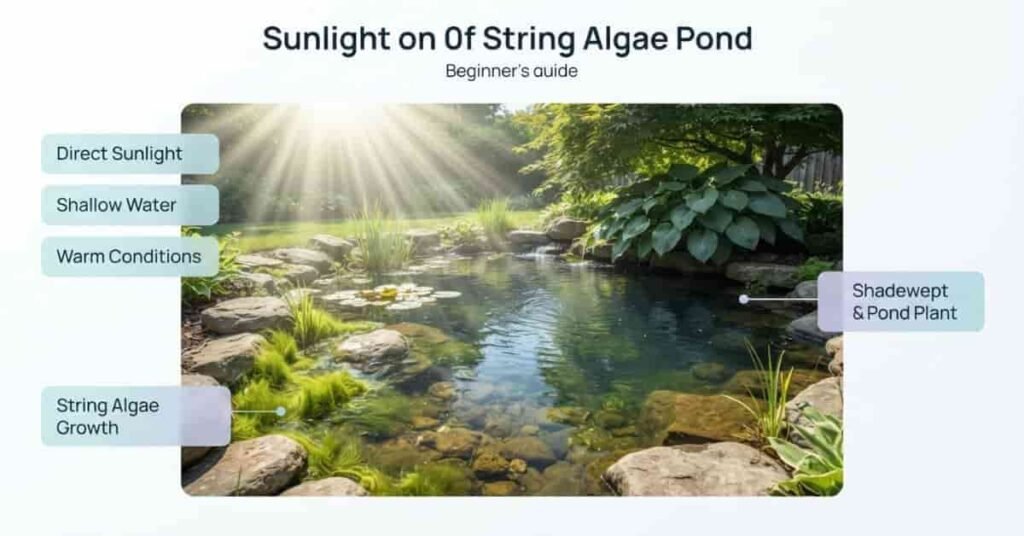
Sunlight gives algae the energy it needs for photosynthesis. When a pond receives strong, direct sunlight for long periods, string algae can grow more easily.
Shallow ponds often experience stronger effects because sunlight can reach more of the water and pond surfaces. Warm, sunny weather can also create favorable conditions for faster algae growth.
However, sunlight alone does not explain every algae problem. Nutrient availability also matters. A sunny pond with low nutrient levels may not develop the same algae growth as a nutrient-rich pond.
Expert tip: Watch areas that receive direct sunlight throughout the day. These spots may show string algae first, especially during warm weather.
Addressing the conditions that encourage algae is important for long-term control. These strategies can also help you prevent pond algae growth before it becomes severe.
Poor Water Circulation
Good water movement helps distribute oxygen, nutrients, and other substances throughout a pond. Poor circulation can create stagnant areas where water quality becomes less consistent.
These low-flow areas can collect organic debris and nutrients. String algae may then find favorable conditions near pond edges, corners, rocks, or other areas with limited movement.
Pond pumps, waterfalls, fountains, and properly positioned returns can improve circulation. However, circulation alone does not prevent algae if excess nutrients remain in the water.
Expert tip: Check corners and areas behind rocks or plants. Persistent algae in these spots may indicate weak water movement.
Overfeeding Fish
Feeding fish more than they can eat can indirectly encourage string algae growth. Uneaten food breaks down and adds organic nutrients to the pond.
Fish waste creates another source of nutrients. When feeding continues without proper control, nutrient levels can gradually increase and provide more resources for algae growth.
This issue can become noticeable in koi ponds with frequent feeding. The goal is not to stop feeding fish, but to avoid unnecessary food entering the water.
Feed an appropriate amount and observe how quickly your fish finish it. Remove obvious leftovers when practical.
Expert tip: If food regularly remains after feeding, reduce the amount rather than adding more.
Lack of Pond Plant Balance
Pond plants can absorb nutrients from the water and compete with algae for available resources. However, plants need to remain part of a balanced pond ecosystem.
Too few plants may leave more available nutrients for algae. On the other hand, excessive plant growth can create dead organic material when leaves and stems decay.
The goal is a healthy balance between plants, fish, filtration, and nutrient input. Healthy aquatic plants can support water quality, but they cannot compensate for heavy nutrient buildup.
Water Quality Imbalance
Poor water quality can make a pond harder to manage and may support conditions that favor algae growth. Several water-quality problems can contribute to an unstable pond environment.
pH swings can indicate changing pond conditions, especially when other water-quality issues exist. High ammonia levels can also point to excess waste or insufficient biological processing.
Dirty filters can reduce the system’s ability to remove debris and support consistent water quality. Ponds without suitable filtration may also struggle with accumulating organic matter.
However, these factors are not always direct causes of string algae. They often signal a larger nutrient or maintenance problem that deserves attention.
Expert tip: Test your pond water regularly instead of judging water quality by appearance alone. Look at pH, ammonia, nitrite, and nitrate together for a clearer picture.
Seasonal & Weather Factors
Weather can strongly influence how quickly string algae grows. Warm temperatures and longer periods of sunlight create favorable conditions for algae activity.
This explains why pond owners often notice more algae during warmer months. Summer can bring stronger sunlight, warmer water, and faster biological activity.
Heavy rain can create another problem. Rainwater flowing across lawns, soil, or garden areas may carry nutrients and organic material into the pond.
Winter usually brings slower algae growth because cooler conditions reduce biological activity. However, algae may still grow when suitable light, nutrients, and temperatures remain available.
Why String Algae Keeps Coming Back
String algae often returns because the conditions supporting its growth remain unchanged. Removing visible algae does not necessarily remove the nutrients or environmental factors behind it.
For example, cleaning algae from a pond may provide quick improvement. However, excess nutrients can continue entering the water through fish waste, uneaten food, or decaying organic matter.
The same cycle can then repeat. Algae grows, gets removed, and returns when favorable conditions remain.
The better approach is to identify the underlying cause. Check nutrient sources, sunlight, circulation, feeding habits, plants, filtration, and seasonal changes.
How Understanding the Cause Helps Control String Algae
Knowing what causes string algae makes pond control much more effective. Instead of repeatedly removing visible growth, you can address the conditions that encourage it.
Start by looking at the basics: nutrient buildup, sunlight, circulation, fish feeding, plants, filtration, and organic debris. Small changes in these areas can help create a more balanced pond environment.
For practical removal methods, see our guide on how to get rid of string algae. If your goal is long-term prevention, visit our guide on how to prevent pond algae.
Understanding the cause should come first. Once you know why the algae grows, you can choose control methods with greater confidence.
Conclusion
String algae usually points to an imbalance in the pond environment rather than a random algae problem. Excess nutrients, sunlight, poor circulation, fish waste, and seasonal changes can all encourage growth.
Understanding what causes string algae helps you address the conditions behind repeated growth. Removing algae can improve the pond temporarily, but fixing the underlying environment offers a better long-term approach.
Start by reviewing your feeding habits, filtration, water movement, plant balance, and organic debris. Also watch for nutrient-rich runoff after heavy rain.
If you’re dealing with recurring blanket weed, focus on the cause before choosing a control method. For practical next steps, explore our guides on how to get rid of string algae and how to prevent pond algae.
Have you dealt with recurring string algae? Share your experience and what worked for your pond.
Frequently Asked Questions
What causes string algae in ponds?
String algae usually grows when ponds have excess nutrients, strong sunlight, and suitable temperatures. Fish waste, uneaten food, decaying leaves, and runoff can add nutrients that support algae growth.
What causes blanket weed in ponds?
Blanket weed grows when conditions favor filamentous algae. Excess nutrients, sunlight, warm water, and poor pond balance can encourage its growth. Reducing nutrient buildup can make the pond less favorable for blanket weed.
Why does string algae grow so fast?
String algae can grow quickly when it has enough nutrients, sunlight, and suitable temperatures. Warm weather can increase biological activity and create better conditions for algae growth.
Does sunlight cause string algae?
Sunlight helps string algae grow by providing energy for photosynthesis. However, sunlight alone does not explain algae problems. Nutrient availability also plays an important role.
Can overfeeding fish cause string algae?
Overfeeding can contribute to string algae growth. Uneaten food breaks down and adds nutrients to the pond. Fish waste can add nutrients as well, especially when feeding levels remain high.
Can poor water circulation cause string algae?
Poor circulation can create low-flow areas where debris and nutrients accumulate. These areas may provide favorable conditions for string algae, especially around pond edges and corners.
Do pond plants prevent string algae?
Healthy aquatic plants can compete with algae for available nutrients. However, plants work best as part of a balanced pond system. Too much decaying plant material can also add nutrients.
Why does string algae keep coming back?
String algae often returns when the conditions supporting its growth remain unchanged. Removing visible algae does not remove excess nutrients, sunlight, or other underlying factors.
Does rainwater make string algae worse?
Rainwater can contribute to algae growth when runoff carries nutrients, soil, fertilizers, or organic debris into the pond. Heavy runoff can therefore change pond water conditions.
How can I prevent string algae from growing?
Focus on reducing excess nutrients and maintaining a balanced pond environment. Avoid overfeeding, remove organic debris, maintain filtration, improve circulation, and manage excessive sunlight where practical.

Michael Brooks and Sarah Lane are the co-founders of the Pond Pump Team, a trusted U.S.-based group helping homeowners and landscapers build better ponds and water features. Michael, an experienced pond engineer from Oregon, has worked for over 12 years on pump sizing, flow systems, and water circulation. Sarah, a pond designer from Colorado with nine years of experience, focuses on eco-friendly and easy-to-maintain pond and waterfall designs. Together, they’ve completed more than 180 pond projects and created tools like the Pond Pump Calculator and Pond Liner Calculator to make pond planning simple, accurate, and sustainable.
Need help with your pond setup? Contact the Pond Pump Team for expert advice and reliable solutions.