Table of Contents
Introduction
Ever pulled thick green strands from your pond and wondered why they keep coming back?
Blanket weed in pond water can quickly turn a clean-looking backyard pond into a tangled mess. This stringy algae often spreads across rocks, plants, liners, pumps, and waterfalls.
For beginners in the USA, identifying the cause is the first step toward effective control. Too much sunlight, excess nutrients, fish waste, and poor circulation can all encourage growth.
The good news is that you don’t always need harsh chemicals to control it. Simple maintenance and the right treatment can make a big difference.
In this guide, you’ll learn what blanket weed is and why it grows. We’ll also explain whether it can harm fish and pond plants.
You’ll discover practical ways to remove blanket weed and prevent it from returning. We’ll cover natural control methods, treatments, and useful pond equipment.
Ready to take back your pond? Let’s start with the basics and find the best blanket weed control approach for your pond.
What Is Blanket Weed?
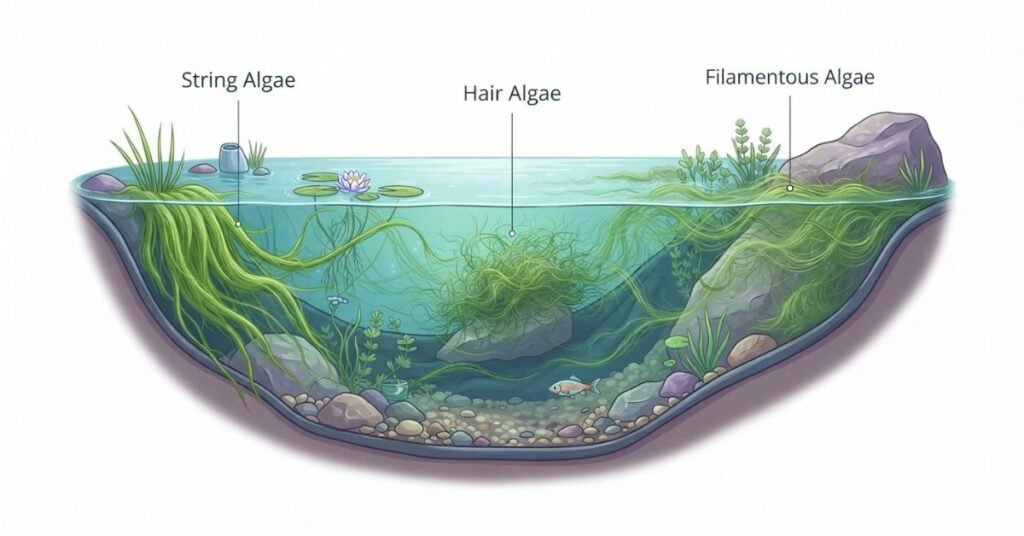
Blanket weed in pond water is a type of filamentous algae that grows in long, thread-like strands. These strands can join together and form thick green mats across the pond surface or underwater. You may also hear it called string algae or hair algae.
Blanket weed usually becomes a bigger problem when pond conditions favor excessive algae growth. Understanding what causes algae in ponds can help you address the problem at its source.
Unlike single-celled algae that turns water green, blanket weed grows as visible threads. It often attaches to rocks, pond liners, plants, pumps, and other underwater surfaces. As the strands grow, they can become tangled and form large clumps.
The name “blanket weed” comes from its growth pattern. Dense strands can spread across the pond like a loose green blanket. Warm weather, sunlight, and excess nutrients can encourage faster growth.
For beginners, identifying this growth correctly matters. Blanket weed control works best when you address both the visible algae and the conditions helping it grow.
What Does Blanket Weed Look Like?
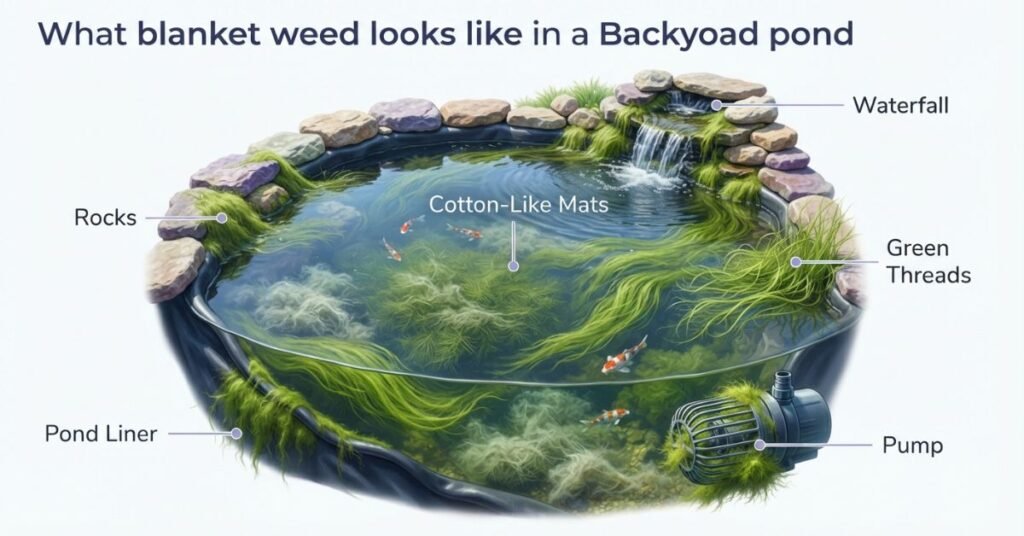
Blanket weed is usually easy to recognize once you know its appearance. It starts as fine green threads that cling to underwater surfaces. Over time, these threads can become thicker, tangled, and difficult to remove.
You may find green threads attached to rocks, plants, or the pond liner. As growth increases, the strands can form cotton-like mats that float near the surface. These mats may look soft, slimy, or tangled when you lift them from the water.
Blanket weed can also grow around waterfalls and pump areas. Water movement may collect loose strands around the pump intake. This can reduce flow if the growth becomes heavy.
Look for these common signs:
- Green threads: Fine strands attached to underwater surfaces.
- Cotton-like mats: Dense clumps that tangle together.
- Rocks: Algae often starts growing on submerged stones.
- Pond liner: Smooth liner surfaces can collect attached strands.
- Waterfall: Flowing water can spread loose algae around the feature.
- Pump: Strands may gather around pump intakes and moving water.
What Causes Blanket Weed in a Pond?
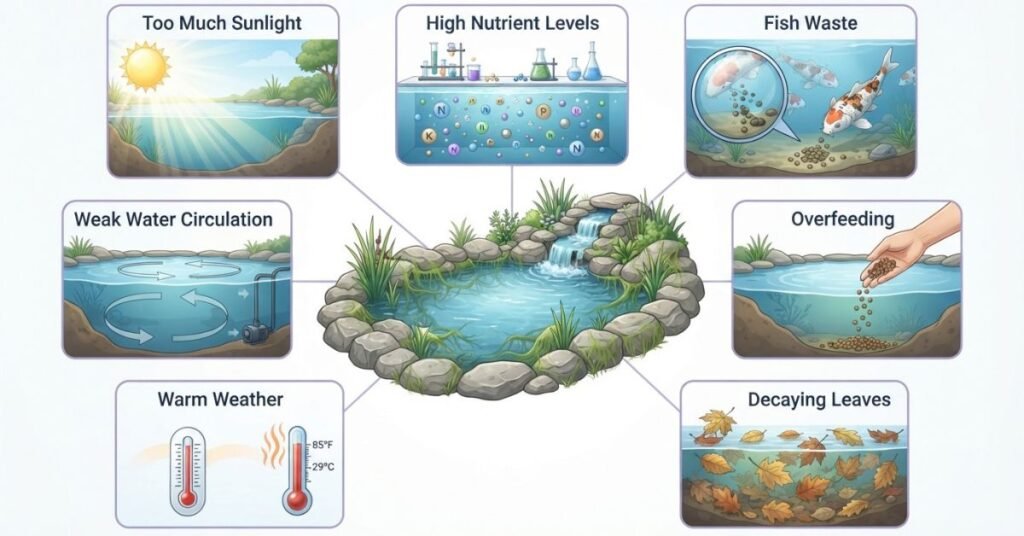
Blanket weed grows when pond conditions give filamentous algae plenty of light and nutrients. Several factors can work together, making growth harder to control.
Too Much Sunlight
Blanket weed needs light for photosynthesis and often grows faster in sunny ponds. Long periods of direct sunlight can encourage dense algae growth.
Ponds with little shade may receive enough light to support rapid growth. This becomes more noticeable during bright spring and summer weather.
You don’t need to shade the entire pond. Adding suitable floating or marginal plants can reduce direct sunlight naturally.
Pro Tip: Aim for balanced shade rather than completely blocking sunlight. Pond plants still need light for healthy growth.
High Nutrient Levels
Excess nutrients can fuel blanket weed growth. Nutrients often enter ponds through fish waste, uneaten food, decaying leaves, and runoff.
Nitrogen and phosphorus are especially important nutrients for algae growth. When these nutrients build up, blanket weed may spread more quickly.
Regular debris removal and good filtration can help reduce nutrient accumulation. Avoid adding more nutrients than your pond ecosystem can process.
Fish Waste
Fish naturally release waste into the water. Larger fish populations can therefore contribute more organic waste to the pond.
Waste breaks down and releases nutrients that algae can use. Heavy stocking can make nutrient control more difficult.
Good filtration helps capture solid waste before it breaks down. Regular maintenance also keeps organic material from accumulating.
Overfeeding
Uneaten fish food quickly becomes an unwanted nutrient source. This can happen when you feed more food than your fish consume.
Feed only what your fish can reasonably eat during each feeding. Remove obvious leftovers when necessary.
Reducing excess food helps control nutrient levels. It also supports cleaner water and healthier pond conditions.
Decaying Leaves
Leaves and other plant debris add organic matter as they decompose. Their breakdown can release nutrients into the pond.
A skimmer or pond net can help remove leaves before they sink. Regular debris removal becomes especially useful during autumn.
Keeping organic waste under control can reduce one source of algae-fueling nutrients.
Weak Water Circulation
Poor circulation can create areas where nutrients and debris collect. Stagnant sections may also encourage algae to establish.
A properly sized pump helps move water through the pond and filtration system. Water movement also supports better oxygen distribution.
Check pump flow regularly, especially if blanket weed gathers around the intake or quiet corners.
Warm Weather
Blanket weed often becomes more noticeable during warmer periods. Warm, sunny conditions can support active algae growth when nutrients are available.
Summer maintenance therefore deserves extra attention. Remove debris, monitor feeding, maintain filtration, and check water movement regularly.
Is Blanket Weed Harmful?
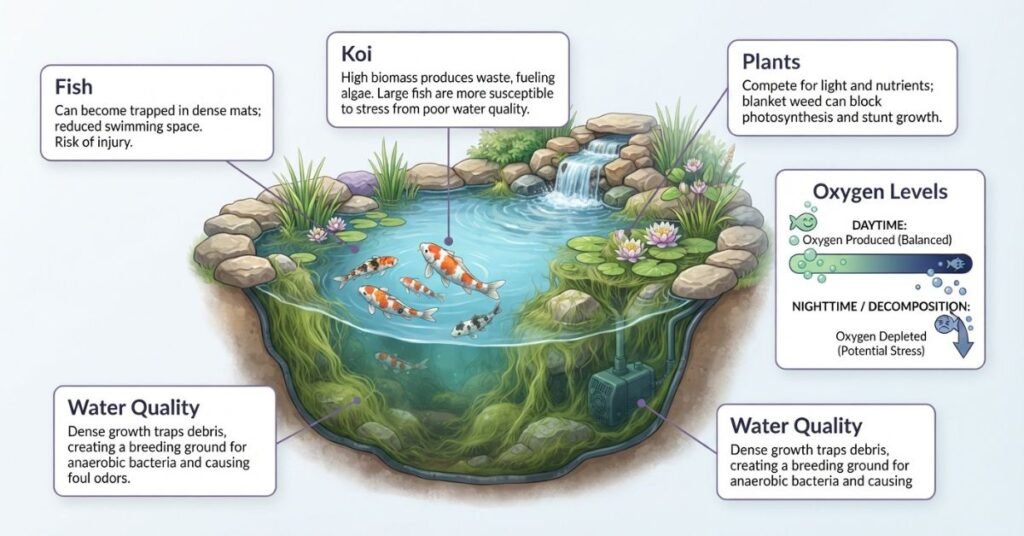
Blanket weed isn’t automatically harmful to a pond. Small amounts can exist without causing major problems for fish or plants.
The bigger concern comes from heavy growth. Thick algae mats can interfere with pond appearance, equipment, plant growth, and overall water balance.
A small amount of algae can be part of a natural pond ecosystem, but excessive growth can affect water quality and appearance. Learn more about whether pond algae is harmful or beneficial.
Fish
Moderate blanket weed usually doesn’t directly harm healthy pond fish. However, heavy growth can create problems by covering surfaces and interfering with normal pond conditions.
Large mats can trap debris and make maintenance more difficult. If substantial algae dies and decomposes, it can also consume oxygen.
Koi
Koi can live in ponds where some filamentous algae grows. However, excessive blanket weed can become troublesome in heavily stocked koi ponds.
Dense growth may interfere with pumps and filtration equipment. Koi ponds also need careful nutrient management because waste can contribute to algae growth.
Plants
Heavy blanket weed can compete with aquatic plants for light and nutrients. It may also grow around stems and leaves.
Dense mats can cover smaller plants and make them harder to maintain. Removing excess algae carefully can give desirable pond plants more room.
Water Quality
Blanket weed itself doesn’t always mean poor water quality. However, persistent heavy growth can indicate excess nutrients or other underlying conditions.
Look at the bigger picture. Check debris, feeding, stocking, filtration, circulation, and other nutrient sources.
Oxygen Levels
Living algae produce oxygen during daylight through photosynthesis. However, algae also respire, including at night.
When large amounts of algae die and decompose, microorganisms consume oxygen during decomposition. This can create oxygen stress, especially in poorly aerated ponds.
How to Get Rid of Blanket Weed in a Pond
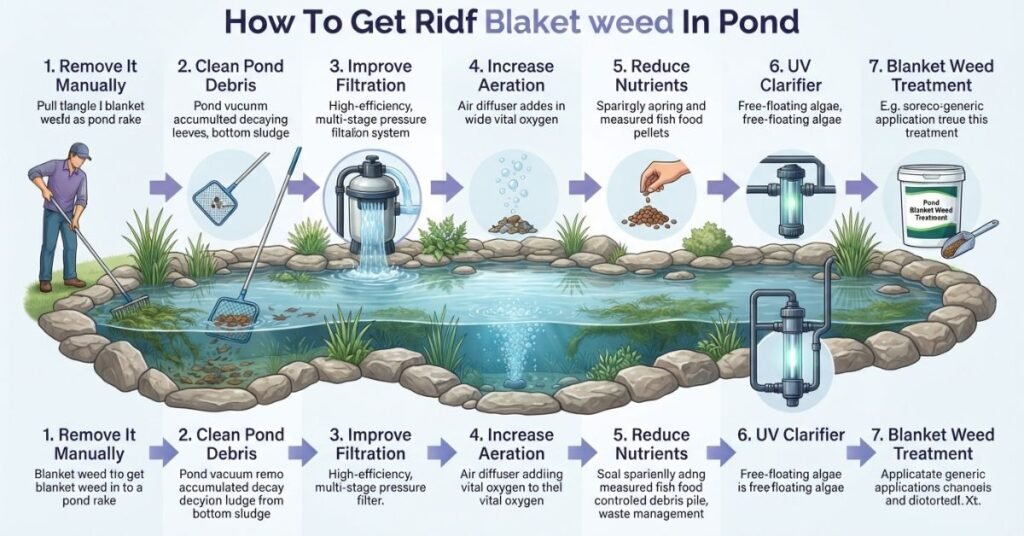
If you’re wondering how to get rid of blanket weed in a pond, start with physical removal and better pond maintenance. Chemicals can help in some situations, but they work best alongside long-term control.
Removing blanket weed from a fish pond requires care, especially when koi or goldfish are present. See our guide on how to get rid of pond algae without killing fish for safer removal methods.
Step 1: Remove It Manually
Use a pond rake, net, or long-handled tool to pull out visible blanket weed. Remove as much of the thick growth as practical.
Work slowly around pond plants and fish. Leaving removed algae beside the pond can allow nutrients to wash back into the water.
For large ponds, tackle one section at a time. Manual removal provides quick results and lets you see where algae keeps returning.
Step 2: Clean Pond Debris
Remove fallen leaves, dead plant material, sludge, and other organic debris. These materials can release nutrients as they break down.
Check areas around rocks, edges, skimmers, and pump intakes. Regular debris removal helps reduce the nutrient supply that supports algae growth.
Step 3: Improve Filtration
A suitable filter helps remove suspended particles and organic waste from pond water. Good mechanical filtration can also reduce material that would otherwise decompose.
Clean filter media according to the manufacturer’s instructions. Avoid aggressively cleaning beneficial biological media with untreated tap water.
Step 4: Increase Aeration
An air pump, diffuser, or suitable waterfall can increase oxygen exchange and improve water movement. This becomes especially useful during warm weather.
Better aeration doesn’t directly remove established blanket weed. It supports healthier pond conditions and helps reduce oxygen stress.
Step 5: Reduce Nutrients
Control the nutrients feeding blanket weed. Avoid overfeeding fish and remove leaves, dead plants, and other organic waste regularly.
Also check for fertilizer runoff entering the pond. Keeping nutrients under control makes long-term blanket weed control much easier.
Step 6: Install a UV Clarifier
A UV clarifier can help control suspended algae that causes green water. It does not directly destroy established blanket weed mats.
This distinction matters when choosing pond equipment. A UV clarifier can improve water clarity, but it shouldn’t replace physical blanket weed removal.
Step 7: Apply Blanket Weed Treatment
If manual removal and maintenance aren’t enough, consider a suitable blanket weed treatment. Always check the product label before application.
Confirm its compatibility with your fish, plants, pond size, and filtration system. Follow the manufacturer’s dosage and safety instructions carefully.
Pro Tip: Don’t rely on treatment alone. Removing the algae while reducing excess nutrients gives you a better long-term strategy.
Natural Blanket Weed Control
Natural methods can help reduce blanket weed without relying entirely on chemical treatments. They work best when you also control sunlight, nutrients, and organic waste.
Barley Straw
Barley straw is a traditional pond-management method used to discourage algae growth. As it decomposes, it produces compounds that may affect certain algae.
Results can vary depending on pond conditions. Barley straw should support your overall strategy rather than replace proper maintenance.
Floating Plants
Floating plants can provide shade across parts of the pond. They also compete with algae for available nutrients.
Avoid covering the entire surface. Fish and submerged plants still need suitable light and healthy gas exchange.
Beneficial Bacteria
Beneficial bacteria products can support the breakdown of organic waste in ponds. They may help manage nutrients that contribute to algae growth.
Choose products specifically designed for ponds. Follow the label instructions and don’t expect bacteria alone to remove thick algae mats.
Pond Dye
Pond dye can reduce the amount of available light reaching deeper water. This may help limit photosynthesis under suitable conditions.
Choose a dye labeled for ornamental ponds and follow the application instructions. Dye won’t remove existing blanket weed by itself.
Water Changes
Partial water changes can help dilute accumulated nutrients in some ponds. They can be useful when water quality problems contribute to recurring algae.
Avoid making unnecessary large changes. Consider your fish, plants, source-water quality, and overall pond conditions first.
Shade
Adding shade can reduce direct sunlight reaching the pond. Floating plants, nearby landscaping, or purpose-built shade can provide useful coverage.
Keep some open water exposed to light. Balanced shade works better than completely blocking sunlight from the pond.
Best Blanket Weed Killer for Ponds
Choosing the best blanket weed killer for ponds depends on your pond size, algae type, fish, plants, and local product labeling. No single treatment works perfectly for every pond.
For backyard ponds, start with manual removal and nutrient control before reaching for a chemical treatment. Some aquatic treatments can affect fish or other pond life when used incorrectly.
Product labels matter most. Check whether the treatment specifically covers filamentous algae or blanket weed. Also verify fish, plant, dosage, water-use, and application restrictions before use.
| Product | Fish Safety | Plant Safety | Treats Area | Best For | Rating | Check Price |
|---|---|---|---|---|---|---|
| Natural Elements Weed Killer 1 Gallon | Check label | No Kills grass & weeds | Not specified | General weeds & grasses | 2,403 reviews | View on Amazon → |
| ECO Garden PRO Organic Vinegar Weed Killer 1 Gallon | Yes* Seller claim | No Kills weeds & grass | Not specified | Weeds, moss & grass | 4,136 reviews | View on Amazon → |
| Agrisel GlyPhoSel Pro Weed Killer 128 oz | Not recommended No pond-use claim provided | No Eliminates treated vegetation | Not specified | Tough weeds & vegetation | 529 reviews | View on Amazon → |
| Agrisel Diquat Weed Killer 128 oz | Check label | Check label | Not specified | Aquatic & landscape weeds | 272 reviews | View on Amazon → |
Important: Always check the current product label for approved pond use, fish and plant safety, application rates, and water-use restrictions before applying any treatment.
*Fish-safety information marked “Yes” is based on the seller’s product claim and should be verified on the current product label.
Blanket Weed Control in Ponds
Long-term blanket weed control in ponds focuses on reducing the conditions that encourage algae. Removing algae alone may provide temporary relief when excess nutrients remain.
A simple maintenance schedule can make pond care easier. Adjust the routine based on your pond size, fish load, plant growth, and seasonal conditions.
Weekly
Check the pond for new algae growth and remove visible strands before they form thick mats. Remove floating leaves and other debris.
Check the pump, skimmer, waterfall, and filter for restricted flow. Feed fish carefully and remove obvious uneaten food.
Monthly
Inspect filtration equipment and clean it according to the manufacturer’s instructions. Check whether water movement remains strong across the pond.
Look for recurring algae hotspots around rocks, shallow edges, and equipment. These areas may reveal circulation or nutrient problems.
Seasonal
Spring and summer often require closer monitoring because warmer, brighter conditions can encourage algae growth. Increase debris removal when growth accelerates.
In autumn, use a pond net where appropriate to reduce falling leaves. Winter maintenance usually focuses on equipment, debris, and preventing unnecessary nutrient buildup.
The RHS recommends reducing nutrient inputs, removing algae manually, and using measures such as shade or pond plants.
Pro Tip: Don’t wait until the pond becomes covered in algae. Early removal usually makes routine maintenance much easier.
How to Prevent Blanket Weed
The best blanket weed prevention strategy targets the conditions that help algae thrive. Focus on water movement, filtration, nutrients, sunlight, and regular maintenance.
Pump Sizing
Choose a pump that provides suitable circulation for your pond and filtration setup. Undersized equipment may leave quiet areas where debris and nutrients accumulate.
Always follow the pump manufacturer’s flow recommendations. Account for head height, pipe length, bends, and other restrictions when assessing actual flow.
Filtration
Good filtration helps remove solid waste and organic material from the water. Match the filter capacity to your pond and fish load.
Clean mechanical media regularly according to the manufacturer’s guidance. Don’t remove beneficial biological media unnecessarily.
Pond Plants
Aquatic plants can provide shade and compete with algae for available nutrients. Floating plants can also reduce direct sunlight reaching parts of the pond.
Avoid overcrowding the surface. Fish and other pond life still need adequate open water and healthy gas exchange.
Nutrient Balance
Keep excess nutrients out of the pond whenever possible. Remove leaves, dead plant material, and other organic debris before they accumulate.
Also watch for fertilizer runoff from nearby lawns and gardens. Nutrient reduction is one of the most important long-term algae-control measures.
Feeding Schedule
Overfeeding fish adds unnecessary organic material to the pond. Give fish an appropriate amount and avoid leaving uneaten food behind.
Adjust feeding as conditions change. Fish generally need less food when their activity and metabolism decrease.
Cleaning Routine
Create a simple routine for removing debris and checking pond equipment. Inspect pumps, filters, skimmers, and waterfalls regularly.
Prevention works best when several small habits work together. A clean, well-circulated pond gives blanket weed fewer opportunities to become a major problem.
Blanket Weed vs String Algae
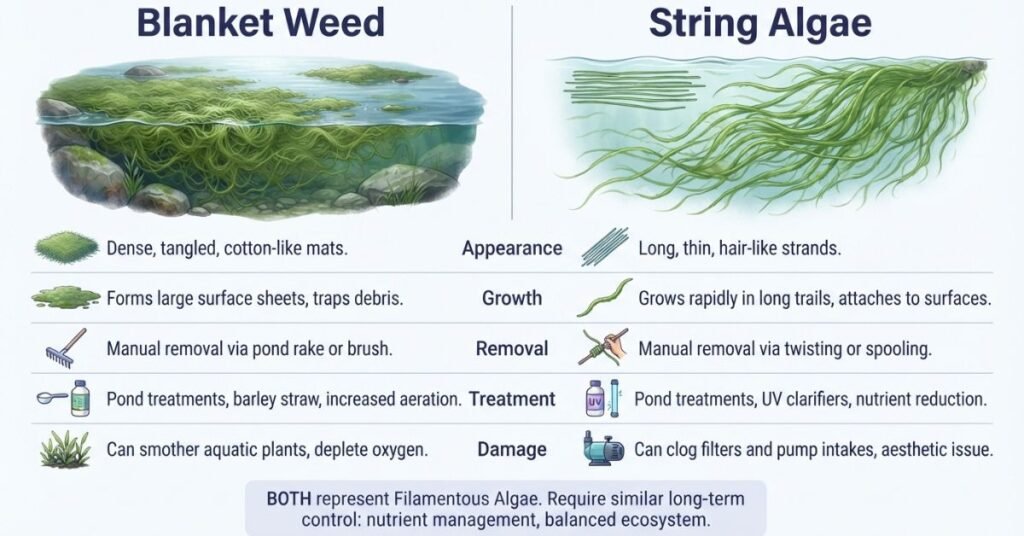
Blanket weed and string algae are closely related terms for filamentous algae that grows in long strands. Many pond owners use the names interchangeably.
Blanket weed is different from the suspended algae that turns pond water green. If your main problem is cloudy or green water, learn how to clear green pond water fast.
The main difference comes from how people describe the growth. “String algae” often describes the thread-like form, while “blanket weed” describes thick, tangled mats.
| Feature | Blanket Weed | String Algae |
|---|---|---|
| Appearance | Thick, tangled green mats | Long, thin green strands |
| Growth | Forms dense blankets across surfaces | Grows in loose strings and clumps |
| Removal | Pond rake, net, or manual removal | Hand removal, rake, or net |
| Treatment | Suitable filamentous-algae treatment when needed | Suitable filamentous-algae treatment when needed |
| Damage | Heavy growth can affect equipment and pond conditions | Heavy growth can create similar problems |
Both can grow on rocks, pond liners, plants, waterfalls, and equipment. Their growth depends on factors such as sunlight, nutrients, temperature, and water conditions.
For most pond owners, the control strategy remains similar. Remove excess growth, reduce nutrient sources, improve circulation, and maintain healthy pond conditions.
Pro Tip: Don’t focus too much on the name. Identify the algae’s appearance and address the conditions supporting its growth.
Common Mistakes
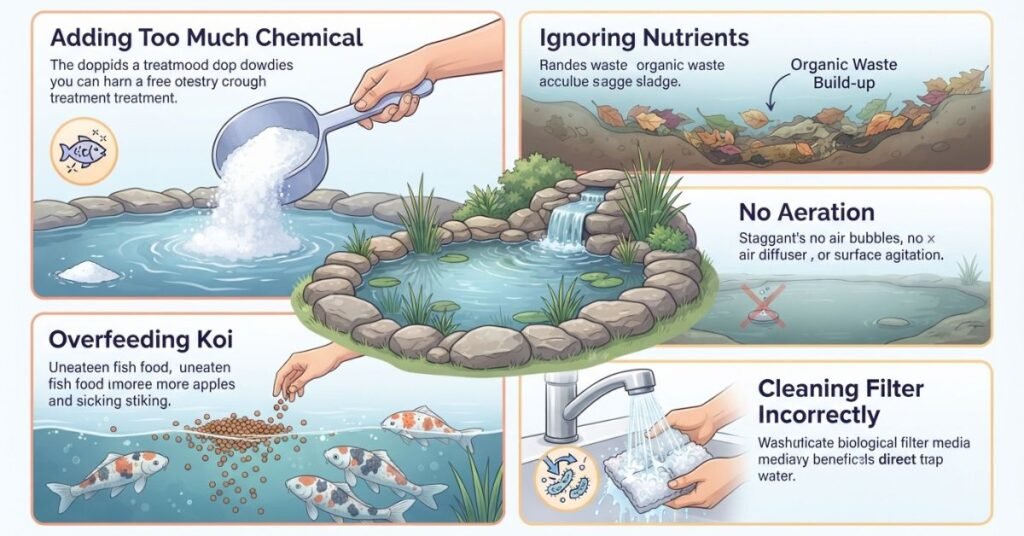
Controlling blanket weed isn’t only about removing visible algae. Certain pond-care mistakes can make growth return faster or create new water-quality problems.
Adding Too Much Chemical
Using extra treatment won’t necessarily produce better results. Incorrect dosing can stress fish, plants, and other pond organisms.
Always measure your pond accurately and follow the product label. Never exceed the recommended dosage.
Ignoring Nutrients
Killing algae without addressing excess nutrients often leads to recurring growth. Fish waste, uneaten food, leaves, and other organic material can contribute nutrients.
Remove debris regularly and review your feeding routine. Good filtration can also help manage organic waste.
No Aeration
Large amounts of dying algae can increase oxygen demand as decomposition occurs. This can create stressful conditions for fish, especially in warm weather.
Adequate aeration supports oxygen exchange and healthier pond conditions. Consider extra aeration when treating heavy algae growth.
Cleaning the Filter Incorrectly
Aggressive cleaning can remove beneficial microorganisms from biological filter media. This can reduce biological filtration efficiency.
Follow the filter manufacturer’s cleaning instructions. Mechanical media and biological media may require different maintenance methods.
Overfeeding Koi
Uneaten koi food eventually becomes organic waste. That waste can contribute to nutrient buildup and encourage algae growth.
Feed appropriate portions and watch how quickly your koi consume the food. Adjust feeding rather than automatically adding more.
Seasonal Blanket Weed Guide
Blanket weed can behave differently throughout the year. Seasonal changes in sunlight, temperature, plant growth, and pond maintenance can affect algae growth.
Adjusting your routine throughout the year makes blanket weed prevention easier. Focus on early removal and nutrient control before growth becomes difficult to manage.
Spring
As temperatures and daylight increase, blanket weed may become more active. Check the pond regularly for early green strands and remove them before they form thick mats.
Clean accumulated winter debris from the pond and inspect your pump and filter. Remove dead leaves and plant material that could release nutrients.
Spring is also a good time to check circulation. Make sure pumps, filters, and waterfalls provide suitable water movement.
Summer
Summer often brings stronger sunlight and warmer water. These conditions can support faster algae growth when nutrients are available.
Check blanket weed frequently and remove new growth early. Keep fish feeding controlled and remove floating debris regularly.
Maintain aeration during hot weather. Good oxygen levels become especially important when algae grows heavily or treatments cause algae to die.
Autumn
Falling leaves can add substantial organic material to a pond. Remove leaves regularly before they sink and begin decomposing.
A pond net can help reduce leaf buildup in suitable ponds. Continue checking pumps and filters for trapped debris.
Reducing organic waste during autumn can make spring algae control easier.
Winter
Blanket weed growth may slow during colder conditions, but pond maintenance still matters. Avoid allowing leaves and dead vegetation to accumulate.
Check equipment periodically and follow manufacturer guidance for winter operation. Don’t make unnecessary changes simply because algae growth has slowed.
Pro Tip: Use winter as a preparation period. Removing debris now can reduce nutrient buildup before spring growth begins.
Best Pond Equipment to Prevent Blanket Weed
The right pond equipment can make blanket weed control in ponds easier and more consistent. Equipment doesn’t replace good maintenance, but it can help manage circulation, debris, nutrients, and water clarity.
Pond Pumps
A properly sized pond pump keeps water moving through the system. Good circulation helps prevent stagnant areas where debris and nutrients can collect.
Choose a pump based on your pond volume, filtration system, pipework, and required flow rate. Check the manufacturer’s specifications before buying.
Filters
Pond filters help remove solids and support biological filtration. A suitable filter can reduce organic waste that contributes to nutrient buildup.
Match filter capacity to your pond size and fish load. Regular maintenance keeps the system working efficiently.
UV Clarifiers
UV clarifiers can help control suspended algae responsible for green water. They don’t directly remove established blanket weed mats.
They’re therefore best viewed as supporting equipment rather than a standalone blanket weed solution.
Pond Vacuums
Pond vacuums can remove sludge, settled debris, and organic material from suitable ponds. Reducing accumulated waste can help limit nutrient sources.
Use them carefully around fish, plants, and pond surfaces. Follow the equipment manufacturer’s instructions.
Beneficial Bacteria
Beneficial bacteria products can support the breakdown of organic waste. They may help maintain better nutrient conditions when used correctly.
Choose a product designed for ornamental ponds. Follow the label instructions rather than applying extra doses.
Pond Skimmers
Skimmers collect floating leaves and debris before they sink. This can reduce the amount of organic material entering the pond.
A skimmer can be especially useful during periods of heavy leaf fall. Keep the basket clean so water continues flowing properly.
Conclusion
Blanket weed usually grows when ponds have excess nutrients, strong sunlight, warm water, or weak circulation. Understanding these causes makes long-term control much easier.
To control blanket weed in pond water, start by removing visible growth and cleaning organic debris. Improve filtration, circulation, and aeration while reducing excess nutrients. Natural methods and suitable blanket weed treatments can provide additional support when needed.
Prevention remains the best long-term approach. Maintain your pump, filter, pond plants, feeding routine, and cleaning schedule throughout the year.
If blanket weed keeps returning, upgrading your pond pump, filtration system, and UV clarifier may work better than repeatedly using chemicals.
Have you dealt with recurring blanket weed? Share what worked for your pond, and explore our other pond-care guides for more practical tips.
Frequently Asked Questions
Start by removing visible blanket weed with a pond rake or net. Then remove leaves, dead plants, and other organic debris.
Improve filtration, water circulation, and aeration while reducing excess nutrients. If growth remains heavy, consider a suitable blanket weed treatment.
Always follow the product label and check compatibility with your fish and plants.
No treatment can guarantee permanent blanket weed removal. Algae usually returns when the conditions supporting its growth remain unchanged.
Reduce excess nutrients, improve circulation, manage sunlight, remove debris, and maintain effective filtration.
Use chemical treatments as a supporting measure when appropriate. Addressing the underlying cause provides better long-term results.
Small amounts of blanket weed usually don’t pose an immediate threat to healthy koi. Heavy growth can create management and water-quality problems.
Large algae mats can interfere with pumps and equipment. When substantial algae dies and decomposes, oxygen levels can also become a concern.
Good filtration, aeration, nutrient control, and regular algae removal help maintain better conditions for koi.
Barley straw may help discourage certain algae as it decomposes, but results can vary between ponds.
It shouldn’t replace manual removal, nutrient control, or proper filtration. Use barley straw as part of a broader blanket weed control strategy.
Follow product instructions when using commercial barley-straw products. Don’t expect it to quickly remove thick existing algae mats.
Some pond fish may nibble on filamentous algae, but fish shouldn’t be your main method of blanket weed control.
Koi and other ornamental fish may consume small amounts. However, heavy algae growth can continue when nutrients and sunlight remain available.
Regular removal and better pond management provide more reliable control than depending on fish to eat the algae.
Yes. Manual removal is one of the simplest ways to reduce visible blanket weed quickly.
Use a pond rake, net, or suitable long-handled tool. Work carefully around fish, plants, liners, and other pond features.
Remove the algae from the pond completely. Leaving large clumps nearby can allow nutrients to return through decomposition or runoff.
The best blanket weed killer depends on your pond size, algae type, fish, plants, and local product availability.
Choose a product specifically labeled for filamentous algae or blanket weed. Check its active ingredient, dosage, treatment area, and compatibility with pond life.
Don’t choose a treatment based only on reviews or price. Always follow the current product label before application.
Blanket weed often returns because the conditions supporting its growth haven’t changed.
Common causes include excess nutrients, strong sunlight, warm weather, fish waste, overfeeding, decaying leaves, and weak circulation.
Removing algae provides short-term relief. Long-term blanket weed prevention requires better nutrient control, filtration, circulation, and regular maintenance.
A UV clarifier generally won’t remove established blanket weed mats. UV systems mainly target suspended microorganisms that contribute to green pond water.
However, a UV clarifier can still support overall pond water management. It may improve water clarity when suspended algae causes green water.
Don’t rely on UV equipment alone. Combine it with physical removal, filtration, circulation, and nutrient management.
Treatment time varies by product, algae growth, water conditions, and pond size. Always follow the manufacturer’s instructions.
Some products may begin affecting algae within several days, while heavier growth can require longer management.
Avoid repeating doses early unless the label specifically allows it. Monitor fish, water conditions, and dying algae during treatment.
Blanket weed and string algae commonly refer to filamentous algae that grows in long strands. Many pond owners use these terms interchangeably.
The term “blanket weed” usually describes dense, tangled growth. “String algae” often describes individual thread-like strands.
Both can require similar control methods. Focus on the growth pattern and underlying pond conditions rather than the name alone.
Not necessarily. Some filamentous algae can occur in otherwise functioning ponds.
However, heavy or recurring growth may indicate excess nutrients, strong sunlight, or poor circulation.
Check fish feeding, debris, filtration, water movement, and nearby fertilizer runoff. Addressing these factors can improve overall pond management.
Yes. Strong sunlight provides the energy algae needs for photosynthesis.
Ponds receiving prolonged direct sunlight may experience faster blanket weed growth, especially when excess nutrients are available.
Floating plants, suitable pond landscaping, and other shade sources can reduce direct sunlight. Avoid completely covering the pond.
Aeration doesn’t directly kill established blanket weed. However, it can improve oxygen exchange and support healthier pond conditions.
Aeration becomes particularly useful when large amounts of algae die and decompose. Decomposition can increase oxygen demand.
Combine aeration with nutrient control, filtration, circulation, and physical algae removal for a stronger overall strategy.
Focus on controlling the conditions that encourage algae growth. Remove leaves and organic debris before they accumulate.
Maintain suitable filtration and water circulation. Avoid overfeeding fish and consider suitable pond plants for shade and nutrient competition.
Regularly inspect pumps, filters, skimmers, and problem areas. Consistent maintenance is usually more effective than repeatedly treating recurring algae.
Yes. Suitable aquatic plants can compete with algae for available nutrients and provide shade.
Floating plants can reduce sunlight reaching parts of the water surface. However, avoid excessive plant coverage.
Healthy plant growth should complement filtration and maintenance. Plants alone won’t remove thick existing blanket weed.
Remove the visible algae around the pump intake as soon as practical. Switch off the equipment first if required by the manufacturer’s instructions.
Clean the intake and check for additional buildup elsewhere in the system. Heavy algae around the pump can restrict water flow.
Continue monitoring the area after cleaning. Recurring buildup may indicate poor circulation or excessive algae growth that needs broader control.

Michael Brooks and Sarah Lane are the co-founders of the Pond Pump Team, a trusted U.S.-based group helping homeowners and landscapers build better ponds and water features. Michael, an experienced pond engineer from Oregon, has worked for over 12 years on pump sizing, flow systems, and water circulation. Sarah, a pond designer from Colorado with nine years of experience, focuses on eco-friendly and easy-to-maintain pond and waterfall designs. Together, they’ve completed more than 180 pond projects and created tools like the Pond Pump Calculator and Pond Liner Calculator to make pond planning simple, accurate, and sustainable.
Need help with your pond setup? Contact the Pond Pump Team for expert advice and reliable solutions.